Executive Summary:
RTX’s Pratt & Whitney Military Engines business has received a $42.1 million contract modification to finalize fiscal 2026 sustainment activities for the F135 propulsion system that powers the F-35 Lightning II. The award supports maintenance, engineering, spare parts, software sustainment, and depot repair for U.S. military services, international F-35 partner nations, and Foreign Military Sales customers through November 2026.
RTX Finalizes F135 Engine Sustainment Contract For The Global F-35 Fleet
RTX’s Pratt & Whitney Military Engines has secured a $42,096,941 contract modification from the U.S. Naval Air Systems Command (NAVAIR) to support sustainment of the F135 propulsion system powering the F-35 Lightning II fleet.
The award definitizes a previously authorized fiscal year 2026 undefinitized contract action and provides funding for worldwide sustainment activities supporting operational F-35 aircraft across the U.S. Air Force, U.S. Navy, U.S. Marine Corps, international F-35 Cooperative Program partners, and Foreign Military Sales (FMS) customers.
The modification was awarded under existing contract N0001926C0112 and was not competed, reflecting Pratt & Whitney’s role as the original manufacturer and sustainment provider for the F135 engine.
Sustainment Covers The Entire F135 Support Enterprise
Rather than purchasing new engines, this contract focuses on keeping the existing global F135 fleet mission ready.
The work includes:
- Global unit-level maintenance
- Depot-level overhaul and repair
- Replenishment spare parts
- Engineering and technical support
- Software sustainment
- Configuration management
- Depot maintenance planning
- Repair of fielded propulsion systems
These activities ensure operators can maintain high aircraft availability while managing one of the world’s largest fifth-generation fighter fleets.
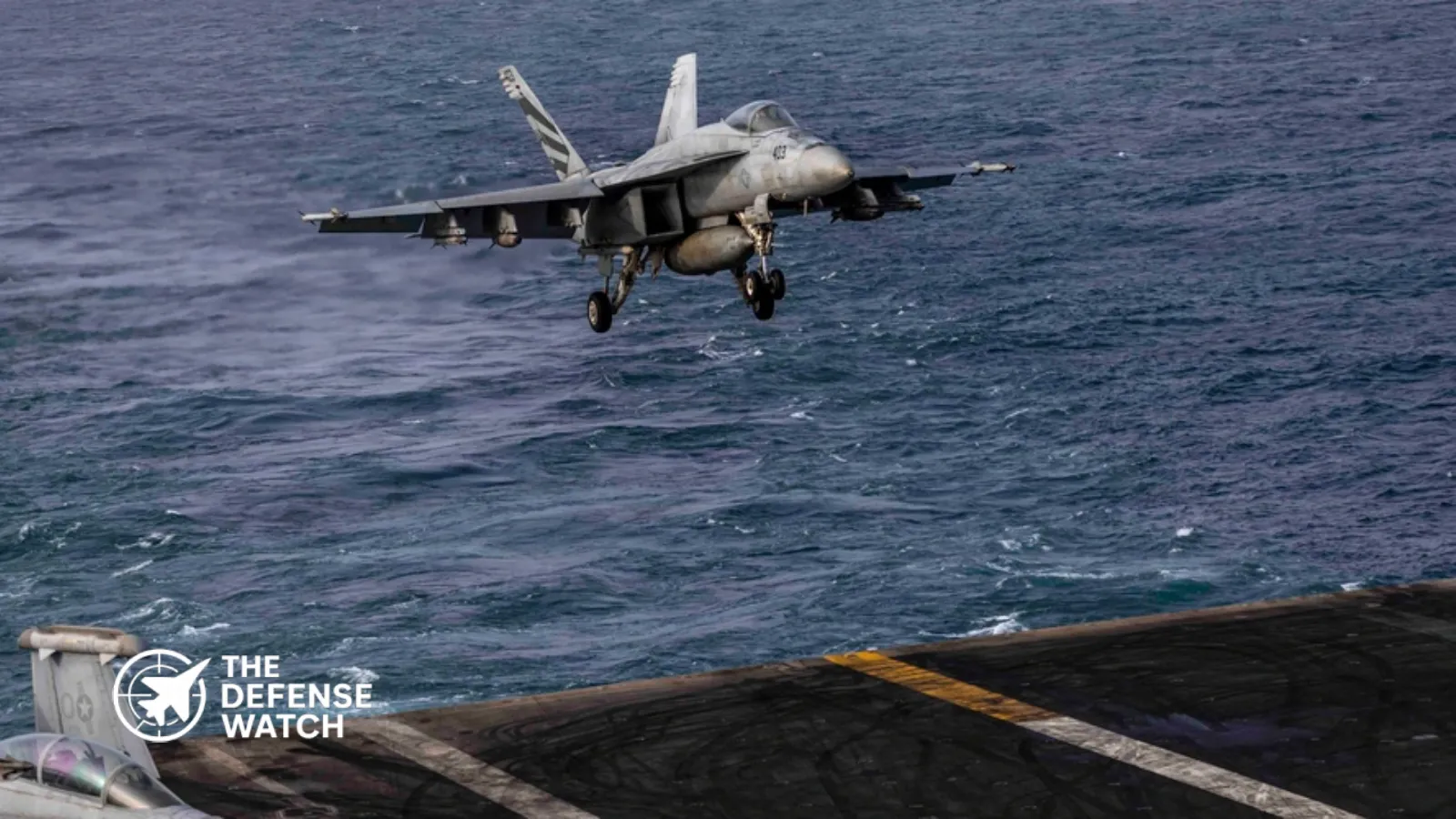
The F135 remains the sole propulsion system for every conventional takeoff, carrier-based, and short takeoff/vertical landing variant of the F-35 Lightning II.
Funding Breakdown
The $42.1 million modification draws funding from multiple U.S. military services as well as international operators.
Funding Source Amount U.S. Air Force Operations & Maintenance $15.15 million U.S. Marine Corps Operations & Maintenance $9.26 million U.S. Navy Operations & Maintenance $3.37 million F-35 Cooperative Program Partners $8.72 million Foreign Military Sales Customers $5.59 million All funding was obligated at the time of award.
Work Spans Multiple Countries
Sustainment activities will be distributed across an extensive international industrial network supporting the worldwide F-35 enterprise.
Location Share of Work East Hartford, Connecticut 40% Oklahoma City, Oklahoma 21% Indianapolis, Indiana 12% West Palm Beach, Florida 6% Windsor Locks, Connecticut 6% Brekstad, Norway 4% Leeuwarden, Netherlands 3% Iwakuni, Japan 3% Williamtown, Australia 2% Cameri, Italy 1% RAF Marham, United Kingdom 1% Fort Worth, Texas 1% Contract performance is expected to conclude in November 2026.
Why F135 Sustainment Matters
Although fighter procurement often receives the most public attention, sustainment represents one of the largest long-term costs across any military aircraft program.
The F-35 fleet continues to expand as additional aircraft enter service across North America, Europe, the Indo-Pacific, and the Middle East. Every new aircraft increases demand for engine maintenance capacity, spare modules, software updates, logistics support, and engineering services.
Unlike procurement funding, sustainment contracts directly influence operational readiness. Aircraft cannot generate sorties without reliable engines, timely repairs, and readily available replacement components.
Depot maintenance also allows engines to receive inspections, component replacements, and performance upgrades before small issues become major failures that reduce fleet availability.
Global Sustainment Supports Coalition Operations
One notable aspect of this contract is its multinational scope.
Beyond supporting U.S. military services, the award includes work for F-35 Cooperative Program partners and Foreign Military Sales operators. This reflects the increasingly integrated sustainment model used across the international F-35 enterprise.
Regional maintenance facilities in Europe, the Indo-Pacific, and North America allow participating nations to perform maintenance closer to operational units while reducing transportation time and improving supply chain resilience.
Facilities in Norway, the Netherlands, Italy, Australia, Japan, and the United Kingdom have become increasingly important as more allied air forces field operational F-35 squadrons.
Strategic Analysis
This contract illustrates an important shift in the F-35 program’s maturity. Earlier phases emphasized aircraft production, flight testing, and capability development. Today’s priorities increasingly center on readiness, lifecycle support, and reducing sustainment costs.
For the Department of Defense, sustaining a growing global fleet requires balancing operational availability with affordability. Investments in engineering support, software maintenance, and depot infrastructure help improve engine reliability while reducing maintenance turnaround times.
The geographic distribution of work also reflects broader U.S. defense strategy. Establishing regional sustainment capabilities strengthens coalition interoperability and reduces dependence on a single maintenance location during crises. This approach supports NATO operations in Europe while simultaneously improving logistics resilience across the Indo-Pacific.
From an industrial perspective, Pratt & Whitney remains central to the F-35 propulsion ecosystem. As the original equipment manufacturer, the company provides specialized engineering expertise, certified repair processes, and software support that cannot easily be replicated elsewhere. Continued sustainment awards ensure technical knowledge remains available as the F-35 fleet grows over the coming decade.
While the contract value is relatively modest compared with major aircraft procurement awards, sustainment contracts such as this one play a critical role in maintaining combat readiness. Reliable engine support ultimately determines how many F-35s are available for training, deterrence missions, and operational deployments on any given day.
Metrea And Omega Secure $938.9 Million U.S. Navy Air To Air Refueling Services Contract Through 2031
Executive Summary:
The U.S. Navy has exercised contract options valued at an estimated $938.85 million for Metrea Strategic Mobility Inc. and Omega Aerial Refueling Services Inc. to continue providing contractor-owned and operated air-to-air refueling services through July 2031. The agreements support pilot qualification training, fleet readiness exercises, Navy test organizations, and Foreign Military Sales customers while reducing demand on military tanker fleets.
The U.S. Navy air to air refueling contract supporting contractor-operated tanker services has been extended through July 2031 after the Department of War awarded option modifications to Metrea Strategic Mobility Inc. and Omega Aerial Refueling Services Inc. The announcement was made through the Department of Defense’s daily contract awards, with the Naval Air Warfare Center Aircraft Division serving as the contracting activity.
The modifications apply to previously awarded multiple-award, indefinite-delivery, indefinite-quantity (IDIQ) contracts and establish a combined estimated ceiling of $938,853,731. Both companies will continue competing for individual task orders rather than receiving predetermined funding allocations.
Importantly, no funds were obligated at the time of the contract modifications. Funding will instead be provided incrementally as future task orders are issued under the contract vehicle.
Contract Supports Navy And Marine Corps Flight Readiness
The contract ensures continued availability of commercial aerial refueling aircraft for a broad range of operational and training missions.
According to the Department of Defense, contractor-owned and operated tankers will support:
- Initial pilot qualification training
- Recurring pilot refresher training
- Fleet readiness exercises
- Naval aviation test activities
- Foreign Military Sales (FMS) customers
These missions allow Navy and Marine Corps aviators to maintain proficiency without relying exclusively on military-operated tanker aircraft.
The work distribution reflects the Navy’s principal aviation training areas:
| Training Area | Share of Work |
|---|---|
| Marine Corps training ranges | 32% |
| West Coast Fleet Area Control and Surveillance Facility (FACSFAC) ranges | 27% |
| East Coast FACSFAC ranges | 27% |
| Outside the Continental United States | 14% |
Contract performance is scheduled to continue through July 2031.
Metrea And Omega Continue Long Standing Tanker Support
Metrea Strategic Mobility, headquartered in Temecula, California, and Omega Aerial Refueling Services, based in Alexandria, Virginia, have become integral providers of commercial aerial refueling capability for the U.S. military.
Unlike traditional defense contractors that manufacture aircraft, both companies operate their own fleets of tanker aircraft under contractor-owned, contractor-operated (COCO) arrangements. These aircraft perform missions similar to those flown by military tankers while remaining commercially operated.
Their aircraft routinely support:
- Carrier air wing training
- Marine Corps aviation exercises
- Operational test programs
- Joint military exercises
- International partner training
Because these services are acquired competitively under an IDIQ framework, both companies remain eligible to compete for future task orders throughout the contract period.
Why Contractor Tankers Have Become Increasingly Important
Commercial aerial refueling has become an increasingly valuable capability as U.S. military tanker fleets face growing operational demands worldwide.
The U.S. Air Force’s KC-135 Stratotanker and KC-46 Pegasus fleets are frequently tasked with:
- Global force deployments
- Indo-Pacific operations
- European deterrence missions
- Middle East contingency support
- Strategic bomber operations
By outsourcing routine training refueling to commercial providers, the Department of Defense preserves military tanker availability for higher-priority operational missions.
This approach also allows Navy aviators to maintain qualification standards without competing directly for limited military tanker capacity.
Operational Benefits For Naval Aviation
Commercial refueling services provide several operational advantages beyond simple cost savings.
Greater Scheduling Flexibility
Dedicated contractor aircraft can often support training events that might otherwise be delayed because military tankers are assigned to operational missions.
Improved Fleet Readiness
Consistent access to aerial refueling enables pilots to maintain proficiency in long-range mission planning, fuel management, and complex airborne operations.
Increased Availability Of Military Assets
Every training sortie flown with contractor support allows military tanker units to prioritize combat readiness, contingency planning, or overseas deployments.
Support For Test And Evaluation
Naval aviation test organizations also rely on reliable refueling support when evaluating new aircraft systems, sensors, or mission profiles that require extended airborne endurance.
Foreign Military Sales Customers Also Benefit
The contract also includes support for Foreign Military Sales (FMS) customers.
Many allied nations conduct pilot training or aircraft testing alongside U.S. forces. Access to contractor-operated tanker aircraft provides additional flexibility during multinational exercises while avoiding unnecessary pressure on American military tanker fleets.
As allied air forces continue integrating advanced aircraft such as fifth-generation fighters and carrier-capable platforms, aerial refueling remains a critical enabling capability for realistic operational training.
Strategic Significance
Although the announcement does not introduce a new aircraft or weapons system, it reflects an important trend in U.S. defense logistics.
Over the past decade, the Department of Defense has increasingly relied on commercial service providers to perform specialized support missions traditionally handled by military units. Contractor-operated adversary air services, flight training, maintenance support, and aerial refueling have all expanded under this model.
The continued investment in commercial tanker support demonstrates that aerial refueling has become a foundational element of modern airpower readiness rather than a capability reserved only for combat deployments.
For naval aviation, maintaining predictable access to tanker aircraft directly supports pilot qualification, carrier air wing readiness, and large-scale fleet exercises across both Atlantic and Pacific theaters.
With increasing operational commitments across multiple regions, preserving military tanker capacity while sustaining high-quality training has become a practical force management strategy. The latest contract modifications ensure that Metrea and Omega will remain key partners in delivering that capability through at least mid-2031.
Contract Overview
| Item | Details |
|---|---|
| Contract Ceiling | $938,853,731 |
| Contract Type | Firm-Fixed-Price, Cost-Reimbursable, Multiple Award IDIQ |
| Companies | Metrea Strategic Mobility Inc.; Omega Aerial Refueling Services Inc. |
| Performance End Date | July 2031 |
| Contracting Activity | Naval Air Warfare Center Aircraft Division, Patuxent River, Maryland |
| Funding At Award | None obligated |
| Award Method | Competitive procurement |
Executive Summary:
Oracle America Inc. has received a single award Department of War Enterprise Software Agreement valued at $3.311 billion over five years, with an option that could raise the total value to $6.99 billion. Managed by the Naval Information Warfare Center Pacific, the agreement is intended to standardize Oracle software procurement across the Department of War while expanding access to the intelligence community and the U.S. Coast Guard.
Oracle Secures Major Department Of War Enterprise Software Agreement
Oracle America Inc. has been awarded a $3.311 billion Department of War Enterprise Software Agreement under the Department of War Enterprise Software Initiative (DOW ESI), marking one of the largest enterprise software contracts awarded by the U.S. defense establishment in 2026.
According to the Department of War contract announcement, the award establishes a single award, firm fixed price, indefinite delivery, indefinite quantity (IDIQ) contract with a five year ordering period. The agreement was issued by the Naval Information Warfare Center Pacific (NIWC Pacific) in San Diego, California.
The contract supports enterprise wide acquisition of Oracle software products and services while reducing fragmented purchasing across military organizations.
What The Enterprise Agreement Includes
The DOW Enterprise Software Agreement provides defense organizations with centralized access to Oracle’s commercial software portfolio.
Available offerings include:
| Capability | Coverage |
|---|---|
| Software Licenses | Perpetual and subscription licensing |
| Software Maintenance | Maintenance and technical support renewals |
| Cloud Services | Oracle Software as a Service (SaaS) offerings |
| Customer Success Services | Technical adoption and implementation support |
| Consulting Services | Professional services supporting defense IT operations |
The agreement is intended to simplify acquisition while giving authorized organizations access to standardized pricing and contract terms.
Eligible customers extend beyond the Department of War itself and include organizations within the U.S. intelligence community and the U.S. Coast Guard.
Contract Value Could Reach Nearly $7 Billion
The base award carries a ceiling of $3.311 billion during the initial five year ordering period.
Officials also included an unexercised option that would increase the cumulative contract value to $6.99 billion if exercised.
Importantly, no funding is obligated at contract award. Instead, funding will occur through individual task orders issued as operational requirements arise across participating defense organizations.
This structure is common for large enterprise IDIQ contracts, allowing agencies to purchase software and services when needed while operating under a single negotiated agreement.
Why The Department Of War Uses Enterprise Software Agreements
The Department of War Enterprise Software Initiative was established to consolidate commercial software purchasing across the defense enterprise.
Rather than allowing hundreds of organizations to negotiate separate contracts, DOW ESI creates enterprise agreements that provide:
- Consistent licensing terms
- Reduced procurement timelines
- Lower administrative costs
- Standardized cybersecurity requirements
- Enterprise wide pricing advantages
- Improved software lifecycle management
The current Oracle agreement was awarded under Defense Federal Acquisition Regulation Supplement (DFARS) 208.74 and Department of Defense Directive 8470.01E, which designate the Department of War as Executive Agent for commercial software product management.
Strategic Importance For Defense Digital Modernization
Although the announcement focuses on procurement rather than new technology, the agreement reflects the Pentagon’s continued emphasis on modernizing enterprise information technology.
Large defense organizations increasingly depend on commercial software to support:
- Enterprise resource planning
- Cloud infrastructure
- Database management
- Mission planning support
- Logistics systems
- Financial management
- Cybersecurity operations
- Data analytics
Oracle has long supplied database technologies and enterprise applications used across federal agencies. Centralizing procurement through a single enterprise agreement helps reduce contract duplication while providing greater visibility into software licensing across the defense enterprise.
From a cybersecurity perspective, standardized software acquisition can also simplify patch management, support compliance with federal security standards, and accelerate deployment of updated software versions across multiple organizations.
Non Competitive Award Authorized In The Public Interest
The contract was awarded without full and open competition.
According to the award notice, the Secretary of the Navy authorized the direct award under 10 U.S. Code 3204(a)(7) and Federal Acquisition Regulation 6.103-7 (Class Deviation 2026-00017 Rev. 1), citing action taken in the public interest.
Such authorities permit non competitive awards under specific statutory conditions when determined to best support government requirements.
Operational Impact Across The Defense Enterprise
The agreement highlights an ongoing shift toward enterprise scale software management rather than isolated procurement by individual commands.
For defense organizations operating globally, standardized commercial software contracts can improve interoperability between commands while reducing administrative overhead. This becomes increasingly important as military operations rely more heavily on cloud computing, artificial intelligence enabled workflows, cybersecurity platforms, and data driven decision making.
Because Oracle’s portfolio spans databases, cloud infrastructure, enterprise applications, and consulting services, the agreement provides a single contracting vehicle capable of supporting multiple modernization efforts across the defense enterprise.
The inclusion of the intelligence community and Coast Guard also broadens the potential operational impact beyond traditional Department of War organizations, enabling shared procurement efficiencies among agencies with overlapping technology requirements.
Contract Overview
| Item | Details |
|---|---|
| Contractor | Oracle America Inc. |
| Headquarters | Austin, Texas |
| Contract Type | Firm Fixed Price IDIQ |
| Base Value | $3.311 billion |
| Potential Value | $6.99 billion |
| Ordering Period | Five years |
| Contracting Agency | Naval Information Warfare Center Pacific |
| Contract Number | N66001-26-D-0020 |
| Competition | Single award, non competitive authorization |
| Customers | Department of War, Intelligence Community, U.S. Coast Guard |
- Boeing received an $18.8 million U.S. Navy delivery order to repair 27 Distributed Targeting Processor Network units used on F/A-18 aircraft.
- The contract was awarded by Naval Supply Systems Command Weapon Systems Support under a sole source procurement.
- Repairs will be completed in Missouri and Florida, with work scheduled through March 2028.
- The Distributed Targeting Processor Network is a critical mission computer that enables advanced sensor fusion and precision targeting.
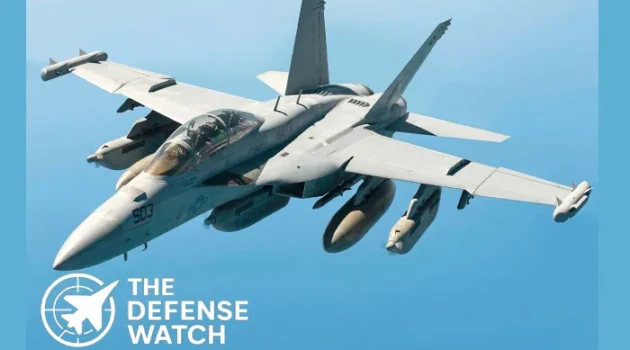
- Sustaining these processors supports the combat readiness of U.S. Navy F/A-18 Super Hornet and Growler fleets.
The U.S. Navy has awarded The Boeing Company an $18,798,154 firm fixed price delivery order to repair 27 Distributed Targeting Processor Network (DTP,N) systems supporting the F/A-18 aircraft fleet. The award was issued by Naval Supply Systems Command (NAVSUP) Weapon Systems Support in Philadelphia, Pennsylvania, under a sole source procurement, reinforcing continued investment in sustaining one of the Navy’s most important tactical aviation platforms.
According to the Department of Defense contract announcement, the repair effort will be conducted in St. Louis, Missouri, and Malabar, Florida, with all work expected to conclude by March 2028. Initial funding comes from Fiscal Year 2026 Navy Working Capital Funds, with additional task orders financed through future working capital appropriations.
Deep Technical & Strategic Context Analysis
The Distributed Targeting Processor Network serves as one of the F/A-18’s most advanced mission computing systems. Introduced as part of the Block II Super Hornet modernization program, the DTP,N significantly expanded onboard processing capacity compared with earlier mission computers. Its high performance architecture enables the aircraft to rapidly process data from the AN/APG,79 Active Electronically Scanned Array (AESA) radar, infrared search and track systems, electronic warfare sensors, targeting pods, and secure tactical datalinks.
Rather than simply increasing computing power, the DTP,N enables advanced sensor fusion, allowing pilots to receive a unified tactical picture while reducing workload during complex missions. This capability has become increasingly important as modern air operations require aircraft to detect, identify, track, and engage multiple threats simultaneously across contested electromagnetic environments.
From a strategic perspective, sustainment contracts like this are often more significant than their dollar value suggests. The F/A-18E/F Super Hornet and EA-18G Growler remain the backbone of U.S. Navy carrier air wings despite the continued introduction of the F-35C. Maintaining the health of mission critical avionics ensures higher aircraft availability, faster depot turnaround, and improved readiness for Indo Pacific deployments, where carrier strike groups continue to operate in increasingly sophisticated anti access and area denial environments.
The delivery order is structured as a firm fixed price contract, meaning Boeing assumes responsibility for completing the specified repairs at the agreed price. Unlike cost reimbursement contracts, this arrangement limits government cost exposure while providing predictable budgeting for depot level maintenance activities.
Contract Breakdown & Details
Contract Value
- Award Value: $18,798,154
- Contract Type: Firm Fixed Price Delivery Order
- Contract Number: N00383,26,F,YY1N
- Option Period: None
Scope of Work
- Repair of: 27 Distributed Targeting Processor Network units
- Supported Platform: F/A-18 aircraft
- Purpose: Restore mission critical avionics to operational condition for fleet service
Work Locations
- St. Louis, Missouri: 50 percent
- Malabar, Florida: 50 percent
Schedule
- Performance Completion: March 2028
Funding
- Initial Obligation: $9,211,095
- Funding Source: Fiscal Year 2026 Navy Working Capital Funds
- Future Task Orders: Additional Navy Working Capital Funds as required
Contracting Activity
- Awarding Agency: Naval Supply Systems Command Weapon Systems Support (NAVSUP WSS)
- Location: Philadelphia, Pennsylvania
Procurement Method
- Competition: Sole source
- Authority: 10 U.S. Code 3204(a)(1)
- Offers Received: One
Why This Contract Matters
Although valued at less than $20 million, the contract supports one of the most critical components of the Navy’s tactical aviation sustainment strategy. Modern fighter aircraft increasingly depend on powerful mission computers capable of integrating vast amounts of sensor information in real time. As the Super Hornet fleet continues to operate alongside fifth generation aircraft, maintaining advanced processing hardware such as the Distributed Targeting Processor Network remains essential for preserving operational effectiveness and mission readiness.
Depot repair programs also represent a cost effective approach to extending the service life of existing avionics, allowing the Navy to sustain high readiness rates while balancing procurement of next generation capabilities.
- Raytheon received an $18.98 million U.S. Navy contract modification to provide engineering support for the ESSM and NATO SeaSparrow missile programs.
- The work will continue through December 2030, supporting U.S. Navy requirements alongside eleven NATO nations and Japan.
- Engineering services include technical design authority, system integration, configuration management, and long term missile sustainment.
- The contract reflects continued multinational investment in naval air defense against cruise missiles, aircraft, and increasingly complex drone threats.
- NAVSEA is managing the program under a cost plus fixed fee contract that shares technical development risk with the government.
The U.S. Navy has awarded Raytheon an $18.98 million cost plus fixed fee contract modification to continue providing technical and design agent engineering support for the Evolved SeaSparrow Missile (ESSM) and NATO SeaSparrow Missile System (NSSMS) programs. The award was announced by the Naval Sea Systems Command (NAVSEA) in Washington, D.C., which serves as the contracting activity for the multinational missile program.
According to NAVSEA, the modification extends engineering support through December 2030 and covers both U.S. Navy requirements and participating allied nations. The procurement includes funding from the U.S. Navy, eleven NATO SeaSparrow consortium members, and Japan through the Foreign Military Sales (FMS) program, highlighting the missile’s importance as one of the world’s most widely deployed naval air defense systems.
Deep Technical & Strategic Context Analysis
The Evolved SeaSparrow Missile (ESSM) is the primary medium range shipborne air defense interceptor used aboard numerous NATO and allied surface combatants. Designed to defeat highly maneuverable anti-ship cruise missiles, fixed wing aircraft, helicopters, and increasingly unmanned aerial threats, ESSM forms the inner layer of many naval integrated air and missile defense architectures. The latest ESSM Block 2 introduced an active radar seeker, allowing the missile to independently acquire and engage targets during the terminal phase without relying solely on continuous shipboard radar illumination. This significantly improves a warship’s ability to counter saturation attacks involving multiple incoming threats.
The engineering work funded under this contract is as strategically important as missile production itself. Rather than purchasing additional interceptors, NAVSEA is investing in the technical backbone that keeps the weapon system operational for decades. As the designated technical and design agent, Raytheon will provide configuration management, software and hardware engineering, system integration, reliability improvements, testing support, and lifecycle sustainment. These activities ensure that the missile remains compatible with evolving combat management systems, sensors, launchers, and emerging naval threats.
The cost plus fixed fee contract structure is commonly used for highly specialized engineering work where the exact technical requirements may evolve throughout the project. Under this arrangement, the government reimburses allowable development costs while paying a predetermined fixed fee, reducing contractor incentives to cut corners during complex research, design validation, and long term systems engineering efforts.
Contract Breakdown & Details
Contract Value
- Total Modification: $18,977,361
- Contract Type: Cost Plus Fixed Fee (CPFF)
- Original Contract: N00024-26-C-5434
- Completion Date: December 2030
Work Locations
- Tucson, Arizona:85%
- Raytheon’s primary missile engineering and design center.
- Portsmouth, Rhode Island:15%
- Naval systems engineering and program support.
Participating Customers
United States Navy
- Accounts for 36% of total funding.
NATO SeaSparrow Consortium
- Represents approximately 63% of contract funding.
- Participating nations include:
- Australia
- Belgium
- Canada
- Denmark
- Germany
- Greece
- Netherlands
- Norway
- Portugal
- Spain
- Türkiye
Foreign Military Sales
- Japan: Approximately 1% of total funding.
Major Funding Sources
- Other Customer Funds: Largest funding component supporting allied consortium partners.
- Weapons Procurement, Navy (WPN): Supports missile system modernization.
- Other Procurement, Navy (OPN): Funds associated equipment and sustainment.
- Operations & Maintenance, Navy (O&M): Supports operational readiness and engineering services.
- Foreign Military Sales Funds: Supports Japanese participation.
Why This Contract Matters
Although modest in value compared with missile production contracts, engineering support agreements are essential to maintaining combat readiness across multinational fleets. More than a dozen navies operate ESSM aboard destroyers, frigates, amphibious ships, and aircraft carriers, making software updates, system integration, and technical support critical as naval threats continue to evolve.
The award also underscores the enduring success of the NATO SeaSparrow Consortium, one of the defense industry’s longest running multinational cooperative acquisition programs. By pooling engineering resources and sharing development costs, consortium members maintain common missile standards while improving interoperability across allied fleets operating in the Indo-Pacific, North Atlantic, Mediterranean, and other contested maritime regions.
As global naval forces place greater emphasis on defending against cruise missiles, low flying drones, and high speed precision weapons, sustained engineering investment ensures ESSM remains an effective component of layered maritime air defense well into the next decade.
The U.S. Air Force has awarded Boeing a $42.93 million contract to upgrade the defensive infrared countermeasure systems installed on the United Arab Emirates’ fleet of C-17 Globemaster III strategic transport aircraft, extending the aircraft’s survivability against modern infrared-guided missile threats.
According to the Department of Defense contract announcement, the award was issued by the Air Force Life Cycle Management Center (AFLCMC), Warner Robins Air Logistics Complex, Georgia, under the Foreign Military Sales (FMS) program. The firm-fixed-price contract covers the integration of upgraded Large Aircraft Infrared Countermeasures (LAIRCM) configurations into UAE-operated C-17 aircraft. Boeing will perform the work primarily in San Antonio, Texas, with completion expected by **August 2030.
- Boeing received a $42.93 million Foreign Military Sales contract to upgrade infrared countermeasure systems on UAE C-17 aircraft.
- The work will modernize Large Aircraft Infrared Countermeasures designed to protect transport aircraft from infrared-guided missiles.
- Upgrades will be carried out in San Antonio, Texas, with completion scheduled for August 2030.
- The contract was awarded on a sole-source basis through the U.S. Air Force’s Foreign Military Sales program.
- Enhanced survivability will help UAE strategic airlift operations in increasingly contested regional environments.
Deep Technical & Strategic Context Analysis
The Large Aircraft Infrared Countermeasures (LAIRCM) system is one of the most sophisticated self-protection suites fielded on U.S. military transport aircraft. Rather than relying solely on expendable flares, the system detects incoming infrared-guided missiles using ultraviolet missile warning sensors before directing a laser-based jammer toward the missile seeker. The directed infrared energy disrupts the missile’s guidance system, causing it to lose track of the aircraft. This layered approach significantly improves survivability against modern shoulder-fired MANPADS and advanced infrared-guided surface-to-air missiles.
For the United Arab Emirates, upgrading the C-17 fleet has strategic importance beyond routine modernization. The UAE operates one of the Middle East’s most capable strategic airlift forces, using its C-17s for military deployments, humanitarian assistance, disaster relief, and logistics missions across the Middle East, Africa, Europe, and Asia. As portable air defense systems continue to proliferate among state and non-state actors, transport aircraft frequently operate within range of infrared-guided threats during takeoff, landing, and tactical airlift operations. Maintaining an up-to-date defensive suite helps preserve operational freedom in higher-risk environments.
The contract is structured as a firm-fixed-price agreement, meaning Boeing assumes responsibility for completing the required work at the agreed contract value. This contracting approach limits cost growth for the U.S. government and the Foreign Military Sales customer while placing greater performance and schedule risk on the contractor. The award was issued as a sole-source acquisition, reflecting Boeing’s role as the original manufacturer and primary systems integrator for the C-17 platform and its associated modification packages.
Contract Breakdown & Details
Contract Overview
- Contract Value: $42,932,563
- Contract Type: Firm-fixed-price
- Prime Contractor: The Boeing Company
- Contracting Activity: Air Force Life Cycle Management Center (AFLCMC), Warner Robins, Georgia
- Program: Foreign Military Sales (United Arab Emirates)
- Award Method: Sole-source acquisition
Scope of Work
- Upgrade existing Large Aircraft Infrared Countermeasure configurations.
- Integrate improved defensive systems into UAE-operated C-17 Globemaster III aircraft.
- Support long-term survivability against evolving infrared-guided missile threats.
- Complete installation and integration by August 2030.
Work Location
- San Antonio, Texas: Approximately 100% of contract performance.
Funding
- Funding Source: Foreign Military Sales (United Arab Emirates)
- Amount Obligated at Award: $42,932,563
Platform Overview
Aircraft: Boeing C-17 Globemaster III
Primary Missions
- Strategic airlift
- Tactical airlift
- Humanitarian assistance
- Medical evacuation
- Equipment deployment
- Special operations support
Key Characteristics
- Payload capacity exceeding 170,000 pounds
- Short and austere runway capability
- Intercontinental range with aerial refueling
- Rapid global deployment capability
- Compatible with advanced defensive aids including LAIRCM
Why This Contract Matters
Although relatively modest compared with aircraft procurement programs, survivability upgrades often deliver substantial operational value. Strategic transport aircraft routinely carry troops, armored vehicles, humanitarian supplies, and high-value cargo into regions where portable air defense systems remain widespread. Improving defensive avionics enables operators to extend aircraft service life while maintaining compatibility with evolving missile threats without replacing the underlying airframe.
The award also underscores the continued importance of the U.S. Foreign Military Sales program in sustaining allied air mobility capabilities. As regional security challenges evolve, defensive modernization programs such as this help partner nations maintain interoperability with U.S. and coalition forces while enhancing mission readiness.
The agreement will provide rapid launch capability for U.S. military flight testing, hypersonic research, and advanced defense technology demonstrations through 2028.
- Rocket Lab received a $266 million firm fixed price U.S. Space Force contract for 12 suborbital launches, with options for six additional missions.
- Launch operations will be conducted from the Pacific Spaceport Complex in Alaska through December 2028.
- The contract supports U.S. military research, development, testing, and evaluation activities, including hypersonic technology programs.
- Space Systems Command awarded the contract after a competitive competition involving three industry proposals.
- Initial fiscal 2025 RDT&E funding totals $112 million, demonstrating the Space Force’s continued investment in responsive launch capabilities.
The U.S. Space Force has awarded Rocket Lab USA Inc. a $266 million firm fixed price completion contract to provide suborbital launch services supporting military research, development, testing, and evaluation programs. The award was issued by Space Systems Command (SSC) at Kirtland Air Force Base, New Mexico, which manages many of the Department of Defense’s space acquisition and launch activities.
Under the agreement, Rocket Lab will deliver 12 suborbital launch vehicles, while the government retains options for six additional launches. All missions will be conducted from the Pacific Spaceport Complex in Kodiak, Alaska, with contract performance scheduled to conclude by December 31, 2028.
The contract was awarded following a competitive procurement that attracted three industry bids. At the time of award, the Space Force obligated $112 million in Fiscal Year 2025 Research, Development, Test and Evaluation (RDT&E) funding, reflecting the immediate start of launch campaign preparations.
Deep Technical & Strategic Context Analysis
The award strengthens Rocket Lab’s growing position within the U.S. national security launch market, particularly in the rapidly expanding niche for responsive suborbital testing. Unlike orbital launches that place satellites into space, suborbital missions provide a cost effective method of testing experimental payloads, missile technologies, hypersonic vehicles, sensors, guidance systems, and reentry technologies under realistic flight conditions before operational deployment.
Rocket Lab is expected to support these missions using its Hypersonic Accelerator Suborbital Test Electron (HASTE) vehicle, a modified version of its proven Electron rocket optimized for high speed defense testing. HASTE has emerged as one of the Department of Defense’s preferred commercial platforms because it offers relatively short launch preparation timelines, flexible trajectories, and the ability to carry classified experimental payloads. The vehicle has already supported multiple U.S. defense hypersonic flight campaigns for agencies including the Defense Innovation Unit and the Department of Defense’s Test Resource Management Center.
The contract also reflects a broader Pentagon strategy to expand partnerships with commercial launch providers as demand for hypersonic weapon development accelerates. The United States is simultaneously advancing several long range strike programs, including the Air Force’s Hypersonic Attack Cruise Missile (HACM), the Army’s Long Range Hypersonic Weapon (LRHW), and the Navy’s Conventional Prompt Strike program. Frequent, affordable flight testing has become increasingly important as these systems transition from development into operational capability.
From a procurement perspective, the award uses a firm fixed price completion contract, meaning Rocket Lab assumes much of the cost risk by agreeing to complete the specified launches for a predetermined value. This contract structure incentivizes schedule discipline and cost control while giving the government greater budget certainty compared with cost reimbursable contracts commonly used during early technology development.
Contract Breakdown & Details
Contract Overview
- Contract Value: $266 million
- Contract Type: Firm Fixed Price Completion
- Award Recipient: Rocket Lab USA Inc.
- Headquarters: Long Beach, California
Mission Scope
- 12 guaranteed suborbital launches
- Option for 6 additional launches
- Supports military research, development, testing, and evaluation
- Expected completion: December 31, 2028
Launch Location
- Primary Launch Site: Pacific Spaceport Complex, Kodiak, Alaska
Funding
- Initial Obligation: $112 million
- Funding Source: Fiscal Year 2025 Research, Development, Test and Evaluation (RDT&E)
Competition
- Procurement Method: Competitive acquisition
- Number of Offers Received: Three
Contract Administration
- Contracting Activity: Space Systems Command
- Location: Kirtland Air Force Base, Albuquerque, New Mexico
- Contract Number: FA8818-26-C-B003
Geographic Work Breakdown
The Department of Defense announcement identifies work at a single primary location:
- Pacific Spaceport Complex, Alaska: 100%
Strategic Significance
This award demonstrates the Department of Defense’s continued shift toward leveraging commercial launch providers for high tempo testing rather than relying exclusively on government owned infrastructure. As hypersonic weapons, missile defense interceptors, advanced sensors, and autonomous systems become increasingly central to U.S. military modernization, responsive suborbital launch capacity is emerging as a critical enabling capability.
For Rocket Lab, the contract further expands its national security portfolio beyond satellite launch and spacecraft manufacturing, reinforcing its role as a strategic partner supporting U.S. defense innovation and rapid technology fielding.
Executive Summary:
Saab and Embraer have signed a Heads of Agreement establishing a framework to potentially manufacture 20 additional Gripen fighter aircraft at Embraer’s Gavião Peixoto facility in Brazil. The agreement expands production capacity beyond Saab’s Swedish assembly line and strengthens the companies’ long term industrial partnership as they prepare to meet future global demand for the Gripen platform.
Saab And Embraer Expand Gripen Production Capacity With New Brazil Manufacturing Agreement
Saab and Embraer have signed a Heads of Agreement (HoA) that establishes a framework for the potential production of 20 additional Gripen fighter aircraft at Embraer’s industrial complex in Gavião Peixoto, São Paulo. The announcement, made jointly by both companies, marks another significant step in their decade long industrial partnership and is intended to increase manufacturing capacity for future international customers.
Under the proposed arrangement, Embraer would assemble the additional aircraft in Brazil, complementing Saab’s existing final assembly line in Linköping, Sweden. The companies intend to finalize the corresponding production agreement during 2026.
The announcement comes as fighter aircraft manufacturers face increasing international demand driven by military modernization programs across Europe, Latin America, and other regions.
Agreement Expands Gripen Manufacturing Capacity
The new Heads of Agreement does not represent a production contract itself. Instead, it establishes the framework under which Saab and Embraer can expand manufacturing if future customer orders require additional capacity.
According to Saab, Embraer will become responsible for assembling up to 20 additional Gripen aircraft, providing production flexibility while supporting a globally integrated manufacturing model.
The Brazilian production line will operate alongside Saab’s established assembly facility in Sweden rather than replacing it.
Saab President and CEO Micael Johansson said the agreement reinforces the company’s long term commitment to Latin America while strengthening industrial capabilities to support future business opportunities.
Embraer Defense & Security President and CEO Bosco da Costa Junior said the expanded partnership reflects the trust built over more than a decade and positions Embraer to increase production should customer demand continue to grow.
Gavião Peixoto Becomes A Strategic Gripen Production Hub
Embraer’s Gavião Peixoto (GPX) complex has become one of the company’s most advanced aerospace manufacturing sites.
The facility already supports multiple defense and aviation programs through advanced manufacturing processes and an experienced workforce. Under the new framework, GPX would play a larger role in Gripen production while integrating Brazilian and international suppliers into Saab’s broader industrial network.
According to the companies, the production model is designed to increase industrial output while maintaining common manufacturing standards across both Sweden and Brazil.
The arrangement also provides greater flexibility for future export campaigns without requiring all aircraft to be assembled exclusively in Sweden.
Technology Transfer Remains Central To The Partnership
The industrial cooperation between Saab and Embraer began more than ten years ago through Brazil’s Gripen acquisition program for the Brazilian Air Force (FAB).
A major element of that program has been the transfer of technology and technical knowledge between Sweden and Brazil.
Brazilian engineers, technicians, assembly specialists, maintenance personnel, and test pilots have completed extensive training in Sweden as part of the Gripen program.
This technology transfer has enabled Brazil to develop advanced aerospace manufacturing expertise while allowing Embraer to assume greater responsibility throughout the aircraft’s production lifecycle.
The latest agreement builds directly on that foundation by expanding Embraer’s role from domestic production support toward potential manufacturing for future international customers.
Why The Agreement Matters
While the announcement focuses on industrial cooperation rather than new aircraft sales, it carries broader strategic significance.
Global demand for modern multirole fighters has increased as many countries replace aging fourth generation aircraft while seeking platforms that offer lower operating costs than heavier fifth generation fighters.
The Gripen E has positioned itself within that market by combining:
| Capability | Benefit |
|---|---|
| AESA radar | Enhanced air and surface target detection |
| Advanced electronic warfare suite | Improved survivability in contested environments |
| Network-enabled operations | Integration with modern command and control systems |
| Lower operating costs | Reduced lifecycle expenses compared with larger fighters |
| High sortie generation | Rapid turnaround during sustained operations |
Expanding production capacity allows Saab to respond more effectively if additional export orders are secured without relying solely on its Swedish production facilities.
Industrial Benefits Extend Beyond Aircraft Production
The agreement also highlights a broader trend across the global defense industry.
Rather than concentrating manufacturing in a single country, major defense programs increasingly rely on multinational industrial partnerships that distribute production, technology development, and supply chains across allied nations.
For Saab, expanding assembly capability in Brazil diversifies production capacity while strengthening its presence in Latin America.
For Embraer, the arrangement further establishes the company as an international defense manufacturing partner capable of supporting advanced combat aircraft production beyond domestic requirements.
This collaborative manufacturing model can also improve supply chain resilience by reducing dependence on a single production location.
Strategic Outlook
Although no additional Gripen customer has been announced alongside the agreement, the expanded manufacturing framework positions Saab and Embraer to respond more rapidly if future export opportunities emerge.
The planned production capability demonstrates confidence in the long term outlook for the Gripen program while reinforcing Brazil’s growing role within the global defense aerospace industry.
If the final agreement is completed in 2026, Embraer’s Gavião Peixoto facility would become an even more significant contributor to Saab’s international manufacturing network, supporting future deliveries alongside the company’s established Swedish production line.
Rather than representing a shift in Gripen production away from Sweden, the agreement expands industrial capacity through a distributed manufacturing approach that offers greater flexibility for future customers while deepening the strategic partnership between Saab and Embraer.
Executive Summary:
KNDS has expanded manufacturing capacity at its Kassel facility to accelerate production of the Leopard 2A8 main battle tank and RCH 155 wheeled self-propelled howitzer. The investment reflects growing European demand for modern armored vehicles as NATO members continue rebuilding land combat capabilities and increasing defense spending.
KNDS Expands Leopard 2A8 Production As Germany Strengthens Land Systems Manufacturing
KNDS has significantly expanded Leopard 2A8 production and RCH 155 manufacturing at its Kassel facility in Germany, increasing industrial capacity to meet rising demand from European armed forces. The company announced the expansion as governments across NATO continue investing in armored vehicles and long-range artillery following sustained increases in defense spending and force modernization programs.
The Kassel facility has become one of KNDS’ primary production centers for heavy land combat systems. The latest expansion adds manufacturing space, production equipment, and workforce capacity to support larger annual output of both armored platforms.
According to KNDS, the investment is designed to improve production efficiency while shortening delivery timelines for current and future customers.
Expanded Production Supports European Rearmament
Demand for modern land systems has increased sharply across Europe since 2022, with numerous NATO members replacing legacy armored fleets while expanding active military formations.
The Leopard 2A8 has become one of Europe’s most sought-after main battle tanks because it builds upon decades of operational experience while incorporating new protection technologies, digital architecture, and improved survivability.
At the same time, the RCH 155 has emerged as one of Europe’s newest long-range artillery platforms, combining the proven AGM artillery module with the Boxer 8×8 armored vehicle.
KNDS stated that expanding production capacity now will help sustain long-term deliveries rather than simply respond to short-term procurement requirements.
Leopard 2A8 Represents The Latest Evolution Of Europe’s Leading Tank
The Leopard 2A8 introduces numerous upgrades over previous Leopard 2 variants.
Key improvements include:
| Capability | Leopard 2A8 |
|---|---|
| Main Armament | 120 mm smoothbore cannon |
| Protection | Enhanced modular armor and active protection integration |
| Fire Control | Advanced digital fire-control system |
| Crew | Four personnel |
| Mobility | High-performance diesel powertrain |
| Battlefield Networking | Digital command and battle management systems |
The Leopard family remains one of the most widely operated Western main battle tanks, serving numerous NATO and allied nations.
Several countries have either placed orders for the Leopard 2A8 or selected it as the preferred replacement for older armored fleets.
RCH 155 Brings Highly Automated Artillery Capability
Alongside tank production, KNDS is increasing manufacturing of the RCH 155 wheeled self-propelled howitzer.
The system combines a remotely operated 155 mm/L52 artillery module with the Boxer armored vehicle platform, allowing crews to conduct fire missions while remaining protected inside the vehicle.
Key characteristics include:
- NATO-standard 155 mm artillery system
- Fully automated loading system
- High tactical mobility
- Shoot-and-scoot capability
- Digital fire control
- Compatibility with precision-guided ammunition
The RCH 155’s automated turret significantly reduces crew workload while enabling rapid engagement cycles and quick displacement after firing.
Kassel Becomes A Strategic Production Hub
The Kassel expansion demonstrates how defense manufacturers are investing not only in new products but also in industrial resilience.
Modern defense procurement increasingly depends on production capacity as much as technological capability. Governments are placing greater emphasis on ensuring manufacturers can deliver equipment at scale within predictable timelines.
KNDS noted that the Kassel site will play a central role in manufacturing armored vehicles for both Germany and international customers.
The investment also supports broader efforts to strengthen Germany’s domestic defense industrial base while improving supply chain resilience across Europe.
Why The Expansion Matters
The significance of this investment extends beyond additional factory space.
European governments are shifting from limited peacetime procurement toward sustained industrial production capable of supporting long-term military readiness. That requires manufacturers to increase workforce capacity, modernize production lines, and reduce dependence on slow manufacturing cycles.
For NATO, industrial output has become an operational consideration. Alliance planning increasingly emphasizes the ability to replace battlefield losses, maintain readiness, and rapidly equip newly formed units.
The Leopard 2A8 and RCH 155 address different but complementary capability requirements.
The Leopard 2A8 provides heavy armored maneuver capability for high-intensity combat, while the RCH 155 delivers mobile precision fires capable of supporting maneuver forces over extended ranges. Producing both systems at higher volumes strengthens Europe’s ability to field integrated armored formations equipped with modern digital command systems.
From an industrial perspective, expanding Kassel also reflects a broader transformation within Europe’s defense manufacturing sector. Instead of maintaining limited surge capacity, companies are investing in permanent production increases that can support future multinational procurement programs.
For the United States and NATO allies, these developments strengthen Europe’s contribution to collective defense by increasing indigenous production of critical land combat systems. Greater European manufacturing capacity can also reduce pressure on transatlantic supply chains during periods of heightened demand.
Outlook
KNDS’ expansion at Kassel positions the company to meet growing orders for both the Leopard 2A8 and RCH 155 as European modernization programs continue over the coming years.
As NATO members prioritize armored warfare, long-range fires, and industrial readiness, production capacity is becoming as strategically important as platform performance. Investments such as the Kassel expansion illustrate how Europe’s defense industry is adapting to support sustained modernization and improved alliance readiness.
Deep Technical & Strategic Context Analysis
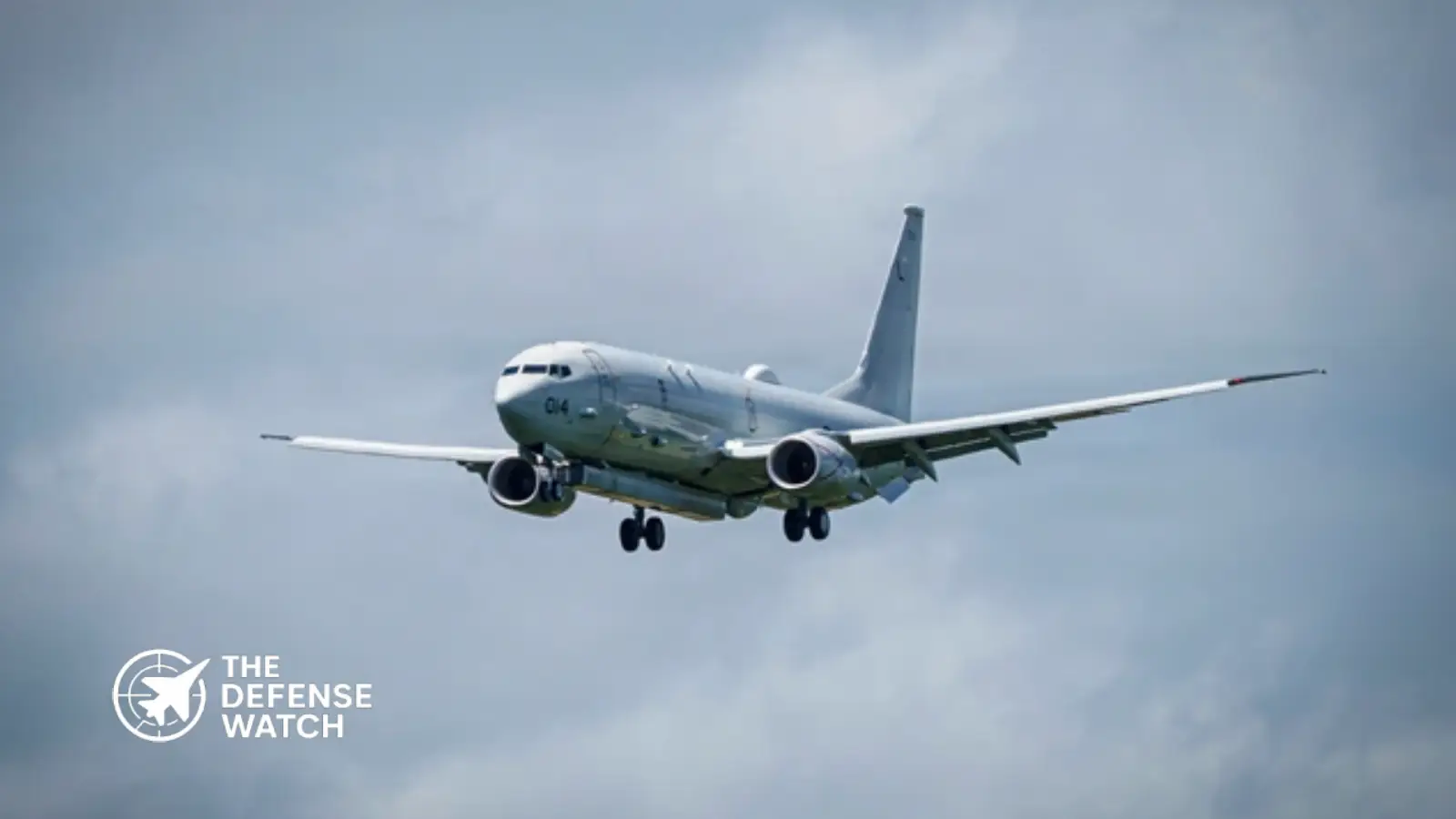
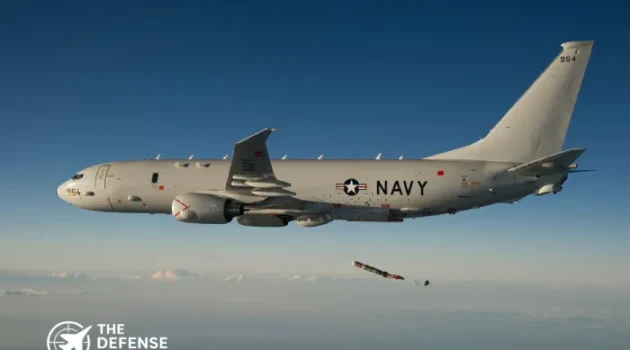
The Boeing P-8A Poseidon has become the U.S. Navy’s principal maritime patrol and reconnaissance aircraft, replacing the aging P-3C Orion fleet. Based on the commercial Boeing 737-800ERX airframe, the aircraft combines long-range endurance with advanced sensors, electronic support measures, secure communications, and anti-submarine warfare capabilities. Equipped with the AN/APY-10 maritime surveillance radar, acoustic processing systems for sonobuoys, electro-optical and infrared sensors, and a comprehensive mission management suite, the P-8A is designed to detect, track, and engage submarines and surface vessels across vast ocean areas.
- The U.S. Navy awarded Raytheon a $13.5 million contract to supply 50 weapon repairable assemblies for the P-8A Poseidon fleet.
- The sustainment effort runs from July 2026 through September 2029 and supports long-term fleet readiness.
- Germany will receive support under the Foreign Military Sales program, accounting for approximately 2 percent of the contract value.
- Weapon repairable assemblies are critical line replaceable components that help maintain mission capable aircraft while reducing lifecycle costs.
- The award reinforces continued investment in sustaining the Navy’s primary long range maritime patrol and anti-submarine warfare aircraft.
Beyond anti-submarine warfare, the platform increasingly supports maritime domain awareness, intelligence collection, over-the-horizon targeting, and joint operations across the Indo-Pacific, North Atlantic, and European theaters. Allied operators, including Germany, the United Kingdom, Australia, Norway, New Zealand, South Korea, and India, have expanded the global P-8 fleet, making logistics and sustainment increasingly important for coalition operations.
The contract specifically covers weapon repairable assemblies (WRAs), which are complex line-replaceable electronic and weapon interface components designed to be repaired rather than discarded after failure. Maintaining an inventory of WRAs enables maintainers to rapidly replace malfunctioning equipment, minimizing aircraft downtime while defective assemblies are refurbished. This approach significantly improves fleet availability and lowers long-term sustainment costs.
The award is structured as a firm-fixed-price delivery order, meaning Raytheon assumes responsibility for delivering the required assemblies at an agreed price regardless of production costs. Unlike cost-reimbursement contracts, this structure transfers greater financial risk to the contractor while providing predictable budgeting for the Navy, particularly for mature production and sustainment requirements.
Contract Breakdown & Details
Contract Overview
- Contract Value: $13,522,168
- Contractor: Raytheon Co.
- Location: McKinney, Texas
- Contract Type: Firm-Fixed-Price Delivery Order
- Ordering Agreement: N00383-23-G-SV01
- Delivery Order: N00383-26-F-SV0B
- Performance Period: July 2026 through September 2029
- Contracting Activity: Naval Supply Systems Command Weapon Systems Support (NAVSUP WSS), Philadelphia, Pennsylvania
Scope of Work
- Procurement of four different weapon repairable assembly types
- Total Quantity: 50 assemblies
- Supports sustainment of the P-8A Poseidon maritime patrol aircraft fleet
- Production and support work performed entirely in McKinney, Texas
Funding Breakdown
- U.S. Navy Fiscal Year 2026 Working Capital Funds: $13,308,427 (98%)
- Foreign Military Sales (Germany): $213,741 (2%)
Foreign Military Sales
- Supports Germany’s P-8A Poseidon program
- German participation represents 2 percent of the contract value
- Demonstrates expanding multinational sustainment cooperation among P-8 operators
Procurement Details
- Solicitation: Sole-source
- Authority: 10 U.S. Code 3204(a)(1)
- Offers Received: One
Why This Contract Matters
Although relatively modest in dollar value, sustainment contracts like this form the backbone of military readiness. Modern maritime patrol aircraft rely on hundreds of sophisticated electronic modules and mission system components that require continuous replacement and repair throughout decades of service.
As the U.S. Navy expands P-8A operations across contested maritime regions, particularly in the Indo-Pacific and North Atlantic, maintaining high mission capable rates is as strategically important as acquiring new aircraft. Reliable availability of repairable assemblies ensures aircraft spend more time conducting operational missions and less time awaiting maintenance.
The inclusion of Germany under the Foreign Military Sales program also reflects the growing international P-8 logistics network. Common sustainment arrangements improve interoperability, simplify supply chains, and strengthen coalition maritime surveillance capabilities among allied operators.