

Executive Summary:
Russian President Vladimir Putin said the war in Ukraine is “approaching its end” during remarks tied to Moscow’s Victory Day events and a temporary ceasefire initiative. Germany and several Western officials rejected any suggestion that Moscow is pursuing a credible peace process, highlighting continued distrust between Russia and NATO-backed governments.
Putin Signals Possible Diplomatic Shift During Victory Day Events
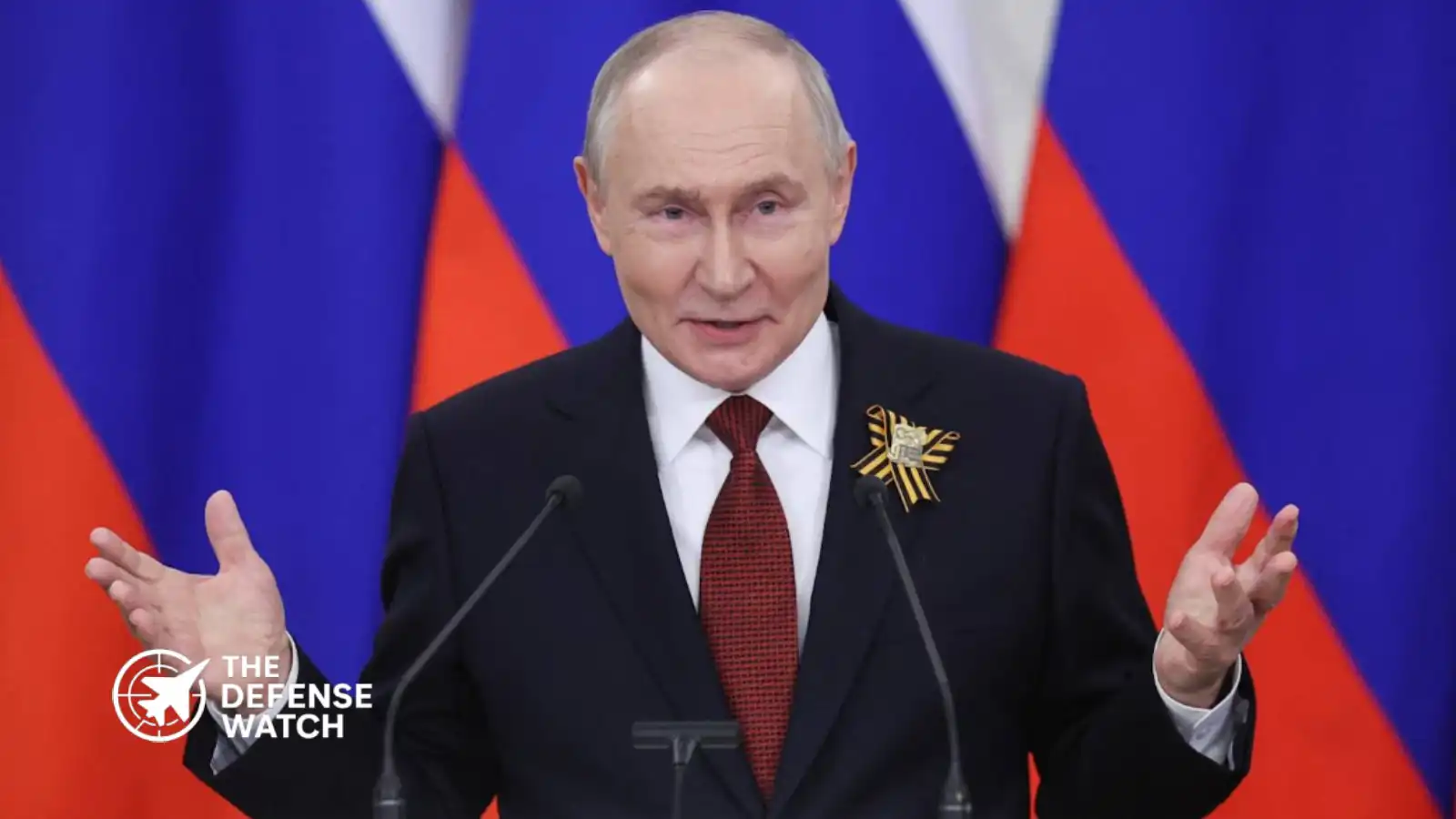
Russian President Vladimir Putin claimed on May 9 that the war in Ukraine is “approaching its logical conclusion,” marking one of Moscow’s strongest public suggestions in months that the conflict could eventually transition toward negotiations.
The statement came during Russia’s annual Victory Day commemorations in Moscow, an event traditionally used to showcase military power and national unity. This year’s parade, however, appeared notably scaled back compared to previous years. Analysts noted the absence of heavy military hardware such as tanks, ballistic missile systems, and armored combat vehicles on Red Square, a departure from the large-scale displays commonly seen since the mid-2000s.
Putin’s remarks coincided with a temporary three-day ceasefire reportedly encouraged through indirect U.S.-supported diplomatic channels. While Moscow framed the pause as a humanitarian measure tied to Victory Day observances, Ukrainian officials continued to accuse Russian forces of maintaining localized offensive operations along parts of the front line.
The Kremlin has repeatedly argued that it remains open to negotiations, but Kyiv and its Western partners continue to insist that any peace process must include the restoration of Ukrainian sovereignty and territorial integrity.
Germany Rejects Russian Mediation Narrative
German officials moved quickly to dismiss suggestions that Berlin could support or facilitate a Russian-led mediation framework.
Representatives from the German government reiterated that Moscow remains the aggressor in the conflict and emphasized that any negotiations would require credible commitments from Russia regarding troop withdrawals and security guarantees.
The response reflects broader European skepticism toward Russian diplomatic messaging. Since the start of the full-scale invasion in 2022, European NATO members have steadily increased military assistance to Ukraine while simultaneously expanding sanctions against Russia’s defense, banking, and energy sectors.
Berlin has become one of Ukraine’s largest European military supporters, providing air defense systems, armored vehicles, artillery ammunition, and training support. German officials also continue to back NATO’s eastern flank reinforcement efforts amid concerns about long-term regional instability.
Reduced Victory Day Display Reflects Operational Pressures
The reduced scale of this year’s Victory Day military parade has drawn attention among defense analysts and intelligence observers.
For years, Russia used the annual event to display next-generation combat platforms, strategic missile systems, and modernization achievements. The absence of major armored formations this year may reflect operational demands linked to the war in Ukraine, where Russian ground forces continue to experience high equipment attrition rates.
Western defense assessments have repeatedly highlighted losses involving tanks, infantry fighting vehicles, and artillery systems since the conflict escalated into large-scale warfare. At the same time, Russia has accelerated defense industrial production to replenish battlefield inventories and sustain long-term military operations.
Despite the smaller parade footprint, Moscow still showcased select strategic assets and emphasized themes of resilience, national sacrifice, and wartime mobilization.
The optics of the event remain important for domestic political messaging. Victory Day carries deep symbolic value in Russia because of its connection to the Soviet Union’s role in defeating Nazi Germany during World War II.
Strategic Messaging Targets Domestic And International Audiences
Putin’s statement that the war may be nearing an end is widely viewed by analysts as part of a broader strategic communications effort aimed at both Russian domestic audiences and international observers.
From a domestic perspective, the Kremlin faces pressure to demonstrate that the costly conflict is delivering strategic gains while avoiding signs of military exhaustion. Presenting the war as potentially entering a closing phase could help reinforce public confidence ahead of future political and economic challenges.
Internationally, the remarks may also be intended to influence ongoing debates inside NATO and Europe regarding long-term military aid to Ukraine. Some Western governments are increasingly balancing continued support for Kyiv with concerns about defense stockpile depletion, industrial capacity, and fiscal pressures.
However, there is little evidence that either side is currently prepared to make major concessions. Ukrainian leadership continues to seek additional Western military assistance, particularly in air defense and long-range strike capabilities, while Russia maintains demands tied to territorial control and Ukrainian neutrality.
Military Situation Remains Unresolved
Despite diplomatic rhetoric surrounding ceasefire discussions, fighting across multiple sectors of eastern and southern Ukraine continues.
Russian forces remain focused on gradual territorial advances through artillery-heavy operations, while Ukraine continues to rely on drone warfare, precision strikes, and layered defensive positions to slow Russian momentum.
The conflict has also accelerated major shifts in modern warfare, particularly in the use of unmanned systems, electronic warfare, long-range fires, and battlefield surveillance technologies. NATO militaries are closely monitoring lessons from the war as they adapt future force planning and procurement strategies.
At the strategic level, the war continues to reshape European security architecture, defense spending priorities, and NATO operational planning.
While Putin’s latest remarks may indicate an effort to project confidence or openness to negotiations, the underlying military and political conditions required for a durable settlement remain far from resolved.
