

Executive Summary:
The Chinese PLA Navy has completed type certification trials for a new terminal air-defense and anti-missile system designed to intercept ultra-low-altitude and potentially hypersonic threats. Chinese military analysts say the system could strengthen layered fleet defense for destroyers, frigates, and future carrier strike groups amid growing regional missile competition.
PLA Navy Terminal Defense System Advances China’s Naval Air Defense
The PLA Navy terminal defense system entered a new phase of development after Chinese state media confirmed completion of type certification trials in the Bohai Sea. The tests reportedly evaluated the system’s ability to engage high-speed sea-skimming targets in electronically contested environments, a capability increasingly viewed as essential in modern naval warfare.
According to Chinese state broadcaster CCTV, the trials involved multiple target drones simulating ultra-low-altitude penetration attacks against naval vessels. Footage released during the report showed successful interceptions of incoming targets flying only meters above the sea surface.
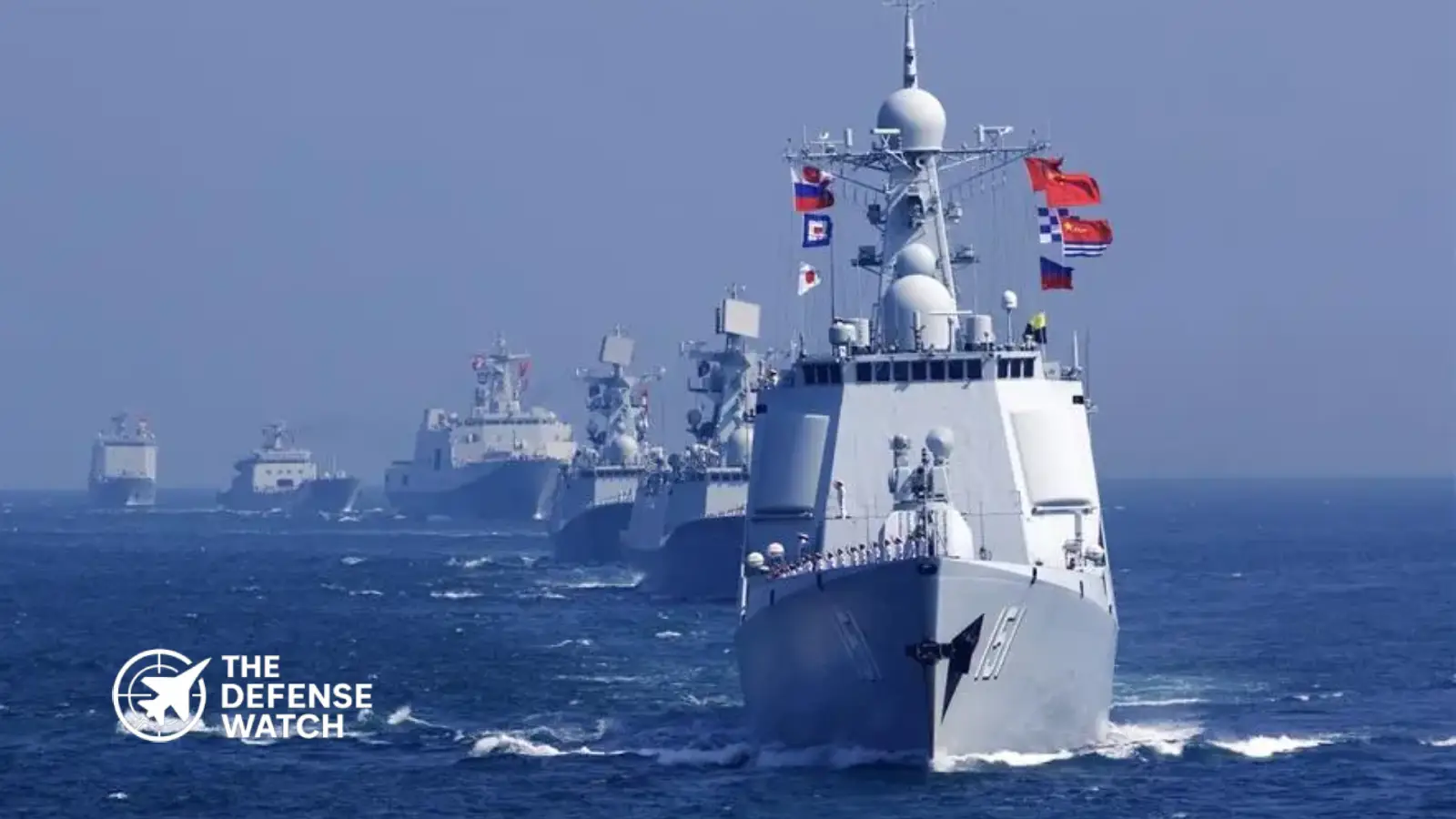
Chinese military commentators cited by state media described the system as part of a layered naval defense architecture designed to protect warships during the final phase of incoming missile attacks. The capability is intended to complement longer-range naval air defense missiles already deployed aboard PLA Navy surface combatants.
Focus On Sea-Skimming And Hypersonic Threats
Chinese analysts claimed the new PLA Navy terminal defense system may possess the ability to counter maneuvering hypersonic weapons in addition to conventional anti-ship missiles. While those claims remain unverified outside Chinese sources, the emphasis reflects broader global concern over high-speed precision strike weapons.
The report stated the system intercepted targets flying at altitudes between 5 and 10 meters above sea level, a difficult engagement profile for naval radar and fire-control systems because of sea clutter and limited reaction time.
Chinese military expert Wang Yunfei told the Global Times that the system could use advanced fire-control algorithms and kinetic-kill technologies to improve interception performance against complex threats.
If accurate, the development would place China among a small group of countries pursuing naval defenses optimized for both hypersonic and sea-skimming missile engagements. The United States, Japan, and several NATO navies are also accelerating investments in terminal defense technologies as anti-ship missile ranges and speeds continue to increase.
Electronic Warfare Resistance Emerges As Key Feature
One of the most notable elements of the reported trials was the system’s operation under heavy electromagnetic interference conditions. Chinese commentators emphasized anti-jamming performance as a major requirement for future naval combat systems.
Modern naval warfare increasingly depends on the ability to maintain sensor tracking, communications, and missile guidance during electronic attack operations. The Russia-Ukraine conflict and Red Sea maritime attacks have reinforced the importance of resilient air defense networks capable of operating in degraded environments.
The Chinese report suggested the trials tested both target interception and system coordination across multiple defensive layers. Analysts noted that future naval conflicts are expected to involve simultaneous drone, missile, and electronic warfare attacks designed to overwhelm ship defenses.
Expanding China’s Layered Naval Defense Network
Chinese analysts said the new system is intended to close an engagement gap between the PLA Navy’s HQ-9B long-range missile system, the HQ-10 short-range missile system, and the Type 1130 close-in weapon system.
That layered structure mirrors defensive concepts already used by the U.S. Navy and several allied fleets, where multiple defensive rings provide overlapping protection against incoming threats.
The report also indicated the new system could eventually be deployed aboard destroyers, frigates, and potentially aircraft carriers.
China has rapidly expanded its naval modernization efforts over the past decade, commissioning new Type 055 cruisers, Type 052D destroyers, and the Fujian aircraft carrier as part of a broader effort to extend maritime reach and improve blue-water operational capability.
Strategic Implications For Indo-Pacific Naval Competition
The unveiling of the PLA Navy terminal defense system comes as Indo-Pacific navies increasingly focus on survivability against advanced anti-ship missiles and drone saturation attacks.
Regional militaries, including the United States, Japan, Australia, and South Korea, are investing heavily in integrated air and missile defense systems capable of countering hypersonic and low-observable threats.
China’s emphasis on layered fleet defense also aligns with its broader carrier strike group ambitions. Analysts widely assess that Beijing aims to build naval formations capable of operating farther from mainland air cover while maintaining credible defenses against advanced missile attacks.
Although many technical claims surrounding the new system cannot yet be independently verified, the completion of type certification trials suggests the platform may be approaching operational deployment within the PLA Navy.
