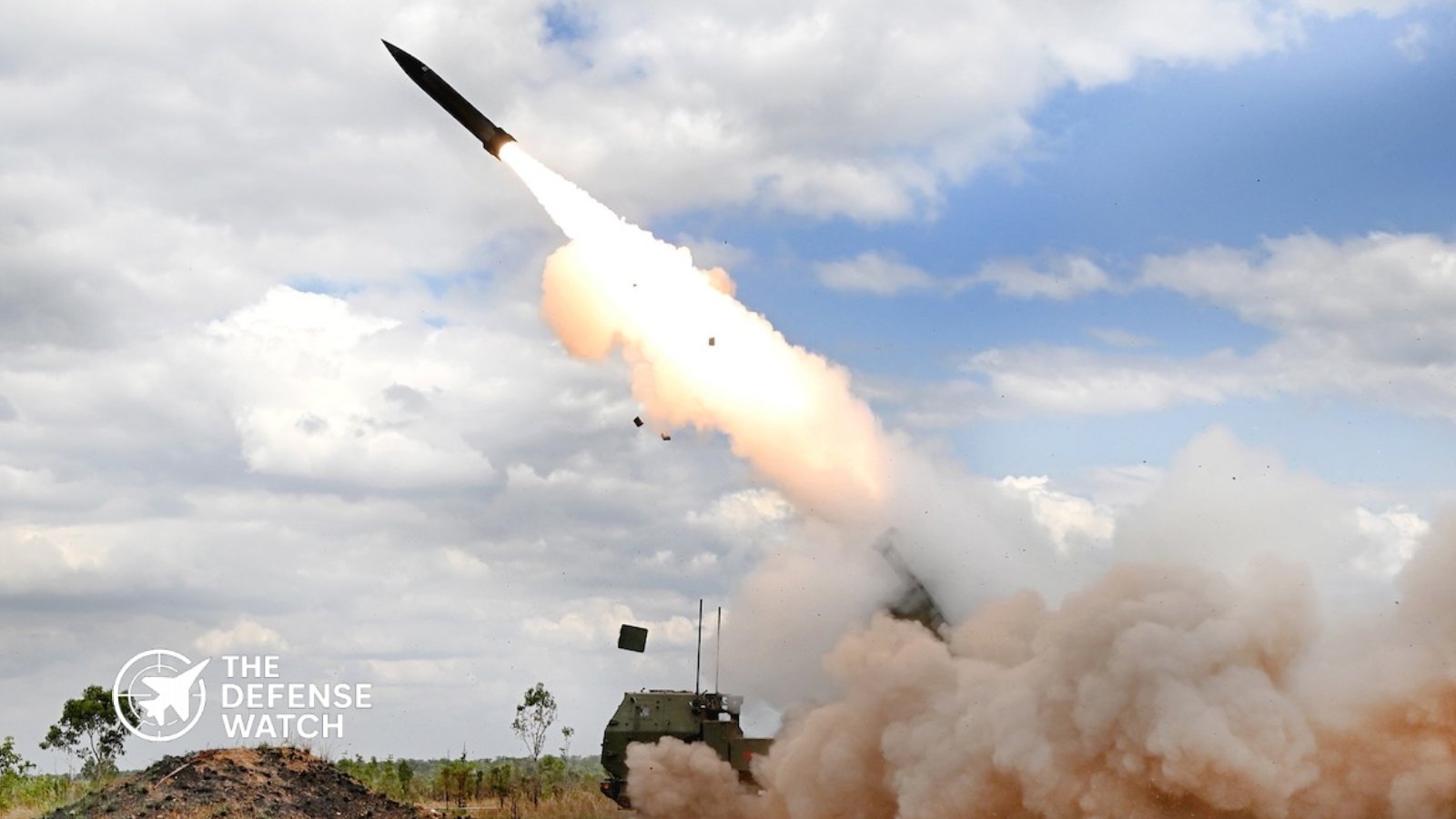
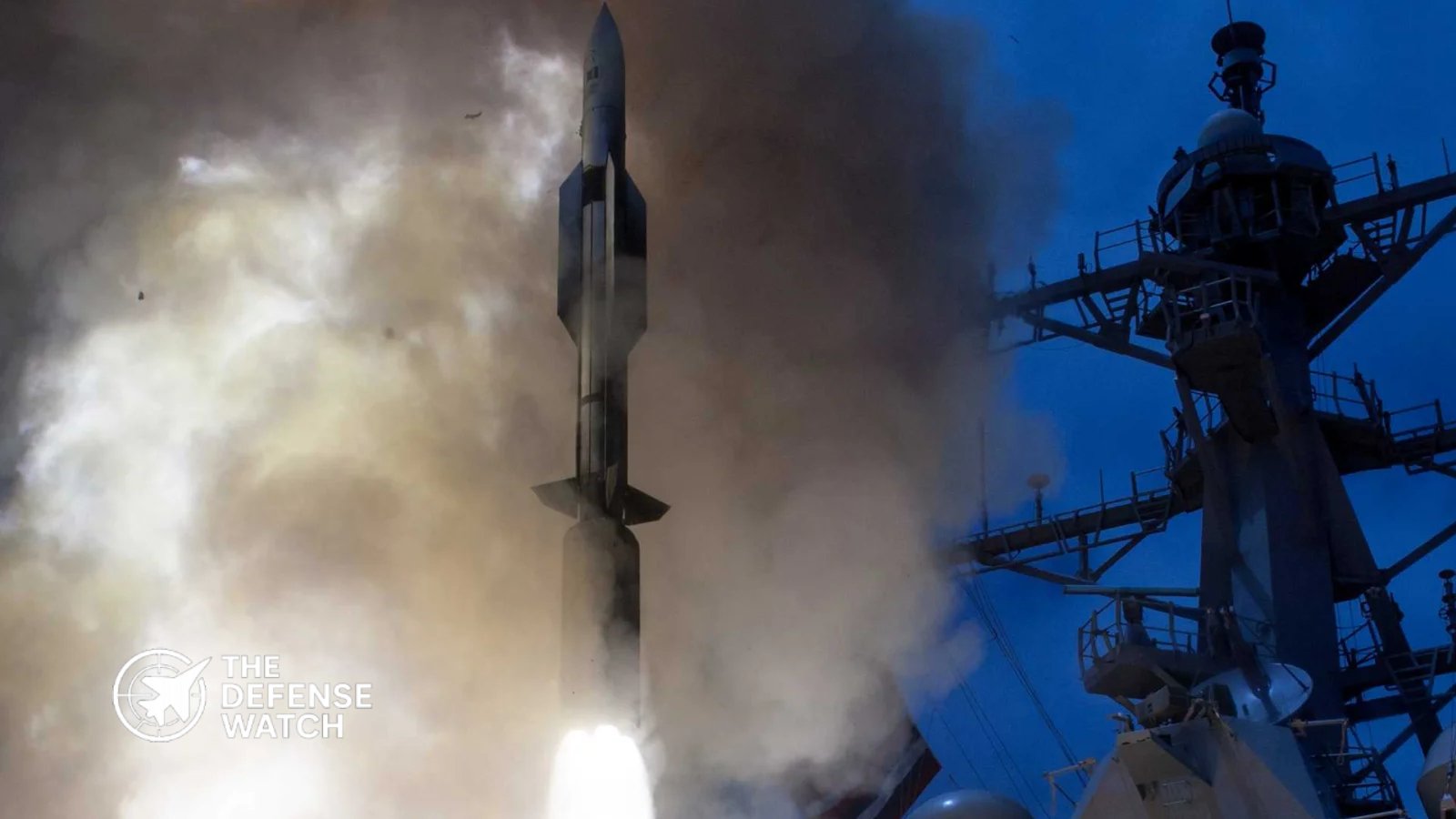
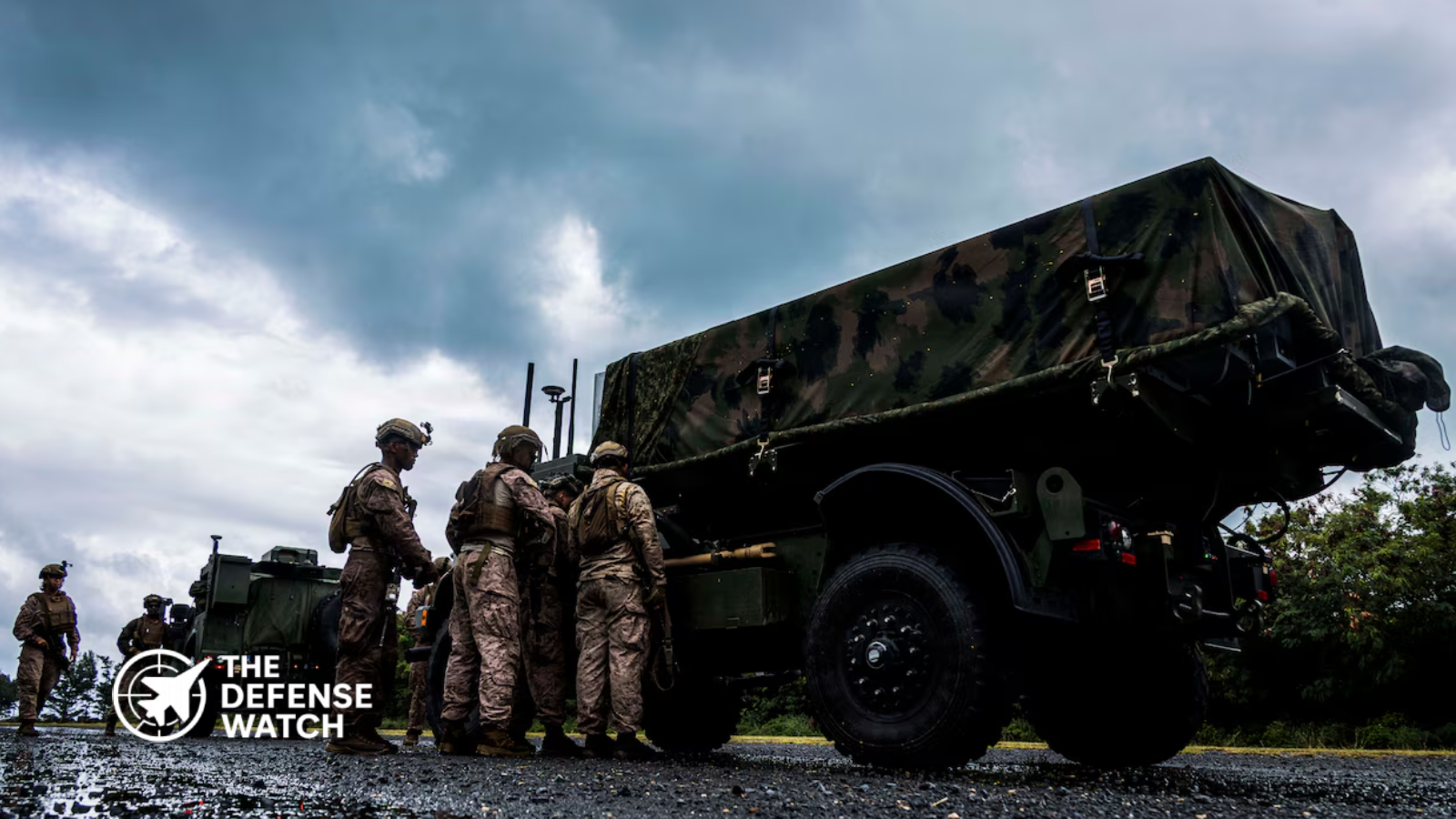
Takeaways
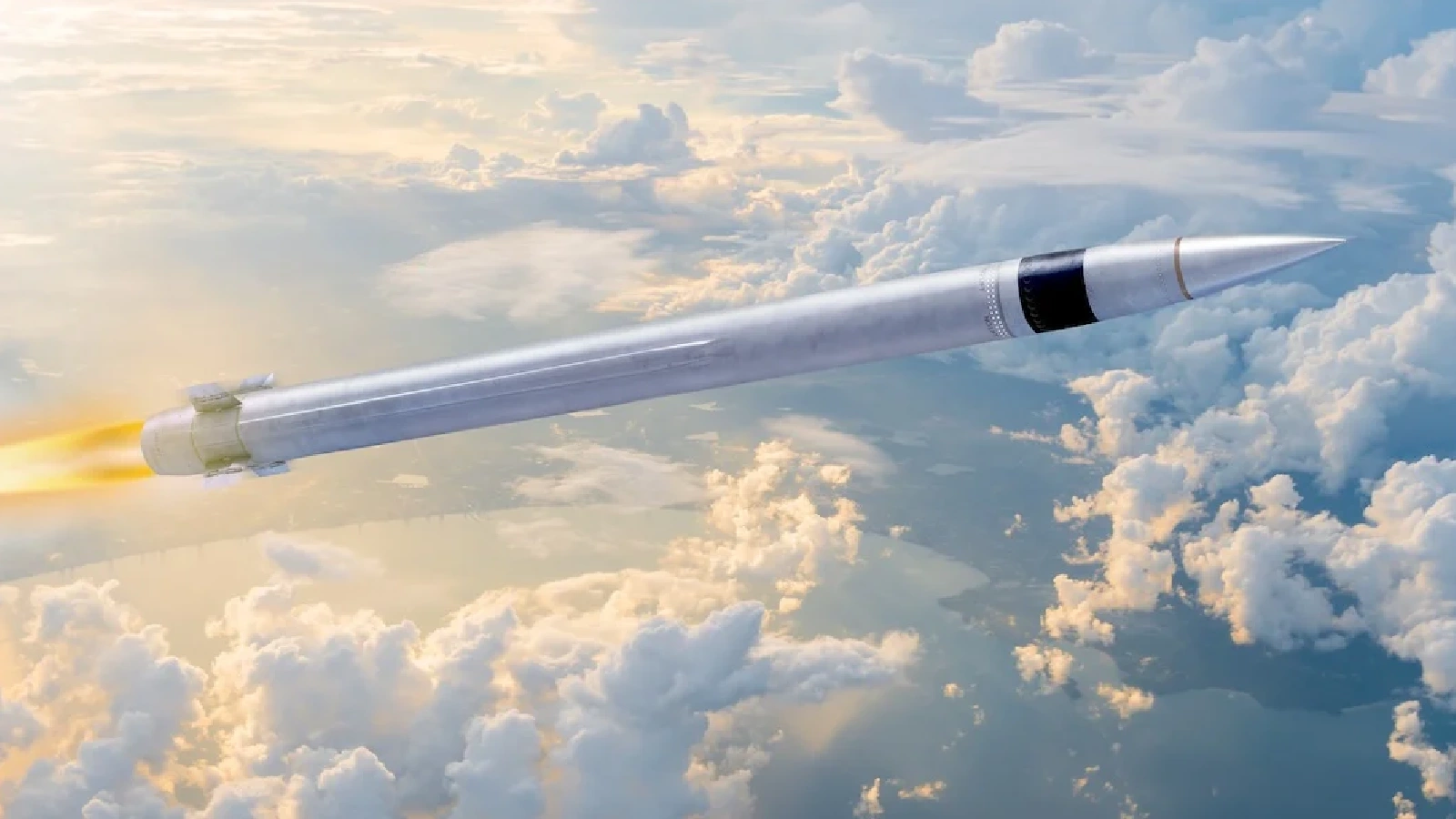
The U.S. Navy has disclosed the AIM-424 Malice, a new long-range air-to-air missile designed to extend the engagement range of current and future naval fighters.
U.S. Navy Reveals AIM-424 Malice Long-Range Air-to-Air Missile
The AIM-424 Malice is the U.S. Navy’s newly disclosed long-range air-to-air missile, with an officially stated range of more than 250 nautical miles, or 463 kilometers. The Navy identified the weapon as the Long Range Air-to-Air Missile, or LRAAM, and lists Raytheon as its contractor.
The Navy publicly disclosed the program at the Tailhook Symposium in Reno, Nevada, on August 22, 2026, before adding the AIM-424 to its official Fact Files. The service says the missile is intended to strengthen fleet defense and provide greater reach, survivability and tactical flexibility against advanced air threats.
The disclosure is significant because the AIM-424 is being designed across multiple generations of naval aircraft. The Navy identifies fourth-, fifth- and sixth-generation platforms as potential users, including the F/A-18, F-35 and future F/A-XX.
AIM-424 Malice Specifications
The Navy has released a limited but important set of technical specifications.
| Specification | AIM-424 Malice |
|---|---|
| Primary function | Air-to-air missile |
| Contractor | Raytheon |
| Propulsion | Solid-propellant rocket motor |
| Length | 13.5 feet, 4.11 meters |
| Diameter | 13.5 inches, 0.34 meters |
| Wingspan | 26.2 inches, 0.67 meters |
| Weight | 1,500 pounds, 680.4 kg |
| Stated range | More than 250 nautical miles, 463 km |
| Warhead | Blast fragmentation |
| Intended aircraft | F/A-18, F-35, F/A-XX |
| Generation compatibility | Fourth, fifth and sixth generation |
These figures come directly from the Navy’s AIM-424 fact sheet. The service has not released a public operational timeline or a complete description of the missile’s guidance and seeker systems.
A Much Larger Weapon Than the AIM-120
The physical dimensions of the AIM-424 show the engineering tradeoff behind its long-range mission.
At 13.5 feet in length and 1,500 pounds, Malice is considerably larger than the AIM-120 AMRAAM used by U.S. and allied fighters. The additional size provides considerably more volume for propulsion, control systems and other components needed for long-range flight, but it also creates integration challenges for aircraft that must carry the weapon internally or on external stations.
The Navy’s own imagery shows the AIM-424 associated with both the F/A-18E Super Hornet and F-35C. A Navy image released in August shows the missile installed in the F-35C’s internal weapons bay, demonstrating that internal carriage is part of the program’s aircraft integration effort.
That point matters for the F-35C. Internal carriage preserves the aircraft’s low-observable configuration, allowing a long-range weapon to be carried without relying exclusively on external pylons that can increase radar signature.
The F/A-18E/F, meanwhile, offers greater external carriage flexibility. Recent Navy imagery has shown test aircraft carrying multiple AIM-424 training or test missiles, indicating that flight testing has already progressed beyond a purely conceptual stage.
What the 250-Nautical-Mile Range Means
The Navy’s stated range of more than 250 nautical miles places the AIM-424 in a different class from conventional medium-range air-to-air weapons.
Range alone, however, does not determine the effective combat envelope of a missile. Actual engagement performance depends on launch conditions, altitude, speed, target maneuvering, seeker performance, guidance updates, electronic warfare conditions and the amount of energy remaining when the missile reaches the target area.
For that reason, the Navy’s 250-plus nautical mile figure should be treated as a published maximum range indicator rather than a guarantee that every target can be engaged at that distance.
The operational value is instead the ability to give naval aviators more options before entering the threat envelope of opposing aircraft or air-defense systems. A longer-range weapon can potentially allow a fighter to remain farther from an adversary while still contributing to an engagement.
That becomes particularly relevant to carrier aviation, where aircraft must operate from mobile platforms that can be exposed to increasingly long-range surveillance and strike systems.
Built for the F/A-18, F-35C and F/A-XX
The Navy explicitly identifies the AIM-424 as a weapon for fourth-, fifth- and sixth-generation platforms. That makes it more than a replacement weapon for a single fighter type.
The F/A-18E/F remains a major component of carrier aviation. The Navy’s 2025 year-in-review publication said the Super Hornet fleet is expected to continue operating into the 2040s, while the Navy’s sixth-generation strike fighter will eventually augment and replace the Super Hornet and EA-18G Growler.
The F-35C adds another important dimension. Its stealth characteristics and sensor architecture provide a different method of employing long-range weapons, particularly when the aircraft can detect, track or receive targeting information without exposing itself unnecessarily.
The future F/A-XX is expected to become another major carrier-based platform for the weapon. Navy aviation planning describes F/A-XX as a sixth-generation fighter intended to bring greater range, speed and sensor capability to the carrier air wing while operating alongside unmanned systems.
A common long-range missile across these aircraft could therefore provide continuity as the carrier air wing transitions between generations.
AIM-424 and the U.S. Long-Range Air Combat Requirement
The AIM-424 is emerging alongside other U.S. efforts to extend air-to-air engagement ranges.
The Navy has already introduced the AIM-174B Gunslinger, an air-launched adaptation of the SM-6 family, while the Navy and Air Force are also pursuing the AIM-260 Joint Advanced Tactical Missile. The emergence of Malice indicates that the U.S. is pursuing multiple long-range air-to-air options rather than relying on a single weapon architecture.
The distinction between these weapons is important. The AIM-424 is specifically described by the Navy as an LRAAM intended for fourth-, fifth- and sixth-generation aircraft, while the AIM-174B is derived from a larger surface-to-air missile family and provides a different combination of range and platform integration.
The AIM-260, meanwhile, is intended to provide a next-generation tactical air-to-air capability for U.S. fighters. The continued development of all three reflects the importance the U.S. military places on long-range air combat.
Why the Missile Matters for Carrier Aviation
The central issue for the Navy is not simply missile range. It is the changing geometry of combat in the Indo-Pacific.
Potential adversaries are developing aircraft, sensors and weapons that can threaten carrier air wings at increasingly long distances. A carrier-based fighter therefore needs to detect, identify, target and engage threats without necessarily approaching the range at which the opposing force can effectively attack the carrier or supporting aircraft.
A weapon such as Malice can contribute to that requirement by extending the reach of the fighter itself.
The Navy describes the program in terms of maintaining a first-look, first-shot and first-kill advantage. In practical terms, that concept depends on more than the missile. It requires a complete chain involving sensors, data links, airborne networking, electronic warfare, targeting information and reliable weapon guidance.
This makes aircraft integration particularly important. A very long-range missile has limited value if the launching aircraft cannot obtain a sufficiently accurate track, maintain the required data exchange or defeat electronic countermeasures during the engagement.
Internal Carriage Creates an Important F-35C Challenge
The F-35C presents a particularly demanding integration problem because the aircraft’s internal weapons capacity is constrained by bay dimensions and aerodynamic requirements.
The Navy’s released imagery indicates that the AIM-424 has been fitted into an F-35C weapons bay. That is an important development because the missile’s 13.5-foot length and 13.5-inch diameter make it a large weapon for internal carriage.
The integration effort will have to balance missile size against the aircraft’s internal weapon capacity, separation safety, flight characteristics and mission configuration.
If the AIM-424 can be carried internally without major restrictions, it could allow the F-35C to combine low-observable operations with substantially longer-range air-to-air effects. The Navy has not yet published enough information to determine the final operational loadout or restrictions.
What Remains Classified
The Navy has provided the missile’s basic dimensions, weight, propulsion type, warhead and range, but many of the characteristics that determine actual combat performance remain undisclosed.
Those include the specific seeker technology, guidance architecture, datalink capabilities, terminal engagement characteristics, maximum speed, no-escape-zone performance and resistance to electronic countermeasures.
The Navy has also not announced an operational deployment date. Defence Industry Europe reported that further details on specific capabilities and deployment timelines remain classified for operational security reasons.
That makes it premature to describe Malice as an operational replacement for an existing missile. The available information establishes that the Navy is developing the system and has conducted aircraft integration activity, but it does not establish an initial operational capability date.
A Decade-Long Development Path
The AIM-424 appears to have roots in earlier U.S. work on very-long-range air-to-air weapons.
Aviation Week reporting cited by Defence Industry Europe connects the program with a Long Range Engagement Weapon concept disclosed in 2017. Earlier budget documentation described a two-year technology demonstration before the technology was transferred to the military services.
That history helps explain why the Navy is now able to disclose an apparently mature weapon rather than a purely conceptual design.
Recent reporting has also identified flight-test activity involving F/A-18E aircraft and integration work with the F-35C. A Navy photograph shows the weapon associated with an F/A-18E test aircraft, while another image shows an AIM-424 in an F-35C weapons bay.
The public evidence therefore points to a program that has moved into aircraft integration and testing, although the Navy has not disclosed the complete test schedule or milestones.
Strategic Implications for U.S. Airpower
The most important feature of Malice is its combination of range and platform flexibility.
A missile designed for Super Hornets, F-35Cs and the future F/A-XX can potentially provide a common long-range air-to-air effect across several stages of the Navy’s fighter modernization plan.
For carrier aviation, that could reduce the gap between today’s force and the future air wing. The Super Hornet can provide near-term capacity, the F-35C brings stealth and advanced sensing, and F/A-XX is being developed for the next generation of carrier air combat.
The AIM-424 does not solve the broader challenge of long-range air warfare by itself. Its effectiveness will depend on the aircraft carrying it, the quality of the targeting network and the ability of the entire force to operate inside heavily contested electromagnetic and air-defense environments.
What the disclosure does show is that the Navy is placing substantial emphasis on increasing the reach of its carrier-based air-to-air weapons.
AIM-424 Malice: What Is Confirmed
Based on the Navy’s official fact sheet and publicly released imagery, the following points are confirmed:
- The weapon is designated AIM-424 LRAAM.
- Its official name is Malice.
- Raytheon is the contractor.
- The Navy lists its range as more than 250 nautical miles, or 463 kilometers.
- It uses a solid-propellant rocket motor.
- It has a blast-fragmentation warhead.
- It is 13.5 feet long.
- Its diameter is 13.5 inches.
- Its wingspan is 26.2 inches.
- Its listed weight is 1,500 pounds.
- It is intended for fourth-, fifth- and sixth-generation aircraft.
- The Navy identifies the F/A-18, F-35 and future F/A-XX as intended platforms.
- The Navy has not announced an operational deployment timeline.
Conclusion
The U.S. Navy’s disclosure of the AIM-424 Malice marks a significant addition to its long-range air-to-air weapon portfolio.
With an officially stated range beyond 250 nautical miles and planned compatibility with F/A-18E/F, F-35C and F/A-XX aircraft, the missile is designed to extend the reach of naval aviation as the carrier air wing moves toward a more distributed and networked combat model.
The weapon is still under development, and key information about its seeker, guidance system, speed, engagement envelope and deployment schedule remains unavailable. Those details will ultimately determine how the AIM-424 fits alongside the AIM-120, AIM-174B and AIM-260.
For now, the Navy’s disclosure establishes the core fact: the United States is developing a large, long-range air-to-air missile specifically intended to give naval fighters substantially greater reach against advanced air threats.
USS George Washington Reaches 200,000th Aircraft Recovery
USS George Washington has completed its 200,000th fixed wing aircraft recovery, with an F-35C Lightning II making the milestone landing during flight operations in the Indian Ocean on Aug. 18, 2026. The U.S. Navy reported the event through the Defense Visual Information Distribution Service, identifying the landing as a major aviation milestone after more than three decades of carrier operations.
Takeaways
A major carrier aviation milestone for USS George Washington
1. 200,000 Fixed Wing Recoveries
USS George Washington completed its 200,000th fixed wing aircraft recovery while operating in the Indian Ocean on Aug. 18, 2026.
2. F-35C Performs the Milestone Landing
An F-35C Lightning II assigned to Strike Fighter Squadron 147 conducted the historic arresting gear landing.
3. More Than 34 Years of Service
Commissioned in 1992, the Nimitz class carrier has supported U.S. naval aviation operations across multiple generations of carrier aircraft.
4. Forward Deployed in the Indo Pacific
George Washington is operating in the U.S. 7th Fleet area of operations as part of the Navy’s forward presence in the Indo Pacific.
5. The Milestone Reflects Carrier Readiness
The 200,000 recovery figure represents decades of coordinated work involving pilots, landing signal officers, flight deck crews, maintainers and arresting gear teams.
The aircraft involved was an F-35C assigned to Strike Fighter Squadron 147, the Navy’s first operational F-35C squadron. The pilot, Lt. Steven Frazier, conducted the recovery after routine operations in the U.S. 7th Fleet area of operations.
For a carrier, an aircraft recovery is more than a landing. The aircraft must approach a moving flight deck, align with the landing area and use its tailhook to catch one of the ship’s arresting wires, which rapidly absorbs the aircraft’s energy and brings it to a stop.
The Navy said George Washington can recover approximately one aircraft per minute and typically lands about 70 aircraft during several flight operations events throughout a day.
A 34 Year Record of Carrier Aviation
USS George Washington was commissioned on July 4, 1992, and is one of the Nimitz class nuclear powered aircraft carriers. Navy historical records show that the ship was designed to support sustained offensive air operations while providing forward presence, sea control, deterrence and maritime security.
The 200,000 recovery milestone therefore represents aircraft operations spanning several generations of U.S. naval aviation.
According to the Navy, George Washington has recovered aircraft ranging from F-14 Tomcats and F/A-18C/D Hornets to F/A-18E/F Super Hornets, EA-18G Growlers, E-2D Hawkeyes and the F-35C Lightning II.
That transition is significant because the aircraft operating from the carrier have changed considerably in their sensors, mission systems, propulsion, weapons integration and maintenance requirements.
The ship’s underlying recovery function, however, remains dependent on the same basic principle: safely stopping a fixed wing aircraft on a relatively short flight deck at sea.
Why the F-35C Is Suited to Carrier Operations
The F-35C is specifically designed for catapult assisted launches and arrested landings aboard large aircraft carriers.
Compared with the other F-35 variants, the carrier version has larger wings, reinforced landing gear and structural features designed to withstand the repeated stresses associated with carrier launch and recovery operations. Its wingtips also fold to improve aircraft handling and storage on the carrier deck.
F-35C Carrier Feature Operational Purpose Larger wing surfaces Improved low speed carrier handling Reinforced landing gear Supports carrier launch and recovery loads Arresting hook Enables arrested landings Folding wingtips Improves carrier deck and hangar storage Internal fuel capacity of nearly 20,000 pounds Supports longer range and mission persistence Supersonic performance Allows high speed tactical operations The F-35C can reach approximately Mach 1.6 and has more than 1,200 nautical miles of range according to Lockheed Martin. The aircraft also combines stealth characteristics with sensor fusion and networked information sharing, making it fundamentally different from many of the aircraft that previously operated from George Washington.
The Navy declared the F-35C operationally capable in February 2019. VFA-147 was the first Navy squadron to reach that milestone with the aircraft.
The Recovery System Is a Critical Part of Carrier Combat Power
The 200,000th recovery also highlights an element of carrier aviation that receives less attention than the aircraft itself: the ship’s arresting gear and the personnel responsible for operating it.
Every recovery requires coordination between the pilot, landing signal officer, flight deck personnel, maintainers and arresting gear operators. The recovery system must absorb the aircraft’s kinetic energy while keeping the landing sequence within the available deck space.
The Navy described the milestone as the product of continuous work by arresting gear teams, flight deck personnel, maintainers and watch standers who keep the carrier’s aviation systems operational.
This is particularly important for a carrier operating at sea because aviation support cannot depend on a conventional runway or nearby maintenance base. The ship has to launch, recover, refuel, rearm and maintain aircraft while continuing to operate as a mobile naval airfield.
The F-35C adds another layer of complexity because its carrier operations depend on the aircraft’s specialized landing gear, arresting hook, folding wings and integration with carrier launch and recovery equipment.
From F-14 Tomcats to F-35C Lightning IIs
The aircraft recovered by George Washington over its service life provide a useful picture of the evolution of U.S. carrier aviation.
When the carrier entered service in 1992, its air wing included aircraft such as the F-14B Tomcat, F/A-18C Hornet, E-2C Hawkeye, EA-6B Prowler, S-3B Viking and C-2A Greyhound.
Many of those platforms have since been retired.
Today’s carrier aviation force relies heavily on the F/A-18E/F Super Hornet, EA-18G Growler, E-2D Hawkeye, MH-60 helicopters and F-35C. The change reflects the Navy’s broader move toward networked operations, improved sensors, electronic warfare and fifth generation aircraft.
The F-35C’s presence aboard George Washington is particularly relevant because the aircraft can contribute sensing and targeting information beyond its traditional role as a fighter. Its networked architecture allows information gathered by the aircraft to be shared with other connected forces.
Why the Milestone Matters for U.S. Naval Operations
The 200,000th recovery is primarily a readiness milestone, but it also illustrates the operational value of maintaining carrier aviation at high tempo.
A carrier’s combat effectiveness depends on its ability to repeatedly generate sorties. Launching an aircraft is only one part of that cycle. The aircraft must also be recovered safely, inspected, serviced and prepared for another mission.
The recovery rate cited by the Navy, approximately one aircraft per minute under suitable operating conditions, demonstrates why arresting gear performance and flight deck coordination are central to carrier sortie generation.
This matters to U.S. naval strategy because aircraft carriers are designed to provide air power without requiring access to a land base. In the Indo Pacific, where distances between bases can be substantial and access to fixed infrastructure can be politically or militarily constrained, the ability to operate aviation forces from the sea remains an important component of U.S. forward presence.
George Washington’s current activity in the 7th Fleet area also places the milestone within the Navy’s broader Indo Pacific posture. The Navy describes the carrier as a forward deployed platform supporting U.S. engagement with allies and partners across the region.
F-35C Integration Shows the Carrier’s Continued Adaptation
George Washington has continued integrating the F-35C into its flight operations rather than treating the aircraft as a separate capability.
In earlier operations, the carrier conducted cyclic flight operations involving F-35Cs and other aircraft. During a 2024 training period, the Navy reported 141 sorties, including 67 day traps and 17 night traps, as the carrier and air wing practiced operating together.
That integration is important because the value of a carrier based fifth generation aircraft depends not only on the jet itself, but also on the ship, air wing, maintenance teams, communications architecture and flight deck personnel working as a single operational system.
The 200,000th recovery therefore represents more than a numerical record. It demonstrates that a carrier commissioned in 1992 remains capable of supporting a modern air wing built around aircraft with substantially different requirements from those of the platforms it operated during its early service.
A Milestone Built Around Routine Operations
The significance of the event also comes from the fact that it occurred during routine flight operations rather than a ceremonial demonstration.
The Navy described the recovery as part of normal operations in the Indian Ocean. That distinction matters because carrier readiness is ultimately measured through repeated operational performance, not isolated demonstrations.
For the sailors involved, the 200,000th trap was the result of thousands of previous recoveries and the accumulated procedures, maintenance practices and training developed over the carrier’s service life.
George Washington is now well into its fourth decade of service. Its latest aviation milestone shows how the Nimitz class continues to support successive generations of aircraft while remaining part of the U.S. Navy’s forward deployed carrier force.
The 200,000th fixed wing recovery, completed by an F-35C in the Indian Ocean, connects those two eras directly: a carrier commissioned during the Cold War era’s aftermath recovering a fifth generation fighter designed for modern networked naval warfare.
Tiberius Aerospace Advances Invictus Missile Into Formal Testing
The Invictus missile has entered formal engineering Test and Evaluation as Tiberius Aerospace moves the long-range precision strike system beyond early laboratory work and toward structured validation. The company says the program is intended to combine long-range precision, multi-domain deployment and scalable production in a single missile architecture.
Takeaways
Tiberius Aerospace is advancing the Invictus missile from laboratory development into formal engineering testing.
1. Formal Engineering Testing Begins
Tiberius Aerospace has moved the Invictus program into formal engineering Test and Evaluation, focusing on propulsion, flight performance, guidance, platform integration and manufacturability.
2. Mach 3 and 200-Kilometer Design Target
The Invictus-200 is designed to reach speeds of up to Mach 3 and engage targets at ranges of up to 200 kilometers.
3. Ramjet Propulsion
The system combines a ramjet engine with an integral booster, with direct-connect engine testing already underway at Purdue University’s Zucrow Laboratories.
4. Modular Multi-Mission Architecture
Tiberius says the missile will have a 10 to 15 kilogram payload and an open architecture intended to support different missions and future upgrades.
5. Production Capacity Is Part of the Design
The company is positioning Invictus not only as a precision strike system but also as a weapon designed for scalable production and adaptation through its service life.
The development marks an important change in the status of Invictus. Rather than remaining primarily a concept or laboratory project, the program is now focused on testing the engineering elements required to mature the weapon. According to Tiberius, those activities include propulsion, flight performance, guidance, platform integration and manufacturability.
The company has not announced an operational deployment date. The move into formal Test and Evaluation therefore should be viewed as a development milestone rather than evidence that Invictus has entered military service.
Invictus-200 Targets Mach 3 and 200-Kilometer Range
The central configuration is the Invictus-200, which Tiberius says is designed to reach speeds of up to Mach 3 and strike targets at ranges of up to 200 kilometers.
The missile is designed around a ramjet propulsion system combined with an integral booster. Tiberius says the system is intended to achieve targeting precision of approximately 5.5 meters circular error probable, or CEP, depending on the guidance configuration. The planned payload is between 10 and 15 kilograms.
These figures remain design and development targets rather than independently verified operational performance. That distinction is important as the program enters formal testing.
The Invictus architecture is also intended to support a range of launch platforms. Tiberius describes it as a tube-launched, multi-mission system that could be integrated with vertical launch systems and autonomous vehicles operating from land and sea.
This approach gives the program a broader role than a missile designed around one launcher or platform. The company is developing the weapon around a modular architecture intended to allow different configurations as mission requirements change.
Ramjet Development Builds On Sceptre
Invictus follows Tiberius Aerospace’s Sceptre program, a 155 mm precision-guided artillery munition that uses ramjet propulsion.
In April 2026, Tiberius reported that Sceptre had successfully demonstrated liquid-fuelled ramjet ignition after launch from a NATO-standard 155 mm howitzer during testing in New Mexico. The company said the test demonstrated the ability to launch the munition, ignite the ramjet and maintain intended flight performance.
Tiberius has presented Sceptre as a system capable of extending the reach of existing artillery infrastructure. Its reported development target includes speeds above Mach 3 and ranges of up to 150 kilometers. The company’s current website lists Sceptre with a range exceeding 255 kilometers, a speed above Mach 3 and a 4.5-meter CEP, indicating that the program’s published performance figures have evolved during development.
The experience gained from Sceptre is now being applied to Invictus. Tiberius says the earlier program helped accelerate Invictus from exploratory laboratory work into a formal engineering effort.
Purdue Zucrow Laboratories Supports Engine Testing
A key part of the current Invictus effort is propulsion testing at Purdue University’s Maurice J. Zucrow Laboratories.
Tiberius says direct-connect testing of the Invictus ramjet engine is underway at the facility and that the engine has demonstrated operability using Jet-A across the conditions tested so far.
Purdue describes Zucrow Laboratories as a major propulsion research complex with capabilities covering propulsion systems, combustion, hypersonics, aerodynamics and energetic materials. Its test infrastructure includes multiple propulsion test cells, dedicated control and diagnostics facilities, and systems capable of testing propulsion hardware under representative conditions.
The facility’s role is significant because propulsion testing provides a controlled environment for evaluating engine behavior before more complex flight testing. For a ramjet-powered system, validating combustion and engine performance across relevant operating conditions is a central part of the development process.
Production Capacity Is Central To The Design
Tiberius is positioning Invictus around two related requirements: precision strike capability and the ability to produce weapons at scale.
The company says its modular, open architecture is intended to allow the missile to evolve without replacing the entire system. This could enable changes to guidance, payload or other components as requirements develop, although specific future configurations have not been publicly detailed.
Tiberius also says it is using its GRAIL software platform to support development, supplier integration and production planning. The company describes GRAIL as an AI-powered platform intended to assess weapon effectiveness and connect program requirements with domestic and allied suppliers.
The production objective reflects a broader issue facing Western militaries. Recent conflicts have highlighted the difficulty of maintaining inventories of precision weapons when expenditure rates are high and production capacity is limited.
Tiberius argues that a weapon designed from the beginning for high-volume production can address part of that problem. However, whether Invictus can achieve the proposed production scale and cost targets will depend on the results of engineering tests, manufacturing qualification, supplier capacity and eventual government procurement decisions.
Multi-Domain Launch Options
The planned launch architecture is another defining feature of the Invictus missile.
Tiberius describes Invictus as a tube-launched system that could be integrated with vertical launch systems and autonomous platforms operating on land and at sea. The approach is intended to reduce dependence on a single launch platform and provide flexibility in how precision effects are delivered.
Earlier reporting on the program identified the Vault launch system as a planned containerized launcher for Invictus. EDR Magazine reported in 2025 that the proposed system could use a booster to accelerate the missile to the speed needed for ramjet operation before the ramjet takes over propulsion. At that stage, however, many Invictus details were still preliminary.
The transition into formal Test and Evaluation should provide additional information about how the propulsion, launcher, guidance and missile airframe perform as an integrated system.
What Formal Testing Means For Invictus
The move into formal engineering testing is an important development stage, but it does not by itself establish that Invictus is ready for operational deployment.
The program must demonstrate that its propulsion system can perform reliably, that the missile can achieve its intended flight characteristics, and that guidance and control systems can deliver the required accuracy. Platform integration and manufacturing processes will also need to mature.
The company has stated that these areas are now part of the formal testing program.
For TheDefenseWatch.com readers, the most important point is that Invictus has moved from a primarily developmental concept into a structured engineering validation phase. The advertised Mach 3 speed, 200-kilometer range and 5.5-meter CEP remain targets that must be demonstrated through testing.
If those targets are achieved, the system could give U.S. and allied forces another potential option for mobile, long-range precision strike. At present, however, the program remains in development and no operational fielding decision has been announced.
Analysis: Why The Invictus Missile Program Matters
The significance of the Invictus missile is not limited to its stated range or speed. Its development reflects a broader shift in Western defense planning toward weapons that combine precision, mobility and production capacity.
Traditional missile programs often prioritize performance requirements first, with manufacturing capacity addressed later in the acquisition cycle. Tiberius is explicitly making production scalability part of the weapon’s design philosophy.
That approach is relevant to a defense environment in which precision-guided weapons can be consumed faster than traditional industrial systems can replace them.
Invictus is also being developed alongside Sceptre, allowing Tiberius to build experience with ramjet propulsion, testing and production processes across more than one weapon category. The successful Sceptre ramjet ignition demonstration provides a company-reported technical milestone, but it does not independently validate the full Invictus system.
The next phase will therefore be closely tied to measurable test results. Flight demonstrations, guidance accuracy, propulsion reliability, launcher integration and manufacturing performance will provide a clearer assessment of whether the Invictus design can move from development into a deployable military capability.
For now, the formal engineering Test and Evaluation phase represents the clearest indication yet that Tiberius Aerospace is attempting to turn Invictus from a proposed long-range strike concept into a testable weapon system.
U.S. Navy Reveals ARAV-6 Launch During Pacific Dragon 2026
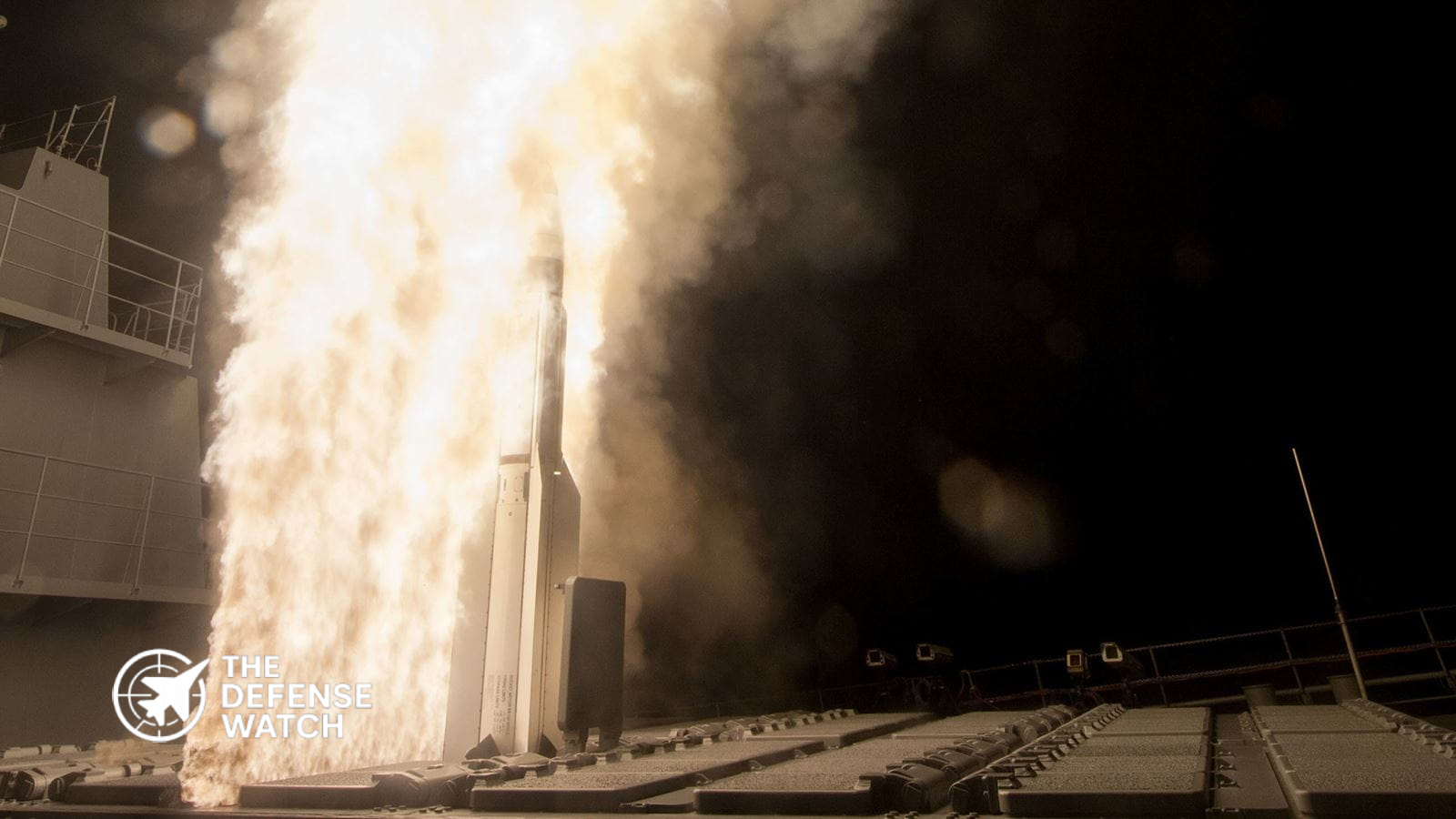
The ARAV-6 launch during Pacific Dragon 2026 provided a visible demonstration of the target activity supporting a multinational ballistic missile defense exercise around Hawaii. The U.S. Navy released imagery showing an Aegis Readiness Assessment Vehicle Six launching from the Pacific Missile Range Facility on August 6, during the latest iteration of Pacific Dragon.
Takeaways
The ARAV-6 launch supported a multinational missile defense exercise in Hawaii.
1. ARAV-6 Launched In Hawaii
The Aegis Readiness Assessment Vehicle Six launched from Pacific Missile Range Facility in Hawaii on August 6, 2026, during Pacific Dragon 2026.
2. Exercise Focused On Missile Defense
Pacific Dragon 2026 was designed to improve allied and partner capabilities to detect, track and report integrated air and missile defense targets.
3. Seven Nations Participated
The exercise brought together forces from the United States, Australia, Chile, Italy, Japan, the Republic of Korea and Spain.
4. Tactical Data Sharing Was Central
Participants used shared tactical data links and coordinated ballistic missile defense operations to improve interoperability among maritime forces.
5. Aegis Testing Benefits From Live Targets
The exercise gave the Missile Defense Agency an opportunity to collect live tracking data, assess sensor performance and support evaluation of Aegis ballistic missile defense capabilities in a realistic multinational setting.
The image was taken by U.S. 3rd Fleet personnel during the exercise and was subsequently published through the Defense Visual Information Distribution Service. The imagery is identified as public domain by the U.S. Department of Defense distribution platform.
The launch occurred as participating forces trained to improve their ability to detect, track and coordinate responses to ballistic missile targets. Pacific Dragon is conducted every two years by U.S. 3rd Fleet with support from the U.S. Missile Defense Agency.
ARAV-6 Launch Supports Ballistic Missile Defense Training
The ARAV-6, or Aegis Readiness Assessment Vehicle Six, serves as a target vehicle for missile defense training and assessment. Its launch allows participating forces to work against a representative ballistic target while exercising sensors, tactical data links, command and control processes and missile defense procedures.
The Pentagon and Missile Defense Agency have long used realistic target launches as part of the broader missile defense testing process. MDA describes flight testing as an important source of data for evaluating the operational effectiveness, suitability and survivability of missile defense systems.
The ARAV-6 launch Pacific Dragon 2026 therefore formed part of a larger training and assessment framework rather than representing an operational ballistic missile launch. The vehicle was used to support the exercise’s missile defense objectives.
That distinction is important because Pacific Dragon combines elements of operational training and missile defense assessment. The exercise is intended to improve how participating forces operate together against air and missile threats while providing data and experience that can be used to refine tactics and procedures.
Pacific Dragon 2026 Brings Seven Nations Together
Pacific Dragon 2026 took place in waters around the Hawaiian Islands from August 6 through August 13, according to the U.S. Navy. Other reporting from U.S. military sources places the broader exercise activity through August 15, including events around Kauai and the Pacific Missile Range Facility.
The exercise included the United States and six partner nations: Australia, Chile, Italy, Japan, the Republic of Korea and Spain. Chile and Spain were participating for the first time in Pacific Dragon, according to information released following the exercise.
The multinational composition is significant because ballistic missile defense increasingly depends on the ability of different military forces to share information quickly and maintain a common operational picture.
Pacific Dragon addresses that requirement through tactical data link information sharing and coordinated ballistic missile defense activities. The U.S. Navy said the exercise helped participating forces refine tactics, techniques and procedures for integrated air and missile defense.
Aegis System Remains Central To Naval Missile Defense
The exercise also provided an opportunity to operate and evaluate elements associated with the Aegis ballistic missile defense architecture.
The Missile Defense Agency describes Aegis BMD as the sea-based component of the U.S. missile defense system. U.S. Navy destroyers equipped with Aegis use the system’s sensors, combat system, command and control architecture and Standard Missile family to conduct ballistic missile defense missions.
Aegis BMD is designed to support engagements against ballistic missile threats across different phases of flight. The system incorporates SM-3 interceptors for midcourse ballistic missile defense and SM-6 capabilities for terminal defense against certain short-range ballistic missile threats.
That architecture makes realistic target activity particularly important. A missile defense network is not dependent on an interceptor alone. Sensors must detect and track a target, information must be exchanged among participating units, and command systems must process the data quickly enough to support an engagement.
Pacific Dragon places those functions into a multinational environment.
Why The ARAV-6 Launch Matters
The operational value of the ARAV-6 launch Pacific Dragon 2026 extends beyond the launch itself. The more important objective is the information and coordination generated by the event.
A ballistic missile defense scenario requires multiple systems to work together. Ships and shore-based facilities must establish tracks, exchange data and maintain accurate information about the target. Allied forces must also understand how information generated by one nation’s systems can be used by another nation’s forces.
Pacific Dragon provides a recurring venue for practicing those processes.
The U.S. Navy said the 2026 exercise improved interoperability through shared tactical data links and coordinated ballistic missile defense operations. The service also said the exercise helped refine the tactics and procedures needed for regional integrated air and missile defense.
For the Missile Defense Agency, the exercise provided another opportunity to support warfighters while gathering live tracking data and evaluating sensor performance. The agency also used the exercise environment to help assess and refine Aegis ballistic missile defense capabilities.
Hawaii Provides A Realistic Missile Defense Test Environment
The Pacific Missile Range Facility on Kauai plays an important role in U.S. missile defense testing and training.
MDA identifies the Aegis Ashore Missile Defense Test Complex at the Pacific Missile Range Facility as a test and evaluation center supporting development of Aegis capabilities.
The location also provides access to the broader Hawaiian operating area and Pacific test ranges. That allows missile defense exercises to combine land-based facilities with maritime forces operating offshore.
The setting has been used for earlier Pacific Dragon exercises as well. During Pacific Dragon 2024, for example, an Aegis Readiness Assessment Vehicle Group B was launched from Pacific Missile Range Facility as part of the multinational exercise.
Earlier iterations also included ballistic missile tracking and missile defense training involving U.S. forces and allied navies.
Multinational Interoperability Is A Key Objective
One of the clearest themes of Pacific Dragon 2026 was interoperability.
The exercise was not limited to testing individual weapon systems. Instead, it focused on how multiple nations can connect sensors, data links, command systems and operational procedures during a missile defense scenario.
That requirement is increasingly important for U.S. forces operating with allies across the Indo-Pacific. A regional missile defense network can involve ships from several navies, shore-based sensors and command centers separated by significant distances.
The ability to exchange accurate information quickly can determine whether participating forces maintain a shared understanding of an incoming target.
Vice Adm. Marc Miguez, commander of U.S. 3rd Fleet, said the exercise strengthened interoperability, information sharing and the tactics and procedures required for integrated air and missile defense.
The participation of Australia, Japan and South Korea also continues a pattern of multinational missile defense cooperation in the Pacific. Chile and Spain added new participants to the 2026 exercise, broadening the number of partners involved.
ARAV-6 Launch Highlights Broader Missile Defense Approach
The newly released image of the ARAV-6 launch offers only one snapshot of Pacific Dragon 2026, but it illustrates an important part of the exercise’s structure.
The target launch provided participating forces with a realistic ballistic missile defense event. The larger exercise then connected that event to tactical data sharing, sensor tracking, command and control and multinational coordination.
That combination is central to modern integrated air and missile defense.
The U.S. Navy has described Pacific Dragon as a biennial exercise designed to improve participating forces’ ability to detect, track and report integrated air and missile defense targets. The 2026 edition continued that mission while expanding participation to seven nations.
The ARAV-6 launch Pacific Dragon 2026 also reinforces the continuing importance of live targets in missile defense training. Exercises using realistic target vehicles can expose gaps in procedures and information sharing that may not become apparent during simulations alone.
For the United States and its Indo-Pacific partners, the value lies not simply in launching or tracking a target, but in demonstrating that multiple forces can process the same threat information and coordinate their response.
Pacific Dragon 2026 concluded after another cycle of multinational ballistic missile defense training around Hawaii. The release of the ARAV-6 launch imagery now provides a clear visual record of one of the exercise’s key target events.
UK Expands Its SSN AUKUS Submarine Ambition
The SSN AUKUS submarine program is becoming a central part of Britain’s long-term naval modernization strategy, with the UK government planning for a fleet of up to 12 conventionally armed, nuclear-powered attack submarines under the AUKUS partnership with the United States and Australia. The British government says the program will support about 21,000 jobs in the UK at peak production.
Takeaways
Britain is expanding its attack submarine program under AUKUS
1. Up To 12 Attack Submarines
The UK plans to expand its future conventionally armed, nuclear-powered attack submarine fleet to up to 12 SSN AUKUS boats, compared with the seven Astute class submarines originally planned.
2. Continuous Submarine Production
The UK is investing in Barrow-in-Furness and Derby to establish a production tempo capable of delivering a new submarine approximately every 18 months.
3. 21,000 Jobs At Peak
The SSN AUKUS program is expected to support approximately 21,000 UK jobs at peak production, including employment across the submarine supply chain.
4. First UK Boats From Late 2030s
The future class is intended to begin replacing the Royal Navy’s Astute class from the late 2030s, while Australia expects its first SSN AUKUS submarine in the early 2040s.
5. AUKUS Is A Trilateral Industrial Program
SSN AUKUS is based on a UK next-generation submarine design and incorporates technology from the United States, United Kingdom and Australia, linking the three nations’ undersea industrial bases.
The expansion was formally set out in the UK’s 2025 Strategic Defence Review, which called for continuous submarine production and an increase in the future attack submarine fleet from the seven Astute class boats to as many as 12 SSN AUKUS submarines.
The decision represents more than a numerical increase in Royal Navy submarines. It requires Britain to maintain a sustained industrial capacity for nuclear submarine design, construction, propulsion, maintenance and workforce development over several decades.
From Astute To SSN AUKUS
The SSN AUKUS is being developed as the successor to the Royal Navy’s Astute class. Britain currently operates or is completing a fleet of seven Astute class nuclear-powered attack submarines, which provide capabilities including intelligence collection, anti-submarine warfare, anti-surface warfare, special operations support and land attack.
The future SSN AUKUS will be conventionally armed but nuclear powered. That distinction is important because the submarines will not carry nuclear weapons as their primary armament, while their nuclear propulsion will provide the endurance and mobility associated with nuclear-powered attack submarines.
The UK Ministry of Defence describes SSN AUKUS as the next-generation replacement for Astute, with the future boats expected to enter Royal Navy service from the late 2030s.
The program is being led from the British submarine industrial base. BAE Systems is responsible for submarine construction at Barrow-in-Furness, while Rolls-Royce is responsible for nuclear propulsion technology and reactor production. Australia is also participating in the design and will build its own SSN AUKUS boats in South Australia.
Production Rate Is As Important As Fleet Size
One of the most significant elements of Britain’s plan is the move toward continuous submarine construction.
The UK government has committed investment intended to allow the industrial base to build a new submarine approximately every 18 months. This production rate is designed to prevent the long gaps between submarine programs that can result in the loss of specialist skills, supplier capacity and manufacturing knowledge.
For a nuclear-powered submarine program, maintaining production continuity is particularly demanding.
The industrial base must retain highly specialized engineers, nuclear-qualified workers, welders, designers, electricians, software specialists and quality-assurance personnel. It must also maintain a stable network of suppliers capable of producing components that meet stringent nuclear and defense requirements.
The UK government has therefore linked SSN AUKUS to wider investment in the Defence Nuclear Enterprise, rather than treating the program solely as a shipbuilding project.
Barrow And Derby Are Central To The Expansion
BAE Systems is expanding its submarine facilities at Barrow-in-Furness to support the next generation of UK attack submarines.
The company has reported that its UK submarine workforce had reached about 13,500 employees and is expected to grow further as the Astute, Dreadnought and SSN AUKUS programs overlap. Its infrastructure investment includes a major expansion of the Barrow site to support future submarine construction.
Rolls-Royce is simultaneously expanding its nuclear manufacturing capability at Raynesway in Derby.
The company began a major site expansion to increase capacity for submarine reactor production. In 2026, Rolls-Royce said the expansion would more than double the size of its manufacturing facility and support the increased production tempo required by Britain’s submarine programs and AUKUS commitments.
These investments illustrate a central challenge of the program: increasing the number of submarines requires increasing the capacity of the entire nuclear submarine enterprise.
The 21,000 Job Figure
The British government estimates that more than 21,000 people will work on the SSN AUKUS program in the UK at peak production. The program is also expected to create more than 7,000 additional jobs across the British supply chain.
The employment impact extends beyond Barrow and Derby.
The broader submarine enterprise involves companies and facilities across Britain, including specialist manufacturers, engineering firms, nuclear suppliers and maintenance organizations. The government has also identified training and workforce development as necessary components of the expansion.
In February 2026, the UK government said AUKUS was already generating thousands of new jobs and that the wider Defence Nuclear Enterprise could support approximately 65,000 UK jobs by 2030.
The employment numbers should therefore be understood as part of a much larger industrial effort supporting Britain’s nuclear-powered submarine capability.
What SSN AUKUS Means For Royal Navy Operations
The primary operational value of the expanded fleet is persistence under water.
Nuclear-powered attack submarines can remain submerged for long periods without the propulsion constraints faced by conventionally powered submarines. Their operational endurance is generally constrained more by provisions, crew requirements and maintenance cycles than by fuel for propulsion.
That allows SSNs to operate over long distances and remain deployed in areas where their presence may be difficult to detect.
For Britain, this has relevance in both the North Atlantic and Indo-Pacific regions. The UK government has described AUKUS as contributing to security in both the Euro-Atlantic and Indo-Pacific theaters.
A larger SSN fleet also provides greater flexibility in managing maintenance and deployment cycles. More boats do not automatically translate into more submarines deployed at any given moment, because nuclear-powered submarines require extensive maintenance, training and crew preparation.
However, a larger fleet can increase the number of boats available for operations after accounting for those requirements.
Why AUKUS Matters To The United States
For Washington, the SSN AUKUS program is significant because it connects the undersea capabilities and industrial bases of three close defense partners.
AUKUS Pillar I combines the UK and US submarine expertise with Australia’s plan to establish a sovereign nuclear-powered submarine capability. The partnership is also creating shared infrastructure and operational arrangements in Australia.
In May 2026, Australia, the UK and United States reaffirmed that AUKUS Pillar I remained on track. The three governments also confirmed progress on SSN AUKUS design and the establishment of Submarine Rotational Force-West in Western Australia.
The U.S. Navy has separately established Naval Support Activity Stirling in Western Australia as part of the AUKUS framework. The facility is intended to support submarine operations in the region.
This creates an increasingly connected undersea network linking American, British and Australian submarine operations.
SSN AUKUS Is More Than A New Submarine
The technical significance of SSN AUKUS extends beyond the hull itself.
The program is based on a UK design but incorporates technology from all three AUKUS countries. That creates opportunities for common systems and industrial cooperation, but it also requires the partners to manage complex requirements involving technology transfer, security, certification, manufacturing standards and nuclear regulation.
The UK government said in June 2026 that SSN AUKUS is based on the UK’s next-generation design and incorporates technology from all three nations. It also said design and delivery remained on track.
The submarine program is therefore also an industrial interoperability project.
That distinction matters because AUKUS is intended to create capabilities that can be sustained by multiple partners rather than relying on isolated national systems.
Nuclear Propulsion Is A Critical Industrial Constraint
One of the most difficult parts of the program is nuclear propulsion.
Rolls-Royce Submarines provides the nuclear reactors for Royal Navy submarines and is also scheduled to provide reactors for Australia’s future SSN AUKUS submarines. The company is expanding its Derby facilities to increase production capacity.
This creates a long-term requirement for nuclear-qualified manufacturing capacity.
The challenge is not simply producing reactor components. The wider enterprise must maintain nuclear safety, regulatory compliance, specialized materials, testing, quality assurance and a workforce capable of operating within a highly controlled nuclear environment.
That makes the 18-month construction target an industrial target as much as a shipbuilding target.
Australia Adds A Second Production Line
Australia’s role makes AUKUS different from a conventional bilateral submarine procurement program.
BAE Systems and ASC have been selected to build Australia’s SSN AUKUS submarines at Osborne in South Australia. Australia is developing its own submarine construction workforce and supply chain while drawing on British and American expertise.
Australian industry is already being integrated into the future build program.
In 2026, BAE Systems opened qualification opportunities for Australian metal fabrication companies that could contribute to the SSN AUKUS supply chain. The initiative covers components ranging from smaller fabrications to large structural assemblies.
This approach is intended to build a sustainable Australian industrial base rather than simply importing completed submarines.
AUKUS Is Also Expanding Undersea Technology
The submarine effort is only one part of the wider AUKUS undersea strategy.
In May 2026, the three nations announced the first AUKUS Pillar II Signature Project, focused on payloads and enabling systems for uncrewed underwater vehicles. The project is intended to support surveillance, reconnaissance, strike, mine countermeasures, electronic warfare and anti-submarine and anti-surface warfare missions.
This matters because future submarine operations are increasingly likely to involve combinations of crewed submarines, uncrewed underwater vehicles, seabed sensors and other networked systems.
SSN AUKUS therefore fits into a broader AUKUS effort to develop a connected undersea warfare architecture.
The Strategic Implication For The Indo Pacific
The expansion of Britain’s attack submarine fleet comes as the United States, United Kingdom and Australia are placing greater emphasis on undersea warfare in the Indo-Pacific.
The U.S. Navy remains the largest nuclear-powered submarine force among the three AUKUS partners, while Australia is establishing its first nuclear-powered attack submarine capability. Britain brings decades of nuclear submarine experience and an established design and industrial base.
The combined effect is intended to improve allied submarine availability, interoperability and sustainment.
For the United States, British and Australian nuclear-powered submarines can complement U.S. forces rather than replace them. The value comes from expanding the number of allied platforms capable of operating over long distances while sharing infrastructure, technology and operational experience.
The Main Challenge Is Sustaining The Industrial Base
The decision to target up to 12 SSN AUKUS submarines is significant, but the key measure of success will be whether Britain can sustain the production rate over several decades.
The government must maintain funding, recruit and retain specialized personnel, expand nuclear manufacturing capacity and ensure that suppliers can meet demand.
The overlap between Astute, Dreadnought and SSN AUKUS also creates a demanding workload for the British submarine enterprise.
That workload is intentional. Continuous production is designed to preserve the skills and infrastructure needed for a sovereign nuclear submarine capability.
The British government has committed £6 billion since 2024 to submarine infrastructure at Barrow and Derby, with the investment intended to support the increased production rate.
What Comes Next
The UK is now moving from long-term planning toward sustained design, infrastructure and workforce development for SSN AUKUS.
The immediate priorities include continued detailed design work, long-lead procurement, expansion of submarine construction facilities, nuclear propulsion capacity and workforce development.
The UK government expects the future attack submarine capability to begin entering service from the late 2030s. Australia expects its first SSN AUKUS boat in the early 2040s.
If the planned production tempo is maintained, the program will become one of Britain’s largest and longest-running defense industrial undertakings.
For the Royal Navy, the objective is a larger and more sustainable nuclear-powered attack submarine fleet. For AUKUS, the objective is broader: building a common industrial and operational foundation that links the undersea forces of Australia, the UK and United States.
Key SSN AUKUS Program Data
Item Current UK Position Program SSN AUKUS Partners United Kingdom, United States, Australia UK role Design and construction Primary UK builder BAE Systems Nuclear propulsion Rolls-Royce UK planned fleet Up to 12 submarines Replaced class Astute Intended UK entry Late 2030s Planned production tempo About one submarine every 18 months Peak UK employment About 21,000 jobs Additional UK supply-chain jobs More than 7,000 UK infrastructure investment £6 billion since 2024 Sources: UK Ministry of Defence, UK Government, BAE Systems and Rolls-Royce.
Bottom Line
Britain’s plan for up to 12 SSN AUKUS attack submarines represents a major expansion of its nuclear-powered attack submarine capability and a long-term commitment to continuous submarine production.
The program is also an important part of AUKUS itself. It links British submarine design and construction, American nuclear submarine expertise and Australian industrial development into a common undersea capability.
For the United States, the program strengthens the broader allied submarine network supporting deterrence in the Indo-Pacific and Euro-Atlantic regions. For Britain, the immediate challenge is turning the planned fleet size and 18-month production target into a sustainable industrial reality.
Takeaways
SPY-6 demonstrated its role in multinational integrated air and missile defense during Pacific Dragon 2026.
1. SPY-6 Supported Pacific Dragon 2026
Raytheon’s AN/SPY-6 radar operated aboard USS Jack H. Lucas during the U.S. Navy’s multinational Pacific Dragon 2026 ballistic missile defense exercise.
2. First Flight III Destroyer Participated
USS Jack H. Lucas is the Navy’s first Arleigh Burke-class Flight III destroyer and combines SPY-6 with the Aegis Baseline 10 combat system.
3. Seven Allied and Partner Navies Took Part
Pacific Dragon 2026 included forces from Australia, Chile, Italy, Japan, South Korea and Spain alongside U.S. forces, with Chile and Spain participating for the first time.
4. Exercise Focused on Information Sharing
The exercise tested multinational ballistic missile defense, tactical data links and integrated air and missile defense procedures in the Indo-Pacific.
5. SPY-6 Production Is Expanding
Raytheon says SPY-6 is expected to reach more than 50 U.S. Navy ships over the next decade, while the company is expanding production capacity.
SPY-6 Radar Takes Part In Pacific Dragon 2026
Raytheon’s SPY-6 radar supported multinational missile defense operations aboard USS Jack H. Lucas during Pacific Dragon 2026, demonstrating the role of the U.S. Navy’s newest destroyer radar in integrated air and missile defense operations with allied and partner forces.
The U.S. Navy said Pacific Dragon 2026 was conducted by U.S. 3rd Fleet with support from the Missile Defense Agency from August 6 through August 13 around the Hawaiian Islands. The biennial exercise focused on ballistic missile defense, tactical data link information sharing and coordination between participating forces.
USS Jack H. Lucas, designated DDG 125, served as the U.S. Navy’s principal Flight III destroyer participant. The ship is equipped with the AN/SPY-6 radar and Aegis Baseline 10, giving the Navy a platform specifically designed to expand shipboard air and missile defense capacity.
Why USS Jack H. Lucas Matters
The participation of USS Jack H. Lucas is significant because DDG 125 represents the transition from earlier Arleigh Burke-class configurations to the Flight III standard.
The Flight III upgrade is centered on the AN/SPY-6(V)1 Air and Missile Defense Radar. The Navy also increased the ship’s electrical generation and cooling capacity to support the radar and associated combat-system requirements.
The Navy describes SPY-6 as providing significantly greater detection and tracking capacity than the radar systems associated with earlier destroyer configurations. That capability is particularly important for a destroyer expected to perform multiple missions while operating inside a network of ships, aircraft and other sensors.
The radar is not an interceptor by itself. Its importance comes from its ability to provide sensing and tracking information to the ship’s combat system, which can then support defensive engagements and the broader integrated air and missile defense architecture.
Pacific Dragon Tests The Network, Not Just The Ship
Pacific Dragon is designed around a problem that cannot be solved by a single radar or warship.
Ballistic missile defense depends on detecting a threat, developing an accurate track, sharing that information and coordinating an appropriate response. A multinational exercise therefore tests not only individual sensor performance but also the procedures and data links that connect different national systems.
The U.S. Navy said PD26 improved interoperability through shared tactical data links and coordinated ballistic missile defense operations. The exercise also included a multi-mission event combining ballistic missile defense and integrated air and missile defense scenarios.
Participating maritime forces included the Australian destroyer HMAS Sydney, Chilean frigate Almirante Cochrane, Italian frigate Giovanni delle Bande Nere, Japanese destroyer JS Kongo, South Korean destroyer ROKS Jeongjo the Great and Spanish frigate SPS Álvaro de Bazán.
U.S. aircraft participating in the exercise included P-8A Poseidon aircraft, F/A-18 Hornets, MQ-9 Reapers and BQM-177A subsonic aerial targets.
Chile and Spain were new participants in this year’s exercise, broadening the multinational component of the event.
What SPY-6 Brings To The Fight
The AN/SPY-6(V)1 is an active electronically scanned array radar developed for the U.S. Navy’s air and missile defense mission.
Unlike a mechanically steered radar, an electronically scanned array can direct its energy electronically, allowing the radar to manage multiple detection and tracking tasks rapidly.
For the Navy, the value of the system is therefore broader than a simple increase in detection range. The radar is intended to support a higher volume of air and missile defense activity while operating as part of the Aegis combat system.
The Flight III configuration also required changes beyond the radar itself. Navy documentation identifies upgrades to electrical power generation, cooling and associated ship systems as essential parts of the configuration.
That integration requirement illustrates an important point about modern naval air defense: improving the sensor often requires changes to the platform that carries it.
SPY-6 Is Becoming A Fleet-Wide Program
The Pacific Dragon demonstration comes as Raytheon continues expanding production of the SPY-6 family.
In July 2026, Raytheon announced a $1.8 billion contract extension covering SPY-6 hardware production and sustainment for the U.S. Navy. Options could increase the cumulative value of the arrangement to $3.3 billion.
Raytheon said SPY-6 was then aboard two commissioned U.S. Navy ships and installed on 11 additional ships undergoing testing. The company expects the radar family to be deployed on more than 50 Navy ships over the next decade.
The company also said it has invested more than $800 million to modernize radar manufacturing facilities and expand production capacity, with the goal of doubling SPY-6 output by 2028.
This production effort matters because the Navy’s air and missile defense architecture depends on deploying capable sensors across a sufficient number of combatants. A radar that exists only on a small number of ships provides less network depth than one deployed across a large portion of the fleet.
SPY-6 Also Supports Destroyer Modernization
The SPY-6 family is not limited to newly built Flight III destroyers.
Raytheon is also supporting installation of the SPY-6(V)4 on modernized Flight IIA Arleigh Burke-class destroyers. In August 2026, the company announced installation of the first SPY-6(V)4 array at the Navy’s Surface Combat Systems Center at Wallops Island, Virginia.
The Wallops facility will be used for testing the radar and its interfaces before installation aboard USS Pinckney, DDG 91, the first ship scheduled to receive the SPY-6(V)4 backfit.
This creates two parallel paths for expanding SPY-6 across the surface fleet. Flight III ships receive the radar as part of their new-build configuration, while selected Flight IIA ships can receive the SPY-6(V)4 through modernization.
The Strategic Importance For The Indo-Pacific
For U.S. forces operating in the Indo-Pacific, the ability to coordinate missile defense across multiple ships and national forces has particular operational importance.
The region is geographically large, and naval formations can operate across substantial distances. A distributed defense architecture can allow information generated by one sensor or platform to contribute to a wider operational picture.
Pacific Dragon is therefore useful as a test of the command, control and information-sharing layer that connects individual capabilities.
The exercise also gives the Missile Defense Agency an opportunity to work with partner nations in a realistic operational environment. The MDA has used Pacific Dragon as a venue for advancing regional ballistic missile defense and maritime theater missile defense capabilities with partner countries.
The central lesson is that integrated missile defense increasingly depends on interoperability. A sophisticated radar can provide high-quality tracks, but those tracks have greater operational value when allied forces can receive, interpret and act on relevant information through established networks and procedures.
A Broader Shift Toward Integrated Air And Missile Defense
The U.S. Navy’s investment in Flight III destroyers and SPY-6 reflects a wider shift toward integrating sensors, combat systems, weapons and data networks.
DDG 125 was designed to conduct anti-air warfare and ballistic missile defense while retaining the broader multi-mission functions expected from an Arleigh Burke-class destroyer. The Navy identifies anti-submarine warfare and anti-surface warfare among the class’s other missions.
That multi-mission requirement places significant demands on the ship’s combat system. The destroyer must manage air and missile defense tasks without becoming a single-purpose platform.
For the U.S. Navy, the significance of SPY-6 therefore extends beyond its radar specifications. Its value is tied to how effectively the radar operates with Aegis, shipboard weapons, tactical data links and other sensors in a distributed force.
What Pacific Dragon 2026 Demonstrated
Pacific Dragon 2026 did not represent the deployment of a new missile interceptor or the first operational use of SPY-6. Instead, its importance lies in demonstrating how the radar and Aegis-equipped Flight III destroyer fit into a multinational missile defense network.
The exercise brought together U.S. and allied maritime forces to practice ballistic missile defense, integrated air and missile defense and information sharing. The presence of USS Jack H. Lucas provided an opportunity to employ the Navy’s newest destroyer configuration within that multinational environment.
As the Navy expands its SPY-6-equipped fleet, exercises such as Pacific Dragon will remain important for validating the procedures that connect individual platforms into a wider defensive network.
The combination of more capable sensors, modernized combat systems and greater interoperability is becoming central to how the United States and its allies approach missile defense in the Indo-Pacific.
Key SPY-6 And Pacific Dragon 2026 Facts
Item Details Radar AN/SPY-6 family U.S. ship USS Jack H. Lucas, DDG 125 Ship configuration Arleigh Burke-class Flight III Combat system Aegis Baseline 10 Exercise Pacific Dragon 2026 Exercise period August 6-13, 2026 Primary location Waters around the Hawaiian Islands Exercise focus Ballistic missile defense, IAMD and tactical data links U.S. lead U.S. 3rd Fleet MDA role Support for multinational BMD activities New participants Chile and Spain Future SPY-6 fleet More than 50 U.S. Navy ships expected over the next decade Bottom Line
Pacific Dragon 2026 provided another demonstration of the U.S. Navy’s effort to build a more integrated missile defense architecture with allies and partners.
USS Jack H. Lucas, equipped with SPY-6 and Aegis Baseline 10, represents the technical foundation of the Navy’s Flight III destroyer program. Its participation also shows why sensor capability and multinational interoperability increasingly have to be developed together.
With SPY-6 production expanding and the radar moving onto both new Flight III destroyers and modernized Flight IIA ships, the system is positioned to become an increasingly important component of the U.S. Navy’s surface fleet air and missile defense architecture.
Boeing Wins $156.2M Navy Contract for P-8A and C-40A Engines Support
The Boeing Co. has received a $156.2 million U.S. Navy contract covering engine support equipment for the P-8A Poseidon maritime patrol aircraft and spare engine integration for the C-40A Clipper. The award provides for up to 31 P-8A Engine Build-Up kits and up to two Quick Engine Change kits.
Takeaways
Key facts from the Boeing engine support contract for Navy and foreign military customers
1. $156.2 Million IDIQ Award
The Navy awarded Boeing a firm-fixed-price economic-price-adjustment IDIQ contract with a potential value of $156.2 million.
2. Up to 31 P-8A Engine Kits
The contract provides for up to 31 Engine Build-Up kits, including 18 for the Navy and 13 for Foreign Military Sales customers.
3. C-40A Spare Engine Support
Boeing can also provide up to two Quick Engine Change kits for integration with CFM56-7B24E core engines to create complete C-40A Clipper spare engines.
4. Orders Will Fund the Work
No funds were obligated at award. Funding will be provided through individual orders issued under the IDIQ contract.
The contract was awarded by Naval Air Systems Command, or NAVAIR, in Patuxent River, Maryland, according to the U.S. Department of Defense contract announcement. Boeing’s work will be performed in Tukwila, Washington, with the contract scheduled to run through August 2031.
The award is structured as a firm-fixed-price economic-price-adjustment indefinite-delivery/indefinite-quantity contract. No funds were obligated when the contract was awarded. Instead, funding will be provided through individual orders issued under the contract.
What The Contract Covers
The primary portion of the award covers up to 31 P-8A Engine Build-Up kits. Of that potential quantity, 18 kits are designated for the U.S. Navy and 13 are intended for Foreign Military Sales customers.
The kits include associated components and hardware needed to mate and integrate with CFM56-7B27AE core engines.
The contract also provides for up to two Quick Engine Change kits. These kits include associated components, mating hardware, and attaching hardware for integration with CFM56-7B24E core engines.
The stated purpose of this portion of the contract is to create complete spare engines for the C-40A Clipper.
The announcement does not identify the specific Foreign Military Sales customers receiving the 13 P-8A Engine Build-Up kits.
Technical And Operational Context
The P-8A Poseidon is the U.S. Navy’s principal long-range maritime patrol and reconnaissance aircraft. Its mission set includes maritime surveillance, anti-submarine warfare, anti-surface warfare, intelligence, surveillance and reconnaissance, and other naval aviation tasks.
Engine support is therefore an important part of maintaining aircraft availability. The Boeing contract is focused on equipment and hardware required to assemble and integrate engine components rather than the purchase of complete new aircraft.
An Engine Build-Up kit can be understood in this context as a package of components and associated hardware used to prepare an engine core for integration into an aircraft engine configuration.
The contract separately addresses the C-40A Clipper, a Boeing 737-based military transport aircraft used by the Navy for personnel and logistics transportation. The award calls for Quick Engine Change kits associated with CFM56-7B24E core engines to create complete spare engines for the C-40A fleet.
The contract announcement does not provide additional technical specifications for the engines, such as performance characteristics, service life, or expected installation schedules.

Image : U. S. Navy Why The Award Matters
The contract is significant primarily because it establishes a long-term procurement framework for engine-related equipment supporting both U.S. Navy aircraft and Foreign Military Sales customers.
For the P-8A fleet, the potential purchase of 31 Engine Build-Up kits provides a mechanism for obtaining the components and hardware needed to support engine integration requirements over the contract period.
The inclusion of 13 kits for Foreign Military Sales customers also reflects the international operating base of the P-8A platform. However, the announcement does not identify which countries will receive the kits, so no specific customer relationship can be established from the award alone.
For the C-40A, the provision for two Quick Engine Change kits is tied directly to the creation of complete spare engines. That gives the Navy a separate engine-support pathway within the same contract framework.
Contract Breakdown
Contract Value
The contract has a potential value of $156,201,219.
Because it is an indefinite-delivery/indefinite-quantity contract, the announced value represents the contract framework rather than an immediate obligation of the full amount.
Contractor
Boeing Co., based in Tukwila, Washington, is the contractor.
The contract number is N0001926D1007.
Contract Type
The award is a firm-fixed-price economic-price-adjustment indefinite-delivery/indefinite-quantity contract.
The IDIQ structure allows the government to issue individual orders during the contract period for the covered requirements. The economic-price-adjustment provision provides a mechanism for adjusting applicable prices under defined contractual conditions.
Work Locations
Work will be performed in Tukwila, Washington.
The announcement does not identify additional work locations.
Performance Period
The contract is expected to be completed in August 2031.
Funding
No funds were obligated at the time of award.
The Navy will obligate funds through individual orders as they are issued under the contract.
Options Or Follow-On Work
The contract provides for potential quantities of up to 31 P-8A Engine Build-Up kits and up to two Quick Engine Change kits.
The announcement does not disclose a separate option-year structure or additional follow-on contract beyond the stated IDIQ framework.
Industry And Acquisition Implications
From an acquisition perspective, the IDIQ structure gives the Navy flexibility to order engine-related equipment as requirements arise rather than committing the entire potential contract value at the time of award.
The structure is also relevant to the P-8A’s international user base. Eighteen of the potential 31 P-8A kits are designated for the U.S. Navy, while 13 are allocated for Foreign Military Sales customers.
The contract therefore combines domestic fleet support with international customer requirements within a single procurement vehicle.
The award also illustrates the role of engine support hardware in aircraft sustainment. Maintaining an operational aircraft fleet involves more than purchasing airframes. Engine integration equipment, replacement components, and spare engines are part of the broader logistics system needed to keep aircraft available for assigned missions.
The contract was not competed, according to the announcement. The notice does not provide the rationale for the noncompetitive award, so no further conclusion should be drawn about the procurement decision from the announcement alone.
What Happens Next
The next funding actions will occur through individual orders issued under the IDIQ contract.
Those orders will determine the actual quantities purchased and the associated obligations against the contract.
The announcement does not provide a specific schedule for individual orders, kit deliveries, engine integration, or installation on Navy aircraft.
The contract is scheduled to remain in place through August 2031, giving the Navy a multi-year framework for procuring the covered P-8A and C-40A engine support equipment.
HITT Contracting Navy contract
HITT Contracting of Charleston, South Carolina, has received a $264.03 million U.S. Navy construction contract to expand the P200 Nuclear Power Training Facility simulation complex at Joint Base Charleston, South Carolina. The award was issued by Naval Facilities Engineering Systems Command Southeast, or NAVFAC Southeast, in Jacksonville, Florida.
The contract, identified as N69450-26-C-0027, covers construction work for the P200 nuclear power training facility simulation expansion. According to the contract announcement, work will be performed in Berkeley County, South Carolina, with completion expected by April 2030.
Takeaways
Key facts from the defense contract or military technology development
1. $264 Million Navy Award
HITT Contracting received a $264.03 million fixed-price-award-fee construction contract for the P200 nuclear power training facility simulation expansion.
2. Joint Base Charleston Project
The project is located at Joint Base Charleston in South Carolina and is being managed by Naval Facilities Engineering Systems Command Southeast.
3. Work Extends Into 2030
The construction contract is expected to be completed by April 2030, with funding divided across fiscal years 2026, 2027 and 2028.
4. Additional Options Remain
The contract contains 12 unexercised options that could raise the cumulative contract value to $274.31 million if exercised.
The Navy is funding the project through its fiscal 2026, 2027 and 2028 Military Construction, Navy, or MILCON, program. The initial fiscal 2026 obligation is $55.07 million.
The project had previously been solicited by NAVFAC Southeast as a design-bid-build, firm-fixed-price award-fee construction requirement. The solicitation identified Joint Base Charleston as the location of the P200 Nuclear Power Training Facility Simulator expansion.
What The Contract Covers
The award is for the expansion of the P200 Nuclear Power Training Facility simulation infrastructure supporting Navy nuclear power training.
Earlier NAVFAC planning material described the project as a major military construction effort involving a new high-bay facility for large-scale naval propulsion plant simulators, a Training Support Building and supporting infrastructure. The planned project also includes classrooms and training areas, office and storage space, security and special-purpose areas, mechanical utilities, electrical infrastructure, access improvements and parking facilities.
The government planning material described the planned facility as approximately 157,000 square feet and identified space for two large-scale simulators. Those details come from earlier project planning documents rather than the contract award notice itself.
The project also involves significant supporting infrastructure. Government technical information released during the acquisition process identified network infrastructure, facility-related control systems, furniture and equipment, and a new electrical substation as elements of the overall P200 effort.
Technical And Operational Context
The P200 project is centered on simulation-based nuclear power training rather than construction of an operational nuclear propulsion plant.
For the Navy, high-fidelity simulator infrastructure allows personnel to train on nuclear propulsion plant operations in a controlled environment. The facility is therefore part of the shore-based infrastructure that supports the preparation of personnel for duties involving the Navy’s nuclear-powered fleet.
The earlier NAVFAC project brief specifically identified naval propulsion plant simulators, classrooms and training spaces as core functions of the expansion.
The acquisition was structured as a design-bid-build, firm-fixed-price, award-fee construction contract. The underlying solicitation was classified under NAICS 236220 for commercial and institutional building construction and was issued as a full-and-open competition.
Why The Award Matters
The contract represents a significant investment in the Navy’s shore-based nuclear training infrastructure.
The operational importance of the project comes from its role in supporting nuclear propulsion training. The Navy operates nuclear-powered aircraft carriers and submarines, creating a continuing requirement for specialized personnel training and simulator capacity.
The P200 expansion also illustrates the infrastructure demands associated with advanced military training. The project is not limited to a simulator building. Government planning documents show that it requires supporting electrical, communications, utility, transportation and site infrastructure to make the expanded training complex operational.
From an acquisition perspective, the award also moves the project from solicitation into contract execution. NAVFAC had advertised the requirement in 2026 after earlier industry engagement and planning activities.
Contract Breakdown
Contract Value
The base contract awarded to HITT Contracting is valued at $264,031,732.
The contract also contains 12 unexercised options. If all of those options are exercised, the cumulative contract value could increase to $274,312,160.
The potential option value should not be treated as current spending. The announced award value is $264.03 million, while the additional amount represents potential future work subject to exercise of the options.
Contractor
HITT Contracting, based in Charleston, South Carolina, is the contractor receiving the award.
The contract was competitively procured through SAM.gov, with two offers received, according to the award announcement.
Contract Type
The Navy awarded the project as a fixed-price-award-fee construction contract.
The underlying solicitation described the requirement as design-bid-build and firm-fixed-price with an award-fee structure.
A firm-fixed-price arrangement generally establishes a set price for defined work and places more cost risk on the contractor than cost-reimbursement arrangements. The award-fee element provides a mechanism for recognizing contractor performance under the terms of the contract.
Work Locations
Construction will be performed in Berkeley County, South Carolina, at Joint Base Charleston.
The official solicitation identifies Joint Base Charleston as the place of performance.
The project is associated with the Navy’s nuclear power training infrastructure at the installation.
Performance Period
The contract is expected to be completed by April 2030.
The long construction period reflects the scale of the infrastructure project and its multiple facility and utility requirements.
Funding
The project is being funded incrementally through the Navy’s Military Construction program.
The funding breakdown is:
- Fiscal 2026 MILCON, Navy: $55,070,586
- Fiscal 2027 MILCON, Navy: $135,484,430
- Fiscal 2028 MILCON, Navy: $73,476,716
The fiscal 2026 amount will be obligated at the time of award and will not expire at the end of the current fiscal year.
The three funding increments total $264,031,732, matching the announced base contract value.
Options Or Follow-On Work
The contract contains 12 unexercised options.
If exercised, those options would increase the cumulative contract value to $274,312,160.
The announcement does not provide additional details on the individual options or identify which elements of the project they would cover.
Industry And Acquisition Implications
The award gives HITT Contracting responsibility for a major Navy military construction project at an installation supporting nuclear power training.
The contract also shows how a large training infrastructure program can involve considerably more than the primary training facility. Earlier government planning identified a high-bay simulator facility, training support spaces, mechanical infrastructure and substantial site and utility work. The project planning also included a new electrical substation intended to support the expanded facility.
The competitive award followed a government solicitation that received two offers. That provides a clear acquisition record for the award, although the contract announcement does not disclose the identities or prices of the unsuccessful offeror.
The project is also being funded over multiple fiscal years rather than entirely through the initial obligation. This allows the Navy to align construction funding with the project’s planned execution schedule.
What Happens Next
HITT Contracting will proceed with construction under the awarded contract, with the Navy planning completion by April 2030.
The contract announcement does not provide a detailed construction milestone schedule, simulator installation date or operational activation date.
Earlier NAVFAC planning material indicated that the facility would be constructed while the associated simulators were still in development and that the timing of the broader effort was linked to simulator delivery.
The Navy has not disclosed in the award announcement when the expanded simulator capacity will enter training service.
U.S. Navy ARAV-6 Launch Highlights Pacific Dragon 2026
The U.S. Navy has released an image of an Aegis Readiness Assessment Vehicle Six, or ARAV-6, launching from the Pacific Missile Range Facility in Hawaii during Pacific Dragon 2026, a multinational ballistic missile defense exercise led by U.S. 3rd Fleet. The launch took place August 6 as allied and partner forces trained to improve coordinated detection, tracking and engagement of ballistic missile threats.
Takeaways
The ARAV-6 launch formed part of a broader multinational effort to improve ballistic missile defense interoperability in the Indo-Pacific.
1. ARAV-6 Launched in Hawaii
The U.S. Navy released an image of an Aegis Readiness Assessment Vehicle Six launching from the Pacific Missile Range Facility during Pacific Dragon 2026.
2. Multinational Missile Defense Exercise
Pacific Dragon 2026 brought together forces from Australia, Chile, Italy, Japan, South Korea, Spain and the United States for ballistic missile defense and tactical data-link training.
3. Focus on Interoperability
The exercise emphasized shared tactical data links, coordinated ballistic missile defense operations and procedures for multinational integrated air and missile defense.
4. ARAV Targets Simulate Ballistic Threats
Kratos describes the ARAV family as configurable short and medium-range ballistic missile targets designed to emulate different threat profiles for defense testing.
5. Flight III Aegis Destroyer Participated
The U.S. Navy deployed USS Jack H. Lucas, the first Flight III Arleigh Burke-class destroyer, equipped with Baseline 10 and the AN/SPY-6 radar.
Pacific Dragon 2026 was conducted in waters around the Hawaiian Islands from August 6 to 13, according to the U.S. 3rd Fleet. The exercise combined ballistic missile defense operations with tactical data-link information sharing and broader integrated air and missile defense activities.
The exercise involved the U.S. Missile Defense Agency and forces from Australia, Chile, Italy, Japan, the Republic of Korea, Spain and the United States. This year’s iteration also expanded the exercise’s operational scope by introducing Chilean and Spanish participation and a multi-mission event combining ballistic missile defense and integrated air and missile defense scenarios.
What the ARAV-6 Launch Represents
The ARAV family is not an operational ballistic missile. It is a threat-representative target system used to provide realistic targets for missile defense testing and training.
Kratos, which supports the ARAV family, describes its vehicles as configurable short and medium-range ballistic missile targets capable of emulating different threat profiles. The company says the family uses advanced staging to provide flexibility in trajectory design and has supported more than 50 successful defense missions.
The Navy and Missile Defense Agency have used ARAV targets for years to evaluate Aegis ballistic missile defense capabilities. Earlier ARAV missions were designed to provide low-cost, flight-proven targets that could support tracking, engagement and crew training.
That distinction is important when interpreting the ARAV-6 launch image. The vehicle’s purpose is to reproduce selected characteristics of a ballistic threat so that sensors, command systems and interceptors can be evaluated under controlled conditions.
ARAV Family Provides Flexible Ballistic Missile Targets
Kratos currently identifies three principal ARAV configurations: Type B, Type C and Type TTO.
ARAV Configuration General Configuration Key Characteristics ARAV Type B Two-stage, spin-stabilized Terrier first stage and Oriole second stage ARAV Type C Two-stage, spin-stabilized Talos MK11 first stage and Castor IA second stage ARAV Type TTO Three-stage, spin-stabilized Two Terrier stages and an Oriole third stage Kratos states that the Type B configuration provides selectable flight events and can incorporate optional thrust-vector control. The Type C uses a Talos MK11 first stage and Castor IA second stage, while the three-stage TTO configuration provides additional trajectory and payload options.
Kratos does not publicly provide a separate technical specification sheet for the specific ARAV-6 designation in its current ballistic systems material. As a result, individual performance characteristics should not be attributed to ARAV-6 unless they are confirmed by the Navy, MDA or the manufacturer.
Pacific Dragon 2026 Focused on Allied Missile Defense Integration
Pacific Dragon is designed around a problem that extends beyond the performance of an individual missile or radar: how several countries combine sensors, communications networks, command systems and weapons during a missile engagement.
The 2026 exercise included both in-port and underway phases. In-port activities included interoperability training and work at the Pacific Integrated Air and Missile Defense Center before forces moved into maritime operations.
The U.S. 3rd Fleet said the exercise improved interoperability through shared tactical data links and coordinated ballistic missile defense operations. These activities are intended to refine the procedures required for allied forces to operate together within an integrated air and missile defense architecture.
For a multinational force, this can be as important as the interceptor itself. A missile defense engagement depends on timely detection, accurate tracking, reliable communications and a clear command relationship before a weapon is launched.
U.S. and Allied Ships Bring Different Capabilities
The participating naval forces included HMAS Sydney, the Chilean Navy’s Almirante Cochrane, Italian Navy ship Giovanni delle Bande Nere, Japan Maritime Self-Defense Force destroyer JS Kongo, Republic of Korea Navy destroyer ROKS Jeongjo the Great, Spanish Navy frigate SPS Álvaro de Bazán and U.S. Navy destroyer USS Jack H. Lucas.
The exercise also incorporated an Australian E-7A Wedgetail airborne early warning and control aircraft, alongside U.S. P-8A Poseidon aircraft, F/A-18 Hornets, MQ-9 Reapers and BQM-177A subsonic aerial targets.
This combination allowed Pacific Dragon 2026 to move beyond a single ballistic missile defense scenario. The inclusion of aircraft and other aerial targets supported a broader integrated air and missile defense environment.
USS Jack H. Lucas Brings Flight III Aegis Capability
A notable U.S. Navy participant was USS Jack H. Lucas, the Navy’s first Flight III Arleigh Burke-class guided missile destroyer.
The destroyer is equipped with the AN/SPY-6 radar and Aegis Baseline 10, providing the ship with the sensor and combat-system architecture associated with the Navy’s latest Arleigh Burke-class configuration.
The significance of the ship’s participation is therefore broader than the presence of another destroyer. Flight III ships are being introduced as the Navy’s next-generation surface combatants for demanding air and missile defense missions, making multinational exercises such as Pacific Dragon an opportunity to train those capabilities alongside allied systems.
The exercise also demonstrates why interoperability remains a central requirement for the U.S. Navy in the Indo-Pacific. Potential missile threats do not respect national boundaries, while regional defense networks increasingly depend on multiple sensors and weapons operated by different militaries.
Why Tactical Data Links Matter
A modern missile defense architecture is built around the rapid movement of information.
A sensor may detect a target without being the system that ultimately engages it. Information therefore has to move across the network, be processed into an actionable track and reach an appropriate command-and-control node or weapon system.
Pacific Dragon’s tactical data-link component addresses this layer of the problem. The exercise specifically focused on information sharing and coordinated operations among participating forces.
The practical objective is not simply to prove that individual systems work. It is to establish whether different national forces can exchange usable information quickly enough and with sufficient accuracy to support a coordinated defense response.
That becomes increasingly important as air and missile defense expands from individual ship or battery engagements toward networked regional architectures.
Pacific Dragon’s Broader Indo-Pacific Significance
The exercise took place against the wider requirement for integrated air and missile defense across the Indo-Pacific. The U.S. Navy’s Pacific forces operate with allies and partners whose ships, aircraft, sensors and weapons systems were developed under different national requirements.
Pacific Dragon provides a controlled environment for testing how those capabilities work together.
The 2026 exercise also added a multi-mission element combining ballistic missile defense with integrated air and missile defense scenarios. That development reflects the operational reality that forces may need to address different airborne threats within the same battlespace rather than treating ballistic missile defense as an isolated mission.
For the United States, the value lies partly in developing repeatable procedures with regional partners. For participating allies, the exercise provides an opportunity to train alongside U.S. Navy and Missile Defense Agency forces and improve familiarity with multinational command, control and information-sharing processes.
ARAV Targets Support Repeated Missile Defense Testing
The ARAV program also illustrates an important element of missile defense development: realistic testing requires dedicated targets.
Kratos has previously supplied ARAV targets for U.S. Navy and allied missile defense exercises. In Pacific Dragon 2022, for example, an ARAV-B short-range ballistic missile target was launched and successfully intercepted by USS Fitzgerald using an SM-3 Block IA interceptor.
The company has also supported other multinational missile defense exercises, including NATO’s Formidable Shield campaign, where ARAV ballistic targets have been used for live-fire engagements involving Standard Missile-3 interceptors.
These exercises provide data that can be used to assess sensors, combat systems, engagement planning and interceptor performance. They also allow crews to practice the decision-making and coordination required for a real engagement without relying solely on computer simulations.
What Pacific Dragon 2026 Shows About Modern Missile Defense
The ARAV-6 launch itself is only one part of Pacific Dragon 2026. The more important development is the combination of a realistic ballistic missile target with multinational sensors, combat systems, tactical data links and command procedures.
The exercise therefore provides a useful demonstration of how modern missile defense is moving toward networked operations.
For the U.S. Navy and its Indo-Pacific partners, the ability to share information and coordinate actions across national boundaries is increasingly important. A successful regional defense architecture depends not only on the range or speed of individual weapons, but also on whether participating forces can detect, track, communicate and respond as a connected force.
Pacific Dragon 2026 offered another opportunity to test those relationships in a live operational environment around Hawaii.
The U.S. Navy’s release of the ARAV-6 launch image provides a visible snapshot of that effort, while the wider exercise demonstrates the continuing U.S. focus on integrated air and missile defense and multinational interoperability in the Indo-Pacific.
Castelion Expands Blackbeard Hypersonic Missile Production
The Blackbeard hypersonic missile program is entering a new phase as Castelion raises about $1 billion in Series C financing to expand production, increase manufacturing capacity and develop additional strike and defensive weapons. The financing values the U.S. defense technology company at approximately $13 billion, according to Defence Industry Europe.
Takeaways
Castelion is putting private capital behind higher-rate U.S. hypersonic weapons production.
1. About $1 Billion Series C
Castelion has raised about $1 billion in Series C financing, combining $800 million in equity with $250 million in committed revolving credit financing.
2. Blackbeard Production Expansion
A substantial portion of the funding will support increased Blackbeard production capacity at Project Ranger in New Mexico.
3. Minimum 500 Missiles Annually
A May 2026 Department of War framework provides a pathway to a minimum procurement of 500 Blackbeard missiles per year after testing and validation.
4. Navy Integration Underway
The U.S. Navy has awarded Castelion contracts covering Blackbeard integration and production, including a $23.4 million order for 50 pre-production prototypes.
5. Broader Weapon Portfolio
The new financing will also support a longer-range precision strike weapon and defensive systems intended to use technologies and manufacturing methods developed for Blackbeard.
The financing consists of $800 million in equity and $250 million in committed financing for a revolving credit facility. JPMorganChase’s Strategic Investment Group, Andreessen Horowitz and funds managed by Carlyle co-led the equity round. Lightspeed Venture Partners, Lavrock Ventures, Altimeter, General Catalyst and Interlagos also participated, while T. Rowe Price Associates joined as a new investor.
The scale of the investment is significant because Castelion is attempting to address one of the most difficult parts of hypersonic weapons development: moving from successful testing and limited production to repeatable, high-volume manufacturing.
Private Capital Targets U.S. Weapons Production
Castelion said hundreds of millions of dollars from the financing will be committed to expanding Blackbeard production capacity. Much of that investment is expected to support Project Ranger, the company’s 1,000-acre manufacturing campus in Sandoval County, New Mexico. Castelion previously committed more than $250 million in private infrastructure spending at the site.
The company describes Project Ranger as a dedicated hypersonic missile manufacturing facility designed to support higher production rates.
That focus reflects a wider change in U.S. defense acquisition. For years, hypersonic weapons have been heavily associated with expensive development programs and limited numbers of test articles. The emerging requirement is different: the military increasingly wants weapons that can be produced in meaningful quantities without making each round prohibitively expensive.
The Department of War’s May 2026 framework agreement with Castelion established a pathway for a two-year, multi-year procurement contract covering at least 500 Blackbeard missiles annually once testing and validation are completed. The department also said it was seeking authorizations and appropriations for a potential purchase of more than 12,000 Blackbeard missiles over five years.
Those figures represent planned procurement pathways, not a completed purchase of 12,000 missiles.
Blackbeard Moves Toward Operational Fielding
The Blackbeard hypersonic missile has progressed through development, flight testing and integration work with U.S. military platforms.
In June, Castelion announced a $23.4 million U.S. Navy delivery order for 50 Blackbeard early operational capability pre-production prototypes and 50 associated storage and shipping containers. The company said the order would support production at Project Ranger and help move the weapon toward operationally relevant production.
The Navy also awarded Castelion a $105 million contract in April to continue integration of Blackbeard with the F/A-18 Super Hornet and support a planned Early Operational Capability in 2027. The work includes system safety and certification testing, flight testing and carrier-related integration activities.
In February, the Navy separately awarded nearly $50 million to advance Blackbeard from prototype development toward integrated early operational capability.
Together, these awards show that the program is moving beyond basic technology demonstrations. The remaining challenge is to prove that the weapon can meet military requirements while production expands.
Why Production Capacity Matters
Hypersonic weapons generally operate at speeds above Mach 5 and can maneuver during flight, making them difficult to track and intercept. U.S. congressional research has identified hypersonic weapons as an important area of competition involving the United States, China and Russia.
The United States has several major hypersonic programs, including the Army’s Long-Range Hypersonic Weapon and the Navy’s Conventional Prompt Strike system. However, the industrial challenge extends beyond developing a weapon that can fly at hypersonic speed.
Materials, propulsion, thermal protection, precision manufacturing, testing infrastructure and specialized labor can all constrain production. A 2026 congressional report specifically highlighted manufacturing bottlenecks involving carbon-carbon composites, precision machining, materials fabrication and system assembly.
This makes Castelion’s manufacturing approach particularly relevant. The company has positioned Blackbeard around manufacturability from the beginning rather than treating mass production as a later stage of the program.
That approach could matter if the Pentagon’s requirement shifts from a small number of highly capable weapons toward larger inventories that can be replenished quickly.
Longer-Range Strike Weapon Under Development
The new financing is not limited to Blackbeard.
Castelion said it will accelerate development and testing of a longer-range precision-strike weapon that has been under development for several years. The company said the weapon uses core technologies, components and manufacturing methods developed through Blackbeard, with the objective of providing another lower-cost strike option capable of higher production rates.
Castelion is also developing defensive systems based on technologies and manufacturing processes established for Blackbeard. The company said the objective is to reduce costs and increase production rates for air and missile defense missions, potentially allowing larger inventories of interceptors.
This is an important industrial-base development. Rather than building separate manufacturing ecosystems for every weapon, Castelion is seeking to reuse components, processes and production infrastructure across multiple weapon families.
U.S. Hypersonic Competition Adds Pressure
The push comes as the United States continues to close a gap with China and Russia in operational hypersonic weapons.
A Congressional Research Service assessment published in 2025 noted that Russia and China had reportedly fielded operational hypersonic glide and cruise missile capabilities, while U.S. programs remained largely in development. The report also highlighted the technical difficulty of conventionally armed U.S. hypersonic weapons, which require high accuracy rather than relying on nuclear warhead effects.
Congress has also raised concerns about whether some U.S. hypersonic programs can transition into sustained production. The House Armed Services Committee said in its FY2026 defense authorization report that the emerging U.S. hypersonic industrial base faces a risk if programs do not establish clear paths toward tactically relevant quantities.
Castelion’s model directly addresses that production problem by combining government procurement commitments with private investment.
The company said it has secured more than $500 million in U.S. military contracts over the previous 18 months. It now plans to use the Series C capital to expand Blackbeard production, develop longer-range strike capabilities and build defensive systems.
What The Funding Means For Blackbeard
The most important development is not simply the size of Castelion’s funding round. It is the combination of private capital, government procurement commitments and an existing production facility.
The Blackbeard hypersonic missile program still faces the normal testing, integration and validation requirements associated with a new weapon. The Navy’s planned 2027 early operational capability and the Department of War’s production framework depend on successful completion of those steps.
If those milestones are achieved, the program could provide the U.S. military with another path toward producing hypersonic strike weapons at higher rates.
For Castelion, the immediate task is therefore straightforward but demanding: convert investment into manufacturing capacity, complete military testing and demonstrate that a hypersonic weapon designed for production can be delivered in quantities relevant to operational planning.
The $1 billion financing round gives the company substantially more capital to pursue that objective, while the existing Navy contracts and Department of War framework provide a government pathway for eventual procurement.
Newer Posts