











@2026 – All Right Reserved. TheDefenseWatch.com
- Home
- Defense Systems
- Compare
- F-35A vs. F-35B vs. F-35C: Key Differences, Capabilities, and Which Variant Is Best?
F-35A vs. F-35B vs. F-35C: Key Differences, Capabilities, and Which Variant Is Best?
Executive Summary / Tactical Overview
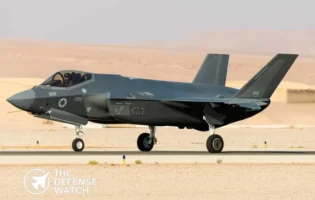
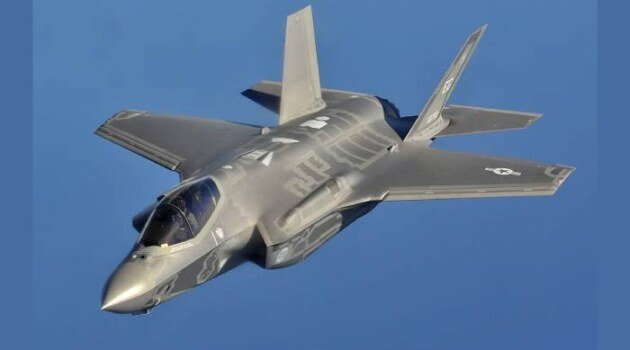
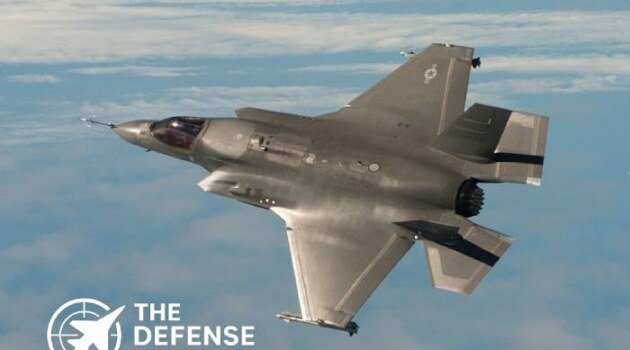
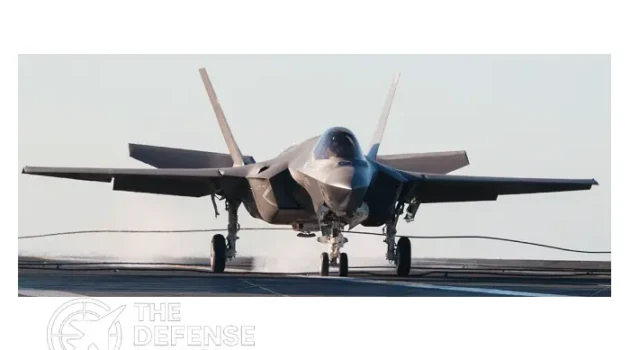
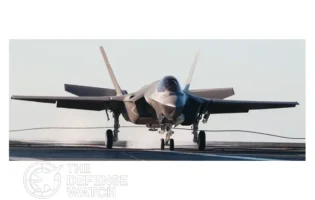
Although all three variants belong to the F-35 Lightning II family and share the same stealth architecture, sensor suite, and mission systems, each was designed for a distinct operational environment. The F-35A serves as the conventional land-based fighter for air forces, the F-35B provides short takeoff and vertical landing capabilities for expeditionary operations, and the F-35C is optimized for aircraft carrier deployments with enhanced range and naval durability.
Key Capability Pillars
Technical Specifications Table
| Metric | F-35A Lightning II | F-35B Lightning II | F-35C Lightning II |
|---|---|---|---|
| Primary Operator | Air Forces | Marine Corps / STOVL Operators | Naval Aviation |
| Generation | 5th Generation | 5th Generation | 5th Generation |
| Takeoff/Landing Type | Conventional (CTOL) | Short Takeoff Vertical Landing (STOVL) | Carrier Variant (CATOBAR) |
| Max Speed | Mach 1.6 | Mach 1.6 | Mach 1.6 |
| Combat Radius | ~1,239 km | ~935 km | ~1,240 km |
| Length | 15.67 m | 15.67 m | 15.67 m |
| Wingspan | 10.7 m | 10.7 m | 13.1 m |
| Internal Weapons Capacity | Up to 4 missiles/bombs | Up to 4 missiles/bombs | Up to 4 missiles/bombs |
| Internal Fuel Capacity | Highest among land-based variants | Reduced due to lift fan | Highest overall |
| Primary Radar | AN/APG-81 AESA | AN/APG-81 AESA | AN/APG-81 AESA |
| Internal Gun | GAU-22/A (Internal) | External Gun Pod | External Gun Pod |
| Carrier Operations | No | Limited Amphibious Ships | Full Aircraft Carrier Operations |
Stealth & Survivability
All three variants share a common low-observable design, radar-absorbent materials, internal weapons bays, and advanced electronic warfare systems. Their stealth characteristics are broadly similar, although the F-35C’s larger wing area and strengthened naval structure slightly alter its physical profile. The F-35B maintains stealth while incorporating a unique shaft-driven lift fan for vertical landing operations.
Avionics & Sensor Fusion
The F-35A, F-35B, and F-35C all employ the AN/APG-81 AESA radar, AN/AAQ-37 Distributed Aperture System (DAS), Electro-Optical Targeting System (EOTS), and advanced sensor fusion software. Pilots receive an identical fused battlespace picture regardless of variant, providing 360-degree situational awareness and network-centric warfare capabilities.
Payload & Mission Profiles
In stealth configuration, all variants carry weapons internally to preserve low observability. When stealth is less critical, they can employ external hardpoints in so-called Beast Mode, significantly increasing payload capacity.
- F-35A: Optimized for conventional strike, air superiority, and multi-role missions.
- F-35B: Designed for expeditionary warfare, dispersed operations, and amphibious assault support.
- F-35C: Tailored for long-range maritime strike, fleet defense, and carrier-based power projection.
Range & Endurance
The F-35C benefits from larger wings and greater fuel capacity, giving it the best endurance for long-range naval missions. The F-35A closely follows, while the F-35B sacrifices fuel volume to accommodate its lift fan system, resulting in a shorter combat radius.
Basing Flexibility
This is where the variants differ most dramatically.
- F-35A: Requires conventional runways.
- F-35B: Can operate from short runways, highways, austere airstrips, and amphibious assault ships.
- F-35C: Requires catapult-equipped aircraft carriers and specialized naval infrastructure.
Strategic Verdict
The best F-35 variant depends entirely on mission requirements rather than overall capability.
The F-35A offers the most cost-effective solution for air forces seeking a stealthy multi-role fighter with strong range and payload characteristics. The F-35B provides unmatched operational flexibility, enabling fifth-generation airpower from locations inaccessible to conventional fighters. The F-35C delivers the greatest endurance and carrier suitability, making it the preferred choice for naval aviation and maritime power projection.
For conventional land-based operations, the F-35A remains the most balanced option. For expeditionary and amphibious warfare, the F-35B stands alone. For carrier strike groups operating in contested maritime environments, the F-35C offers the strongest combination of range, persistence, and naval survivability.
| |
| Price | |
| Our Rating | |
| Manufacturer | Lockheed Martin Lockheed Martin Lockheed Martin |
| Category | Fighter Jets Fighter Jets Fighter Jets |
General Information
| Name | F-35A Lightning II F-35B Lightning II F-35C Lightning II |
| Manufacturer | Lockheed Martin Lockheed Martin Lockheed Martin |
| Country of Origin | United States United States United States |
| Type / Role | Stealth Multirole Fighter Stealth Multirole Fighter (STOVL) Carrier-Based Stealth Multirole Fighter |
| Generation | 5th Generation 5th Generation 5th Generation |
| Status | In Service In service In Service |
| First Flight | December 15, 2006 June 11, 2008 June 6, 2010 |
| Introduction / In Service Since | 2016 2015 February 2019 |
| Number Built | 1,200+ (all variants) 180+ 150+ (as of 2025) |
| Operators | USAF, UK, Italy, Japan, Australia, Israel, and others U.S. Marine Corps, Royal Navy, Royal Air Force, Italy, Japan U.S. Navy |
Dimensions & Structure
| Length | 51.4 ft (15.67 m) 51.2 ft (15.6 m) 51.5 ft (15.7 m) |
| Wingspan | 35 ft (10.7 m) 35 ft (10.7 m) 43 ft (13.1 m) |
| Height | 14.4 ft (4.38 m) 14.3 ft (4.36 m) 14.7 ft (4.48 m) |
| Wing Area | 460 sq ft (42.7 m²) 460 sq ft (42.7 m²) 668 sq ft (62.1 m²) |
| Empty Weight | 29,300 lb (13,290 kg) 32,300 lb (14,650 kg) 34,800 lb (15,785 kg |
| Maximum Takeoff Weight (MTOW) | 0,000 lb (31,800 kg) 60,000 lb (27,216 kg) 70,000 lb (31,800 kg) |
| Internal Weapons Bay | 2 bays (4 hardpoints) 2 bays 2 bays |
| External Hardpoints | 6 6 6 |
Performance
| Maximum Speed | Mach 1.6 Mach 1.6 Mach 1.6 (1,200 mph / 1,930 km/h) |
| Range | 1,380 miles (2,220 km) 900 nm (1,670 km) 1,200 nmi (2,220 km) |
| Combat Radius | 670 nmi (1,240 km) 450 nm (833 km) 670 nmi (1,240 km) |
| Service Ceiling | 50,000 ft (15,240 m) 50,000 ft 50,000 ft (15,240 m) |
| Rate of Climb | 45,000 ft/min 45,000 ft/min 45,000 ft/min |
| Thrust-to-Weight Ratio | 1.07 0.87 0.87 |
| G Limits | +9 +9 +9 |
Powerplant
| Engine Type | Pratt & Whitney F135-PW-100 Pratt & Whitney F135-PW-600 Pratt & Whitney F135-PW-100 |
| No. of Engines | 1 1 1 |
| Thrust (each) | 43,000 lbf (191 kN) with afterburner 40,000 lbf (with afterburner) 43,000 lbf (191 kN) |
| Thrust Vectoring | No Yes (3-bearing nozzle + lift fan) No |
| Fuel Capacity | 18,498 lb (8,382 kg) internal 13,500 lb (6,123 kg) 19,750 lb (8,960 kg) |
Armament
| Gun | GAU-22/A 25mm cannon GAU-22/A 25mm cannon (external pod) GAU-22/A 25mm cannon (external pod) |
| Missiles (Air-to-Air) | AIM-120 AMRAAM, AIM-9X Sidewinder AIM-120 AMRAAM, AIM-9X Sidewinder AIM-120 AMRAAM, AIM-9X Sidewinder |
| Missiles (Air-to-Ground) | AGM-154 JSOW, AGM-158 JASSM AGM-154 JSOW, AGM-158 JASSM AGM-154 JSOW, AGM-158 JASSM |
| Bombs | JDAM, Paveway II/III, SDB JDAM, GBU-12, SDB JDAM, Paveway, SDB |
| Hardpoints | 10 (4 internal, 6 external) 6 external + 2 internal 6 external, 2 internal |
| Payload Capacity | 18,000 lb (8,160 kg) 15,000 lb (6,800 kg) 18,000 lb (8,160 kg) |
Avionics & Systems
| Radar | AN/APG-81 AESA AN/APG-81 AESA AN/APG-81 AESA |
| Radar Range | 150+ miles 150+ miles 150+ miles |
| Electronic Warfare (EW) System | AN/ASQ-239 Barracuda AN/ASQ-239 AN/ASQ-239 Barracuda |
| Targeting System | EOTS (Electro-Optical Targeting System) EOTS (Electro-Optical Targeting System) Electro-Optical Targeting System (EOTS) |
| Helmet Display | Gen III HMDS Gen III HMDS HMDS Gen III |
| Navigation | GPS/INS with Terrain Following GPS/INS GPS/INS |
| Autopilot / AI Assistance | Autonomous mission management Yes Yes |
| Communication | Multifunction Advanced Datalink (MADL), Link 16 MADL, Link-16, SATCOM MADL, Link 16, SATCOM |
Stealth & Technology
| Radar Cross Section (RCS) | ~0.001 m² 0.0015 m² <0.005 m² |
| Stealth Features | RAM coatings, internal weapons, edge alignment Radar-absorbent materials, edge alignment Shaping, RAM coating |
| Infrared Signature Reduction | Yes Yes Yes |
| Sensor Fusion | Full 360° situational integration Full 360° situational awareness Multi-sensor integration |
| Networking Capabilities | C4ISR-enabled with allied interoperability Multi-domain data sharing Joint all-domain operations |
Variants
| Special Export Versions | F-35I (Israel), F-35A (Japan), F-35A (Finland) F-35I (Israel), F-35A (Japan) F-35I (Israel), F-35A (Japan), etc. |
Operational History
| Major Conflicts / Deployments | Syria, Middle East operations Syria (USMC), Pacific deterrence missions Indo-Pacific and Atlantic deployments |
| Notable Operators | USAF, RAF, RAAF, IAF USMC, RAF, Royal Navy U.S. Navy |
| Combat Proven? | Yes Yes Yes |
| Mission Types | Air superiority, strike, ISR, SEAD Strike, reconnaissance, air defense, EW Strike, air superiority, ISR, SEAD |
Cost & Program
| Unit Cost | $82.5 million (Lot 18) ~$101 million (FY2024) $117 million (FY2025) |
| Development Cost | Over $400 billion (program total) $400+ billion (JSF program) $400+ billion (JSF Program) |
| Program Name | Joint Strike Fighter (JSF) Joint Strike Fighter (JSF) Joint Strike Fighter (JSF) |
| Funding Countries | USA, UK, Italy, Netherlands, Australia, others USA, UK, Italy, Japan, others United States and allies |
Additional Information
| Upgrades Planned | Block 4 software/hardware upgrade Block 4 software, new weapons integration Block 4 modernization (weapons, sensors) |
| Future Replacement | None (expected to serve beyond 2070) None (mid-century service life) Next Generation Air Dominance (NGAD) |
| Export Restrictions | Limited to U.S. allies Yes (US approval required) ITAR-regulated |
| Notable Achievements | Widest deployed 5th-gen jet First operational stealth VTOL jet First stealth aircraft designed for carrier operations |
| Competitors | Su-57, J-20, FC-31 Su-57, J-35, J-20, FCAS Su-57, J-35, Rafale M |


|
Disclaimer Note
The information provided on TheDefenseWatch.com is for general informational purposes only. While we strive to ensure the accuracy, completeness, and timeliness of our content regarding defense and aerospace products, technologies, and specifications, we cannot guarantee that all information is 100% accurate or up-to-date due to the evolving nature of military technology and classified data.TheDefenseWatch.com does not warrant the reliability, suitability, or availability of the information for any specific purpose. Users are advised to consult official sources, such as manufacturers, government publications, or defense agencies, for precise and verified data before making decisions based on our content.We are not affiliated with any defense manufacturers, governments, or military organizations mentioned. Opinions, reviews, and ratings reflect expert analysis but are subjective and should not be considered endorsements. TheDefenseWatch.com is not responsible for any errors, omissions, or consequences arising from the use of this website’s content.External links are provided for convenience and do not imply endorsement. TheDefenseWatch.com reserves the right to update or modify content without prior notice. By using this website, you agree to our Privacy & Cookies Policy.
New Arrivals
Popular Comparisons
-
 Tejas Fighter Jet vs F-16 Fighting Falcon: Capability Compared
View Comparison →
Tejas Fighter Jet vs F-16 Fighting Falcon: Capability Compared
View Comparison → -
Rafale Fighter Jet vs F-16 Fighting Falcon : Which Fighter Has the Edge?
View Comparison →
-
Su-57 Fighter Jet vs J-20 Fighter Jet: Stealth and Air Combat Compared
View Comparison →
-
Mirage 2000 vs Tejas Mk1A: Legacy Combat Power vs Indigenous Modernization
View Comparison →
-
Rafale Fighter Jet vs F-22 Raptor: Which Air Dominance Fighter Has the Edge?
View Comparison →
-
Tejas Fighter Jet vs. Rafale Fighter Jet: India’s Indigenous Fighter Meets France’s Proven Multirole Combat Aircraft
View Comparison →
-
F-22 Raptor vs. F-35 Joint Strike Fighter: Which Fifth Generation Fighter Has the Edge?
View Comparison →
-
F-35A vs. F-22 Raptor: Which U.S. Stealth Fighter Dominates Modern Air Combat?
View Comparison →
-
AGM-114 Hellfire vs. AGM-179 JAGM: Which U.S. Precision Missile Is Better?
View Comparison →
-
Patriot (PAC-3) vs. THAAD: Complete Missile Defense System Comparison, Capabilities, Range, and Strategic Roles
View Comparison →
- Bell Boeing Wins $19.8M V-22 Tactical Software Support Contract

- Honeywell Wins $53.9M Navy Contract for WSN-7 Gyro Components
- Lockheed Martin Wins $76.6M Trident II D5LE2 Development Contract
- Lockheed Martin Gets $871.2M F-35 Site Support Contract Increase
- Pete Hegseth Texas Enlistment Ceremony: Hegseth Tells Military Families, We Have Their Back
- U.S., Denmark and Greenland Reach Security Agreement to Expand American Military Presence
- SpaceX Wins Three More NASA Crew Missions in $946 Million ISS Contract
- U.S. Clears Potential $24.3 Billion F-35 Sale to Saudi Arabia
- Type 99B Tank Training Shows China’s Shift Toward Networked Armored Warfare
- JRC Integrated Systems Gets $47.4M SLCM-N Support Contract