U.S. Army Expands Enhanced Night Vision Goggles Procurement
The U.S. Army has awarded Elbit Systems of America a $212 million contract to continue production and delivery of enhanced night vision goggles for U.S. ground forces. The agreement marks another major investment in the Army’s broader modernization strategy aimed at improving infantry survivability and combat effectiveness during day and night operations.
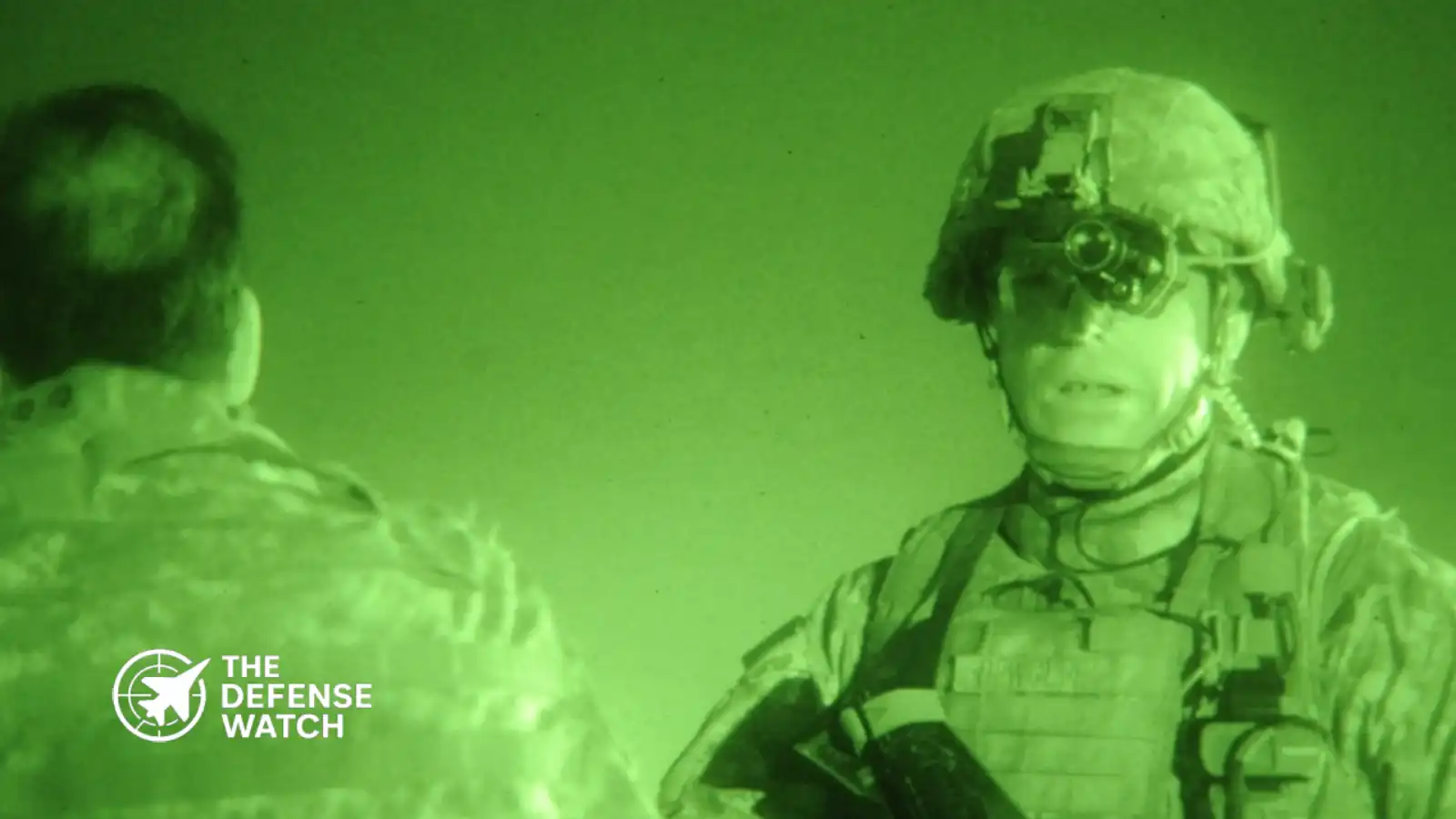
The contract supports procurement of advanced Enhanced Night Vision Goggle-Binocular systems, commonly known as ENVG-B systems. These systems combine traditional night vision capability with thermal sensing technology to improve target acquisition and battlefield awareness in degraded visual environments.
The enhanced night vision goggles program remains one of the Army’s most visible soldier modernization efforts under its close combat capability upgrades.
Advanced Night Fighting Capability
The ENVG-B system provides soldiers with fused white phosphor image intensification and thermal imaging. This allows operators to detect threats through smoke, dust, darkness, and camouflage while maintaining improved depth perception compared to legacy monocular systems.
The goggles are also designed to integrate with the Army’s weapon systems and digital battlefield architecture. Combined with wireless targeting technologies, soldiers can engage threats more rapidly while reducing exposure during combat operations.
The Army has steadily expanded deployment of enhanced night vision goggles across infantry, armored, and special operations units over the past several years. The technology is intended to improve operational tempo during nighttime engagements, where U.S. forces have traditionally maintained a tactical advantage.
Military analysts increasingly view advanced night vision and thermal fusion systems as essential in modern peer conflict environments. Near-peer competitors including Russia and China have invested heavily in electronic warfare, drone reconnaissance, and low-visibility combat capabilities, pushing NATO and U.S. forces to accelerate infantry modernization programs.
Soldier Modernization Remains A Pentagon Priority
The latest contract reflects continued Pentagon emphasis on soldier lethality and survivability as part of the Army’s long-term modernization roadmap.
In recent years, the service has prioritized upgrades in areas including:
- next-generation squad weapons
- integrated visual augmentation systems
- tactical communications
- battlefield networking
- autonomous reconnaissance systems
Enhanced night vision goggles are considered a foundational capability within that modernization effort because they directly affect maneuver effectiveness at the squad level.
The Army has repeatedly stressed that future conflicts may involve contested electromagnetic environments, urban warfare, and prolonged operations in low-light conditions. Advanced fused imaging systems help reduce operational limitations in such scenarios.
The continued procurement also signals confidence in domestic defense industrial capacity supporting soldier systems production. Elbit Systems and its U.S. subsidiary have become major suppliers of electro-optical and soldier survivability technologies for American and allied armed forces.
Growing Demand For Battlefield Electro-Optics
Global demand for military electro-optical systems has increased significantly since the outbreak of major conflicts in Ukraine and the Middle East. Modern battlefields increasingly rely on persistent surveillance, thermal detection, and rapid target identification capabilities.
Defense planners now view night dominance as a critical operational requirement rather than a niche advantage. Thermal fusion optics, helmet-mounted displays, and digitally connected targeting systems are becoming standard equipment for frontline combat troops.
The U.S. Army’s investment in enhanced night vision goggles aligns with broader trends across NATO militaries, many of which are accelerating procurement of advanced infantry equipment amid rising geopolitical tensions.
Industry observers also note that continued contracts of this scale provide stability for the U.S. defense manufacturing base while supporting long-term technology development in electro-optical warfare systems.
Strategic Implications
The enhanced night vision goggles contract demonstrates how relatively small-scale soldier systems can have outsized operational impact. While large platforms such as fighter aircraft and missile systems dominate defense headlines, infantry modernization remains central to combat readiness.
The Army’s continued investment in ENVG-B technology suggests the service expects future ground combat operations to depend heavily on sensor fusion, rapid targeting, and all-weather battlefield awareness.
As militaries adapt to increasingly complex operational environments, integrated night vision and thermal systems are likely to remain a priority procurement area across NATO and allied defense programs.