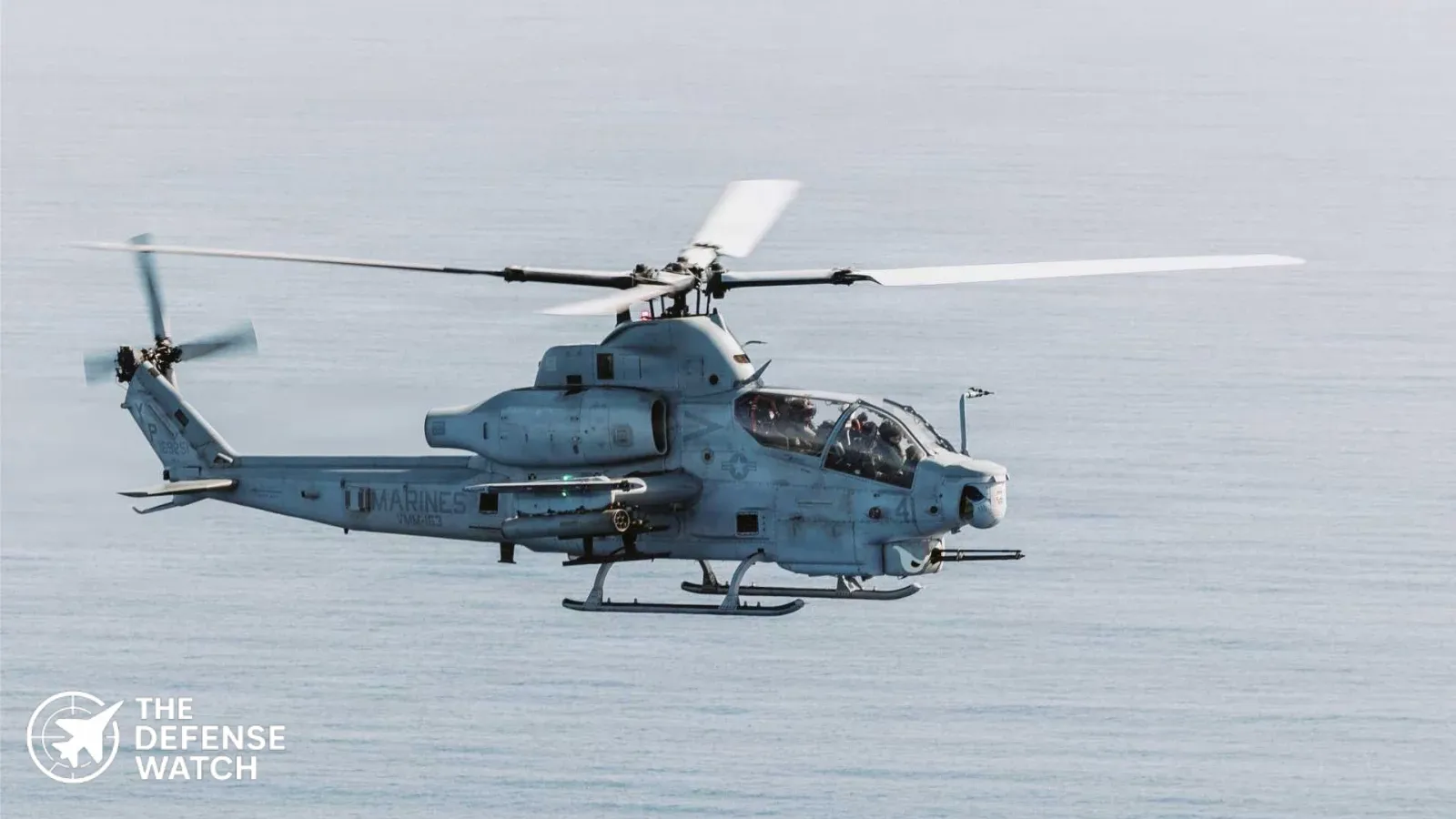
U.S. Marines AH-1Z Viper Live-Fire Flight Operations Boost Pacific Readiness
U.S. Marines AH-1Z Viper attack helicopters carried out live-fire flight operations as part of a Pacific deployment, reinforcing expeditionary and amphibious aviation capabilities with the 11th Marine Expeditionary Unit (MEU).
Marine Medium Tiltrotor Squadron 163 (Reinforced), the aviation element of the 11th MEU, flew AH-1Z Vipers from the USS Boxer Amphibious Ready Group in the U.S. 3rd Fleet area on January 23.
The training included weapons employment and integrated flight operations over the Pacific Ocean. It is designed to strengthen air-to-ground and close air support proficiency while operating from an amphibious assault ship at sea.
Advanced Attack Helicopter in Expeditionary Role
The AH-1Z Viper stands as the Marine Corps most advanced attack helicopter. It has a four-bladed composite rotor system, digital cockpit and helmet-mounted display, plus targeting systems that support all-weather operations.
The aircraft is armed with a 20 mm M197 cannon and a suite of precision weapons, including AGM-114 Hellfire missiles, Advanced Precision Kill Weapon System rockets, and AIM-9 Sidewinder air-to-air missiles.
These features make the Viper a flexible asset for close air support, armed reconnaissance and escort missions within Marine Air-Ground Task Forces and joint operations.
Integration at Sea
Conducting live-fire flight operations from amphibious ships tests the Marines ability to operate without fixed land bases. It also requires tight coordination between naval forces and Marine aviation, including deck handling, navigation and weapons employment at sea.
The exercise reflects ongoing efforts to preserve high levels of readiness in contested maritime environments, reinforcing Marine aviation’s expeditionary mission set.
Deployments like this help the 11th MEU project combat power across the Indo-Pacific. Marine leaders have said such training supports deterrence, alliance reassurance and rapid crisis response.
Strategic Context
The Marines have been increasing operational training in the Pacific as part of broader U.S. deterrence and readiness efforts. AH-1Z Vipers have recently fired new precision weapons in exercises such as Steel Knight 25, including the Joint Air-to-Ground Missile (JAGM), highlighting the platform’s evolving strike roles.
This Pacific live-fire operation joins recent Marine aviation activity in other regions, like air-to-air missile drills in the Caribbean, demonstrating a range of combat proficiency and interoperability with naval and joint forces.