Executive Summary:
Finland’s Patria has signed agreements with Czech state-owned defense firms to support its armored vehicle bid. The move strengthens local industrial participation and improves its chances in a key Czech military procurement. The partnership reflects a broader European push for defense cooperation and localized production.
Patria Armored Vehicle Bid Gains Czech Industrial Backing
The Patria armored vehicle bid has taken a significant step forward as Finnish defense company Patria signed cooperation agreements with Czech state-owned firms to support its entry into a major armored vehicle procurement program.
The agreements aim to integrate Czech industry into the production, maintenance, and lifecycle support of Patria’s armored platforms, reinforcing the company’s competitiveness in the tender. The move aligns with Prague’s requirement for strong domestic industrial participation in defense acquisitions.
The partnerships involve key Czech defense enterprises and are designed to ensure local manufacturing, technology transfer, and long-term sustainment capabilities.
Strategic Push For Local Production And Sovereignty
The Czech Republic has increasingly emphasized domestic involvement in defense procurement, particularly for large-scale modernization programs. This reflects a broader European trend toward strengthening defense industrial sovereignty following supply chain disruptions and rising geopolitical tensions.
By partnering with Czech state firms, Patria positions itself as a contender that meets not only operational requirements but also political and industrial expectations.
Local production offers several advantages:
- Reduced dependency on foreign supply chains
- Faster delivery and sustainment timelines
- Job creation and economic benefits within the Czech Republic
This approach mirrors similar strategies across NATO Europe, where governments are prioritizing domestic capability development alongside interoperability.
Patria’s AMV Platform And Market Position
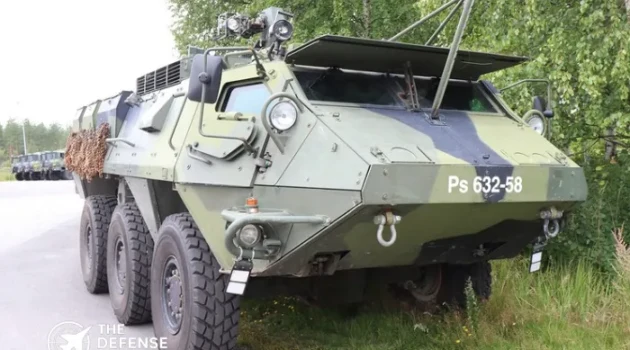
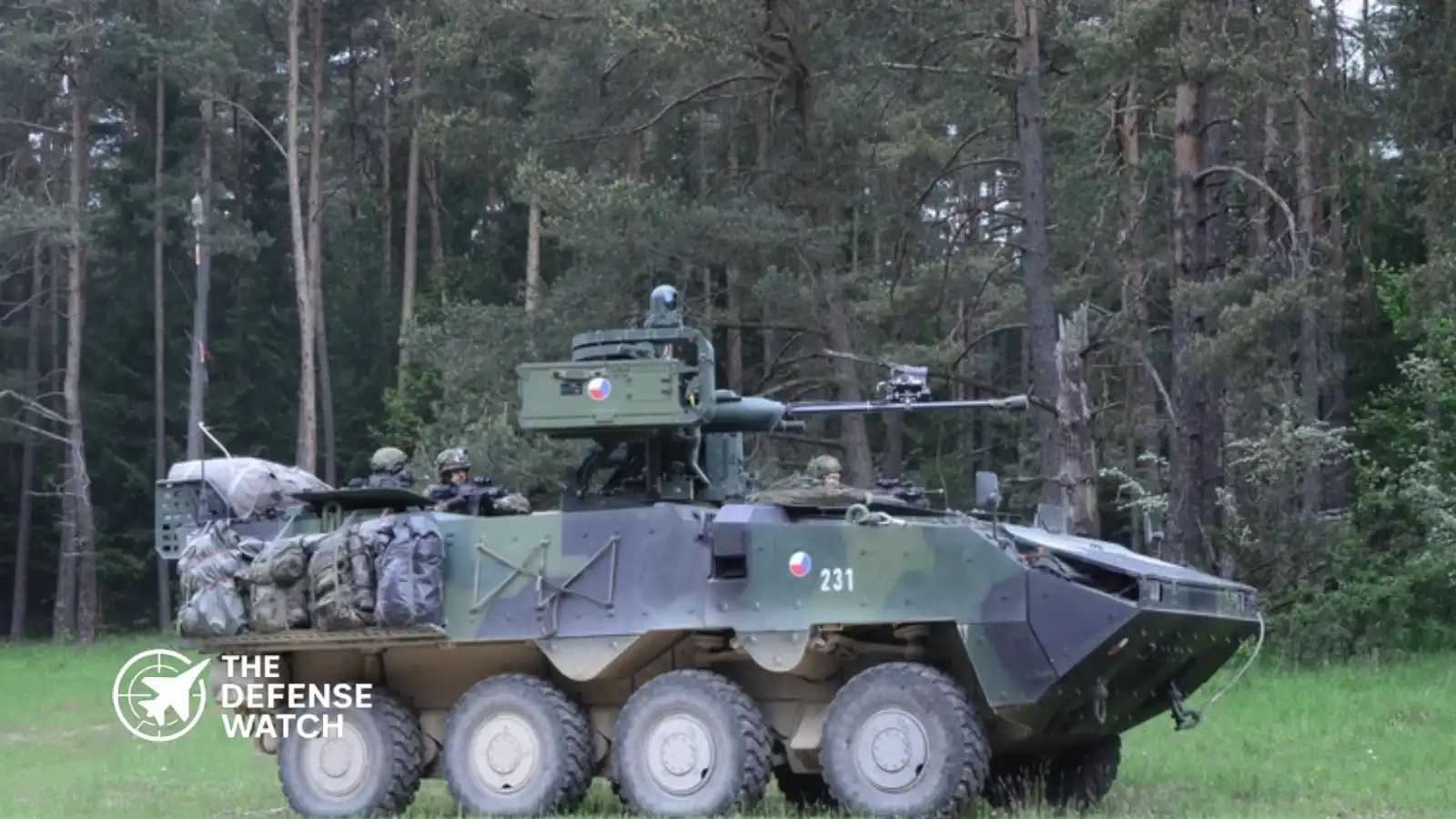
At the center of the Patria armored vehicle bid is the company’s Armored Modular Vehicle (AMV), a combat-proven 8×8 platform used by multiple European and international forces.
The AMV platform is known for:
- High mobility across varied terrain
- Modular design for multiple mission roles
- Strong ballistic and mine protection
- Compatibility with NATO standards
Patria has continued to evolve the platform, introducing upgraded variants with enhanced survivability, digital architecture, and integration options for modern weapon systems.
The Czech requirement is expected to focus on replacing or supplementing legacy armored fleets, making versatility and lifecycle support key evaluation factors.
Competitive Landscape And European Dynamics
The Czech armored vehicle program is expected to attract multiple European defense firms, making competition intense. Companies are likely to emphasize not only technical performance but also industrial partnerships and long-term value.
Patria’s decision to align with Czech state firms early in the process provides a strategic advantage. It demonstrates commitment to local industry and may help mitigate political risk in the procurement decision.
More broadly, the move reflects a shift in how defense contracts are awarded in Europe. Procurement decisions are no longer based solely on platform capability. Industrial cooperation, technology transfer, and economic impact now play a central role.
Broader Implications For European Defense Cooperation
The Patria armored vehicle bid highlights the growing importance of cross-border industrial collaboration within Europe’s defense sector.
As NATO countries increase defense spending in response to evolving security threats, there is a parallel push to ensure that investments strengthen regional industrial capacity.
This trend is driven by several factors:
- The need for resilient supply chains
- Increased demand for rapid production scaling
- Political pressure to support domestic industries
Patria’s partnership model aligns with these priorities, offering a framework that combines proven technology with localized production.
Analysis: Industrial Partnerships Now Factor
The significance of this development goes beyond a single procurement program. It underscores a structural shift in defense acquisition strategies across Europe.
In the past, platform performance often dominated procurement decisions. Today, industrial integration and economic impact are equally critical. Governments want systems that not only enhance military capability but also contribute to national resilience.
Patria’s approach reflects a clear understanding of this shift. By embedding itself within the Czech industrial ecosystem, the company increases its credibility as a long-term partner rather than just a supplier.
This strategy may prove decisive in a competitive field where technical differences between platforms are often marginal.
Outlook
The outcome of the Czech armored vehicle program remains uncertain, but Patria’s strengthened industrial position improves its prospects.
If successful, the deal could:
- Expand Patria’s footprint in Central Europe
- Deepen Finnish-Czech defense cooperation
- Set a precedent for future European defense partnerships
As European militaries continue to modernize, similar collaboration models are likely to become standard practice.