Lockheed Martin Corp., Fort Worth, Texas, has received a $31.29 million indefinite-delivery/indefinite-quantity contract from the U.S. Air Force for contractor engineering and technical services, extending engineering support to a network of foreign F-16 operators through June 30, 2029. The Air Force Life Cycle Management Center at Wright-Patterson Air Force Base, Ohio, is the contracting activity.
Takeaways
Lockheed Martin receives multiyear engineering support award for F-16 operators
1. $31.3 Million IDIQ Contract
Lockheed Martin has received a $31.29 million indefinite-delivery/indefinite-quantity contract for contractor engineering and technical services supporting F-16-related requirements.
2. Support Runs Through June 2029
The award is scheduled to continue through June 30, 2029, providing engineering assistance while participating operators develop greater organic technical capability.
3. 11 Foreign Locations
Work will be performed at Hill Air Force Base and in Argentina, Bahrain, Chile, Egypt, Indonesia, Jordan, Morocco, Oman, Taiwan, Thailand and Turkey.
4. FMS Support Spans 10 Countries
The contract identifies Foreign Military Sales support for Bahrain, Chile, Egypt, Indonesia, Jordan, Morocco, Oman, Taiwan, Thailand and Turkey.
5. Initial Funding Is Less Than 1%
$297,008 in FMS funding is obligated at award, equal to about 0.95% of the contract’s $31.29 million ceiling, leaving most potential value for future task orders.
The award will support work at Hill Air Force Base and in Argentina, Bahrain, Chile, Egypt, Indonesia, Jordan, Morocco, Oman, Taiwan, Thailand and Turkey. The contract includes Foreign Military Sales support for 10 of those countries. The award is a sole-source acquisition, and $297,008 in FMS funds is being obligated initially.
Engineering Support Sustains a Global F-16 Fleet
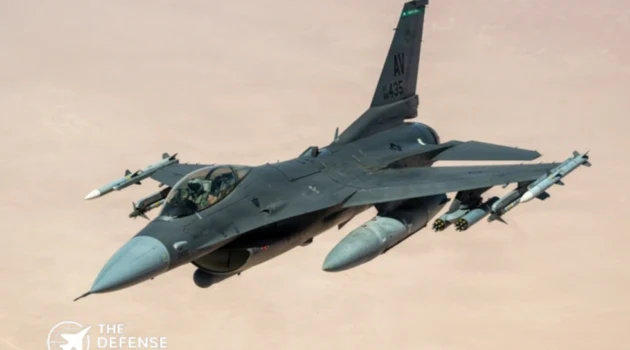
Although the award announcement does not explicitly identify the aircraft in its description, the structure of the requirement closely matches the Air Force’s established Contractor Engineering and Technical Services model for the F-16 Fighting Falcon. Previous Air Force awards under the same CETS framework have provided engineering support for F-16 operators, including Bahrain and other international customers.
The purpose of this type of support is broader than conventional aircraft maintenance. Contractor engineers can provide technical advice, configuration assistance, engineering analysis and other specialized expertise needed to keep aircraft and associated systems operational. This becomes particularly important for foreign operators managing aircraft configurations that can differ by production block, modernization package, weapons integration and national requirements.
The arrangement also reflects a common sustainment challenge for mature combat aircraft. As operators develop their own engineering organizations, the original equipment manufacturer can provide technical reach-back while national personnel build the expertise needed to assume more responsibility. The contract language specifically states that Lockheed Martin will provide advisory engineering and technical services until organic engineering capability is developed.
That model has precedent in the F-16 fleet. A 2023 Air Force award to Lockheed Martin for F-16 engineering support similarly focused on raising the technical skills of personnel responsible for operating and maintaining Lockheed Martin equipment and systems toward self-sufficiency.
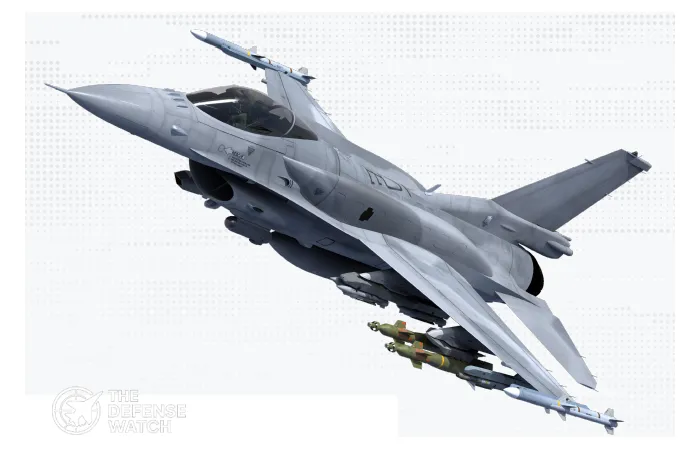
The requirement is strategically relevant because the F-16 remains one of the world’s most widely operated Western combat aircraft. Its multinational fleet creates a continuing demand for engineering support as operators introduce upgrades, manage aging components and integrate new weapons, avionics and mission systems.
Contract Breakdown & Financial Allocation
$31.29 Million IDIQ Ceiling
- Contract value: $31,291,904
- Contract type: Indefinite-delivery/indefinite-quantity
- Contractor: Lockheed Martin Corp., Fort Worth, Texas
- Contracting activity: Air Force Life Cycle Management Center, Wright-Patterson AFB, Ohio
- Acquisition method: Sole source
- Completion date: June 30, 2029
- Initial obligation: $297,008 in FMS funds
An IDIQ contract establishes a framework under which the government can issue individual orders for qualifying work during the contract period. The $31.29 million figure therefore represents the contract’s stated potential value, rather than money that has already been obligated.
The initial $297,008 obligation represents approximately 0.95% of the total contract value. Future obligations will depend on individual requirements and orders issued under the contract.
Global Work Locations
The announced places of performance include:
- United States: Hill Air Force Base
- South America: Argentina, Chile
- Middle East: Bahrain, Egypt, Jordan, Morocco, Oman
- Asia-Pacific: Indonesia, Taiwan, Thailand
- Eastern Mediterranean: Turkey
By location count, one of the 12 listed work locations is in the United States and 11 are overseas. That equates to approximately 8.3% domestic and 91.7% overseas locations by count, although the contract does not provide a corresponding percentage breakdown of funding or labor.
Foreign Military Sales Coverage
The FMS portion covers:
- Bahrain
- Chile
- Egypt
- Indonesia
- Jordan
- Morocco
- Oman
- Taiwan
- Thailand
- Turkey
Argentina is listed as a place of performance but is not identified in the announcement as an FMS customer under this award.
The geographic spread is consistent with the global nature of the F-16 sustainment enterprise. Previous Air Force F-16 engineering awards have covered many of the same operators and have included technical support, configuration management and sustainment activities.
Industry Impact & Acquisition Insight
The sole-source structure reflects Lockheed Martin’s position as the F-16’s original equipment manufacturer and the technical authority for much of the aircraft’s design data, configuration knowledge and engineering baseline. That does not mean every future sustainment activity must remain contractor-led. Instead, the stated objective of transitioning toward organic engineering capability indicates a model in which OEM expertise fills technical gaps while customer organizations develop greater independence.
The approach also separates engineering support from aircraft procurement. Rather than purchasing new aircraft, the award helps maintain the technical foundation needed to operate existing and upgraded fleets. This is increasingly important as F-16 operators combine legacy airframes with modernized avionics, sensors, weapons and mission computers.
The Air Force has used similar F-16 engineering arrangements for years. In March 2024, Lockheed Martin received a $33.79 million IDIQ order for F-16 CORE Sustainment covering engineering and technical services, support and sustainment, configuration management and programmatic support. That earlier award involved FMS customers across Europe, the Middle East and Asia.
The new contract therefore represents another layer of long-term sustainment infrastructure around the global F-16 fleet. Its multiyear structure gives the Air Force a mechanism to respond to technical requirements as they arise while supporting foreign operators that continue to depend on Lockheed Martin engineering expertise.