U.S. Navy JDAM LR Moves Closer To Fleet Use
The JDAM LR guided bomb is moving closer to operational service after the U.S. Navy confirmed successful early-April flight demonstrations of the new long-range weapon. Naval Air Systems Command said the tests marked a key milestone in delivering a lower-cost standoff strike option for carrier aviation.
According to the Navy, two test events validated safe separation from the launch aircraft, compatibility with existing aircraft interfaces, and controlled powered flight to target. Each flight traveled about 200 nautical miles, a major increase over standard JDAM family ranges.
- The U.S. Navy says JDAM LR completed two successful demonstration flights in early April 2026.
- Each test covered roughly 200 nautical miles, far beyond standard JDAM range.
- The weapon combines a JDAM body with wings and a small turbojet engine.
- Next steps focus on shipboard integration for future aircraft carrier deployment.
- The Navy views JDAM LR as an affordable, producible standoff strike option.
That range matters because carrier aircraft increasingly face layered air defenses and anti-access threats. Longer-range weapons allow strike aircraft to launch farther from hostile air defense envelopes, improving survivability while preserving combat reach.
What Is JDAM LR
The U.S. Navy JDAM LR is an evolved version of the widely used Joint Direct Attack Munition. Traditional JDAM kits convert unguided bombs into GPS and INS-guided precision weapons. JDAM LR adds folding wings, fuel, and a compact turbojet engine, turning the weapon into a powered standoff munition.
Reports indicate the system uses a 500-pound class warhead based on the Mk 82 bomb body. Aviation Week reported the weapon carries the military designation GBU-75, a sign the program may be moving beyond experimentation and toward formal acquisition channels.
Why The Navy Wants It Now
The Navy already fields advanced long-range weapons such as JASSM-ER and LRASM through joint inventories, but those systems are more expensive and produced in smaller quantities than bomb-based kits.
That creates a growing demand for what Pentagon planners often call affordable mass, weapons that are precise, long-ranged, and available in higher numbers. JDAM LR appears designed to fill that space.

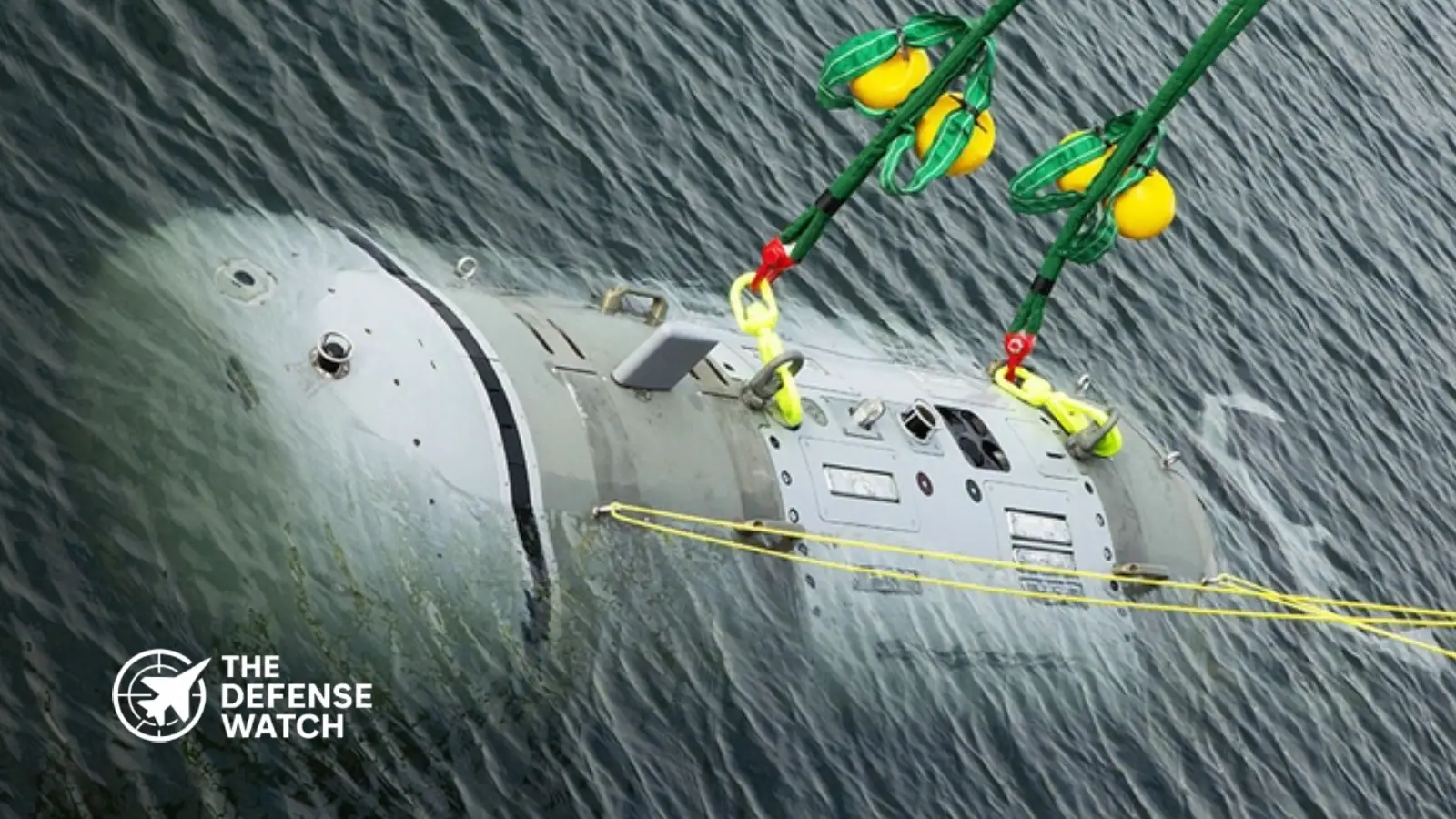
Picture Source: U.S. Naval Air Warfare Center Aircraft Division Using existing JDAM components could lower cost, simplify logistics, and speed production compared with building entirely new missiles. For carrier air wings, that means more magazine depth during sustained operations.
Carrier Deployment Is The Next Test
Naval officials said the next phase of qualification will focus on shipboard integration, a necessary step before carrier deployment. Weapons must be compatible with carrier magazines, handling systems, deck procedures, and maritime storage requirements.
That phase is often overlooked, but it is critical. A weapon can perform well in flight tests and still require significant work before routine carrier use.
If successful, JDAM LR could give U.S. Navy strike groups a new option between short-range glide bombs and costly cruise missiles.
Strategic Impact
The JDAM LR guided bomb reflects a broader U.S. military shift toward expanding strike range without relying only on premium weapons inventories. Similar trends are visible across Air Force and Navy procurement programs.
For the carrier force, the equation is straightforward. More range means carriers can operate farther from threats, while aircraft can hit targets with less exposure.
That does not replace stealth aircraft or advanced missiles, but it adds another tool commanders can use at scale.