

Executive Summary
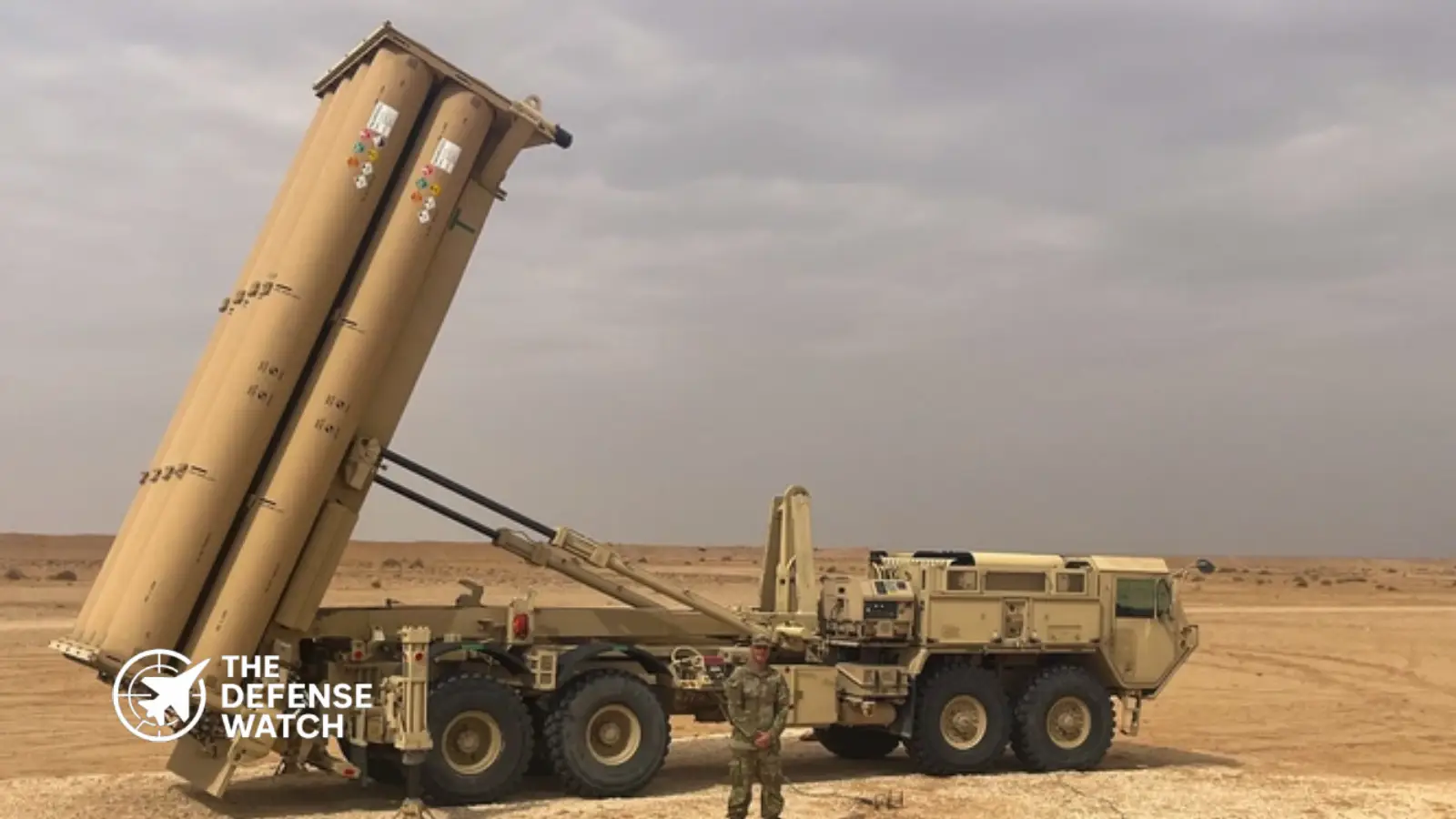
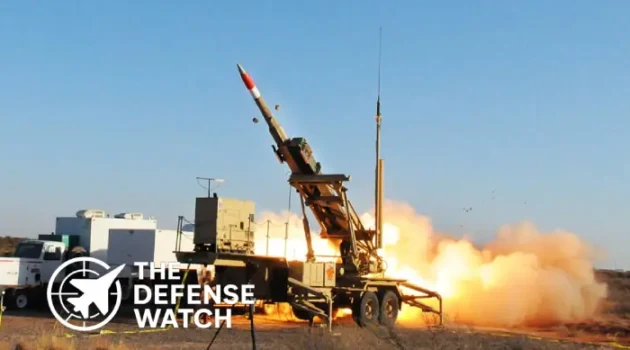
- A Patriot air defense system operated by Greek military personnel intercepted a ballistic missile and a drone near the wider Yanbu region of Saudi Arabia on September 24, according to Reuters, citing Greek security sources. Reuters reported that the Patriot battery launched two interceptors.
- Greece has maintained a Patriot battery in Saudi Arabia since 2021 under a bilateral arrangement focused on strengthening the kingdom’s air and ballistic missile defenses and protecting critical energy infrastructure.
- The engagement highlights the operational importance of layered air and missile defense around Gulf energy infrastructure, while also giving Greece direct experience operating a deployed Patriot system against real-world missile and drone threats.
A Greek-operated Patriot air defense system intercepted a ballistic missile and a drone over the wider Yanbu region of Saudi Arabia on Thursday, September 24, according to Reuters, citing Greek security sources. The area contains major oil refining infrastructure and was among several Saudi regions that received civil defense warnings during the day.
That the Greek Patriot battery launched two missiles and that both incoming threats were destroyed. The report did not identify the launch platform or provide technical details about the intercepted drone or ballistic missile. Those details therefore remain unverified in publicly available primary-source material.
The incident is significant beyond the individual engagement because the Patriot battery represents a sustained European contribution to Saudi Arabia’s integrated air and missile defense architecture.
Greek Patriot Battery Has Been Deployed Since 2021
Greece deployed a Patriot battery to Saudi Arabia in 2021 following a request from Riyadh. The Greek Ministry of National Defence said the mission was intended to reinforce Saudi air defense and ballistic missile defense, particularly around critical energy infrastructure.
The deployment was established through an agreement between Greece and Saudi Arabia. Greek officials described the mission as part of a broader multinational effort to strengthen air defense around critical energy facilities.
The Greek government confirmed in March 2026 that the Patriot battery remained operational in Saudi Arabia. Defense Minister Nikos Dendias said at the time that the Greek Patriot mission had begun in September 2021 and had been extended through November 2026.
That extended deployment has now placed Greek personnel in an unusually direct operational role in the defense of Gulf infrastructure.
Patriot Brings Ballistic Missile Defense Into the Same Defensive Mission
The Patriot family is designed to address both air-breathing threats and tactical ballistic missiles, depending on the interceptor and system configuration.
The U.S. Army identifies PAC-3 Missile Segment Enhancement as a hit-to-kill interceptor used within the Patriot system. It is designed to counter tactical ballistic missiles, cruise missiles and aircraft as part of a layered air and missile defense architecture.
However, the specific Patriot interceptor used in the September 24 engagement has not been publicly identified. The available reporting only states that the Greek battery fired two Patriot missiles. It would therefore be inappropriate to assign the engagement to a particular PAC-3 or PAC-3 MSE configuration without additional official confirmation.
Element Confirmed information System Patriot air defense system Operator Greek military personnel Location Wider Yanbu region, Saudi Arabia Date September 24, 2026 Reported threats One ballistic missile and one drone Interceptors fired Two, according to Reuters Origin of threats Not publicly identified in the Reuters report Specific Patriot interceptor Not publicly identified Mission start 2021 Current mission extension Through November 2026 Why Yanbu Matters to Air Defense Planning
Yanbu is strategically important because it hosts major petroleum processing and export infrastructure on Saudi Arabia’s Red Sea coast.
That makes the area different from a conventional military air defense problem. The defended assets are fixed, economically important facilities whose disruption can have effects well beyond the immediate tactical area.
Greece’s original deployment agreement explicitly linked the Patriot mission to the protection of critical Saudi energy infrastructure.
The September 24 engagement therefore illustrates a broader shift in Gulf air defense requirements. Defending energy infrastructure now involves preparing for combinations of ballistic missiles, drones and other airborne threats rather than relying on a single threat category.
The Operational Value of a European Patriot Deployment
The Greek deployment also provides an important example of how European militaries can contribute specialized air and missile defense capabilities outside their home territory.
The mission is not simply a transfer of equipment. Greek personnel operate the battery, giving the Hellenic Air Force experience with sustained deployment, coalition coordination and live air defense operations in a high-threat environment.
Greek officials have already confirmed that the battery has been used against Iranian ballistic missiles during the current regional conflict. In March, Defense Minister Dendias said the Greek Patriot battery had intercepted two ballistic missiles targeting Saudi refineries.
Prime Minister Kyriakos Mitsotakis subsequently described the March engagement as a defensive action conducted within the framework of the Greek-Saudi agreement.
Reuters now reports that the September 24 engagement was the fifth combat use of the Greek-operated system since the United States and Israel began their war with Iran at the end of February. That count comes from Reuters’ reporting and should be treated separately from the individual engagements publicly confirmed by Greek officials.
Ballistic Missiles and Drones Create Different Defensive Problems
The combination reported near Yanbu is important because ballistic missiles and drones present different detection, tracking and engagement challenges.
A ballistic missile can compress the defender’s reaction timeline because of its speed and trajectory. A drone can present a different problem, particularly when it flies at lower altitude, approaches along complex routes or is employed alongside other threats.
The Patriot system is primarily a high-end air and missile defense capability. The U.S. Army describes PAC-3 MSE as part of a layered architecture rather than a stand-alone solution for every airborne threat.
That distinction matters for Gulf infrastructure defense. A sustainable architecture has to combine long-range surveillance, command and control, ballistic missile interceptors and lower-cost defenses against smaller or slower threats.
Using a high-end interceptor against every low-cost drone can create an unfavorable cost and magazine-management problem, although the September 24 incident does not provide enough public information to determine what engagement logic was used.
The Industrial Challenge Behind Patriot Operations
The operational value of Patriot also depends on interceptor availability.
The U.S. Army has been expanding PAC-3 MSE production in response to growing demand from U.S. forces and international customers. In April 2026, the Army announced a $4.7 billion contract action supporting accelerated PAC-3 MSE production.
The Army had previously reported that a 2024 contracting action was intended to raise Lockheed Martin’s maximum annual PAC-3 MSE production rate from 550 to 650 missiles.
These production figures do not establish the number or type of interceptors available to the Greek battery in Saudi Arabia. They do, however, show why the wider Patriot mission is tied to industrial capacity as well as tactical performance.
Repeated combat use consumes finite interceptor inventories and increases pressure on production, maintenance, resupply and forward logistics.
What the September 24 Engagement Shows
The immediate lesson is that the Greek Patriot deployment has moved beyond a precautionary presence. Greek personnel are operating a deployed air and missile defense system in an environment where ballistic missiles and drones are being used against strategically important infrastructure.
The engagement also reinforces the value of distributed allied air defense. Saudi Arabia retains its own extensive air defense capabilities, while foreign-operated systems can add additional sensors, interceptors, crews and geographic coverage.
At the same time, the incident should not be interpreted as evidence that Patriot alone can provide comprehensive protection against the full range of threats facing Gulf infrastructure. The public record does not disclose the complete sensor network, command architecture, interceptor inventory or engagement sequence involved in the September 24 event.
Those limitations are important when assessing the broader effectiveness of the defense architecture.
A Wider Test for Gulf Integrated Air Defense
The strategic issue is increasingly one of integration rather than individual missile performance.
Saudi energy infrastructure faces a threat environment in which ballistic missiles, cruise missiles and drones can potentially be used in overlapping attack patterns. A layered defense therefore needs to combine systems optimized for different portions of the threat spectrum.
Patriot remains particularly relevant to the ballistic missile defense layer. The U.S. Army describes the system as capable of contributing to both lower-tier ballistic missile defense and air defense, with different Patriot interceptors optimized for different target sets.
The Greek deployment demonstrates how allied contributions can reinforce that architecture while giving participating militaries direct operational experience.
For Greece, the mission has also become a sustained test of expeditionary air defense operations. For Saudi Arabia, the deployment provides an additional allied capability focused on critical infrastructure. For the broader European defense community, it demonstrates how air defense assets can be employed outside Europe when regional partners request assistance.
The September 24 interception therefore matters less as an isolated Patriot engagement than as another data point in the evolution of Gulf integrated air and missile defense.
What Remains Unconfirmed
Several important details have not been publicly disclosed.
These include the exact type and origin of the ballistic missile, the type and origin of the drone, the specific Patriot interceptor used, the engagement distance, the radar track sequence and whether other Saudi or allied systems participated in the engagements.
No such figures should be treated as confirmed unless they are released by an authoritative source.
What is confirmed is that Reuters reported two successful interceptions by the Greek-operated Patriot battery near Yanbu and that Greece has maintained the system in Saudi Arabia since 2021 as part of a mission supporting Saudi air and ballistic missile defense.
Executive Summary
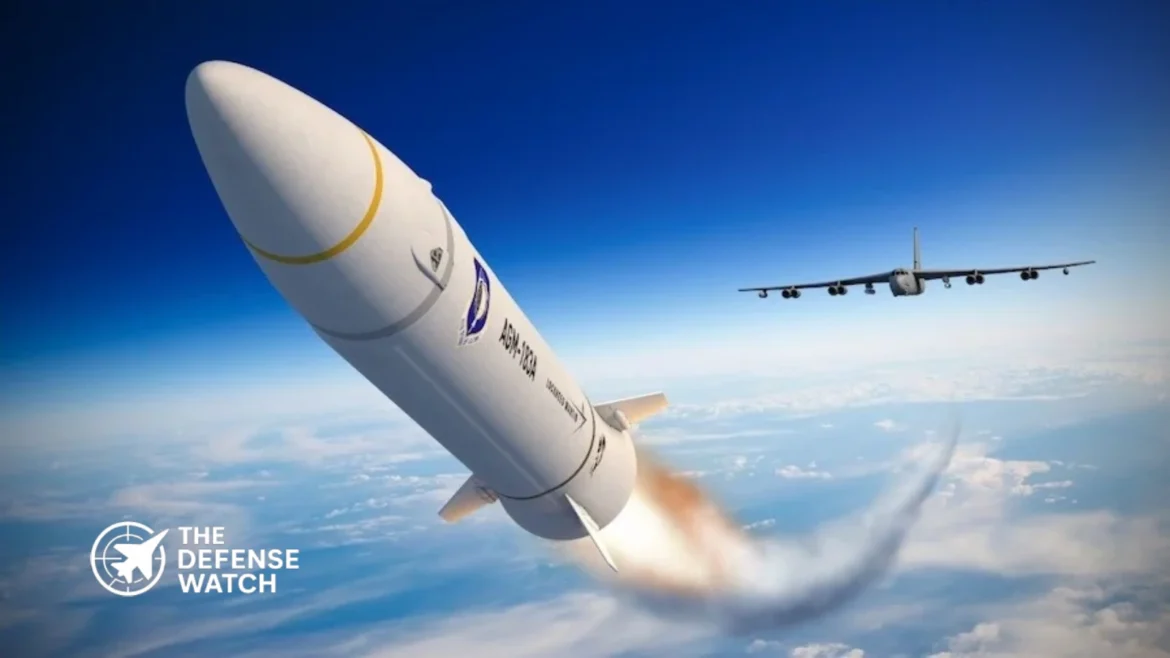
- Lockheed Martin said Sept. 16 that the next phase of hypersonic development is shifting from headline peak speed toward sustained atmospheric flight, maneuverability and operational production.
- The company highlighted scramjet propulsion, heat-resistant materials and advanced manufacturing as central technical challenges. It said atmospheric flight at Mach 5 creates extreme thermal and aerodynamic stresses, while scramjets require the vehicle to reach sufficient speed before sustained operation.
- The industrial challenge is significant. U.S. government assessments have identified production capacity, testing infrastructure and immature technologies as persistent obstacles to scaling hypersonic weapons. Recent GAO findings show that production problems continue to affect the Navy and Army’s Conventional Prompt Strike and Long Range Hypersonic Weapon efforts.
Lockheed Martin says hypersonic weapons race is shifting from peak speed to sustained flight, maneuverability and mass production
Lockheed Martin is arguing that the next phase of the U.S. hypersonic weapons competition will be decided less by maximum speed than by how long a weapon can maintain hypersonic flight, maneuver inside the atmosphere and be produced in operational quantities.
In a Sept. 16, 2026 company analysis, Lockheed Martin described sustained atmospheric flight as the more difficult engineering problem behind future hypersonic systems. The company pointed to propulsion, thermal management, aerodynamic control and manufacturing as the areas that will determine whether hypersonic technology can move from successful demonstrations to repeatable military capability.
The argument comes as the United States continues to develop multiple hypersonic weapon architectures while China maintains a large and increasingly sophisticated missile portfolio. The Pentagon’s latest China military power assessment says China has the world’s leading hypersonic missile arsenal and continues developing both conventional and nuclear-armed hypersonic systems.
Why Sustained Flight Matters More Than a Speed Record
Mach 5 is the conventional threshold used to define hypersonic flight, but reaching that speed alone does not distinguish a modern hypersonic weapon from older missile technologies.
Ballistic missiles have reached hypersonic velocities for decades during portions of their flight. The more demanding engineering problem is maintaining controlled hypersonic flight within the atmosphere while managing heat, drag, propulsion and maneuvering forces.
Lockheed Martin says this distinction is becoming increasingly important. A powered atmospheric vehicle can potentially maintain control and alter its trajectory during flight rather than following a largely predetermined ballistic path.
That creates a different problem for missile defenses.
A defender must detect the weapon, establish a reliable track, predict its future position and provide an interceptor with sufficient time and geometry to engage it. Maneuvering during the terminal or midcourse portions of flight can complicate those calculations.
The U.S. Department of Defense has previously identified hypersonic weapons as difficult targets because of their speed, maneuverability and varying flight altitudes.
The Thermal Barrier
Sustained atmospheric hypersonic flight creates an extreme thermal environment.
Lockheed Martin says air compressed ahead of a vehicle traveling at approximately Mach 5 can generate surface temperatures exceeding 2,200 degrees Fahrenheit. The company identifies carbon-fiber composites, specialized ceramics and heat-resistant coatings as part of the material solution.
These figures come from Lockheed Martin and should therefore be treated as company-provided engineering context rather than an independently verified performance specification for a particular operational missile.
The fundamental problem is broader than skin temperature. Electronics, sensors, communications systems, control surfaces and propulsion components must continue functioning while exposed to a rapidly changing aerodynamic and thermal environment.
This is one reason why hypersonic development cannot be reduced to engine performance alone.
Scramjets Change the Design Problem
Lockheed Martin’s analysis places particular emphasis on air-breathing propulsion.
A scramjet uses atmospheric oxygen rather than carrying an onboard oxidizer supply. That can reduce the amount of oxidizer hardware that a vehicle would otherwise need, but it introduces another requirement: the engine cannot simply operate from a standstill.
The vehicle has to reach the appropriate flight conditions before the scramjet can sustain combustion. Lockheed Martin identifies aircraft release, cold-gas ejection and hot-launch methods among possible approaches for providing the initial acceleration.
This creates a propulsion chain rather than a single-engine problem.
Hypersonic flight architecture
| Technology area | Core challenge | Operational significance |
|---|---|---|
| Initial acceleration | Reach conditions required for sustained propulsion | Determines launch architecture |
| Scramjet propulsion | Maintain combustion at hypersonic velocity | Enables sustained powered flight |
| Thermal protection | Survive prolonged aerodynamic heating | Protects structure and onboard systems |
| Guidance and control | Maneuver while exposed to extreme aerodynamic forces | Complicates defensive tracking |
| Communications | Maintain usable links during high-speed atmospheric flight | Supports command and mission updates |
| Manufacturing | Produce complex thermal and composite structures consistently | Determines fleet-scale availability |
The table reflects publicly described engineering challenges, not specifications for a specific Lockheed Martin missile.
The Industrial Base May Be the Harder Competition
The most important part of Lockheed Martin’s argument may not be aerodynamic.
It is production.
The company says factories producing hypersonic systems require specialized inspection systems, high-temperature furnaces and manufacturing processes capable of handling advanced composite structures. It also argues that future production systems need flexibility across different launch configurations.
That requirement exposes a longstanding weakness in U.S. hypersonic development.
The Government Accountability Office has repeatedly identified industrial-base capacity, workforce requirements, testing infrastructure and immature technologies as challenges to large-scale hypersonic production.
Recent GAO findings provide a more direct indication of the problem.
The Navy’s Conventional Prompt Strike program, which shares its missile and glide-body production architecture with the Army’s Long Range Hypersonic Weapon, has experienced production and quality problems. GAO reported in 2026 that the current production rate was below the program goal of 12 missile rounds per year, while flight testing aboard the Zumwalt class had moved to 2027.
That matters because a technically successful weapon has limited military value if production cannot generate sufficient inventory.
U.S. Hypersonic Programs Face a Scale Problem
The U.S. approach is not based on a single hypersonic weapon.
The FY2026 defense budget request included more than $3.9 billion for hypersonic weapons and supported development and production across programs including the Army’s Long Range Hypersonic Weapon, Conventional Prompt Strike and the Air Force’s Hypersonic Attack Cruise Missile.
Lockheed Martin has also been moving toward manufacturing approaches intended to support higher-rate production.
In June 2026, the company announced its Next Generation Hypersonic Glide Body, describing it as a manufacturing-first design intended to support scalable production. In August, Lockheed Martin and Albany Engineered Composites announced a teaming agreement focused on increasing production capacity for U.S. hypersonic programs.
These announcements do not establish that a particular weapon has entered full-rate production. They indicate where the industrial strategy is moving: reducing the gap between prototype manufacturing and repeatable production.
Where the U.S. Must Close the Competitive Gap
The comparison with China is particularly important.
The Pentagon’s 2025 China Military Power Report describes China as having the world’s leading hypersonic missile arsenal and identifies continued development of hypersonic systems. It also notes China’s fielded hypersonic glide vehicle capable DF-17 system and continued advances in related missile technologies.
The relevant competitive gap therefore extends beyond velocity.
Three areas are particularly important.
1. Sustained maneuverability
A hypersonic system must combine speed with controlled atmospheric flight. The engineering objective is not simply reaching a high velocity, but retaining useful control authority throughout the mission.
2. Detection and survivability
The offensive advantage of maneuverability depends partly on the defender’s ability to detect, track and predict the vehicle. U.S. defense officials have previously identified space-based sensing as an important component of the response to maneuvering hypersonic threats.
This makes hypersonic competition inseparable from missile warning, tracking and command-and-control architecture.
3. Production capacity
This may be the least visible but most decisive industrial factor.
GAO’s recent findings on Conventional Prompt Strike demonstrate that advanced propulsion and flight technology can reach the production stage while manufacturing capacity, quality control and testing continue to constrain output.
For the United States, closing this gap means more than funding individual weapons. It requires reliable suppliers, qualified materials, specialized manufacturing equipment, test capacity and skilled workers.
Speed Alone Does Not Define the Weapon
The shift described by Lockheed Martin is important because hypersonic weapons are often discussed primarily through maximum speed.
That metric has obvious value, but it does not capture the full military problem.
A weapon that reaches a high speed briefly but cannot sustain controlled flight, protect its electronics from heat, communicate reliably or be manufactured consistently presents a different operational proposition from a system designed around sustained atmospheric flight.
The same distinction applies to defenses. Interceptors and sensors cannot be designed around speed alone. Tracking architecture, engagement timelines, sensor coverage and fire-control systems must account for maneuvering trajectories and uncertain future positions.
The result is an increasingly integrated competition between offensive weapons and defensive sensing.
The Next Phase Is a Systems Competition
The U.S. hypersonic effort is therefore moving into a phase where propulsion, materials, sensors, guidance, launch systems, testing and industrial capacity increasingly matter as one system.
The Pentagon’s FY2026 budget request already reflects this broader approach, combining hypersonic weapons investment with funding for missile and munitions production expansion.
Lockheed Martin’s own production initiatives point in the same direction. Its hypersonics organization says it has expanded manufacturing capabilities in Alabama and development capacity in Texas, while its recent industry partnerships focus on scalable composite manufacturing.
But the recent GAO assessment provides an important counterweight to industry claims. Production targets, testing schedules and manufacturing performance remain measurable constraints, particularly for the U.S. Army and Navy’s shared hypersonic missile architecture.
That means the next meaningful benchmark will not necessarily be another speed demonstration.
It will be whether the United States can repeatedly test, manufacture and field reliable hypersonic weapons in quantities large enough to support sustained operations.
What to Watch Next
For the U.S. hypersonic sector, several indicators will provide a clearer picture of progress than headline speed claims:
- Successful completion of repeated end-to-end flight tests
- Evidence of stable production rates rather than prototype output
- Improvements in composite and thermal-protection manufacturing
- Greater availability of hypersonic test infrastructure
- Progress in air-breathing hypersonic cruise missile development
- Integration with space-based missile warning and tracking systems
- Evidence that production costs and manufacturing time are becoming more predictable
The distinction is important. Lockheed Martin’s Sept. 16 analysis describes an industry direction, not proof that every technical or manufacturing challenge has been solved.
The broader U.S. record supports that caution. Government assessments continue to identify testing, production and technology maturity as constraints even as funding and industrial investment increase.
For the next generation of hypersonic weapons, the competitive question is increasingly becoming straightforward: can a system fly fast, maneuver under extreme conditions, survive the thermal environment, remain controllable and be produced reliably at scale?
That is a considerably harder requirement than simply reaching Mach 5.

Pete Hegseth Texas Enlistment Ceremony Highlights Readiness and Training Standards
Secretary of War Pete Hegseth used a September 18, 2026, enlistment ceremony in Austin, Texas, to outline his expectations for how the U.S. military should prepare and support new service members. At the Austin Armed Forces Reserve Center, Hegseth administered the oath to more than a dozen recruits joining the Texas National Guard, followed by an oath for more than 30 recruits entering federal military service across the armed forces.
Rather than focusing his remarks primarily on the recruits, Hegseth addressed the families who had gathered for the ceremony. His message centered on the responsibility assumed by military leaders when young Americans enter uniform, particularly the obligation to provide demanding training, appropriate equipment, clear missions and adequate support.
The event also fits a broader pattern of Hegseth participating personally in enlistment ceremonies during 2026. In January, he administered the oath to 40 recruits at the Los Angeles Military Entrance Processing Station and emphasized preparation, equipment and support for new service members.
Key Takeaways
Hegseth used the Texas enlistment ceremony to emphasize military readiness, rigorous training, clear missions, capable equipment and leadership responsibility toward new service members.
What Happened at the Austin Enlistment Ceremony
The Pete Hegseth Texas enlistment ceremony took place at the Austin Armed Forces Reserve Center on September 18. The ceremony involved two groups of new service members.
The first group consisted of more than a dozen young men and women entering the Texas National Guard. Hegseth then administered the oath to more than 30 additional recruits entering federal military service across the armed forces.
The distinction is important from a force-structure perspective.
The National Guard provides forces that can operate under state or federal authority depending on their status and mission. Federal military recruits, meanwhile, enter one of the armed services as part of the active or reserve components of the U.S. military.
Together, these accessions represent the personnel pipeline that eventually supplies the Army, Navy, Air Force, Marine Corps, Space Force and other elements of the U.S. national defense structure.
The United States Military Entrance Processing Command describes the accession process as involving recruiting services that identify, recruit and qualify applicants for military service.
Hegseth’s Message to Military Families
The most significant part of the Austin event was not the oath itself, but Hegseth’s discussion with the families watching the ceremony.
He described the decision by parents to allow their children to enter military service as a major responsibility for the War Department. He said military leaders must ensure that recruits receive appropriate preparation, equipment and support.
Hegseth specifically identified several areas that he said should remain central to military preparation:
- Training: New personnel must receive demanding preparation for their assigned roles.
- Readiness: Service members must be capable of performing their assigned missions.
- Equipment: Units require appropriate equipment to perform those missions.
- Mission clarity: Personnel need to understand what they are being asked to accomplish.
- Leadership support: Commanders must accept responsibility for preparing and supporting their formations.
The emphasis reflects a basic principle of force generation: recruiting personnel is only the beginning of creating military capability.
A recruit does not immediately become a combat-ready warfighter after taking the oath. The accession process must be followed by basic military training, occupational training, unit integration, certification and continuing readiness activities.
The Training Standards Debate
Hegseth also described what he called the War Department’s Golden Rule for commanders.
His formulation was that leaders should consider whether they would accept a particular training standard if their own son or daughter were serving in the formation.
The broader issue is training realism and force readiness.
Military organizations have to balance several competing requirements. Training must be demanding enough to prepare personnel for realistic operational conditions, while commanders must also manage safety, resources, personnel availability and mission requirements.
For combat formations, this becomes particularly important.
A training program can produce personnel who technically meet administrative requirements without necessarily creating the level of tactical proficiency required for complex operations. Modern military operations increasingly require personnel to work across domains, including land, air, maritime, cyber, space and electromagnetic operations.
That places greater demands on training systems.
From Recruitment to Combat Readiness
The strategic importance of the Texas ceremony extends beyond the number of recruits who took the oath.
The United States military is a large technical organization that depends on a continuous personnel pipeline. New recruits eventually fill positions ranging from infantry and aviation to cyber operations, intelligence, logistics, maintenance, communications and space operations.
Modern combat systems also require highly trained personnel.
An advanced aircraft, air-defense system, unmanned platform or electronic warfare system can provide substantial technical capability, but its operational value depends on trained personnel who can employ, maintain and integrate the system.
This creates a direct connection between recruitment, training and military modernization.
As the U.S. military introduces systems such as fifth-generation aircraft, autonomous platforms, long-range precision weapons, integrated air and missile defenses and advanced command-and-control networks, the personnel operating those systems require increasingly specialized technical skills.
The personnel system therefore becomes part of the broader modernization equation.
Personnel Readiness and Multi-Domain Operations
The U.S. military’s future force will operate in an environment where traditional service boundaries are increasingly connected.
An air operation can depend on satellite communications and space-based positioning. A naval task force can rely on cyber networks, airborne sensors and long-range weapons. Ground forces can depend on unmanned aircraft, electronic warfare, intelligence networks and joint fires.
This means military readiness cannot be measured only by troop numbers.
Relevant factors include:
- Personnel availability
- Individual qualification
- Unit-level training
- Equipment availability
- Maintenance capacity
- Logistics support
- Command-and-control connectivity
- Interoperability with joint and allied forces
- Ability to operate under contested conditions
The Pentagon’s focus on warfighter preparation therefore has implications across the entire force-generation system.
Pete Hegseth’s Enlistment Ceremonies in 2026
The Austin event is part of a wider series of enlistment-related appearances by Hegseth during 2026.
On January 5, he administered the oath to new recruits at a recruiting station in Newport News, Virginia. Days later, he administered the oath to 40 recruits at the Los Angeles Military Entrance Processing Station.
On January 12, Hegseth also administered an oath to recruits at Navy Talent Acquisition Group Red River in Irving, Texas.
In February, he administered the oath to 17 Arkansas Army National Guardsmen and five Arkansas Air National Guardsmen during a ceremony in Camden, Arkansas.
These events have provided Hegseth with repeated opportunities to emphasize recruitment, training and military readiness.
Why Military Training Standards Matter
For defense professionals, the central issue raised by the Austin ceremony is the relationship between standards and operational readiness.
Military training serves several purposes.
First, it establishes basic technical and tactical competence. Second, it develops unit cohesion and decision-making under pressure. Third, it gives commanders an opportunity to identify weaknesses before personnel enter operational environments.
In high-end conflict, training requirements can become even more demanding.
A future conflict against a technologically capable adversary could involve electronic attack, degraded communications, cyber disruption, unmanned systems, precision fires and persistent surveillance. Personnel may need to make decisions while operating with incomplete information and disrupted networks.
That places a premium on realistic training and mission-focused preparation.
The challenge for military leaders is to ensure that standards remain measurable and relevant while adapting training to rapidly changing technologies and operational concepts.
Data Summary: Austin Enlistment Ceremony
| Metric | Details |
|---|---|
| Event | Austin military enlistment ceremony |
| Date | September 18, 2026 |
| Location | Austin Armed Forces Reserve Center, Texas |
| Presiding official | Secretary of War Pete Hegseth |
| Texas National Guard recruits | More than a dozen |
| Federal military recruits | More than 30 |
| Military services represented | Federal recruits across all branches |
| Primary focus of remarks | Readiness, training, equipment, mission clarity and leadership |
| Audience emphasized by Hegseth | Families of new service members |
| Status | Completed ceremony |
Challenges Facing the U.S. Military Personnel Pipeline
The ceremony also highlights a broader challenge facing any modern military: turning recruits into deployable capability.
Recruiting alone does not solve personnel readiness problems.
The services must also retain experienced personnel, develop technical specialists, maintain instructor capacity and ensure that training infrastructure keeps pace with changes in warfare.
Modernization can make this problem more complex.
New aircraft, autonomous systems, electronic warfare equipment, cyber capabilities and space systems can require specialized operators and maintainers. Training those personnel can take considerably longer than basic military accession.
At the same time, experienced personnel are needed to train the next generation.
This creates a cycle in which recruitment, retention and professional development directly influence the military’s ability to absorb new technology.
The Role of Families in Military Service
Hegseth’s decision to address parents and relatives also highlights an often overlooked part of military manpower.
Families do not directly operate weapons systems or command units, but they can play an important role in supporting service members throughout their careers.
Military service can involve relocations, deployments, extended training periods and periods of separation. For Guard and Reserve personnel, service can also interact with civilian employment and local community responsibilities.
The military therefore operates within a wider social support structure.
That support can be particularly relevant to retention, morale and long-term service decisions, although individual outcomes vary significantly between service members and families.
Future Outlook
The Austin ceremony does not represent a new weapons program or a major force-structure announcement. Its importance is instead connected to the human component of U.S. military power.
The United States continues to field increasingly complex systems across the air, land, maritime, cyber and space domains. Those systems require personnel who can operate, maintain and integrate them under demanding conditions.
Hegseth’s message in Austin placed that personnel requirement at the center of his remarks.
His stated priorities were clear: prepare service members, train them rigorously, provide suitable equipment, establish clear missions and ensure leadership support.
Whether those objectives translate into measurable improvements will depend on how they are implemented across recruiting, training, acquisition, maintenance and operational commands.
For the recruits who took the oath in Austin, however, the next stage is more immediate. Their transition from civilian applicants to military personnel begins with training and continues through qualification, unit integration and progressively more demanding responsibilities.
Conclusion
The Pete Hegseth Texas enlistment ceremony highlighted a fundamental element of U.S. military power: personnel readiness remains as important as technology and equipment.
More than 40 new recruits participated in the Austin ceremony, including members of the Texas National Guard and recruits entering federal military service. Hegseth used the event to tell their families that military leadership carries a responsibility to prepare service members for difficult missions through rigorous training, capable equipment and clear direction.
The message also fits Hegseth’s repeated participation in enlistment ceremonies during 2026. Earlier events in Virginia, California, Texas, Florida and Arkansas similarly placed emphasis on preparing and supporting new service members.
For the U.S. military, the longer-term challenge is converting recruitment into sustained combat capability. That requires not only bringing new Americans into uniform, but also providing the training, experience, equipment, leadership and institutional support needed to make them effective members of an increasingly technical joint force.
Executive Summary
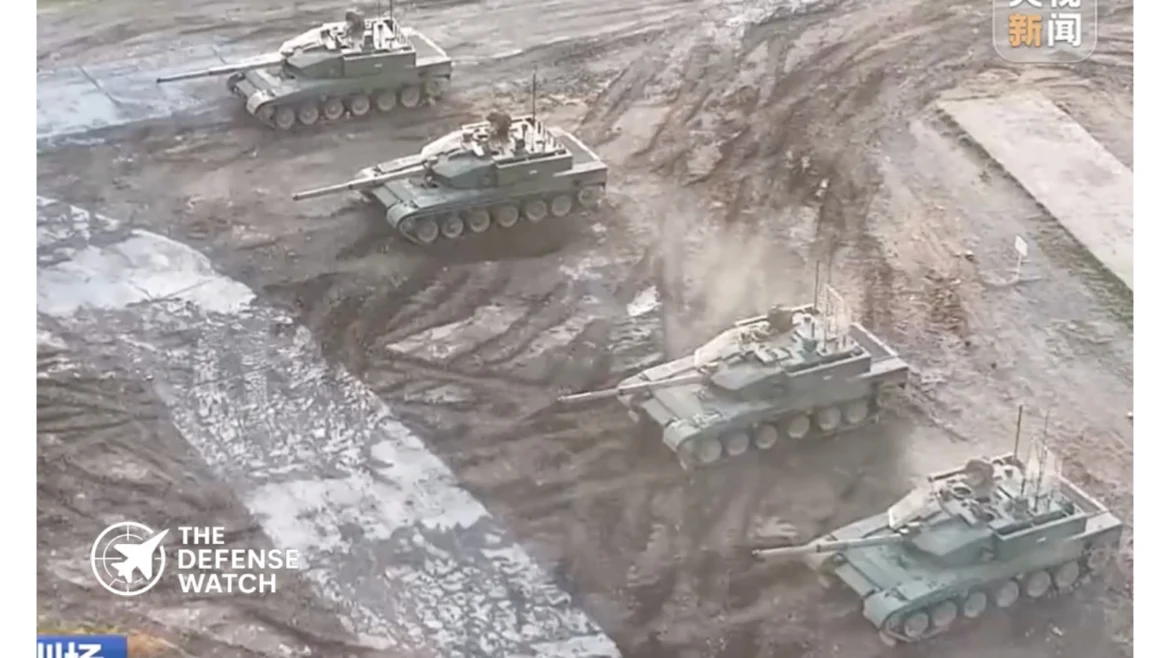
- CCTV footage released in September 2026 shows four Type 99B main battle tanks from a PLA 80th Group Army brigade conducting a live-fire assessment in Shandong.
- The exercise tested target search, identification, engagement while stationary and on the move, communications, maneuver through obstacles, and three-person crew performance.
- The more significant development is the emphasis on information systems and networked operations, suggesting that the Type 99B is intended to operate as part of a connected combined-arms formation rather than as an isolated tank.
China has released rare footage of the Type 99B main battle tank conducting live-fire training, providing a clearer view of how the People’s Liberation Army is integrating its newest publicly identified 99-series tank into operational training.
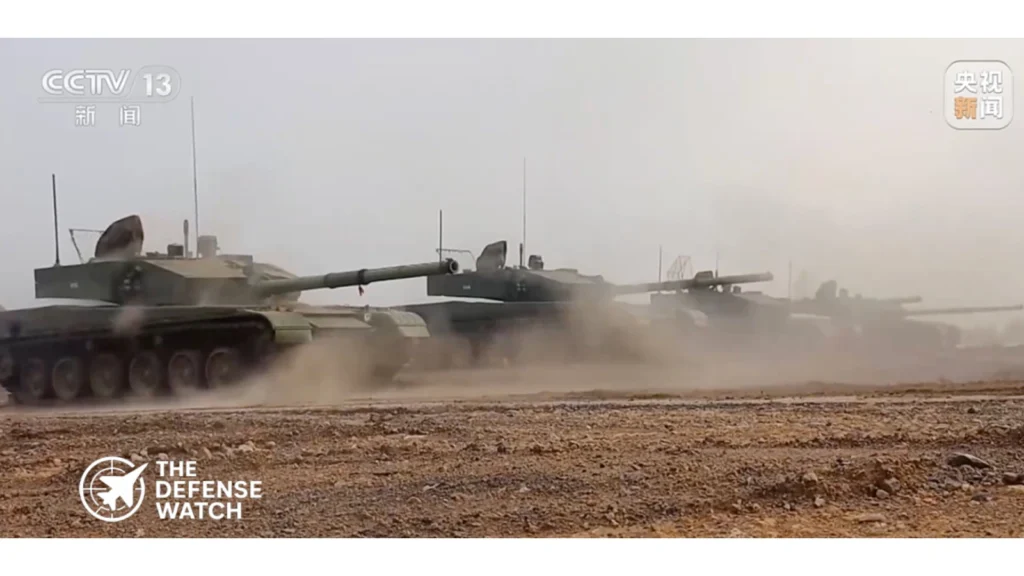
The footage, released by CCTV News on September 16, shows a brigade of the PLA’s 80th Group Army conducting a live-fire assessment at a training area in Shandong Province. Four Type 99B tanks are shown maneuvering, loading ammunition, operating their sights and engaging simulated targets under different battlefield conditions.
The exercise is significant less because it demonstrates a new gun or a disclosed performance figure than because of what it reveals about how China is training the tank to fight. The assessment emphasized target detection and selection, communications with higher command, movement through obstacles and engagement while maneuvering.
Type 99B Demonstrates Live-Fire and Maneuvering Skills
According to CCTV footage described by Global Times, the training involved fixed targets positioned at different ranges and directions. Tank crews were required to independently assess the tactical situation and select appropriate targets.
One sequence showed a Type 99B firing an armor-piercing round at a target approximately 1,200 meters away from a stationary position. Another sequence showed a tank engaging a simulated enemy tank while moving, with the target approximately 1,000 meters away. These figures describe the training scenario shown in the broadcast, not the maximum effective range of the tank’s weapon system.
The exercise also tested the crews’ ability to operate in difficult terrain. Drivers negotiated bridges, water-filled pits and craters while commanders maintained communications and directed engagement tasks.
The assessment included sideways and rearward firing scenarios and additional routes, obstacles and restricted passages intended to make the exercise more demanding. CCTV reported that all designated targets were destroyed during the assessment.
Three-Person Crew Remains Central
The footage also provides evidence of the Type 99B’s three-person crew arrangement. The crews were evaluated on their ability to identify and engage designated targets within prescribed time limits, both from stationary positions and while moving.
This matters because modern armored warfare increasingly depends on reducing the time between detection, identification, decision and engagement. A tank’s effectiveness therefore depends not only on armor and gun performance but also on crew workload, sensors, communications and access to information from other elements of a combined-arms formation.
Type 99B Builds on the Type 99A
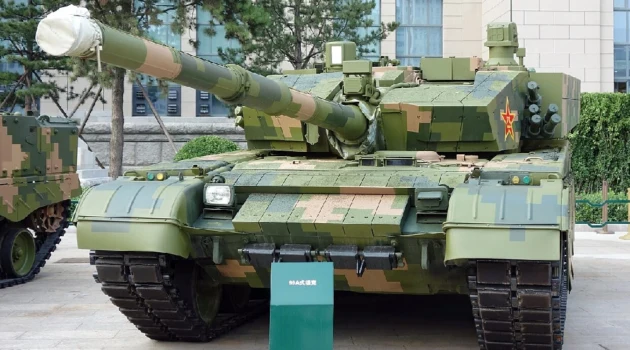
Chinese official sources have previously described the Type 99B as an improved development of the Type 99A.
The Chinese Ministry of National Defense identified the Type 99B in December 2025 as the latest variant of China’s domestically developed third-generation main battle tank family and reported that the tank was designed for rapid and sustained operations in demanding environments, including high-altitude and cold regions.
Chinese state media also highlighted the Type 99B during the September 2025 Victory Day parade. CCTV described it as an improved Type 99A and pointed to changes involving communications and remotely operated weapon functions.
China’s Ministry of National Defense has separately described the Type 99B as part of a broader effort to improve integrated joint operations, firepower against multiple types of targets and mobility in complex terrain.
The available official information does not provide a complete technical specification for the Type 99B. Consequently, claims concerning its exact combat weight, armor protection, maximum speed, ammunition capacity, sensor performance or engagement range should not be treated as confirmed unless supported by authoritative Chinese documentation.
Type 99B vs. Type 99A
Area Type 99A Type 99B Design lineage Established Type 99-series MBT Development of the Type 99A Crew Three-person configuration Three-person configuration shown in training Main role Heavy armored combat Heavy armored combat with expanded information and networking emphasis Communications Earlier-generation architecture Official Chinese sources indicate improved communications and information systems Remote weapon capability Earlier configuration CCTV footage shows remotely operated secondary weapon features Training focus Conventional armored warfare Conventional skills plus greater emphasis on networked command and complex battlefield conditions Public technical data Limited Still limited and incomplete The most important distinction is therefore not necessarily a disclosed increase in raw firepower. It is the growing emphasis on information exchange, situational awareness and command integration.
Information Systems May Be the More Important Upgrade
Chinese military analyst Song Zhongping told Global Times that the Type 99B’s improvements are particularly important in its information systems. He described the tank as a node in a wider information network capable of receiving and executing orders from higher command more effectively.
That assessment is consistent with the direction of China’s wider land-force modernization.
Modern armored formations increasingly operate as sensor and weapons networks. Tanks can receive information from other vehicles, unmanned systems, artillery units and higher command elements, potentially allowing crews to focus on engagement decisions rather than relying exclusively on their own optical observation.
This becomes especially important in environments where drones continuously expose armored formations. A tank that can rapidly receive target information from another sensor may not need to expose itself for as long as a platform operating primarily through its own sights.
The September exercise did not demonstrate the complete battlefield network surrounding the Type 99B, so the precise level of integration remains unclear. However, the emphasis on communications and command during the exercise indicates that China is training armored crews around a broader information architecture.
Drone Threats Are Now a Core Training Problem
The footage also highlights an important problem facing modern main battle tanks: traditional armored warfare assumptions are increasingly being challenged by inexpensive unmanned systems.
Global Times reported that the Type 99B exercise represented a foundation for more complex training, including operations under extensive drone disruption. Song specifically identified drones as an emerging battlefield challenge requiring new tactics.
This is consistent with lessons emerging from recent conflicts, where small unmanned aircraft have been used for reconnaissance, artillery spotting and direct attack against armored vehicles.
For a modern tank formation, survivability therefore depends on more than passive armor protection. Units require early warning, camouflage, electronic protection, counter-UAS systems, dispersed operations and rapid access to accurate battlefield information.
The Type 99B footage does not show enough detail to establish what dedicated counter-drone systems are integrated into the tank itself. It does, however, show that Chinese training planners recognize drone-saturated conditions as a requirement for future armored operations.
China Is Moving Beyond Platform-Centric Armored Warfare
The Type 99B also needs to be viewed alongside China’s newer Type 100 main battle tank and Type 100 support combat vehicle, both of which were displayed alongside the Type 99B during the 2025 Victory Day parade.
Chinese state media presented these systems as part of a new ground combat formation. CCTV reported that the Type 99B, Type 100 and Type 100 support vehicle were being developed around increasingly informationized and unmanned approaches to ground warfare.
This suggests that China is not simply replacing one tank model with another. The broader direction is toward combining armored vehicles with sensors, unmanned systems, digital communications and supporting fires.
The distinction is important. A modern tank’s battlefield value increasingly depends on the formation around it. A well-connected tank may receive targeting information from external sensors, coordinate with infantry and supporting fires, and operate under a command structure capable of rapidly reallocating targets.
That approach mirrors a wider international trend toward networked armored warfare, although the specific architecture and degree of automation differ among militaries.
Operational Significance for the PLA
The Type 99B’s transition into increasingly demanding training provides an indication that the PLA is moving beyond equipment introduction toward developing repeatable tactical proficiency.
The September assessment included target search, identification, selection, communications, maneuver and engagement while moving. Those are basic armored warfare skills, but combining them under restricted terrain and time pressure provides a more meaningful test of operational readiness than static demonstrations.
Chinese official reporting has also emphasized the Type 99B’s suitability for demanding environments. The Ministry of National Defense previously said the tank is intended for rapid and sustained operations in high-altitude and cold conditions.
Such capabilities have potential relevance to China’s western land borders, where terrain, altitude and weather can complicate the movement and sustainment of heavy armored units. Public footage alone, however, does not establish where specific Type 99B units are permanently assigned or how many vehicles have entered service.
What the Footage Does Not Confirm
The new footage should not be interpreted as a complete demonstration of the Type 99B’s combat capability.
Several important characteristics remain undisclosed in authoritative public sources. These include exact armor composition, protection levels, engine output, maximum road speed, ammunition load, sensor specifications and the detailed architecture of its battlefield network.
Similarly, publicly circulated claims about specific active protection, artificial intelligence or advanced targeting capabilities should be separated from confirmed information unless Chinese military authorities formally identify those systems.
The footage does establish something more limited but still important: Type 99B crews are conducting live-fire training involving stationary and moving engagements, complex terrain, communications and multi-directional firing tasks. That provides direct evidence of operational training without requiring assumptions about undisclosed technical specifications.
The Broader Modernization Trend
China’s ground-force modernization is increasingly moving toward a combination of heavier armored platforms, digital command systems and unmanned capabilities.
The Type 99B occupies an intermediate position in that transition. It retains the basic concept of a conventional main battle tank while incorporating improvements intended to make it more effective inside an information-driven formation.
The appearance of the Type 100 family alongside the Type 99B suggests that China is simultaneously pursuing a newer generation of armored vehicles. This means the Type 99B should not necessarily be viewed as the final stage of Chinese tank development, but as part of a broader transition in PLA ground combat architecture.
For foreign militaries, the relevant issue is therefore not simply how the Type 99B compares with an individual Western or Russian tank. The more important question is how effectively Chinese armored formations can connect tanks with reconnaissance, unmanned systems, artillery, air defense and command networks under battlefield conditions.
The September training footage provides an early public indication that this integration is becoming a central part of Type 99B employment.
Key Takeaways
- Type 99B training: Four Type 99B tanks participated in a live-fire assessment conducted by a PLA 80th Group Army brigade in Shandong.
- Operational skills: Crews practiced stationary and moving engagements, target selection, communications and maneuver through obstacles.
- Information warfare: Chinese reporting places particular emphasis on upgraded information systems and network connectivity.
- Drone environment: PLA training planners are preparing for armored operations under conditions involving extensive drone activity.
- Technical caution: Exact Type 99B performance figures and detailed protection specifications remain incompletely disclosed in public official sources.
Executive Summary
- Lockheed Martin received the first batch of housing components for PAC-3 MSE interceptors from GM Defense on August 28, 22 days after the companies signed a formal manufacturing agreement on August 6.
- The new industrial arrangement adds GM Defense manufacturing capacity to the PAC-3 MSE supply chain as Lockheed Martin works to expand output of the Patriot interceptor and other missile systems.
- The supplier agreement comes amid a wider U.S. effort to increase PAC-3 MSE production. In July, the Army established a seven-year undefinitized contract action with a ceiling of about $58.62 billion for future PAC-3 MSE procurement.
Lockheed Martin has received the first batch of PAC-3 Missile Segment Enhancement components produced by GM Defense, marking an early milestone in a manufacturing partnership intended to expand the U.S. industrial base for Patriot interceptors.
Lockheed Martin said the initial housing components were delivered on August 28, only 22 days after the companies signed the formal contract on August 6. The development was disclosed on September 17 as demand for Patriot interceptors remains high among the United States and its allies. Reuters separately reported that the components traditionally can take months or longer to produce, although the companies did not disclose a comparable historical production cycle for the specific components.
The significance extends beyond the first shipment. PAC-3 MSE production is already the subject of a broader U.S. Army effort to increase manufacturing capacity, secure suppliers and provide a longer-term demand signal to industry.
GM Defense Enters the PAC-3 MSE Supply Chain
The first delivery involved housing components for the PAC-3 MSE interceptor. Lockheed Martin said GM Defense used its casting and machining capabilities to manufacture the components to defense requirements.
The arrangement is part of a broader collaboration announced by the two companies in June. The objective is to use additional manufacturing capacity and commercial production practices to address bottlenecks affecting the U.S. defense industrial base.
The 22-day interval between contract signing and first delivery is notable because it demonstrates that an established commercial manufacturer can be integrated into an existing defense production chain on a relatively short timeline. However, the first delivery should not be interpreted as evidence that the entire PAC-3 MSE production process has been reduced to a 22-day cycle.
The delivered items represent components within a much larger missile production system. Final interceptor production continues to depend on multiple suppliers, specialized materials, testing, integration and quality-control processes.
PAC-3 MSE Production Is Already Expanding
The GM Defense agreement arrives as the Army is pursuing a much larger expansion of PAC-3 MSE production.
In April, the Army announced a $4.7 billion undefinitized contract action supporting accelerated PAC-3 MSE production. The Army described the effort as part of a broader push to increase manufacturing throughput and strengthen the supply chain supporting U.S. and allied air and missile defense requirements.
The Army subsequently announced in July that it had awarded Lockheed Martin a seven-year undefinitized contract action with a not-to-exceed value of approximately $58.62 billion. The modification replaced the earlier one-year arrangement and was intended to provide industry with a longer planning horizon for labor, raw materials and manufacturing investments.
That longer procurement horizon is important for industrial planning. Missile production cannot be expanded simply by adding final assembly labor. Suppliers also need confidence that demand will remain high enough to justify tooling, workforce expansion, facility improvements and additional raw-material commitments.
PAC-3 MSE Production Context
| Measure | Current publicly reported figure |
|---|---|
| PAC-3 MSE production contract ceiling announced July 2026 | $58.62 billion |
| Seven-year UCA period | FY2026-FY2032 |
| April 2026 accelerated-production contract action | $4.7 billion |
| Earlier annual production maximum | 650 interceptors |
| FY2024-2026 PAC-3 MSE contract | $9.8 billion |
| FY2024-2026 procurement | 1,970 missiles and associated hardware |
The Army’s earlier production expansion increased the annual PAC-3 MSE maximum production rate from 550 to 650 missiles. The Army later signed a $9.8 billion FY2024-FY2026 contract covering 1,970 PAC-3 MSE missiles and associated hardware for U.S. and international customers.
These figures provide the larger context for the GM Defense agreement. The new supplier relationship is not a standalone procurement program. It is one component of a multi-year effort to increase the number of interceptors that the industrial base can produce.
Why the Supply Chain Matters
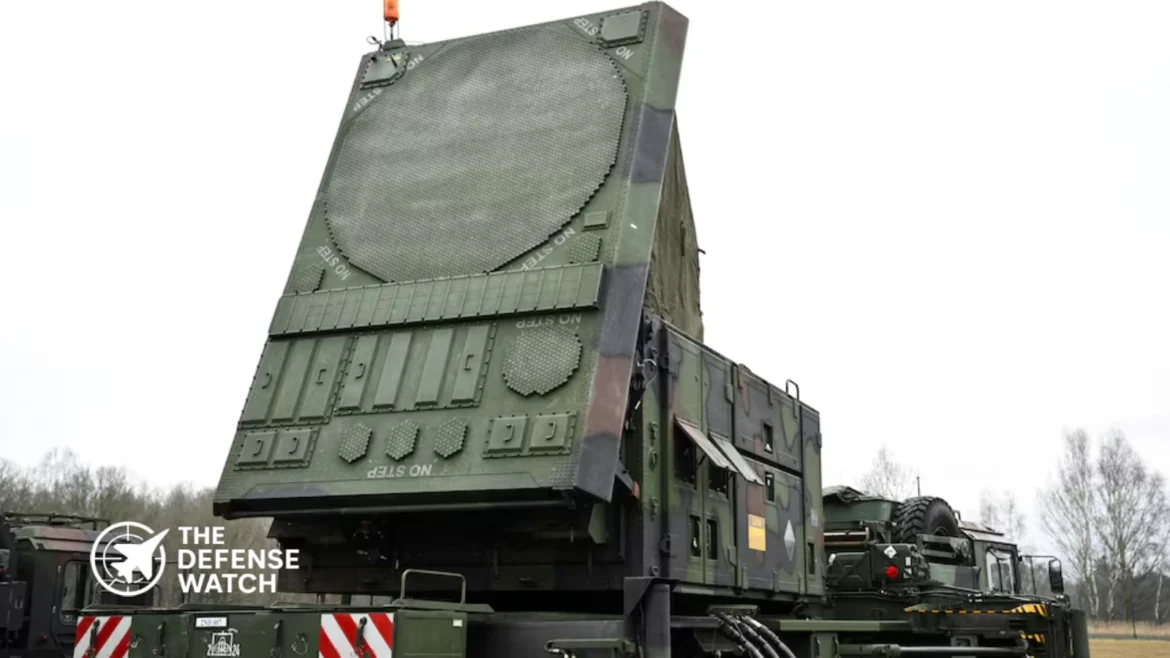
Patriot has become a central element of U.S. and allied integrated air and missile defense. PAC-3 MSE is a hit-to-kill interceptor designed to engage tactical ballistic missiles, cruise missiles and aircraft within the Patriot architecture. The Army describes it as an important part of its layered air and missile defense system.
The operational demand has also exposed the industrial challenge of sustaining interceptor inventories while supporting multiple customers. Ukraine has used Patriot systems against Russian missile attacks, while the United States and other countries continue to procure and sustain the system. Reuters reported that Ukraine has repeatedly sought additional Patriot launchers and interceptors as Russian air attacks continue.
That creates a production problem distinct from the technical performance of the interceptor itself. A highly capable missile-defense system can only sustain operational availability if sufficient interceptors, replacement components and supporting equipment can be manufactured and delivered.
For the U.S. military, expanding the supplier base can therefore provide resilience against individual production bottlenecks. It can also reduce pressure on existing specialized facilities if additional qualified manufacturers can absorb selected components.
Lockheed Martin’s Broader Munitions Expansion
Lockheed Martin said it is investing between $8 billion and $9 billion to expand munitions production, including PAC-3 MSE, THAAD and Precision Strike Missile production. The company said planned expansion across more than 20 U.S. sites will increase production and warehousing space by nearly 50 percent.
Those investments illustrate the scale of the production challenge. Increasing interceptor output requires more than expanding a single missile assembly line. It requires additional manufacturing capacity throughout the supplier network.
The GM Defense partnership is significant in this respect because it tests whether manufacturing capacity from the commercial automotive sector can be adapted to defense production requirements. The immediate result is a faster source of specific PAC-3 MSE components, but the longer-term value will depend on whether the model can be expanded to other parts and programs without compromising quality, security or delivery reliability.
Strategic Implications for U.S. Air and Missile Defense
The immediate effect of the GM Defense shipment is limited to the components involved. It does not by itself establish a new PAC-3 MSE production rate or change the interceptor’s published performance.
Its broader significance lies in industrial capacity.
The United States is attempting to maintain inventories for its own forces while meeting allied demand and replacing weapons consumed or transferred during ongoing conflicts. Multi-year procurement contracts and additional suppliers can provide manufacturers with stronger incentives to invest in capacity before shortages become acute.
The challenge will be sustaining that expansion across the entire production chain. If one component moves faster but another remains constrained, overall missile output can still be limited by the slowest critical production step.
The PAC-3 MSE program therefore provides a useful example of the industrial side of integrated air and missile defense. Modern air defense depends not only on radar coverage, command-and-control networks and interceptor performance, but also on the ability to manufacture replacement weapons at a pace compatible with operational consumption.
For the United States and its allies, the first GM Defense delivery represents an incremental step toward that objective. The more important test will be whether the new supplier relationship contributes to sustained increases in completed PAC-3 MSE interceptor deliveries over the coming years.

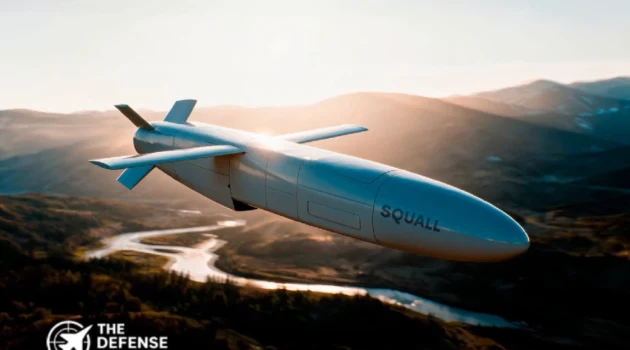
Executive Summary: Spanish defense company Indra has unveiled SQUALL, a new low-cost cruise missile designed to strike strategic targets more than 300 kilometers away. The company says the weapon can be launched from land or naval platforms and is designed for low-altitude flight, precision targeting, and resistance to jamming and spoofing. Indra is also positioning SQUALL for coordinated mass attacks intended to saturate air defenses. The company has not publicly disclosed key specifications including missile dimensions, speed, warhead size, propulsion system, unit price, test schedule, or entry-into-service date.
Indra Introduces SQUALL Cruise Missile
Indra has unveiled the SQUALL cruise missile, a new Spanish-developed weapon designed to conduct precision strikes against targets more than 300 kilometers away.
The company presented the system at UNVEX 2026 in San Javier, Murcia, on September 16. Indra describes SQUALL as a low-cost cruise missile intended for attacks against targets in the adversary’s rear area, including command and control centers, air defense systems, and other high-value military infrastructure.
Indra says SQUALL is designed for both individual precision missions and coordinated attacks involving larger numbers of missiles. The latter concept is intended to create saturation effects against defensive systems.
The company has emphasized that the missile is being developed around a national supply chain, with the aim of maintaining production capacity during periods of disrupted international logistics.
SQUALL Missile Specifications
Indra has released only a limited set of technical information about SQUALL. Several characteristics normally used to evaluate a cruise missile remain undisclosed.
Characteristic SQUALL Manufacturer Indra Country Spain Type Cruise missile Stated range More than 300 km Launch platforms Land and naval platforms Launch methods Ramps, containers and tactical vehicles Flight profile Low altitude, according to Indra Guidance Multiple guidance and navigation systems Electronic warfare resilience Designed to resist jamming and spoofing Intended targets Command and control, air defense and high-value military infrastructure Employment concept Precision strikes and coordinated saturation attacks Unit cost Not disclosed Speed Not disclosed Warhead Not disclosed Propulsion Not disclosed Development schedule Not publicly specified The absence of these specifications is significant. Range alone does not establish the overall capability of a cruise missile, because effectiveness also depends on speed, signature, navigation accuracy, warhead effects, survivability, sensor performance, launch integration, and production capacity.
Low-Altitude Flight and Electronic Warfare
Indra says SQUALL is designed to fly at low altitude. Such flight profiles can reduce radar detection opportunities because the curvature of the Earth and terrain can limit the line of sight available to ground-based sensors.
The company describes this as part of the missile’s ability to operate with a high degree of stealth. That should not be interpreted as evidence that SQUALL is a stealth missile in the same technical sense as systems specifically designed around very low radar cross-section characteristics. Indra has not publicly released a radar cross-section figure or detailed signature data.
SQUALL also incorporates multiple guidance and navigation systems intended to maintain the weapon’s ability to reach its target when subjected to jamming or spoofing.
That feature reflects a central challenge for modern long-range precision weapons. Satellite navigation signals can be disrupted or manipulated, while other navigation and guidance methods introduce their own requirements for sensors, computing, mapping, target information, and system integration.
Indra has not publicly detailed the individual guidance technologies used by SQUALL. It therefore remains unclear how the missile combines navigation sources or how it performs terminal target acquisition.
Designed for Saturation Attacks
One of the most important elements of the SQUALL concept is its intended cost structure.
Indra describes the weapon as low cost compared with conventional missiles. The company says this would allow SQUALL to be used in small numbers for precision attacks or in larger coordinated salvos designed to saturate air defenses.
The concept is closely linked to the changing economics of modern air warfare. Defending against a large number of incoming weapons can require expensive interceptors, radar coverage, command and control capacity, and multiple defensive layers.
A lower-cost offensive missile can therefore change the number of weapons a force can procure and deploy. However, the actual economic advantage of SQUALL cannot yet be quantified because Indra has not disclosed a unit price or production rate.
The same limitation applies to claims about production scale. A missile can be designed around low-cost components while still facing challenges involving propulsion, seekers, electronics, testing, quality control, and supply-chain capacity.
Land and Naval Launch Options
SQUALL is being designed for integration with both land and naval platforms.
Indra says the missile can be launched from ramps, containers, or tactical vehicles. This suggests an emphasis on launcher flexibility rather than dependence on a single specialized platform.
For land forces, containerized or vehicle-based launch could potentially allow cruise missiles to operate from dispersed positions. For naval forces, compatibility with containerized launch arrangements could provide additional integration options, although Indra has not identified specific ships or launch systems that will carry SQUALL.
The distinction between planned compatibility and demonstrated integration is important. At the time of the September 2026 unveiling, the company had not publicly identified a completed operational launcher configuration.
A New Layer in Indra’s Defense Portfolio
SQUALL expands Indra’s activities beyond its established work in sensors, electronic systems, air defense, command and control, and unmanned systems.
The company is also presenting the DRIZZLE effector drone and the TARSIS unmanned aircraft family at UNVEX 2026. Indra says DRIZZLE is intended to intercept drones and attack light targets at ranges of up to 130 kilometers, while TARSIS platforms provide attack, intelligence, surveillance, reconnaissance, and target-designation capabilities.
Indra says these systems are designed to operate within a broader multilayered air defense architecture and combat cloud.
The broader significance is the integration of sensors, command and control, unmanned systems, counter-drone capabilities, and long-range strike effects into a connected architecture. For European militaries, such integration is increasingly important as forces seek to combine relatively inexpensive systems with more sophisticated and expensive weapons.
Why SQUALL Matters for European Long-Range Strike
SQUALL arrives as European defense industries are placing greater emphasis on domestic production capacity and long-range precision weapons.
The missile’s stated range of more than 300 kilometers places it in a class of systems capable of engaging targets well beyond the immediate tactical battlespace. Its intended targets also indicate an emphasis on operational-level effects, particularly command nodes and air defense infrastructure.
For Spain, domestic development could also provide an additional source of sovereign long-range strike technology. Indra specifically highlights control over the supply chain as part of SQUALL’s design philosophy.
That aspect could become important during a major conflict, when demand for precision weapons can rise sharply and international supply chains may face competing requirements from multiple countries.
For the United States and its European allies, the development is relevant to the wider effort to increase the depth, volume, and resilience of allied precision-strike inventories. It also illustrates a shift toward considering not only the performance of individual weapons but the number of weapons that can be produced and sustained during a prolonged conflict.
What Remains Undisclosed
SQUALL remains a newly unveiled system, and several important questions remain unanswered.
Indra has not publicly released the missile’s maximum speed, dimensions, launch weight, warhead configuration, propulsion system, seeker architecture, radar signature, exact unit cost, production rate, flight-test schedule, or operational entry date.
The company also has not publicly announced a procurement contract for SQUALL from the Spanish Armed Forces.
These details will be important for assessing the system’s eventual military value. In particular, the combination of production cost, manufacturing rate, guidance resilience, survivability, and demonstrated accuracy will determine how SQUALL compares with other long-range precision weapons.
For now, the September 2026 announcement establishes SQUALL as a Spanish cruise missile development focused on range, precision, launch flexibility, electronic warfare resilience, and scalable production.
The Defense Watch Assessment
SQUALL’s most notable feature is not simply its stated range of more than 300 kilometers. The larger design objective is to combine long-range precision strike with a lower-cost production model capable of supporting larger salvos.
That approach addresses a practical problem in modern warfare: sophisticated air defenses can be effective against individual threats, but maintaining sufficient interceptor inventories against sustained attacks can become a major logistical and economic challenge.
Whether SQUALL can deliver that intended balance will depend on information that Indra has not yet released, particularly its production cost, propulsion performance, guidance architecture, survivability, test results, and manufacturing capacity.
The September 2026 unveiling therefore represents the beginning of a development story rather than evidence of an already operational cruise-missile capability. Further testing, industrial commitments, and potential Spanish or international procurement decisions will provide the information needed to assess how the system develops.
Sustained Hypersonic Flight Is the Real Challenge
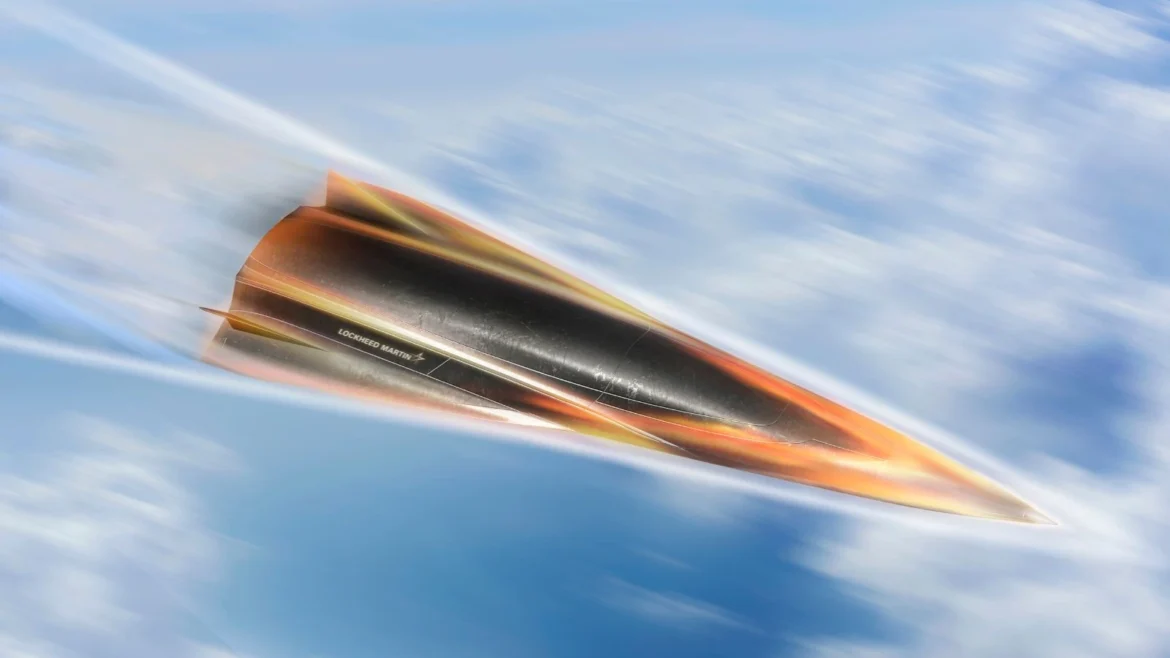
Sustained hypersonic flight refers to maintaining controlled flight at speeds of at least Mach 5 for a meaningful portion of a mission, rather than simply reaching hypersonic velocity for a short period. For the United States, this distinction is becoming increasingly important as defense programs move from demonstrating isolated high-speed events toward operational systems that must combine propulsion, thermal protection, guidance, communications and maneuverability in a single vehicle.
Lockheed Martin’s latest discussion of hypersonic technology places sustained flight at the center of the engineering problem. The company has spent decades working on hypersonic systems and currently supports programs spanning hypersonic boost-glide weapons, air-breathing concepts and next-generation glide bodies.
The issue is significant because a vehicle traveling above Mach 5 encounters an environment fundamentally different from that experienced by conventional aircraft and missiles. Aerodynamic heating increases rapidly, atmospheric density changes with altitude, propulsion becomes highly sensitive to airflow conditions, and even relatively small control errors can have major consequences at extreme velocity.
Key Takeaways
Sustained hypersonic flight is becoming a central engineering challenge for next-generation weapons, with propulsion, thermal management, guidance and manufacturing all affecting operational performance.
Why Sustained Hypersonic Flight Matters
Hypersonic flight is commonly defined as flight at Mach 5 or faster. The U.S. Government Accountability Office notes that hypersonic weapons can combine high velocity with lower-altitude flight and maneuverability, creating tracking and defensive challenges that differ from conventional ballistic trajectories.
But speed alone does not define the operational value of a hypersonic system.
A vehicle that briefly reaches Mach 5 before slowing down has a different propulsion and thermal problem from a system designed to cruise at hypersonic velocity for an extended portion of its mission.
This is particularly important for hypersonic cruise missiles and other air-breathing concepts.
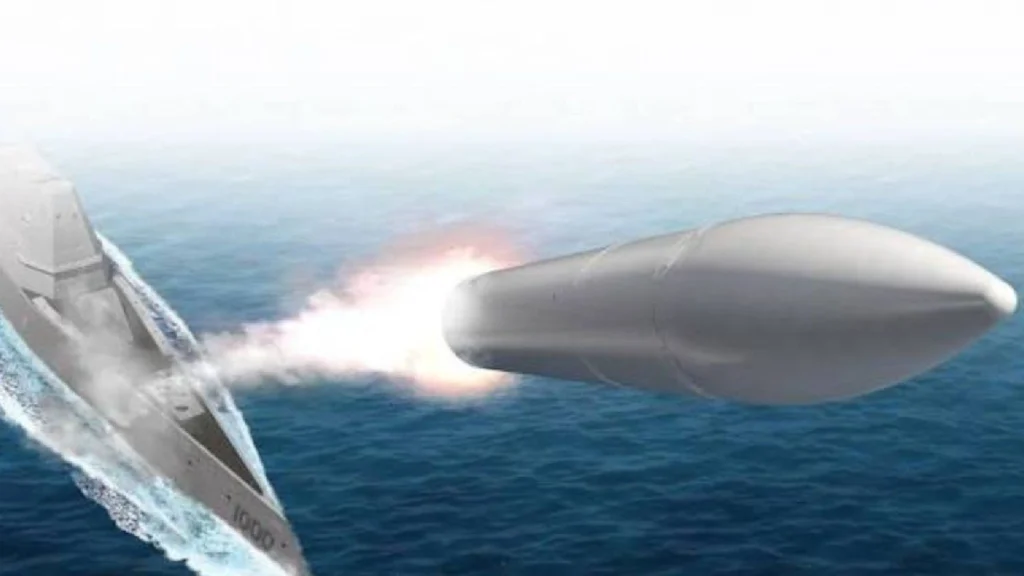
Unlike a hypersonic glide vehicle, which is accelerated by a booster before gliding through the atmosphere, a hypersonic cruise missile can use an air-breathing engine to continue generating thrust during flight. GAO describes hypersonic cruise missiles as powered systems that can use ramjet or scramjet propulsion after reaching the required speed for engine operation.
That creates a demanding engineering chain:
- Accelerate the vehicle to the required propulsion regime.
- Capture and compress incoming air.
- Sustain combustion at extremely high airflow velocities.
- Maintain stable propulsion across changing altitude and speed.
- Control aerodynamic heating.
- Maintain guidance and navigation accuracy.
- Survive high aerodynamic and structural loads.
- Deliver the required terminal maneuverability and effect.
The ability to perform all of these functions simultaneously is what makes sustained hypersonic flight difficult.
Hypersonic Propulsion: The Engine Has to Keep Working
Traditional jet engines are not designed to operate efficiently at hypersonic speeds. Conventional turbine engines rely on rotating compressor stages and combustion processes that become impractical as incoming airflow velocity increases.
Ramjets provide one alternative. They use the vehicle’s forward motion to compress incoming air before combustion. Scramjets take this further by maintaining airflow through the combustor at supersonic speeds.
The advantage is important. An air-breathing hypersonic vehicle does not need to carry an onboard supply of oxidizer for its cruise propulsion system. It can use atmospheric oxygen, potentially allowing more of the vehicle’s mass to be devoted to fuel, payload, structure and thermal-management systems.
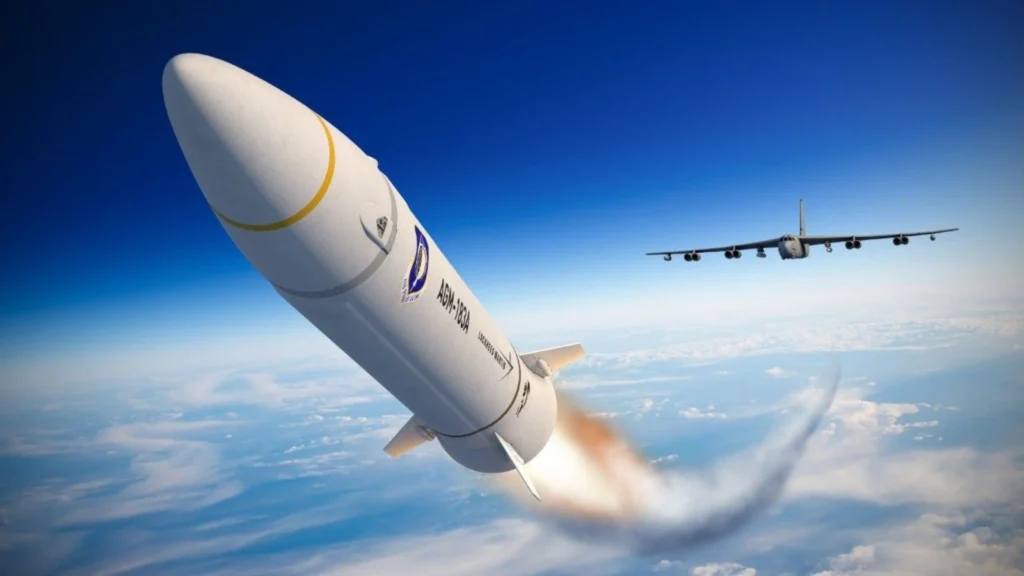
DARPA’s HAWC program demonstrated this principle. In a 2021 test, a Raytheon-built vehicle used a Northrop Grumman scramjet and achieved flight above Mach 5. The program specifically focused on technologies needed for effective air-launched hypersonic cruise missiles.
The Lockheed Martin HAWC configuration subsequently demonstrated sustained hypersonic cruise. DARPA reported that the vehicle maintained speeds above Mach 5, reached altitudes above 65,000 feet and traveled more than 300 nautical miles during a 2022 flight test.
These demonstrations are significant because they moved the engineering problem beyond simply proving that a vehicle can reach hypersonic velocity.
Lockheed Martin and the Next Generation of Hypersonic Propulsion
Lockheed Martin’s 2026 hypersonic work includes efforts to improve propulsion efficiency and manufacturing scalability.
In January 2026, Lockheed Martin and GE Aerospace announced successful tests of a liquid-fueled rotating detonation ramjet intended for hypersonic missile applications. The companies said the design could provide higher thrust generation and improved fuel efficiency while using a compact engine architecture.
The technology uses rotating detonation combustion rather than conventional combustion methods. Detonation waves move through the combustion process, potentially improving pressure gain and propulsion efficiency.
For hypersonic weapons, improvements in propulsion efficiency can have effects beyond engine performance.
A smaller or more efficient engine could potentially create additional internal volume for:
- Fuel
- Payloads
- Thermal-management equipment
- Guidance hardware
- Communications equipment
- Structural reinforcement
Lockheed Martin and GE Aerospace said they would continue maturation of the rotating detonation ramjet during 2026.
Thermal Management May Be the Defining Constraint
At hypersonic velocity, aerodynamic heating becomes one of the most difficult problems facing vehicle designers.
The vehicle compresses the surrounding atmosphere as it moves through the air. Shock waves form around the airframe, and energy is transferred into the structure and surrounding airflow.
The result is a thermal environment that can affect nearly every subsystem.
GAO has identified heat-tolerant materials as a major hypersonic development challenge. The agency has noted that external temperatures can exceed 2,000 degrees Fahrenheit under some hypersonic conditions, requiring materials that combine thermal resistance with structural strength and low weight.
This means thermal management cannot be treated as an isolated subsystem.
The aerodynamic shape affects heating.
The propulsion system affects internal temperatures.
The materials affect structural mass.
The electronics must remain within their operating limits.
The guidance system must continue functioning while the vehicle experiences extreme thermal and mechanical conditions.
Lockheed Martin has also identified thermal management as an important area for advanced manufacturing. In April 2026, the company said its laser powder-bed fusion work was being applied to thermal-management components for next-generation aircraft and hypersonic systems.
Guidance and Communications at Hypersonic Speed
Sustained flight also increases the demands placed on navigation and control.
At approximately one mile per second, a vehicle covers enormous distances in a short period. That leaves little time for a control system to detect an error, calculate a correction and change the vehicle’s flight path.
Hypersonic systems therefore require highly responsive guidance and flight-control architectures.
Communication creates another problem.
Lockheed Martin identifies communications as one of the major technical challenges associated with hypersonic flight. At high speed, a vehicle operating within an extreme aerodynamic environment must maintain access to its sensors and communication systems while dealing with the physical effects of high-temperature atmospheric flight.
This becomes particularly important for systems expected to operate in contested environments.
A future hypersonic weapon may need to receive updated information, use onboard navigation and sensors, maintain an accurate flight path and execute terminal maneuvers while facing electronic warfare and communications disruption.
The result is a system that requires much more than a high-performance engine.
Sustained Hypersonic Flight and Modern Warfare
The operational attraction of hypersonic systems comes from the combination of speed, maneuverability and reduced reaction time.
A hypersonic weapon can potentially reach a target faster than a conventional cruise missile while following a less predictable trajectory than a traditional ballistic missile.
GAO notes that hypersonic systems could be used against mobile or time-sensitive targets because their high speed can reduce the time available for an adversary to react.
This has implications for command centers, air-defense systems, mobile missile launchers, naval assets and other high-value targets.
However, sustained hypersonic flight should not be viewed as a replacement for existing missile technologies.
Ballistic missiles, cruise missiles, stealth aircraft, long-range artillery and conventional precision weapons each have different combinations of cost, range, payload, survivability and mission flexibility.
Hypersonics add another option to that broader strike architecture.
U.S. Hypersonic Programs Are Expanding Across Multiple Domains
The United States is pursuing hypersonic capabilities across air, land and maritime domains.
The Army and Navy are developing the same common hypersonic missile technology under different service designations. The Navy calls its system Conventional Prompt Strike, while the Army uses the Long-Range Hypersonic Weapon designation. GAO reported in July 2026 that the Navy plans to field the system aboard Zumwalt-class destroyers and later on Virginia-class submarines, while the Army is also procuring the capability.
Lockheed Martin is involved in the common hypersonic glide body used by these programs.
The company is also developing the Next Generation Glide Body, or NxGB, which Lockheed Martin describes as a scalable hypersonic glide body designed to support long-range strike options from multiple platforms and warfighting domains.
This illustrates an important distinction.
Not every U.S. hypersonic program requires sustained powered flight.
Boost-glide systems use a different architecture from air-breathing hypersonic cruise missiles.
Both, however, depend on the ability to survive extreme aerodynamic conditions while maintaining precise control.
Hypersonic Flight: Key Technical Comparison
| Parameter | Hypersonic Cruise Missile | Hypersonic Glide Vehicle | Conventional Cruise Missile |
|---|---|---|---|
| Typical Speed Regime | Mach 5+ | Mach 5+ during portions of flight | Usually below Mach 1 |
| Main Propulsion | Air-breathing ramjet or scramjet | Rocket booster for acceleration, then unpowered glide | Turbine or turbofan engine |
| Sustained Powered Flight | Yes | No during glide phase | Yes |
| Atmospheric Flight | Yes | Yes | Yes |
| Major Thermal Challenge | Very high | Very high | Lower |
| Key Engineering Challenge | Sustained propulsion and thermal management | High-speed maneuvering and thermal protection | Range, survivability and propulsion efficiency |
| U.S. Development Examples | HAWC technology demonstrations and advanced air-breathing concepts | CPS, LRHW, NxGB | Tomahawk and other cruise missile families |
| Primary Operational Value | Rapid strike with sustained high-speed flight | Long-range high-speed maneuverable strike | Long-range precision strike |
| Technology Maturity | Development and demonstration across multiple programs | Moving toward operational fielding | Mature operational technology |
The table highlights why sustained hypersonic flight is a distinct technical challenge. An air-breathing system must continue producing useful thrust throughout the cruise portion of the mission, while a boost-glide vehicle concentrates its propulsion requirement primarily in the acceleration phase.
China and Russia Add Pressure to the Hypersonic Race
The U.S. focus on sustained hypersonic flight is occurring within a wider competition involving China and Russia.
Both countries have fielded or developed hypersonic weapons, while the United States continues working to mature comparable offensive systems and counter-hypersonic defenses.
The competition is therefore not limited to maximum speed.
It includes:
- Propulsion efficiency
- Flight duration
- Maneuverability
- Thermal protection
- Sensor integration
- Manufacturing capacity
- Launch platforms
- Command and control
- Missile warning and tracking
- Counter-hypersonic interception
The defensive side is particularly important.
The Missile Defense Agency is developing capabilities intended to detect, track and defeat maneuvering hypersonic threats. GAO has identified the Glide Phase Interceptor and space-based tracking concepts such as the Hypersonic and Ballistic Tracking Space Sensor as important elements of the U.S. counter-hypersonic effort.
This creates a broader technological competition between offensive hypersonic systems and increasingly distributed defense networks.
Manufacturing Is Becoming a Strategic Requirement
A successful hypersonic flight test does not automatically translate into a deployable weapon.
The United States must also be able to manufacture advanced thermal structures, propulsion components, guidance systems and airframes consistently and at sufficient scale.
GAO has repeatedly identified the industrial base as one of the challenges facing U.S. hypersonic development. Specialized materials, manufacturing processes and highly trained personnel can increase cost and complicate production.
Lockheed Martin has recently placed greater emphasis on this part of the problem.
In August 2026, the company announced a teaming agreement with Albany Engineered Composites to pursue high-rate production opportunities for U.S. hypersonic programs. Lockheed Martin said the partnership is intended to combine systems integration with scalable composite manufacturing.
The company has also announced a multimillion-dollar investment in a Modular Payload Delivery System intended to transform existing hypersonic vehicle technologies into a more flexible family of systems.
These efforts show that the hypersonic challenge is increasingly moving from laboratory performance toward production engineering.
Challenges That Remain
Despite progress in flight testing and propulsion research, several technical barriers remain.
Thermal Protection
Materials must survive extreme heating while remaining light enough for the vehicle to achieve the required performance.
Propulsion Reliability
A hypersonic engine must start, operate and remain stable across changing flight conditions.
Guidance
High velocity reduces the time available for corrections and places exceptional demands on onboard navigation and control.
Communications
Maintaining reliable communications and sensor operation in a severe aerodynamic environment remains difficult.
Testing
Hypersonic development requires specialized wind tunnels, thermal facilities and flight-test infrastructure. GAO has identified limited testing resources as a continuing challenge.
Cost and Production
Advanced materials and specialized manufacturing processes can make hypersonic weapons expensive to build. The Pentagon therefore faces the additional challenge of achieving production rates that can support operational inventories.
Future Outlook: From Speed Demonstrations to Sustained Performance
The next stage of hypersonic development is likely to focus less on proving that a vehicle can briefly reach Mach 5 and more on demonstrating repeatable, controlled and affordable operation.
That means the key metrics will increasingly include:
- Sustained speed
- Flight duration
- Propulsion efficiency
- Thermal performance
- Guidance accuracy
- Reliability
- Production rate
- Cost per weapon
- Platform integration
- Operational availability
Lockheed Martin’s current portfolio reflects this broader shift. The company is working across hypersonic glide bodies, air-breathing propulsion, advanced manufacturing and counter-hypersonic defense.
The U.S. Department of Defense is also moving toward a larger operational architecture in which hypersonic weapons operate alongside conventional long-range fires, aircraft, submarines, surface ships, space sensors and integrated command networks.
The technical goal is therefore not simply a faster missile.
It is a reliable system capable of maintaining performance under extreme conditions and contributing to a wider multi-domain force.
Conclusion
Sustained hypersonic flight is becoming one of the defining engineering challenges in advanced military aerospace.
Reaching Mach 5 is a necessary milestone, but it does not by itself create an operational hypersonic weapon. The harder task is maintaining propulsion, controlling aerodynamic heating, protecting electronics and structures, preserving navigation accuracy and sustaining reliable performance throughout the mission.
Lockheed Martin’s current work illustrates that transition. The company is pursuing advanced glide bodies, air-breathing propulsion and manufacturing technologies while continuing to support major U.S. hypersonic programs.
DARPA’s HAWC demonstrations already showed that sustained Mach 5-class air-breathing flight is technically achievable under test conditions. The next challenge is turning those demonstrations into reliable, affordable and producible military capabilities.
For the United States and its allies, the long-term competition will therefore be measured not only by who can build the fastest vehicle, but by who can combine speed, endurance, thermal protection, propulsion, guidance, manufacturing and operational integration into a dependable system.
That is why sustained flight may prove to be the more important hypersonic frontier.
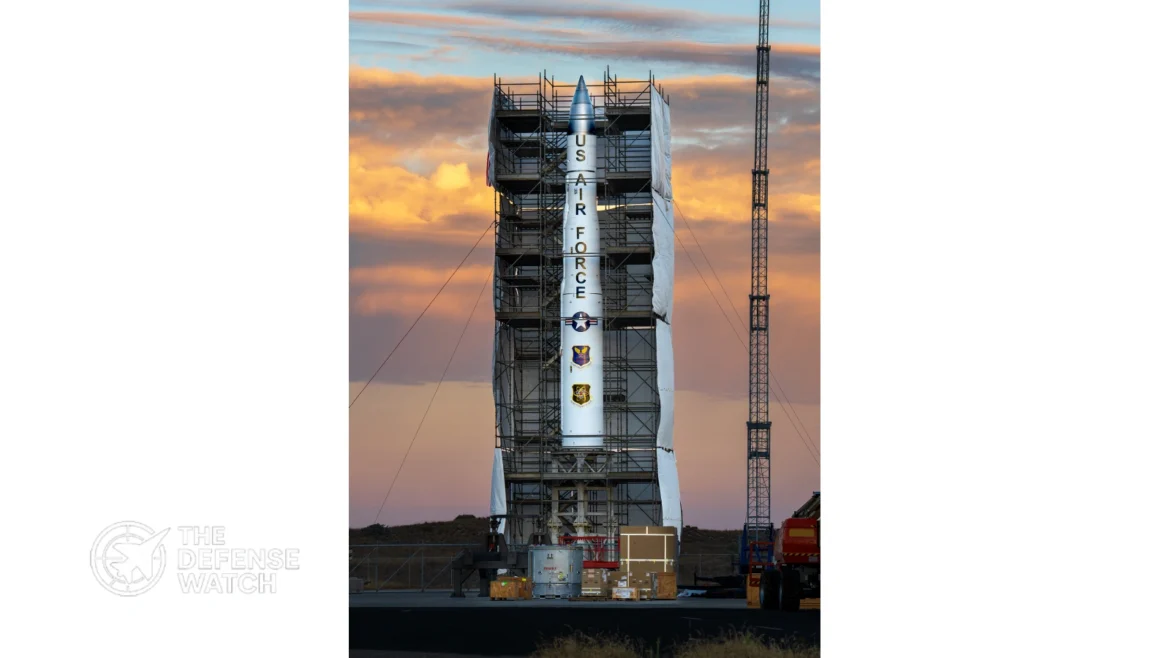
Sentinel ICBM Reaches Major Ground Integration Milestone
The Sentinel ICBM has moved closer to its planned 2027 flight-test campaign after the U.S. Air Force and Northrop Grumman completed the vertical assembly of an inert LGM-35A missile at Vandenberg Space Force Base, California. Northrop Grumman announced the milestone Sept. 14, describing the exercise as a major step toward demonstrating the missile’s design and integration before flight testing.
Takeaways
The Sentinel program has completed another major ground integration milestone as the United States prepares for the next-generation ICBM’s flight-test campaign.
The exercise, known as Pathfinder, was designed as a full-scale ground rehearsal rather than a missile launch. Engineers transported Sentinel components from locations across the United States and then tested the procedures needed to assemble the missile in its operational orientation on a test pad.
That distinction is important. A successful vertical assembly does not demonstrate flight performance by itself, but it does test whether the hardware, interfaces, handling equipment and procedures can be brought together as a complete missile configuration.
The latest event also comes as the Air Force continues a broader restructuring of the Sentinel acquisition program following major cost and schedule problems.
Pathfinder Tests the Processes Required Before Flight
According to Northrop Grumman, the inert missile was assembled with its stages, propulsion elements, shroud and associated components integrated into a single configuration. Engineers then de-stacked the missile after completing the planned ground procedures.
The Pathfinder exercise covered several practical operations that have to work before flight testing can proceed.
| Area | Pathfinder Activity |
|---|---|
| Missile transportation | Components moved from locations across the United States |
| Handling | Specialized transport vehicles and mobile cranes used |
| Vertical integration | Missile assembled in operational orientation |
| Interfaces | Mechanical and system interfaces verified |
| Test-pad operations | Assembly and de-stacking procedures demonstrated |
| Flight preparation | Ground processes evaluated ahead of flight testing |
The exercise therefore addresses a different class of risk from static motor testing. Rocket-motor tests establish confidence in propulsion hardware, while Pathfinder addresses the physical integration and handling processes needed to prepare a complete missile for a launch campaign.
Northrop Grumman said the exercise demonstrated that the required procedures for safely assembling the missile at the test pad could be executed.
Flight-Test Critical Design Review Adds Another Milestone
At the same time, Northrop Grumman and the Air Force’s 719th Test Squadron completed the first flight-test Critical Design Review.
The review examined whether the missile’s design maturity and hardware testing were sufficient to support the requirements for the planned flight test, including performance, safety and schedule considerations.
The combination of the design review and Pathfinder exercise is significant because it moves Sentinel beyond isolated component demonstrations toward testing the interaction of the complete weapon system.
The Air Force has already reported substantial progress on individual propulsion elements. Stage 1 and Stage 2 solid rocket motor testing was completed in 2025, while the program has also conducted testing of the Stage 3 propulsion system and post-boost propulsion hardware.
The service has described the flight-test campaign as a deliberate progression in which individual technologies and components are tested before increasingly complete system-level demonstrations.
Why the 2027 Flight Test Matters
The planned 2027 flight test represents a major transition point for Sentinel.
The Air Force said in February 2026 that the program was targeting a first missile pad launch in 2027 while completing its restructuring and working toward a new Milestone B decision. The service also set the early 2030s as the target for initial capability.
The flight campaign will ultimately provide information that cannot be obtained through ground testing alone. A flight test allows the government to evaluate the integrated missile under actual launch and flight conditions and generate data for subsequent developmental and operational decisions.
That makes the current Pathfinder exercise more than a logistics demonstration. It is part of the chain of evidence required to show that the program can move from component qualification to an integrated flight system.
Sentinel Is Replacing a More Than 50-Year-Old ICBM Force
Sentinel is intended to replace the Minuteman III, which has been in service for more than five decades.
The land-based ICBM force forms one leg of the U.S. strategic nuclear triad alongside ballistic-missile submarines and nuclear-capable bombers. The Sentinel program is consequently much larger than the development of a new missile alone.
The Air Force is replacing and modernizing associated launch facilities, command infrastructure, support equipment and other elements required to operate the weapon system.
GAO has described the transition as one of the most complex modernization efforts facing the Air Force. The existing Minuteman III infrastructure includes more than 600 facilities, including approximately 450 missile silos distributed across five states.
The scale of that infrastructure explains why missile development and facility construction have to progress together. A flight-ready missile cannot by itself complete the transition from Minuteman III to Sentinel.
The Program Still Faces Significant Cost and Schedule Pressure
The latest technical progress should not be confused with the resolution of Sentinel’s broader acquisition challenges.
In January 2024, the Air Force reported a critical Nunn-McCurdy cost breach. The subsequent Department of Defense review found problems including an unrealistic delivery schedule, weaknesses in systems engineering and incomplete basic system design, along with an industrial base that had lost capacity. The program was allowed to continue, but its previous Milestone B approval was rescinded and the program was restructured.
GAO has continued to identify Sentinel as a high-risk modernization program.
In its February 2026 assessment, GAO reported that the program’s original flight schedule had slipped substantially and identified continuing concerns involving software development, infrastructure and the transition from Minuteman III. GAO also noted that the Air Force was evaluating ways to reduce further cost and schedule growth.
The current Air Force schedule is more recent than those earlier assessments. In February, the service publicly stated that the first missile pad launch was planned for 2027. Northrop Grumman’s Sept. 14 announcement now says the program remains on pace for that 2027 flight-test objective.
That represents an important schedule marker, but the flight test itself will remain a significant technical and program-management checkpoint.
A New Architecture for the Land-Based Nuclear Leg
Sentinel is being developed as a new weapon system rather than a simple replacement missile.
The Air Force describes the program as a modernization of the entire land-based leg of the nuclear triad, including the missile, launch systems, command-and-control infrastructure and supporting facilities. The program also uses extensive digital engineering intended to model system behavior and identify problems before hardware testing.
The missile’s flight system includes a three-stage solid rocket booster, post-boost propulsion, guidance and navigation systems and a reentry system.
This architecture is intended to provide a modern foundation that can remain viable for decades rather than extending the service life of the Minuteman III indefinitely.
Northrop Grumman says the Sentinel weapon system is intended to remain viable through 2075. The company is leading a nationwide industrial team involving more than 500 partners, with more than 10,000 personnel supporting the program.
The Infrastructure Challenge Is Almost as Important as the Missile
One of the most consequential changes to the restructured program has involved the launch infrastructure.
The Air Force has moved toward constructing new standardized silos rather than relying primarily on extensive refurbishment of the existing Minuteman III structures. In March 2026, the service reported that a full-scale Sentinel silo prototype had begun construction in Utah to validate the new construction approach before wider fielding.
The change has operational significance because Sentinel requires a synchronized transition from an existing nuclear force to a new one.
The Air Force has also been developing new wing command centers and other facilities while work continues at Vandenberg to support flight testing.
The challenge is therefore not simply to build a new ICBM. The service has to create an integrated system of missiles, silos, command infrastructure, transportation equipment, communications, security and maintenance capabilities while keeping Minuteman III operational.
What Comes Next
The immediate objective is to complete the remaining preparations for Sentinel’s first missile pad launch and subsequent flight testing.
The Pathfinder exercise has demonstrated the physical process for transporting and vertically integrating the inert missile. The flight-test Critical Design Review provides another assessment of design maturity and readiness.
The next major test will move the program from a ground-based integrated configuration toward an actual flight environment.
If the 2027 schedule holds, Sentinel will enter one of the most consequential stages of its development. Flight-test results will help determine how quickly the Air Force can progress toward additional testing, production and eventual deployment.
The larger strategic objective remains the replacement of the aging Minuteman III force and preservation of the land-based component of the U.S. strategic deterrent into the 2030s and beyond.
For now, the Sept. 14 milestone provides evidence that Sentinel is progressing from digital designs and component testing toward a physically integrated flight-test system. It does not eliminate the program’s cost, infrastructure and schedule risks, but it represents a measurable step toward the 2027 launch objective.
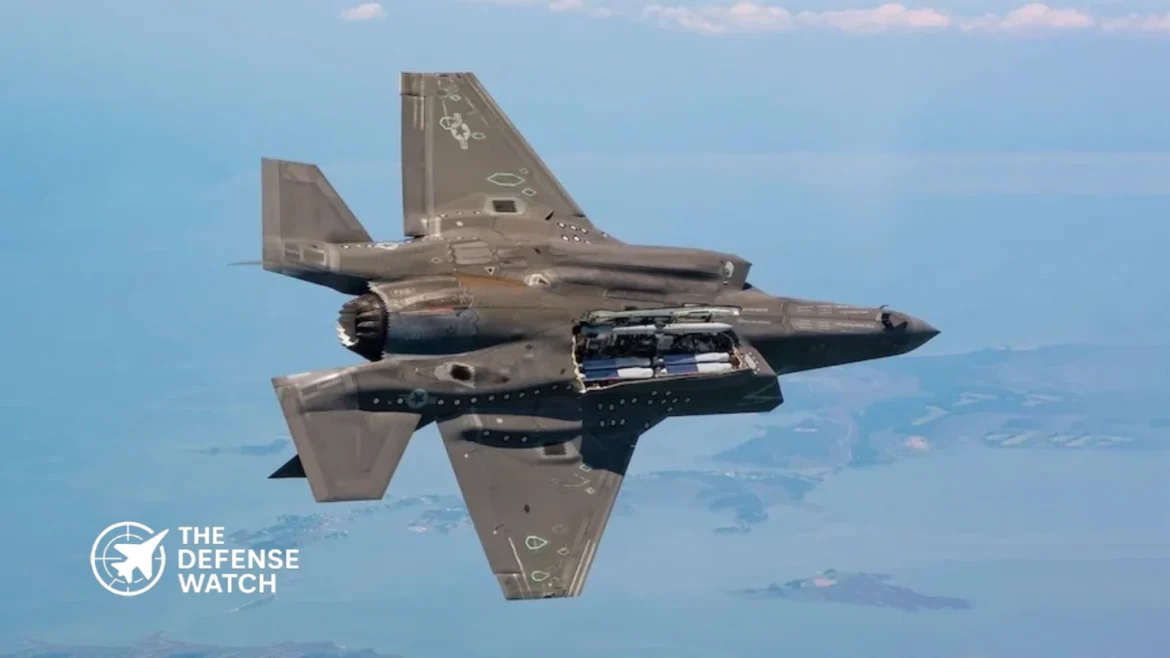
F-35B StormBreaker Test Demonstrates Higher Strike Capacity
The F-35B StormBreaker weapons integration effort has reached another test milestone, with Raytheon reporting that an F-35B launched eight GBU-53/B StormBreaker smart weapons simultaneously during a recent flight test in Arizona. The company said the demonstration validated the weapon’s ripple eight capability, allowing one aircraft to release eight weapons in a closely coordinated sequence.
Takeaways
Raytheon says an F-35B launched eight StormBreaker weapons simultaneously during an Arizona flight test, demonstrating a higher-volume precision strike capability against moving targets.
The test is significant because StormBreaker is designed specifically for precision engagement of moving and stationary targets under difficult weather and visibility conditions. The U.S. Navy identifies the GBU-53/B as an air-launched precision strike weapon intended to engage moving and fixed targets while using network connectivity to receive updated target information during flight.
The latest demonstration does not by itself establish a new operational deployment date for StormBreaker on the F-35B. Instead, it demonstrates progress in integrating the weapon with the fifth-generation fighter and in expanding the number of weapons that can be employed during a single mission.
What The Eight-Weapon Demonstration Shows
The central feature of the Arizona test is the simultaneous launch of eight StormBreakers from an F-35B.
Raytheon describes this as ripple eight, a capability intended to allow one aircraft to prosecute multiple targets during a single attack sequence. The company said the test was focused on increasing the number of targets an individual aircraft could engage during one mission.
That distinction matters because StormBreaker is not simply a smaller version of a conventional guided bomb. Its design combines a compact airframe with a seeker and network architecture intended to support engagements against targets that can move after weapon release.
The U.S. Navy lists the GBU-53/B as a 250-pound-class weapon with a listed weight of 208 pounds, a length of 70 inches and a diameter of seven inches. Its compact dimensions are central to the weapon’s value on aircraft with limited internal weapons-bay volume.
StormBreaker GBU-53/B At A Glance
Capability GBU-53/B StormBreaker Weapon designation GBU-53/B Program name Small Diameter Bomb Increment II Manufacturer Raytheon Weight 208 pounds Length 70 inches Diameter 7 inches Primary targets Moving and stationary targets Guidance Imaging infrared, millimeter-wave radar, semi-active laser Navigation GPS-aided inertial navigation Network Link 16 and UHF data links Moving-target range More than 45 miles, according to Raytheon F-35 threshold platforms F-35B and F-35C Source: U.S. Navy, NAVAIR, U.S. Department of Defense and Raytheon.
A Tri-Mode Seeker For Difficult Conditions
One of StormBreaker’s most important characteristics is its tri-mode seeker.
The weapon combines millimeter-wave radar, imaging infrared and digital semi-active laser guidance. These sensing modes allow the weapon to operate across conditions in which conventional electro-optical or laser-guided weapons can face limitations.
Millimeter-wave radar provides the ability to detect and track targets through conditions such as rain and other degraded visibility environments. Imaging infrared provides another method of target detection and discrimination, while the semi-active laser mode allows the weapon to engage a target designated by an aircraft or ground operator.
The combination is particularly relevant to moving targets. A weapon intended to hit a stationary coordinate can rely heavily on precise navigation to a known location. A weapon attacking a moving vehicle must instead locate and track the target as its position changes.
StormBreaker was designed around that problem.
Network Connectivity Adds Another Layer
StormBreaker’s capabilities also extend beyond the seeker itself.
NAVAIR states that the weapon can receive updated target coordinates while in flight through two-way datalink communications. Link 16 and UHF communications can allow airborne or ground controllers to provide updated information, while the weapon also has an abort capability after release.
This network-enabled architecture changes the tactical problem from simply releasing a weapon toward a predetermined coordinate to maintaining a connection between the weapon, aircraft and wider force.
That capability becomes more relevant when targets are mobile, when the target picture changes after launch, or when the original target position is no longer valid.
The F-35’s own sensor and networking architecture provides an important complement. The aircraft is designed to collect information from multiple sensors and distribute relevant targeting information across the force. StormBreaker adds a weapon that can use networked information after release.
Why The F-35B Integration Matters
The F-35B presents a particularly demanding integration challenge because it combines fifth-generation aircraft characteristics with short-takeoff and vertical-landing requirements.
Earlier U.S. Navy testing established that StormBreaker could be integrated into the F-35B’s internal weapons configuration. Navy aviation documentation described the weapon as part of the effort to expand the F-35B and F-35C weapon inventory while preserving the aircraft’s low-observable configuration.
The latest eight-weapon demonstration therefore builds on a longer integration effort rather than representing the beginning of StormBreaker work on the F-35B.
The internal carriage issue is especially important. Carrying weapons internally allows the F-35B to retain the aerodynamic and signature advantages associated with its low-observable configuration.
External weapons carriage can increase available payload, but it also changes the aircraft’s signature and aerodynamic characteristics. Internal carriage is consequently valuable for missions in which survivability against sophisticated air defenses remains a priority.
From F-15E To F/A-18E/F And F-35
StormBreaker has progressed beyond developmental testing on the F-15E.
The U.S. Air Force approved the GBU-53/B for operational flights on the F-15E in 2020, and an Air Force operational unit subsequently employed the weapon during evaluation activities. The F-15E’s larger weapons capacity also highlights the weapon’s small physical footprint.
The U.S. Navy has since advanced the weapon on the F/A-18E/F Super Hornet. NAVAIR announced initial operational capability for the SDB II on the Super Hornet in February 2026, following limited early operational use in 2025.
Raytheon also announced in February 2026 that the Navy had approved StormBreaker for operational use on the Super Hornet fleet. The company said the weapon provides the aircraft with a precision-strike capability against moving and stationary targets in both favorable and adverse weather.
The continuing F-35 integration effort therefore extends an existing weapon capability across multiple U.S. tactical aircraft rather than creating an entirely separate weapon ecosystem.
The Operational Value Of More Weapons Per Sortie
The most important implication of the Arizona test is the relationship between aircraft numbers and target capacity.
A fighter can only attack as many targets as its available weapons, targeting information and engagement sequence permit. Increasing the number of precision weapons carried by an aircraft can allow a smaller force package to engage more targets during a mission, assuming sufficient target-quality information and weapon availability.
Raytheon specifically highlights this feature of StormBreaker, stating that its compact design can allow aircraft to carry more weapons and engage a greater number of targets without requiring additional aircraft. The company also states that the weapon can fly more than 45 miles against mobile targets.
The practical value is therefore not simply eight weapons released at once. It is the potential combination of aircraft survivability, weapon quantity, target discrimination, networking and standoff range.
That combination is relevant to contested environments where aircraft may face layered air defenses and where mobile targets can relocate quickly.
What The Test Does Not Establish
The Arizona demonstration should not be interpreted as evidence that every F-35B unit can immediately employ eight StormBreakers operationally under all mission conditions.
Flight testing validates specific aspects of weapon and aircraft integration. Operational fielding also depends on certification, software, tactics development, maintenance procedures, training, logistics and formal authorization.
The U.S. government continues to describe F-35B and F-35C as threshold platforms for the SDB II program, while StormBreaker has already achieved operational status on other aircraft.
The distinction between a successful flight demonstration and full operational availability is important when evaluating defense technology announcements.
A Broader Shift Toward Networked Precision Weapons
StormBreaker represents a broader U.S. shift toward weapons that combine precision guidance with onboard sensing and network connectivity.
Traditional precision weapons can be highly effective against fixed coordinates, but moving targets create a more difficult engagement problem. A mobile target can change position between target identification, weapon release and impact.
StormBreaker’s architecture addresses that challenge through a combination of onboard sensing, navigation and networked updates.
For the F-35B, the value is amplified by the aircraft’s ability to operate from amphibious assault ships and austere locations. A weapon capable of engaging moving targets at standoff distance gives the aircraft another option for precision strike without relying exclusively on larger weapons.
The latest test therefore represents more than a weapons release demonstration. It is a step toward increasing the number of precision engagements a fifth-generation aircraft can conduct during a single mission while maintaining the advantages of a compact, network-enabled weapon.
Outlook
Raytheon’s eight-weapon F-35B demonstration adds another milestone to the StormBreaker integration program and shows how the GBU-53/B is being developed as a multi-platform precision weapon for the U.S. tactical aviation fleet.
The weapon is already operational on the F-15E and has reached initial operational capability on the F/A-18E/F. Continued F-35 integration could extend its combination of moving-target capability, adverse-weather performance and networked targeting to the Joint Strike Fighter fleet.
For U.S. forces, the larger issue is capacity. A precision weapon that can fit in a fighter’s internal weapons bay, identify moving targets and receive updated targeting information can increase the number of useful engagements generated by each aircraft.
The Arizona test indicates that Raytheon and U.S. military test teams are continuing to push that capability toward a more mature F-35 employment option.

Kongsberg Adds Echodyne Radar to PROTECTOR Counter-UAS Systems
Kongsberg is integrating Echodyne MESA radar with its PROTECTOR RS4 and RS6 remote weapon stations, adding radar-supported detection, tracking and targeting functions to a weapon-system family increasingly being adapted for counter-unmanned aircraft system missions. Echodyne announced the selection on September 9, 2026, describing the integration as one of the first applications of its MESA radar platform with Kongsberg’s remote weapon systems.
Takeaways
Kongsberg is integrating U.S.-made Echodyne MESA radar technology with its PROTECTOR RS4 and RS6 remote weapon stations, adding radar-supported counter-UAS detection and tracking to a widely deployed weapon-system family.
The companies are presenting the capability at MSPO 2026 in Kielce, Poland, where the integration demonstrates an approach aimed at connecting compact radar sensing directly with an existing remote weapon station rather than requiring a separate dedicated air-defense vehicle for every firing position.
The development is significant because counter-UAS systems increasingly have to detect and track small aerial targets before an operator can employ a suitable effector. Adding radar to an established remote weapon station addresses that sensor-to-effector gap while retaining the weapon station’s existing electro-optical and fire-control architecture.
How the Echodyne MESA Integration Works
Echodyne’s MESA, or Metamaterials Electronically Scanned Array, is a compact solid-state radar architecture that electronically steers its beam rather than relying on a mechanically rotating antenna.
For the PROTECTOR integration, the radar supplies measurements including target range, bearing and radial velocity. Those data can be used by Kongsberg’s Collaborative Fire Control architecture to generate and maintain a track and to cue the weapon station’s electro-optical sensors.
The result is a more complete engagement sequence:
| Function | Integrated Capability |
|---|---|
| Detection | Echodyne MESA radar |
| Tracking | Radar-derived target measurements |
| Identification and confirmation | Electro-optical sensor suite |
| Fire control | Kongsberg Collaborative Fire Control |
| Effectors | Machine guns, automatic grenade launchers, cannon and selected missiles |
| Platforms | Static, crewed and uncrewed platforms |
| Mission | Counter-UAS and broader ground-defense applications |
This architecture also allows the PROTECTOR system to receive tracks from external surveillance sensors. That matters in a networked air-defense environment because a weapon station does not necessarily have to discover every target independently.
Instead, a wider surveillance network can provide an initial track, while the local radar and electro-optical system refine the information before an engagement.
RS4 and RS6 Provide Different Counter-Drone Options
The integration covers two different PROTECTOR configurations.
Kongsberg describes the PROTECTOR RS4 as a flexible remote weapon station capable of carrying 5.56 mm, 7.62 mm and 12.7 mm machine guns, as well as 40 mm automatic grenade launchers. The system can also accommodate additional weapon and sensor configurations.
The RS4 is therefore suited to platforms where weight, size and existing armament remain important constraints. Kongsberg also states that the RS4 can support counter-UAS missions when combined with its Counter-UAS software.
The PROTECTOR RS6 provides a heavier weapons option. Its configuration can integrate the XM914 30 x 113 mm cannon, a coaxial 7.62 mm M240 machine gun and selected missiles. Kongsberg says the RS6 can combine radar sensors, Collaborative Fire Control and programmable airburst ammunition for engagements against small and medium-sized drones.
The U.S. Army separately identifies the XM914 as a 30 x 113 mm automatic chain gun capable of firing at up to 200 rounds per minute. The Army has also used the XM914 in counter-UAS development, including integration with the Mobile Low, Slow, Small Unmanned Aerial Vehicle Integrated Defeat System, or M-LIDS.
That gives the Kongsberg configuration a direct connection to a broader U.S. Army effort to adapt medium-caliber automatic weapons for the small-drone threat.
Why Radar Matters Against Small Drones
A remote weapon station already has an electro-optical sensor, but optical systems face limitations when attempting to maintain continuous tracks on small targets.
Small drones can present limited visual signatures, operate at low altitude and move against backgrounds containing terrain, buildings and other objects. Radar can provide continuous measurements of position and motion that are useful to the fire-control system even when the target is difficult to keep visually centered.
That distinction becomes particularly important during the final stages of an engagement.
A fire-control system needs more than a general indication that a drone is somewhere in the vicinity. It needs sufficiently accurate information about the target’s position and movement to point the weapon and calculate an engagement solution.
This is where the MESA integration has its main technical value. The radar provides measurements that can be used to maintain the track, while the electro-optical system can support visual confirmation and the weapon station can provide the final engagement.
Airburst Ammunition Changes the Engagement Problem
For small maneuvering drones, hitting the aircraft directly with a projectile can be difficult.
Programmable airburst ammunition changes that requirement by allowing the projectile to detonate near the target rather than depending entirely on a direct impact. When combined with accurate radar-derived range and velocity information, the fire-control system can place the burst around the predicted target position.
The U.S. Army is already pursuing related approaches. Its Armaments Center reported in June 2026 that it had demonstrated advanced counter-drone fire control using a Common Remotely Operated Weapon Station, enabling engagement of moving drones while the host vehicle was itself moving. The project uses sensor inputs and automated fire-control calculations to improve weapon pointing against aerial targets.
The parallel development is important because it shows that the challenge is not simply mounting a cannon on a remote turret. The central problem is creating an accurate and sufficiently automated detect, track, calculate and engage sequence.
From Remote Weapon Station to Distributed Air Defense
The larger significance of the Kongsberg and Echodyne integration is its potential to increase the number of available counter-UAS firing points.
A conventional short-range air-defense architecture may use dedicated vehicles carrying specialized radars, launchers or guns. Such systems remain important, but they can be expensive and limited in number.
A remote weapon station already mounted on a tactical vehicle represents a different starting point. Adding radar and appropriate software can potentially turn that platform into an additional counter-UAS node.
Kongsberg says the PROTECTOR family has more than 25,000 systems delivered and is in service across more than 31 nations.
That installed base is strategically relevant. If existing weapon stations can receive new sensors and software without requiring complete replacement, militaries may be able to increase counter-UAS density through upgrades rather than building an entirely separate fleet.
This does not make every PROTECTOR station a replacement for a dedicated air-defense system. Radar coverage, target classification, ammunition capacity, elevation limits, electronic warfare conditions and the number of simultaneous targets remain important constraints.
Instead, the concept adds another layer to a broader integrated air-defense network.
The NATO Context
The development arrives as NATO expands investment in counter-drone technology.
At the July 2026 NATO Summit Defence Industry Forum in Ankara, Allied nations announced plans to invest more than $40 billion in counter-drone capabilities over five years under the NATO Drone Edge initiative. NATO said the effort would support capabilities needed to rapidly detect, identify and neutralize drones.
The emphasis reflects operational lessons from Ukraine, the Middle East and repeated drone incidents affecting Allied territory.
The central requirement is increasingly one of scale. Militaries need enough sensors, command-and-control capacity and effectors to respond to large numbers of relatively inexpensive unmanned aircraft without consuming high-value interceptors against every low-cost target.
A distributed network of radar-equipped remote weapon stations could contribute to that objective by placing additional sensing and engagement capability closer to the units and assets that need protection.
Implications for U.S. and Allied Forces
For U.S. forces and other NATO militaries, the Kongsberg-Echodyne approach illustrates an important direction in counter-UAS modernization: upgrading existing combat platforms instead of relying exclusively on new dedicated systems.
The approach also fits the growing use of modular software and sensor architectures. The U.S. Army’s recent CROWS counter-UAS work similarly focuses on integrating fire-control software and sensor inputs with existing remote weapon station hardware.
There are practical advantages to this model. Existing vehicles already have mobility, communications, power generation, crew protection and logistics support. If the counter-UAS package can be integrated without imposing excessive size, weight and power requirements, the resulting capability can potentially be distributed across more units.
The principal challenge is achieving reliable performance in complex electromagnetic and physical environments. Small drones can be difficult radar targets, and terrain, buildings, weather, other aircraft and friendly systems can complicate tracking.
The system also has to manage the transition from detection to engagement quickly enough to defeat a maneuvering target. That requires close coordination between radar, fire control, electro-optics, weapon pointing and ammunition functionality.
A Broader Shift in Counter-UAS Design
The Kongsberg and Echodyne integration therefore represents more than the addition of another radar to a remote turret.
It reflects the movement toward distributed counter-UAS architectures, in which sensors and effectors can be placed across multiple vehicles and fixed positions and connected through a common fire-control network.
For Kongsberg, the integration gives the PROTECTOR family an additional route into the rapidly expanding counter-drone market. For Echodyne, integration with an established remote weapon system provides a path for its compact radar technology into a larger installed base of military platforms.
The immediate result is a PROTECTOR station with greater radar-supported sensing and targeting capability against drones. The broader military significance lies in the possibility of making existing tactical platforms part of a larger, layered air-defense network.
As NATO and individual Allied militaries increase counter-UAS spending, such upgrade-based approaches are likely to remain important alongside dedicated air-defense systems, electronic warfare, directed-energy weapons and interceptor-based solutions.
The objective is not a single universal counter-drone weapon. It is a sufficiently dense and connected defensive network capable of detecting, tracking and defeating aerial threats at the tactical level.
Technical Summary
| Area | Kongsberg-Echodyne Capability |
|---|---|
| Radar | Echodyne MESA |
| Radar type | Compact solid-state electronically scanned architecture |
| Integrated weapon stations | PROTECTOR RS4 and RS6 |
| Primary mission | Counter-UAS |
| Fire-control architecture | Kongsberg Collaborative Fire Control |
| Sensor integration | Radar plus electro-optical sensors |
| RS6 weapon option | XM914 30 x 113 mm cannon |
| Ammunition approach | Programmable airburst capability |
| Platform options | Static, crewed and uncrewed |
| Network approach | External sensors can provide tracks |
| Demonstration venue | MSPO 2026, Kielce, Poland |
| Announcement date | September 9, 2026 |
Conclusion
Kongsberg’s integration of Echodyne MESA radar with the PROTECTOR RS4 and RS6 adds a radar-based sensing layer to a widely deployed family of remote weapon stations.
The technical importance lies in connecting radar measurements with electro-optical sensors, automated fire control and kinetic effectors. The strategic importance is the potential to turn more existing tactical platforms into distributed counter-UAS nodes.
As drone threats continue to expand in scale and complexity, the ability to field more affordable detection and engagement points will become an increasingly important part of NATO and U.S. force protection.
The Kongsberg-Echodyne configuration does not replace dedicated air-defense networks. Instead, it demonstrates how remote weapon stations already deployed on military platforms can be adapted to contribute to the layered counter-drone architecture now being developed across NATO.