F-35B StormBreaker Test Demonstrates Higher Strike Capacity
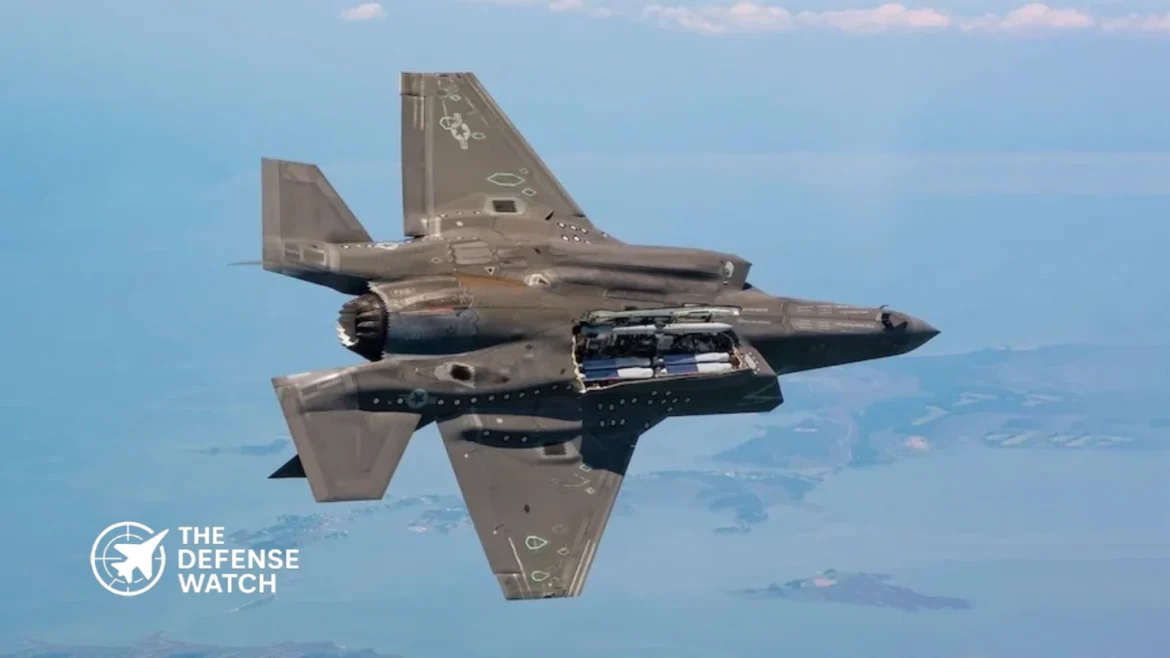
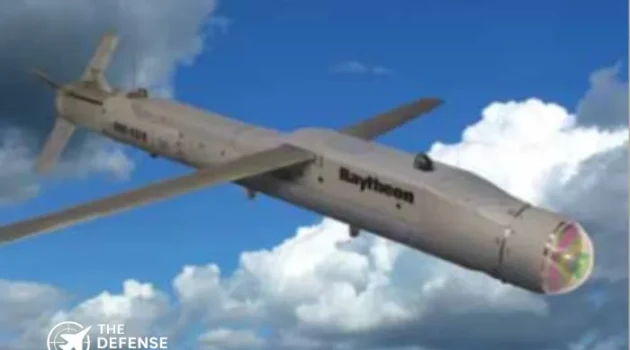
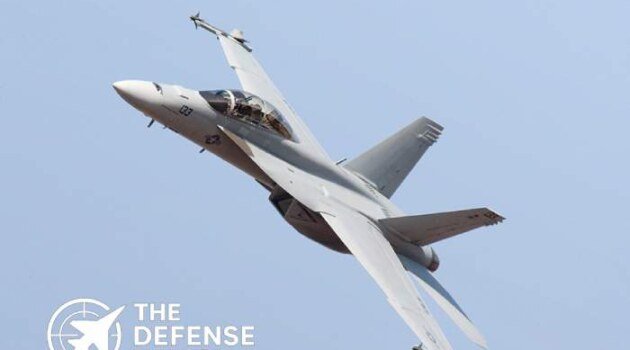
The F-35B StormBreaker weapons integration effort has reached another test milestone, with Raytheon reporting that an F-35B launched eight GBU-53/B StormBreaker smart weapons simultaneously during a recent flight test in Arizona. The company said the demonstration validated the weapon’s ripple eight capability, allowing one aircraft to release eight weapons in a closely coordinated sequence.
Takeaways
Raytheon says an F-35B launched eight StormBreaker weapons simultaneously during an Arizona flight test, demonstrating a higher-volume precision strike capability against moving targets.
The test is significant because StormBreaker is designed specifically for precision engagement of moving and stationary targets under difficult weather and visibility conditions. The U.S. Navy identifies the GBU-53/B as an air-launched precision strike weapon intended to engage moving and fixed targets while using network connectivity to receive updated target information during flight.
The latest demonstration does not by itself establish a new operational deployment date for StormBreaker on the F-35B. Instead, it demonstrates progress in integrating the weapon with the fifth-generation fighter and in expanding the number of weapons that can be employed during a single mission.
What The Eight-Weapon Demonstration Shows
The central feature of the Arizona test is the simultaneous launch of eight StormBreakers from an F-35B.
Raytheon describes this as ripple eight, a capability intended to allow one aircraft to prosecute multiple targets during a single attack sequence. The company said the test was focused on increasing the number of targets an individual aircraft could engage during one mission.
That distinction matters because StormBreaker is not simply a smaller version of a conventional guided bomb. Its design combines a compact airframe with a seeker and network architecture intended to support engagements against targets that can move after weapon release.
The U.S. Navy lists the GBU-53/B as a 250-pound-class weapon with a listed weight of 208 pounds, a length of 70 inches and a diameter of seven inches. Its compact dimensions are central to the weapon’s value on aircraft with limited internal weapons-bay volume.
StormBreaker GBU-53/B At A Glance
Capability GBU-53/B StormBreaker Weapon designation GBU-53/B Program name Small Diameter Bomb Increment II Manufacturer Raytheon Weight 208 pounds Length 70 inches Diameter 7 inches Primary targets Moving and stationary targets Guidance Imaging infrared, millimeter-wave radar, semi-active laser Navigation GPS-aided inertial navigation Network Link 16 and UHF data links Moving-target range More than 45 miles, according to Raytheon F-35 threshold platforms F-35B and F-35C Source: U.S. Navy, NAVAIR, U.S. Department of Defense and Raytheon.
A Tri-Mode Seeker For Difficult Conditions
One of StormBreaker’s most important characteristics is its tri-mode seeker.
The weapon combines millimeter-wave radar, imaging infrared and digital semi-active laser guidance. These sensing modes allow the weapon to operate across conditions in which conventional electro-optical or laser-guided weapons can face limitations.
Millimeter-wave radar provides the ability to detect and track targets through conditions such as rain and other degraded visibility environments. Imaging infrared provides another method of target detection and discrimination, while the semi-active laser mode allows the weapon to engage a target designated by an aircraft or ground operator.
The combination is particularly relevant to moving targets. A weapon intended to hit a stationary coordinate can rely heavily on precise navigation to a known location. A weapon attacking a moving vehicle must instead locate and track the target as its position changes.
StormBreaker was designed around that problem.
Network Connectivity Adds Another Layer
StormBreaker’s capabilities also extend beyond the seeker itself.
NAVAIR states that the weapon can receive updated target coordinates while in flight through two-way datalink communications. Link 16 and UHF communications can allow airborne or ground controllers to provide updated information, while the weapon also has an abort capability after release.
This network-enabled architecture changes the tactical problem from simply releasing a weapon toward a predetermined coordinate to maintaining a connection between the weapon, aircraft and wider force.
That capability becomes more relevant when targets are mobile, when the target picture changes after launch, or when the original target position is no longer valid.
The F-35’s own sensor and networking architecture provides an important complement. The aircraft is designed to collect information from multiple sensors and distribute relevant targeting information across the force. StormBreaker adds a weapon that can use networked information after release.
Why The F-35B Integration Matters
The F-35B presents a particularly demanding integration challenge because it combines fifth-generation aircraft characteristics with short-takeoff and vertical-landing requirements.
Earlier U.S. Navy testing established that StormBreaker could be integrated into the F-35B’s internal weapons configuration. Navy aviation documentation described the weapon as part of the effort to expand the F-35B and F-35C weapon inventory while preserving the aircraft’s low-observable configuration.
The latest eight-weapon demonstration therefore builds on a longer integration effort rather than representing the beginning of StormBreaker work on the F-35B.
The internal carriage issue is especially important. Carrying weapons internally allows the F-35B to retain the aerodynamic and signature advantages associated with its low-observable configuration.
External weapons carriage can increase available payload, but it also changes the aircraft’s signature and aerodynamic characteristics. Internal carriage is consequently valuable for missions in which survivability against sophisticated air defenses remains a priority.
From F-15E To F/A-18E/F And F-35
StormBreaker has progressed beyond developmental testing on the F-15E.
The U.S. Air Force approved the GBU-53/B for operational flights on the F-15E in 2020, and an Air Force operational unit subsequently employed the weapon during evaluation activities. The F-15E’s larger weapons capacity also highlights the weapon’s small physical footprint.
The U.S. Navy has since advanced the weapon on the F/A-18E/F Super Hornet. NAVAIR announced initial operational capability for the SDB II on the Super Hornet in February 2026, following limited early operational use in 2025.
Raytheon also announced in February 2026 that the Navy had approved StormBreaker for operational use on the Super Hornet fleet. The company said the weapon provides the aircraft with a precision-strike capability against moving and stationary targets in both favorable and adverse weather.
The continuing F-35 integration effort therefore extends an existing weapon capability across multiple U.S. tactical aircraft rather than creating an entirely separate weapon ecosystem.
The Operational Value Of More Weapons Per Sortie
The most important implication of the Arizona test is the relationship between aircraft numbers and target capacity.
A fighter can only attack as many targets as its available weapons, targeting information and engagement sequence permit. Increasing the number of precision weapons carried by an aircraft can allow a smaller force package to engage more targets during a mission, assuming sufficient target-quality information and weapon availability.
Raytheon specifically highlights this feature of StormBreaker, stating that its compact design can allow aircraft to carry more weapons and engage a greater number of targets without requiring additional aircraft. The company also states that the weapon can fly more than 45 miles against mobile targets.
The practical value is therefore not simply eight weapons released at once. It is the potential combination of aircraft survivability, weapon quantity, target discrimination, networking and standoff range.
That combination is relevant to contested environments where aircraft may face layered air defenses and where mobile targets can relocate quickly.
What The Test Does Not Establish
The Arizona demonstration should not be interpreted as evidence that every F-35B unit can immediately employ eight StormBreakers operationally under all mission conditions.
Flight testing validates specific aspects of weapon and aircraft integration. Operational fielding also depends on certification, software, tactics development, maintenance procedures, training, logistics and formal authorization.
The U.S. government continues to describe F-35B and F-35C as threshold platforms for the SDB II program, while StormBreaker has already achieved operational status on other aircraft.
The distinction between a successful flight demonstration and full operational availability is important when evaluating defense technology announcements.
A Broader Shift Toward Networked Precision Weapons
StormBreaker represents a broader U.S. shift toward weapons that combine precision guidance with onboard sensing and network connectivity.
Traditional precision weapons can be highly effective against fixed coordinates, but moving targets create a more difficult engagement problem. A mobile target can change position between target identification, weapon release and impact.
StormBreaker’s architecture addresses that challenge through a combination of onboard sensing, navigation and networked updates.
For the F-35B, the value is amplified by the aircraft’s ability to operate from amphibious assault ships and austere locations. A weapon capable of engaging moving targets at standoff distance gives the aircraft another option for precision strike without relying exclusively on larger weapons.
The latest test therefore represents more than a weapons release demonstration. It is a step toward increasing the number of precision engagements a fifth-generation aircraft can conduct during a single mission while maintaining the advantages of a compact, network-enabled weapon.
Outlook
Raytheon’s eight-weapon F-35B demonstration adds another milestone to the StormBreaker integration program and shows how the GBU-53/B is being developed as a multi-platform precision weapon for the U.S. tactical aviation fleet.
The weapon is already operational on the F-15E and has reached initial operational capability on the F/A-18E/F. Continued F-35 integration could extend its combination of moving-target capability, adverse-weather performance and networked targeting to the Joint Strike Fighter fleet.
For U.S. forces, the larger issue is capacity. A precision weapon that can fit in a fighter’s internal weapons bay, identify moving targets and receive updated targeting information can increase the number of useful engagements generated by each aircraft.
The Arizona test indicates that Raytheon and U.S. military test teams are continuing to push that capability toward a more mature F-35 employment option.

Kongsberg Adds Echodyne Radar to PROTECTOR Counter-UAS Systems
Kongsberg is integrating Echodyne MESA radar with its PROTECTOR RS4 and RS6 remote weapon stations, adding radar-supported detection, tracking and targeting functions to a weapon-system family increasingly being adapted for counter-unmanned aircraft system missions. Echodyne announced the selection on September 9, 2026, describing the integration as one of the first applications of its MESA radar platform with Kongsberg’s remote weapon systems.
Takeaways
Kongsberg is integrating U.S.-made Echodyne MESA radar technology with its PROTECTOR RS4 and RS6 remote weapon stations, adding radar-supported counter-UAS detection and tracking to a widely deployed weapon-system family.
The companies are presenting the capability at MSPO 2026 in Kielce, Poland, where the integration demonstrates an approach aimed at connecting compact radar sensing directly with an existing remote weapon station rather than requiring a separate dedicated air-defense vehicle for every firing position.
The development is significant because counter-UAS systems increasingly have to detect and track small aerial targets before an operator can employ a suitable effector. Adding radar to an established remote weapon station addresses that sensor-to-effector gap while retaining the weapon station’s existing electro-optical and fire-control architecture.
How the Echodyne MESA Integration Works
Echodyne’s MESA, or Metamaterials Electronically Scanned Array, is a compact solid-state radar architecture that electronically steers its beam rather than relying on a mechanically rotating antenna.
For the PROTECTOR integration, the radar supplies measurements including target range, bearing and radial velocity. Those data can be used by Kongsberg’s Collaborative Fire Control architecture to generate and maintain a track and to cue the weapon station’s electro-optical sensors.
The result is a more complete engagement sequence:
| Function | Integrated Capability |
|---|---|
| Detection | Echodyne MESA radar |
| Tracking | Radar-derived target measurements |
| Identification and confirmation | Electro-optical sensor suite |
| Fire control | Kongsberg Collaborative Fire Control |
| Effectors | Machine guns, automatic grenade launchers, cannon and selected missiles |
| Platforms | Static, crewed and uncrewed platforms |
| Mission | Counter-UAS and broader ground-defense applications |
This architecture also allows the PROTECTOR system to receive tracks from external surveillance sensors. That matters in a networked air-defense environment because a weapon station does not necessarily have to discover every target independently.
Instead, a wider surveillance network can provide an initial track, while the local radar and electro-optical system refine the information before an engagement.
RS4 and RS6 Provide Different Counter-Drone Options
The integration covers two different PROTECTOR configurations.
Kongsberg describes the PROTECTOR RS4 as a flexible remote weapon station capable of carrying 5.56 mm, 7.62 mm and 12.7 mm machine guns, as well as 40 mm automatic grenade launchers. The system can also accommodate additional weapon and sensor configurations.
The RS4 is therefore suited to platforms where weight, size and existing armament remain important constraints. Kongsberg also states that the RS4 can support counter-UAS missions when combined with its Counter-UAS software.
The PROTECTOR RS6 provides a heavier weapons option. Its configuration can integrate the XM914 30 x 113 mm cannon, a coaxial 7.62 mm M240 machine gun and selected missiles. Kongsberg says the RS6 can combine radar sensors, Collaborative Fire Control and programmable airburst ammunition for engagements against small and medium-sized drones.
The U.S. Army separately identifies the XM914 as a 30 x 113 mm automatic chain gun capable of firing at up to 200 rounds per minute. The Army has also used the XM914 in counter-UAS development, including integration with the Mobile Low, Slow, Small Unmanned Aerial Vehicle Integrated Defeat System, or M-LIDS.
That gives the Kongsberg configuration a direct connection to a broader U.S. Army effort to adapt medium-caliber automatic weapons for the small-drone threat.
Why Radar Matters Against Small Drones
A remote weapon station already has an electro-optical sensor, but optical systems face limitations when attempting to maintain continuous tracks on small targets.
Small drones can present limited visual signatures, operate at low altitude and move against backgrounds containing terrain, buildings and other objects. Radar can provide continuous measurements of position and motion that are useful to the fire-control system even when the target is difficult to keep visually centered.
That distinction becomes particularly important during the final stages of an engagement.
A fire-control system needs more than a general indication that a drone is somewhere in the vicinity. It needs sufficiently accurate information about the target’s position and movement to point the weapon and calculate an engagement solution.
This is where the MESA integration has its main technical value. The radar provides measurements that can be used to maintain the track, while the electro-optical system can support visual confirmation and the weapon station can provide the final engagement.
Airburst Ammunition Changes the Engagement Problem
For small maneuvering drones, hitting the aircraft directly with a projectile can be difficult.
Programmable airburst ammunition changes that requirement by allowing the projectile to detonate near the target rather than depending entirely on a direct impact. When combined with accurate radar-derived range and velocity information, the fire-control system can place the burst around the predicted target position.
The U.S. Army is already pursuing related approaches. Its Armaments Center reported in June 2026 that it had demonstrated advanced counter-drone fire control using a Common Remotely Operated Weapon Station, enabling engagement of moving drones while the host vehicle was itself moving. The project uses sensor inputs and automated fire-control calculations to improve weapon pointing against aerial targets.
The parallel development is important because it shows that the challenge is not simply mounting a cannon on a remote turret. The central problem is creating an accurate and sufficiently automated detect, track, calculate and engage sequence.
From Remote Weapon Station to Distributed Air Defense
The larger significance of the Kongsberg and Echodyne integration is its potential to increase the number of available counter-UAS firing points.
A conventional short-range air-defense architecture may use dedicated vehicles carrying specialized radars, launchers or guns. Such systems remain important, but they can be expensive and limited in number.
A remote weapon station already mounted on a tactical vehicle represents a different starting point. Adding radar and appropriate software can potentially turn that platform into an additional counter-UAS node.
Kongsberg says the PROTECTOR family has more than 25,000 systems delivered and is in service across more than 31 nations.
That installed base is strategically relevant. If existing weapon stations can receive new sensors and software without requiring complete replacement, militaries may be able to increase counter-UAS density through upgrades rather than building an entirely separate fleet.
This does not make every PROTECTOR station a replacement for a dedicated air-defense system. Radar coverage, target classification, ammunition capacity, elevation limits, electronic warfare conditions and the number of simultaneous targets remain important constraints.
Instead, the concept adds another layer to a broader integrated air-defense network.
The NATO Context
The development arrives as NATO expands investment in counter-drone technology.
At the July 2026 NATO Summit Defence Industry Forum in Ankara, Allied nations announced plans to invest more than $40 billion in counter-drone capabilities over five years under the NATO Drone Edge initiative. NATO said the effort would support capabilities needed to rapidly detect, identify and neutralize drones.
The emphasis reflects operational lessons from Ukraine, the Middle East and repeated drone incidents affecting Allied territory.
The central requirement is increasingly one of scale. Militaries need enough sensors, command-and-control capacity and effectors to respond to large numbers of relatively inexpensive unmanned aircraft without consuming high-value interceptors against every low-cost target.
A distributed network of radar-equipped remote weapon stations could contribute to that objective by placing additional sensing and engagement capability closer to the units and assets that need protection.
Implications for U.S. and Allied Forces
For U.S. forces and other NATO militaries, the Kongsberg-Echodyne approach illustrates an important direction in counter-UAS modernization: upgrading existing combat platforms instead of relying exclusively on new dedicated systems.
The approach also fits the growing use of modular software and sensor architectures. The U.S. Army’s recent CROWS counter-UAS work similarly focuses on integrating fire-control software and sensor inputs with existing remote weapon station hardware.
There are practical advantages to this model. Existing vehicles already have mobility, communications, power generation, crew protection and logistics support. If the counter-UAS package can be integrated without imposing excessive size, weight and power requirements, the resulting capability can potentially be distributed across more units.
The principal challenge is achieving reliable performance in complex electromagnetic and physical environments. Small drones can be difficult radar targets, and terrain, buildings, weather, other aircraft and friendly systems can complicate tracking.
The system also has to manage the transition from detection to engagement quickly enough to defeat a maneuvering target. That requires close coordination between radar, fire control, electro-optics, weapon pointing and ammunition functionality.
A Broader Shift in Counter-UAS Design
The Kongsberg and Echodyne integration therefore represents more than the addition of another radar to a remote turret.
It reflects the movement toward distributed counter-UAS architectures, in which sensors and effectors can be placed across multiple vehicles and fixed positions and connected through a common fire-control network.
For Kongsberg, the integration gives the PROTECTOR family an additional route into the rapidly expanding counter-drone market. For Echodyne, integration with an established remote weapon system provides a path for its compact radar technology into a larger installed base of military platforms.
The immediate result is a PROTECTOR station with greater radar-supported sensing and targeting capability against drones. The broader military significance lies in the possibility of making existing tactical platforms part of a larger, layered air-defense network.
As NATO and individual Allied militaries increase counter-UAS spending, such upgrade-based approaches are likely to remain important alongside dedicated air-defense systems, electronic warfare, directed-energy weapons and interceptor-based solutions.
The objective is not a single universal counter-drone weapon. It is a sufficiently dense and connected defensive network capable of detecting, tracking and defeating aerial threats at the tactical level.
Technical Summary
| Area | Kongsberg-Echodyne Capability |
|---|---|
| Radar | Echodyne MESA |
| Radar type | Compact solid-state electronically scanned architecture |
| Integrated weapon stations | PROTECTOR RS4 and RS6 |
| Primary mission | Counter-UAS |
| Fire-control architecture | Kongsberg Collaborative Fire Control |
| Sensor integration | Radar plus electro-optical sensors |
| RS6 weapon option | XM914 30 x 113 mm cannon |
| Ammunition approach | Programmable airburst capability |
| Platform options | Static, crewed and uncrewed |
| Network approach | External sensors can provide tracks |
| Demonstration venue | MSPO 2026, Kielce, Poland |
| Announcement date | September 9, 2026 |
Conclusion
Kongsberg’s integration of Echodyne MESA radar with the PROTECTOR RS4 and RS6 adds a radar-based sensing layer to a widely deployed family of remote weapon stations.
The technical importance lies in connecting radar measurements with electro-optical sensors, automated fire control and kinetic effectors. The strategic importance is the potential to turn more existing tactical platforms into distributed counter-UAS nodes.
As drone threats continue to expand in scale and complexity, the ability to field more affordable detection and engagement points will become an increasingly important part of NATO and U.S. force protection.
The Kongsberg-Echodyne configuration does not replace dedicated air-defense networks. Instead, it demonstrates how remote weapon stations already deployed on military platforms can be adapted to contribute to the layered counter-drone architecture now being developed across NATO.
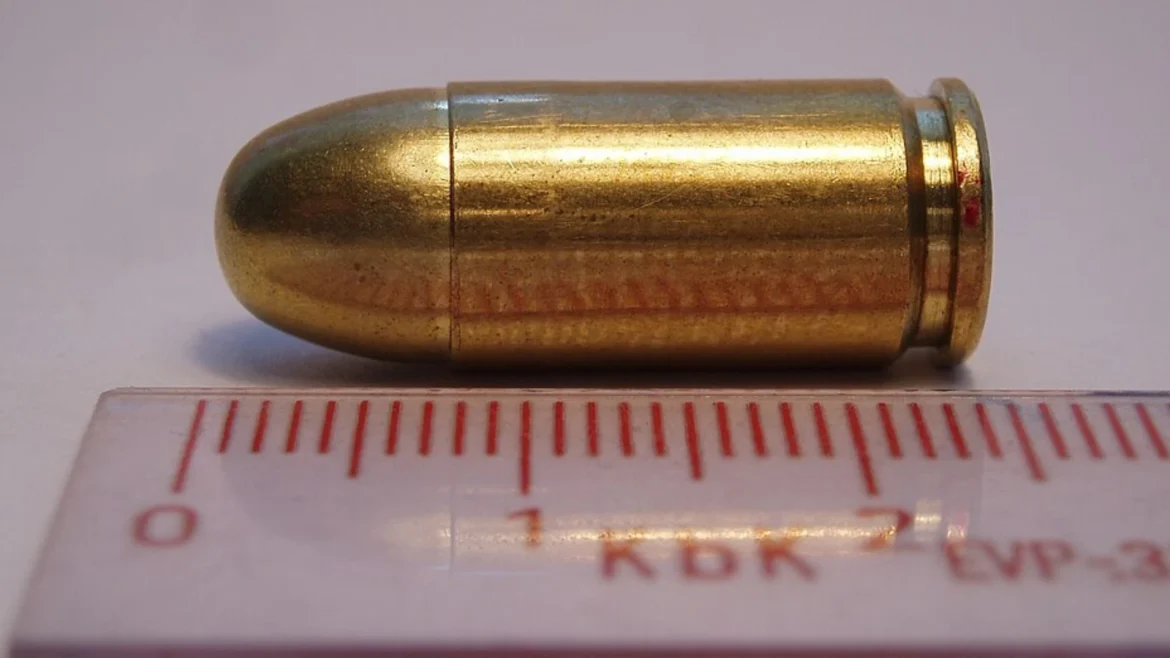
The 9×19mm cartridge, commonly called 9mm, has a long and well-established history as a military and law-enforcement handgun caliber. Its widespread adoption across different countries has made it one of the most recognizable pistol cartridges in the world. Even as modern armed forces introduce newer sidearm designs, 9mm continues to have an important place in military handgun inventories.
Why Militaries Chose 9mm
Military organizations generally look for sidearm cartridges that can be supported by established manufacturing and supply systems while working reliably in service pistols. The 9×19mm cartridge became particularly successful because it was adopted by numerous countries and manufacturers over many decades.
Its military history is closely connected with European service pistols and later with NATO-standard ammunition practices. The cartridge eventually became common across a wide range of military handguns, creating an extensive international ecosystem of compatible firearms and ammunition.
9mm and NATO Service
One of the major developments in the history of 9mm was its adoption as a standard NATO pistol and submachine-gun cartridge. Standardization helped participating countries simplify ammunition compatibility and logistics.
This did not mean every NATO military used exactly the same pistol. Different nations selected different service handguns, but many of those firearms were chambered for the same basic 9×19mm cartridge.
General Factors Behind Its Adoption
- Availability: 9mm has been manufactured extensively around the world, giving military organizations access to established production and supply networks.
- Standardization: Its widespread military adoption has made the cartridge familiar across different armed forces.
- Firearm compatibility: Many military and service pistols have been designed around the 9×19mm cartridge.
- Long service history: Decades of military use have created substantial experience with the caliber.
A Longstanding Military Caliber
The history of 9mm ammunition extends well beyond one particular pistol. Numerous military handguns have been chambered for the cartridge, including service designs from manufacturers such as Beretta, SIG Sauer, Heckler & Koch, and Glock.
The United States provides a useful example. The Beretta M9 became the U.S. military’s standard service pistol during the 1980s and used 9×19mm ammunition. The later M17 and M18 pistols selected under the Modular Handgun System program also use 9mm.
Other armed forces have adopted their own 9mm service pistols, reflecting the cartridge’s international reach.
How Military 9mm Ammunition Differs
Military ammunition is produced according to specifications established by the relevant armed force or standardization organization. Those specifications can cover factors such as projectile construction, dimensions, pressure, reliability, and manufacturing quality.
Historically, full-metal-jacket ammunition has been strongly associated with military 9mm use. This type of projectile has a metal jacket surrounding its core and has commonly been used for military training and service applications.
The exact ammunition used by a particular military can change over time as contracts, firearms, standards, and procurement requirements change.
The Growth of 9mm Adoption
The following conceptual graph illustrates the broad expansion of 9mm’s military presence over time. It is intended as a historical visualization rather than a numerical count of countries or ammunition purchases.
Conceptual trend in military adoption of 9mm
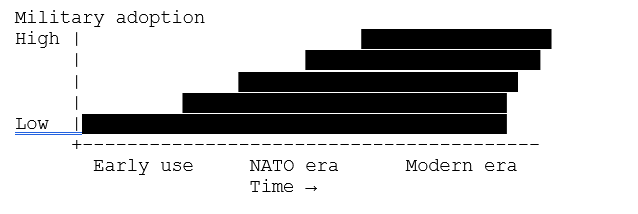
The overall trend reflects how the cartridge moved from individual military applications toward broader international adoption, particularly during the second half of the twentieth century.
Why 9mm Remains Relevant
The continued popularity of 9mm is not based on one characteristic alone. Its history, international availability, established manufacturing infrastructure, and compatibility with numerous handgun designs all contribute to its longevity.
For readers researching the cartridge itself, 9mm ammunition represents a broad category that includes different types of 9×19mm cartridges intended for various lawful shooting applications.
Modern Service Pistols and 9mm
Military sidearms have evolved considerably since the earliest 9mm service pistols appeared. Modern designs often incorporate improved ergonomics, modular components, updated safety systems, and contemporary materials.
Despite these changes, many modern service pistols continue to use the same basic 9×19mm cartridge. This continuity allows newer firearm designs to benefit from an ammunition standard with a long-established manufacturing base.
That consistency is particularly valuable for organizations that already have substantial experience with 9mm firearms and ammunition. Moving to a completely different caliber can require changes to training, supply chains, storage systems, and equipment.
The Future of 9mm in Military Use
Military handgun requirements will continue to evolve, and individual countries may choose different cartridges or firearm systems in the future. Nevertheless, 9×19mm has several advantages that make it difficult to overlook.
Its extensive history means that manufacturers have considerable experience producing both firearms and ammunition for the caliber. At the same time, its widespread use means that 9mm remains familiar to military personnel, law-enforcement agencies, competitive shooters, and other lawful users.
For these reasons, 9mm ammunition remains an important part of the history and present-day landscape of military sidearms. While technologies and service pistols may change, the 9×19mm cartridge has demonstrated remarkable staying power.
FAQs
Because 9×19mm has a long service history, broad international production base, extensive firearm compatibility, and established NATO standardization.
9×19mm describes the cartridge’s approximate bullet diameter and case length. It is commonly called 9mm or 9mm Luger.
9mm NATO refers to ammunition manufactured to NATO specifications. While it uses the 9×19mm cartridge, specific military ammunition can differ in construction and specifications.
Examples include the Beretta M9 and the U.S. M17 and M18 pistols, along with numerous service pistols used by other armed forces.
Bottom line: I would keep the article, but strengthen the sourcing and SEO before publishing. The strongest primary keyword for this piece is 9mm ammunition, while 9×19mm ammunition and 9mm military sidearms work well as secondary targets.
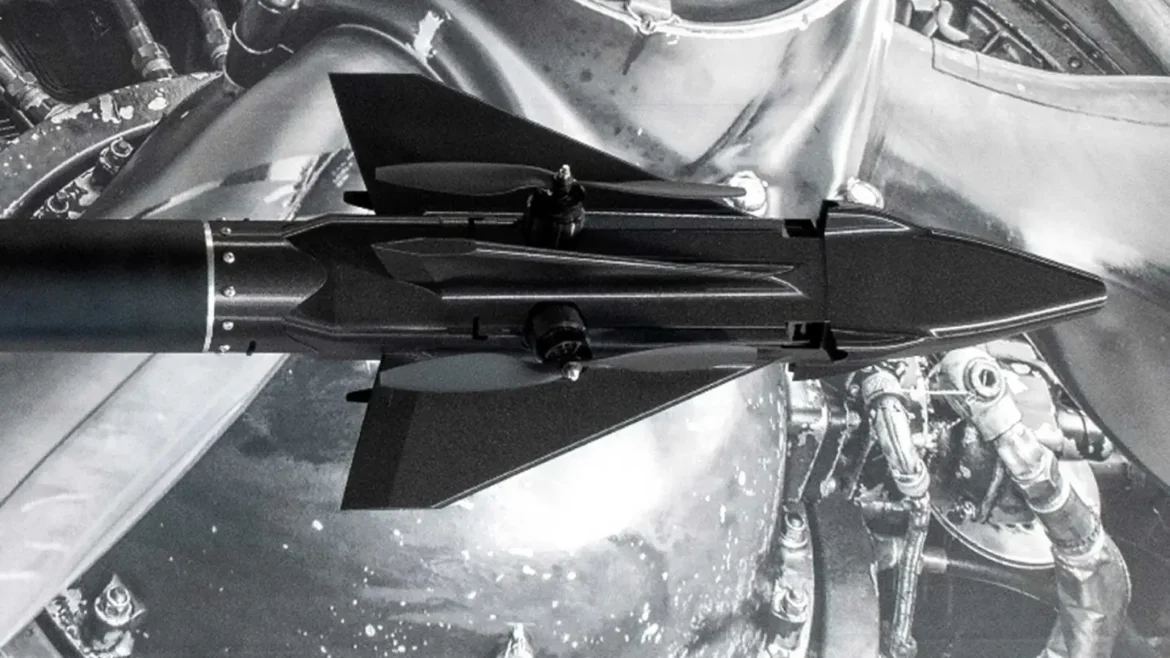
Aveo Engineering Group Expands Its Counter-UAS Portfolio
Aveo Engineering Group is preparing to present its expanding counter-UAS and unmanned systems portfolio at Future Forces Exhibition & Forum 2026 in Prague, with the Czech aerospace company set to display drones, high-speed interceptors, sensors, electronic warfare equipment and unmanned ground vehicles. The Future Forces organization lists Aveo among the event’s current exhibitors at PVA EXPO Prague, while Army Recognition reports that the company plans to present its wider defense portfolio during the October 2026 event.
Takeaways
Aveo Engineering Group is preparing to showcase a broad counter-UAS and unmanned systems portfolio at Future Forces 2026 in Prague, including rocket-assisted interceptors designed for different engagement requirements.
The exhibition is scheduled for October 21 to 23, 2026, and is expected to bring defense companies and military delegations from across NATO countries and partner nations to Prague.
For Aveo, the display represents a significant expansion beyond its established aerospace lighting business. Its defense division now spans unmanned aircraft, counter-UAS systems, rocket propulsion, electro-optical sensors, electronic warfare, unmanned ground vehicles and specialized materials.
ConeHead and Mayhem Address Different Counter-UAS Requirements
The most notable elements of the company’s counter-UAS portfolio are the ConeHead and Mayhem interceptors.
According to Aveo, the ConeHead is designed to engage aerial targets through either kinetic collision or an explosive cone warhead. With optional AveoJolt rocket assistance, the interceptor is stated to reach 350 km/h.
The company describes the Mayhem as a faster interceptor using rocket assistance during its climb before transitioning to electric propulsion. Aveo states that it can reach 800 km/h during the rocket-assisted climb phase.
| System | Company-stated capability | Primary role |
|---|---|---|
| AirWing | More than 175 km/h | Surveillance and modular UAV missions |
| AirWing F-150 | More than 200 km range | Long-range UAV and payload missions |
| ConeHead | Up to 350 km/h with rocket assistance | Counter-UAS interception |
| Mayhem | Up to 800 km/h during rocket-assisted climb | High-speed counter-UAS interception |
The distinction between the two interceptors is operationally important. A counter-UAS architecture does not necessarily require every interceptor to have the same speed, endurance or engagement method.
A slower and potentially lower-cost interceptor can address routine targets, while a rocket-assisted system can provide a rapid response against faster or more time-sensitive threats. The combination gives an operator the option of matching the interceptor to the target instead of relying exclusively on expensive traditional air-defense missiles.
Rocket Assistance Is Central to the Design
Aveo’s AveoJolt propulsion family provides rocket assistance for several of its unmanned systems. The company lists solid rocket motors in 40, 50, 70, 90 and 120 mm classes and describes them as suitable for either rocket-powered flight or short boost phases before electric propulsion.
This architecture addresses a central challenge in counter-UAS operations: reaction time.
Small drones can appear close to defended assets with limited warning. An interceptor that spends too much time accelerating after launch can lose the opportunity to engage the target. Rocket assistance can provide rapid initial acceleration while allowing an electric propulsion system to handle the later phase of flight.
For the Mayhem, Aveo says the rocket stage provides the initial climb, after which propellers are deployed for electric flight. The concept therefore combines high initial acceleration with the efficiency of electric propulsion during the terminal phase.
That approach is particularly relevant to layered counter-UAS defenses, where detection, classification, electronic attack and kinetic interception may need to operate within seconds.
Sensors and Electronic Warfare Form the Other Half of the System
The interceptor itself is only one component of a modern counter-UAS network.
Aveo’s AveoVision portfolio includes visible-spectrum, SWIR, MWIR and LWIR sensing, along with millimeter-wave micro-radars. The company says these systems can support drone detection, obstacle warning, identification and other sensing functions across airborne and ground platforms.
Its ForceField family adds electronic warfare capabilities. Aveo says the system can identify commercial UAV communication characteristics and provide either directional or 360-degree RF jamming.
This combination creates a layered architecture:
- Detection: Radar and other sensors identify potential aerial threats.
- Identification: Electro-optical and infrared sensors provide additional target information.
- Electronic attack: RF effects can disrupt or interfere with susceptible systems.
- Kinetic engagement: Interceptors provide an additional defeat mechanism when electronic effects are insufficient.
- Mobility: Vehicle-mounted launchers can move the defensive layer with tactical formations.
The architecture matters because no single counter-UAS method is effective against every target. Radio-frequency jamming may have limited value against autonomous systems, frequency-hopping systems or threats using alternative navigation and control methods. Kinetic interceptors provide another option when electronic attack is unavailable or ineffective.
AirWing Extends the Portfolio Beyond Interception
Aveo is also developing the AirWing family of fixed-wing unmanned aircraft.
The company states that the baseline AirWing exceeds 175 km/h and can carry daylight and thermal imaging equipment. Its modular architecture allows different mission and payload configurations.
The larger AirWing F-150 is described as having more than 200 km of range and additional internal volume for payloads. Aveo lists potential configurations including cargo, small rockets, bomblets and an explosive nose, as well as a short-range laser intended for counter-drone missions.
The inclusion of surveillance aircraft alongside interceptors points toward a broader unmanned ecosystem rather than a single-purpose counter-UAS product.
For military users, this can be important because the same operational network can potentially support reconnaissance, target detection, communications and defensive missions without requiring every function to rely on a separate platform family.
Distributed Manufacturing Could Be a Key Differentiator
One of Aveo’s more unusual approaches is its emphasis on distributed production.
The company says customers can receive digital airframe files and manufacture selected structures locally using Carbon5D materials, while integrating Aveo-supplied propulsion, electronics, sensors and other components.
This model separates production of comparatively simple airframe structures from higher-value components such as propulsion systems, avionics and sensors.
From a defense-industrial perspective, the approach addresses a problem exposed by recent conflicts: the ability to produce large numbers of unmanned systems can be as important as the performance of an individual vehicle.
Local fabrication can reduce dependence on centralized assembly facilities and potentially shorten logistics chains. It can also allow production closer to deployed forces, although the practical value of such a model depends on quality control, certification, supply of critical components and secure distribution of manufacturing data.
Czech Aerospace Base Supports the Defense Expansion
Aveo’s move into unmanned and counter-UAS systems builds on a longer aerospace manufacturing background.
Army Recognition reports that the group has more than 400,000 square feet of company-owned production infrastructure across Czechia, Slovakia and the United States and supplies aerospace products to customers in more than 110 countries.
The company’s traditional business includes aircraft lighting, searchlights, avionics and related systems. Aveo says it has produced more than 900 aerospace lighting products, with applications spanning commercial aircraft, helicopters, UAVs and other platforms.
That background is relevant to the company’s current defense strategy because counter-UAS systems require expertise in lightweight structures, electronics, optics, thermal management and environmental qualification.
Aveo’s participation in NASA’s Odysseus lunar mission also demonstrates experience with components exposed to demanding environmental conditions, although that experience should not be interpreted as direct evidence of military system performance.
Why the Future Forces Display Matters
The Prague exhibition comes as European militaries increasingly focus on affordable methods of countering large numbers of small unmanned aircraft.
The challenge is economic as well as technical. Using high-value surface-to-air missiles against inexpensive drones can create an unfavorable cost exchange, particularly when an adversary can launch repeated waves of low-cost systems.
Rocket-assisted interceptors offer one possible answer, but their value will ultimately depend on acquisition cost, magazine depth, sensor integration, reliability and demonstrated effectiveness against representative targets.
Aveo’s portfolio also illustrates a broader shift in counter-UAS development. Modern systems increasingly combine radar, electro-optical sensors, electronic warfare and kinetic effects rather than treating the interceptor as a standalone weapon.
For U.S. and European forces, that layered approach is particularly relevant to the protection of forward operating bases, logistics hubs, armored formations, critical infrastructure and other targets vulnerable to small drones.
Aveo’s Future Forces 2026 display will therefore be significant less because of any single specification and more because it shows how a Czech aerospace supplier is building a vertically integrated unmanned and counter-UAS product family around propulsion, sensing, electronic warfare and local manufacturing.
The systems remain company-developed products, and published performance figures should not be treated as equivalent to independently verified operational results. Demonstrations, testing and procurement by military customers will ultimately determine how these technologies perform in real counter-UAS environments.

A deadly blast at a wedding in southern Iran has intensified scrutiny of U.S. targeting and civilian protection after weapons experts found evidence pointing to a direct munition impact.
Takeaways
Reuters analysis indicates that a U.S. munition likely directly struck an Iranian wedding site, while the U.S. military investigates the civilian casualties.
Iranian Wedding Strike Under U.S. Investigation
The Iranian wedding strike in the southern Iranian town of Kuhestak on September 1 is under investigation by the U.S. military after weapons experts reviewing imagery verified by Reuters concluded that the blast was likely caused by a direct hit from a U.S. munition. The finding has renewed scrutiny of U.S. targeting practices and civilian protection during the continuing conflict with Iran.
Reuters reported that the explosion struck a residential building where a wedding celebration was taking place. The initial reported toll was four people killed and at least 68 injured. Iranian state television later reported that another woman died from injuries, raising the reported death toll to five.
The United States has not accepted responsibility for the casualties. U.S. officials have said the military is examining what happened, including whether the deaths and injuries were caused by a U.S. strike, an Iranian air-defense event or another scenario.
What The Weapons Analysis Found
Reuters provided photographs and videos of the aftermath to four military weapons experts for assessment. The experts concluded that the physical damage was consistent with a direct munition impact rather than secondary damage caused by a weapon that had struck another target and then ricocheted.
Three of the experts assessed that the weapon was likely American rather than an Iranian air-defense missile. The analysis pointed toward an air-dropped U.S. munition, although Reuters did not establish a definitive weapon identification from the available evidence.
That distinction is important because the location of the wedding was close to a telecommunications tower that U.S. forces had targeted during strikes in the area.
Reuters reported that the tower was approximately 135 meters from the wedding location, based on satellite imagery. U.S. officials told Reuters that American forces had targeted the communications facility in Kuhestak on September 1.
The evidence therefore raises a central question for the U.S. investigation: whether the munition intended for the nearby military-related communications target instead struck the residential building.
U.S. Strikes Targeted IRGC Military Infrastructure
The wider operation was publicly acknowledged by U.S. Central Command.
CENTCOM said on September 1 that U.S. forces completed a wave of strikes against Iranian military targets, including Islamic Revolutionary Guard Corps air-defense sites, radar systems, maritime assets, mine-laying capabilities and communications sites. CENTCOM said the strikes followed Iranian attempts to attack commercial shipping in the Strait of Hormuz and U.S. service members.
The official U.S. account does not specifically identify the Kuhestak wedding incident or acknowledge that an American munition caused the civilian casualties.
That distinction remains important for reporting the incident accurately. The Reuters weapons analysis provides evidence supporting the U.S. munition assessment, but the U.S. government investigation has not publicly reached a final conclusion.
Civilian Casualty Questions
The Iranian wedding strike has become particularly significant because it follows another major civilian casualty incident earlier in the conflict.
On February 28, a strike destroyed the Shajareh Tayyebeh girls school in Minab, southern Iran. Reuters previously reported that U.S. forces were likely responsible based on an initial internal military investigation, while the Pentagon continued a formal investigation. Reuters reported that the strike killed more than 160 people, most of them children.
The two incidents have different circumstances and should not be treated as identical. However, both have raised questions about intelligence, target identification, weapon employment and the ability of U.S. forces to distinguish military objectives from nearby civilian structures.
The latest incident also places renewed attention on the practical limits of precision weapons. Modern guided munitions can substantially improve accuracy, but precision does not eliminate the risk of civilian casualties when military targets are located close to populated areas.
For military planners, the issue extends beyond the accuracy of the weapon itself. Target-quality intelligence, confirmation of the intended aimpoint, assessment of surrounding structures and the timing of the strike can all influence the outcome.
What Remains Unclear
Several important questions remain unanswered.
The first is the exact identity of the munition. Weapons experts assessed the physical evidence as consistent with a U.S. air-dropped weapon, but the publicly available evidence does not establish a definitive model.
The second concerns the intended target. U.S. officials said the telecommunications tower was targeted, but the government has not publicly explained the intelligence supporting the strike or whether the residential building was considered during the targeting process.
The third is whether the wedding site was visible to U.S. intelligence and targeting systems before the strike.
Finally, the investigation must determine whether the incident resulted from a targeting error, a weapon malfunction, an unexpected weapon trajectory or another factor.
Those findings will matter for assessing whether the incident represents an isolated operational failure or points to broader problems in targeting procedures during the Iran campaign.
Why The Incident Matters For U.S. Military Operations
The Iranian wedding strike comes as U.S. forces continue conducting operations against Iranian military infrastructure while attempting to counter threats to American forces and commercial shipping around the Strait of Hormuz.
The strategic environment makes accurate targeting particularly important. Communications facilities, radar systems and air-defense infrastructure can be embedded within or near populated areas, creating difficult operational conditions for strike planners.
Precision-guided weapons are designed to reduce unintended damage, but their effectiveness ultimately depends on accurate intelligence and correct target identification. A weapon can strike its designated aimpoint accurately while still causing civilian harm if the target information is incomplete or if civilians are present in the weapon’s effects area.
This is why the pending U.S. investigation will likely be more important than the initial debate over whether the weapon was American. Establishing responsibility is only the first step. Determining how the target was selected, what information was available and what safeguards were applied will provide a clearer picture of the operational failure, if one is confirmed.
U.S. Accountability Under Scrutiny
Vice President JD Vance said the United States was investigating the incident and emphasized that Washington wanted to establish what happened. U.S. officials have not publicly confirmed that an American munition caused the deaths.
That position contrasts with the findings presented by the Reuters investigation, which relied on independently reviewed imagery and assessments from military weapons specialists.
The Pentagon’s handling of the earlier Minab school investigation adds another layer of scrutiny. Reuters reported that the Pentagon had not publicly released the final findings of that investigation, despite the scale of the casualties.
For the United States, the credibility of its investigation will therefore depend on whether it clearly establishes the weapon involved, the intended target, the intelligence used for the strike and the reasons civilians were present in the affected area.
Until those findings are released, the most defensible conclusion is that independent weapons analysis strongly points toward a direct U.S. munition strike, while formal U.S. responsibility remains unconfirmed.
The Broader Military Lesson
The incident illustrates a central challenge in modern air warfare: precision technology can reduce the probability of unintended casualties, but it cannot compensate for inaccurate or incomplete information about the target environment.
The distinction is particularly important in conflicts where military communications, air-defense and other strategic infrastructure operate close to civilian communities.
For U.S. forces, the outcome of the investigation could influence future targeting procedures, intelligence verification requirements and operational restrictions around populated areas. It could also affect international assessments of how the United States applies precision strike capabilities during the Iran conflict.
For now, the Iranian wedding strike remains an active investigation rather than a formally acknowledged U.S. civilian casualty incident. Reuters’ analysis provides significant evidence about the likely weapon and impact mechanism, but the final determination rests with the U.S. military investigation.
Feature Image Suggestion
Use a professionally licensed Reuters or other authorized news photograph showing the damaged residential building in Kuhestak after the September 1 blast. Avoid graphic imagery of victims. A wide, non-graphic image showing structural damage and the surrounding residential area would provide appropriate context for Google News and Discover.

West Point Branch Week Connects Cadets With Army Career Paths
The 2026 West Point Branch Week gave U.S. Military Academy cadets a direct look at 16 Army branches and the missions they could enter after graduation and commissioning. The U.S. Army said the Aug. 24-28 event combined static displays, informational booths, engagement sessions and a final Capability Exercise at West Point, New York.
Takeaways
West Point’s 2026 Branch Week exposed cadets to 16 Army branches while connecting career decisions with the service’s evolving operational and modernization priorities.
The event is designed to help cadets make better-informed decisions about their future branches. Upper-class cadets received deeper briefings on their top two choices while interacting with officers and noncommissioned officers who currently serve in those fields.
The timing is significant because the Army is undergoing broad modernization across fires, aviation, command and control, autonomous systems and other capabilities. The service’s fiscal 2026 modernization strategy identifies long-range precision fires, air and missile defense, autonomous systems, cyber, electronic warfare and counter-space capabilities as major priorities for the future force.
Branch Displays Put Army Capabilities In Front Of Cadets
Branch Week provided a physical demonstration of how different Army specialties contribute to a larger force.
Static displays around Washington Hall and the Washington Statue included artillery and rocket systems, tanks, helicopters and tactical vehicles. The five-day program then concluded with a Capability Exercise that demonstrated Army power and lethality for spectators.
For cadets, that format offers a different perspective from classroom instruction. Instead of considering branches only as organizational categories, they can see how equipment, personnel and missions fit together at the tactical level.
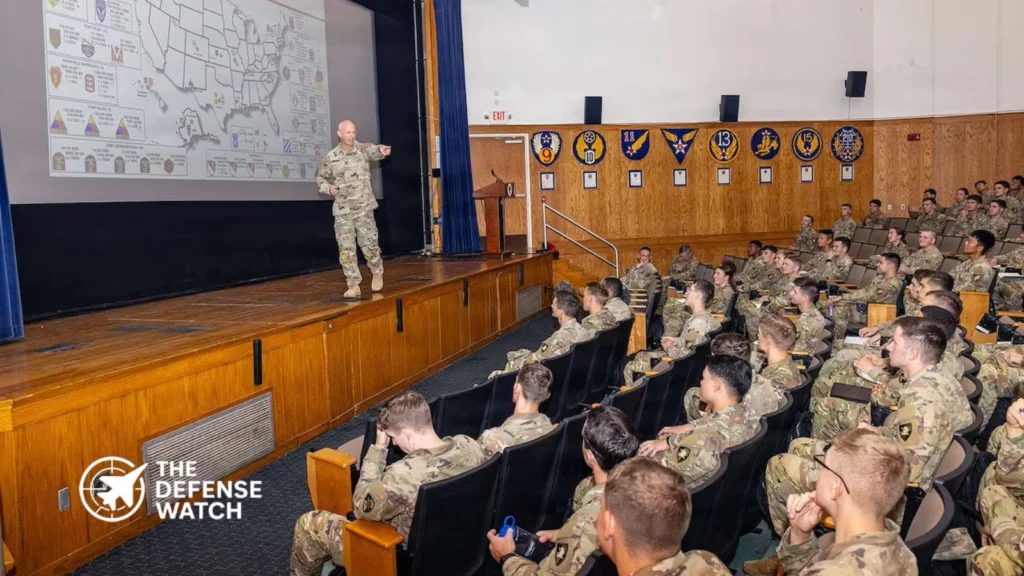
That combined-arms perspective is particularly important for future officers. An infantry formation depends on fires, intelligence, logistics, aviation, communications and other supporting capabilities, while those supporting branches depend on maneuver units to create operational effects.
Class of 2027 Cadet Samuel Eppler described the experience as a way to understand how closely the Army’s branches depend on one another. He said the event changed his earlier view of the Army as being primarily centered on infantry and showed him the wider range of possible military careers.
Infantry Officers Emphasize Leadership And Physical Demands
Army Capt. Wilson Catoe, a 2022 West Point graduate and former Army West Point football player, returned to the academy representing the Infantry Branch.
Catoe serves with the U.S. Army Infantry School and the Office of the Chief of Infantry as an Infantry branch proponent officer. His responsibilities include helping determine which cadets and other officer candidates enter the Infantry Branch.
His message focused heavily on leadership, physical demands and the responsibility associated with leading soldiers in difficult environments.
For cadets considering Infantry, the branch offers an early opportunity to command platoons and operate directly within maneuver formations. That experience also provides a foundation for understanding how infantry integrates with armor, artillery, aviation and other capabilities.
Catoe’s own career illustrates that progression. Before his current assignment, he served as a platoon leader and executive officer with the 1st Battalion, 67th Armor Regiment, 3rd Armored Brigade Combat Team, at Fort Bliss, Texas.
Field Artillery Faces A Technology-Driven Transition
Field Artillery representatives presented a different type of career challenge.
Army 1st Lt. Sam Hanson, assigned to the Field Artillery Proponent Office at Fort Sill, Oklahoma, told cadets that the branch contains several distinct jobs requiring different skill sets. He also emphasized that every Army branch contributes to the fight rather than competing for importance.
Hanson highlighted the pace of change in Army fires. He told cadets that the service expects new weapon systems to enter the force over the next five years, potentially changing how artillery units conduct close combat.
That assessment reflects a wider Army effort to modernize its fires architecture. The service is experimenting with autonomous launchers, digital command systems and longer-range precision capabilities while seeking greater mobility and survivability for artillery formations.
The Army’s Project Convergence Capstone 6, for example, included experimentation with autonomous launcher and command capabilities. The service has described the broader effort as part of its move toward faster, more adaptable combat formations.
The result is that a future Field Artillery officer is likely to operate in an environment increasingly shaped by sensors, digital networks, precision weapons and autonomous systems rather than relying solely on traditional artillery procedures.

Chemical Corps Branch representatives dressed in protective gear discuss the Army’s chemical, biological, radiological and nuclear defense with a U.S. Military Academy cadet during Branch Week at West Point, N.Y., Aug. 24-28, 2026. (Image : DoW)
Aviation Interest Reflects A Changing Army Air Arm
For some cadets, Branch Week also provided an opportunity to assess Army Aviation at a time of major change.
Eppler said he hopes to enter Aviation and potentially fly the UH-60 Black Hawk. He also attended an Explosive Ordnance Disposal engagement session after developing an interest in EOD during summer training with an EOD unit at Fort Bragg, North Carolina.
Army Aviation is itself moving through a substantial transformation.
In August, the Army announced Flight School Next, a new approach to initial rotary-wing training. The program is intended to train between 800 and 1,500 Army pilots annually and uses a contractor-owned, contractor-operated model with commercially available aircraft and equipment. The announced contract has a potential cumulative value of $10 billion over up to 26 years.
The Army is also integrating unmanned capabilities with existing helicopters. In June, UH-60M crews successfully launched and controlled multiple medium-range air-launched effects during testing, giving pilots the ability to employ unmanned systems from a position of relative safety.
The service has additionally received an H-60Mx Black Hawk modified to operate with or without a pilot at the controls, marking another step in its effort to integrate autonomy into Army Aviation.
For cadets considering Aviation, these changes demonstrate that the branch’s future will involve more than conventional helicopter operations. Pilot training, autonomy, launched effects, networked systems and next-generation aircraft are increasingly connected parts of the Army’s aviation model.
EOD Offers A Highly Specialized Technical Mission
Eppler’s interest in EOD illustrates another aspect of Branch Week: cadets can discover specialized career paths through direct exposure rather than simply through formal recruiting material.
The Army’s EOD mission includes detecting, identifying, evaluating, rendering safe, exploiting and disposing of explosive ordnance. The mission is conducted worldwide during both peacetime and conflict.
EOD therefore requires a markedly different technical and operational skill set from conventional maneuver branches. Its personnel work at the intersection of explosives expertise, technical analysis, risk management and operational support.
The contrast between Infantry, Field Artillery, Aviation and EOD is exactly what Branch Week is intended to expose. Each branch contributes to Army operations, but the daily work, training requirements and technical demands can differ substantially.
Why Branch Week Matters To The Future Army
The broader value of Branch Week extends beyond helping individual cadets select a career.
The Army is attempting to prepare officers for an operating environment in which traditional maneuver formations increasingly depend on digital command networks, precision fires, unmanned systems, electronic warfare and other technologies.
The service’s Next Generation Command and Control effort is one example. Army testing has focused on using data and artificial intelligence to help commanders make decisions more quickly and operate across complex, high-threat environments.
At the same time, Army acquisition organizations have been reorganized to accelerate development and fielding of new capabilities. The service created Portfolio Acquisition Executive organizations around areas such as Fires, Maneuver Ground, Maneuver Air, Command and Control, Agile Sustainment and Layered Protection.
That means today’s West Point cadets are selecting branches within an Army that is actively changing its force structure and technology base.
The implication is not that traditional branches are becoming less important. Instead, their missions are becoming more dependent on integration with other parts of the force.
A future infantry officer will need to understand fires and unmanned systems. A field artillery officer will increasingly operate through digital networks and sensor inputs. An aviation officer will have to manage a force that includes both crewed aircraft and unmanned effects. Sustainment officers will have to support increasingly complex equipment across dispersed formations.
Branch Week gives cadets an early view of that reality.
Cadets See More Than Today’s Army
Eppler said conversations with officers and enlisted personnel also gave cadets insight into where the Army is heading, including lessons emerging from Ukraine and other conflicts.
That perspective is increasingly important for an officer corps preparing to operate in a rapidly changing technological environment. The Army is testing new systems while simultaneously modifying training, acquisition processes and force structures.
For cadets, the central lesson from Branch Week is therefore broader than choosing between Infantry, Field Artillery, Aviation or EOD.
It is understanding how each branch contributes to a connected force.
The event’s combination of equipment displays, professional engagement and live capability demonstrations gives future officers a practical view of that relationship before they receive their commissions.
As Eppler put it, the experience reinforced the idea that there are no bad branches in the Army. Each provides a different route to serving within the same larger mission.
For the Army, exposing cadets to those differences is also an investment in future leadership. Officers who understand how branches depend on one another will enter the force with a clearer view of the combined-arms system they will eventually be expected to lead.
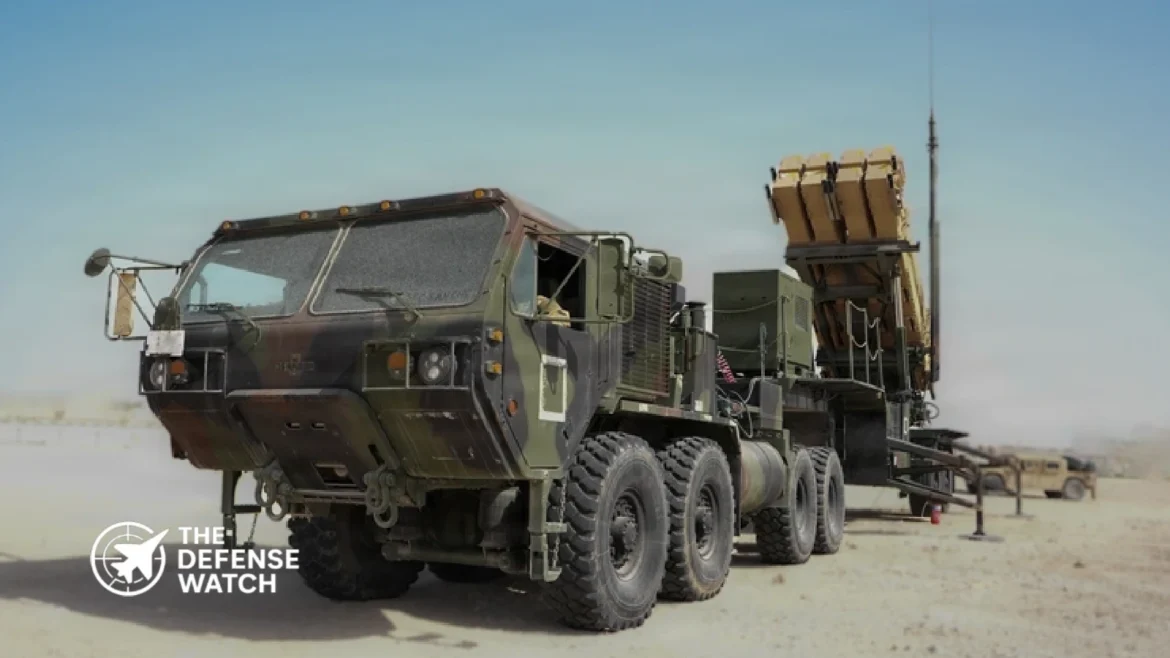
U.S. Patriot Interceptor Stocks Face New Pressure
U.S. Patriot interceptor stocks are facing renewed pressure as American forces continue to rely heavily on air and missile defense systems against Iranian ballistic missile attacks. Open source intelligence assessment estimating that U.S. forces launched between 96 and 128 Patriot interceptors against approximately 32 Iranian ballistic missiles during one reported engagement over Jordan.
Takeaways
Heavy use of Patriot interceptors against Iranian ballistic missile attacks is putting additional pressure on a U.S. missile defense inventory that was already being rebuilt.
The reported expenditure has not been independently confirmed by the U.S. Department of War or U.S. Army, and the precise number of Patriot interceptors available to the United States is not publicly disclosed. The estimate should therefore be treated as an open source assessment rather than an official expenditure figure.
The broader concern, however, is supported by independent defense analysis. The Center for Strategic and International Studies estimated in July that the U.S. Patriot inventory had fallen below 1,000 interceptors after extensive use during the Iran conflict.
What The Reported Patriot Engagement Means
The reported engagement illustrates a central problem in modern integrated air and missile defense: defeating a relatively small number of incoming ballistic missiles can require multiple interceptors.
According to the open source assessment, 96 to 128 interceptors were launched against approximately 32 Iranian ballistic missiles. That equates to roughly three to four interceptors per incoming missile if the estimate is accurate.
Such an engagement does not necessarily mean that every interceptor was required to destroy a separate missile. Air defense forces can employ multiple interceptors against a single target to increase the probability of a successful intercept, particularly when defending high-value bases, personnel or critical infrastructure.
The cost implications are also significant. If an interceptor costs approximately $4 million, as cited in the report, the estimated expenditure for 96 to 128 interceptors would correspond to approximately $384 million to $512 million. That calculation is illustrative and should not be treated as a confirmed U.S. government cost figure.
Patriot Inventory Estimates Remain Uncertain
The most important qualification surrounding current Patriot stockpile reporting is that the U.S. government does not publicly disclose a precise operational inventory.
CSIS previously estimated that the United States had approximately 2,330 Patriot interceptors before the current Iran conflict. Its subsequent analysis placed the inventory at approximately 1,030 when an April ceasefire took effect, with later fighting reducing the estimated stockpile further.
A later Washington Post report citing CSIS estimates put the remaining inventory between approximately 759 and 827 interceptors following additional fighting. Those figures are estimates, not official Pentagon inventory disclosures.
This distinction matters because inventory calculations can differ depending on the interceptor variant, readiness status, location, training stocks, maintenance requirements and whether missiles allocated to allies are included.
The latest public estimates nevertheless point to a clear strategic issue: the United States has been consuming high-end air defense interceptors faster than the industrial base can immediately replace them.
PAC-3 MSE Production Is Being Expanded
Washington has already taken steps to address the problem.
The Patriot system uses several interceptor variants, with the PAC-3 Missile Segment Enhancement, or PAC-3 MSE, serving as a major component of the Army’s ballistic missile defense architecture. The interceptor uses hit-to-kill technology and is designed to engage tactical ballistic missiles as well as other advanced aerial threats.
In January, Lockheed Martin announced a seven-year framework agreement intended to raise PAC-3 MSE annual production capacity from approximately 600 missiles to 2,000. The company said it had delivered 620 PAC-3 MSE interceptors in 2025.
The U.S. Army subsequently awarded Lockheed Martin a $4.7 billion contract action in April to support accelerated PAC-3 MSE production.
In July, the Army expanded the arrangement into a seven-year undefinitized contract action with a ceiling of approximately $58.62 billion, including the earlier one-year award. The Army said the arrangement is intended to provide industry with a predictable production requirement and support investment in manufacturing capacity and suppliers.
Metric Current Public Information Earlier PAC-3 MSE annual capacity About 600 Planned annual capacity About 2,000 Seven-year contract ceiling Up to $58.62 billion PAC-3 MSE deliveries in 2025 620 Estimated U.S. Patriot inventory Below 1,000 in CSIS assessment The production target is significant, but it does not solve an immediate inventory shortage. Manufacturing capacity takes time to expand, and missile production depends on a network of specialized suppliers and components.
Why Replenishment Takes Years
Patriot interceptor production is considerably more complicated than simply increasing assembly-line output.
The missiles contain sophisticated guidance electronics, propulsion systems, control components and other specialized hardware. Expanding output therefore requires additional tooling, qualified workers, supplier capacity and testing infrastructure.
CSIS estimates that critical defense munitions can have manufacturing lead times ranging from roughly 25 to 51 months. The organization has identified PAC-3 MSE production expansion as one of several major U.S. efforts intended to reduce the gap between wartime consumption and industrial replenishment.

Image Source : Lockheedmartin That creates a difficult planning problem for the U.S. military.
A missile fired in combat is immediately removed from inventory, while a replacement produced through an expanded industrial base may not become available for years. A sustained conflict can therefore consume inventory much faster than industry can restore it.
The Global Demand Problem
The Patriot issue is also not confined to the Middle East.
The system is an important element of air and missile defense for U.S. forces and allied militaries in Europe, the Middle East and the Indo-Pacific. Ukraine has also placed significant demand on Patriot interceptors as it defends against Russian ballistic and cruise missile attacks.
That creates a global allocation problem.
Every interceptor transferred to an ally or fired in combat represents a missile that may not be immediately available for another theater. For U.S. planners, the challenge is therefore not simply how many Patriot missiles exist, but how those missiles should be distributed among competing operational requirements.
The problem is especially important for the Indo-Pacific, where U.S. forces must plan for the possibility of large missile salvos in a conflict involving China. European allies also require credible air and missile defenses against Russian missile capabilities.
The Cost Exchange Favors Large Missile Salvos
The Patriot stockpile issue highlights an increasingly important feature of modern warfare: the cost exchange between offensive missiles and defensive interceptors.
A ballistic missile attacker can potentially launch large salvos using relatively inexpensive missiles compared with the cost of sophisticated interceptors. Defenders then face the choice of firing expensive interceptors, accepting a higher risk of leakage, or employing a layered defense that combines different systems.
This is why the United States is increasingly pursuing a broader integrated air and missile defense approach rather than relying exclusively on Patriot.
Patriot can provide a critical terminal defense layer, but it is more sustainable when combined with other sensors, interceptors, electronic warfare capabilities and lower-cost defenses against less sophisticated threats.
The distinction is particularly important when ballistic missiles are mixed with drones and cruise missiles. Using a high-end PAC-3 interceptor against every incoming low-cost drone would create an unfavorable economic exchange and rapidly consume scarce missile stocks.
Implications For U.S. Defense Planning
The current situation reinforces several priorities for U.S. defense planners.
First, production capacity has become a strategic capability in its own right. The ability to manufacture thousands of interceptors annually is increasingly important because high-intensity conflicts can consume inventories at rates that peacetime procurement models were not designed to accommodate.
Second, stockpile requirements need to account for multiple theaters. The United States cannot plan Patriot inventory solely around current Middle East operations while ignoring requirements in Europe, the Indo-Pacific and support for allies.
Third, layered defense is becoming more important. A mix of high-end interceptors, medium-range systems, short-range air defenses, electronic warfare and lower-cost interceptors can reduce the number of situations in which the most expensive missiles must be used.
Finally, the issue reinforces the importance of allied industrial capacity. Expanding production in the United States is central, but allied production, maintenance and local air defense capabilities can reduce pressure on U.S. stocks.
A Replenishment Effort Is Already Underway
The U.S. response is not limited to Patriot.
The Pentagon has been pushing defense companies to expand production of several classes of munitions following concerns about depleted inventories. CSIS has identified expanded production plans for PAC-3 MSE, THAAD and Precision Strike Missile as part of a broader effort to rebuild U.S. weapons inventories.
For Patriot specifically, the move toward 2,000 PAC-3 MSE interceptors annually represents a major increase from the previous production rate. Lockheed Martin has also announced investments intended to expand manufacturing capacity across its U.S. industrial network.
The key question is timing.
Even if the planned production rate is achieved, it will take time to rebuild stocks depleted during sustained combat. The U.S. military must therefore manage current inventories while simultaneously expanding future production.
Bottom Line
The reported launch of 96 to 128 Patriot interceptors against approximately 32 Iranian ballistic missiles should not be treated as an officially confirmed U.S. expenditure figure. It is an open source estimate, and the precise number of missiles fired remains publicly unverified.
The larger issue is less disputed. Independent analysis indicates that U.S. Patriot stocks have fallen substantially during the Iran conflict, while Washington is accelerating PAC-3 MSE production to rebuild capacity.
For the United States, the challenge extends beyond replacing individual missiles. It involves rebuilding sufficient interceptor depth to support simultaneous commitments in the Middle East, Europe and the Indo-Pacific while creating an industrial base capable of sustaining production during a prolonged high-intensity conflict.
The expansion of PAC-3 MSE production to a planned 2,000 interceptors annually is therefore not simply an acquisition program. It is part of a broader effort to restore the magazine depth required for modern integrated air and missile defense.
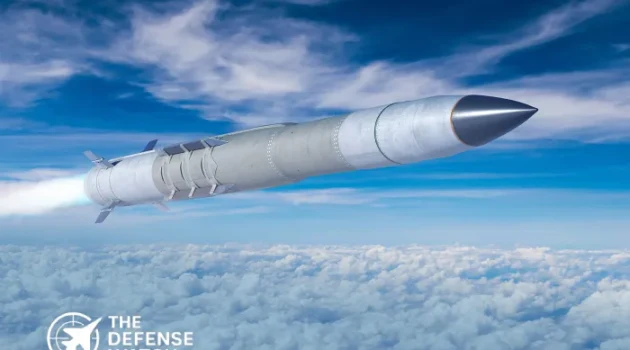
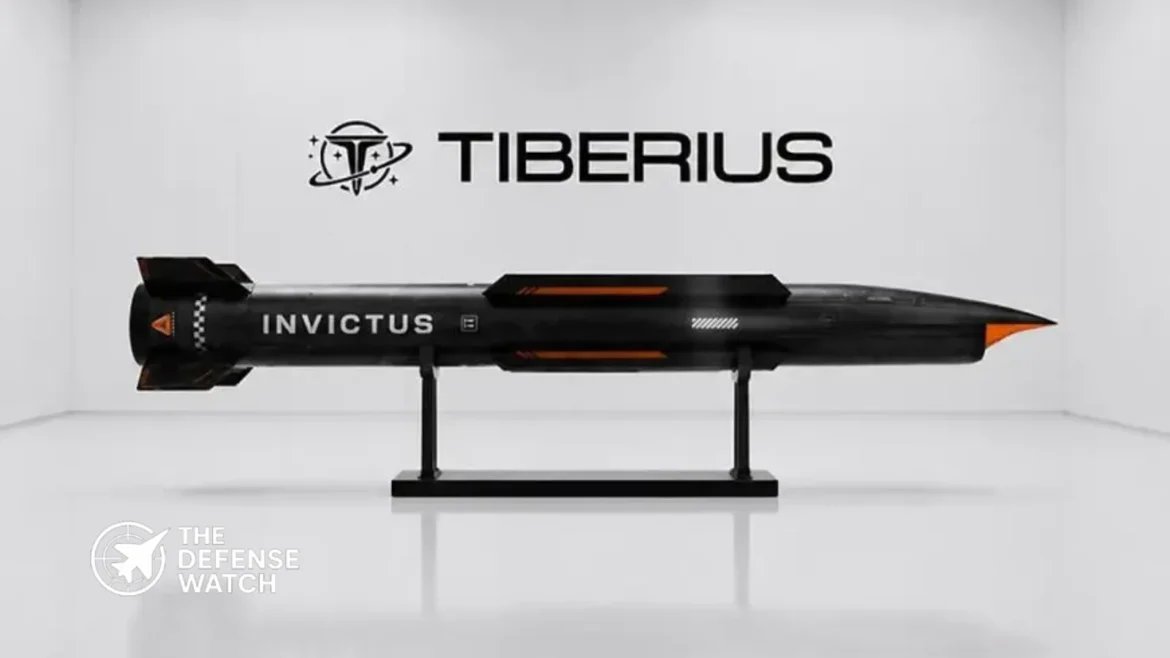
Tiberius Aerospace Advances Invictus Missile Into Formal Testing
The Invictus missile has entered formal engineering Test and Evaluation as Tiberius Aerospace moves the long-range precision strike system beyond early laboratory work and toward structured validation. The company says the program is intended to combine long-range precision, multi-domain deployment and scalable production in a single missile architecture.
Takeaways
Tiberius Aerospace is advancing the Invictus missile from laboratory development into formal engineering testing.
1. Formal Engineering Testing Begins
Tiberius Aerospace has moved the Invictus program into formal engineering Test and Evaluation, focusing on propulsion, flight performance, guidance, platform integration and manufacturability.
2. Mach 3 and 200-Kilometer Design Target
The Invictus-200 is designed to reach speeds of up to Mach 3 and engage targets at ranges of up to 200 kilometers.
3. Ramjet Propulsion
The system combines a ramjet engine with an integral booster, with direct-connect engine testing already underway at Purdue University’s Zucrow Laboratories.
4. Modular Multi-Mission Architecture
Tiberius says the missile will have a 10 to 15 kilogram payload and an open architecture intended to support different missions and future upgrades.
5. Production Capacity Is Part of the Design
The company is positioning Invictus not only as a precision strike system but also as a weapon designed for scalable production and adaptation through its service life.
The development marks an important change in the status of Invictus. Rather than remaining primarily a concept or laboratory project, the program is now focused on testing the engineering elements required to mature the weapon. According to Tiberius, those activities include propulsion, flight performance, guidance, platform integration and manufacturability.
The company has not announced an operational deployment date. The move into formal Test and Evaluation therefore should be viewed as a development milestone rather than evidence that Invictus has entered military service.
Invictus-200 Targets Mach 3 and 200-Kilometer Range
The central configuration is the Invictus-200, which Tiberius says is designed to reach speeds of up to Mach 3 and strike targets at ranges of up to 200 kilometers.
The missile is designed around a ramjet propulsion system combined with an integral booster. Tiberius says the system is intended to achieve targeting precision of approximately 5.5 meters circular error probable, or CEP, depending on the guidance configuration. The planned payload is between 10 and 15 kilograms.
These figures remain design and development targets rather than independently verified operational performance. That distinction is important as the program enters formal testing.
The Invictus architecture is also intended to support a range of launch platforms. Tiberius describes it as a tube-launched, multi-mission system that could be integrated with vertical launch systems and autonomous vehicles operating from land and sea.
This approach gives the program a broader role than a missile designed around one launcher or platform. The company is developing the weapon around a modular architecture intended to allow different configurations as mission requirements change.
Ramjet Development Builds On Sceptre
Invictus follows Tiberius Aerospace’s Sceptre program, a 155 mm precision-guided artillery munition that uses ramjet propulsion.
In April 2026, Tiberius reported that Sceptre had successfully demonstrated liquid-fuelled ramjet ignition after launch from a NATO-standard 155 mm howitzer during testing in New Mexico. The company said the test demonstrated the ability to launch the munition, ignite the ramjet and maintain intended flight performance.
Tiberius has presented Sceptre as a system capable of extending the reach of existing artillery infrastructure. Its reported development target includes speeds above Mach 3 and ranges of up to 150 kilometers. The company’s current website lists Sceptre with a range exceeding 255 kilometers, a speed above Mach 3 and a 4.5-meter CEP, indicating that the program’s published performance figures have evolved during development.
The experience gained from Sceptre is now being applied to Invictus. Tiberius says the earlier program helped accelerate Invictus from exploratory laboratory work into a formal engineering effort.
Purdue Zucrow Laboratories Supports Engine Testing
A key part of the current Invictus effort is propulsion testing at Purdue University’s Maurice J. Zucrow Laboratories.
Tiberius says direct-connect testing of the Invictus ramjet engine is underway at the facility and that the engine has demonstrated operability using Jet-A across the conditions tested so far.
Purdue describes Zucrow Laboratories as a major propulsion research complex with capabilities covering propulsion systems, combustion, hypersonics, aerodynamics and energetic materials. Its test infrastructure includes multiple propulsion test cells, dedicated control and diagnostics facilities, and systems capable of testing propulsion hardware under representative conditions.
The facility’s role is significant because propulsion testing provides a controlled environment for evaluating engine behavior before more complex flight testing. For a ramjet-powered system, validating combustion and engine performance across relevant operating conditions is a central part of the development process.
Production Capacity Is Central To The Design
Tiberius is positioning Invictus around two related requirements: precision strike capability and the ability to produce weapons at scale.
The company says its modular, open architecture is intended to allow the missile to evolve without replacing the entire system. This could enable changes to guidance, payload or other components as requirements develop, although specific future configurations have not been publicly detailed.
Tiberius also says it is using its GRAIL software platform to support development, supplier integration and production planning. The company describes GRAIL as an AI-powered platform intended to assess weapon effectiveness and connect program requirements with domestic and allied suppliers.
The production objective reflects a broader issue facing Western militaries. Recent conflicts have highlighted the difficulty of maintaining inventories of precision weapons when expenditure rates are high and production capacity is limited.
Tiberius argues that a weapon designed from the beginning for high-volume production can address part of that problem. However, whether Invictus can achieve the proposed production scale and cost targets will depend on the results of engineering tests, manufacturing qualification, supplier capacity and eventual government procurement decisions.
Multi-Domain Launch Options
The planned launch architecture is another defining feature of the Invictus missile.
Tiberius describes Invictus as a tube-launched system that could be integrated with vertical launch systems and autonomous platforms operating on land and at sea. The approach is intended to reduce dependence on a single launch platform and provide flexibility in how precision effects are delivered.
Earlier reporting on the program identified the Vault launch system as a planned containerized launcher for Invictus. EDR Magazine reported in 2025 that the proposed system could use a booster to accelerate the missile to the speed needed for ramjet operation before the ramjet takes over propulsion. At that stage, however, many Invictus details were still preliminary.
The transition into formal Test and Evaluation should provide additional information about how the propulsion, launcher, guidance and missile airframe perform as an integrated system.
What Formal Testing Means For Invictus
The move into formal engineering testing is an important development stage, but it does not by itself establish that Invictus is ready for operational deployment.
The program must demonstrate that its propulsion system can perform reliably, that the missile can achieve its intended flight characteristics, and that guidance and control systems can deliver the required accuracy. Platform integration and manufacturing processes will also need to mature.
The company has stated that these areas are now part of the formal testing program.
For TheDefenseWatch.com readers, the most important point is that Invictus has moved from a primarily developmental concept into a structured engineering validation phase. The advertised Mach 3 speed, 200-kilometer range and 5.5-meter CEP remain targets that must be demonstrated through testing.
If those targets are achieved, the system could give U.S. and allied forces another potential option for mobile, long-range precision strike. At present, however, the program remains in development and no operational fielding decision has been announced.
Analysis: Why The Invictus Missile Program Matters
The significance of the Invictus missile is not limited to its stated range or speed. Its development reflects a broader shift in Western defense planning toward weapons that combine precision, mobility and production capacity.
Traditional missile programs often prioritize performance requirements first, with manufacturing capacity addressed later in the acquisition cycle. Tiberius is explicitly making production scalability part of the weapon’s design philosophy.
That approach is relevant to a defense environment in which precision-guided weapons can be consumed faster than traditional industrial systems can replace them.
Invictus is also being developed alongside Sceptre, allowing Tiberius to build experience with ramjet propulsion, testing and production processes across more than one weapon category. The successful Sceptre ramjet ignition demonstration provides a company-reported technical milestone, but it does not independently validate the full Invictus system.
The next phase will therefore be closely tied to measurable test results. Flight demonstrations, guidance accuracy, propulsion reliability, launcher integration and manufacturing performance will provide a clearer assessment of whether the Invictus design can move from development into a deployable military capability.
For now, the formal engineering Test and Evaluation phase represents the clearest indication yet that Tiberius Aerospace is attempting to turn Invictus from a proposed long-range strike concept into a testable weapon system.

The U.S. Army is closing in on a contract that would move high-energy laser weapons out of the testing phase and into permanent operational service — a shift that acquisition officials say marks the service’s first true program of record for directed-energy defense against drones.
Lt. Gen. Frank Lozano, the Army’s portfolio acquisition executive for Fires, confirmed on July 14, 2026, that the service was in active negotiations with AeroVironment over what’s being called the Enduring High-Energy Laser, or E-HEL. Lozano told a CSIS audience the company had shown “a lot of recent promise and capability” during testing at White Sands Missile Range, New Mexico.
What E-HEL Would Actually Buy
Reporting since Lozano’s remarks has filled in the shape of the expected deal. The Army is reportedly looking to acquire up to 20 E-HEL systems, in an agreement that multiple outlets have pegged in the hundreds of millions of dollars — Bloomberg reported the figure at a minimum of $400 million, while other reporting has cited numbers approaching $500 million. As of this writing, the Army has not publicly confirmed a final contract value, system count, or award date.
The system at the center of the deal is AeroVironment’s LOCUST X3, unveiled in March 2026 at the AUSA Global Force conference as the third generation of the company’s high-energy laser family. LOCUST X3 is built on earlier Army high-energy laser efforts, including the AMP-HEL and PHEL programs, and is described as scalable from roughly 20 kilowatts up to more than 35 kilowatts of output — enough, AeroVironment says, to engage Group 1 through Group 3 unmanned aircraft, a range that spans small commercial-style quadcopters up to considerably larger unmanned platforms.
The Economics Behind the Push
The strategic logic driving E-HEL is less about raw firepower than cost per engagement. AeroVironment’s VP of directed-energy systems, John Garrity, put the underlying math bluntly at the AUSA Global Force Symposium in March 2026: the Army has been spending millions of dollars in missiles to shoot down drones that themselves cost a fraction of that. AeroVironment has cited a per-shot cost for LOCUST under $5, framed as a virtually unlimited magazine constrained only by available power rather than physical ammunition stocks.
That math matters more than ever against the kind of drone volumes now being seen on the Ukrainian front and, increasingly, in incursions over NATO territory — threats that would rapidly deplete conventional interceptor missile stockpiles if used as the primary counter-drone layer.
Part of a Bigger System, Not a Standalone Weapon
AeroVironment has positioned LOCUST as one layer within a broader counter-UAS architecture rather than a silver-bullet weapon. The company’s April 2026 Halo_Shield platform integrates LOCUST alongside its Titan family of radio-frequency detection and jamming systems — which disrupt drone control links without firing a shot — and the Freedom Eagle kinetic interceptor, reserved for larger or faster Group 2/3 threats that may be harder to defeat with directed energy alone. The full concept layers radar, electro-optical/infrared sensors, RF defeat systems, Switchblade loitering munitions, and battle management software into a single networked response.
That layering addresses a real limitation: LOCUST engages one target at a time, meaning a coordinated swarm attack — multiple drones sent simultaneously to saturate a point-defense system — can exploit the sequential nature of a laser’s engagement cycle. AeroVironment’s own senior director of business development, Aaron Westman, has acknowledged this as an inherent constraint of single-beam directed-energy systems, which is part of why the company pairs LOCUST with RF jamming and kinetic backup options rather than marketing it as a complete solution on its own.
Not the Army’s First Laser Test — But a Different Kind of Milestone
The Army has fielded and tested directed-energy counter-drone systems for several years, including a JLTV-mounted LOCUST variant delivered in December 2025. Those earlier systems were tested and deployed on a limited, largely experimental basis — including a February 2026 incident in which an Army laser was fired near El Paso, prompting the FAA to twice close nearby airspace over safety concerns, according to reporting from Task & Purpose. In one case, Department of Homeland Security personnel operated the system.
E-HEL is different in kind, not just scale. As a program of record, it would place high-energy lasers inside the Army’s standard acquisition, budgeting, and sustainment structure — the same institutional track that governs vehicles, missiles, and other enduring equipment — rather than treating lasers as a rotating set of prototypes and demonstrators.
The Army isn’t moving alone. The Air Force disclosed in July 2026 that it is already using a compact laser weapon system at multiple overseas locations to defend against drones, while the Navy has spent several years integrating its HELIOS system — which combines a high-energy laser with an optical dazzler and surveillance capability — aboard destroyers. Separately, the Pentagon’s JIATF-401 task force has named five domestic bases slated to receive directed-energy or high-powered microwave counter-drone systems within a 180-day window, with initial operations expected before the end of 2026.
Comparing the Directed-Energy Counter-Drone Field
| System | Service | Status (as of Aug 2026) | Role |
|---|---|---|---|
| LOCUST X3 / E-HEL | Army | Contract negotiations underway with AeroVironment | Program of record, permanent base/maneuver-force defense |
| Compact laser weapon system | Air Force | Operational at multiple overseas locations | Overseas base defense |
| HELIOS | Navy | Fielded aboard destroyers | Shipboard counter-UAS and dazzler capability |
| High-powered microwave systems | Joint (JIATF-401) | Deployment to 5 domestic bases pending | Swarm-oriented base defense |
FAQ
E-HEL is a U.S. Army program to acquire high-energy laser systems as a permanent, program-of-record counter-drone capability, rather than treating lasers as experimental or prototype equipment. The Army is currently negotiating a production contract with AeroVironment.
Reported figures vary by outlet, ranging from roughly $400 million to around $500 million, potentially covering up to 20 systems. The Army has not publicly confirmed a final contract value or quantity.
AeroVironment says LOCUST X3 is designed to engage Group 1 through Group 3 unmanned aircraft, a range spanning small commercial-style drones up to larger unmanned platforms, with output scalable from about 20 kilowatts to more than 35 kilowatts.
AeroVironment has cited a per-engagement cost for LOCUST under $5, compared to interceptor missiles that can cost hundreds of thousands to millions of dollars — a significant factor given how many low-cost drones a defender may need to engage.
Not on its own. LOCUST engages one target at a time, which creates a vulnerability against coordinated, simultaneous drone attacks. AeroVironment addresses this by pairing the laser with RF jamming (Titan) and kinetic interceptors (Freedom Eagle) within its broader Halo_Shield counter-UAS architecture.
The Ammo-Economy Problem, Gamified
Anyone who’s played a tower-defense title knows the core tension the Army is trying to solve here: your strongest single-target tower can wreck a boss unit, but it’s useless against a swarm wave unless you’ve paired it with something that handles volume — a slow field, a chain-lightning tower, anything that hits multiple targets at once. LOCUST is, in effect, the Army’s single-target damage-per-second unit: cheap to fire, precise, but limited to one kill at a time. Pairing it with Titan’s jamming and Freedom Eagle’s kinetic backup is the real-world equivalent of building a layered defense rather than betting everything on one high-value tower — because against a determined swarm, target-saturation beats raw power every time.
Executive Summary: Northrop Grumman has invested more than $2 billion in facilities and technology supporting the LGM-35A Sentinel ICBM, while the company has hired more than 5,000 people for strategic deterrence and related aerospace programs. The investment comes as the U.S. Air Force restructures Sentinel following a major cost breach and works toward a first flight in 2027 and initial capability in the early 2030s.
Sentinel ICBM Program Moves Into a New Development Phase
The Sentinel ICBM program is receiving more than $2 billion in Northrop Grumman investment as the U.S. Air Force pushes to replace the aging Minuteman III and rebuild the land based component of the U.S. nuclear triad.
Northrop Grumman says its investment covers facilities, technology and workforce expansion supporting Sentinel and other strategic aerospace missions. The company has expanded its Roy Innovation Center in Utah, which serves as a major development hub for the program.
The Air Force currently targets initial Sentinel capability for the early 2030s. The service also plans to complete the program restructuring process during 2026 and pursue a new Milestone B decision before moving into the next stage of development.
Northrop Grumman and the Air Force are targeting a first missile launch in 2027. That schedule is more aggressive than the February 2026 Government Accountability Office assessment, which identified March 2028 as the planned first flight at the time.
More Than $2 Billion in Industrial Capacity
Northrop Grumman says it has invested more than $2 billion in facilities and technology for Sentinel and has hired more than 5,000 people to date across the strategic deterrence effort.
The company is expanding its Roy Innovation Center, which now encompasses more than 1.1 million square feet of office space across six buildings. A new facility announced in July is intended to provide additional capacity for Sentinel and other national security programs.
This investment is significant because Sentinel is not simply a missile replacement project. The program involves the replacement and modernization of missiles, launch systems, command and control infrastructure, communications equipment and supporting facilities across the existing Minuteman III missile fields.
The Air Force Nuclear Weapons Center describes Sentinel as a full modernization of the land based leg of the nuclear triad. The system is being designed around a modular, open architecture intended to allow future technology upgrades as threats and requirements change.
Sentinel Replaces the Minuteman III
The LGM-35A Sentinel is intended to replace the LGM-30G Minuteman III, which has formed the land based component of the U.S. nuclear triad since 1970.
The triad combines land based ICBMs, submarine launched ballistic missiles and nuclear capable bombers. The Air Force considers the land based component important because it provides a persistent, geographically distributed strategic force that complicates an adversary’s planning.
The current Sentinel force is planned to include 400 deployed missiles. The Air Force lists a range of more than 6,000 miles, a burnout speed of approximately Mach 23 and a three stage solid propellant propulsion system.
Sentinel Program Element Current Public Information Designation LGM-35A Sentinel Mission Intercontinental ballistic missile Prime contractor Northrop Grumman Propulsion Three solid propellant rocket motors Planned deployed inventory 400 missiles Publicly listed range More than 6,000 miles Approximate burnout speed Mach 23 Initial capability Early 2030s First launch target 2027 The system will operate from the three existing ICBM bases at F.E. Warren Air Force Base in Wyoming, Malmstrom Air Force Base in Montana and Minot Air Force Base in North Dakota.
Program Cost Remains a Major Issue
The investment by Northrop Grumman comes against a difficult acquisition history.
In January 2024, the Air Force reported that Sentinel had breached the Nunn-McCurdy cost threshold. The breach resulted from a projected unit cost increase of at least 37 percent compared with the program’s earlier baseline.
Following a statutory review, the Department of Defense determined that a modified Sentinel program remained essential to national security and that no lower cost alternative could provide the required capability.
The Pentagon subsequently estimated total acquisition costs for the modified program at approximately $140.9 billion, an 81 percent increase over the previous Milestone B estimate. The department also rescinded the program’s earlier Milestone B approval and directed a restructuring intended to address the causes of the cost growth.
That history makes the current industrial investment more than a routine expansion. The new facilities, prototypes and manufacturing capacity are being developed while the government is simultaneously trying to establish a more controlled cost and schedule baseline.
Infrastructure Is as Important as the Missile
One of the central challenges for Sentinel is the scale of infrastructure required to field it.
The program involves hundreds of missile facilities and command infrastructure spread across multiple states. The Government Accountability Office described the transition as a highly complex project and warned that the Air Force needs stronger risk management to protect the Minuteman III to Sentinel transition.
The Air Force and Northrop Grumman are therefore developing prototype launch infrastructure before full scale construction. A Sentinel launch silo tube prototype is being used to validate structural designs and construction methods.
The approach is intended to reduce uncertainty before the service commits to large scale deployment work. It also reflects a broader change in the acquisition strategy following the Nunn-McCurdy review.
The Air Force has also begun work on new Wing Command Centers and supporting infrastructure. At F.E. Warren Air Force Base, construction and prototyping activities are intended to establish methods that can later be applied across the missile fields.
Software and Systems Engineering Remain Key Risks
Sentinel’s modernization challenge extends beyond hardware.
The Government Accountability Office has identified software development as a significant program risk. Earlier assessments found that software progress was slower than expected and that the program needed to improve software development metrics and cybersecurity planning.
A 2026 GAO assessment also reported that the program was refining its software requirements, cybersecurity approach and development processes as part of the broader restructuring effort. The program is pursuing digital engineering methods, modular architecture and a digital twin to support development and future upgrades.
This matters because Sentinel is a weapon system rather than simply a new missile. Its operational effectiveness depends on the integration of the missile, launch facilities, command and control systems, communications architecture, software and security systems.
A delay in any one of these areas can affect the broader fielding schedule.
Why the Early 2030s Timeline Matters
The Air Force’s accelerated timeline is intended to prevent a prolonged gap between the existing Minuteman III force and Sentinel.
The Air Force says the Sentinel program is now targeting a first launch in 2027 and initial capability in the early 2030s. Northrop Grumman has publicly aligned its development schedule with those objectives.
At the same time, GAO has highlighted the need for caution because Sentinel has already experienced major cost and schedule problems. The February 2026 GAO assessment said the program’s first flight had slipped roughly four years from its original estimate and identified unresolved software, infrastructure and program management challenges.
The difference between the Air Force’s accelerated 2027 objective and GAO’s earlier 2028 assessment illustrates the importance of the remaining test and development milestones.
The Air Force has attempted to reduce this risk by changing the flight test strategy. According to GAO’s 2026 assessment, the program planned to conduct its first several flights from an above ground pad before moving to a silo based launch later in development.
That approach allows engineers to obtain flight data earlier without waiting for the entire operational silo infrastructure to be ready.
Strategic Importance to the U.S. Nuclear Triad
Sentinel represents the long term replacement of one of the three pillars of the U.S. nuclear deterrent.
The Department of Defense has argued that the land based component provides a persistent strategic capability and complicates adversary calculations. The department’s 2024 Nunn-McCurdy review concluded that alternatives such as extending Minuteman III or pursuing different basing concepts would not provide the required capability at lower cost.
The modernization also takes place against a broader U.S. effort to replace aging nuclear delivery systems. The Columbia class ballistic missile submarine, B-21 Raider and Sentinel are central elements of that modernization effort.
For Sentinel, the strategic requirement is therefore tied to both deterrence and continuity. The system must remain operationally credible while the United States transitions from a missile design that has been in service for more than five decades.
Northrop Grumman’s Investment Supports a Long Term Program
The more than $2 billion Northrop Grumman investment demonstrates the industrial scale of the Sentinel effort, but it does not by itself resolve the program’s acquisition challenges.
The most important milestones ahead are the completion of the restructuring process, the new Milestone B decision, continued qualification testing, the first flight campaign and maturation of the launch infrastructure.
The Air Force and Northrop Grumman have already demonstrated progress on several technical elements. The program completed qualification testing of the Stage 1 and Stage 2 solid rocket motors, assembled a complete three stage ground test missile and advanced the design of the Launch Support System.
The central test for the program will be whether these technical advances translate into predictable cost, schedule and performance outcomes.
If the current plan holds, Sentinel will begin flight testing in 2027 and move toward initial capability in the early 2030s. That would place the United States on a path to replace the Minuteman III while establishing a new infrastructure architecture intended to support the land based nuclear deterrent for decades.
Key Takeaways
- Northrop Grumman has invested more than $2 billion in Sentinel facilities and technology.
- The company says it has hired more than 5,000 people supporting strategic deterrence and related programs.
- Sentinel is designed to replace the Minuteman III as the land based leg of the U.S. nuclear triad.
- The Air Force plans to deploy 400 Sentinel missiles.
- The current Air Force target calls for first launch in 2027 and initial capability in the early 2030s.
- The program’s estimated acquisition cost rose to about $140.9 billion after the Nunn-McCurdy review.
- Infrastructure, software, systems engineering and cost control remain major program management priorities.
- GAO continues to identify schedule and technical risks that could affect the transition from Minuteman III to Sentinel.