

Takeaways
Key facts from the contract announcement
1. $105.6 Million AMRAAM Modification
Raytheon has received a $105,646,856 firm-fixed-price modification for Advanced Medium-Range Air-to-Air Missile parts.
2. U.S. and Allied Requirements
The action includes Foreign Military Sales support for multiple international AMRAAM customers, alongside U.S. procurement funding.
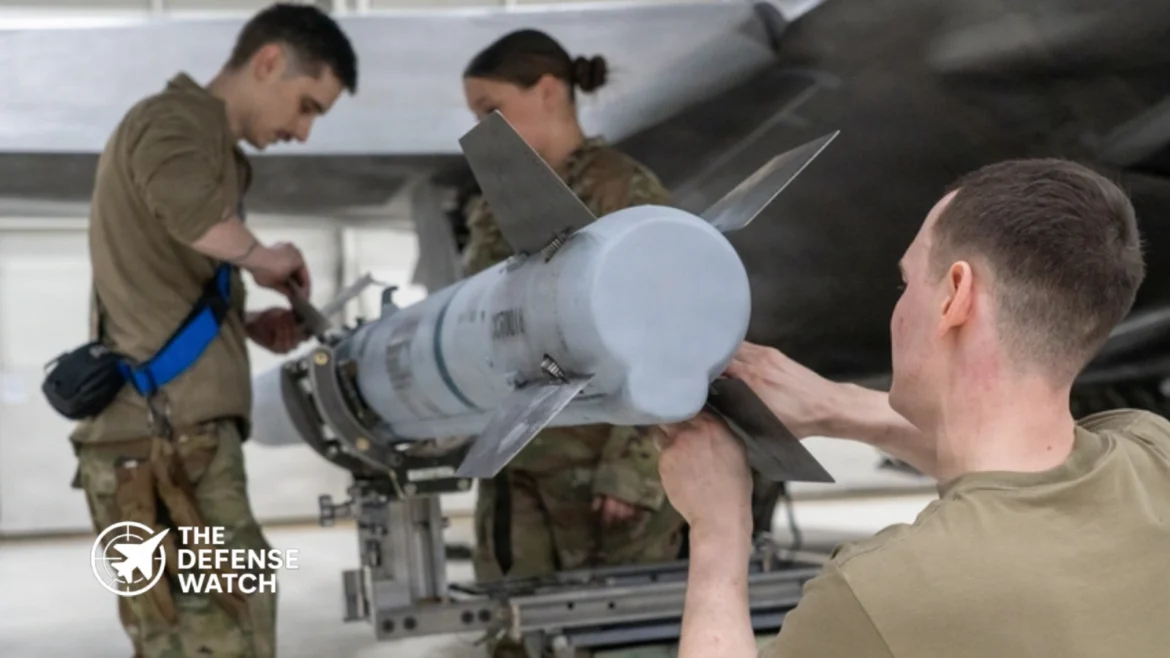
Raytheon Co., Tucson, Arizona, has received a $105.65 million firm-fixed-price contract modification for parts supporting the AIM-120 Advanced Medium-Range Air-to-Air Missile, or AMRAAM.
The U.S. Department of Defense contract announcement identifies the action as modification PZ0004 to previously awarded contract FA8556-25-C-B001. The Air Force Life Cycle Management Center at Robins Air Force Base, Georgia, is the contracting activity.
The work is scheduled to continue through Aug. 31, 2027, and the award includes U.S. procurement as well as Foreign Military Sales requirements.
Scope of the Raytheon AMRAAM Contract
The modification covers AMRAAM parts purchases rather than a separately announced new missile production contract. The announcement does not disclose the specific parts, quantities, individual missile variants, or aircraft allocations associated with this modification.
The contract is valued at $105,646,856 and uses a firm-fixed-price structure. That means the government and contractor have agreed to fixed pricing for the contracted work, subject to the terms of the existing contract and modification.
The action builds on the previously awarded contract rather than representing an entirely new basic contract.
AIM-120 AMRAAM Technical and Operational Context
The AIM-120 AMRAAM is a beyond-visual-range air-to-air missile used by the U.S. military and numerous allied air forces. The U.S. Air Force describes AMRAAM as an all-weather air-to-air weapon using active radar guidance for terminal engagement, combined with inertial guidance during the missile’s flight.
The weapon is integrated with multiple U.S. fighter aircraft, including the F-15, F-16, F-22 and F-35, as well as Navy aircraft such as the F/A-18. The Air Force has also continued to test and modernize newer AMRAAM configurations.
The specific AMRAAM configuration covered by the new parts purchase was not identified in the contract announcement.
The broader program remains an active procurement priority. The FY2026 Department of Defense weapons budget identifies continued AMRAAM procurement for the U.S. Air Force and Navy and calls for 534 missiles in FY2026, including U.S. and procurement requirements.
Operational Impact on U.S. Air Force Air-to-Air Capability
AMRAAM remains an important part of U.S. and allied air-to-air inventories because it provides a common medium-range missile capability across multiple fighter fleets.
The current modification also illustrates the multinational character of the AMRAAM program. The DoD announcement lists Foreign Military Sales customers including Australia, Canada, Germany, Japan, Poland, South Korea, Sweden, the United Kingdom, and other partner nations.
The announcement lists the following countries under the military sales portion of the contract:
Argentina, Australia, Belgium, Bulgaria, Canada, Czech Republic, Denmark, Finland, Germany, Hungary, Israel, Italy, Japan, Kuwait, Lithuania, Morocco, the Netherlands, Norway, Poland, Republic of Korea, Saudi Arabia, Singapore, Spain, Sweden, Switzerland, Taiwan, Turkey, the United Arab Emirates and the United Kingdom.
Because the announcement does not provide a country-by-country funding or parts breakdown, the value attributable to each customer cannot be determined from the available information.
Contract Breakdown: Raytheon AMRAAM Award Details
Contract Value
The modification is valued at $105,646,856.
Contractor
Raytheon Co., Tucson, Arizona.
Contract Type
The action is a firm-fixed-price modification, designated PZ0004, to contract FA8556-25-C-B001.
Work Locations
Work will be performed in Tucson, Arizona.
Performance Period
The work is expected to be completed by Aug. 31, 2027.
Funding
The DoD announcement identifies three funding sources:
- $61,594,619 in fiscal 2025 missile procurement funds
- $8,399,266 in fiscal 2025 Navy weapons procurement funds
- $35,652,971 in Foreign Military Sales funds
The combined amount equals the full $105,646,856 contract value.
Options Or Follow-On Work
The announcement does not identify additional options or a separate follow-on production action associated with this modification.
Raytheon Defense Industrial Base and Acquisition Impact
The award provides additional procurement activity for Raytheon’s Tucson missile operation and supports the parts supply chain for a weapon system used by the United States and a broad group of foreign customers.
The funding structure also shows how AMRAAM procurement combines U.S. service requirements with Foreign Military Sales activity. The FY2026 Air Force procurement documentation identifies Raytheon in Tucson as the AMRAAM prime contractor and shows continued procurement planning for the missile program.
That broader procurement activity is important because AMRAAM production involves requirements from multiple U.S. services and international customers. The Air Force’s procurement documents show continued acquisition of AIM-120 missiles through the current budget cycle.
The new modification, however, should not be interpreted as a disclosed increase in missile quantities. The contract notice specifically describes the action as a purchase of AMRAAM parts, and it does not provide a quantity of complete missiles associated with the $105.6 million modification.
Program Milestones and Next Steps
Raytheon is expected to perform the contracted work through Aug. 31, 2027, with Tucson identified as the work location.
The announcement does not provide a detailed delivery schedule for individual parts, identify specific AMRAAM variants, or disclose how the parts will be distributed among the U.S. military and individual Foreign Military Sales customers.
The broader AMRAAM program continues to receive procurement funding. The Department of Defense’s FY2026 weapons budget identifies ongoing AMRAAM procurement for the Air Force and Navy, while Air Force testing has also included newer AMRAAM configurations such as the AIM-120D3.


Executive Summary
- The United States and Albania have signed a $302 million Foreign Military Financing direct loan agreement to support modernization of the Albanian Armed Forces.
- The financing is designed to help Albania acquire U.S. defense articles and services, but DSCA has not identified a specific weapon system or procurement program connected to the loan.
- The agreement comes as Albania increases defense investment and seeks to expand its contribution to NATO under the alliance’s new defense spending framework.
The United States has agreed to provide Albania with a $302 million Foreign Military Financing (FMF) direct loan, creating additional financing capacity for Tirana’s military modernization and future purchases from the U.S. defense industrial base.
The Defense Security Cooperation Agency announced the agreement on September 10, 2026, in cooperation with the U.S. Department of State. DSCA described the loan as low-cost and flexible financing intended to advance Albania’s defense modernization and strengthen its contribution to allied security.
The agreement is important, but its immediate significance is financial rather than the delivery of a new weapons system. Neither DSCA nor Albania has publicly identified a specific aircraft, missile, air defense system, armored vehicle or other major platform that will be purchased with the $302 million facility.
What the $302 Million Loan Actually Provides
The FMF agreement gives Albania access to financing for U.S.-produced defense articles and services. That distinction matters because the announcement does not represent a $302 million equipment transfer or a confirmed arms contract.
DSCA said the FMF direct loan program enables allies and partners to invest in defense articles and services produced by the U.S. defense industrial base. It also said the mechanism is intended to improve interoperability between the recipient country, the United States and other NATO members.
| Item | Confirmed information |
|---|---|
| Recipient | Albania |
| Financing | U.S. Foreign Military Financing direct loan |
| Value | $302 million |
| Announcement | September 10, 2026 |
| Administrator | Defense Security Cooperation Agency |
| Program | Foreign Military Financing |
| Intended use | U.S. defense articles and services |
| Specific weapons announced | None |
| Strategic objective | Albanian modernization and NATO interoperability |
This makes the agreement different from a Foreign Military Sales announcement that identifies a particular package of equipment. The current announcement establishes financing capacity, while future procurement decisions will determine what Albania actually buys.
Albania’s Broader Military Modernization
The loan arrives amid a wider modernization effort by the Albanian Armed Forces.
Albania’s Defense Ministry said in January that its 2026 defense budget represented a significant increase over 2025 and that approximately half of the defense budget was being directed toward investment. The ministry also identified plans to increase the active force and restore or strengthen capabilities including air defense.
That modernization is already producing concrete changes.
In February 2026, Albania announced delivery of the Javelin missile system to its Land Force. The Albanian Defense Ministry described the system as part of its longstanding military cooperation with the United States.
Albania has also received U.S.-supported UH-60 Black Hawk helicopters. The Albanian Defense Ministry says more than $50 million in U.S. funding assistance supported the helicopter investment, with the aircraft intended for missions including medical evacuation, search and rescue, firefighting and NATO operations.
These developments provide context for the new financing agreement. The $302 million loan is not an isolated modernization event. It adds another financial mechanism to an existing U.S.-Albanian defense relationship.
NATO Commitments Add Pressure for New Investment
The timing also reflects NATO’s changing defense investment requirements.
At the 2025 NATO Summit in The Hague, allied governments committed to increasing defense investment to 5% of GDP annually by 2035. NATO defines the commitment as at least 3.5% for core defense requirements and up to 1.5% for broader defense and security-related investment, including areas such as critical infrastructure, resilience, innovation and defense industrial development.
Albania’s Defense Ministry reported in July that the country’s Ministry of Defense budget allocation had reached 2.6% of GDP in 2026.
The comparison is important because the U.S. loan does not replace Albania’s own defense spending. Instead, it can give Tirana additional flexibility to finance major acquisitions while its national defense budget continues to fund personnel, readiness, infrastructure, sustainment and other requirements.
Why U.S. Financing Matters to Albania
For a relatively small NATO member, the financing mechanism can be particularly relevant to the timing of procurement.
Major military systems require more than the purchase price of the platform itself. Training, spares, maintenance, infrastructure, communications, ammunition, software and long-term sustainment can all affect the financial burden of a modernization program.
An FMF direct loan can therefore help Albania structure future acquisitions without requiring the entire procurement cost to be absorbed immediately through a single annual defense budget.
The U.S. government also has a clear industrial interest in the arrangement.
DSCA explicitly connected FMF financing with demand for products and services from the U.S. defense industrial base. The agency said the program supports U.S. national security by enabling allies and partners to invest in U.S.-produced defense articles and services.
This creates a two-sided modernization mechanism. Albania receives financing capacity for military procurement, while U.S. manufacturers gain another potential source of international demand.
The Equipment Question Remains Open
The most important limitation in the announcement is also the easiest detail to overlook.
There is currently no confirmed $302 million Albanian procurement package.
DSCA’s announcement identifies the financing agreement but does not specify which U.S. systems Albania will acquire. As a result, individual platforms should not be presented as being funded by this loan unless Albania, DSCA, the State Department or another authoritative source subsequently confirms the connection.
That leaves several modernization areas open for future procurement, based on Albania’s publicly stated capability priorities.
These include air defense, land forces, aviation, cyber defense, communications, mobility and broader NATO interoperability. Albania’s Defense Ministry has separately identified cyber defense as a priority and has highlighted the need to improve readiness and professional military capacity.
However, those priorities should not be confused with a confirmed shopping list for the new loan.
From Javelin to Air Defense
Albania’s recent acquisitions indicate a broader effort to rebuild capabilities across several parts of the force rather than concentrate exclusively on one platform category.
The Javelin delivery provides a modern anti-armor capability at the tactical level. Black Hawk helicopters add rotary-wing utility for military and national support missions. Albania has also stated that it was working to restore air defense capabilities after a prolonged period in which that capability had been limited.
The next phase therefore has a potential force-structure challenge: equipment purchases need to be matched by training, sustainment, command and control, infrastructure and personnel.
For a small military, maintaining a manageable number of interoperable systems can be as important as acquiring technically advanced equipment. The value of the U.S. financing will ultimately depend on how Albania connects future purchases to sustainable readiness.
A Wider U.S. Financing Model for NATO Allies
The Albanian agreement also fits into a broader U.S. effort to use financing mechanisms to support allied modernization.
DSCA previously announced a $920 million FMF direct loan for Romania in September 2024. That agreement was aimed at supporting Romania’s modernization objectives and its contribution to NATO security.
The Albanian agreement is substantially smaller, reflecting the different scale of the two countries’ armed forces and modernization requirements. But the underlying mechanism is similar: provide an allied government with financing that can facilitate purchases from the U.S. defense sector.
For Washington, this approach links alliance modernization with defense industrial demand. For European allies, it offers another mechanism for financing major military investments as defense requirements increase.
Strategic Significance for the Western Balkans
Albania’s geographic position gives its modernization effort a regional dimension.
The country is a NATO member and hosts important alliance-related infrastructure and activities. Its armed forces also participate in international missions and exercises. Albania’s Defense Ministry said in May that roughly 250 Albanian military personnel were serving in international missions involving NATO, the European Union and the United Nations.
Modernization therefore affects more than Albania’s national force structure. Better-equipped and interoperable Albanian units can contribute to NATO operations, regional exercises and collective defense missions.
The practical impact, however, will depend on the equipment ultimately purchased through the financing facility and the speed with which Albania can field and sustain those capabilities.
What to Watch Next
The next meaningful indicator will be procurement announcements, not additional statements about the loan itself.
Future U.S. and Albanian announcements should clarify:
- Which U.S. defense systems Albania intends to purchase.
- Whether procurement will focus on air defense, aviation, land warfare, communications or other capability gaps.
- How much of the $302 million financing capacity is committed to individual programs.
- What training, infrastructure and sustainment packages accompany future purchases.
- How new systems are integrated with Albania’s existing NATO force structure.
Until those details emerge, the $302 million agreement should be understood as a financing framework for future modernization rather than a confirmed weapons package.
Bottom Line
The U.S. agreement gives Albania a new financing tool as Tirana expands defense investment and seeks to strengthen its contribution to NATO.
The immediate development is therefore not the arrival of a particular weapon system. It is the creation of $302 million in FMF direct-loan capacity for future U.S. defense purchases.
The strategic significance will become clearer when Albania identifies the programs it intends to finance. Those decisions will determine whether the new funding primarily addresses air defense, land-force modernization, aviation, command and control, or other capability gaps.
For now, the confirmed outcome is financial: Albania has secured a new U.S.-backed mechanism to accelerate defense modernization while strengthening the procurement relationship between Tirana and the American defense industrial base.
Navy Orders 15 SPARTA Trainers for E-2D Hawkeye
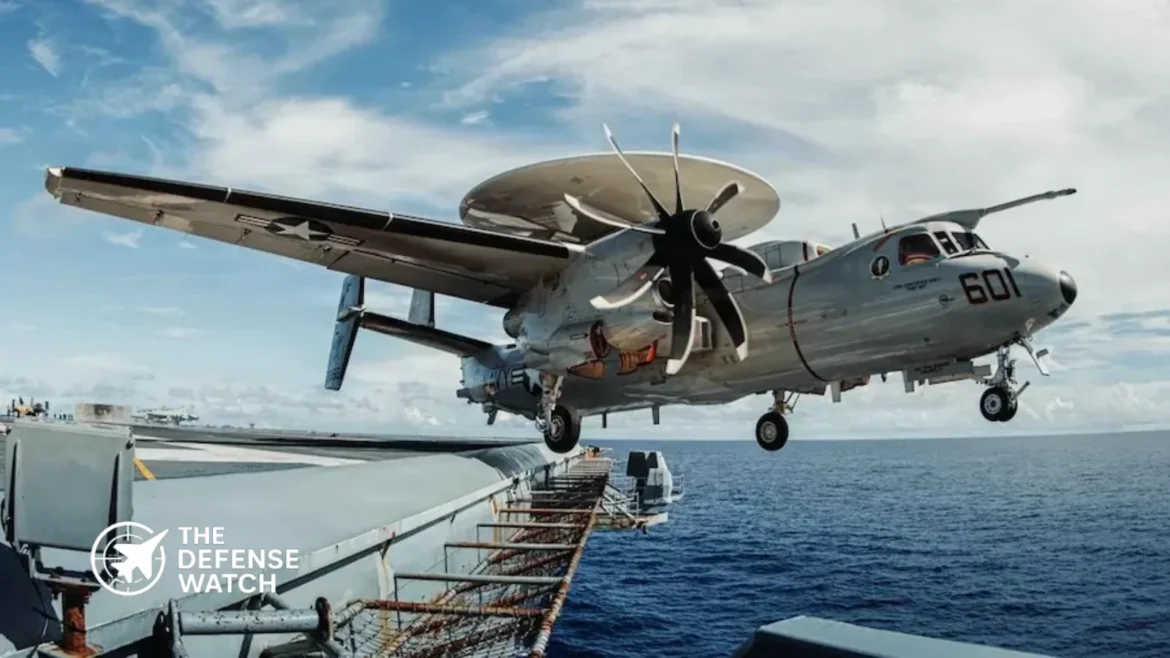
The U.S. Navy has awarded Rockwell Collins Simulation & Training Solutions LLC a $10.72 million contract modification to procure 15 Special Programs Advanced Readiness Trainers Afloat/Ashore, or SPARTA systems, supporting the E-2D Hawkeye Integrated Training Systems V program.
Takeaways
Key facts from the contract announcement
1. 15 SPARTA Trainers Ordered
Rockwell Collins Simulation & Training Solutions will provide 15 Special Programs Advanced Readiness Trainers Afloat/Ashore for the E-2D Hawkeye training program.
2. $10.7 Million Contract Modification
The firm-fixed-price modification adds $10,721,245 in new contract line items, with fiscal 2026 Navy aircraft procurement funds obligated at award.
The contract modification, identified as P00002 to firm-fixed-price contract N6134026C1001, adds new contract line items covering the trainers and associated technical data, computer software, and software documentation. The action was not competitively procured.
Scope of the E-2D SPARTA Trainer Contract
The $10,721,245 modification covers 15 Special Programs Advanced Readiness Trainers Afloat/Ashore for the Navy’s E-2D Hawkeye training architecture.
The announcement also includes associated technical data, computer software, and computer software documentation. The notice does not disclose the individual configuration, hardware content, delivery distribution, or unit price of the 15 trainers.
The award is a modification rather than a new standalone contract. The underlying N6134026C1001 contract was awarded to Rockwell Collins Simulation & Training Solutions for technical refreshes and capability upgrades across the E-2D Hawkeye training system. Earlier contract documentation identifies work involving flight trainers, system integration laboratories, SPARTA devices, Joint Simulation Environment integration, distributed mission testing, virtual maintenance training, and instructor and operator training.
E-2D Hawkeye Technical and Operational Context
The E-2D Advanced Hawkeye is the U.S. Navy’s carrier-based airborne early warning and command and control aircraft. NAVAIR identifies the aircraft as the newest E-2 variant, with an integrated open-architecture sensor system and a five-person crew consisting of two pilots and three mission systems operators.
The aircraft provides airborne surveillance and command and control functions for carrier air wings and wider naval operations. Its role means that E-2D crews must train not only for aircraft operation but also for complex mission management, coordination, communications, and tactical employment.
The Navy has previously used distributed E-2D training devices to allow full crews to practice mission scenarios without using operational aircraft. NAVAIR reported that its Distributed Readiness Trainers could support training for two pilots and three flight officers while also allowing E-2D crews to participate in distributed exercises with other aircraft and joint forces.
The HITS V program is part of that broader training infrastructure. A Naval Air Warfare Center Training Systems Division planning document describes HITS V as covering E-2D software configuration updates, cockpit technical refresh activity, maintenance and aircrew training devices, visual system upgrades, cybersecurity updates, and multi-level security implementation.
Operational Impact on U.S. Navy E-2D Fleet Readiness
The SPARTA procurement is relevant to the Navy’s effort to make E-2D training more flexible across shore-based and deployed environments.
The Afloat/Ashore designation is particularly significant because carrier aviation training requirements can extend beyond fixed installations. The Navy has already demonstrated the value of deployable simulation through its Simulators at Sea initiative, which connected virtual training systems aboard an aircraft carrier and supported aircraft including the E-2D Hawkeye, F-35C, F/A-18E/F and EA-18G.
From an acquisition perspective, additional SPARTA systems can provide the Navy with more training capacity and greater flexibility for maintaining aircrew proficiency. However, the contract announcement does not specify where the 15 systems will be installed or deployed, so their eventual distribution cannot be confirmed from the award.
The Navy also maintains dedicated E-2D training and readiness organizations. The Airborne Command & Control and Logistics Weapons School conducts simulator and aircraft training for Hawkeye squadrons as part of the fleet readiness process.
Contract Breakdown: Rockwell Collins E-2D Award Details
Contract Value
The modification is valued at $10,721,245. The full amount will be obligated at the time of award using fiscal 2026 aircraft procurement, Navy funds.
The announced amount represents the value of this modification. It should not be interpreted as the total value of the underlying HITS V contract.
Contractor
Rockwell Collins Simulation & Training Solutions LLC, based in Cedar Rapids, Iowa, is the contractor.
The company operates within Collins Aerospace, which has an established role in Navy simulation and training programs.
Contract Type
The action is a firm-fixed-price modification to contract N6134026C1001.
The modification establishes new contract line items for the 15 SPARTA systems and associated technical information and software deliverables.
Work Locations
The announcement identifies Sterling, Virginia, as the work location.
It does not provide a percentage breakdown for the work or identify specific Navy facilities where the completed trainers will ultimately operate.
Performance Period
Work is expected to be completed in November 2027.
Funding
Fiscal 2026 aircraft procurement, Navy funds totaling $10,721,245, will be obligated at the time of award.
Options Or Follow-On Work
The announcement does not identify additional options associated specifically with this modification.
The broader HITS V effort includes multiple training-system modernization activities, but those should not be treated as additional funding or work under this particular $10.72 million modification unless separately awarded.
Rockwell Collins Defense Industrial Base and Acquisition Impact
The modification illustrates how the Navy is continuing to invest in simulation infrastructure alongside upgrades to operational aircraft.
Keeping training systems aligned with aircraft software, hardware, and mission-system changes is important for platforms such as the E-2D, where aircrew performance depends on both aircraft operation and complex mission-system employment. HITS V documentation specifically identifies technical refreshes and configuration updates as part of the program’s scope.
The approach also reflects a broader Navy move toward distributed and synthetic training. Deployable simulators can reduce the need to conduct every training event using operational aircraft while allowing crews to rehearse complex scenarios in controlled environments.
The Navy has previously described distributed E-2D trainers as a way to support increasingly complex tactics and training with other aircraft in a carrier strike group.
Program Milestones and Next Steps
The immediate milestone is delivery of the 15 SPARTA trainers and associated technical and software documentation under the modified contract.
The Navy expects the work to be completed by November 2027. The announcement does not provide individual delivery dates, deployment locations, trainer configurations, or acceptance milestones.
The award follows the Navy’s broader HITS V effort to maintain and update E-2D training infrastructure as the Advanced Hawkeye program evolves. NAVAIR has separately identified continuing work on E-2D software configurations and cockpit modernization, reinforcing the need to keep associated training systems aligned with aircraft changes.
Takeaways
Key facts from the contract announcement
1. $11.8 Million Contract Modification
Boeing received an $11,812,176 modification to an existing cost-plus-fixed-fee U.S. Navy contract.
2. Six Months of Kuwait Super Hornet Support
The modification extends logistics, maintenance, aircraft, engine, and ferry support for Kuwait F/A-18E/F Super Hornets before their transfer to Kuwait.
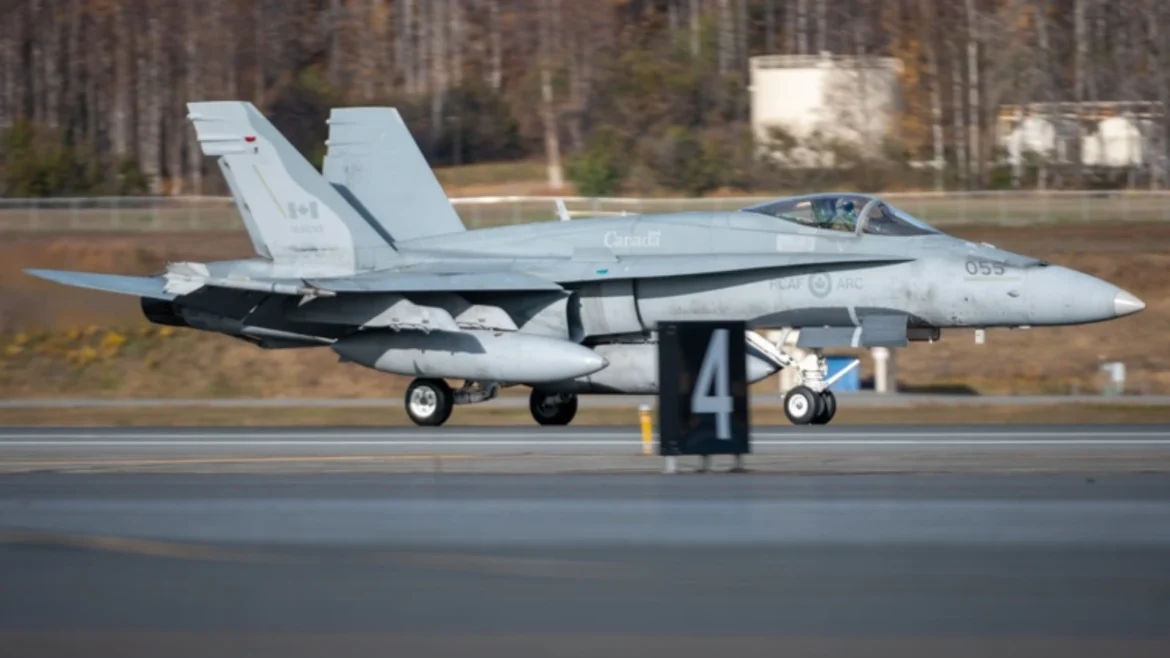
The Boeing Co. has received an $11.8 million U.S. Navy contract modification to extend logistics, management, and maintenance support for Kuwait-bound F/A-18E/F Super Hornet aircraft.
According to the U.S. Department of Defense contract announcement, the $11,812,176 modification, designated P00016, applies to previously awarded cost-plus-fixed-fee contract N0001923C0008. The six-month extension will support the aircraft before their ferry to Kuwait, with work scheduled to continue through March 2027.
Scope of the Boeing F/A-18E/F Super Hornet Contract
The modification covers a range of activities required to prepare the Kuwait F/A-18E/F aircraft and associated equipment for delivery.
Boeing’s responsibilities include:
- General logistics support
- Aircraft pilot support
- Aircraft maintenance support
- Aircraft and equipment logistics
- Engine support
- Ferry support
- Packaging, handling, storage, and transportation
The work therefore extends beyond aircraft maintenance alone. It includes the logistics and transportation activities needed to manage the aircraft and supporting equipment during the period before the aircraft are ferried to Kuwait.
The contract is being performed in support of a Foreign Military Sales customer. The announcement identifies Kuwait as the customer for the F/A-18E/F aircraft support.
F/A-18E/F Super Hornet Technical and Operational Context
The F/A-18E/F Super Hornet is a twin-engine multirole fighter developed by Boeing for carrier aviation and other naval air operations. The single-seat F/A-18E and two-seat F/A-18F variants form a major part of U.S. Navy tactical aviation and have also been selected by international customers.
For Kuwait, the aircraft represent an expansion of the country’s modern fighter fleet and provide a platform capable of conducting multiple mission types.
The contract announcement does not disclose the number of Kuwait aircraft covered by this particular six-month extension. It also does not provide additional information on the aircraft configuration, weapons package, delivery sequence, or individual aircraft status.
Those details should therefore not be inferred from the contract value or support scope.
Operational Impact on Kuwait’s Military Aviation Capability
The support arrangement is directly connected to the process of preparing Kuwait’s F/A-18E/F aircraft for transfer.
From an acquisition perspective, pre-ferry support is an important part of a Foreign Military Sales aircraft program. Aircraft must be maintained, inspected, supported with appropriate equipment, and prepared for transportation or flight before delivery to the customer.
The inclusion of pilot and ferry support indicates that the modification covers activities associated with moving the aircraft toward their eventual delivery to Kuwait. The announcement, however, does not specify the planned ferry route, aircraft delivery dates, or the number of aircraft involved.
Naval Air Systems Command, or NAVAIR, is the contracting activity responsible for the award.
Contract Breakdown: Boeing Award Details
Contract Value
The modification is valued at $11,812,176.
The full amount is identified as Foreign Military Sales customer funding and will be obligated at the time of award.
This figure represents the value of the modification described in the announcement. It should not be treated as the total value of Kuwait’s F/A-18E/F acquisition program.
Contractor
Boeing Co., St. Louis, Missouri, is the contractor.
Contract Type
The action is a cost-plus-fixed-fee contract modification to previously awarded contract N0001923C0008.
It is designated modification P00016, meaning it changes the existing contractual arrangement rather than representing an entirely new standalone contract.
The announcement also states that the modification was not competitively procured.
Work Locations
The work will be performed at:
- New Orleans, Louisiana: 70%
- Jacksonville, Florida: 30%
Performance Period
The six-month extension is expected to be completed in March 2027.
Funding
The award uses Foreign Military Sales customer funds.
The full $11,812,176 amount will be obligated at the time of award, according to the Department of Defense announcement.
Options Or Follow-On Work
The announcement does not identify additional options or follow-on work associated with this modification.
It specifically extends existing services for six months.
Boeing Defense Industrial Base and Acquisition Implications
The award illustrates the support infrastructure required to move U.S.-built combat aircraft to an international customer.
For an F/A-18E/F Foreign Military Sales program, aircraft delivery involves more than manufacturing the airframes. Logistics, maintenance, engines, equipment handling, transportation, pilot support, and ferry activities all have to be coordinated before the aircraft enter customer service.
The modification also demonstrates how existing Navy contracts can be extended to maintain continuity of support during an aircraft delivery period.
Because the announcement provides no information about additional aircraft procurement, it should not be interpreted as a new Kuwait Super Hornet production order. The $11.8 million action is specifically for support services associated with the aircraft before their ferry to Kuwait.
Program Milestones and Next Steps
The immediate milestone is the continuation of Boeing’s support services through March 2027.
The work is expected to help maintain and prepare the Kuwait F/A-18E/F aircraft and associated equipment ahead of their ferry to Kuwait.
The announcement does not disclose specific aircraft delivery dates, the number of aircraft covered by the modification, or the expected completion date for Kuwait’s broader Super Hornet acquisition.
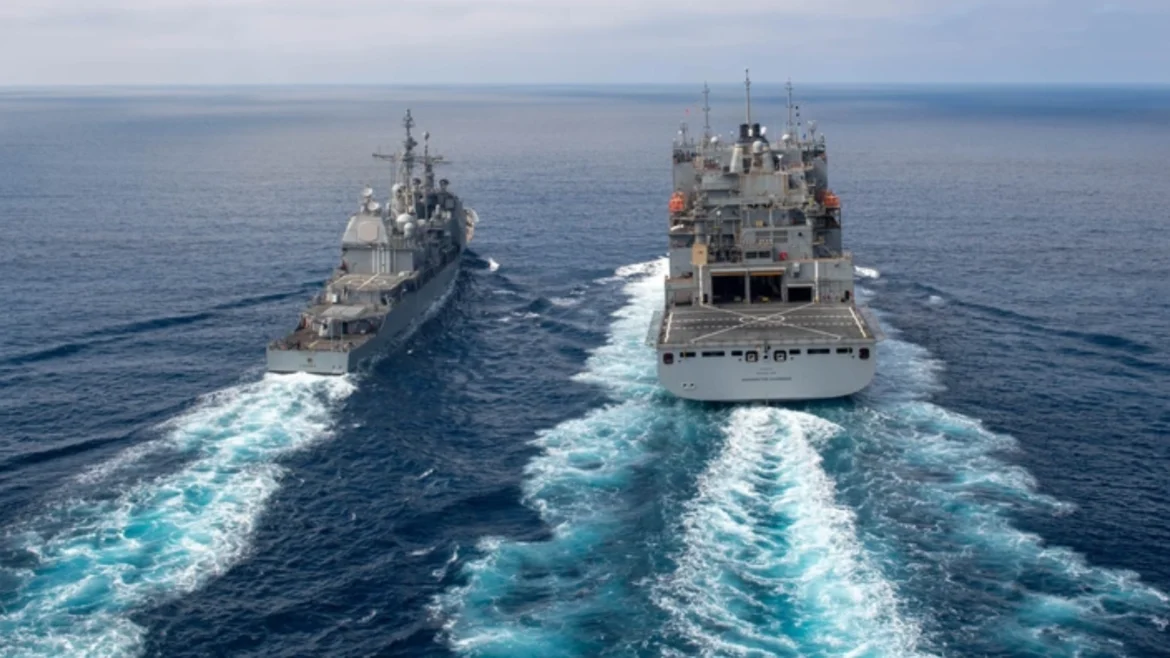
General Dynamics Information Technology Inc. has received a $22.4 million modification from the U.S. Navy to provide engineering services for the MK 41 Vertical Launching System, extending work that supports inspection, testing, upgrades and delivery of launcher components.
According to the U.S. Department of Defense contract announcement, the cost-plus-fixed-fee modification is valued at $22,401,925 and exercises options under previously awarded contract N6339423C0009. Naval Surface Warfare Center, Port Hueneme Division, in California, is the contracting activity.
Takeaways
Key facts from the contract announcement
1. $22.4 Million MK 41 VLS Modification
General Dynamics Information Technology received a $22.4 million cost-plus-fixed-fee modification to exercise options for MK 41 Vertical Launching System engineering services.
2. Work Supports MK 41 VLS Sustainment
The work covers upgrading, inspecting, testing and delivering MK 41 VLS components at U.S. Navy locations in Virginia, Florida, California and Hawaii.
The work is scheduled to continue through October 2027, with the largest share performed in Chesapeake, Virginia.
Scope of the MK 41 VLS Contract
The modification covers engineering services to upgrade, inspect, test and deliver components of the MK 41 Vertical Launching System.
The announcement does not identify individual components or specific ships that will receive the work under this modification. It also does not disclose a quantity of components, individual delivery schedules or specific engineering changes.
The award is a modification to an existing contract rather than a new standalone contract. That distinction is important because the $22.4 million represents the value of this contract action, not a newly established total value for the entire MK 41 VLS engineering program.
The underlying contract was established for MK 41 VLS in-service engineering agent support. Earlier procurement records describe the broader requirement as including engineering activities associated with MK 41 launcher components and sustainment.
MK 41 Vertical Launching System Technical and Operational Context
The MK 41 VLS is a fixed, vertical, multi-missile storage and launching system used aboard U.S. Navy surface combatants. The Navy identifies the system on Ticonderoga-class guided-missile cruisers and Arleigh Burke-class guided-missile destroyers, as well as allied naval platforms.
The launcher supports multiple mission areas, including anti-air warfare, anti-submarine warfare, ballistic missile defense and land attack. Depending on the ship, configuration and weapon integration, MK 41 can support weapons including Standard Missile variants, Tomahawk, Vertical Launch ASROC and Evolved SeaSparrow Missile.
The system is closely integrated with the Aegis Weapon System aboard major U.S. Navy surface combatants. The Navy describes the MK 41 launcher as part of the Aegis combat system aboard Arleigh Burke-class destroyers, where it operates alongside the ship’s combat system and sensors to support air defense, strike and other missions.
This makes the condition and availability of launcher equipment an important part of shipboard weapons readiness. Engineering support can cover activities needed to keep launcher equipment within required technical and operational standards, although the Navy announcement does not specify which individual engineering tasks will receive the largest share of this modification.
Operational Impact on U.S. Navy Surface Combatants
For the U.S. Navy, MK 41 VLS is more than a missile storage system. It provides the physical launch interface for a range of weapons carried by major surface combatants.
The system’s multi-mission design allows the same launcher architecture to support different weapons and mission sets. This is particularly relevant to Aegis-equipped destroyers, which combine air defense, surface warfare, anti-submarine warfare and strike capabilities in a single platform.
The Navy is also working on methods to improve the sustainment and reload cycle associated with VLS-equipped ships. In October 2024, Naval Sea Systems Command reported a successful at-sea demonstration of the Transferrable Reload At-sea Method, which loaded a missile canister into an MK 41 VLS aboard USS Chosin.
That demonstration is separate from the GDIT contract and should not be interpreted as part of the current modification. It does, however, illustrate the wider Navy focus on maintaining and improving the availability of VLS-equipped combatants.
Contract Breakdown: General Dynamics Information Technology Award Details
Contract Value
The modification is valued at $22,401,925.
The Navy will obligate $10,821,834 at the time of award from fiscal 2026 Shipbuilding and Conversion, Navy funds. The announcement states that these funds will not expire at the end of the current fiscal year.
The amount obligated at award is therefore lower than the modification’s stated value. The two figures should not be treated as interchangeable.
Contractor
General Dynamics Information Technology Inc., based in Falls Church, Virginia, is the contractor.
GDIT is performing the work under previously awarded contract N6339423C0009. Earlier records identify that contract as an in-service engineering agent support requirement for the MK 41 VLS.
Contract Type
The modification uses a cost-plus-fixed-fee contract structure.
Under this type of arrangement, allowable costs are reimbursed according to the contract terms, while the contractor receives a negotiated fixed fee. The structure differs from a firm-fixed-price award, where the government generally pays an established price for defined work.
Work Locations
The announced distribution of work is:
| Location | Share |
|---|---|
| Chesapeake, Virginia | 80% |
| Norfolk, Virginia | 5% |
| Mayport, Florida | 5% |
| San Diego, California | 5% |
| Pearl Harbor, Hawaii | 5% |
The geographic distribution indicates that most of the work will be conducted in Virginia, while smaller portions will be performed at Navy locations supporting fleet operations on both the Atlantic and Pacific sides.
The announcement does not identify the individual ships, installations or VLS components associated with each location.
Performance Period
Work is expected to be completed by October 2027.
Funding
The Navy will obligate $10,821,834 in fiscal 2026 Shipbuilding and Conversion, Navy funds at the time of award.
The announcement states that the funds will not expire at the end of the current fiscal year.
Options Or Follow-On Work
The current action exercises options under the previously awarded GDIT contract.
The underlying contract has received multiple option and modification actions supporting MK 41 VLS engineering. Procurement records show earlier modifications for similar engineering services, demonstrating that the requirement is being executed through recurring contract actions rather than a single one-time engineering effort.
The current announcement does not state whether additional options will be exercised after October 2027.
General Dynamics Defense Industrial Base and Acquisition Impact
The award continues a long-running engineering and sustainment requirement around a major U.S. Navy weapons-launch infrastructure.
The broader MK 41 requirement is significant because the system is installed across a large portion of the Navy’s guided-missile surface combatant force and is also used by allied navies. The Navy’s MK 41 fact file states that the system has been in U.S. Navy service since 1986 and has been acquired for U.S. and allied platforms.
From an acquisition perspective, recurring engineering contracts allow the Navy to maintain technical expertise and address equipment issues across an installed system rather than treating launcher support solely as a new-production requirement.
Earlier contract information for N6339423C0009 also describes activities such as latch rod adjustment, cell hatch refurbishment and deluge valve overhaul as part of the broader MK 41 in-service engineering requirement. Those activities belong to the underlying requirement and are not individually identified in the current $22.4 million announcement.
This distinction matters because the latest modification should not be interpreted as confirming that every task performed under the original contract will necessarily be performed under the current option.
Program Milestones and Next Steps
The immediate milestone is execution of the option work through October 2027.
The current award provides funding for engineering services covering MK 41 VLS component upgrades, inspections, testing and delivery. The announcement does not disclose a specific number of components, individual ships supported, test events or equipment deliveries associated with the $22.4 million action.
The Navy has separately continued work aimed at improving VLS sustainment and fleet availability. In May 2026, Naval Surface Warfare Center Port Hueneme Division reported development and testing of a tool intended to help sailors maintain MK 41 VLS cell hatch latch rods without damaging the cell mouth or compromising the hatch seal.
Taken together, these activities show that MK 41 VLS support encompasses both long-term engineering and practical fleet maintenance. The current GDIT modification specifically concerns engineering services and should not be conflated with separate VLS modernization or at-sea reloading initiatives.
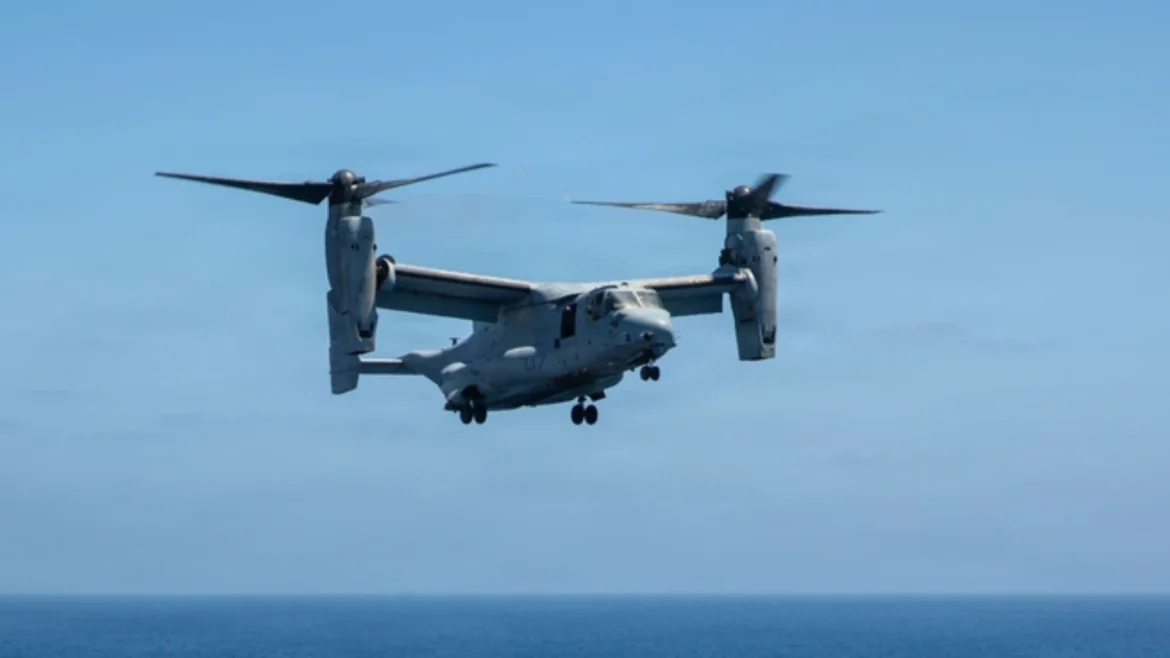
The U.S. Navy has awarded Bell Boeing Joint Project Office a $29.7 million order to provide loads and dynamics model data for the V-22 Osprey fleet as the aircraft program moves toward the end of production and a longer-term sustainment phase.
According to the U.S. Department of War contract announcement dated September 21, 2026, the $29,674,990 cost-plus-fixed-fee order, N0001926F2168, was issued against previously established basic ordering agreement N0001922G0002. Naval Air Systems Command in Patuxent River, Maryland, is the contracting activity.
Takeaways
Key facts from the contract announcement
1. $29.7 Million V-22 Data Order
The Navy awarded Bell Boeing a $29,674,990 cost-plus-fixed-fee order for loads and dynamics model data covering all V-22 variants.
2. Data Will Support Long-Term Sustainment
The technical data will support future sustainment decisions, mishap investigations, post-production sustainment and Fleet Support Team repair and maintenance activities.
The order covers all V-22 variants and is intended to preserve engineering data needed to support the aircraft after new production ends. The announcement specifically identifies sustainment decisions, mishap investigations, transition to post-production sustainment, and Fleet Support Team repair and maintenance as uses for the data.
Scope of the Bell Boeing V-22 Contract
The central deliverable is loads and dynamics model data for the V-22 fleet. These engineering models provide information used to understand how an aircraft and its structures respond to aerodynamic, inertial, mechanical and other loads during different operating conditions.
For a complex tiltrotor such as the V-22, maintaining accurate engineering data becomes particularly important as the production system transitions toward sustainment. The models can provide an engineering reference for evaluating structural conditions, investigating aircraft incidents and supporting maintenance or repair decisions.
The Navy announcement does not disclose the specific datasets, model formats, aircraft configurations or individual engineering parameters included in the order.
The work is scheduled to occur before and concurrently with V-22 production cessation. The contract therefore links engineering data preservation with the transition from active production to post-production support.
V-22 Osprey Technical and Operational Context
The V-22 is a tiltrotor aircraft that combines vertical takeoff and landing capability with the forward-flight characteristics of a turboprop aircraft. The joint program includes variants operated by the Marine Corps, Navy and Air Force Special Operations Command.
The Marine Corps MV-22B provides assault support and transport missions, while the Navy CMV-22B performs the Carrier Onboard Delivery mission and replaced the C-2A Greyhound in that role. The Air Force Special Operations Command operates the CV-22 for long-range special operations missions.
NAVAIR identifies the V-22 as a medium-lift aircraft and lists its primary function as medium-lift assault support. The service also identifies the platform as an ACAT IC program.
The engineering information covered by the new order is therefore relevant across several aircraft configurations rather than being limited to a single V-22 variant.
Operational Impact on U.S. Navy and Marine Corps V-22 Fleet
The award comes as the V-22 program moves from aircraft production toward long-term fleet support.
The Department of Defense fiscal 2026 weapons documentation states that V-22 funding supports shutdown of the MV-22 and CMV-22 production line, including material disposition, tooling and special test equipment storage. The same documentation says modification work continues to address flight-hour costs and time-on-wing availability.
Bell and Boeing had already begun describing the transition toward sustainment. In April 2025, the companies announced the completion of the Air Force CV-22 production program and said the V-22 industrial team was moving toward fleet-wide sustainment and upgrades, while MV-22 and CMV-22 production continued.
The new Navy order expands that transition into the engineering-data domain. Maintaining authoritative technical models can help the government and industry retain the information required to support aircraft already in service after the manufacturing line closes.
This is also relevant to mishap investigations. NAVAIR has previously used engineering analysis and fleet data in response to V-22 technical issues, including investigations and flight restrictions involving the proprotor gearbox system.
Contract Breakdown: Bell Boeing V-22 Award Details
Contract Value
The order is valued at $29,674,990.
The Navy will obligate $10,310,866 in fiscal 2025 procurement funds and $19,364,124 in fiscal 2026 procurement funds at the time of award. These amounts total the stated contract value.
Contractor
The contractor is Bell Boeing Joint Project Office, based in Amarillo, Texas.
The V-22 is jointly produced by Bell and Boeing, with major program activities distributed across multiple facilities. NAVAIR identifies Bell Boeing as the V-22 contractor.
Contract Type
The Navy awarded the action as a cost-plus-fixed-fee order against basic ordering agreement N0001922G0002.
A basic ordering agreement provides a contractual framework under which individual orders can be issued. The new action is the specific funded order covered by this announcement.
Work Locations
The work will be performed at:
- Ridley Park, Pennsylvania, 60%
- Fort Worth, Texas, 30%
- Amarillo, Texas, 10%
The performance locations reflect the distributed industrial structure supporting the V-22 program.
Performance Period
Work is expected to be completed in March 2030.
The duration extends beyond the anticipated end of V-22 aircraft production, reinforcing the contract’s role in the transition toward post-production engineering and sustainment.
Funding
The award uses U.S. Navy procurement funding from fiscal years 2025 and 2026.
The announcement does not identify any option value or additional funding beyond the amounts obligated at award.
Options Or Follow-On Work
The announcement does not identify options or specific follow-on contract actions.
The technical data could support future sustainment decisions, but the Navy has not publicly stated through this announcement whether additional orders will be issued for related engineering data.
Bell Boeing Defense Industrial Base and Acquisition Impact
The contract illustrates an important part of aircraft sustainment that becomes more significant as a production line approaches closure.
Ending production does not end the military requirement for an aircraft. Existing V-22s are expected to remain in service and require structural engineering, maintenance, modifications, parts support, technical assistance and investigation capabilities.
The Congressional Research Service has reported that the Department of Defense planned to close the V-22 production line in fiscal 2028, while current defense budget documents identify production-line shutdown activities.
The September 2026 award does not itself establish a new production schedule. Instead, it provides engineering data intended to support the transition described in the contract announcement.
That distinction matters for the industrial base. Once production stops, some manufacturing-specific knowledge and engineering resources can become harder to maintain. Preserving loads and dynamics models provides the government and Fleet Support Team with an established technical reference for aircraft already delivered to the services.
The Navy has also continued to fund V-22 sustainment and modernization activities. The broader program therefore represents a shift in emphasis from producing new aircraft toward maintaining and upgrading an established fleet.
Program Milestones and Next Steps
The immediate milestone is completion of the engineering-data work in March 2030.
The contract is specifically structured around the period before and concurrent with V-22 production cessation. Its stated purposes include future sustainment decisions, mishap investigations, post-production transition and Fleet Support Team maintenance and repair.
The broader V-22 program is already moving toward that post-production environment. Bell and Boeing completed the Air Force CV-22 Program of Record transition in 2025, while the Defense Department’s fiscal 2026 budget documentation provided funding for MV-22 and CMV-22 production-line shutdown activities.
The new order consequently represents an engineering-support activity tied to the long-term management of the V-22 fleet rather than a procurement of additional aircraft.
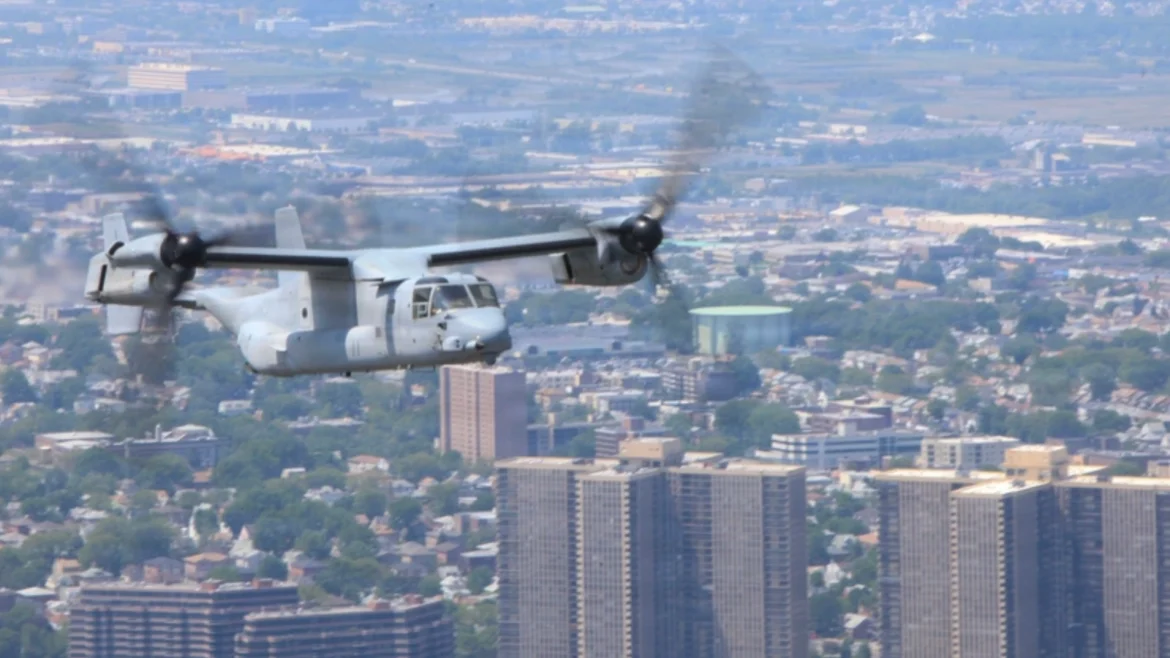
Raytheon has received a $34.36 million U.S. government order to provide engineering, management, technical and acquisition support for the V-22 Tactical Software Suite, extending software sustainment work for the V-22 fleet through August 2028.
According to the Department of War contract announcement, the $34,364,909 cost-plus-fixed-fee order was issued by Naval Air Systems Command, or NAVAIR, under previously established basic ordering agreement N0001925G0009. The order supports the operational readiness of V-22 aircraft operated by the U.S. Air Force, Marine Corps and Navy.
Takeaways
Key facts from the contract announcement
1. $34.4 Million V-22 Software Order
Raytheon received a $34,364,909 cost-plus-fixed-fee order from Naval Air Systems Command for engineering, technical, management and acquisition support for the V-22 Tactical Software Suite.
2. Support Extends Through August 2028
The work will be performed in Indianapolis, Indiana, with completion expected in August 2028. The effort supports V-22 operational readiness across the Air Force, Marine Corps and Navy.
Raytheon will perform the work in Indianapolis, Indiana. The order was not competitively procured, according to the announcement.
Scope of the V-22 Tactical Software Suite Contract
The order covers engineering, management, technical and acquisition support for sustaining the V-22 Tactical Software Suite. The announcement does not disclose individual software modifications, specific software releases, aircraft quantities, or particular capability upgrades funded by the order.
The focus on software sustainment is significant because software is an integral part of modern aircraft operation. NAVAIR has previously described V-22 software activities involving flight control, mission systems, testing, integration and fleet updates. Historical NAVAIR material shows that software changes have been used to modify V-22 aircraft behavior and improve operational capabilities.
A separate NAVAIR procurement notice for V-22 software sustainment described work involving software product updates, resolution of V-22 problem reports, qualification testing, integration into the aircraft, airworthiness substantiation and flight testing for MV-22, CMV-22 and CV-22 aircraft. That earlier requirement provides useful context for the type of engineering and fleet integration activities associated with V-22 software sustainment, although the current contract announcement does not specify which of those activities are included in this particular order.
V-22 Osprey Technical and Operational Context
The V-22 is a tiltrotor aircraft family that combines vertical takeoff and landing characteristics with airplane-mode flight. Its U.S. military variants include the Marine Corps MV-22B, Navy CMV-22B and Air Force CV-22B.
The aircraft’s software architecture is closely connected to its avionics and flight systems. NAVAIR has previously documented V-22 testing involving flight control software and mission computer software. The program has also used software changes to alter aircraft operating characteristics without requiring a major physical redesign.
The current award should therefore be viewed primarily as sustainment and engineering support rather than as a disclosed new aircraft development program. The announcement provides no evidence that the $34.36 million order represents a new V-22 variant or a major hardware modernization effort.
NAVAIR has also described the V-22 program as a joint enterprise involving all three U.S. military services that operate the aircraft. In 2022, the program office said its industry partners included Raytheon and other major V-22 suppliers and that the program was focused on sustaining the aircraft for decades of service.
Operational Impact on U.S. Air Force, Marine Corps and Navy V-22 Fleet
The immediate operational objective identified by the contract announcement is maintaining V-22 fleet readiness.
For the Marine Corps, the MV-22 is a core aviation platform for assault support missions. The Navy’s CMV-22B supports carrier logistics requirements, while the Air Force operates the CV-22 for special operations missions.
Maintaining the software baseline across these variants can require continued engineering, testing and configuration management as aircraft systems, requirements and components change. The current announcement, however, does not identify a specific readiness target, mission-capable rate or operational performance improvement.
NAVAIR’s historical V-22 work illustrates why software sustainment remains a continuing requirement. Earlier program activities included testing updated mission software, flight control software and avionics changes before fleet implementation.
Contract Breakdown: Raytheon V-22 Award Details
Contract Value
The order is valued at $34,364,909 and uses a cost-plus-fixed-fee contract structure. The stated order value should not be confused with a contract ceiling or the value of the underlying basic ordering agreement.
Contractor
Raytheon Co., Indianapolis, Indiana, is the award recipient.
Contract Type
The action is order N0001926F1166, issued against basic ordering agreement N0001925G0009. The order is cost-plus-fixed-fee and was not competitively procured.
Work Locations
All work identified in the announcement will be performed in Indianapolis, Indiana.
Performance Period
Work is expected to be completed in August 2028.
Funding
The announcement identifies funding from several fiscal years and appropriation accounts.
Fiscal 2025 funding includes:
- $309,895 in Air Force aircraft procurement funds
- $294,947 in Defense-Wide procurement funds
Fiscal 2026 funding includes:
- $8,230,418 in Air Force aircraft procurement
- $2,090,824 in Defense-Wide procurement
- $6,109,935 in Navy aircraft procurement
- $4,818,482 in Air Force operations and maintenance
- $6,541,169 in Navy research, development, test and evaluation
- $5,969,238 in Navy operations and maintenance
The listed obligations total $34,364,908, which is $1 below the stated $34,364,909 order value. This one-dollar discrepancy appears in the published figures and is not explained in the announcement. The contract notice states that these funds will be obligated at the time of award.
Options Or Follow-On Work
The announcement does not identify options, additional quantities or a separately funded follow-on order.
The underlying basic ordering agreement provides a contracting framework under which individual orders can be issued. The current action is therefore an order under that existing agreement, rather than a new standalone basic ordering agreement.
Raytheon Defense Industrial Base and Acquisition Impact
The award illustrates the continuing role of software sustainment in the defense industrial base. Aircraft readiness increasingly depends not only on airframes, engines and other physical components, but also on maintaining software, integrating updates and supporting the engineering processes needed to qualify changes.
For the V-22 program, this work spans multiple military services and aircraft variants. NAVAIR has previously described the joint V-22 program office as working with government and industry organizations across the fleet, including Raytheon.
The noncompetitive nature of the current order is also relevant to the acquisition picture. The announcement does not provide the specific justification for the procurement decision, so the reason for limiting competition should not be inferred beyond the fact that the action was not competitively procured.
Program Milestones and Next Steps
Raytheon’s current performance period is expected to continue through August 2028. The announcement does not provide a detailed schedule for individual software releases, testing events, aircraft integrations or fleet deployments.
The earlier V-22 software sustainment requirement identified a process involving software updates, problem-report resolution, qualification testing, aircraft integration, airworthiness work and flight testing. Those activities provide historical context for the broader sustainment process, but the current award notice does not confirm which individual activities will be performed under order N0001926F1166.
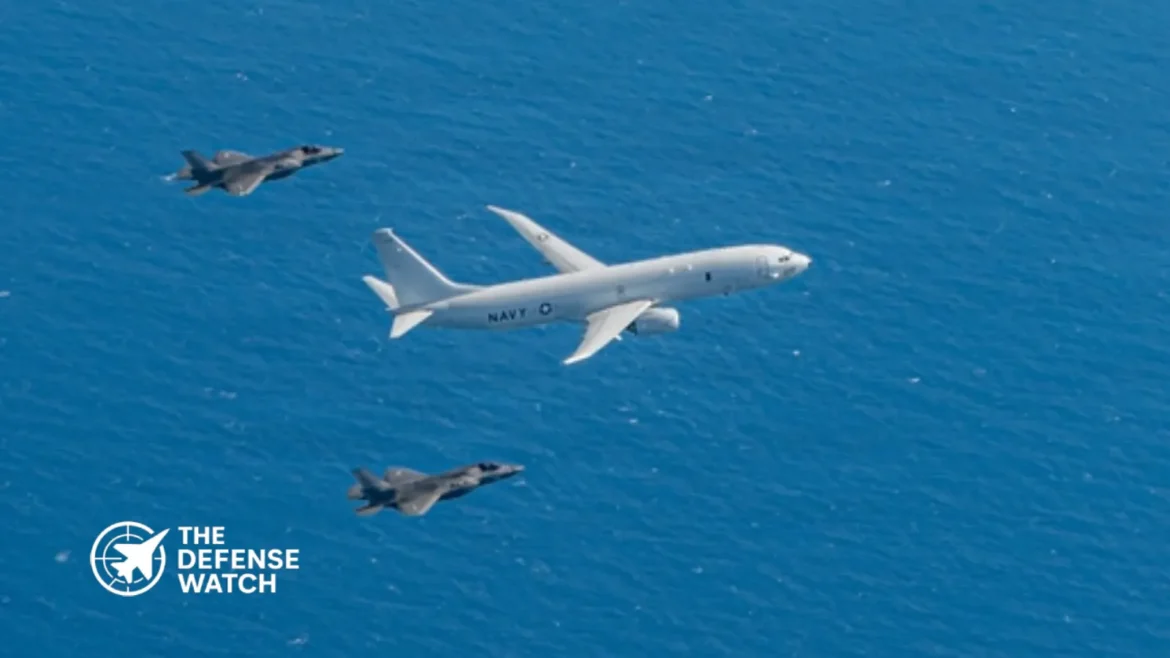
Dayton T. Brown Inc. has received a $55.84 million U.S. Navy contract modification to procure five P-8 Ground Systems and 21 Fly-Away Kits in support of the P-8A Poseidon Mobile Mission Systems mission.
According to the U.S. Department of War contract announcement dated September 21, 2026, the $55,838,189 modification, designated P00029, was issued against order N0042124F0184 under basic ordering agreement N0042123G0005. The action also exercises options for continued Mobile Mission Systems support.
Takeaways
Key facts from the contract announcement
1. $55.8 Million Navy Modification
Dayton T. Brown Inc. received a $55,838,189 modification to an existing order supporting the P-8A Mobile Mission Systems mission.
2. Five Ground Systems and 21 Fly-Away Kits
The modification establishes a new material contract line item for five P-8 Ground Systems and 21 Fly-Away Kits, alongside continued MMS support.
The work is scheduled to be performed in Hollywood, Maryland, with completion expected in March 2027. The modification was not competitively procured.
Scope of the P-8A Mobile Mission Systems Contract
The modification establishes a new material contract line item within the existing order for five P-8 Ground Systems and 21 Fly-Away Kits.
The Navy said the materials will support system and subsystem modifications, upgrades, integration, and capability and capacity growth associated with the P-8A Mobile Mission Systems mission.
The action also includes options for continued MMS support, extending the contractor’s role beyond the procurement of the new equipment.
The announcement does not provide a detailed breakdown of the five ground systems or 21 Fly-Away Kits, including their individual configurations, hardware components, deployment arrangements, or unit prices.
That distinction is important because the $55.84 million figure covers the modification as a whole. The announcement does not establish an individual price for each ground system or kit.
P-8A Poseidon Technical and Operational Context
The P-8A Poseidon is the U.S. Navy’s multimission maritime patrol aircraft, based on the Boeing 737-800 platform. Its missions include anti-submarine warfare, anti-surface warfare, intelligence, surveillance and reconnaissance, maritime domain awareness, and search and rescue. Boeing identifies the aircraft’s mission system as an integrated architecture supporting radar, electronic support measures, communications, data links, acoustic sensors, and other mission equipment.
The aircraft is designed to operate as part of a wider maritime surveillance network rather than as an isolated platform. Its mission systems allow crews to collect, process, and share information during maritime patrol and reconnaissance missions.
Ground-based mission systems therefore form an important part of the wider P-8 operational architecture. The specific equipment included in the Dayton T. Brown modification is not fully described in the contract announcement, but the stated work scope shows that the procurement is intended to support modifications, upgrades, integration, and additional capability and capacity.
Boeing also describes the P-8 as using an open mission systems architecture intended to support technology insertion and future upgrades. In August 2026, Boeing and Northrop Grumman announced a demonstration involving P-8A and MQ-4C Triton teaming using Open Mission Systems and the Universal Command and Control Interface.
That broader modernization approach provides context for why deployable ground equipment and mission-support systems can remain relevant as the aircraft’s software, sensors, communications, and networking capabilities evolve.
Operational Impact on U.S. Navy Maritime Patrol Missions
The P-8A is a central component of the Navy’s maritime patrol and reconnaissance force. The aircraft is commonly used for anti-submarine warfare and intelligence, surveillance and reconnaissance missions, while also supporting anti-surface warfare and search-and-rescue operations.
The new ground systems and fly-away kits are intended to support the mission systems environment surrounding those aircraft. The contract announcement specifically identifies modifications, upgrades, integration, and capability and capacity growth as supported activities.
From an operational perspective, deployable mission-support equipment can provide flexibility for aircraft operating away from permanent infrastructure. However, the announcement does not specify where the five ground systems or 21 Fly-Away Kits will be deployed, which Navy units will receive them, or how the equipment will be distributed.
The contract therefore should not be interpreted as establishing a specific new deployment location or operational concept.
Contract Breakdown: Dayton T. Brown Award Details
Contract Value
The modification is valued at $55,838,189.
The full amount is represented by three fiscal-year funding sources:
- $55,684,474 in fiscal 2024 Aircraft Procurement, Navy funds
- $152,215 in fiscal 2025 Research, Development, Test and Evaluation, Navy funds
- $1,500 in fiscal 2026 Operations and Maintenance, Navy funds
Together, those obligations total $55,838,189.
The announcement identifies these amounts as funds obligated at the time of award. They should not be confused with the ceiling value of the underlying basic ordering agreement.
Contractor
The contractor is Dayton T. Brown Inc., based in Bohemia, New York.
NAVAIR identifies Dayton T. Brown as a small business supporting naval aviation through engineering, testing, technical publications, mobile secure facilities, logistics, prototyping, manufacturing, and system support. Its Pax River area facilities include operations in Hollywood, Maryland.
Contract Type
The action is a modification to an existing order, rather than a standalone new contract.
It is identified as modification P00029 to order N0042124F0184, issued against basic ordering agreement N0042123G0005.
The announcement does not identify the underlying order as firm-fixed-price, cost-plus, or another specific pricing arrangement. Therefore, no specific contract pricing type should be inferred from the announcement.
Work Locations
The contract work will be performed in Hollywood, Maryland.
The announcement identifies March 2027 as the expected completion date.
Performance Period
Work is expected to be completed in March 2027.
The announcement does not provide individual delivery dates for the five P-8 Ground Systems or 21 Fly-Away Kits.
Funding
The modification is funded through three Navy appropriations:
| Fiscal Year | Appropriation | Amount |
|---|---|---|
| FY2024 | Aircraft Procurement, Navy | $55,684,474 |
| FY2025 | Research, Development, Test and Evaluation, Navy | $152,215 |
| FY2026 | Operations and Maintenance, Navy | $1,500 |
| Total | Current modification | $55,838,189 |
Options or Follow-On Work
The modification exercises options for continued Mobile Mission Systems support.
The announcement does not disclose the value of the exercised options separately from the total modification value, nor does it provide a detailed description of the option periods.
Dayton T. Brown Defense Industrial Base and Acquisition Impact
The award illustrates how P-8A modernization extends beyond the aircraft itself.
As the Navy upgrades mission systems, supporting infrastructure must also accommodate new hardware, software, integration requirements, and operational configurations. The contract’s reference to system and subsystem modifications, upgrades, integration, and capability and capacity growth indicates that the effort is tied to this broader support environment.
Dayton T. Brown’s role also reflects the contribution of specialized small businesses to naval aviation programs. NAVAIR lists the company as a small business and identifies capabilities spanning engineering, testing, technical publications, logistics, prototyping, manufacturing, and system support.
The procurement was not competitively procured. The announcement does not state the specific statutory or regulatory basis for that procurement decision, so no further conclusion about the acquisition rationale can be drawn from the available notice.
Program Milestones and Next Steps
The immediate milestone is procurement and delivery of the five P-8 Ground Systems and 21 Fly-Away Kits, together with continued MMS support under the modified order.
Work is expected to continue through March 2027.
The contract notice does not provide additional milestones for system integration, testing, fielding, or operational acceptance. Those activities should therefore not be assumed to have specific dates based solely on this award.
The broader P-8 program continues to evolve. Boeing states that the P-8’s open mission systems architecture is designed to support future technology insertion, while recent work with the MQ-4C Triton has demonstrated efforts to expand standards-based manned-unmanned teaming and mission interoperability.
For the Navy, the relevance of the Dayton T. Brown modification is therefore primarily in maintaining and expanding the mission-support infrastructure that allows the P-8A’s mission systems to be modified and integrated as the platform evolves.
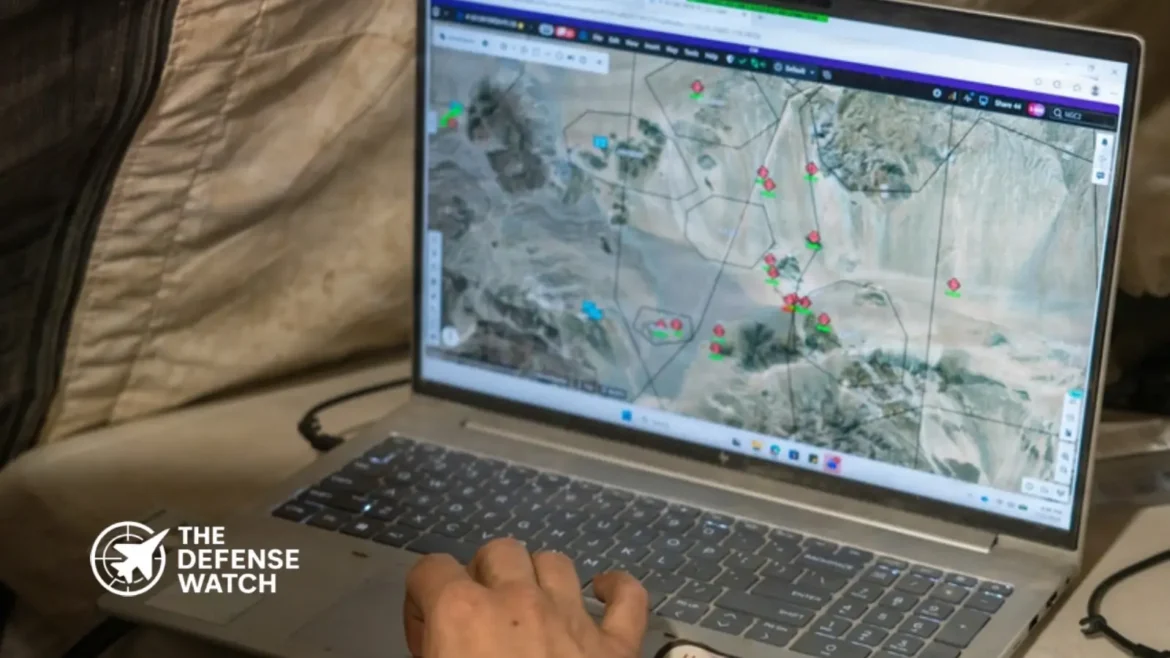
Bell Boeing Wins $19.8M V-22 Software Support Contract
Takeaways
Key facts from the contract announcement
1. $19.8 Million V-22 Software Order
Bell Boeing Joint Project Office received a $19.79 million cost-plus-fixed-fee order to provide engineering, management, technical, and acquisition support for the V-22 Tactical Software Suite.
2. Support Runs Through April 2030
The order supports V-22 fleet operational readiness for the U.S. Air Force, Marine Corps, and Navy, with work scheduled across four U.S. locations through April 2030.
Bell Boeing Joint Project Office has received a $19.79 million U.S. Navy order to provide engineering, management, technical, and acquisition support for the V-22 Tactical Software Suite, according to the Naval Air Systems Command contract announcement.
The cost-plus-fixed-fee order, N0001926F0331, was issued under previously awarded basic ordering agreement N0001922G0002. The work is intended to support operational readiness across V-22 fleets operated by the U.S. Air Force, U.S. Marine Corps, and U.S. Navy.
The order is scheduled to run through April 2030.
Scope of the V-22 Tactical Software Suite Contract
The new order covers engineering, management, technical, and acquisition activities associated with sustaining the V-22 Tactical Software Suite.
The announcement does not identify individual software releases, specific upgrades, aircraft configurations, or new software capabilities that will be delivered under the order. It also does not disclose a specific number of aircraft that will receive software support.
The work is therefore focused on sustaining the existing V-22 software capability rather than establishing a publicly identified new aircraft development program.
Software support is particularly important for a multi-service aircraft such as the V-22 because the platform operates in different configurations and fulfills different missions across the services.
NAVAIR’s V-22 Joint Program Office, PMA-275, manages procurement, development, support, fielding, and disposal of V-22 program systems for the Marine Corps, Air Force, and Navy.
V-22 Osprey Technical and Operational Context
The V-22 Osprey is a tiltrotor aircraft that combines vertical takeoff and landing characteristics with airplane-style flight. Its architecture allows the aircraft to transition between helicopter-like and fixed-wing flight modes.
The U.S. military operates several V-22 variants. The Marine Corps MV-22B performs medium-lift assault support missions, while the Air Force CV-22 supports long-range special operations missions. The Navy’s CMV-22B provides long-range aerial logistics and carrier onboard delivery capabilities.
NAVAIR says the V-22 program supports different requirements across the three services, including Marine Corps assault support, Air Force special operations infiltration and resupply, and Navy aerial logistics.
The aircraft also relies heavily on digital flight controls and integrated avionics. Boeing describes the V-22 as incorporating fly-by-wire controls and modern cockpit systems, making software an integral part of aircraft operation and sustainment.
That makes continued software engineering and technical support an important element of the aircraft’s broader sustainment architecture.
Operational Impact on U.S. Air Force, Marine Corps and Navy V-22 Fleets
The order covers a joint fleet rather than a single service. That is significant because the V-22’s three U.S. variants perform different operational roles.
The MV-22B provides the Marine Corps with a medium-lift aircraft for transporting personnel, equipment, and supplies from ships and land bases for combat assault and assault support.
The CV-22 provides Air Force special operations forces with a long-range vertical takeoff and landing capability for insertion, extraction, and support missions. The CMV-22B, meanwhile, provides the Navy with long-range aerial logistics capability, including carrier onboard delivery.
NAVAIR’s recent V-22 comprehensive review also covered the aircraft as a joint capability operated by the Air Force, Marine Corps, and Navy. The review, released in December 2025, reaffirmed the platform’s airworthiness under established controls and addressed actions intended to improve safety and readiness.
Against that backdrop, maintaining the software infrastructure supporting the aircraft is part of the wider effort to sustain the operational availability of the V-22 fleet.
Contract Breakdown: Bell Boeing V-22 Award Details
Contract Value
The order is valued at $19,785,639.
The award is a specific order under previously established basic ordering agreement N0001922G0002. The announced value represents this order and should not be interpreted as the value of the broader agreement.
Contractor
The work was awarded to the Bell Boeing Joint Project Office, based in Amarillo, Texas.
Contract Type
The order is a cost-plus-fixed-fee contract action.
Under this structure, allowable costs are reimbursed according to the contract while the contractor receives a negotiated fixed fee. The announcement does not describe this order as a firm-fixed-price award.
Work Locations
Work will be performed at four U.S. locations:
| Location | Share of Work |
|---|---|
| Ridley Park, Pennsylvania | 59% |
| Fort Worth, Texas | 30% |
| Amarillo, Texas | 10% |
| Albuquerque, New Mexico | 1% |
The largest share of the work, 59%, will be performed in Ridley Park, Pennsylvania.
Performance Period
The order is expected to be completed in April 2030.
Funding
The Navy said the award will obligate fiscal 2026 funding from multiple accounts at the time of award.
The announced funding includes:
| Funding Account | Amount |
|---|---|
| FY2026 Operations and Maintenance, Navy | $8,028,373 |
| FY2026 Operations and Maintenance, Air Force | $6,231,511 |
| FY2026 RDT&E, Air Force | $1,824,567 |
| FY2026 RDT&E, Navy | $2,874,307 |
| FY2026 Aircraft Procurement, Air Force | $404,306 |
| FY2026 Aircraft Procurement, Navy | $308,333 |
| FY2026 Procurement, Defense-Wide | $114,242 |
| Total | $19,785,639 |
The funding mix reflects the joint-service nature of the work, with both operations and maintenance and research, development, test and evaluation accounts contributing to the order.
Options Or Follow-On Work
The announcement states that the order is expected to be completed in April 2030 and does not identify option periods for this specific action.
It also does not announce additional follow-on orders or a separate software development phase.
Bell Boeing Defense Industrial Base and Acquisition Impact
The award extends industry support for a major U.S. joint-service aircraft program through the end of the decade.
The V-22’s sustainment network already spans multiple locations and organizations because the aircraft is operated by three U.S. military services. NAVAIR describes PMA-275 as responsible for the platform across its procurement, development, support, fielding, and disposal lifecycle.
Boeing also identifies a broader V-22 sustainment and supplier network supporting the aircraft’s operational fleet.
From an acquisition perspective, the order demonstrates that software sustainment is being treated as a continuing requirement within the V-22 lifecycle rather than as a one-time development activity.
The contract also combines operations and maintenance funding with RDT&E and procurement funding. The announcement does not provide enough detail to determine how each individual software activity will be divided among those accounts.
Program Milestones and Next Steps
The immediate milestone is execution of the engineering and technical support covered by order N0001926F0331.
Performance is scheduled to continue through April 2030, with work distributed among facilities in Pennsylvania, Texas, and New Mexico.
The announcement does not disclose specific software release dates, modification schedules, aircraft quantities, or planned capability upgrades.
The broader V-22 program continues to support three U.S. service variants. NAVAIR reported in 2024 that Fleet Readiness Center East had inducted its first Navy CMV-22B for maintenance, allowing the facility to support all three U.S. V-22 variants.
Honeywell Wins $53.9M Navy WSN-7 Gyro Contract
Takeaways
Key facts from the contract announcement
1. $53.9 Million Five-Year Contract
Honeywell Aerospace Technologies received a firm-fixed-price contract valued at $53,866,460 for components supporting the Navy’s AN/WSN-7 inertial navigation system.
2. Up to 1,125 Components
The contract covers up to 1,125 components representing three different parts used in ring laser gyros supporting WSN-7 systems aboard Navy submarines and surface ships.
Honeywell Aerospace Technologies has received a $53.87 million U.S. Navy contract to supply components used in ring laser gyroscopes supporting the Navy’s AN/WSN-7 inertial navigation system.
According to the Department of War contract announcement published September 18, the firm-fixed-price award covers up to 1,125 components representing three different parts over five years. The components support WSN-7 systems used on a variety of Navy submarines and surface ships.
The contract, designated N00104-26-D-AZ01, was awarded by Naval Supply Systems Command Weapon Systems Support in Mechanicsburg, Pennsylvania. No funds are being obligated at the time of award because the contract establishes the framework for subsequent delivery orders.
Scope of the Honeywell AN/WSN-7 Contract
The five-year contract covers three types of components used in the ring laser gyros that form part of the AN/WSN-7 inertial navigation system.
The total contract value is $53,866,460, with procurement authorized for up to 1,125 components during the five-year period. The award has a five-year base period and no option periods.
The Navy stated that subsequent delivery orders under the contract will be issued through September 2031. Those orders will be funded using appropriate Navy working capital funds, with the associated funds not expiring.
The award is therefore not an immediate expenditure of $53.9 million. Instead, the contract provides the procurement framework under which individual delivery orders can be issued as the Navy requires the components.
AN/WSN-7 Technical and Operational Context
The AN/WSN-7 Ring Laser Gyro Navigator is a self-contained inertial navigation system developed for Navy ships and submarines. Navy documentation describes the system as a common ship and submarine inertial navigator intended to replace older fleet navigation systems.
The system uses ring laser gyro technology to measure a vessel’s motion and support navigation without relying exclusively on external positioning signals. The Navy has described the WSN-7 as providing real-time navigation information for navigation and combat systems.
A ring laser gyroscope determines angular motion using counter-propagating laser beams. The measured difference between the beams is related to the rotation of the gyro, allowing the system to determine changes in orientation.
This technology has an important role in inertial navigation because it allows a vessel to maintain navigation information using onboard sensors. That makes inertial navigation particularly relevant when external navigation signals are unavailable or degraded.
The Navy has previously described the AN/WSN-7 as a common ring laser gyro navigation system for surface ships and submarines. NAVSEA says the program was established to address reliability and obsolescence issues affecting older fleet navigation equipment.
Operational Impact on U.S. Navy Navigation
For the U.S. Navy, inertial navigation is part of the broader positioning, navigation and timing architecture required for ship operations.
The AN/WSN-7 provides navigation data that can support both routine ship navigation and other onboard systems. Navy budget documentation describes the AN/WSN-7(V) as providing real-time navigation data for navigation and combat systems.
The continued procurement of components indicates that the Navy still requires parts to sustain WSN-7-equipped platforms. The latest award does not, by itself, establish how many ships or submarines will receive components or how individual quantities will be distributed.
The Navy is also pursuing newer inertial navigation technology. The AN/WSN-12 has been developed as a successor to the WSN-7, with Northrop Grumman involved in the newer system. Janes reported that the WSN-12 uses fiber-optic gyro technology and was intended to provide improved inertial navigation capability.
That means the Honeywell contract should be viewed primarily as a sustainment and component availability action for the existing WSN-7 fleet rather than an announcement of a new navigation system.
Contract Breakdown: Honeywell Aerospace Technologies Award Details
Contract Value
The contract has a total stated value of $53,866,460.
The announcement does not state that the full amount is being obligated at award. No funds are being obligated initially, with funding to follow through subsequent delivery orders.
Contractor
Honeywell Aerospace Technologies, Minneapolis, Minnesota, is the contractor.
Honeywell maintains a broader portfolio of marine navigation technologies based on ring laser gyroscopes and other inertial sensors.
Contract Type
The award is a firm-fixed-price contract.
It is structured as a five-year base contract with no option periods.
Work Locations
All work will be performed in Minneapolis, Minnesota.
Performance Period
The contract covers a period of five years. Subsequent delivery orders are scheduled to be issued by September 2031.
Funding
No funds are obligated at the time of award.
Future delivery orders will use appropriate Navy working capital funds. The announcement states that those funds will not expire.
Options Or Follow-On Work
There are no option periods under the five-year contract.
The Navy expects to place individual delivery orders against the contract as component requirements arise. The announcement does not disclose the timing, quantity or value of individual future orders.
Honeywell Defense Industrial Base and Acquisition Impact
The award provides the Navy with a defined procurement mechanism for components needed to support an established navigation system.
The sole-source structure is also significant. The Navy stated that one source was solicited under 10 U.S. Code 3204(a)(1) and that one offer was received. The contracting activity identified the requirement as sole source.
This approach can be used when the government determines that the required supplies or services can be obtained from only one responsible source under the applicable statutory authority. The contract announcement does not provide additional details on the specific technical or industrial-base rationale for selecting a sole source.
For Honeywell, the award continues the company’s involvement in naval inertial navigation hardware. Honeywell has previously supplied ring laser gyro equipment for Navy navigation applications, including earlier contracts supporting the AN/WSN-7.
Program Milestones and Next Steps
The immediate milestone is the establishment of the five-year contract framework. The Navy can subsequently issue delivery orders for the covered components through September 2031.
Those orders will determine the actual quantities procured and the associated spending under the contract. The current announcement does not provide a schedule for individual deliveries.
The longer-term Navy navigation picture also includes transition toward newer systems such as the AN/WSN-12. At the same time, continued procurement of WSN-7 components provides a mechanism for supporting platforms that continue to use the existing navigation architecture.
The latest Honeywell award therefore represents a sustainment procurement for an established Navy navigation capability, while the service continues development and fielding of newer iner