Executive Summary:
The UK Ministry of Defence plans to award BAE Systems a four-year contract worth up to £4 million for artillery and armored vehicle weapon system components.
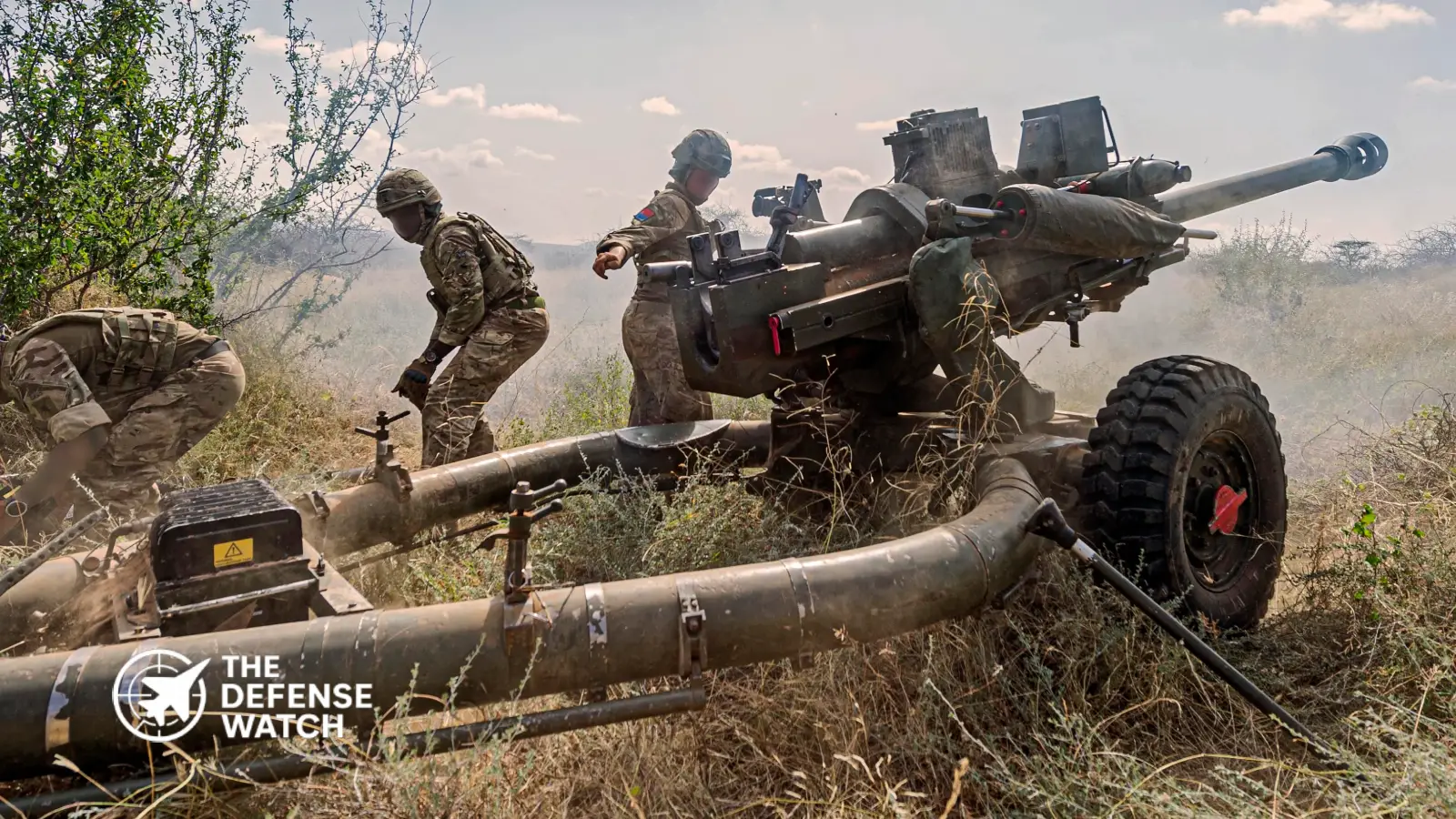
The agreement supports sustainment of systems including the 105mm Light Gun and reflects the British Army’s wider artillery modernization effort amid growing European defense demands.
BAE Systems Artillery Contract Supports UK Army Sustainment Effort
The planned BAE Systems artillery contract marks another step in the United Kingdom’s broader push to strengthen military readiness and sustain critical land warfare capabilities.
According to a procurement notice published by Babcock Land Defence Limited on behalf of the UK Ministry of Defence (MOD), the government intends to negotiate a single-source agreement with BAE Systems GCS International Ltd for artillery, howitzer, and armored vehicle weapons system components.
The proposed framework agreement is valued at up to £4 million and would run for four years without extension options. The deal includes support for approximately 499 NATO Stock Numbers linked to artillery and armored vehicle systems, including components for the British Army’s 105mm Light Gun.
The MOD stated that BAE Systems possesses the specialist expertise and technical experience required to manufacture, test, and supply the components covered under the contract. Officials justified the single-source approach under Section 41 of the UK Procurement Act 2023.
Why The Contract Matters
Although relatively small in financial value compared to major procurement programs, the BAE Systems artillery contract highlights an increasingly important issue across NATO defense industries: sustainment capacity.
Western militaries are placing renewed emphasis on ammunition stockpiles, artillery readiness, and industrial resilience following lessons learned from the war in Ukraine. The British Army, like several European forces, has faced pressure to modernize aging artillery fleets while maintaining operational readiness during equipment transfers to Kyiv.
The UK recently confirmed a nearly £1 billion procurement of 72 RCH 155 self-propelled howitzers to replace AS90 systems donated to Ukraine.
That modernization effort has increased attention on domestic artillery manufacturing and support infrastructure. The latest components agreement with BAE Systems fits into that broader trend by ensuring continued support for legacy and active artillery systems already in British service.
The contract also reinforces the UK government’s preference for maintaining sovereign industrial capabilities in sensitive defense sectors. Recent British procurement activity has increasingly favored domestic suppliers or UK-based production partnerships.
Focus On The 105mm Light Gun
One of the most notable systems covered under the contract is the 105mm Light Gun, a long-serving artillery platform widely used by the British Army and allied forces.
Originally developed by Royal Ordnance, now part of BAE Systems, the lightweight towed howitzer remains valued for rapid deployment and expeditionary operations. Its relatively low weight allows transport by helicopter, aircraft, or tactical vehicles, making it suitable for airborne and light infantry forces.
Despite the British Army’s shift toward longer-range 155mm artillery systems, the 105mm Light Gun continues to fill operational roles requiring mobility and rapid fire support.
Sustainment contracts like this are essential because many military platforms remain in service decades longer than originally planned. Maintaining access to certified spare parts, technical data, and manufacturing expertise becomes increasingly important as supply chains narrow and older systems become more specialized.
Wider UK Artillery Modernization Push
The BAE Systems artillery contract arrives during a period of accelerated UK artillery modernization.
In recent months, the UK has expanded support arrangements for Archer artillery systems while also investing in the Boxer-mounted RCH 155 program.
The British Army’s future artillery strategy emphasizes greater mobility, faster firing rates, and improved survivability against counter-battery threats. Systems such as the RCH 155 can reportedly fire multiple rounds before relocating rapidly to avoid detection.
At the same time, the UK defense sector continues investing in ammunition production and large-caliber artillery manufacturing infrastructure. Rheinmetall’s gun barrel production expansion in Telford and BAE Systems’ munitions investments are part of this broader industrial buildup.
Analysts increasingly view sustainment and industrial readiness as equally important as frontline procurement programs. Without reliable supply chains and component manufacturing, operational availability of artillery systems can quickly decline during prolonged conflict.
Industrial And Strategic Implications
The latest procurement notice suggests the MOD intends to preserve continuity in specialist artillery manufacturing expertise within the UK defense industry.
The notice also allows additional items of a similar nature to be added after contract award, indicating potential flexibility as British Army requirements evolve.
Performance under the agreement will reportedly be measured through delivery timelines, rejected components, and quality compliance standards.
While modest compared to larger modernization programs, the BAE Systems artillery contract reflects how European defense ministries are increasingly prioritizing long-term sustainment, supply chain resilience, and domestic production capacity as security conditions continue to deteriorate across the continent.