Standoff Missiles Would Likely Lead Any Strike Package
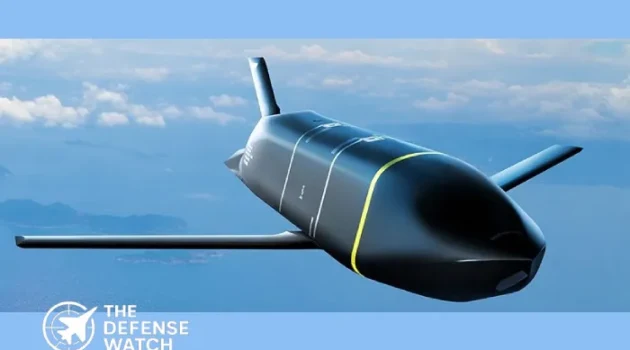
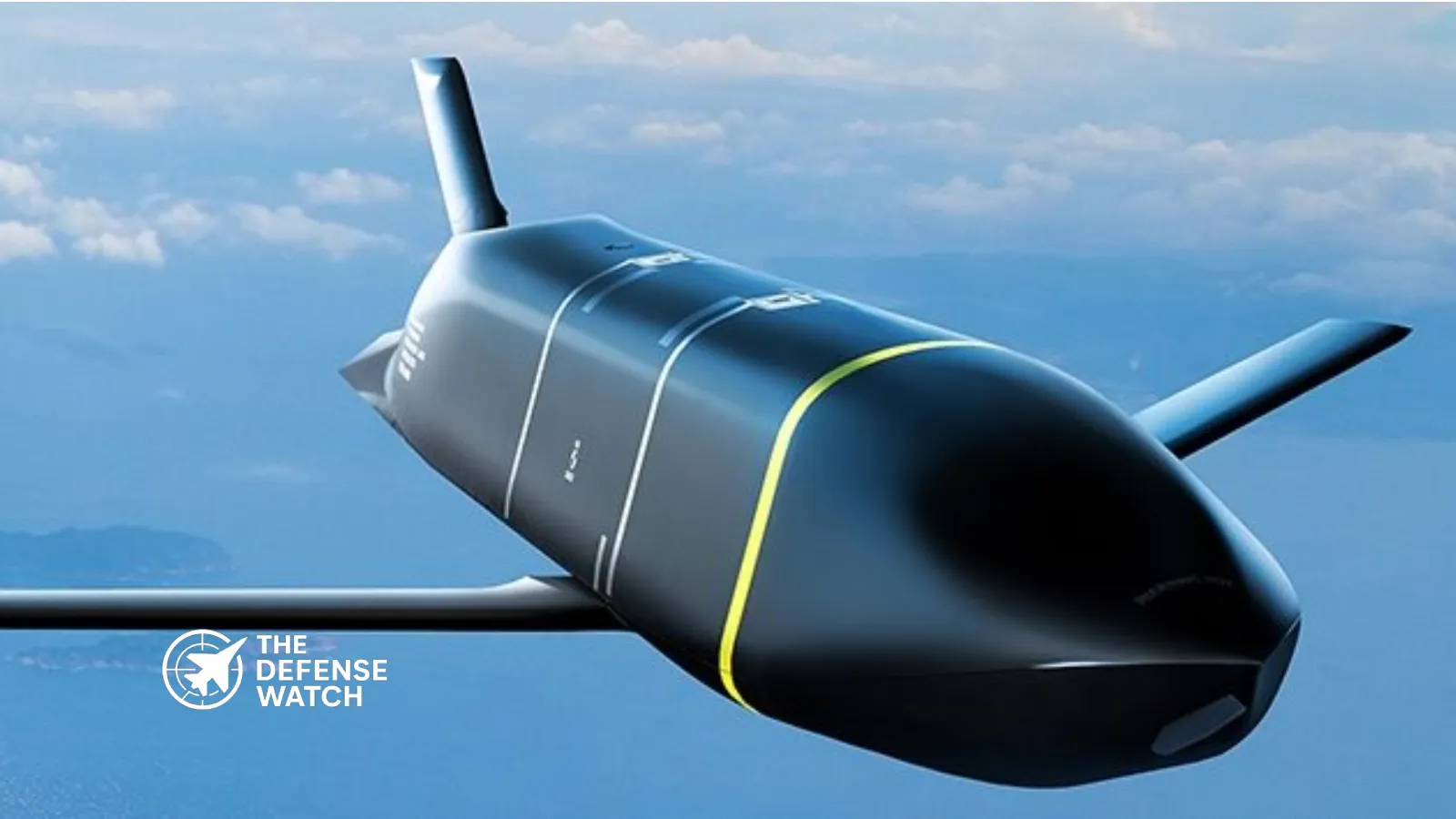
In any hypothetical U.S. military strike on Iran, the Joint Air-to-Surface Standoff Missile (JASSM) would be a likely weapon of choice, particularly in scenarios emphasizing standoff capabilities to minimize risks to American aircraft and personnel. Military analysts point to the weapon’s extended range and stealth characteristics as key factors that would make it central to operational planning.
The JASSM, especially its extended-range variant JASSM-ER, offers ranges exceeding 500 miles, allowing launches from well outside Iranian airspace. This capability avoids direct confrontation with Iran’s integrated air defenses, including systems like the Russian-supplied S-300 or indigenous equivalents that have been deployed around strategic sites.
According to defense industry analysis, JASSM is specifically designed for striking hardened, high-value targets like command centers, missile sites, nuclear facilities, and air defense radars. The weapon features stealth characteristics, GPS/INS guidance, and a penetrating warhead, making it effective against buried or protected installations.
Tomahawk Cruise Missiles Provide Naval Strike Option
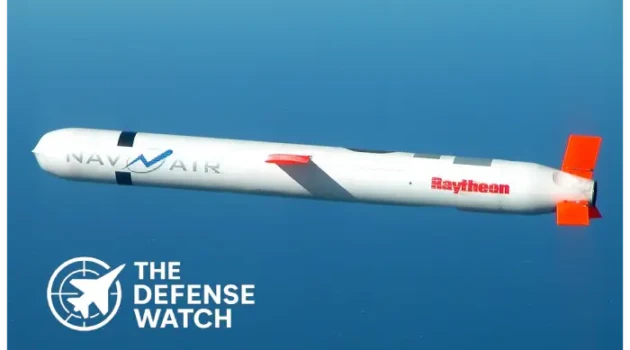
While JASSM would be prominent in any air campaign, it wouldn’t be used in isolation. Tomahawk cruise missiles, launched from Navy surface ships and submarines positioned in the Persian Gulf or Arabian Sea, would provide complementary strike capability from maritime platforms.
The Tomahawk Land Attack Missile (TLAM) offers similar standoff range to JASSM, with the latest Block V variants featuring enhanced navigation systems and the ability to retarget in flight. Navy assets could launch coordinated strikes from multiple vectors, complicating Iranian defensive responses and forcing air defense systems to engage threats from different directions simultaneously.
Defense News reporting indicates that U.S. Navy destroyers and cruisers routinely operate in the region with full Tomahawk loadouts, providing persistent strike capability without requiring aircraft deployment or basing negotiations with regional partners.
B-2 Stealth Bombers Could Strike Deep Underground Facilities
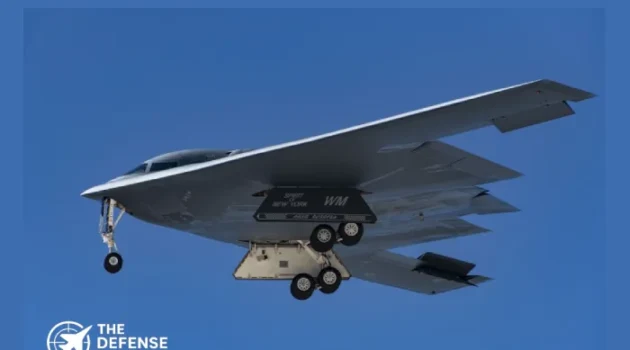
For specialized missions requiring penetration of deeply buried facilities—such as underground nuclear sites or hardened command bunkers—the B-2 Spirit stealth bomber armed with Massive Ordnance Penetrators (MOP) represents the ultimate bunker-defeat capability. The GBU-57 MOP weighs approximately 30,000 pounds and can penetrate up to 200 feet of reinforced concrete before detonation.
According to Aviation Week reporting, only the B-2’s combination of stealth, payload capacity, and precision delivery allows employment of these specialized munitions against the most heavily protected targets. The bomber’s low-observable characteristics enable penetration of defended airspace, while its internal weapons bay accommodates the oversized MOP.
Military planners could employ B-2s against Iran’s underground Fordow uranium enrichment facility or other strategic sites where conventional munitions would prove insufficient. The aircraft’s intercontinental range allows operations from U.S. bases, eliminating dependency on regional airbases.
Rapid Dragon System Converts Cargo Planes Into Strike Platforms
Recent innovation has introduced the Rapid Dragon palletized munition system, which allows JASSM-ER missiles to be launched from the rear cargo ramp of unmodified transport and cargo aircraft including C-130 and C-17 platforms.
The deployment sequence involves rolling pallets with missiles out of the aircraft, with parachutes deploying to orient them, and then missiles launching in sequence. While not the standard employment method, this capability was developed for distributed operations and to give transports strike potential in a crisis.
According to U.S. Air Force statements, Rapid Dragon reflects evolving concepts for distributed warfare, potentially converting large portions of the cargo fleet into improvised standoff strike platforms during major conflict scenarios. This dramatically expands the number of launch platforms available to commanders.
F-35 Stealth Fighters Provide Penetrating Strike Capability
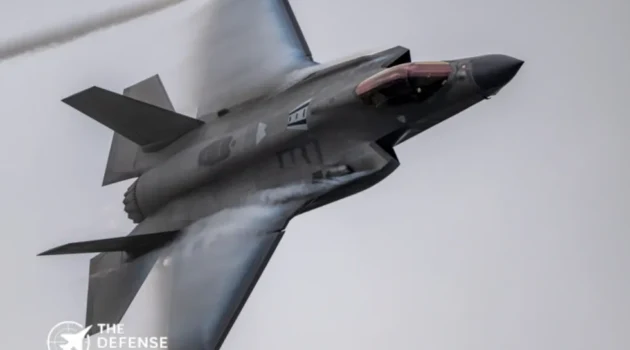
F-35A Lightning II stealth fighters stationed at regional bases or aboard aircraft carriers could conduct penetrating strikes against time-sensitive targets or air defense nodes. While the F-35’s internal weapons bay limits payload compared to legacy strike aircraft, the fighter’s stealth and sensor fusion capabilities enable operations in heavily defended environments.
The F-35 can carry 2,000-pound JDAM precision-guided bombs internally, or external munitions in lower-threat environments. Breaking Defense analysis notes that F-35s would likely operate in coordinated packages, using their advanced sensors to locate and target mobile threats while suppressing air defenses for follow-on strikes by less survivable platforms.
Legacy Strike Aircraft Carry Heavy Payloads
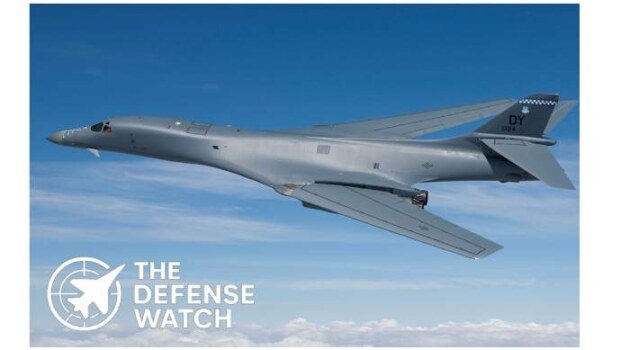
B-52H Stratofortress and B-1B Lancer heavy bombers, along with F-15E Strike Eagle fighters, provide substantial munitions capacity for mass strikes against multiple target sets. These aircraft can carry dozens of precision-guided weapons per sortie, though they would likely operate from standoff ranges rather than penetrating defended airspace.
The B-52 can carry 20 JASSM missiles externally, while the B-1B accommodates 24 JASSM internally. F-15E Strike Eagles, likely operating from regional bases, provide tactical flexibility with mixed loadouts of air-to-ground weapons and self-defense capabilities.
Jane’s Defence Weekly reporting indicates these platforms would form the backbone of any sustained air campaign, delivering the volume of precision strikes necessary to achieve operational objectives across distributed target sets.
Electromagnetic and Cyber Capabilities
Beyond kinetic weapons, U.S. forces possess electromagnetic warfare and cyber capabilities that could disrupt Iranian command and control, air defense networks, and communications infrastructure. While details remain classified, defense analysts note that integrated electronic attack would likely precede or accompany any kinetic strikes.
EA-18G Growler electronic attack aircraft could jam Iranian air defense radars, while cyber operations could target network infrastructure and weapon systems. These non-kinetic effects would degrade Iranian defensive responses and create windows for strike packages to reach their targets.
Strategic Implications of Standoff Strike Doctrine
The emphasis on standoff weapons reflects lessons learned from previous conflicts and the evolving threat environment. By enabling strikes from beyond the effective range of most surface-to-air missile systems, these weapons reduce attrition risk to aircraft and aircrew while maintaining the ability to hold strategic targets at risk.
In the context of potential operations against Iran, standoff strike capability provides both military effectiveness and strategic flexibility. Decision-makers can authorize proportional responses that demonstrate resolve while limiting escalation risks and avoiding the political complications associated with aircraft losses or pilot capture.
Military analysts emphasize that the diverse arsenal available to U.S. commanders allows tailored responses matching specific scenarios, from limited strikes against individual facilities to comprehensive campaigns against integrated target sets. The combination of stealth platforms, extended-range missiles, and enabling capabilities provides options across the spectrum of potential contingencies.