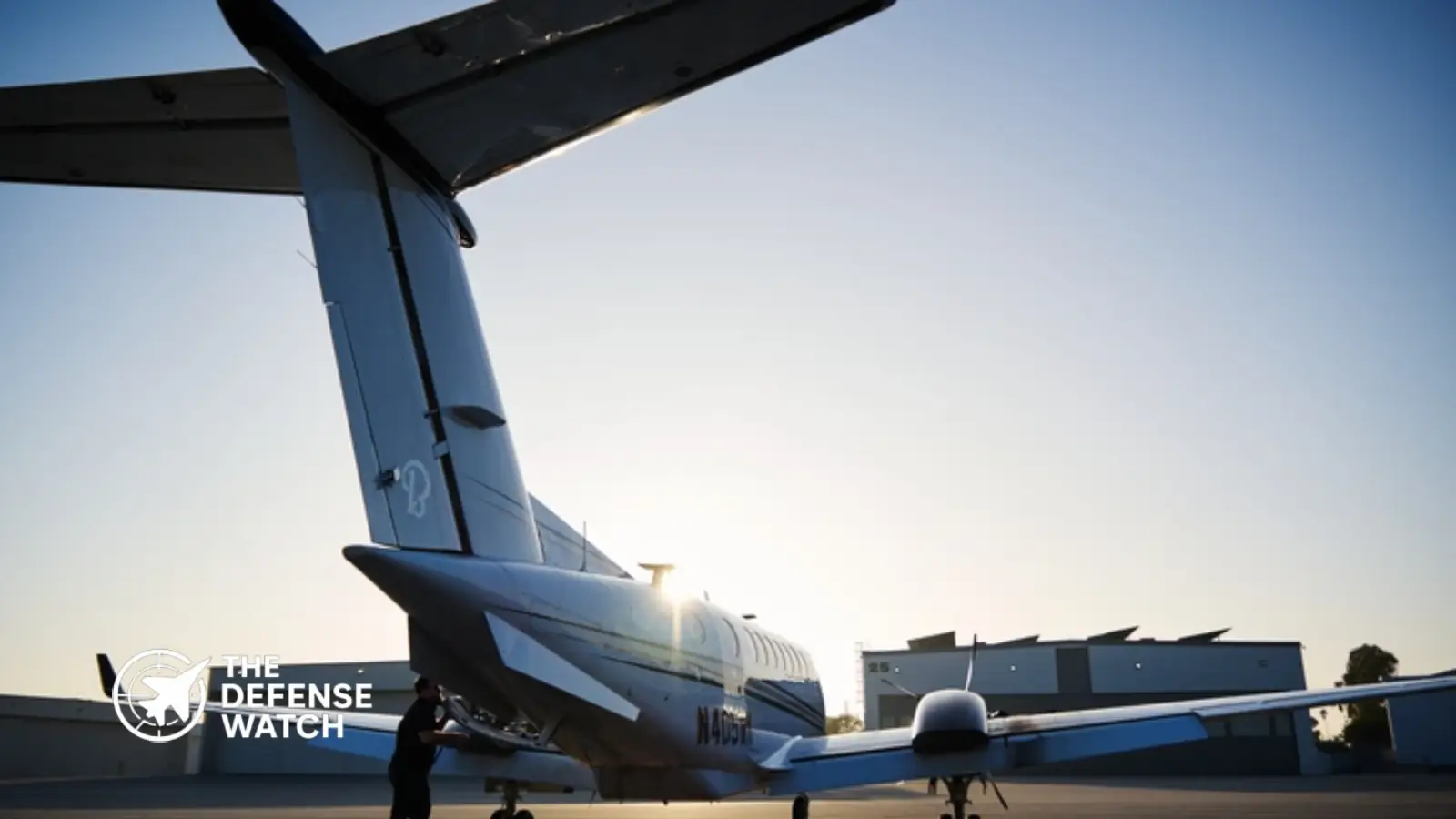
- L3Harris Technologies Integrated Systems received a contract valued at up to $499.6 million to support the Missile Defense Agency’s Airborne Sensors program through 2036.
- The effort sustains specialized aircraft, airborne sensor payloads, mission planning, flight test execution, and modernization activities.
- An initial task order worth $22.2 million was awarded with $5 million in FY2026 research, development, test and evaluation funding obligated immediately.
- Airborne sensor aircraft provide critical tracking data that validates U.S. ballistic missile defense systems during live intercept testing.
- The contract ensures continuity for one of the Missile Defense Agency’s most important flight test capabilities over the next decade.
L3Harris Secures Decade Long Airborne Sensors Contract for U.S. Missile Defense Testing
The U.S. Missile Defense Agency (MDA) has awarded L3Harris Technologies Integrated Systems L.P., doing business as Aeromet, a follow-on indefinite delivery, indefinite quantity (IDIQ) contract with a ceiling value of $499.57 million to continue supporting the agency’s Flight Test Airborne Sensors (ABS) program.
According to the Missile Defense Agency, headquartered in Huntsville, Alabama, the contract covers continued operation, sustainment, modernization, and mission support for specialized airborne sensor aircraft used during U.S. missile defense flight tests. The ordering period extends from September 15, 2026, through September 14, 2036, providing long-term continuity for one of the agency’s most critical test infrastructure capabilities.
An initial task order valued at $22.18 million was issued at award, including $5 million in FY2026 Research, Development, Test and Evaluation (RDT&E) funding obligated immediately. The contract was competitively awarded after one proposal was received.
Deep Technical & Strategic Context Analysis
The Missile Defense Agency’s Airborne Sensors (ABS) fleet plays a unique role within the United States’ layered ballistic missile defense architecture. Unlike operational surveillance aircraft tasked with day-to-day intelligence collection, ABS aircraft are purpose-built flying laboratories that collect high-fidelity tracking, infrared, telemetry, and engagement data during live missile defense flight tests.
These aircraft observe every phase of a ballistic missile engagement, from launch and boost through midcourse and terminal intercept, providing engineers with precise measurements that cannot be replicated solely through ground radars or satellite observations. Data collected during these missions is essential for validating interceptor performance, refining guidance algorithms, calibrating sensor networks, and improving future missile defense architectures.
As missile threats continue to evolve, particularly with the emergence of maneuverable reentry vehicles, hypersonic glide vehicles, and increasingly sophisticated ballistic missile designs, maintaining accurate flight test instrumentation has become strategically significant. The ABS fleet enables the Missile Defense Agency to evaluate the performance of systems such as the Ground Based Midcourse Defense system, Aegis Ballistic Missile Defense, Terminal High Altitude Area Defense (THAAD), and other integrated missile defense capabilities under realistic operational conditions.
The contract’s indefinite delivery, indefinite quantity (IDIQ) structure gives the government flexibility to issue task orders as testing schedules evolve over the next decade. Rather than funding all work upfront, the agency orders specific services when required, allowing flight test campaigns, aircraft modernization efforts, and sensor upgrades to be aligned with evolving defense priorities while controlling long-term acquisition risk.
Contract Breakdown & Details
Scope of Work
L3Harris will provide:
- Operation and sustainment of Missile Defense Agency airborne sensor aircraft
- Maintenance of airborne sensor payloads
- Mission planning and pre-flight preparation
- Flight test execution support
- Engineering modernization and capability upgrades
- Logistics, technical support, and lifecycle sustainment
Contract Overview
- Contract Type: Indefinite Delivery, Indefinite Quantity (IDIQ)
- Maximum Contract Value: $499,573,000
- Initial Task Order: $22,175,032
- Ordering Period: September 15, 2026, through September 14, 2036
- Awardee: L3Harris Technologies Integrated Systems L.P. (Aeromet)
- Primary Work Location: Tulsa, Oklahoma
- Contracting Activity: Missile Defense Agency, Huntsville, Alabama
- Contract Number: HQ0855-26-D-E001
Funding
- Initial FY2026 RDT&E Funding Obligated: $5 million
- Funding supports continued missile defense research, flight testing, and evaluation activities.
Competition
- Procurement Method: Full and open competitive solicitation
- Proposals Received: One
Geographic Work Breakdown
Based on the contract announcement:
- Tulsa, Oklahoma: Approximately 100% of contract performance, including aircraft operations, maintenance, sensor integration, engineering support, and modernization activities.
Why This Matters
Although less visible than interceptor missile procurements, airborne sensor support contracts underpin nearly every major U.S. missile defense flight test. Without reliable airborne instrumentation, engineers would lose critical telemetry needed to verify whether interceptors, radars, command systems, and kill vehicles performed as designed.
The award also reflects the Missile Defense Agency’s continued emphasis on modernizing its testing infrastructure as it prepares for increasingly complex threat scenarios involving hypersonic weapons, advanced ballistic missiles, and integrated air and missile defense operations. By extending support through 2036, the agency is ensuring that its airborne test assets remain available for the next generation of missile defense development and validation programs.