Executive Summary:
Israel Aerospace Industries (IAI) has introduced Ellyon, a new airborne electronic warfare system designed to combine stand-off and escort jamming capabilities into a single modular solution. Revealed during the 2026 Farnborough International Airshow, the system is intended to improve aircraft survivability against increasingly sophisticated radar-guided air defense networks while reducing integration complexity for military operators.
IAI Unveils Ellyon Airborne Jamming System To Expand Electronic Warfare Capability
Israel Aerospace Industries (IAI) has officially introduced the Ellyon airborne jamming system, a new electronic warfare solution designed to provide multiple airborne electronic attack missions from a single platform.
- IAI Unveils Ellyon Airborne Jamming System To Expand Electronic Warfare Capability
- A Single Platform For Multiple Electronic Attack Missions
- Designed For Modern Integrated Air Defense Systems
- Modular Design Offers Greater Operational Flexibility
- Growing Demand For Airborne Electronic Warfare
- Why Ellyon Matters
- Technical Overview
- Strategic Outlook
The system was unveiled during the 2026 Farnborough International Airshow, where company officials described Ellyon as an integrated electronic warfare architecture capable of supporting both escort jamming and stand-off jamming missions. According to IAI, the new capability is intended to simplify airborne electronic attack operations while improving survivability for strike packages operating against advanced integrated air defense systems (IADS).
A Single Platform For Multiple Electronic Attack Missions
Electronic warfare has become one of the most critical capabilities for modern air forces as radar networks continue to evolve with digital processing, passive sensors, and long-range surface-to-air missile systems.
Rather than relying on separate aircraft configured for different missions, Ellyon combines several electronic attack functions into one modular architecture.
According to IAI, the system can support:
| Capability | Operational Purpose |
|---|---|
| Escort Jamming | Protect strike aircraft flying into contested airspace |
| Stand-Off Jamming | Disrupt enemy radar from outside engagement zones |
| Electronic Attack | Reduce effectiveness of hostile radar systems |
| Modular Integration | Install on multiple aircraft types with limited modifications |
The company says the architecture can be adapted to various aircraft sizes, allowing operators to select the most suitable platform based on mission requirements.
Designed For Modern Integrated Air Defense Systems
Modern integrated air defense systems increasingly rely on layered radar coverage, digital networking, and long-range missile batteries capable of engaging aircraft at significant distances.
Instead of physically destroying every radar site, electronic attack systems seek to degrade or deny an opponent’s ability to detect, track, and engage friendly aircraft.
IAI says Ellyon is designed specifically for these operational environments by generating powerful electronic effects intended to interfere with hostile sensors while supporting friendly air operations.
Although the company has not publicly disclosed technical performance figures such as output power, frequency coverage, or effective jamming range, it emphasized that the system can be configured for multiple mission profiles.
Modular Design Offers Greater Operational Flexibility
One of Ellyon’s primary design features is its modular architecture.
Traditional airborne electronic warfare platforms often require extensive aircraft modifications or dedicated mission aircraft, increasing procurement and sustainment costs.
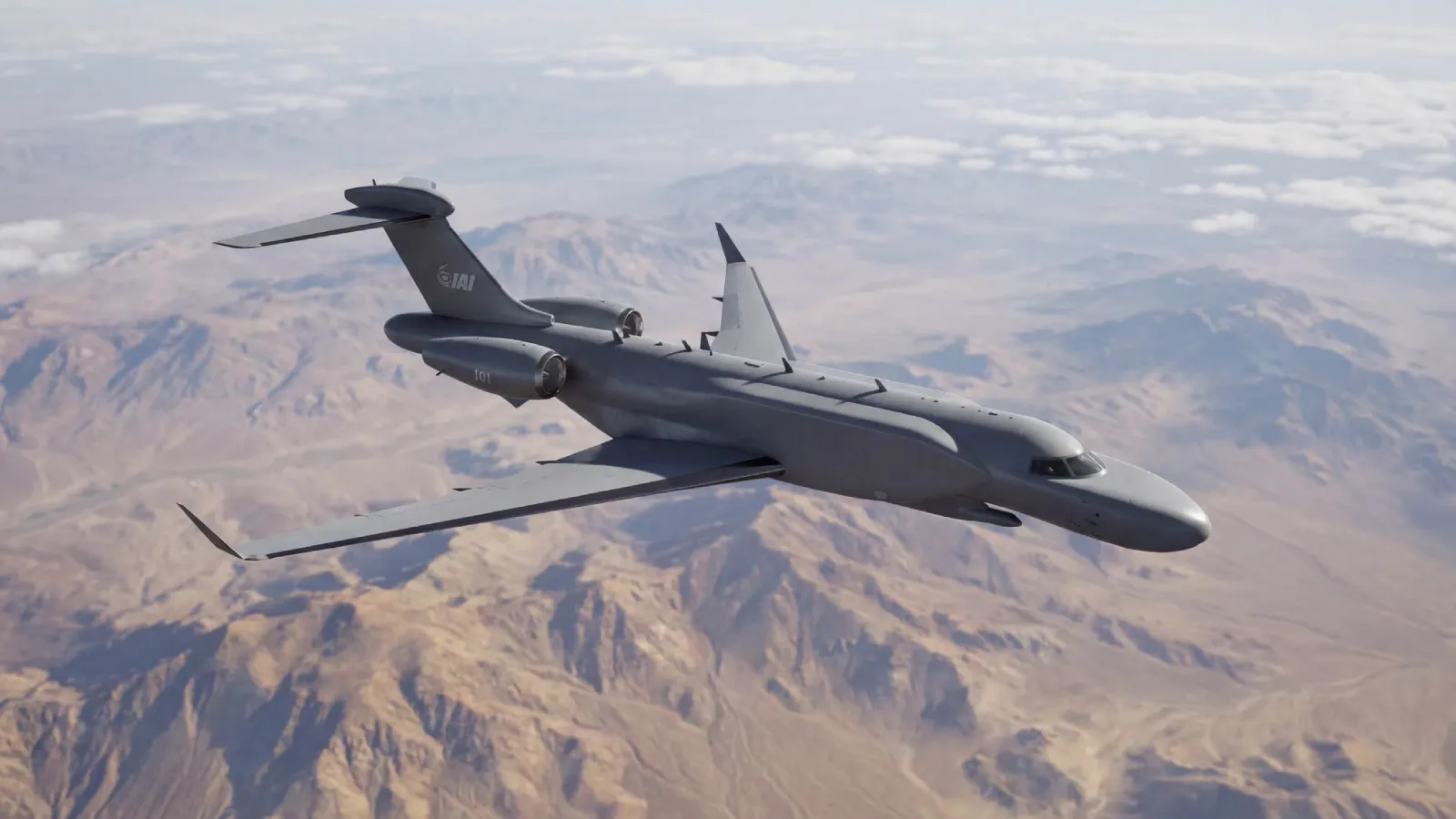
By comparison, IAI says Ellyon can be integrated onto different aircraft depending on customer requirements, providing flexibility for operators with diverse fleets.
Potential host aircraft could include:
- Business jets
- Maritime patrol aircraft
- Medium transport aircraft
- Special mission aircraft
This approach may reduce lifecycle costs while allowing air forces to expand electronic warfare capacity without acquiring entirely new dedicated fleets.
Growing Demand For Airborne Electronic Warfare
The introduction of Ellyon reflects a broader trend across global defense modernization programs.
Conflicts during the past decade have demonstrated that electronic warfare is no longer a niche capability but a central element of modern air operations.
Air forces increasingly require aircraft capable of:
- Supporting suppression of enemy air defenses (SEAD)
- Protecting strike packages
- Countering advanced radar systems
- Operating in heavily contested electromagnetic environments
Manufacturers across the United States, Europe, and Israel have expanded investments in airborne electronic attack systems as militaries prioritize survivability against increasingly capable air defense networks.
Why Ellyon Matters
The launch of Ellyon illustrates how electronic warfare is shifting toward modular, scalable mission systems rather than highly specialized aircraft.
For many air forces, purchasing dedicated electronic attack aircraft similar to larger strategic platforms is financially unrealistic. A modular system that can be integrated onto existing business jets or surveillance aircraft provides an alternative path to acquiring advanced electronic warfare capabilities.
This trend also aligns with broader military modernization efforts emphasizing distributed operations. Instead of relying on a small number of unique electronic warfare aircraft, operators can potentially deploy multiple Ellyon-equipped platforms across different theaters, increasing resilience and operational flexibility.
For the United States and allied air forces, the continued evolution of electronic warfare remains essential as potential adversaries field increasingly sophisticated integrated air defense systems with longer engagement ranges, digital signal processing, and improved resistance to conventional jamming techniques.
Systems such as Ellyon highlight how future electronic warfare capabilities are expected to emphasize adaptability, software-driven upgrades, and modular integration rather than platform-specific solutions. This allows operators to respond more rapidly as electromagnetic threats evolve.
Technical Overview
| Feature | Details |
|---|---|
| Manufacturer | Israel Aerospace Industries (IAI) |
| System | Ellyon |
| Mission | Airborne Electronic Warfare |
| Primary Roles | Escort Jamming, Stand-Off Jamming |
| Integration | Modular architecture for multiple aircraft types |
| Announcement | Farnborough International Airshow 2026 |
| Intended Users | Military air forces and special mission operators |
Strategic Outlook
Electronic warfare continues to be one of the fastest-growing segments of defense modernization. As integrated air defense systems become more capable, militaries are investing in systems that can disrupt enemy sensors rather than relying solely on kinetic weapons.
IAI’s Ellyon enters an increasingly competitive market that includes electronic attack solutions from U.S., European, and Israeli manufacturers. Its emphasis on modular integration and multi-mission capability reflects broader procurement trends favoring adaptable systems that can be rapidly deployed across existing aircraft fleets.
If successfully adopted by international customers, Ellyon could offer air forces a lower-cost path toward expanding electronic attack capacity while improving the survivability of combat aircraft operating in contested environments.