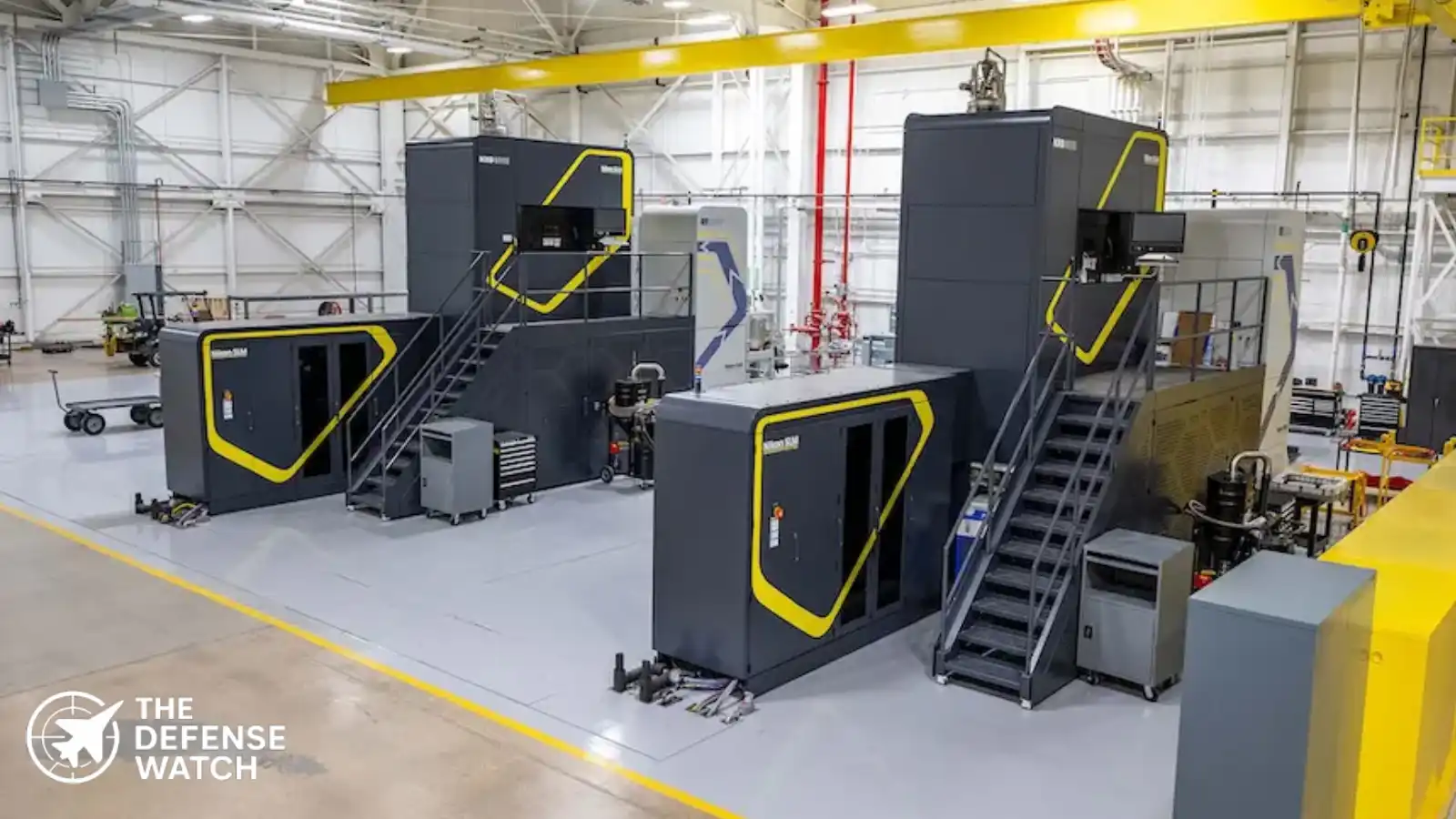
Lockheed Martin Expands Laser Powder Bed Fusion For Operational Readiness
The adoption of laser powder bed fusion is becoming central to how Lockheed Martin approaches modern military production, with a clear focus on improving operational readiness across its aerospace and defense programs.
- Lockheed Martin is expanding laser powder bed fusion to accelerate production timelines for defense systems.
- The technology enables faster, more flexible manufacturing of complex aerospace components.
- Additive manufacturing supports sustainment by producing replacement parts on demand.
- The approach reduces reliance on traditional supply chains and long lead times.
- The initiative aligns with broader U.S. defense efforts to improve operational readiness and resilience.
According to the company, scaling this advanced form of additive manufacturing allows engineers to produce complex parts faster and with greater design flexibility compared to traditional manufacturing methods. This shift is not just about efficiency. It directly impacts how quickly military systems can be deployed, maintained, and sustained in real-world operations.
Faster Production, Reduced Bottlenecks
Laser powder bed fusion works by using a high energy laser to fuse fine metal powder layer by layer, building highly detailed components from digital designs. This process enables the creation of geometries that would be difficult or impossible to achieve using conventional machining.
Lockheed Martin says this capability reduces production bottlenecks, particularly for parts that typically require long lead times. Instead of waiting months for specialized components, manufacturers can now produce them in significantly shorter timeframes.
From an operational standpoint, this means critical systems can be repaired or upgraded faster, reducing downtime and improving mission readiness. For defense platforms operating in contested or remote environments, that advantage is significant.
Strengthening Sustainment and Logistics
One of the most important applications of laser powder bed fusion lies in sustainment. Military systems often remain in service for decades, and sourcing replacement parts for aging platforms can become a major challenge.
By integrating additive manufacturing, Lockheed Martin can produce spare parts on demand, reducing dependence on legacy supply chains. This is particularly relevant as global supply networks face increasing pressure from geopolitical tensions and logistical disruptions.
The ability to manufacture parts closer to the point of use also supports distributed operations, a concept increasingly emphasized by the U.S. Department of Defense. In such scenarios, forward deployed units could eventually access localized production capabilities, improving resilience in contested environments.
Design Innovation And Performance Gains
Beyond speed and logistics, laser powder bed fusion enables design innovation. Engineers can optimize components for weight reduction, strength, and thermal performance without being constrained by traditional manufacturing limitations.
For aerospace systems, even small reductions in weight can translate into improved fuel efficiency and extended range. Similarly, optimized cooling structures can enhance the performance and durability of high stress components.
Lockheed Martin notes that these design advantages are already being integrated into next generation systems, supporting broader modernization efforts across air, space, and missile defense programs.
Aligning With U.S. Defense Priorities
The expansion of additive manufacturing aligns with ongoing U.S. defense priorities focused on readiness, resilience, and rapid capability development. The Department of Defense has increasingly emphasized the need for agile production methods that can respond quickly to emerging threats.
Laser powder bed fusion fits within this framework by enabling faster prototyping, accelerated testing, and quicker transition from design to deployment. It also supports efforts to maintain technological superiority in a competitive global environment.
While the technology is still evolving, its growing adoption across major defense contractors signals a broader shift in how military systems will be built and sustained in the coming years.
Industry-Wide Implications
Lockheed Martin’s push to scale laser powder bed fusion reflects a wider trend across the defense and aerospace sector. Other major manufacturers are also investing in additive manufacturing to improve efficiency and reduce costs.
However, challenges remain. Certification and qualification of additively manufactured parts, especially for critical applications, require rigorous testing and validation. Ensuring consistent quality at scale is another key hurdle.
Despite these challenges, the direction is clear. Additive manufacturing is moving from experimental use to mainstream production, with direct implications for military capability and readiness.