










@2026 – All Right Reserved. TheDefenseWatch.com
- Home
- Defense Systems
- Compare
- Su-57 Fighter Jet vs J-20 Fighter Jet: Stealth and Air Combat Compared
Su-57 Fighter Jet vs J-20 Fighter Jet: Stealth and Air Combat Compared
Su-57 Fighter Jet vs J-20 Fighter Jet: Which Fifth-Generation Fighter Has the Edge?
“`
“`
Executive Summary
Su-57 vs J-20: Two Different Fifth-Generation Fighter Philosophies
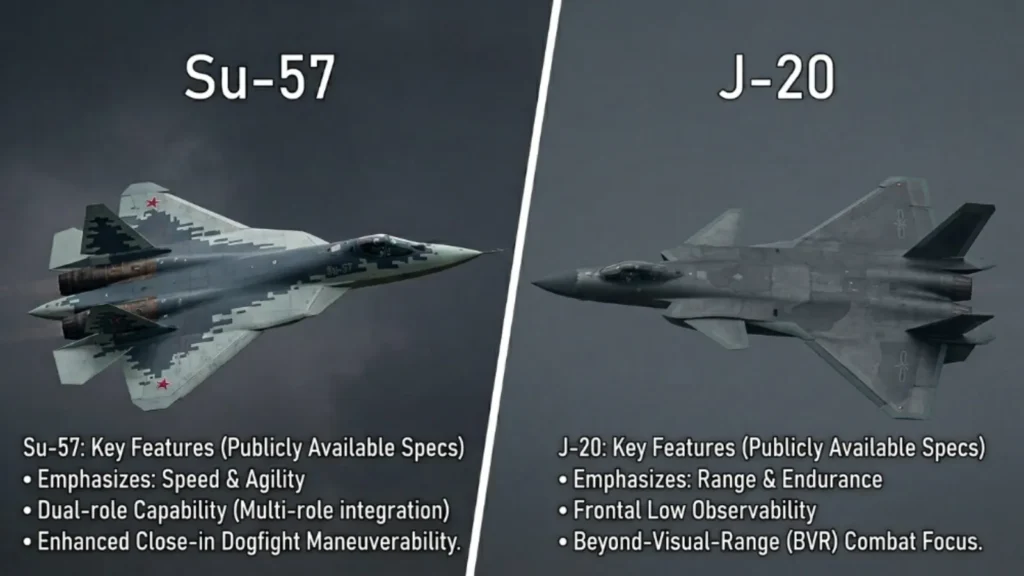
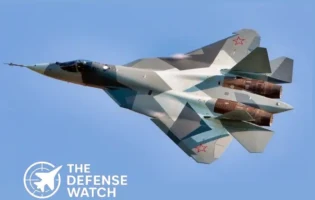
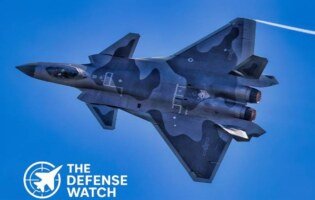
Russia’s Su-57 and China’s J-20 are both fifth-generation fighters, but they are designed around different combat priorities. The Su-57 combines low observability with high maneuverability, thrust-vectoring propulsion and a broad multirole weapons portfolio. The J-20 places greater emphasis on frontal stealth, long-range detection, internal weapons carriage and beyond-visual-range air combat.
In a close-range engagement, the Su-57’s aerodynamic design and thrust-vectoring capabilities could provide important advantages. In a long-range BVR engagement, the J-20’s stealth-focused configuration, internal missile capacity and growing integration with China’s wider airpower network make it a serious threat. Because key data such as radar cross-section, sensor performance and electronic warfare effectiveness remain classified, neither aircraft can be declared an unconditional winner.
Su-57 Focus
Maneuverability, multirole flexibility and high-performance air combat.
J-20 Focus
Stealth, long-range missiles and beyond-visual-range combat.
Bottom Line
The outcome depends heavily on sensors, missiles, electronic warfare and network support.
Tactical Overview
The Su-57, developed by Sukhoi and produced by United Aircraft Corporation, entered Russian service as a multirole fifth-generation fighter intended to attack air, ground and maritime targets. UAC describes the aircraft as capable of operating autonomously or as part of a networked force and in difficult electronic warfare environments.
The J-20, developed by Chengdu Aircraft Industry Group, is China’s operational fifth-generation fighter. The U.S. Department of Defense has identified it as an operationally fielded stealth fighter and has reported continuing development, including increased internal missile capacity, thrust-vectoring possibilities and the integration of higher-thrust WS-15 engines.
The difference is particularly important at the tactical level. The J-20’s large airframe and internal weapons arrangement support long-range missions against fighters and high-value support aircraft. The Su-57’s aerodynamic design, thrust-vectoring propulsion and distributed onboard systems support a broader combination of air-to-air, air-to-ground and electronic warfare missions.
“`
“`
Key Takeaways
Su-57 vs J-20: Key strengths and strategic differences
Russia
Su-57 Advantage
- Strong emphasis on maneuverability and supermaneuverability.
- Thrust-vectoring propulsion supports high-angle-of-attack flight.
- Broad air-to-air and air-to-surface weapons integration.
- Designed as a multirole fighter for contested and electronic warfare environments.
- Includes an internal 30 mm cannon for close-range engagements.
China
J-20 Advantage
- Airframe places strong emphasis on frontal low observability.
- Large internal weapons bay supports long-range air-to-air missiles.
- Designed around long-range interception and beyond-visual-range combat.
- Increasing production provides China with a growing fifth-generation fighter fleet.
- WS-15 engine development is intended to improve speed, range and overall performance.
Defense Analysis
Strategic Context
The Su-57 represents a Russian approach that balances low observability with aerodynamic performance, multirole capability and maneuverability. The J-20 is more strongly oriented toward long-range air combat, stealth-focused approach profiles and attacks against high-value targets. In a modern BVR engagement, detection, sensor networking, electronic warfare, missile performance and supporting aircraft may matter more than raw speed or dogfighting agility.
Technical Specifications Matrix
Public specifications for both aircraft should be treated carefully. Russia and China do not disclose all performance data, and independent verification of figures such as radar range, radar cross-section, combat radius and unit cost is limited.
| Specification | Su-57 | J-20 |
|---|---|---|
| Generation / Type | Fifth-generation multirole fighter | Fifth-generation stealth fighter |
| Manufacturer | Sukhoi / UAC | Chengdu Aircraft Industry Group |
| Engines | Two turbofan engines, AL-41F1 on current aircraft; next-generation engine under development | Two engines, with newer aircraft incorporating or testing WS-15 |
| Maximum Speed | About Mach 2, publicly reported | About Mach 2, commonly reported estimate |
| Service Ceiling | About 20,000 m | About 20,000 m, commonly reported |
| Range / Combat Radius | Public figures vary; combat radius often estimated around 1,500 km | Public estimates generally place combat radius around 1,000 to 2,000 km depending on configuration |
| Payload | Up to about 10,000 kg, claimed | Up to about 11,000 kg, commonly reported estimate |
| Internal Weapons | Main internal bays plus smaller side bays | Large central bay plus two side bays |
| Typical BVR Weapons | R-77-series and R-37M, among others | PL-15 and developing longer-range missile families |
| Short-Range Weapons | R-74-series missiles and internal 30 mm cannon | PL-10 carried in side weapon bays |
| Radar / Sensors | N036 Byelka AESA radar family, distributed sensor architecture and IRST | AESA radar, electro-optical and infrared sensors, distributed sensor systems |
| Radar Cross-Section | Not publicly disclosed | Not publicly disclosed |
| Thrust Vectoring | Yes | Developmental/newer configurations have been associated with thrust-vectoring improvements |
| Estimated Unit Cost | No reliable official public figure | No reliable official public figure |
The most important qualification is that neither government publishes a reliable radar cross-section figure. Claims that assign precise RCS values to either aircraft should therefore be treated as estimates rather than established specifications.
The U.S. Department of Defense reported that China was pursuing J-20 improvements including higher-thrust WS-15 engines, increased internal air-to-air missile capacity and potential thrust-vectoring capability. More recent reporting has identified WS-15-equipped J-20 variants in testing.
Deep-Dive Analysis
1. Stealth, Survivability and Maneuverability
The central difference between the Su-57 and J-20 begins with their airframe philosophy.
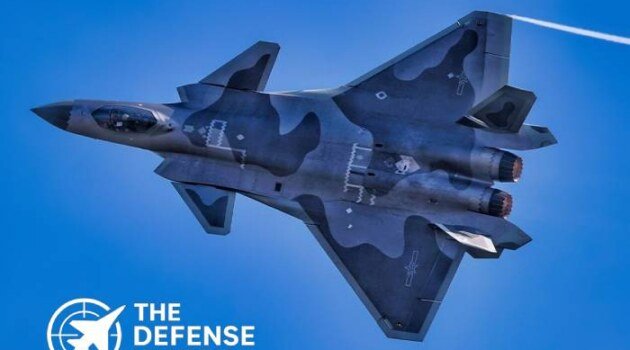
The J-20 has a large fuselage, diverterless-style air intakes, internal weapons carriage and carefully shaped forward surfaces. Its design places particular emphasis on reducing frontal radar signature, an important characteristic for a fighter expected to approach adversaries from long range.
The Su-57 also incorporates low-observable shaping, radar-absorbent materials, internal weapons carriage and measures intended to reduce radar and infrared signatures. However, its designers placed greater emphasis on aerodynamic performance. The aircraft incorporates prominent aerodynamic surfaces and thrust-vectoring engines that contribute to its high maneuverability.
This produces an important tactical distinction.
In a frontal BVR engagement, the J-20’s larger size and stealth-focused geometry could give it an advantage in delaying detection, particularly when supported by other sensors. In a close-range engagement, the Su-57’s maneuverability and thrust-vectoring architecture become more relevant.
Neither advantage should be treated as absolute. Modern fighters rarely operate in isolation, and the effectiveness of stealth depends on radar frequency, viewing angle, electronic warfare, external support and weapons employment.
The Su-57 also has an internal 30 mm cannon, providing a conventional gun capability for close-range combat. The J-20’s design is much more heavily centered on missile combat and does not have a comparable operationally prominent internal cannon.
2. Sensors, Radar and Targeting Capabilities
Sensors are arguably more important than top speed in a modern Su-57 vs J-20 comparison.
The Su-57 uses the N036 Byelka radar family, alongside infrared search-and-track and other distributed sensors. UAC describes its avionics as deeply integrated and capable of exchanging data with ground systems and other aircraft in real time.
The J-20 also combines an AESA radar with electro-optical and infrared sensing systems. Its design supports passive detection and long-range targeting while reducing the need to expose the aircraft through continuous active radar emissions.
China’s development path is particularly significant because the J-20 is being integrated into a broader ecosystem of airborne early warning aircraft, electronic warfare platforms and long-range air-to-air missiles.
The PL-15 is central to this concept. The missile is designed for beyond-visual-range engagements and is carried internally by the J-20. Publicly available imagery has confirmed the aircraft carrying four PL-15 missiles in its main weapons bay alongside two PL-10 missiles in its lateral bays.
The J-20 has also been observed carrying additional PL-15 missiles externally. That configuration increases missile capacity but sacrifices some of the aircraft’s low-observable advantage.
The Su-57 has a similarly broad sensor and weapons architecture. Its weapons portfolio includes air-to-air and air-to-surface weapons, while Russia continues to introduce new weapons for the aircraft. In July 2026, Rosoboronexport announced the RVV-SDM medium-range air-to-air missile for the Su-57E export fighter.
The key question is therefore not simply which fighter has the better radar. Much of the relevant data remains classified. The more meaningful question is which aircraft can combine detection, electronic warfare, data sharing and missile employment most effectively in a contested electromagnetic environment.
3. Payload Options, Weapons and Operational Deployment
The Su-57 was designed from the outset as a multirole aircraft. UAC describes it as capable of attacking air, ground and maritime targets, with a wide range of air-to-air and air-to-surface weapons.
That gives the Russian aircraft considerable flexibility.
Its internal weapons bays can preserve low observability during air-to-air missions, while external weapons can be carried when stealth is less important. The aircraft’s R-77-series and R-37M air-to-air weapons provide options across different engagement ranges, while air-to-surface weapons expand its strike role.
The J-20 is more specialized around air superiority and long-range interception. Its main internal bay is designed to carry long-range air-to-air missiles, while its lateral bays provide rapid access to short-range PL-10 missiles without requiring a large conventional external weapons load.
This arrangement supports a classic fifth-generation tradeoff: keep weapons inside the aircraft to preserve stealth, or accept greater radar visibility in exchange for a larger missile load.
China’s advantage is scale.
The U.S. Department of Defense has described the J-20 as operationally fielded and reported that China was increasing J-20 production capacity. Newer aircraft and development work are also associated with WS-15 engines and further improvements.
By comparison, the Su-57 remains a much smaller Russian fleet. Its production program continues, including the development of a two-seat Su-57D variant that completed its first flight in May 2026. UAC says the two-seat aircraft is intended to provide training and combat-control functions for manned and unmanned aircraft operations.
This production difference matters strategically. A technically capable fighter becomes more consequential when an air force can field it in large numbers, sustain it and integrate it into a wider combat network.
Strategic Verdict & Tactical Scenarios
When the Su-57 Prevails
Close-range air combat: The Su-57 has a stronger claim to an advantage in visual-range maneuvering because of its aerodynamic design, thrust-vectoring propulsion and high-angle-of-attack capabilities.
Mixed multirole missions: The Su-57 was explicitly developed as a multirole platform capable of attacking air, ground and maritime targets. Its weapons integration gives it flexibility beyond pure air superiority.
Electronic warfare and contested environments: Russia has emphasized the aircraft’s ability to operate in difficult jamming conditions, supported by integrated avionics and electronic warfare systems. Actual comparative performance remains difficult to verify publicly.
Flexible weapons employment: The combination of internal and external weapons allows the Su-57 to adapt its configuration to different missions.
When the J-20 Prevails
Long-range BVR combat: The J-20’s large airframe, internal missile carriage and emphasis on long-range air combat make it particularly well suited to engagements where the first detection and first effective missile launch are decisive.
Frontal stealth: The J-20 appears to place greater design emphasis on frontal low observability than the Su-57. However, neither aircraft’s actual RCS is publicly confirmed, so claims of a precise stealth ranking should be avoided.
High-value target interception: The J-20’s mission concept is well suited to attacking or threatening support aircraft such as tankers and airborne early warning platforms from long range.
Fleet scale: China’s expanding J-20 production base gives the aircraft a major strategic advantage. The U.S. Department of Defense has identified the J-20 as operational and reported efforts to expand production and improve the platform.
Final Verdict
The Su-57 vs J-20 matchup is not simply a contest between two specifications sheets. They represent different approaches to fifth-generation air warfare.
The Su-57 is the more maneuverability-focused and broadly multirole design. Its thrust-vectoring propulsion, aerodynamic performance, internal weapons, cannon and wide weapons portfolio give it significant advantages in close-range combat and flexible strike missions.
The J-20 is better aligned with a long-range, networked air combat model. Its large airframe, internal missile capacity, stealth-oriented frontal geometry and growing integration with China’s wider airpower architecture make it particularly suited to BVR engagements.
If the fight becomes a close-range maneuvering engagement, the Su-57 has the stronger case. If the engagement remains a long-range contest of detection, targeting, missile reach and force coordination, the J-20 has the stronger case.
Overall, the J-20 holds the more significant strategic advantage in a large-scale air campaign because of its expanding fleet, long-range combat orientation and integration into China’s broader airpower modernization effort. The Su-57 remains a highly capable and more maneuverability-focused fifth-generation fighter, but its smaller production base makes its strategic impact more limited.
The biggest caveat is data quality. Radar cross-section, detailed radar performance, electronic warfare effectiveness, missile probabilities of kill and real combat performance remain largely classified or disputed. For that reason, the most defensible conclusion is not that one aircraft universally defeats the other, but that the J-20 is optimized for long-range air dominance while the Su-57 offers greater emphasis on maneuverability and multirole flexibility.

| |
| Price | |
| Our Rating | |
| Manufacturer | Sukhoi Chengdu Aerospace Corporation (CAC) |
| Category | Fighter Jets Fighter Jets |
General Information
| Name | Su-57 Felon Chengdu J-20 Mighty Dragon |
| Manufacturer | Sukhoi (UAC) Chengdu Aerospace Corporation (CAC) |
| Country of Origin | Russia China |
| Type / Role | Stealth Air Superiority / Multirole Fighter Stealth Air Superiority / Multirole Fighter |
| Generation | Fifth 5th Generation |
| Status | In limited service In Active Service |
| First Flight | January 29, 2010 January 11, 2011 |
| Introduction / In Service Since | 2020 March 2017 |
| Number Built | ~25 (as of 2025) 200+ (estimated as of 2025) |
| Operators | Russian Aerospace Forces People’s Liberation Army Air Force (PLAAF) |
Dimensions & Structure
| Length | 20.1 m 20.4 m (67 ft) |
| Wingspan | 14.1 m 13.5 m (44 ft) |
| Height | 4.6 m 4.45 m (14.6 ft) |
| Wing Area | 78.8 m² ~78 m² |
| Empty Weight | ~18,000 kg 19,000 kg |
| Maximum Takeoff Weight (MTOW) | 35,000 kg 37,000 kg |
| Internal Weapons Bay | Yes (2 main, 2 side) 2 main + 2 side bays |
| External Hardpoints | 6 4 (optional) |
Performance
| Maximum Speed | Mach 2.0 Mach 2.0+ |
| Range | 3,500 km 2,000 km |
| Combat Radius | 1,500 km 1,100 km |
| Service Ceiling | 20,000 m 66,000 ft (20,000 m) |
| Rate of Climb | 330 m/s 60,000 ft/min |
| Thrust-to-Weight Ratio | ~1.15 ~1.1 |
| G Limits | +9 +9 G |
Powerplant
| Engine Type | Saturn AL-41F1 (future Izdeliye 30) WS-15 (or AL-31FM2 on earlier units) |
| No. of Engines | 2 2 |
| Thrust (each) | 142 kN with afterburner 30,000 lbf (WS-15, projected) |
| Thrust Vectoring | Yes (3D) Yes (newer variants) |
| Fuel Capacity | ~10,300 kg ~25,000 lb (internal) |
Armament
| Gun | 30mm GSh-30-1 cannon None (internal space optimized for stealth) |
| Missiles (Air-to-Air) | R-77, R-74M, R-37M PL-10, PL-15, PL-21 (future) |
| Missiles (Air-to-Ground) | Kh-38, Kh-59MK2 KD-series guided missiles |
| Bombs | KAB-250/500 guided bombs Precision-guided bombs (optional) |
| Hardpoints | 10 (internal + external) 4 external (non-stealth use) |
| Payload Capacity | 10,000 kg ~11,000 kg |
Avionics & Systems
| Radar | N036 Byelka AESA Type 1475 AESA radar |
| Radar Range | 400+ km ~200+ km |
| Electronic Warfare (EW) System | L402 Himalayas suite Integrated ECM suite |
| Targeting System | IRST + radar fusion Electro-Optical Targeting System (EOTS) |
| Helmet Display | Integrated HMS Yes |
| Navigation | GLONASS-based INS Inertial + Satellite-assisted |
| Autopilot / AI Assistance | Partial autonomy Semi-autonomous flight control |
| Communication | Encrypted data link Encrypted data links, satellite comms |
Stealth & Technology
| Radar Cross Section (RCS) | Estimated 0.3–0.5 m² Estimated 0.025–0.1 m² |
| Stealth Features | Internal bays, radar-absorbing composites Shaping, RAM coating, internal bays |
| Infrared Signature Reduction | Engine shielding, cooling design Engine shrouds, thermal coating |
| Sensor Fusion | Multi-source integration Yes |
| Networking Capabilities | Limited data-link interoperability Integrated with PLAAF command networks |
Variants
| Special Export Versions | Su-57E (Export Variant) Experimental electronic warfare variant |
Operational History
| Major Conflicts / Deployments | Syria (testing), Ukraine (limited combat) None confirmed |
| Notable Operators | Russia PLAAF |
| Combat Proven? | Limited Not yet combat-tested |
| Mission Types | Air superiority, strike, reconnaissance Air superiority, long-range interception, precision strike |
Cost & Program
| Unit Cost | ~$45–50 million (estimated) ~$100–120 million (estimated) |
| Development Cost | ~$10 billion (PAK FA program) Classified |
| Program Name | PAK FA (T-50) Mighty Dragon Program |
| Funding Countries | Russia China |
Additional Information
| Upgrades Planned | New radar, Izdeliye 30 engines WS-15 engine, new avionics, EW enhancements |
| Future Replacement | None planned (Su-57M modernization) None (core 5th-gen fleet) |
| Export Restrictions | Controlled by Russian government Not for export |
| Notable Achievements | Russia’s first fifth-gen stealth jet First operational stealth fighter in Asia |
| Competitors | F-22 Raptor, F-35 Lightning II, J-20 Mighty Dragon F-22 Raptor, F-35 Lightning II, Su-57 Felon |
|
Disclaimer Note
The information provided on TheDefenseWatch.com is for general informational purposes only. While we strive to ensure the accuracy, completeness, and timeliness of our content regarding defense and aerospace products, technologies, and specifications, we cannot guarantee that all information is 100% accurate or up-to-date due to the evolving nature of military technology and classified data.TheDefenseWatch.com does not warrant the reliability, suitability, or availability of the information for any specific purpose. Users are advised to consult official sources, such as manufacturers, government publications, or defense agencies, for precise and verified data before making decisions based on our content.We are not affiliated with any defense manufacturers, governments, or military organizations mentioned. Opinions, reviews, and ratings reflect expert analysis but are subjective and should not be considered endorsements. TheDefenseWatch.com is not responsible for any errors, omissions, or consequences arising from the use of this website’s content.External links are provided for convenience and do not imply endorsement. TheDefenseWatch.com reserves the right to update or modify content without prior notice. By using this website, you agree to our Privacy & Cookies Policy.
New Arrivals
-
 AN/SPY-6(V)1 Air and Missile Defense Radar
-
SR-71 Blackbird Aircraft
-
Boeing F/A-XX Fighter
-
F-15E Strike Eagle Fighter
-
F/A-18E/F Super Hornet Fighter Jet
-
Saab Gripen F Fighter Jet
-
JAS 39E/F Gripen Fighter Jet
-
JAS 39 Gripen Fighter Jet
-
F-35A Lightning II Fighter Jet
-
F/A-18F Super Hornet
-
PAC-2 Patriot Missile System
-
Patriot PAC-3 Missile Defense System
Popular Comparisons
-
 F-35 vs F-16: Stealth, Sensors and Combat Roles
View Comparison →
F-35 vs F-16: Stealth, Sensors and Combat Roles
View Comparison → -
Tejas Fighter Jet vs F-16 Fighting Falcon: Capability Compared
View Comparison →
-
Rafale Fighter Jet vs F-16 Fighting Falcon : Which Fighter Has the Edge?
View Comparison →
-
Mirage 2000 vs Tejas Mk1A: Legacy Combat Power vs Indigenous Modernization
View Comparison →
-
Rafale Fighter Jet vs F-22 Raptor: Which Air Dominance Fighter Has the Edge?
View Comparison →
-
Tejas Fighter Jet vs. Rafale Fighter Jet: India’s Indigenous Fighter Meets France’s Proven Multirole Combat Aircraft
View Comparison →
-
F-22 Raptor vs. F-35 Joint Strike Fighter: Which Fifth Generation Fighter Has the Edge?
View Comparison →
-
F-35A vs. F-22 Raptor: Which U.S. Stealth Fighter Dominates Modern Air Combat?
View Comparison →
-
AGM-114 Hellfire vs. AGM-179 JAGM: Which U.S. Precision Missile Is Better?
View Comparison →
-
Patriot (PAC-3) vs. THAAD: Complete Missile Defense System Comparison, Capabilities, Range, and Strategic Roles
View Comparison →
- Raytheon Wins $20.7 Billion AMRAAM Multi-Year Contract

- Raytheon Gets $511.5M Navy Contract for SPY-6 Radar Production
- Navy Awards $9 Billion Northwest Construction Contract
- Government AI Models Advance as GenAI.mil Expands Across War Department
- Hegseth Unveils Six Initiatives Focused on Autonomous Warfare and Force Resilience
- NATO Says No Imminent Russian Attack Threat as Alliance Reinforces Eastern Flank
- NASA Armstrong Marks 80 Years of Flight Research From X-1 to X-59
- NASA Moves SR-71 Tail 844 Into Hangar Amid Return-to-Flight Assessment
- Belgium to Accelerate Delivery of Three F-16s to Ukraine by End of 2026
- Saudi Arabia Rejects Israeli Request to Retrieve Passengers From Diverted Flydubai Flight