

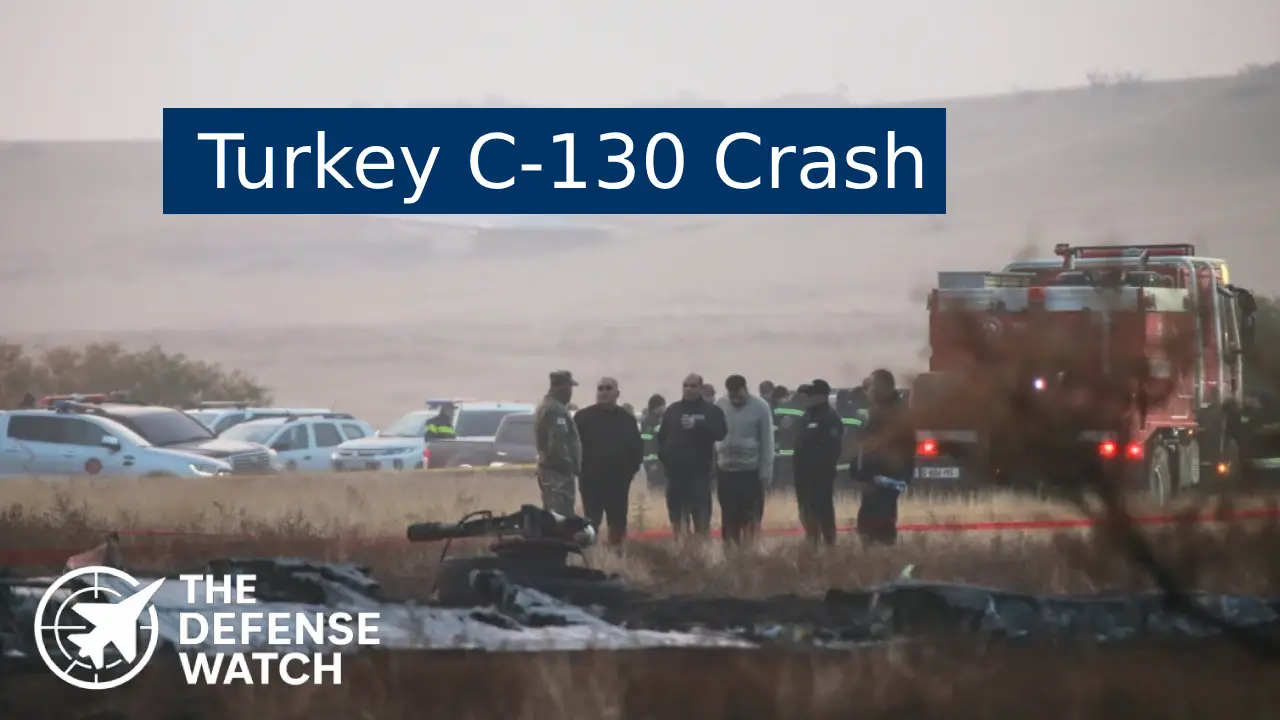
A military transport aircraft belonging to the Turkish Armed Forces crashed in the eastern Georgian municipality of Sighnaghi, near the Azerbaijan border, killing all 20 personnel on board. In response, Turkey’s Defense Ministry has grounded its entire fleet of Lockheed C‑130 Hercules transport aircraft pending technical inspections and investigation into the accident.
Background
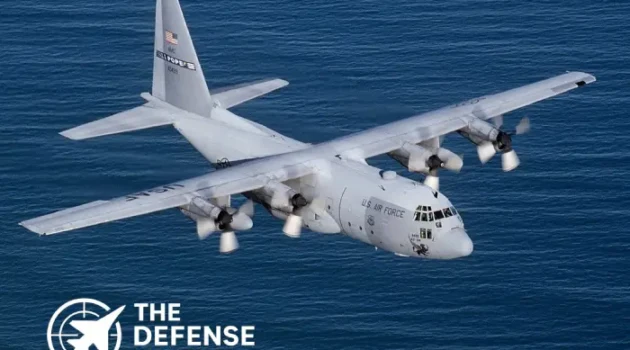
The C-130 Hercules is a four-engine turboprop transport aircraft widely used by militaries globally for cargo, personnel and logistic support missions. Turkey’s C-130s are central to its air transport capability, supporting both routine and allied operations. The crash marks the deadliest aviation incident involving Turkey’s armed forces since 2020.
Crash Details
According to the Turkish Defense Ministry, the aircraft departed from the Azerbaijani city of Ganja and crashed in Georgian airspace shortly after crossing the border, with no distress call issued. Initial reports and footage show the aircraft spiralling out of control and then impacting the ground, with debris strewn across a plain near Sighnaghi.
Turkey confirmed that the 20 people aboard were military personnel. The flight data and cockpit voice recorders (black box) have been recovered and are under analysis.
Following the crash, the Defense Ministry announced that all Turkish C-130 aircraft will undergo comprehensive inspections and maintenance checks before returning to service.
Technological and Operational Context
The aircraft involved was identified as a C-130 model, used for troop and logistical transport. Reports indicate the specific tail number was 68-1609, a unit delivered in 1968, which had entered Turkish service in 2010 after previous use by another air force. Ageing aircraft like this raise issues around maintenance, structural fatigue, upgrades and mission scheduling. The wear and lifecycle of such platforms are critical in ensuring safety across operations.
Strategic and Policy Implications
For Turkey, the grounding of the C-130 fleet has immediate implications for logistical readiness, strategic airlift capability and participation in allied missions. The delay or suspension of transport operations could impact troop movements, humanitarian support and rapid response tasks.
From a policy perspective, the incident may accelerate Turkey’s considerations for modernizing its transport fleet, potentially shifting to newer airframes or expanding existing contracts for upgrades. Military transport aircraft often remain less visible than combat jets, yet their readiness underpins broader force projection and alliance responsibilities—especially within the North Atlantic Treaty Organization framework.
Expert View
Aviation-safety analyst commented that in-flight structural failure or mid‐air breakup remains a leading hypothesis when no distress call is made and debris is widely scattered. Age‐related fatigue, maintenance gaps or unexpected load stresses could all contribute. Early video reported indicated a rapid descent and separation of parts. Investigators will focus on flight-data, maintenance records, weather conditions and any external factors such as bird strike or collision with terrain.
What’s Next
Investigators from Turkish and Georgian authorities will proceed with forensic examination of the wreckage, black boxes, and flight path data. The grounding of the C-130 fleet will remain in effect until each aircraft passes detailed structural and systems inspections. The Turkish Defence Ministry’s findings could influence procurement decisions, maintenance protocols and future airlift planning.
Closing
The crash of the C-130 transport aircraft has tragically cost 20 lives and exposed vulnerabilities in air-mobility operations of a key NATO member. As inspections proceed and investigations deepen, the Turkish military faces urgent decisions on fleet readiness and modernization. The outcome may shape not just domestic transport aviation policy, but Turkey’s broader strategic posture and alliance commitments.
Lockheed C-130 Hercules – Full Specifications
- Maximum Speed: 417 mph (670 km/h)
- Range: 2,800 mi (4,500 km)
- Payload Capacity: 45,000 lb (20,400 kg)
- Crew: 3–5

4 comments
[…] remain locked, causing it to collapse. The bomber veered off runway — its left wing scraped the ground and the aircraft came to rest roughly one mile from the landing […]
[…] relationship with Saudi Arabia spans more than 60 years, beginning with the delivery of the first C-130 Hercules transport aircraft in 1965. Over time, collaboration has grown into a broad, multi-domain partnership covering air, […]
[…] Kit is compatible with several Turkish Air Force aircraft types, including the F 16 Fighting Falcon fleet that forms the backbone of Turkey’s combat aviation […]
[…] denied its warplanes hit the drone, claiming the aircraft crashed while performing a sharp maneuver and alleging violation of a Russian-established no-fly zone near […]