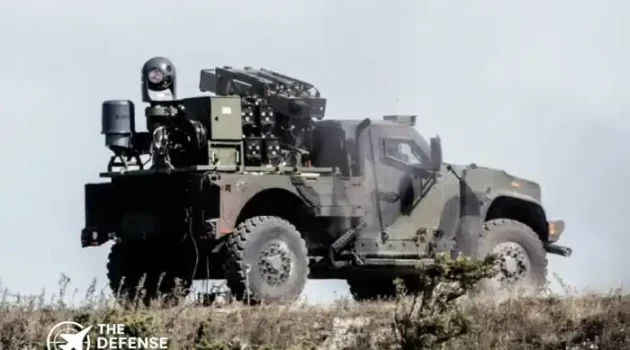
The Army’s Small Vehicle Is Becoming A Big Procurement Program
The U.S. Army’s Infantry Squad Vehicle, or ISV, was originally supposed to fill a narrow mobility gap. The service initially set a procurement objective of 649 vehicles in 2019.
By February 2026, that objective had reached 11,582 vehicles, an increase of roughly 18 times the original requirement. Army officials attribute the expansion not to traditional requirements growth, but to soldiers repeatedly validating the vehicle during operational experimentation and demanding more of it.
Takeaways
The Infantry Squad Vehicle is evolving from a lightweight transport into a major component of the Army’s mobile brigade concept.
1. Procurement Grew 18-Fold
The Army’s requirement increased from 649 vehicles in 2019 to 11,582 in February 2026, reflecting sustained demand from soldiers during operational experimentation.
2. Nine Soldiers And 3,200 Pounds
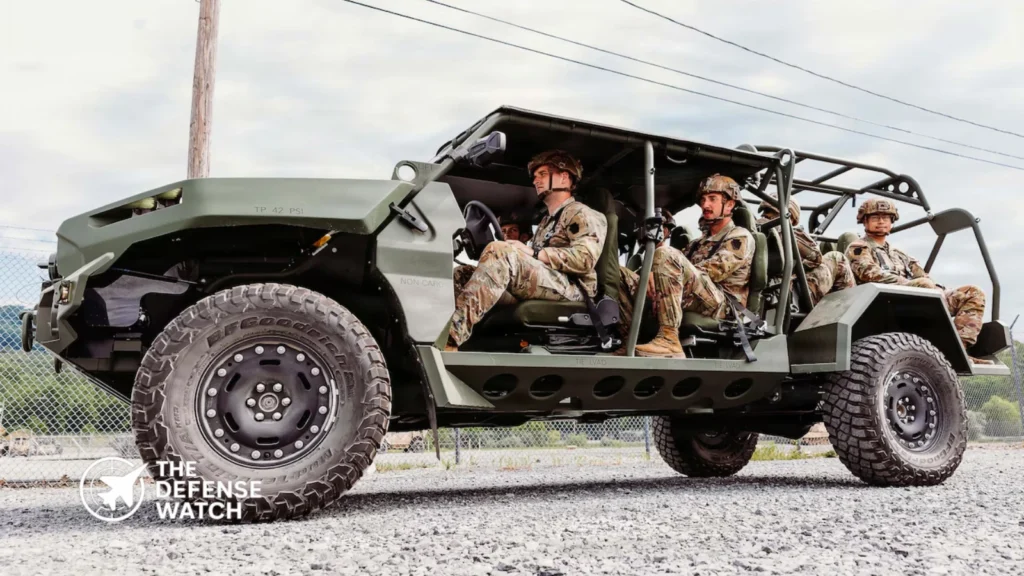
The ISV carries a nine-soldier infantry squad and up to 3,200 pounds of payload, giving light formations significantly greater tactical mobility.
3. Designed For Air Mobility
The vehicle can be transported by UH-60 and CH-47 helicopters and delivered by low-velocity airdrop from C-130 and C-17 aircraft.
4. Commercial Technology Cuts Time
The ISV uses a high percentage of commercial off-the-shelf components, helping the Army reduce development time compared with traditional military vehicle acquisition.
5. Mobility Must Work With Sensors
Because the ISV emphasizes mobility over armor, its battlefield effectiveness depends heavily on reconnaissance, concealment, drones, command networks and fires that help prevent the vehicle from becoming an exposed target.
That distinction matters.
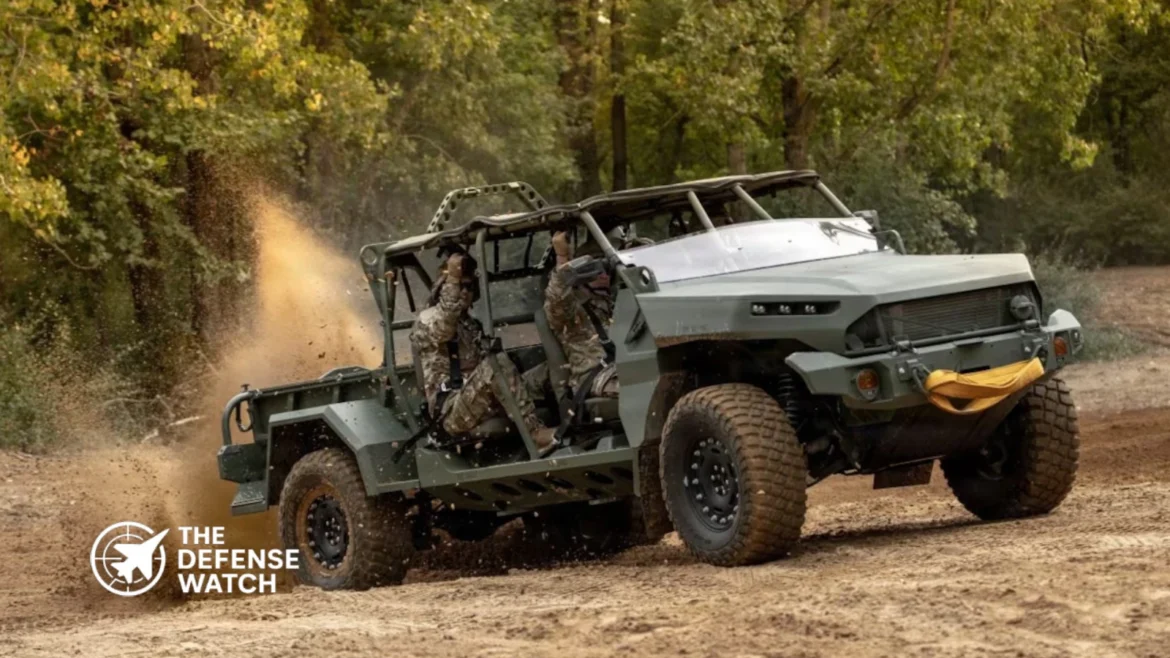
The ISV represents a different acquisition philosophy from the heavily engineered tactical vehicles that traditionally dominate Army procurement. Instead of trying to make one platform perform every battlefield function, the Army kept the ISV focused on moving an infantry squad, its equipment and additional payload quickly across difficult terrain.
The result is a vehicle that gives up armor and some onboard sophistication in exchange for mobility, transportability and speed.
The Army describes the ISV as a nine-soldier vehicle with a 3,200-pound payload. It can be sling loaded by a UH-60 Black Hawk, transported by CH-47 Chinook and delivered by low-velocity airdrop from C-130 or C-17 aircraft.
That combination makes the ISV more than a replacement for a Humvee. It is a mobility tool designed around getting infantry to the fight without turning the vehicle itself into the center of the formation.
Why The ISV Is So Different From A JLTV
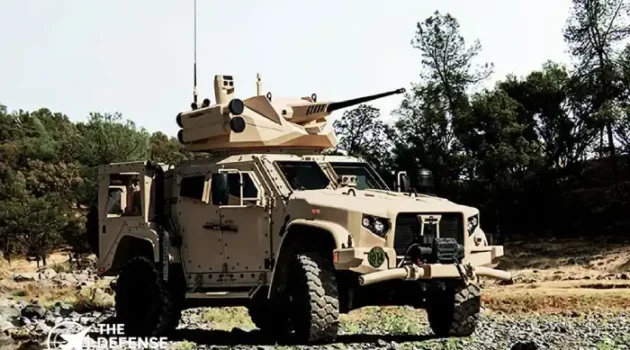
The Joint Light Tactical Vehicle and ISV solve different problems.
The JLTV was designed around a difficult balance of protection, payload and mobility. Its mission set demands considerably more vehicle mass because survivability is a major part of the design.
Its value comes from being small enough to move with infantry formations and light enough to exploit aviation assets. The Army has described it as a platform that can be inserted by helicopter or fixed-wing aircraft and then operate across challenging terrain.
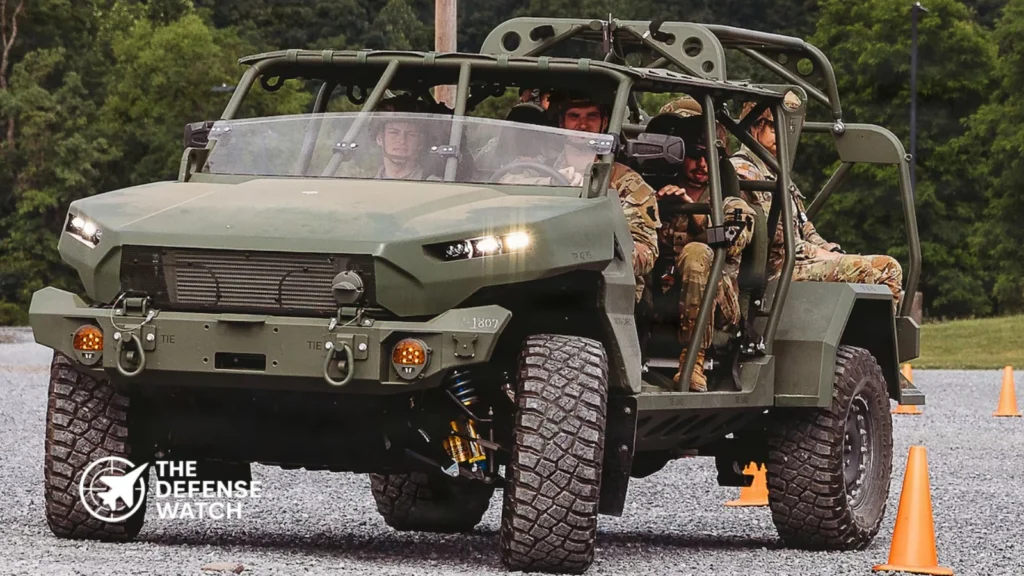
The vehicle is based heavily on commercial technology. GM Defense’s production design uses the Chevrolet Colorado ZR2 architecture and a high percentage of commercial off-the-shelf components.
Soldiers assigned to Alpha Company, 1st Battalion, 112th Infantry Regiment, 56th Mobile Brigade Combat Team, complete a driver’s course designed to introduce them to the Infantry Squad Vehicle’s mobile capabilities at Fort Indiantown Gap, Pa., June 17, 2026.
That commercial foundation helped the Army shorten the development timeline. According to the program officials cited in the source material, the rapid acquisition model allowed the first unit to receive the capability within about 24 months.
This is important because battlefield technology can become obsolete while a conventional acquisition program is still moving through its testing and milestone process.
The ISV approach instead accepts that a useful vehicle today can be more valuable than a theoretically perfect vehicle delivered years later.
The Numbers Behind The ISV Expansion
The program’s growth is one of its most revealing characteristics.
The original 2019 requirement was 649 vehicles. It rose to 900 in February 2021, then increased again until reaching 2,593 vehicles.
In April 2025, the Army approved an ISV utility variant and raised the combined procurement objective to 5,733 vehicles.
By February 2026, the Army had established a current position and procurement objective of 11,582 vehicles.
Metric
Army ISV Program
Original 2019 procurement objective
649 vehicles
2021 procurement objective
900 vehicles
Later procurement objective
2,593 vehicles
April 2025 combined objective
5,733 vehicles
February 2026 objective
11,582 vehicles
Original squad capacity
9 soldiers
Payload
3,200 pounds
UH-60 transport
External sling load
CH-47 transport
Internal load/external lift
Fixed-wing transport
C-130 and C-17 low-velocity airdrop
FY2026 ISV-U unit cost
About $194,000
The FY2026 Army budget documentation lists a unit cost of about $194,000 for the Infantry Squad Vehicle Utility variant. That figure is substantially below the cost of many heavily equipped tactical vehicles, although it should not be treated as the total program cost because fielding, support, engineering and other expenses are separate budget elements.
Soldiers assigned to Alpha Company, 1st Battalion, 112th Infantry Regiment, 56th Mobile Brigade Combat Team, are introduced to the Infantry Squad Vehicle at Fort Indiantown Gap, Pa., June 17, 2026. The soldiers learned how to properly maintain and drive the new vehicle while completing a driver’s course.
The same budget documentation shows how quickly the ISV-U fleet was expected to grow. Planned fielding increased from 96 vehicles in FY2025 to 1,275 in FY2026, requiring additional funding for fielding, training, transportation, spares and contractor support.
That is a useful indicator of where the Army sees the vehicle going.
This is no longer an experimental niche platform. It is becoming an important component of the Army’s mobile brigade concept.
The ISV’s greatest contribution is the distance between the infantry squad and its next tactical position.
An infantry unit moving on foot is limited by human endurance and the weight of its equipment. A conventional tactical vehicle solves that problem but can impose its own limitations because of size, weight and transport requirements.
The ISV sits between those extremes.
Army infantry publications have described ISVs as a way to increase the amount of terrain an infantry formation can cover without making the unit dependent on the vehicle to conduct the fight.
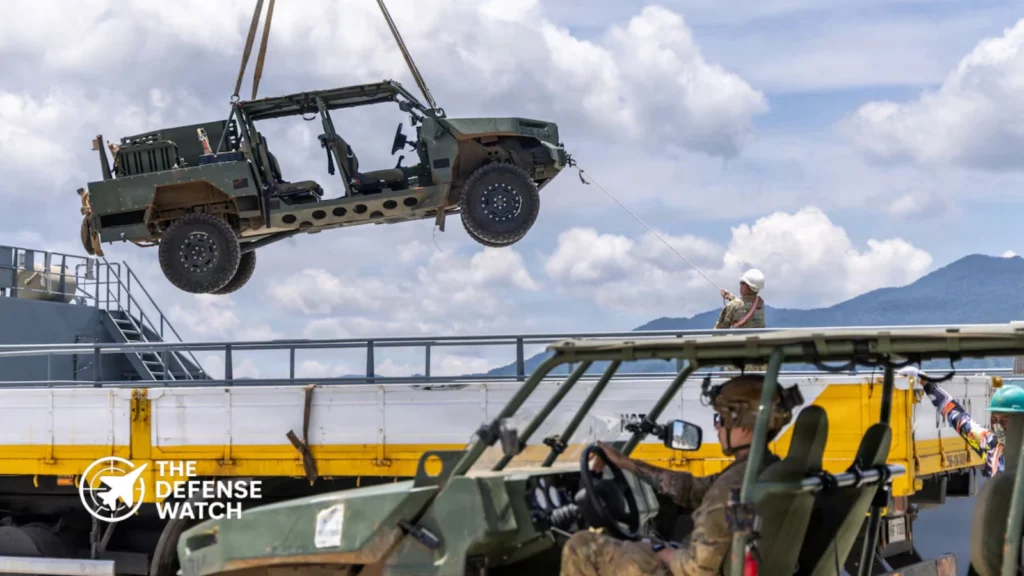
Soldiers assigned to 2nd Battalion, 27th Infantry Regiment, 25th Infantry Division, load Infantry Squad Vehicles onto a logistics support vessel at Port Irene in Santa Ana, Philippines, June 16, 2026.
That distinction is particularly important for mobile brigade combat teams.
During training at the Joint Readiness Training Center, the 2nd Battalion, 26th Infantry Regiment used ISVs to move forces rapidly as a counterattack element. Army analysis concluded that the vehicle helped make a mobile defense viable for an infantry brigade formation.
The lesson is straightforward: mobility creates tactical options.
A commander who can reposition an infantry squad quickly can reinforce a threatened position, exploit a gap or launch a counterattack before an opposing force can adjust.
The Price Of Being Ultra-Light
There is a major tradeoff.
The ISV is an unarmored or lightly protected platform. Its survivability comes primarily from mobility, dispersion, terrain use and avoiding detection rather than absorbing direct hits.
That becomes increasingly important as drones, persistent surveillance and precision fires make exposed movement more dangerous.
Army units have already adapted their ISV tactics around this problem. During one training rotation, infantry used small unmanned aircraft hundreds of meters ahead of ISV formations to identify enemy positions before the vehicles entered exposed areas. Units also practiced concealment and formation techniques when enemy drone activity was expected.
This suggests a key point about the ISV.
It should not be viewed as a smaller armored vehicle.
It is better understood as part of a larger reconnaissance, mobility and fires system.
The vehicle gets the squad there. Drones, sensors, fires and command networks help determine where there is enough room to move.
From Commercial Pickup Architecture To Military Capability
The ISV’s commercial heritage is central to the program’s story.
The production vehicle is derived from the Chevrolet Colorado ZR2 architecture, allowing the Army to use mature commercial automotive components rather than developing every component from the ground up.
The 2.8-liter turbo-diesel engine and six-speed automatic transmission documented during Army testing illustrate that philosophy.
That does not mean the vehicle is simply a civilian pickup with military markings.
Military requirements drove changes to the platform, and the Army subjected the ISV to transportability, reliability and operational testing. It also conducted certification for helicopter sling loading and airdrop operations.
The important acquisition lesson is that commercial technology provided the starting point rather than the finished military capability.
The Transformation In Contact Connection
The ISV’s growth also illustrates what the Army means by Transformation in Contact.
TiC puts soldiers into realistic training environments with emerging equipment and uses their feedback to shape subsequent development. The process is intended to shorten the distance between experimentation and fielded capability.
The Army has increasingly used the approach to change how units organize, train and acquire equipment. In 2025, Army officials described TiC as a method for rapidly putting new systems into soldiers’ hands and using their observations to influence capability development.
That philosophy is particularly relevant to the ISV because its original requirement was not large enough to reflect what soldiers eventually learned through use.
The soldiers effectively became part of the requirements process.
That is why the 11,582-vehicle objective is more significant than the number itself.
It demonstrates that field experimentation can change procurement decisions after equipment reaches operational users.
The ISV’s biggest lesson is that mobility can be treated as a capability in its own right, rather than simply as a feature added to a larger tactical vehicle.
The ISV Is Also Becoming A Family Of Vehicles
The Army’s future plans show that the ISV concept is expanding beyond basic troop transport.
The service is developing heavier and utility-oriented variants to support the emerging mobile brigade combat team structure.
The utility configuration can support equipment and logistics missions that previously depended on larger vehicles or trailers. Army infantry professionals have also explored ISV-based solutions for command and control, communications and other specialized missions.
The heavy variant is expected to provide additional onboard electrical generation and energy storage for next-generation command and control equipment.
That could prove important as Army formations become more dependent on sensors, radios, computing equipment, unmanned systems and electronic warfare capabilities.
The more technology infantry units carry, the more important onboard power becomes.
A Different Kind Of Military Mobility
There is also an interesting cultural comparison with competitive gaming.
In games such as Call of Duty, mobility often determines whether a player controls the next engagement. A fast player can reposition, attack from an unexpected angle and disengage before an opponent can respond.
The ISV applies a similar principle at formation level, although the real battlefield is vastly more complex and unforgiving.
The vehicle does not make infantry invulnerable. It creates opportunities to move faster than an opponent expects.
That concept has appeared repeatedly in military history. From airborne operations to air assault formations, commanders have sought ways to move infantry beyond the constraints imposed by terrain and marching speed.
The ISV modernizes that idea for a battlefield where movement must be coordinated with drones, sensors and precision fires.
The difference is that speed alone is not enough.
An ISV moving quickly into an enemy’s observation and fires network is simply a fast target. Its value appears when speed, concealment, reconnaissance and command decisions work together.
What The 11,582-Vehicle Objective Signals
The Army’s decision to expand the ISV fleet suggests that lightweight mobility is becoming a structural requirement for its mobile formations.
The service is building formations that are expected to operate with greater dispersion, move rapidly and integrate unmanned systems and precision effects.
Army publications have described the emerging mobile brigade combat team as smaller, faster and more dispersed than traditional infantry formations.
The ISV fits that model because it does not attempt to carry the entire battlefield architecture.
It carries soldiers.
Other systems provide sensing, communications, fires, protection and sustainment.
That division of labor may become increasingly important as the Army tries to avoid putting every capability on every vehicle.
Next Step: More Power, More Payload
The next ISV variants will determine whether the concept can remain lightweight while supporting a much more technology-heavy infantry force.
Additional electrical power, energy storage, communications equipment and mission systems all create pressure to increase weight.
That creates the central engineering challenge.
The Army wants more capability without losing the transportability and mobility that made the original ISV attractive.
The program’s future success will therefore depend on maintaining the discipline that helped create it: resist unnecessary requirements, use commercial technology where practical, test with soldiers and make changes based on operational evidence.
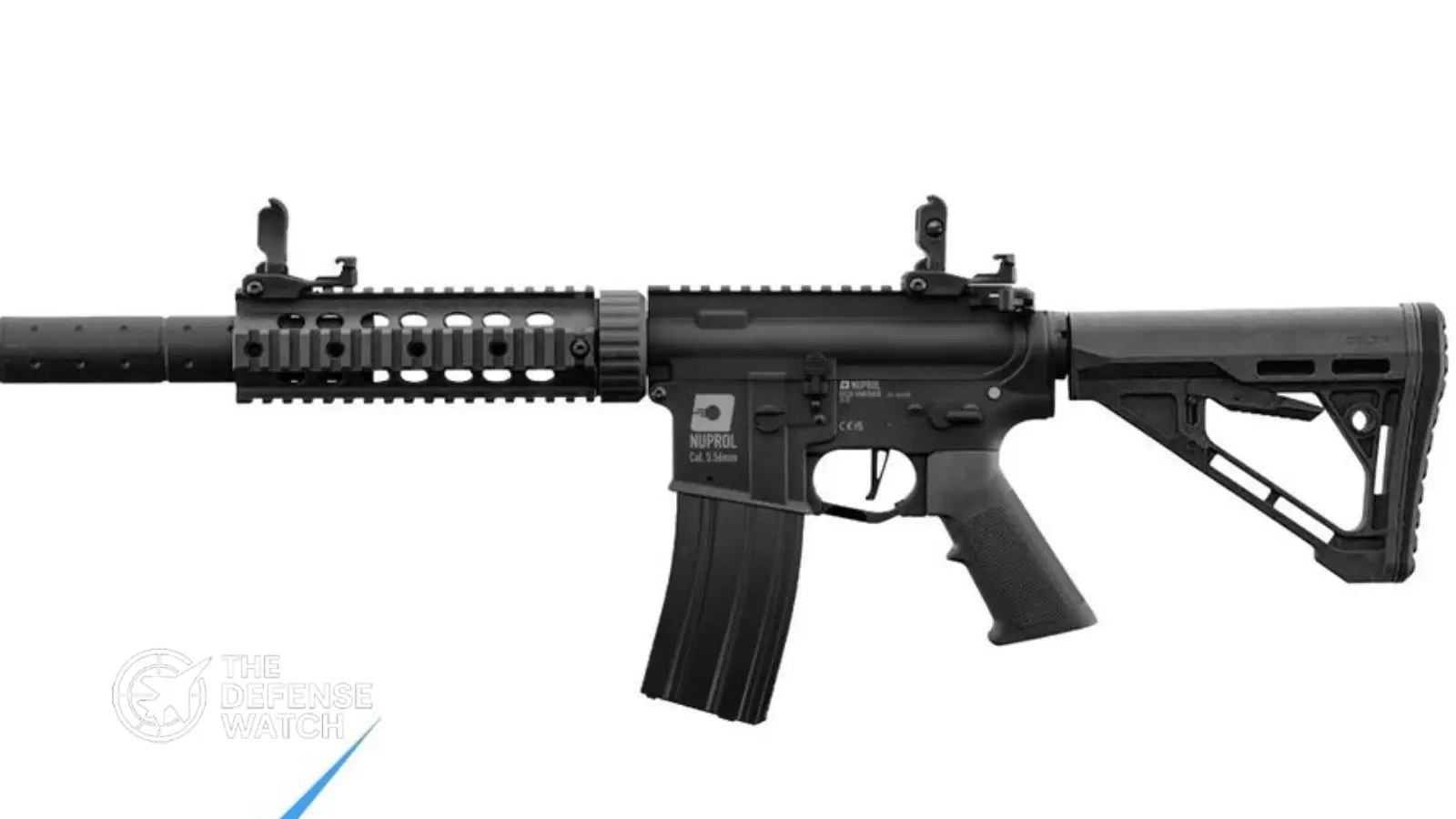
Executive Summary: Air rifles occupy a unique position in the United Kingdom, bridging recreational shooting, competitive marksmanship, and practical pest management. While airsoft focuses on simulation and training value, modern air rifles have evolved into highly accurate tools capable of delivering humane pest control at short to medium ranges.
Air rifles account for millions of shooting activities across the United Kingdom every year. Unlike firearms that require more extensive licensing and storage requirements, many air rifles remain accessible to lawful owners while delivering surprising levels of accuracy.
At the same time, airsoft has emerged as one of Britain’s fastest-growing tactical hobbies. Players use realistic replica weapons to recreate military scenarios, small-unit tactics, and competitive team-based engagements. Though both disciplines share common equipment aesthetics, their purposes differ dramatically.
One is built around marksmanship and practical field use. The other centers on simulation, teamwork, and tactical gaming.
Technical Analysis: Air Rifles, Airsoft Platforms, And Pest Control Performance
Modern air rifles have benefited from advances originally seen in precision firearms. Pre-Charged Pneumatic (PCP) systems, regulated air reservoirs, improved barrel manufacturing, and high-quality optics have transformed the sector.
A premium PCP air rifle can consistently produce sub-inch groups at 50 yards. Many professional pest controllers consider this level of precision essential when targeting rabbits, rats, pigeons, or invasive squirrels.
The most common UK air rifle calibers include:
.177 caliber, favored for flatter trajectories and competitive shooting.
.22 caliber, preferred by many pest controllers due to greater impact energy.
.25 caliber, less common but increasingly popular for larger vermin at closer ranges.
Airsoft platforms operate under an entirely different philosophy. Their projectiles are lightweight plastic BBs typically weighing between 0.20 and 0.40 grams. Engagement ranges often fall between 30 and 70 meters depending on platform configuration.
While airsoft guns replicate military weapons with impressive realism, they are not designed for hunting or pest control. Their primary value lies in training, recreation, and force-on-force simulation.
For pest control operations, shot placement matters far more than raw power. Experienced shooters often compare the process to precision sniping rather than traditional hunting.
The United Kingdom faces persistent agricultural losses from rabbits, rats, feral pigeons, and other nuisance species. These animals damage crops, contaminate feed stores, and spread disease across farming environments.
Air rifles offer several operational advantages:
Low noise signature compared with conventional firearms.
Reduced risk of over-penetration.
Lower operating costs.
High precision in confined environments.
Greater suitability around livestock facilities.
Many pest control specialists deploy thermal optics and night-vision equipment during low-light operations. Technologies once associated with military surveillance have steadily filtered into the civilian shooting market.
Competitive players learn communication, movement, observation, and terrain exploitation. While airsoft cannot replicate recoil, ballistic effects, or terminal performance, it develops many cognitive skills relevant to tactical environments.
The connection becomes particularly interesting when viewed through the lens of modern esports and military simulation games.
Players who excel in tactical titles often understand concepts such as fire-and-maneuver, overwatch positioning, choke-point control, and reconnaissance. Airsoft transforms many of these virtual concepts into physical actions.
Air rifle shooting represents the opposite end of the spectrum.
Instead of rapid movement and team coordination, success depends on patience, range estimation, wind reading, trigger discipline, and precision shot execution.
Key Takeaway: Precision wins in pest control just as it does in military marksmanship. Equipment matters, but consistent shot placement, observation, and discipline remain the decisive factors.
Britain’s airgun tradition stretches back more than a century. Early pneumatic rifles were used for training and recreational shooting long before modern airsoft existed.
Both communities continue to grow because they appeal to different aspects of shooting culture.
One rewards precision and patience.
The other rewards teamwork and tactical creativity.
Conclusion & Takeaway
UK air rifles and airsoft platforms occupy distinct but complementary roles within Britain’s shooting ecosystem. Airsoft offers realistic tactical experiences and team-based competition, while air rifles remain among the most effective and economical tools for lawful pest control and precision shooting.
Advances in optics, air systems, and manufacturing continue to narrow the gap between sporting equipment and professional-grade precision platforms. For farmers, pest controllers, and shooting enthusiasts alike, the modern air rifle represents a blend of affordability, effectiveness, and accuracy that few other systems can match.
The enduring lesson is simple: whether managing pests on a rural farm or navigating a tactical airsoft field, success depends less on equipment alone and more on the skill of the person behind it.
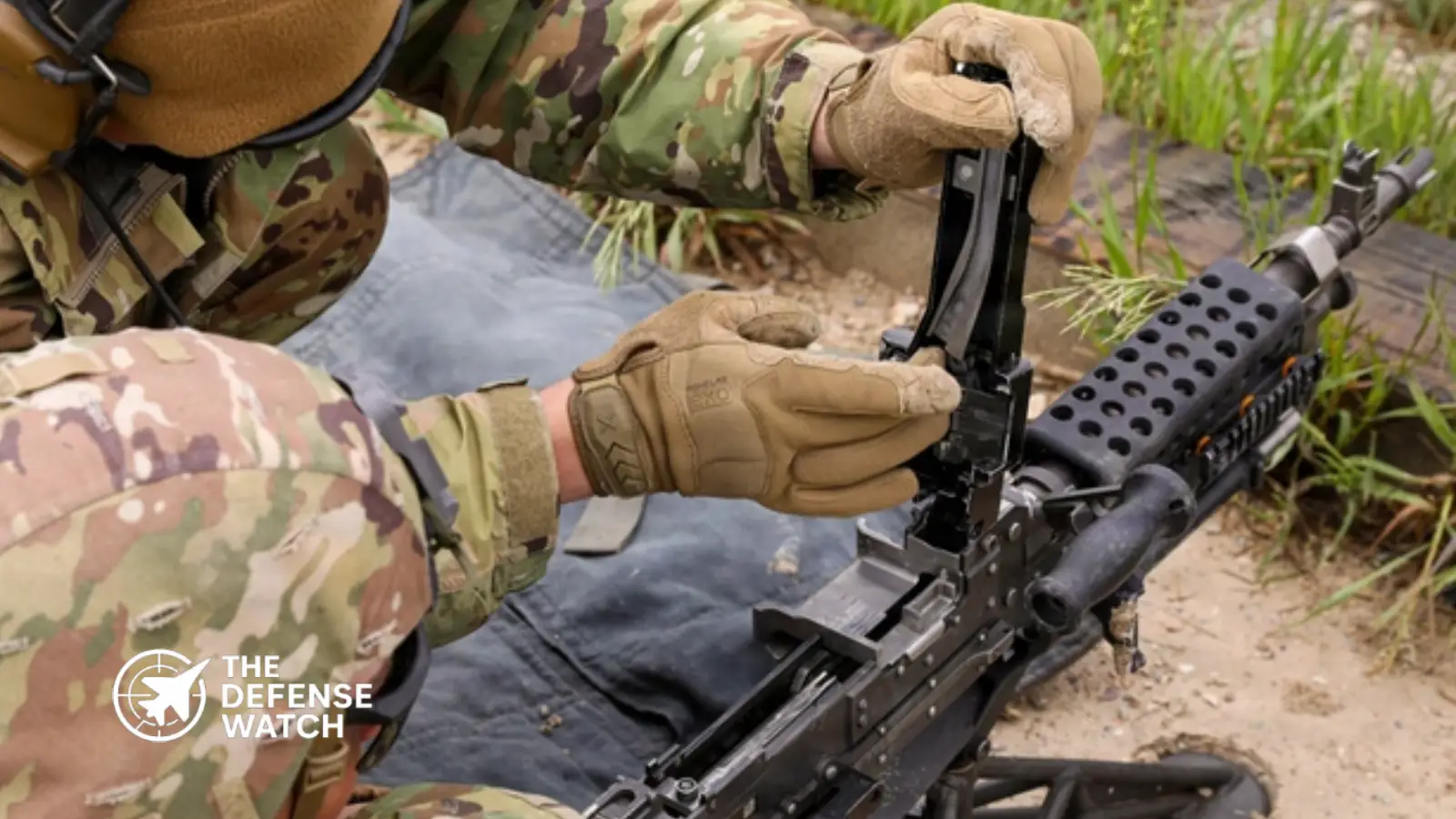
Recent parliamentary disclosures reveal that several firearms, including machine guns, have been lost or stolen from UK military inventories over recent years. While the Ministry of Defence says robust security measures are in place and incidents are investigated, the disclosures have renewed debate about accountability, inventory management, and force protection across Britain’s armed forces.
UK Military Missing Firearms Draw Renewed Scrutiny
The issue of UK military missing firearms has returned to the spotlight following reports highlighting that machine guns, rifles, pistols, and other weapons have been lost or stolen from British military inventories over recent years.
According to information cited by the UK Defence Journal and parliamentary disclosures, a range of military weapons have gone missing from Ministry of Defence (MOD) facilities and military units. The incidents span several years and involve both operational and historical weapons.
The disclosures have generated renewed attention because some of the missing items include machine guns, which are among the most tightly controlled weapons in military arsenals.
What Weapons Have Been Reported Missing?
Data released through parliamentary questions and Freedom of Information requests indicate that a variety of firearms have been reported lost or stolen.
Past disclosures showed incidents involving Glock pistols, SA80 rifles, historic deactivated firearms, general-purpose machine guns, and even a .50 caliber heavy machine gun. Some weapons were later recovered, while others remain unaccounted for.
One parliamentary response previously detailed a stolen Glock 19 pistol and several lost firearms, including deactivated historical weapons. In some cases, investigations resulted in recovery of the missing items.
Officials have stated that robust procedures exist to prevent theft and loss of firearms and that every reported incident is fully investigated. The department has also emphasized that weapons accountability systems are designed to track firearms throughout their service life.
Military weapons are typically subject to strict inventory controls, including serial number tracking, armory accounting procedures, and regular inspections.
However, even a small number of losses can attract significant attention because of the potential security implications if weapons are not recovered.
Why The Issue Matters
The significance of UK military missing firearms extends beyond simple inventory discrepancies.
Modern armed forces rely on rigorous accountability systems to ensure weapons remain under authorized control. Missing firearms can create operational, legal, and security concerns, particularly when military-grade weapons are involved.
Although the total number of missing weapons remains small relative to the overall size of British military stockpiles, defense experts generally view any loss of controlled weapons as a serious matter requiring investigation and corrective action.
The issue also emerges at a time when the UK is pursuing broader military modernization efforts and reviewing future small-arms requirements through initiatives such as Project Grayburn, which aims to shape the next generation of British infantry weapons.
Analysis: Accountability Is As Important As Modernization
While headlines often focus on advanced missiles, drones, and next-generation combat systems, the management of small arms remains a fundamental military responsibility.
The latest disclosures highlight an often-overlooked reality: maintaining effective accountability for existing weapons is just as important as procuring new ones.
For defense organizations, credibility depends not only on acquiring modern capabilities but also on safeguarding the equipment already in service. Strong inventory management, rigorous audits, and rapid investigative procedures help ensure that isolated losses do not become larger security risks.
The British military’s reported losses remain relatively limited when viewed against the scale of its global operations. Nevertheless, each incident serves as a reminder that weapons security remains a core element of military readiness, force protection, and public trust.
Looking Ahead
As the UK Ministry of Defence continues modernization efforts across its armed forces, weapons accountability is likely to remain under parliamentary and public scrutiny.
Future reporting and parliamentary oversight may provide additional insight into how the MOD balances modernization programs with the day-to-day management and security of its existing weapons inventory.
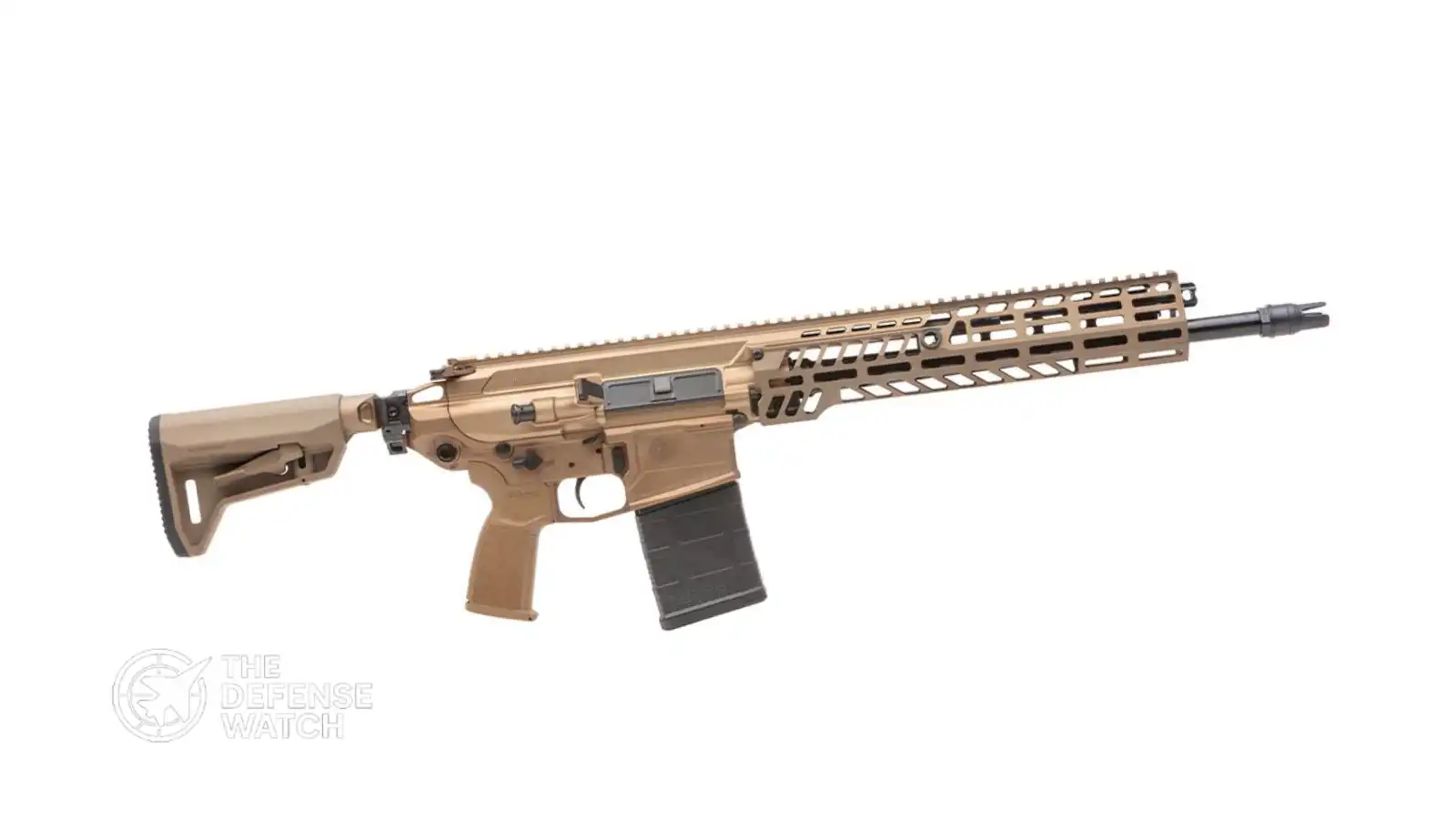
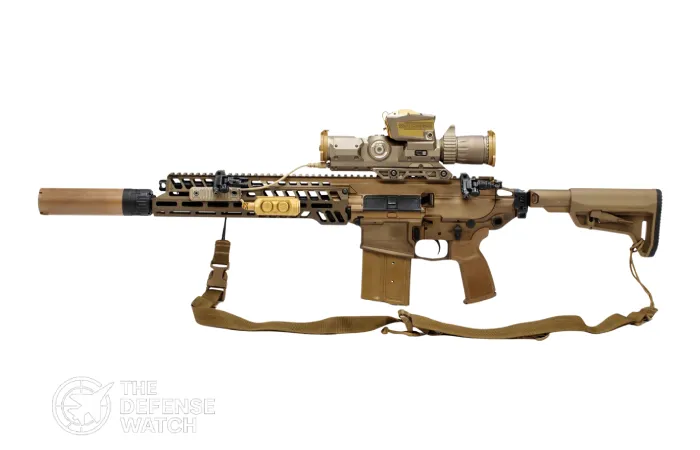
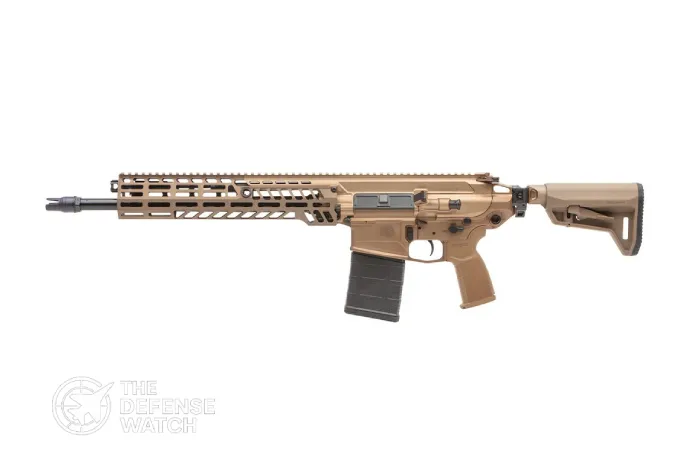
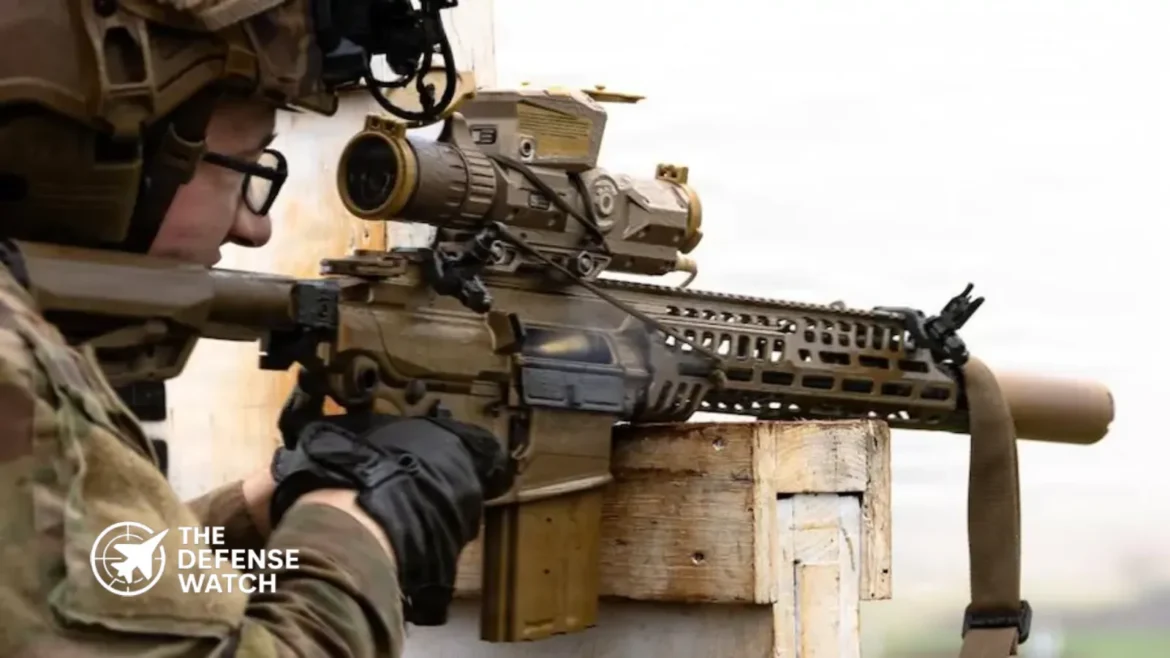
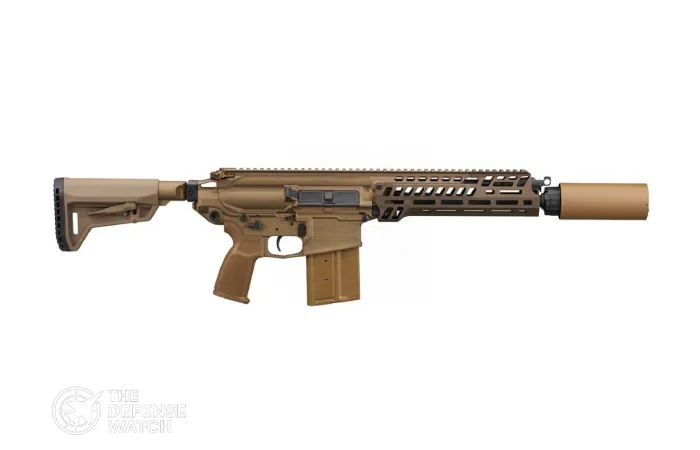
The U.S. Army’s adoption of the XM7 rifle marks the most significant infantry weapons transition since the M16 entered service in the Vietnam era. Combined with new ammunition, optics, suppressors, and fire-control systems, the program aims to increase lethality against modern armored threats while redefining how infantry squads fight on tomorrow’s battlefields.
The U.S. Army is replacing a rifle family that has dominated battlefields for more than half a century.
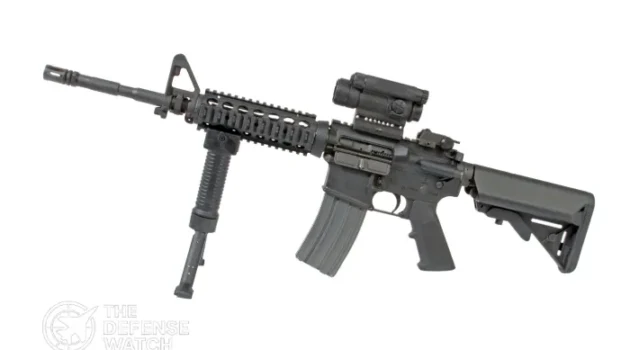
The XM7 rifle, formerly known as the XM5 during development, is at the center of the Army’s Next Generation Squad Weapon (NGSW) program. It is not simply a replacement for the M4 carbine. It represents a broader shift in how the Pentagon views infantry combat against near-peer adversaries equipped with advanced body armor, drones, electronic warfare systems, and longer-range weapons.
For the first time in decades, the Army is accepting higher weapon weight, increased ammunition costs, and greater logistical complexity in exchange for substantially improved range and terminal performance.
The decision signals a recognition that the battlefield environment of the 2030s will look very different from the counterinsurgency campaigns that shaped U.S. small arms doctrine after 2001.
Technical Analysis: Why The XM7 Rifle Exists
The XM7 rifle was selected alongside the XM250 automatic rifle as part of the NGSW effort led by SIG Sauer. The weapon fires the new 6.8×51mm cartridge, delivering significantly greater energy than the 5.56×45mm NATO round used by the M4 and the M27 Infantry Automatic Rifle.
The Army’s concern was straightforward. Potential adversaries are increasingly fielding advanced body armor capable of reducing the effectiveness of existing intermediate-caliber ammunition at longer ranges.
The XM7 addresses that challenge through a combination of higher chamber pressures, advanced ammunition design, and increased ballistic performance.
Unlike earlier modernization efforts, the program also integrates suppressors and advanced fire-control optics from the outset. The result is a weapon system rather than a standalone rifle.
The increased power of the XM7 comes with tradeoffs. Soldiers carry heavier ammunition and experience stronger recoil than with the M4 platform.
Army planners appear willing to accept those drawbacks because future combat scenarios are expected to involve engagements at longer distances, particularly in Eastern Europe, the Indo-Pacific, and other open terrain environments.
The XM7 is not the first attempt to replace the M4.
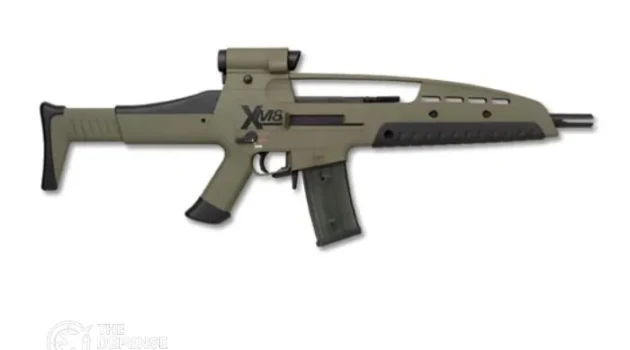
The XM8 rifle program emerged in the early 2000s as a lightweight modular weapon derived from the German G36. Despite promising testing results, the project ultimately collapsed amid procurement disputes, changing operational priorities, and concerns about cost versus capability gains.
The XM8 failed largely because it offered evolutionary improvements.
The XM7 survived because it offers a revolutionary increase in lethality.
That distinction matters. Military modernization programs rarely succeed unless they provide a dramatic battlefield advantage that justifies replacing entrenched systems and retraining entire forces.
Rather than pursuing an entirely new cartridge, the Marines expanded use of the M27 Infantry Automatic Rifle, based on the Heckler & Koch HK416 platform. The M27 improved accuracy, reliability, and controllability while retaining NATO-standard 5.56mm ammunition.
The Marine Corps prioritized precision and distributed firepower.
The Army prioritized penetration and range.
These contrasting decisions highlight two different interpretations of future infantry combat. One focuses on enhanced marksmanship within existing logistics networks. The other embraces a new caliber and weapon architecture to overcome emerging battlefield threats.
While the M110 SASS remains valuable for long-range precision engagements, the Army’s modernization effort effectively pushes more firepower down to the squad level. Infantry formations can now engage targets at ranges that previously required specialized marksman rifles.
This shift reflects a broader trend toward distributed lethality across small combat units.
The Insight: Why Gamers And Defense Analysts Should Pay Attention
Military modernization often mirrors concepts familiar to competitive gaming communities.
In tactical shooters, players frequently balance mobility, recoil control, damage output, and engagement range. The XM7 reflects the same tradeoff calculation.
The M4 was comparable to a highly versatile assault rifle build optimized for speed and adaptability.
The XM7 resembles a battle rifle configuration designed to dominate medium and long-range engagements, sacrificing some mobility for greater stopping power.
The comparison is useful because both environments reward optimization around expected threats.
The Army is effectively redesigning its infantry loadout for a different meta.
Future adversaries are expected to wear better armor, operate drones at scale, and engage from longer distances. The XM7 is a direct response to that changing combat environment.
The XM7 is not merely a new rifle. It is a signal that the U.S. Army believes future infantry battles will be fought farther away, against better-protected opponents, and under far more demanding conditions than the wars of the last two decades.
Conclusion & Takeaway
The XM7 rifle represents one of the most ambitious U.S. infantry modernization efforts in generations.
Unlike the cancelled XM8 rifle program, the XM7 delivers a measurable leap in range, penetration, and battlefield effectiveness. Its adoption also reshapes the relationship between traditional service rifles, automatic rifles, and designated marksman weapons such as the M110 SASS.
Whether the program ultimately achieves its long-term goals will depend on operational performance, logistics, and affordability. Yet one reality is already clear.
The era of incremental upgrades is ending. The U.S. Army’s new army rifle is part of a broader transformation that seeks to prepare infantry forces for a battlefield where range, protection, and lethality matter more than ever before.
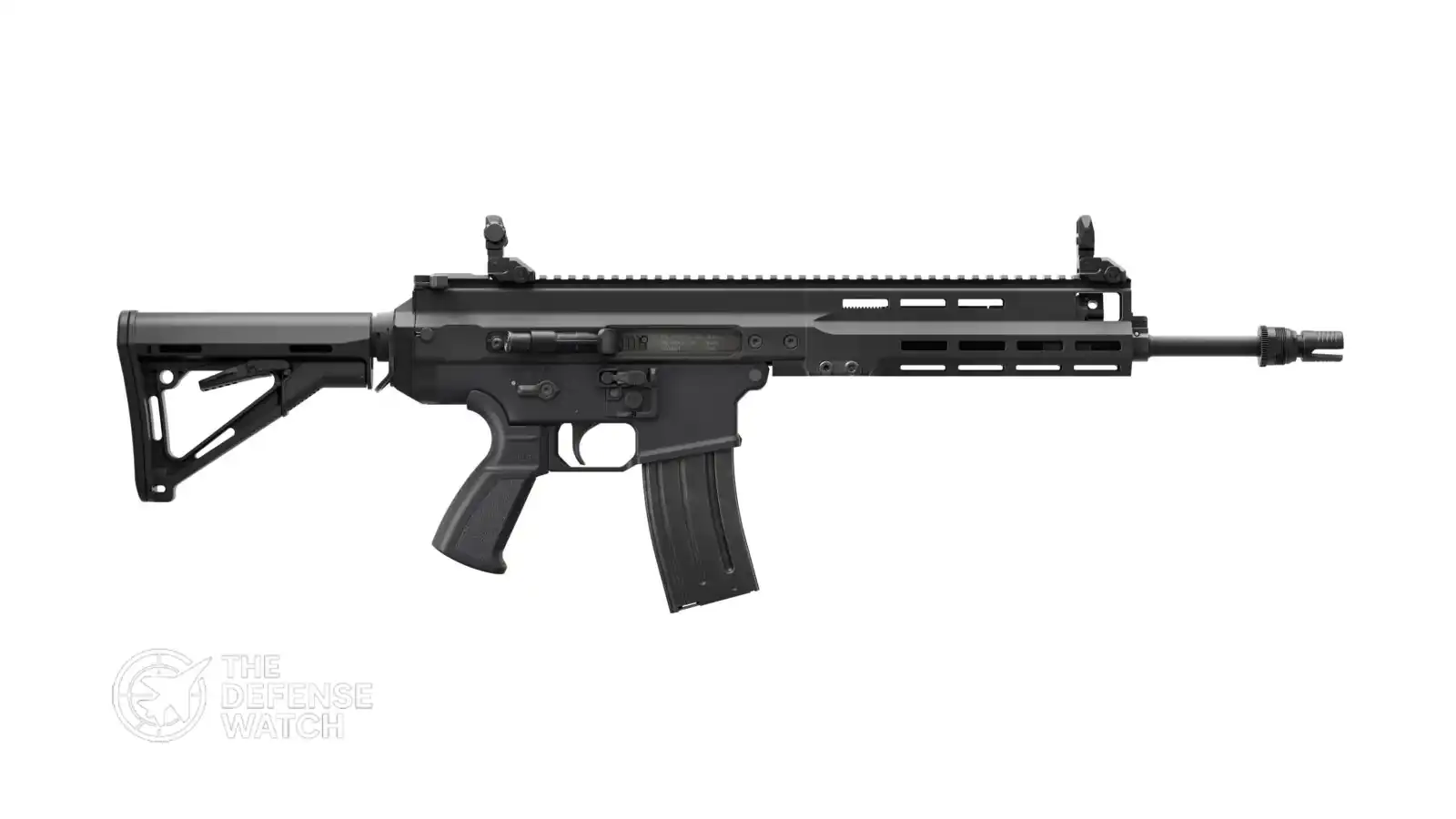
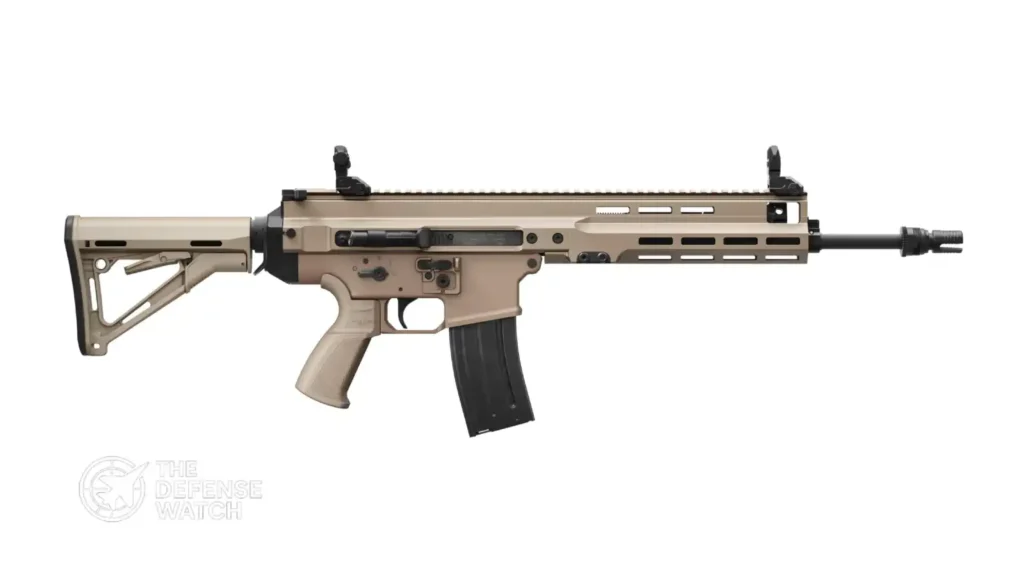
Belgian small arms manufacturer FN Herstal has unveiled the new FN ARKA assault rifle, a weapon designed to combine the combat-proven operating system of the FN SCAR with the ergonomics and accessory compatibility commonly associated with AR-pattern rifles. The announcement reflects growing demand among military and law enforcement customers for rifles that can integrate into existing training, logistics, and modernization programs while reducing transition costs.
FN Herstal has formally introduced the FN ARKA assault rifle, marking the company’s latest effort to expand its presence in the highly competitive global military rifle market. According to reporting from Army Recognition, the ARKA is chambered in 5.56×45mm NATO and is intended for modern military and law enforcement users seeking a rifle that combines familiar AR-style handling with the proven reliability of the FN SCAR family.
The launch comes at a time when many NATO and partner nations are reviewing future infantry weapon requirements, replacing aging service rifles, and seeking systems that reduce training burdens while maintaining combat effectiveness.
Unlike a clean-sheet design, the ARKA appears to leverage significant elements of the SCAR’s operating architecture while adopting a control layout familiar to users trained on AR-15 and M4-type rifles. This approach positions the weapon in a market increasingly driven by interoperability and user familiarity rather than radical technological change.
Designed Around Existing Military Training Pipelines
One of the most notable aspects of the ARKA is its apparent focus on reducing transition costs for military organizations.
Many armed forces have invested heavily in training programs, accessories, optics, and maintenance systems centered around AR-pattern rifles. By incorporating familiar ergonomics while retaining the SCAR’s internal operating principles, FN Herstal appears to be targeting customers that want enhanced reliability without requiring major changes to existing doctrine and support infrastructure.
Industry observers have increasingly noted that procurement decisions are often influenced as much by sustainment costs and training requirements as by raw weapon performance.
For defense ministries facing budget constraints, a rifle that minimizes retraining while maintaining compatibility with existing equipment can offer significant long-term value.
The SCAR-L variant, chambered in 5.56×45mm NATO, remains in service with multiple military organizations and special operations forces. Its short-stroke gas piston operating system is widely recognized for reliability under harsh environmental conditions.
By building on the SCAR’s operational reputation, FN Herstal may be attempting to offer a lower-risk option for procurement authorities compared with entirely new rifle designs.
Potential Relevance to Future Military Rifle Competitions
The ARKA’s introduction is particularly noteworthy given ongoing and anticipated rifle replacement programs across NATO countries.
Recent reporting has linked the rifle to discussions surrounding future infantry weapon requirements, including interest in platforms that combine modern ergonomics with proven combat systems. Publicly available images from 2025 showed a prototype ARKA reportedly being evaluated in connection with discussions surrounding the United Kingdom’s future rifle requirements. While no official selection decisions have been announced, the appearance highlighted the weapon’s relevance to upcoming procurement competitions.
The timing is also significant. FN Browning Group recently announced the acquisition of British precision rifle specialist Accuracy International, strengthening its industrial footprint in the United Kingdom and potentially expanding its position in future British small arms programs.
Why the ARKA Matters Beyond a Single Rifle Launch
The unveiling of the ARKA reflects a broader trend shaping the global small arms market.
For decades, rifle manufacturers often focused on maximizing technical performance. Today, military customers increasingly prioritize ecosystem compatibility, lifecycle affordability, and reduced training requirements.
Key Trends Driving Rifle Development
Increased emphasis on NATO interoperability.
Greater demand for modular weapon architectures.
Preference for compatibility with existing optics and accessories.
Reduced training costs through familiar control layouts.
Focus on long-term sustainment and logistics efficiency.
The ARKA appears designed specifically around these priorities. Rather than replacing the SCAR outright, it expands FN Herstal’s portfolio into a segment where AR-pattern ergonomics have become a de facto standard among many military users.
From a strategic perspective, this allows FN Herstal to compete for contracts where procurement requirements specify AR-style controls while still leveraging the company’s decades of experience developing piston-driven combat rifles.
Competitive Position in the Global Rifle Market
The global military rifle market has become increasingly crowded, with manufacturers such as SIG Sauer, Heckler & Koch, Colt Canada, and others pursuing major modernization opportunities.
The U.S. Army’s adoption of the XM7 under the Next Generation Squad Weapon program has also intensified interest in future infantry weapon development and modernization initiatives. Meanwhile, many countries continue to procure advanced 5.56mm rifles while evaluating longer-term transitions to new calibers and weapon concepts.
Against that backdrop, the ARKA represents FN Herstal’s effort to offer a familiar yet modern solution that can compete in both military and law enforcement markets.
Outlook
The FN ARKA enters a market where procurement authorities increasingly seek evolutionary rather than revolutionary solutions. By combining SCAR-derived reliability with AR-pattern ergonomics and compatibility, FN Herstal is positioning the rifle as a bridge between proven combat performance and modern user expectations.
Whether the ARKA secures major military contracts remains to be seen, but its design philosophy aligns closely with current trends in infantry weapon modernization. As armed forces across NATO and beyond evaluate future rifle requirements, the ARKA is likely to emerge as a notable contender in upcoming competitions.
Executive Summary: Saab has secured a SEK 460 million contract from Lithuania for Carl-Gustaf M4 weapons and training systems, with deliveries running through 2029. The deal strengthens Lithuania’s infantry modernization efforts while deepening long-term defense cooperation between Vilnius and the Swedish defense company.
Saab Carl-Gustaf M4 Order Strengthens Lithuania’s Infantry Capabilities
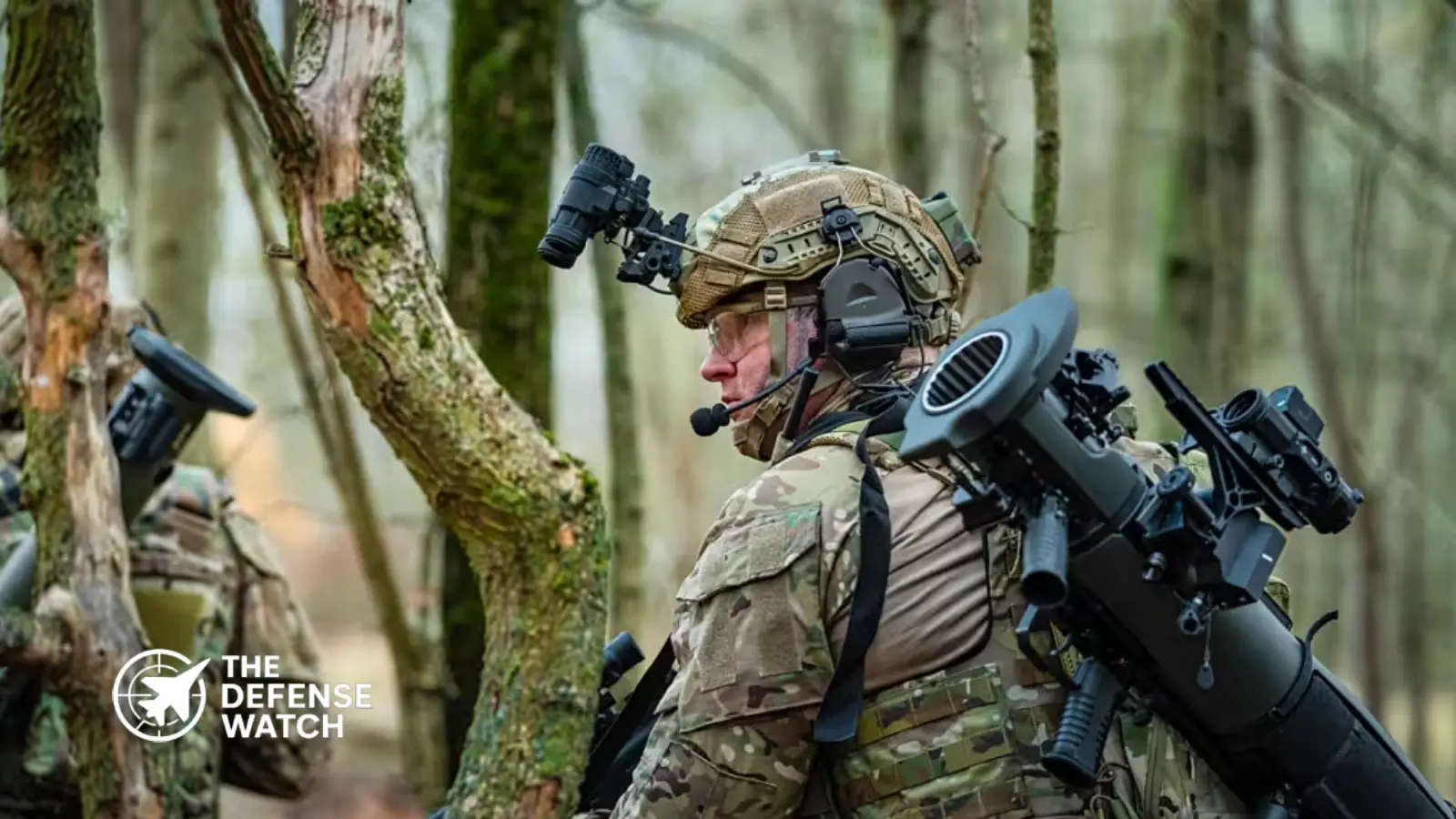
Saab has received a new order from Lithuania for the Carl-Gustaf M4 recoilless rifle system and associated training equipment, marking another step in the Baltic nation’s ongoing military modernization program.
The contract is valued at approximately SEK 460 million, or roughly $48 million, with deliveries scheduled between 2026 and 2029. The agreement forms part of a broader ten-year framework contract between Saab and Lithuania that could reach a total value of SEK 640 million if additional options are exercised.
The order includes Carl-Gustaf M4 weapon systems, sub-calibre adapters for training ammunition, and Carl-Gustaf Outdoor Trainers designed to improve combat readiness and live-fire preparation.
Lithuania has accelerated defense spending in recent years, prioritizing anti-armor systems, air defense, armored mobility, and infantry modernization. The Saab Carl-Gustaf M4 order aligns with NATO efforts to improve frontline readiness and strengthen deterrence capabilities near the alliance’s eastern flank.
In a statement, Görgen Johansson, head of Saab’s Dynamics business area, said the company remains committed to supporting Lithuanian forces with advanced battlefield capabilities and training systems.
The Carl-Gustaf M4 is the latest generation of Saab’s shoulder-fired recoilless rifle family. Compared with earlier variants, the M4 introduces a lighter design, improved ergonomics, digital compatibility, and enhanced integration with modern battlefield systems.
Weighing less than previous versions, the weapon is intended to improve mobility for dismounted infantry units operating in urban environments and contested terrain.
The Carl-Gustaf system remains in service with numerous NATO members and partner nations, including the United States, United Kingdom, Poland, and Sweden.
Its growing adoption reflects a broader trend among Western militaries toward portable, highly flexible infantry weapons capable of countering armored threats without relying exclusively on heavier anti-tank missile systems.
The Saab Carl-Gustaf M4 order also highlights the increasing importance of integrated training ecosystems alongside frontline weapon procurement. Modern military buyers are placing greater emphasis on simulation systems and realistic field training to improve readiness while reducing ammunition costs and safety risks.
Training Systems Included In The Agreement
A key aspect of the Lithuanian agreement is the inclusion of advanced training solutions.
The Carl-Gustaf Outdoor Trainer enables soldiers to rehearse tactical engagements and firing procedures in realistic operational conditions without requiring full live-fire exercises. Sub-calibre adapters further allow lower-cost training using reduced-caliber ammunition while maintaining operational familiarity with the launcher.
This integrated training approach helps units sustain proficiency levels while minimizing wear on operational weapons and reducing logistical burdens.
The focus on readiness is particularly important for smaller frontline NATO states that require highly capable reserve and active-duty forces able to mobilize quickly during regional crises.
Regional governments have prioritized interoperability with NATO forces, modernization of legacy Soviet-era systems, and increased investment in domestic defense resilience.
The inclusion of Lithuanian defense industry cooperation in the agreement also reflects a wider European trend toward strengthening sovereign industrial participation and local sustainment capacity within major defense contracts.
For Saab, the Lithuanian agreement reinforces the company’s strong position in the European infantry weapons market at a time of rising demand for portable anti-armor and multi-role infantry systems.
U.S. Army Expands Enhanced Night Vision Goggles Procurement
The U.S. Army has awarded Elbit Systems of America a $212 million contract to continue production and delivery of enhanced night vision goggles for U.S. ground forces. The agreement marks another major investment in the Army’s broader modernization strategy aimed at improving infantry survivability and combat effectiveness during day and night operations.
The contract supports procurement of advanced Enhanced Night Vision Goggle-Binocular systems, commonly known as ENVG-B systems. These systems combine traditional night vision capability with thermal sensing technology to improve target acquisition and battlefield awareness in degraded visual environments.
The enhanced night vision goggles program remains one of the Army’s most visible soldier modernization efforts under its close combat capability upgrades.
Advanced Night Fighting Capability
The ENVG-B system provides soldiers with fused white phosphor image intensification and thermal imaging. This allows operators to detect threats through smoke, dust, darkness, and camouflage while maintaining improved depth perception compared to legacy monocular systems.
The Army has steadily expanded deployment of enhanced night vision goggles across infantry, armored, and special operations units over the past several years. The technology is intended to improve operational tempo during nighttime engagements, where U.S. forces have traditionally maintained a tactical advantage.
Military analysts increasingly view advanced night vision and thermal fusion systems as essential in modern peer conflict environments. Near-peer competitors including Russia and China have invested heavily in electronic warfare, drone reconnaissance, and low-visibility combat capabilities, pushing NATO and U.S. forces to accelerate infantry modernization programs.
Soldier Modernization Remains A Pentagon Priority
The latest contract reflects continued Pentagon emphasis on soldier lethality and survivability as part of the Army’s long-term modernization roadmap.
In recent years, the service has prioritized upgrades in areas including:
Enhanced night vision goggles are considered a foundational capability within that modernization effort because they directly affect maneuver effectiveness at the squad level.
The Army has repeatedly stressed that future conflicts may involve contested electromagnetic environments, urban warfare, and prolonged operations in low-light conditions. Advanced fused imaging systems help reduce operational limitations in such scenarios.
The continued procurement also signals confidence in domestic defense industrial capacity supporting soldier systems production. Elbit Systems and its U.S. subsidiary have become major suppliers of electro-optical and soldier survivability technologies for American and allied armed forces.
Growing Demand For Battlefield Electro-Optics
Global demand for military electro-optical systems has increased significantly since the outbreak of major conflicts in Ukraine and the Middle East. Modern battlefields increasingly rely on persistent surveillance, thermal detection, and rapid target identification capabilities.
Defense planners now view night dominance as a critical operational requirement rather than a niche advantage. Thermal fusion optics, helmet-mounted displays, and digitally connected targeting systems are becoming standard equipment for frontline combat troops.
The U.S. Army’s investment in enhanced night vision goggles aligns with broader trends across NATO militaries, many of which are accelerating procurement of advanced infantry equipment amid rising geopolitical tensions.
Industry observers also note that continued contracts of this scale provide stability for the U.S. defense manufacturing base while supporting long-term technology development in electro-optical warfare systems.
Strategic Implications
The enhanced night vision goggles contract demonstrates how relatively small-scale soldier systems can have outsized operational impact. While large platforms such as fighter aircraft and missile systems dominate defense headlines, infantry modernization remains central to combat readiness.
The Army’s continued investment in ENVG-B technology suggests the service expects future ground combat operations to depend heavily on sensor fusion, rapid targeting, and all-weather battlefield awareness.
As militaries adapt to increasingly complex operational environments, integrated night vision and thermal systems are likely to remain a priority procurement area across NATO and allied defense programs.
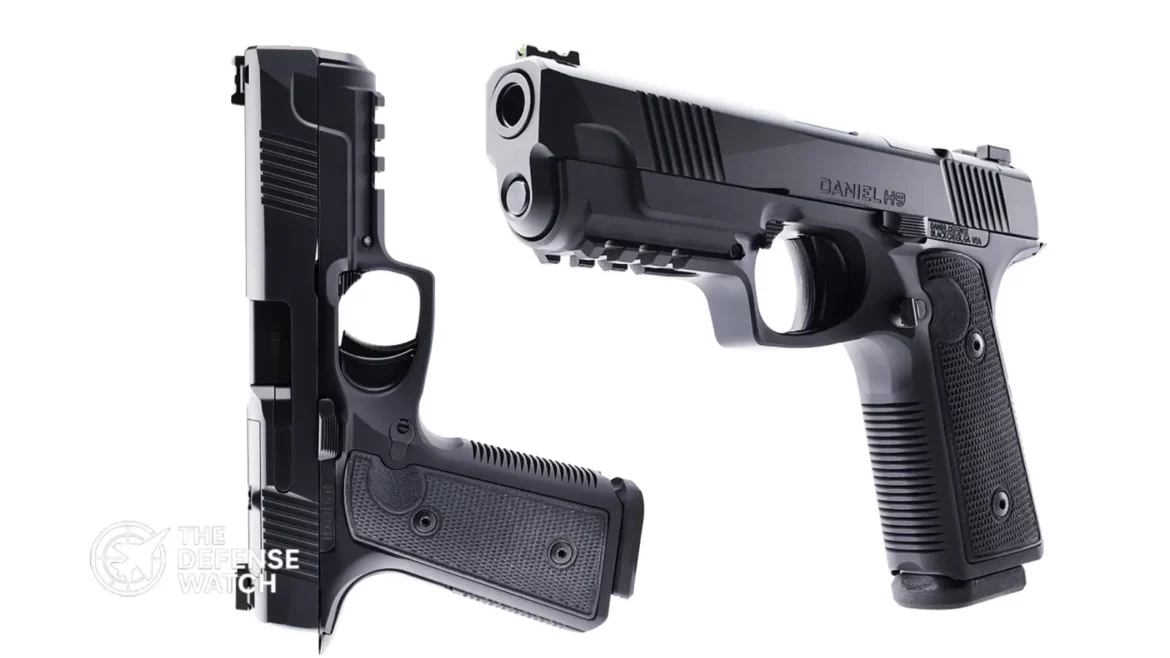
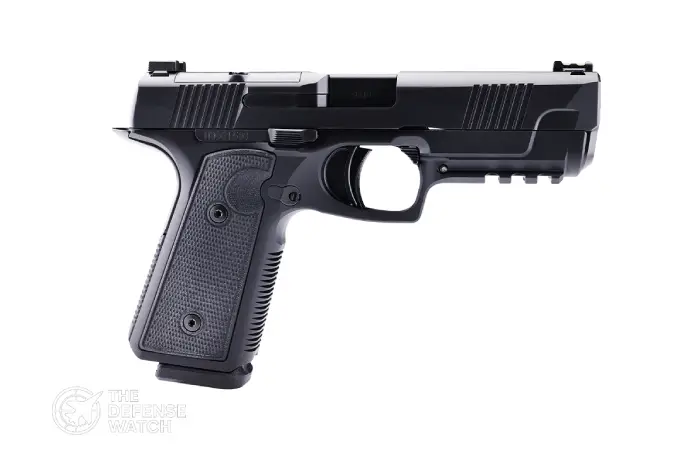
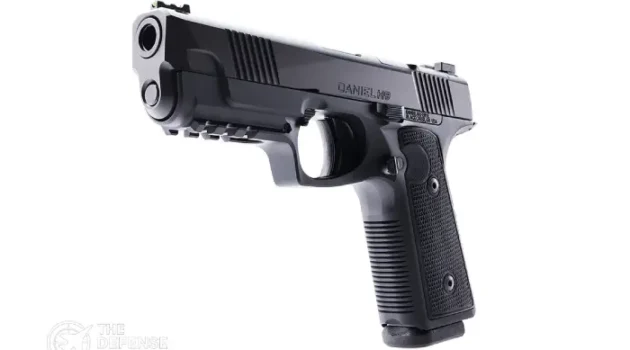
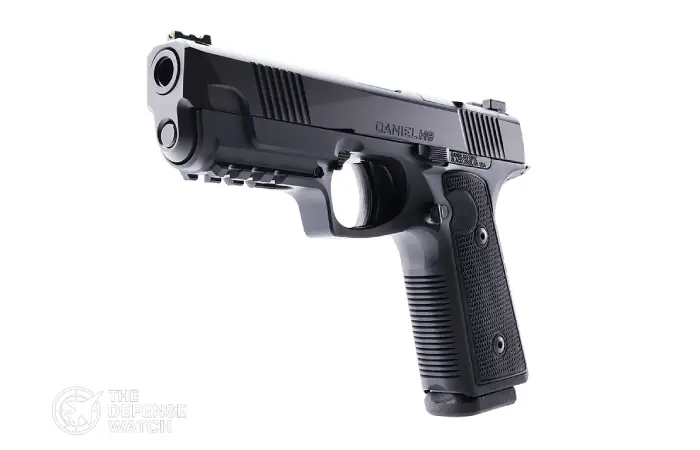
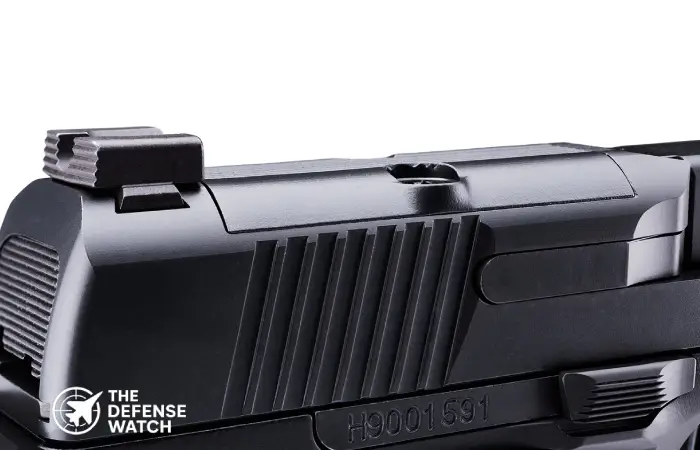
The Daniel Defense H9 represents a calculated resurrection of one of the most mechanically ambitious striker-fired pistol concepts of the modern era. Originally engineered by Hudson Manufacturing, the H9’s foundational architecture — a low bore axis, inline recoil system, and 1911-inspired ergonomics — was functionally ahead of its production infrastructure. Daniel Defense, a manufacturer with an established track record in military-contract rifle systems, has applied its precision fabrication capabilities to the platform, addressing the original’s manufacturing vulnerabilities while preserving its operational geometry. The result is a mission-capable sidearm that warrants serious evaluation by defense professionals, executive protection specialists, and those structuring residential defense architecture around reduced-recoil, high-control ballistic systems.
I. THE HUDSON LEGACY: A DESIGN THAT OUTLIVED ITS MANUFACTURER
To understand what Daniel Defense has built, one must first account for what Hudson Manufacturing attempted. Founded with the singular objective of producing the H9, Hudson’s design team pursued an unconventional engineering brief: create a striker-fired pistol that felt and shot like a tuned 1911, without the platform’s weight, single-action limitations, or manual safety requirement.
The Hudson H9, introduced at SHOT Show 2017, was immediately recognized within the firearms engineering community as structurally novel. Its bore axis — the vertical distance between the shooter’s hand and the barrel centerline — was dramatically lower than any production striker-fired pistol on the market. This was not an aesthetic choice. It was a calculated mechanical intervention designed to reduce muzzle flip by shortening the lever arm through which recoil force acts on the shooter’s wrist.
The trigger system compounded this advantage. Rather than the curved, hinged trigger geometry standard to Glock-pattern pistols, the H9 employed a straight-pull trigger with a flat face and a short, tactile reset — characteristics borrowed directly from competition 1911 architecture. For operators accustomed to single-action platforms, the H9 offered a viable transition path without the training overhead of hammer management.
Hudson Manufacturing ceased operations in 2019, a casualty of production scaling failures rather than design deficiencies. The intellectual property sat dormant — a viable ballistic tool without a viable manufacturer. Daniel Defense’s acquisition of that IP and subsequent engineering commitment to the H9 platform is, operationally, the more significant story.
II. DANIEL DEFENSE: MANUFACTURING CREDIBILITY AS A FORCE MULTIPLIER
Before assessing the H9 itself, the organizational context of Daniel Defense warrants acknowledgment. The company’s primary market identity is built on the MK18 and DDM4 series of AR-platform rifles — systems that have achieved adoption across U.S. military and law enforcement channels. Their manufacturing infrastructure is oriented around tight-tolerance CNC machining, cold hammer forging, and mil-spec material standards.
Image Source : Daniel Defense
This is not a polymer-frame pistol manufacturer experimenting with a heritage acquisition. Daniel Defense brought a rifle-grade manufacturing philosophy to a pistol platform, and the material specification decisions in the H9 reflect that institutional orientation directly.
III. TECHNICAL BREAKDOWN: MATERIAL SCIENCE AND MECHANICAL ARCHITECTURE
3.1 Frame Construction: 7075-T6 Aluminum — A Deliberate Departure
The H9’s frame is CNC-machined from 7075-T6 aluminum alloy — the same material specification used in aircraft structural components and, notably, in Daniel Defense’s own AR-pattern lower receivers. This is a foundational differentiator from the dominant polymer-frame pistol market.
7075-T6 aluminum carries a tensile strength of approximately 83,000 psi, substantially exceeding the structural properties of the glass-filled nylon polymers used in Glock, SIG P320, and comparable platforms. The practical operational implications are dimensional stability under thermal load, resistance to frame flex during high-round-count strings of fire, and long-term retention of rail interface tolerances — relevant for operators who mount weapon lights or targeting systems on a consistent basis.
The CNC machining process ensures dimensional repeatability across production units, a manufacturing characteristic that directly affects fit between frame, slide, and internal components. Looser tolerances in machined metal components are a product of inadequate process control, not an inherent material limitation.
Weight is the acknowledged trade-off. The aluminum frame positions the H9 as a duty-oriented or residential defense platform rather than a deep-concealment carry solution. Operators should calibrate holster selection and carry configuration accordingly.
3.2 Barrel: 4.28-Inch Cold Hammer Forged
The H9’s 4.28-inch barrel is produced via cold hammer forging — a manufacturing process in which a steel mandrel is driven through a barrel blank under high-force rotary hammer strikes, compressing the steel and forming rifling simultaneously. The result is a barrel with a grain structure that follows the rifling geometry rather than being cut across it, producing measurably superior wear resistance and sustained accuracy over service-life round counts.
Cold hammer forging is the process standard for military-contract barrel production — M16 and M4 barrels are CHF-produced. Its application to a pistol barrel at this price point signals a manufacturing commitment to service-life durability rather than cost optimization.
Image Source : Daniel Defense
The 4.28-inch length provides a meaningful ballistic advantage over compact carry platforms in the 3.5-to-3.9-inch range, producing higher muzzle velocity and more complete powder combustion — both relevant factors for terminal performance in close-quarters ballistic engagements.
The H9’s trigger is the platform’s most operationally distinctive feature and its primary ergonomic departure from the Glock-pattern market. The straight-pull, flat-faced trigger operates on a geometry that distributes finger contact load across a broader surface area, reducing the perception of trigger weight and improving consistency of pull angle across varying finger placements.
Travel is short. Reset is tactile and audible. The pull weight is factory-set in a range consistent with duty applications — not a competition-tuned hair trigger, but clean and consistent in a manner that supports accurate fire under elevated physiological stress conditions.
For operators with prior 1911 or 2011 trigger experience, adaptation time is minimal. For operators transitioning from Glock-pattern systems, the straight-pull geometry represents a training consideration but not an operational liability.
3.4 Low Bore Axis: Recoil Management as a System Feature
The H9’s defining mechanical characteristic — the low bore axis — functions as a passive recoil mitigation system embedded in the platform’s geometry. In conventional striker-fired pistols, the barrel sits above the bore of the shooter’s hand, creating a moment arm that converts rearward recoil force into rotational muzzle rise.
The H9 positions the barrel as close to the hand as mechanically feasible, compressing that moment arm. The inline recoil spring system, positioned below the barrel rather than around it, enables this geometry. The operational result is measurably faster return to target between shots, reduced visual disruption during rapid fire, and reduced cumulative wrist fatigue during extended training or operational deployment.
This is not a subjective comfort preference. It is a mechanical advantage with direct implications for split times in close-quarters engagements where follow-up shot speed and first-round accuracy determine outcomes.
IV. COMPETITIVE POSITIONING: H9 vs. GLOCK 19 vs. SIG P320
The H9 does not compete on price. Its positioning is premium, and a direct specification comparison against the two dominant standard-issue striker-fired platforms clarifies the operational rationale for that premium.
Parameter
Daniel Defense H9
Glock 19 Gen5
SIG Sauer P320
Frame Material
7075-T6 Aluminum
Polymer
Polymer
Barrel Length
4.28 in. (CHF)
4.02 in.
3.9 in. (Compact)
Bore Axis
Ultra-low (inline)
Standard
Standard
Trigger Type
Straight-pull, flat
Curved, hinged
Curved, hinged
Weight (unloaded)
~34 oz.
~23.6 oz.
~25.5 oz.
Capacity
15+1 (9mm)
15+1
17+1
MSRP Range
~$1,800–$2,000
~$600–$650
~$600–$700
Frame Flex Under Load
Minimal (metal)
Measurable
Measurable
Target Market
Duty / Residential Defense
Duty / Carry
Duty / Modular
The Glock 19 is the global benchmark for reliability and logistical simplicity. It is not the benchmark for trigger quality, bore axis geometry, or material specification. The SIG P320 introduced modularity as its primary value proposition — the ability to reconfigure grip module and caliber within a single serialized chassis. Neither platform was designed around the H9’s specific operational priorities.
The H9’s premium price point is justified for operators who place primary value on recoil management, trigger quality, and frame material durability. It is not the operationally correct choice for every application — it was not designed to be. It was designed to be the correct choice for operators who understand what they are purchasing and why.
V. OPERATIONAL APPLICATION: RESIDENTIAL DEFENSE ARCHITECTURE
The H9’s specification set is particularly well-suited to fixed-position residential defense deployment — a context in which concealment weight is not a primary constraint, but control, reliability, and rapid follow-up capability are mission-critical parameters.
Image Source : Daniel Defense
In a residential defense scenario, the operator is not on patrol. They are responding to a threat that has already breached a defined perimeter, typically in low-light conditions, at distances ranging from across a room to across a hallway. The engagement geometry is inherently close-quarters. Shot placement under stress, with a potentially non-dominant hand, in a compromised physical position, against a moving target — these are the performance conditions the platform must be evaluated against.
The H9’s low bore axis reduces muzzle climb in those conditions. The straight-pull trigger reduces the risk of trigger-induced accuracy error under elevated stress. The aluminum frame’s dimensional stability ensures the mounted weapon light — a non-negotiable component of any professionally configured residential defense system — maintains zero under recoil. The 4.28-inch CHF barrel extracts maximum ballistic performance from the 9mm cartridge.
For operators structuring a residential defense system around a primary long-gun and a sidearm, the H9 functions as a high-performance secondary that does not require the user to accept capability trade-offs in the name of carry convenience.
VI. TECHNICAL SPECIFICATIONS
Specification
Detail
Platform Designation
Daniel Defense H9
Action Type
Striker-Fired, Semi-Automatic
Caliber
9mm Luger
Barrel Length
4.28 inches
Barrel Manufacturing
Cold Hammer Forged
Frame Material
CNC-Machined 7075-T6 Aluminum
Slide Material
Machined Steel
Trigger Type
Straight-Pull, Flat-Faced (1911-Style)
Bore Axis
Ultra-Low / Inline Recoil System
Magazine Capacity
15+1 (9mm)
Overall Length
~7.55 inches
Height
~5.25 inches
Width
~1.35 inches
Unloaded Weight
~34 oz.
Safety Systems
Trigger Safety, Internal Passive
Rail Interface
Picatinny MIL-STD-1913
Finish
Cerakote / Nitride
Country of Origin
United States
MSRP
~$1,800–$2,000
VII. HOLSTER AND ACCESSORIES ECOSYSTEM
One practical operational consideration for H9 adopters: the platform’s return from discontinuation means the dedicated holster market is in active development rather than mature. The H9’s aluminum frame geometry — particularly its unique rail position and slide profile — does not conform to standard Glock 19 or SIG P320 holster dimensions.
Operators should source holsters from manufacturers with confirmed H9-specific mold production. Kydex custom shops and several established duty-holster manufacturers have introduced H9-compatible SKUs following the Daniel Defense relaunch. Confirm fit verification before operational deployment. A holster that retains inconsistently is a liability in any defensive application.
For weapon light mounting, the Picatinny rail interface accepts standard MIL-STD-1913 accessories. Streamlight TLR-1 HL and SureFire X300 series lights are confirmed compatible, though operators should verify fitment against current H9 production units as the accessories ecosystem continues to develop.
VIII. PRICING AND MARKET AVAILABILITY
The Daniel Defense H9 carries an MSRP in the $1,800–$2,000 range, positioning it in the upper tier of the production striker-fired pistol market — above the Glock 19, SIG P320, and Walther PDP, and in approximate parity with the HK VP9 or Wilson Combat-tuned variants of standard platforms.
Street pricing at authorized Daniel Defense dealers may reflect modest variation above or below MSRP depending on regional market conditions and distributor inventory levels. The platform’s recent return to production means inventory availability is not yet consistent across all retail channels. Operators seeking to acquire the H9 should contact authorized Daniel Defense dealers directly or monitor the manufacturer’s dealer locator for confirmed stock.
The price premium over Glock-pattern alternatives is not a market positioning error. It is a reflection of material costs (7075-T6 aluminum vs. polymer), manufacturing process costs (CNC machining and cold hammer forging vs. injection molding and button rifling), and the limited-production economics of a specialized platform. Operators evaluating the H9 should assess total cost against the operational capability delta, not against the acquisition cost of a mass-market baseline.
IX. OPERATIONAL VERDICT
The Daniel Defense H9 is a technically coherent answer to a specific operational question: what does a striker-fired pistol look like when it is designed without the cost constraints of mass-market production?
The answer is a platform with an aluminum frame that will not flex or deform under service conditions, a cold hammer forged barrel with a service life measured in tens of thousands of rounds, a trigger that supports accurate fire without requiring a gunsmith, and a bore axis geometry that produces measurably faster target reacquisition than any comparable production striker-fired pistol.
It is not the correct platform for every operator. It is heavier than polymer-frame alternatives. Its holster ecosystem is still developing. Its price point requires deliberate budget allocation. These are not design deficiencies — they are engineering trade-offs made in favor of performance over convenience.
For defense professionals, residential security architects, and operators who have moved past the question of “what can I afford” toward “what is the correct tool for this specific mission profile,” the Daniel Defense H9 is a mission-capable answer. It delivers on the promise Hudson Manufacturing could not fulfill — not because the design was flawed, but because the manufacturing infrastructure was. Daniel Defense has closed that gap.
The H9 is, by any objective material and mechanical assessment, the most technically ambitious production striker-fired pistol currently available to the civilian professional market. Whether that ambition is operationally relevant is a determination each operator must make within the context of their specific threat environment, training level, and deployment architecture.
For those for whom it is relevant, it is the correct choice.
The XM8 carbine U.S. Army program has reached a key milestone with the acceptance of the first delivery from SIG Sauer, marking a renewed push to modernize frontline infantry capabilities.
The initial batch of XM8 carbines has been formally delivered to the U.S. Army, signaling progress in efforts to replace or supplement legacy small arms systems. The move comes as the Army continues to prioritize lethality, reliability, and adaptability in evolving combat environments.
While details on deployment timelines remain limited, the delivery confirms that the XM8 platform is moving from concept and evaluation toward operational integration.
¦
KEY FACTS AT A GLANCE
U.S. Army has accepted its first XM8 carbine delivery from SIG Sauer as part of ongoing infantry modernization efforts.
The XM8 platform is designed to enhance reliability, modularity, and battlefield adaptability over legacy systems.
The delivery supports broader efforts to upgrade small arms capability across frontline combat units.
SIG Sauer continues to expand its role as a key supplier of next generation U.S. Army infantry weapons.
The move reflects a strategic shift toward more advanced, modular, and future ready weapon systems.
For years, the Army has relied heavily on the M4 carbine platform. While proven in combat, the M4 faces limitations in range, lethality, and modular flexibility against near peer adversaries. The XM8, originally developed as part of earlier modernization efforts, has re-emerged as a potential solution to these challenges.
The system is designed with a modular architecture, allowing it to be configured for different mission profiles, including standard infantry use, designated marksman roles, and close quarters operations. This flexibility is increasingly important as U.S. forces prepare for multi domain operations across diverse theaters.
SIG Sauer’s Expanding Role
The SIG Sauer XM8 rifle delivery underscores the company’s growing footprint in U.S. military small arms programs. SIG Sauer has already secured major contracts in recent years, including the Next Generation Squad Weapon program, which introduced the XM7 rifle and XM250 automatic rifle.
By delivering the XM8 platform, SIG Sauer is reinforcing its position as a central player in the Army’s transition toward next generation infantry weapons.
This consolidation of suppliers may also streamline logistics and training, as multiple systems share design philosophies and operational concepts. However, it also places increased responsibility on a single manufacturer to meet performance and delivery expectations.
Operational Implications on the Battlefield
The introduction of the XM8 carbine U.S. Army system could have tangible effects on battlefield performance, particularly in terms of reliability and adaptability.
One of the key advantages often associated with the XM8 design is improved durability under harsh conditions. Past small arms programs have emphasized the need for weapons that can perform consistently in extreme environments, from desert heat to arctic cold.
Additionally, the XM8’s modular design supports rapid customization. Units can adjust configurations based on mission requirements without needing entirely different weapon systems. This reduces logistical burden while increasing tactical flexibility.
From a combat perspective, enhancements in ergonomics, weight distribution, and accessory integration may also improve soldier effectiveness and reduce fatigue during extended operations.
Strategic Context: Preparing for Peer Conflict
The U.S. Army infantry modernization effort, including the XM8 program, is closely tied to preparations for potential high intensity conflict against near peer adversaries.
In such scenarios, small arms are not just individual weapons but part of a larger system of systems that includes sensors, communications, and precision targeting. The XM8’s design aligns with this approach, enabling integration with advanced optics, fire control systems, and digital battlefield networks.
This shift reflects lessons learned from recent conflicts, where adaptability and rapid decision making have proven critical. Modern infantry units must be equipped with weapons that support these requirements without adding unnecessary complexity.
Challenges and Considerations
Despite the progress, the XM8 carbine U.S. Army program is not without challenges.
First, integration into existing force structures will require training, maintenance adjustments, and logistical planning. Transitioning from established platforms like the M4 is a complex process that involves more than simply issuing new weapons.
Second, questions remain about long term procurement scale. It is unclear whether the XM8 will fully replace existing systems or serve as a complementary platform within a broader small arms ecosystem.
Finally, budget pressures and competing priorities could influence the pace of adoption. The Army must balance investments across multiple modernization programs, including armored vehicles, long range fires, and air defense.
What Comes Next
The initial SIG Sauer XM8 rifle delivery is likely just the first step in a phased rollout. Future deliveries, testing, and operational feedback will determine how widely the system is adopted across the force.
If the XM8 meets performance expectations, it could play a significant role in shaping the next generation of U.S. Army infantry weapons. Its success will depend not only on technical performance but also on how well it integrates into the broader modernization framework.
For now, the delivery marks a clear signal that the Army is accelerating efforts to equip its soldiers with more capable and adaptable small arms.
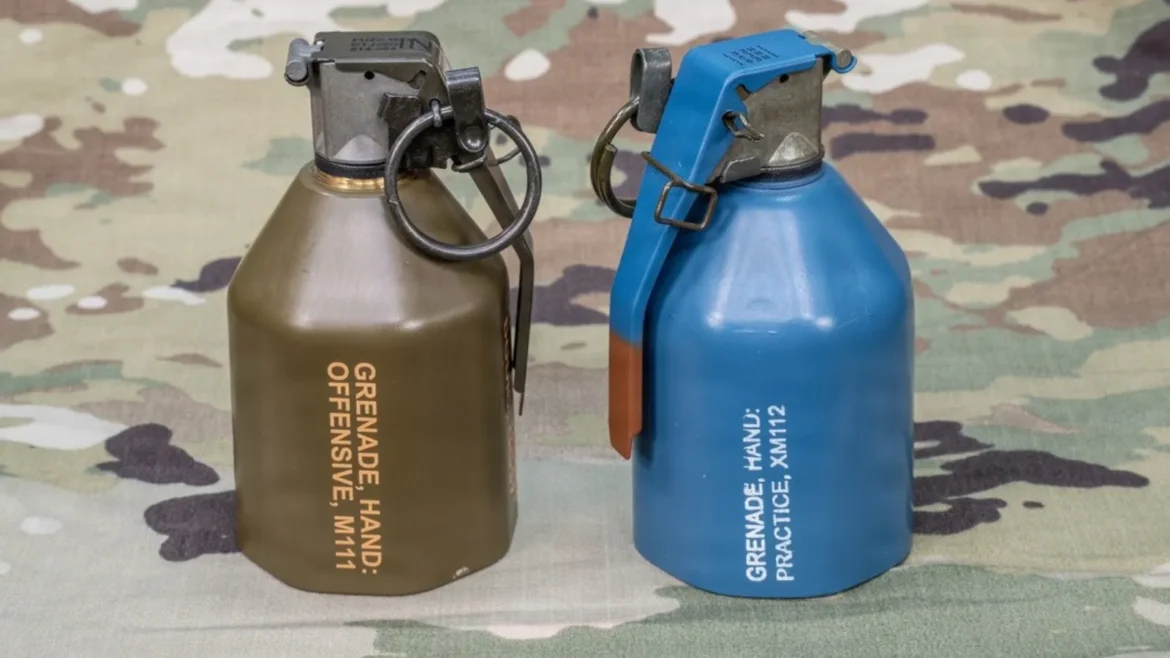
The US Army approved the M111 offensive hand grenade for Full Material Release, the first newly approved lethal grenade since 1968.
The grenade relies on blast overpressure instead of fragmentation, making it more effective in enclosed combat environments.
Developed at Picatinny Arsenal, the system replaces the aging Mk3A2 grenade series with a safer and modern design.
The M111 uses the same fuze and arming procedures as existing M67 grenades to simplify logistics and training.
The new design improves safety while giving infantry units a dedicated weapon for close quarters urban combat.
US Army Approves M111 Offensive Hand Grenade
The M111 offensive hand grenade has been approved by the US Army for Full Material Release, marking the first newly authorized lethal hand grenade for the service since 1968. The decision allows the Army to move the weapon into wider production and operational use across infantry units.
Developed by the Army’s Capabilities Program Executive Office Ammunition and Energetics in partnership with the DEVCOM Armaments Center at Picatinny Arsenal, the grenade replaces the aging Mk3A2 series. The new munition addresses both safety concerns and modern battlefield requirements, particularly in urban environments where traditional fragmentation grenades pose significant risks to friendly forces.
The Big Picture
The US Army’s approval of the M111 reflects a broader effort to modernize legacy munitions and adapt infantry equipment for contemporary combat environments.
Urban warfare has become a defining feature of modern conflicts, from Iraq and Syria to recent fighting in densely populated areas worldwide. Military planners increasingly expect future operations to take place in cities, where buildings, narrow corridors, and civilian infrastructure complicate the use of traditional explosive weapons.
U.S. Army
Hand grenades have remained a staple of infantry combat for decades. However, many designs currently in service trace their origins to Cold War era requirements. The Mk3A2 offensive grenade, introduced in 1968, remained the Army’s primary concussive grenade despite evolving operational needs.
By introducing the M111 offensive hand grenade, the Army is updating a critical piece of soldier equipment that had seen limited innovation for nearly six decades.
What’s Happening
The US Army formally cleared the M111 offensive hand grenade for Full Material Release after years of development and testing at Picatinny Arsenal in New Jersey.
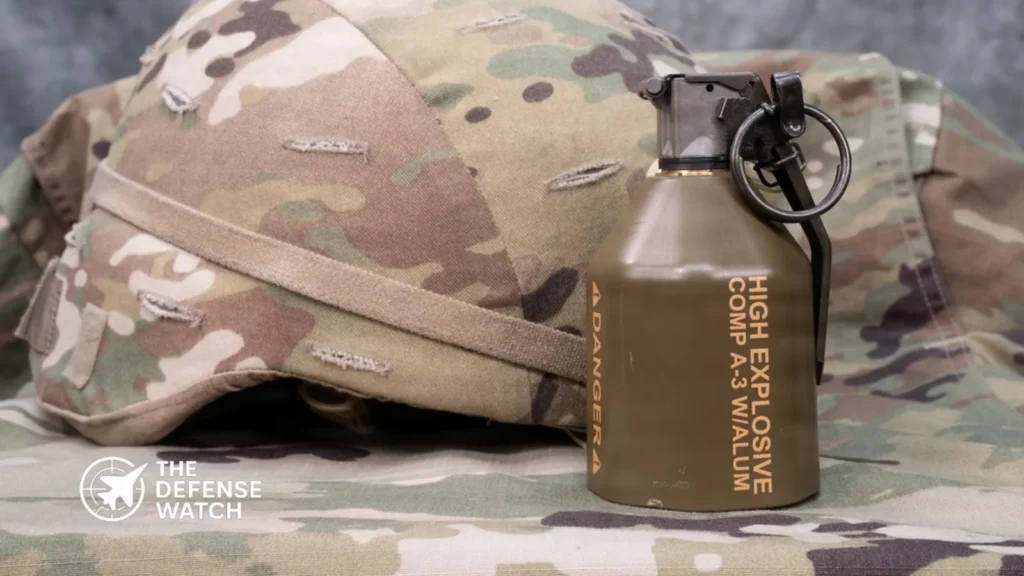
The weapon replaces the obsolete Mk3A2 grenade, which faced increasing restrictions due to its asbestos based body. The M111 eliminates this hazard by using a plastic casing that is fully consumed during detonation.
Unlike the widely used M67 fragmentation grenade, the M111 relies primarily on blast overpressure rather than metal fragmentation to neutralize targets. This design produces powerful shock waves capable of incapacitating enemy personnel in enclosed spaces such as rooms, bunkers, and narrow structures.
U.S. Army
Army officials say the weapon fills a critical operational niche. Fragmentation grenades like the M67 can send lethal fragments in all directions, which may bounce off walls or penetrate barriers in confined spaces. The M111 instead concentrates its lethal effects through pressure waves, reducing the risk to friendly forces positioned nearby.
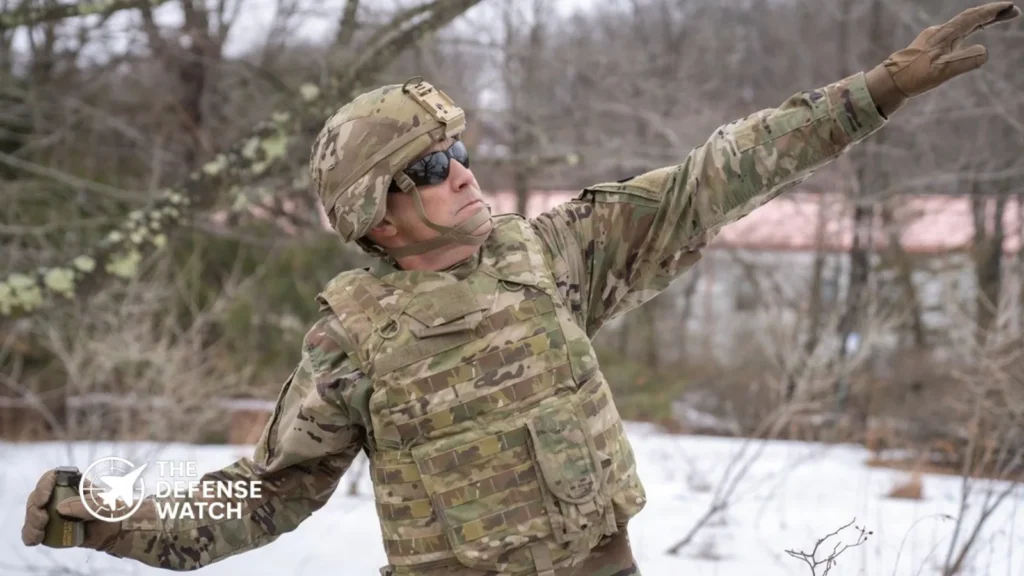
The grenade uses the same fuze and five step arming process as the M67 fragmentation grenade. This design decision allows soldiers to train using familiar procedures while simplifying manufacturing and supply chains.
Why It Matters
The introduction of the M111 offensive hand grenade directly reflects lessons learned during decades of close quarters combat.
US forces conducting urban operations in Iraq and Afghanistan often encountered situations where fragmentation grenades were not the ideal tool. When fighting inside buildings or narrow corridors, fragments can travel unpredictably or penetrate interior walls, increasing the risk of friendly casualties.
U.S. Army
Army program officials noted that door to door combat in Iraq revealed the limitations of existing grenade types. A blast based weapon designed for confined spaces offers a safer alternative for clearing rooms and fortified positions.
The M111 gives infantry units greater flexibility. Soldiers can now choose between fragmentation effects in open terrain using the M67, or concentrated blast effects when operating inside structures.
This approach reflects a broader trend toward specialized infantry munitions tailored for specific tactical environments.
Strategic Implications
Although the M111 is a relatively small piece of equipment, its introduction has broader implications for infantry combat capability.
By fielding a grenade optimized for enclosed spaces, the US Army is improving the survivability and effectiveness of infantry units conducting room clearing operations.
The change also highlights the importance of incremental modernization. While large scale programs such as next generation combat vehicles often dominate headlines, improvements to basic soldier equipment can have immediate operational impact.
Grenades remain among the most widely used infantry weapons. Enhancing their safety and effectiveness directly affects frontline combat units.
Competitor View
Potential adversaries closely monitor US efforts to improve infantry lethality and urban combat capabilities.
At the tactical level, however, improvements to close combat equipment remain essential for ground forces.
What To Watch Next
The Army’s approval of the M111 offensive hand grenade allows the program to transition from development to broader production.
Future milestones will likely include expanded procurement contracts and gradual distribution to operational units. Training grenades, designated the M112, will support instruction and allow soldiers to practice with equipment that closely replicates the live weapon.
Industry participation may also expand. Because the Army retains government owned intellectual property for the grenade design, multiple manufacturers could potentially compete for production contracts.
This approach supports the Pentagon’s broader effort to strengthen the domestic ammunition industrial base.
Capability Gap
The M111 offensive hand grenade addresses a long standing capability gap in close quarters combat.
Fragmentation grenades excel in open terrain but can create unacceptable risks in confined spaces. Conversely, older offensive grenades such as the Mk3A2 lacked modern materials and safety standards.
The M111 attempts to balance lethality with controlled effects in urban environments. Its blast overpressure can incapacitate enemies inside rooms or bunkers while reducing unintended fragmentation hazards.
However, offensive grenades also have limitations. Their blast effects diminish quickly in open areas, meaning they cannot replace fragmentation grenades in all situations.
For this reason, the Army continues to field both grenade types as complementary tools for different combat scenarios.
The Bottom Line
The M111 offensive hand grenade modernizes a decades old infantry weapon and gives US soldiers a safer, more effective option for close quarters urban combat.