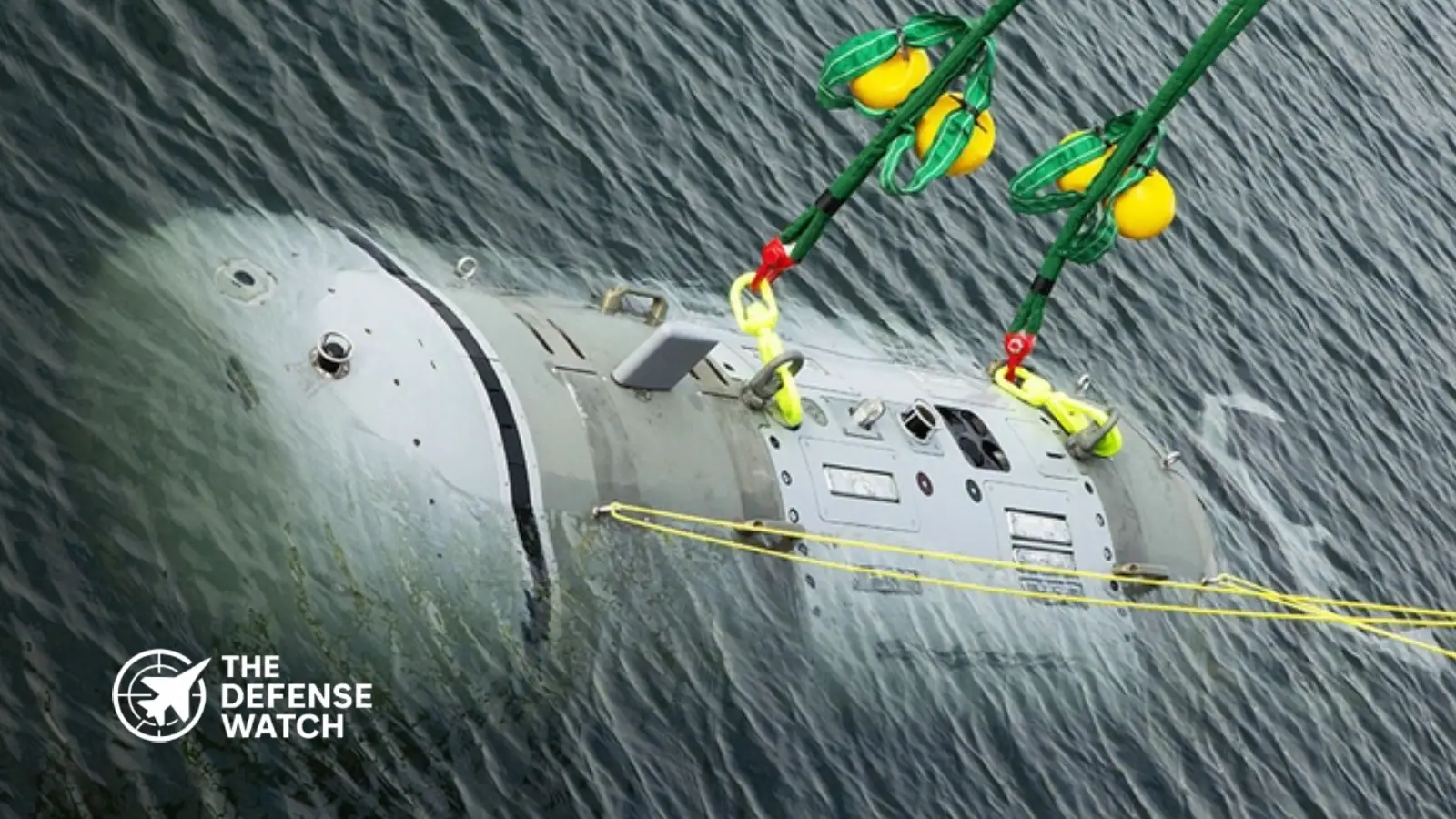
- General Dynamics Mission Systems received a $23.76 million contract modification from the U.S. Navy to continue submarine engineering and technical support activities.
- The work covers software development, hardware integration, systems engineering, testing, and modernization support for Navy submarine platforms.
- Most funding originates from Navy research, development, test, and evaluation accounts, highlighting the technology-focused nature of the effort.
- Activities will be performed primarily in Virginia, Rhode Island, and California through June 2027 under Naval Sea Systems Command oversight.
- The contract supports the Navy’s broader effort to maintain technological superiority across attack and strategic deterrent submarine fleets.
The U.S. Navy has awarded General Dynamics Mission Systems a $23.76 million contract modification to continue engineering, software development, and systems integration support for submarine programs. The award was announced by the Naval Sea Systems Command (NAVSEA), which serves as the contracting authority for many of the Navy’s undersea warfare and shipbuilding initiatives.
The modification exercises previously negotiated contract options under contract N00024-24-C-6230 and provides funding for technical support activities that are critical to sustaining and modernizing submarine combat, sensor, and mission systems. Work is scheduled to continue through June 2027.
Deep Technical & Strategic Context Analysis
Although the contract announcement does not identify a specific submarine class, the scope of work strongly aligns with the Navy’s growing emphasis on software-defined warfare capabilities across the undersea force. Modern U.S. submarines, including the Virginia-class attack submarines and the emerging Columbia-class ballistic missile submarines, rely on increasingly sophisticated software architectures that integrate sonar processing, combat management, navigation, communications, electronic warfare, and weapons control functions into a unified operational environment.
General Dynamics Mission Systems has long served as a key supplier of submarine electronics, acoustic processing technologies, command-and-control systems, and mission-critical computing infrastructure. Continuous software development and hardware integration efforts are essential because submarine combat systems undergo frequent upgrades to address evolving threats, improve sensor performance, enhance cyber resilience, and accommodate new weapons and unmanned systems. Unlike traditional ship maintenance contracts focused on physical repairs, these engineering efforts directly influence a submarine’s combat effectiveness and survivability.
The contract’s structure also provides insight into procurement strategy. A cost-plus-fixed-fee arrangement is commonly used for advanced engineering and development work where technical requirements may evolve during execution. Under this model, the government reimburses allowable costs while paying a predetermined fee, reducing contractor risk during complex research and integration activities. Such contracts are frequently employed when software development, system testing, and technology maturation involve uncertainties that make fixed-price contracting impractical.
The inclusion of funding from the National Sea-Based Deterrence Fund further suggests a connection to technologies supporting the Navy’s strategic deterrence modernization effort. As the Columbia-class program progresses toward fleet introduction, maintaining compatibility between legacy systems and next-generation submarine architectures has become a major priority for naval planners.
Contract Breakdown & Details
Contract Value
- Award Value: $23,759,208
- Contract Type: Cost-plus-fixed-fee and cost-only modification
- Contract Number: N00024-24-C-6230
- Contracting Authority: Naval Sea Systems Command (NAVSEA), Washington, D.C.
- Expected Completion: June 2027
Scope Of Work
The modification funds:
- Engineering support services
- Technical support activities
- Software development
- Hardware integration
- Software integration and testing
- Submarine systems modernization support
These activities help ensure operational readiness and technology insertion across the Navy’s submarine enterprise.
Geographic Distribution Of Work
| Location | Share of Work |
|---|---|
| Manassas, Virginia | 65% |
| Middletown, Rhode Island | 25% |
| San Diego, California | 10% |
The concentration of work in Virginia reflects General Dynamics Mission Systems’ established submarine systems engineering and integration capabilities, while Rhode Island remains a major center for undersea warfare technology development due to its proximity to key Navy research and testing organizations.
Funding Breakdown
| Funding Source | Amount | Share |
|---|---|---|
| FY2026 Navy RDT&E | $3,978,097 | 83% |
| FY2022 Shipbuilding & Conversion (Navy) | $310,000 | 6% |
| FY2025 Navy RDT&E | $249,620 | 5% |
| FY2025 National Sea-Based Deterrence Fund | $185,000 | 4% |
| FY2024 Shipbuilding & Conversion (Navy) | $50,000 | 1% |
| FY2025 Shipbuilding & Conversion (Navy) | $9,000 | 1% |
A significant majority of funding originates from Research, Development, Test and Evaluation (RDT&E) accounts, indicating that the effort is primarily focused on technology advancement, software engineering, system testing, and capability enhancement rather than production activities.
Why This Contract Matters
The U.S. Navy’s undersea force remains one of the most strategically important elements of American military power, providing intelligence collection, anti-submarine warfare, long-range strike, special operations support, and nuclear deterrence missions worldwide.
As adversaries continue investing in advanced anti-submarine warfare technologies, artificial intelligence-enabled sensing systems, and long-range precision weapons, maintaining a technological edge increasingly depends on rapid software updates and continuous systems integration rather than solely on new platform construction. Contracts such as this enable the Navy to modernize existing submarine capabilities while preparing for future operational requirements associated with the Columbia-class and next-generation undersea warfare concepts.