US Air Force Sustainment Contract Overview
The US Air Force Sustainment Center has awarded a major sustainment contract valued at up to seven billion dollars to support contract field team labor augmentation across the force.
The indefinite delivery indefinite quantity multiple award contract supports aircraft and system sustainment missions worldwide and will run for ten years, according to official Air Force contract data.
Contract Scope and Structure
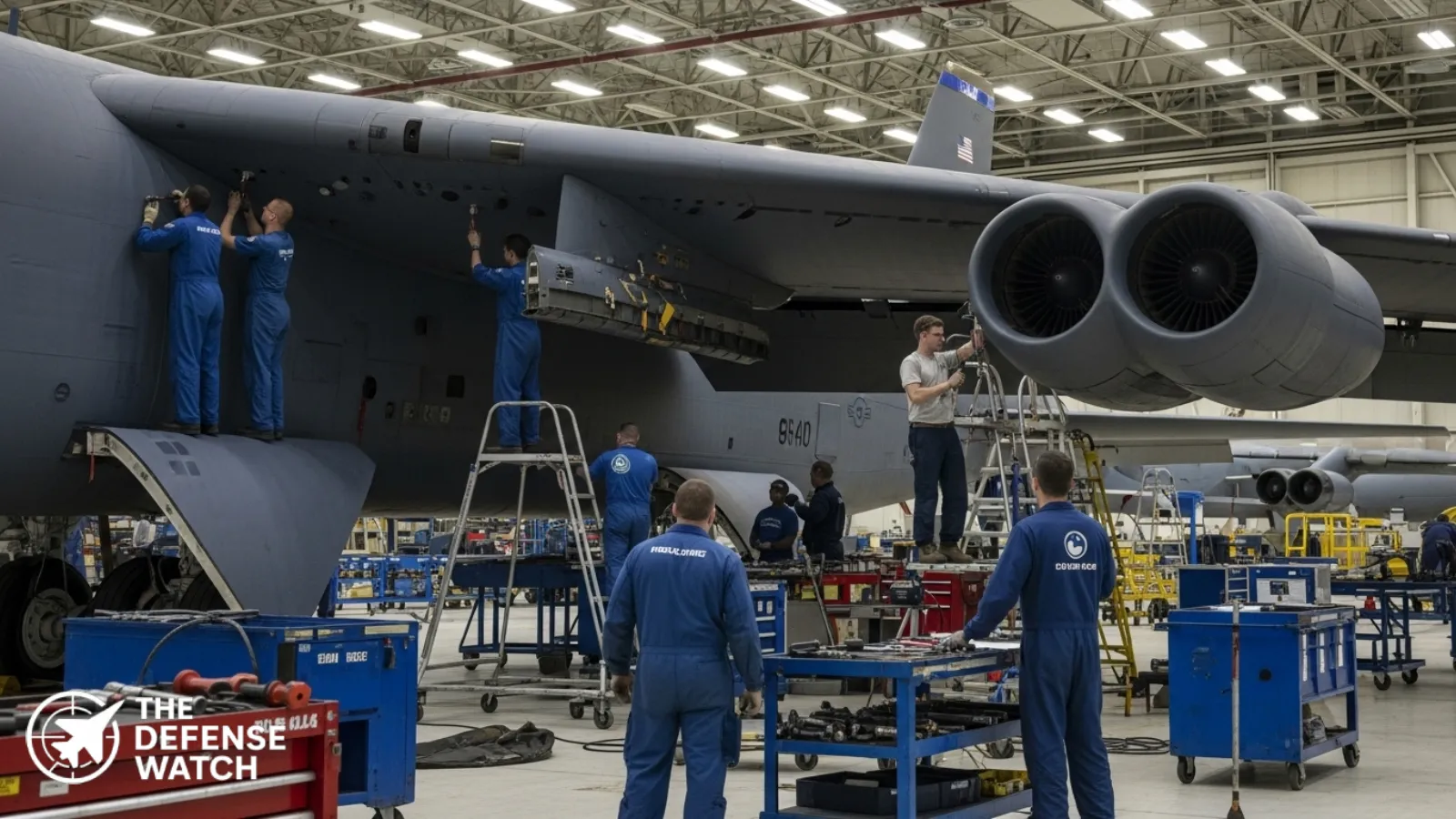
The contract provides contract field team labor augmentation to support Air Force maintenance, repair, and operational readiness missions. These teams are typically deployed to supplement organic Air Force maintenance units, particularly for high demand aircraft platforms and specialized systems.
The effort covers a ten year period from February 2026 to January 2036 and includes a five year base period with one five year option. Work locations will be determined through individual task orders and may include domestic and overseas operating sites.
The total contract ceiling is set at seven billion ten million dollars. At the time of award, fiscal year 2026 operations and maintenance funding totaling eleven thousand five hundred dollars was obligated, reflecting the initial administrative action rather than full program execution.
The contracting activity is the Air Force Sustainment Center at Tinker Air Force Base in Oklahoma.
Companies Selected for the Award
Twenty three companies were selected under the multiple award structure following a competitive acquisition that received twenty six offers.
Awarded firms include
4MHR Logistics LLC of Texas
Adams Communication Engineering Technology of Maryland
Aircraft Readiness Alliance of Alaska
Akima Logistics Services of Virginia
Global Logistics Support Services of Alabama
Kay and Associates of Illinois
PKL Services of California
Powerhouse Resources International of North Carolina
R2C Limited Liability of Alabama
Resicum International of Virginia
S and K Aerospace of Montana
Strategic Technology Institute of Maryland
Vali of Alabama
Vector Solutions of Arizona
AAR Government Services of Illinois
Amentum Services of Virginia
M1 Support Services of Texas
Several companies received more than one contract line under the award structure, reflecting their ability to support multiple mission areas.
Why Field Team Support Matters
Contract field teams play a central role in sustaining complex Air Force aircraft fleets, especially legacy platforms that require specialized technical expertise.
These teams often support depot level maintenance, aircraft modification programs, foreign military sales support, and surge operations where organic manpower is insufficient. They also provide continuity for long term sustainment programs where contractor experience is critical.
According to Air Force sustainment planning documents, contractor field support helps maintain readiness while allowing uniformed maintainers to focus on core operational missions.
Strategic Context
The award aligns with broader Air Force sustainment priorities focused on fleet availability, cost control, and lifecycle management. As aircraft fleets age and modernization efforts compete for funding, sustainment contracts remain a critical pillar of force readiness.
The Air Force Sustainment Center oversees maintenance and supply chain operations for a wide range of aircraft, including bombers, tankers, fighters, and mobility platforms. Contracted field team support enables rapid response to maintenance demands across this diverse inventory.
Defense acquisition experts note that large scale multiple award contracts also increase flexibility, allowing the Air Force to compete task orders and adjust workload distribution based on performance and mission need.