








@2026 – All Right Reserved. TheDefenseWatch.com
- Home
- Defense Systems
- Compare
- Mirage 2000 vs Tejas Mk1A: Legacy Combat Power vs Indigenous Modernization
Mirage 2000 vs Tejas Mk1A: Legacy Combat Power vs Indigenous Modernization
Executive Summary:
The Mirage 2000 is a proven delta-wing multirole fighter built around high speed, high-altitude performance, mature avionics and decades of operational experience. The Tejas Mk1A is a newer 4+ generation light fighter designed around modern AESA radar, electronic warfare, digital avionics, BVR weapons and greater domestic industrial support.
The comparison is therefore less about which aircraft is universally superior and more about mission requirements. The Mirage 2000 retains advantages in combat maturity, speed and established strike capability, while the Tejas Mk1A offers a newer electronic architecture, AESA radar, modern weapons integration and a much longer production future.
The Mirage 2000 entered French service in 1984 and was developed as a high-performance multirole fighter. Dassault Aviation says more than 600 Mirage 2000 aircraft were produced, with approximately half exported to eight countries, including India. Its published specifications include a maximum speed above Mach 2.2, a 60,000-foot operational ceiling and nine external store stations.
India’s Mirage 2000 fleet has also accumulated substantial operational experience. Indian aircraft were used during the 1999 Kargil conflict, where the platform conducted precision attacks against targets at high altitude.
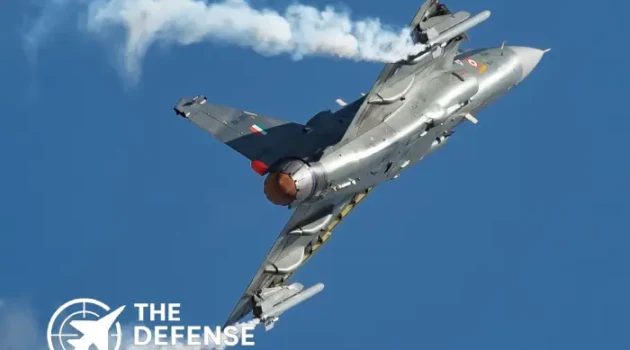
The Tejas Mk1A takes a different approach. It is a lighter, newer fighter intended to combine multirole performance with modern digital systems. India’s Ministry of Defence describes the Mk1A as a 4+ generation fighter equipped with AESA radar, BVR missile capability, electronic warfare systems and air-to-air refueling.
Key Takeaways
Mirage 2000 Advantage
- Higher published maximum speed at more than Mach 2.2.
- Proven multirole platform with extensive operational history.
- Strong high-altitude performance and mature strike capabilities.
- Indian Mirage 2000I aircraft benefit from major avionics modernization.
Tejas Mk1A Advantage
- Modern 4+ generation architecture with AESA radar.
- Improved electronic warfare and digital avionics.
- Designed for BVR combat, multirole missions and air-to-air refueling.
- Indigenous production provides a long-term fleet growth pathway.
Strategic Context
The Mirage 2000 remains a high-performance and combat-proven fighter, while the Tejas Mk1A represents India’s move toward a newer, digitally enabled and domestically supported fighter fleet. The Mirage has the maturity advantage, but Tejas has the stronger long-term modernization and production case.
The key distinction is therefore clear: Mirage 2000 emphasizes proven high-performance combat capability, while Tejas Mk1A emphasizes modern electronics, indigenous production and future fleet growth.
Technical Specifications Matrix
| Specification | Mirage 2000 | Tejas Mk1A |
|---|---|---|
| Generation / Type | 4th generation multirole fighter | 4+ generation light multirole fighter |
| Origin | France | India |
| Engine | SNECMA M53-P2 turbofan | GE F404-IN20 turbofan |
| Max Speed | Mach 2.2+ | Approximately Mach 1.6 |
| Operational Ceiling | 60,000 ft | Approximately 50,000 ft |
| Combat Radius / Range | About 830 nautical miles in a published configuration | Public figures vary by mission and load |
| Maximum Takeoff Weight | 38,500 lb | Approximately 29,000 lb class |
| External Stations | 9 | 8 |
| Payload / Ordnance | Air-to-air missiles, guided bombs, conventional stores and mission-specific weapons | Astra BVR missiles, ASRAAM, guided bombs, air-to-ground weapons and other integrated stores |
| Primary Radar | Modernized Indian aircraft use the RDY-2 radar family | ELM-2052 AESA on early aircraft, with indigenous Uttam AESA planned for later production |
| Electronic Warfare | Modernized Indian aircraft include upgraded defensive avionics | Modern digital EW and self-protection systems |
| Air-to-Air Refueling | Equipped for in-flight refueling in applicable configurations | Air-to-air refueling capability |
| Unit Cost | Historical acquisition and upgrade costs vary by configuration and contract | 2021 83-aircraft procurement package was about ₹48,000 crore including associated elements, making simple flyaway comparison unsuitable |
| Operational Status | Mature operational platform | New-generation platform entering wider service |
The Mirage 2000 figures above are based primarily on Dassault Aviation’s published data. The company lists a 38,500-pound maximum takeoff weight, 98 kN maximum engine thrust, nine store stations, Mach 2.2+ maximum speed and a 60,000-foot operational ceiling.
Cost comparisons require caution. India’s 2021 Tejas Mk1A procurement covered 73 fighters and 10 trainers, with the government stating that the wider contract was close to ₹48,000 crore. That figure included more than the bare aircraft price, so it should not be treated as a direct flyaway unit cost.
Deep-Dive Analysis
1. Speed, Survivability and Flight Performance
The Mirage 2000 has the clear advantage in published top speed. Dassault lists the aircraft at more than Mach 2.2, compared with roughly Mach 1.6 for the Tejas Mk1A. The French fighter was designed around a thin delta wing and a powerful single-engine configuration, giving it strong performance in the high-speed and high-altitude envelope.
That does not automatically make the Mirage superior in modern air combat.
Modern survivability depends heavily on radar warning, electronic warfare, missile warning, countermeasures, pilot information and the ability to detect an opponent before being detected. This is where the Tejas Mk1A’s newer architecture becomes important.
India’s Ministry of Defence specifically identifies AESA radar, electronic warfare and BVR weapons as major Mk1A capabilities.
The Mirage 2000I, meanwhile, benefits from extensive modernization. India’s upgraded aircraft have received the Thales RDY-2 radar and associated cockpit and weapon-system improvements. The RDY-2 provides air-to-air and air-to-ground functions and supports modernized weapon employment.
In a visual-range engagement, the comparison would depend heavily on pilot training, missile type, situational awareness and tactical conditions rather than maximum aircraft speed alone.
2. Radar, Sensors and Electronic Warfare
Radar technology is one of the biggest differences between the two aircraft generations.
The original Mirage 2000 used earlier-generation radar technology, while India’s upgraded Mirage 2000 fleet received the RDY-2 radar as part of its modernization. The upgrade also introduced improved pilot displays, helmet-mounted cueing and integration with modern air-to-air weapons.
The Tejas Mk1A was designed from the outset around a modern digital combat architecture. Its procurement requirements include an AESA radar, BVR missile capability and electronic warfare equipment.
The radar configuration of the Tejas Mk1A has evolved during the program. Reporting based on Indian defense sources has identified the Israeli EL/M-2052 AESA radar for early aircraft and the indigenous Uttam AESA radar for later production. DRDO documentation has also described plans for Uttam integration on the Mk1A.
This gives the Tejas a major architectural advantage. AESA radars generally provide greater flexibility, improved electronic protection and better multitarget capabilities than older mechanically scanned radar designs.
However, radar performance cannot be judged from antenna technology alone. Detection range depends on target radar signature, altitude, aspect, electronic interference, atmospheric conditions, processing and the missile being employed.
The practical advantage for Tejas is therefore not simply that it has AESA. It is that the aircraft was designed around a newer sensor, software and electronic warfare ecosystem.
3. Payload, Weapons and Operational Deployments
The Mirage 2000 has an important advantage in operational maturity.
Indian Mirage 2000s were used extensively during the Kargil conflict, where the aircraft performed precision attacks against difficult high-altitude targets. The experience demonstrated the value of a fast, accurate strike aircraft operating in demanding terrain.
The Indian Mirage fleet has subsequently been upgraded to support modern weapons and avionics. The aircraft’s nine external store stations also provide considerable flexibility for multirole missions. Dassault lists a published configuration involving six MICA missiles and external fuel tanks for its combat-radius data.
The Tejas Mk1A is designed around a newer Indian weapons ecosystem. Its planned and integrated capabilities include BVR missiles, short-range air-to-air weapons, precision-guided weapons and electronic warfare systems. The Indian government specifically highlighted BVR missiles and electronic warfare as core Mk1A capabilities.
The larger strategic advantage for Tejas is production depth.
India initially contracted for 83 aircraft, consisting of 73 Mk1A fighters and 10 trainers. A later 2025 order added 97 more aircraft, bringing the combined Mk1A procurement total to 180 aircraft.
This matters because a fighter’s value extends beyond individual aircraft performance. Domestic production, local maintenance, software development, spare parts and future upgrades can determine how effectively an air force sustains a fleet over several decades.
Strategic Verdict & Tactical Scenarios
When the Mirage 2000 Prevails
High-speed interception: The Mirage 2000 has a substantial advantage in maximum speed, with Dassault listing Mach 2.2+ performance.
Combat-proven strike operations: The aircraft has demonstrated its value in demanding real-world missions, including India’s Kargil operations.
Mature logistics and weapons integration: Decades of service have produced a well-established operational ecosystem, while India’s upgraded Mirage fleet has modernized radar and avionics.
High-altitude strike missions: The Mirage’s performance and established precision-strike history make it particularly relevant to missions requiring speed, altitude and accurate weapons delivery.
When the Tejas Mk1A Prevails
Modern networked air combat: Its newer digital architecture, AESA radar and electronic warfare systems make it better suited to contemporary sensor-driven combat concepts.
BVR-focused operations: The Mk1A was specifically developed with BVR weapons and modern radar capability in mind.
Fleet modernization: Tejas Mk1A provides India with a newer platform that can remain in production and receive upgrades while older Mirage 2000 airframes age.
Domestic sustainment: The largest strategic advantage is India’s ability to expand and support the fleet through domestic manufacturing. The government has emphasized increasing indigenous content in the program, from 50 percent initially toward 60 percent.
Final Assessment
The Mirage 2000 vs Tejas Mk1A comparison does not produce a simple winner because the aircraft represent different stages of fighter development.
The Mirage 2000 remains the faster and more combat-proven platform. Its high-altitude performance, mature design and Indian modernization package give it continuing value for demanding air defense and precision-strike missions.
The Tejas Mk1A is the stronger choice when the focus shifts toward future fleet growth, modern sensors, electronic warfare, BVR combat and domestic industrial support. Its AESA radar architecture and newer avionics give it a better foundation for continued modernization.
For a hypothetical head-to-head engagement, the outcome would depend heavily on weapons, pilot training, radar performance, electronic warfare, support aircraft and tactical conditions. The Mirage 2000 has the maturity advantage, while the Tejas Mk1A has the modernization and long-term fleet advantage.
For India’s broader airpower strategy, the two aircraft are better viewed as complementary stages in the evolution of its fighter fleet rather than direct substitutes.

| |
| Price | |
| Our Rating | |
| Manufacturer | Dassault Aviation Hindustan Aeronautics Limited (HAL) |
| Category | Fighter Jets Fighter Jets |
General Information
| Name | Mirage 2000 HAL Tejas Mk1A |
| Manufacturer | Dassault Aviation Hindustan Aeronautics Limited (HAL) |
| Country of Origin | France India |
| Type / Role | Multirole fighter / interceptor Multirole Light Fighter |
| Generation | Fourth-generation 4.5th |
| Status | In service (many upgraded) In production / Entering service |
| First Flight | 10 March 1978 28 March 2024 (prototype) |
| Introduction / In Service Since | 1984 2025 |
| Number Built | ~601 83 on order (IAF) |
| Operators | France, India, UAE, Egypt, Greece, Taiwan, Qatar, Peru, etc. Indian Air Force (IAF) |
Dimensions & Structure
| Length | 14.36 m (47.1 ft) 13.2 m |
| Wingspan | 9.13 m (29.9 ft) 8.2 m |
| Height | 5.20 m 4.4 m |
| Wing Area | 41 m² 38.4 m² |
| Empty Weight | ~7,500 kg 6,560 kg |
| Maximum Takeoff Weight (MTOW) | ~17,000 kg 13,500 kg |
| Internal Weapons Bay | None (no internal bay) None (external only) |
| External Hardpoints | 9 total (5 fuselage + 4 under wings) 8 |
Performance
| Maximum Speed | Mach 2.2 (~2,338 km/h) Mach 1.8 (2,205 km/h) |
| Range | ~1,550 km (standard) to ≈3,335 km ferry with external tanks 3,000 km (ferry) |
| Combat Radius | ~780–900 km (depending on load) 500 km |
| Service Ceiling | ~16,460 m (~54,000 ft) 16,000 m (52,500 ft) |
| Rate of Climb | ~17,000 m/min (≈ 60,000 ft/min) 213 m/s |
| Thrust-to-Weight Ratio | Approx ~0.9+ (varies by weight) 1.07 |
| G Limits | –3 to +9 g +8 / –3.5 g |
Powerplant
| Engine Type | SNECMA M53-P2 afterburning turbofan GE F404-IN20 afterburning turbofan |
| No. of Engines | 1 1 |
| Thrust (each) | ~95.1 kN (with afterburner) 84 kN (with afterburner) |
| Thrust Vectoring | None No |
| Fuel Capacity | ~3,950 L internal (plus external tanks) 3,060 L internal (+ drop tanks) |
Armament
| Gun | 2 × 30 mm DEFA / GIAT 30-550 (≈125 rnd each) 23 mm GSh-23 cannon |
| Missiles (Air-to-Air) | MICA (IR/EM), Magic II, Super 530, exported Sidewinder in some cases Astra Mk 1/2, Derby, R-73 |
| Missiles (Air-to-Ground) | AS-30L, SCALP / Storm Shadow (in modern upgrades), AASM in some roles Spice-2000, Crystal Maze, Harop (UCAV control capable) |
| Bombs | Laser-guided bombs (GBU series), dumb bombs, cluster munitions on export versions Mk-82/84, LGBs, SAAW |
| Hardpoints | 9 pylons (5 fuselage, 4 wing) 8 |
| Payload Capacity | ~6.3 tonnes 5,300 kg |
Avionics & Systems
| Radar | RDM / RDI in older, RDY multimode in 2000-5 evolution Uttam GaN-based AESA |
| Radar Range | ~100–150 km multitrack capability (≈150 km) 200 km (class) |
| Electronic Warfare (EW) System | ICMS / Serval / Spirale jammers / RWR Unified EW Suite (DARE) |
| Targeting System | ATLIS II, Damocles pod in upgraded versions Litening Pod |
| Helmet Display | Standard HUD, integration in upgrades (VEH-3020 etc.) HMDS |
| Navigation | INS / GPS hybrid + terrain following in some variants GPS/INS |
| Autopilot / AI Assistance | Basic autopilot; flight augmentation via fly-by-wire system Digital Fly-By-Wire |
| Communication | VHF/UHF radios, datalink in upgraded variants V/UHF + Indigenous Data Link |
Stealth & Technology
| Radar Cross Section (RCS) | Moderate (not stealth-optimized) ≈ 0.5 m² |
| Stealth Features | None purpose-built 45 % composite airframe |
| Infrared Signature Reduction | Limited implementation Yes |
| Sensor Fusion | Partial in upgraded versions Yes |
| Networking Capabilities | Link / datalink in modern upgrades Secure Indigenous Data Links |
Variants
| Special Export Versions | e.g. Mirage 2000-9, 2000-5I/TI (India), others Customized for foreign clients (planned) |
Operational History
| Major Conflicts / Deployments | Gulf War, Kosovo, Libya, Mali, Afghanistan, cross-border strikes None – Mk1 used in training & exercises |
| Notable Operators | France, India, UAE, Egypt, Greece, Taiwan, Peru, Qatar Indian Air Force |
| Combat Proven? | Yes, used in multiple theaters No (Mk1A new platform) |
| Mission Types | Interceptor, air policing, ground strike, nuclear deterrence Air superiority, ground attack, reconnaissance |
Cost & Program
| Unit Cost | Varies by variant and upgrade (older estimates ~$30–50M range adjusted) ≈ $48 million USD |
| Development Cost | Internal to Dassault and French programs ≈ $2.5 billion (LCA program) |
| Program Name | Mirage 2000 program Light Combat Aircraft (LCA) |
| Funding Countries | Primarily French government, export customers India |
Additional Information
| Upgrades Planned | Continued avionics modernization (2000D RMV for French service) Mk2 with GE F414 engine & canards |
| Future Replacement | Dassault Rafale (within French service) Advanced Medium Combat Aircraft (AMCA) |
| Export Restrictions | French export controls on advanced systems None (‘Make in India’ program) |
| Notable Achievements | Long service life, many international users Uttam AESA radar now 100 % indigenous |
| Competitors | F-16, MiG-29, J-10, Saab Gripen etc. JF-17 Block III, Saab Gripen C/D, KAI FA-50 |


|
Disclaimer Note
The information provided on TheDefenseWatch.com is for general informational purposes only. While we strive to ensure the accuracy, completeness, and timeliness of our content regarding defense and aerospace products, technologies, and specifications, we cannot guarantee that all information is 100% accurate or up-to-date due to the evolving nature of military technology and classified data.TheDefenseWatch.com does not warrant the reliability, suitability, or availability of the information for any specific purpose. Users are advised to consult official sources, such as manufacturers, government publications, or defense agencies, for precise and verified data before making decisions based on our content.We are not affiliated with any defense manufacturers, governments, or military organizations mentioned. Opinions, reviews, and ratings reflect expert analysis but are subjective and should not be considered endorsements. TheDefenseWatch.com is not responsible for any errors, omissions, or consequences arising from the use of this website’s content.External links are provided for convenience and do not imply endorsement. TheDefenseWatch.com reserves the right to update or modify content without prior notice. By using this website, you agree to our Privacy & Cookies Policy.
New Arrivals
-
 PAC-2 Patriot Missile System
-
Patriot PAC-3 Missile Defense System
-
EA-18G Growler
-
J-50 Fighter Jet
-
Northrop Grumman GHOST-R GEO Recon Satellite
-
A-50 Mainstay Aircraft
-
Spanish EF-18 Hornet Fighter
-
Trident II D5 Missile
-
B-21 Raider Bomber
-
F-47 Fighter Jet
-
F-35i Adir Fighter Jet
-
Type 99B Main Battle Tank
Popular Comparisons
-
 Tejas Fighter Jet vs F-16 Fighting Falcon: Capability Compared
View Comparison →
Tejas Fighter Jet vs F-16 Fighting Falcon: Capability Compared
View Comparison → -
Rafale Fighter Jet vs F-16 Fighting Falcon : Which Fighter Has the Edge?
View Comparison →
-
Su-57 Fighter Jet vs J-20 Fighter Jet: Stealth and Air Combat Compared
View Comparison →
-
Rafale Fighter Jet vs F-22 Raptor: Which Air Dominance Fighter Has the Edge?
View Comparison →
-
Tejas Fighter Jet vs. Rafale Fighter Jet: India’s Indigenous Fighter Meets France’s Proven Multirole Combat Aircraft
View Comparison →
-
F-22 Raptor vs. F-35 Joint Strike Fighter: Which Fifth Generation Fighter Has the Edge?
View Comparison →
-
F-35A vs. F-22 Raptor: Which U.S. Stealth Fighter Dominates Modern Air Combat?
View Comparison →
-
AGM-114 Hellfire vs. AGM-179 JAGM: Which U.S. Precision Missile Is Better?
View Comparison →
-
Patriot (PAC-3) vs. THAAD: Complete Missile Defense System Comparison, Capabilities, Range, and Strategic Roles
View Comparison →
-
AIM-120 AMRAAM vs. AIM-9X Sidewinder: Complete Air-to-Air Missile Comparison, Range, Speed, and Combat Roles
View Comparison →
- X-Planes in the Drone Era: Why Experimental Aircraft Still Matter

- France to Deploy Troops, Radar and Air Defense to Protect Saudi Yanbu Oil Hub
- Greek-Operated Patriot Intercepts Ballistic Missile and Drone Over Saudi Arabia
- Raytheon Wins $50.1 Million Navy Order for EA-18G Next Generation Jammer Repairs
- Stark Aerospace Wins $114 Million MK 41 VLS Canister Contract
- Northrop Grumman Wins $123.8M F-35 APG-85 Lot 7 Radar Contract
- Leonardo, Fincantieri Win €3.7B Contract for Two Italian Navy DDX Destroyers
- Finnish President Urges Musk to Expand Starlink Access for Ukraine to Target Russian Missile Launchers
- MV-22B Osprey Completes First Navy Sonobuoy Acceptance Test
- Saab expands Swedish space role through new partnerships with SSC Space, OHB Sweden and Ericsson