

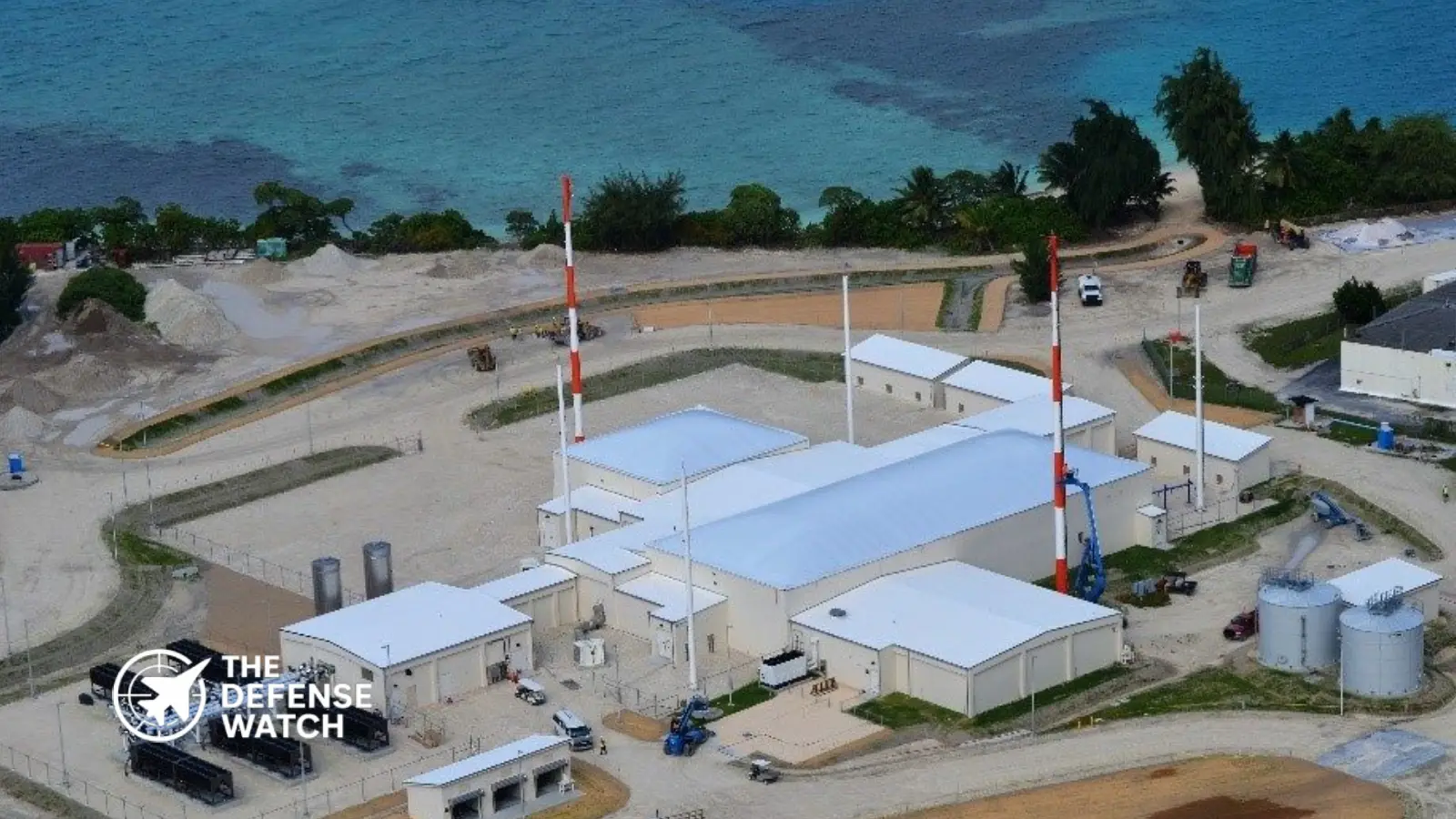
Executive Summary: Lockheed Martin has received a $27.4 million contract modification to support the AN/FSY-3 Space Fence radar system, enhancing U.S. space surveillance capabilities.
The award ensures continued detection, tracking, and intelligence support amid growing congestion and threats in orbit.
The upgrade reinforces the United States Space Force ability to monitor space objects and safeguard critical assets.
Contract Overview and Key Details
The U.S. Department of Defense has awarded Lockheed Martin Rotary and Mission Systems a $27,456,111 modification to an existing contract supporting the AN/FSY-3 Space Fence system.
Key contract highlights include:
- Total contract value increased to $66,142,810, up from $59,948,252
- Work locations:
- Eglin Air Force Base
- Kwajalein Atoll
- Expected completion: April 30, 2027
- Funding: $25.14 million in FY2026 operations and maintenance funds
- Contracting authority: Space Systems Command
This modification ensures continued access to original equipment manufacturer expertise for maintaining and enhancing one of the most advanced space surveillance radars in operation.
Understanding the AN/FSY-3 Space Fence System
Advanced Space Surveillance Radar
The AN/FSY-3 Space Fence is a ground-based S-band radar system designed to detect, track, and catalog objects in low Earth orbit (LEO).
Core Capabilities
- Detection of small debris and satellites in LEO
- High-precision orbital tracking and cataloging
- Real-time space domain awareness
- Support for collision avoidance and threat assessment
Technical Advantages
- Higher sensitivity compared to legacy radars
- Ability to track smaller objects, improving debris monitoring
- Enhanced data processing and analytics
- Continuous wide-area surveillance coverage
Comparison: Space Fence vs Legacy Space Surveillance Systems
| Feature | AN/FSY-3 Space Fence | Legacy Radar Systems |
|---|---|---|
| Range | Global LEO coverage | Limited regional coverage |
| Payload | Tracks small debris and satellites | Tracks larger objects only |
| Status | Operational and expanding | Aging and partially retired |
| Key Technology | S-band phased-array radar | VHF/UHF radar systems |
Strategic Importance of Space Fence Enhancements
Rising Congestion and Threats in Orbit
The contract comes as space becomes increasingly contested. The number of satellites, debris, and potential threats continues to rise, driven by:
- Commercial mega-constellations
- Anti-satellite weapon testing
- Increased military reliance on space assets
Strengthening Space Domain Awareness
The Space Fence system plays a central role in:
- Protecting U.S. and allied satellites
- Monitoring potential adversary activities
- Supporting missile warning and defense systems
- Enabling safe space operations
Operational Footprint: Kwajalein Atoll’s Strategic Role
The radar installation at Kwajalein Atoll provides a critical vantage point for tracking objects across key orbital paths. Its geographic position allows persistent monitoring of high-traffic regions in low Earth orbit.
Industry and Program Outlook
This contract modification highlights continued reliance on Lockheed Martin as the original equipment manufacturer for sustaining and advancing Space Fence capabilities.
Future developments may include:
- Expanded radar coverage sites
- Integration with space-based sensors
- AI-driven tracking and predictive analytics
