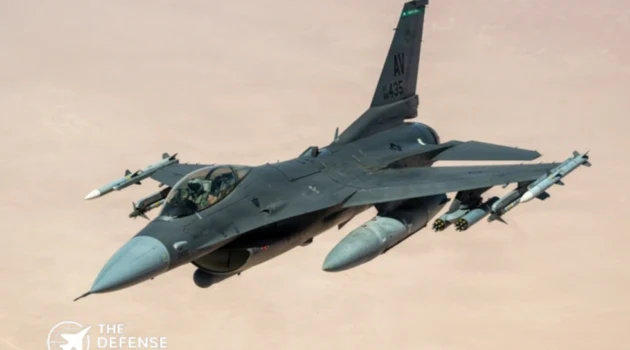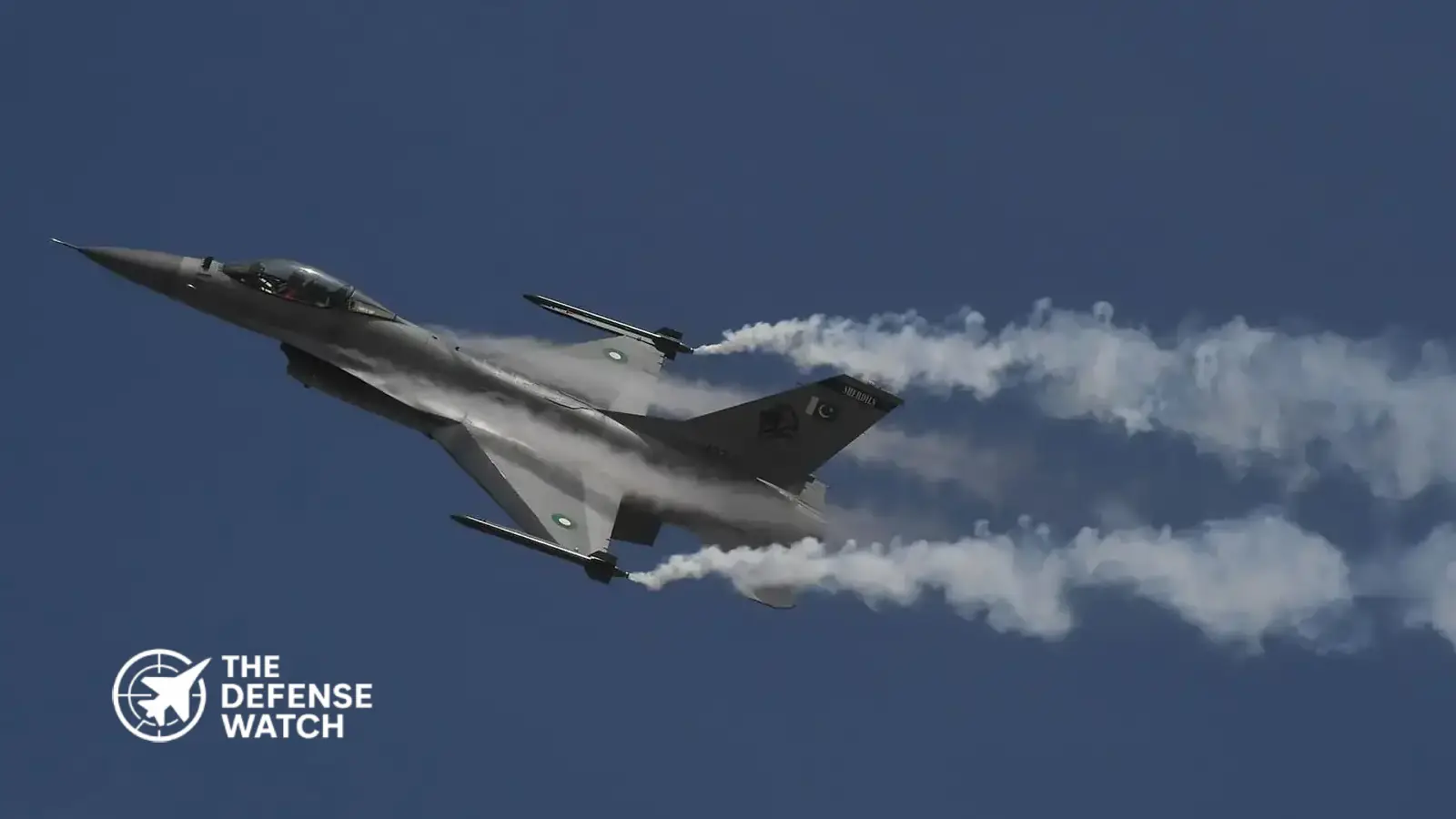
Executive Summary: The United States has authorized a comprehensive dual-track support and upgrade framework for Pakistan’s F-16 fleet, totaling approximately $1.17 billion. The package focuses on long-term radar sustainment and the integration of Link-16 tactical data links to ensure operational safety and regional interoperability through 2040.
Technical Modernization Overview
The modernization effort is divided into two distinct Foreign Military Sales (FMS) segments. The first, a $488 million contract awarded to Northrop Grumman, provides indefinite-delivery/indefinite-quantity (IDIQ) engineering and technical support for the AN/APG-66 and AN/APG-68 radar sets. This ensures the reliability of the fleet’s primary fire-control sensors.
The second phase, valued at $686 million, introduces advanced digital capabilities, most notably the Link-16 tactical data link system. This upgrade allows for secure, jam-resistant communication and real-time data sharing between aircraft and command centers, a critical requirement for modern multi-domain operations.
Comparative Capabilities: Legacy vs. Modernized Fleet
Feature Legacy F-16 (Block 15/MLU) Modernized F-16 (Post-Upgrade) Key Technology Mechanical Radar / Voice-only Link-16 / AN/APG-68(V)9 Support Range (Detection) ~40-60 nmi (Standard) Enhanced signal processing and MTBF Status Approaching End-of-Life Validated for service through 2040 Payload Interoperability Analog/Basic Digital Advanced precision-guided munitions (PGM) Precision Avionics and Secure Communications
The $686 million package notified to Congress by the Defense Security Cooperation Agency (DSCA) includes a robust suite of hardware and software enhancements:
- Tactical Data Exchange: Procurement of 92 Link-16 terminals to facilitate “silent” situational awareness.
- Cryptographic Security: Integration of KY-58M and KIV-78 cryptographic modules for secure, NSA-certified voice and data transmissions.
- Precision Navigation: Upgraded embedded Global Positioning Systems (GPS) and Inertial Navigation Systems (INS).
- Flight Safety: Structural and software modifications to the Operational Flight Program (OFP) to mitigate fatigue-related safety concerns.
Strategic Context and Regional Balance
While the upgrades significantly enhance the Pakistan Air Force (PAF) capability, the DSCA stated that the sale “will not alter the basic military balance in the region.” Instead, the focus is squarely on counterterrorism (CT) operations and maintaining a baseline of interoperability with US and coalition forces.
The timing of the authorization is critical. As regional threats evolve, the ability of the PAF to maintain a high mission-capable (MC) rate for its premier fighter platform is a pillar of Pakistan’s defensive posture. By refurbishing the Block-52 and Mid-Life Upgrade (MLU) airframes, Pakistan effectively bridges the gap until its next-generation platforms reach full operational maturity.
Logistics and Implementation
The primary contractors for these efforts are Lockheed Martin (Fort Worth, TX) and Northrop Grumman (Linthicum Heights, MD). Notably, the US government has confirmed that the implementation of these packages will not require the permanent stationing of additional US personnel in Pakistan. All support will be managed through existing technical coordination groups and long-term engineering contracts scheduled to run through March 31, 2036.