Executive Summary
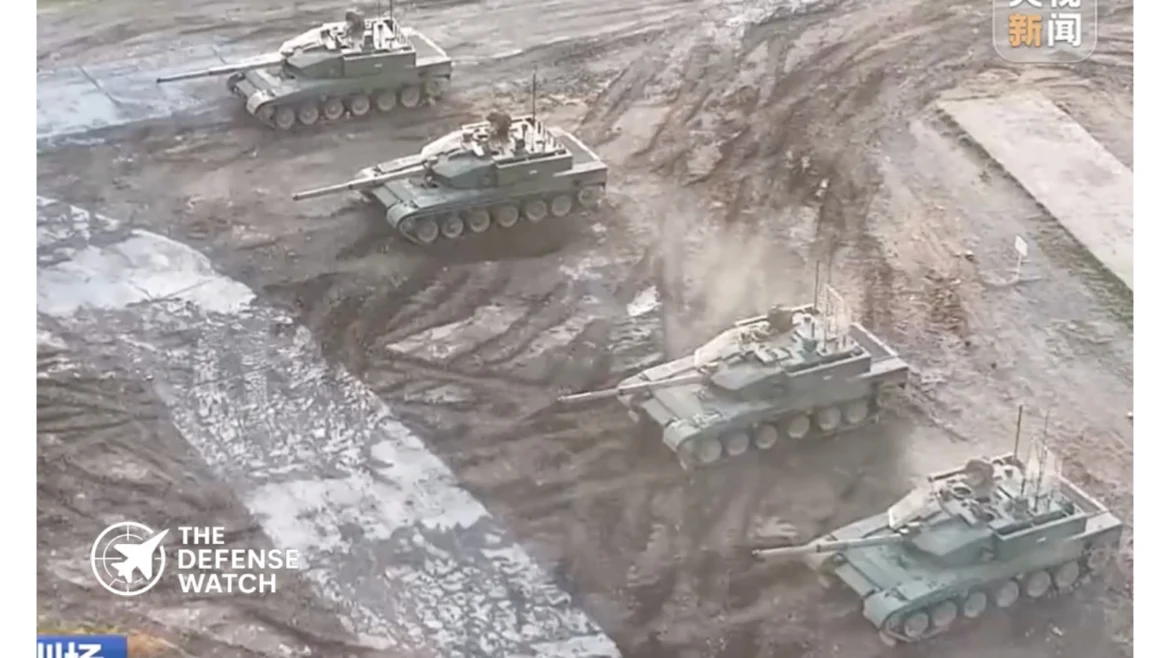
- CCTV footage released in September 2026 shows four Type 99B main battle tanks from a PLA 80th Group Army brigade conducting a live-fire assessment in Shandong.
- The exercise tested target search, identification, engagement while stationary and on the move, communications, maneuver through obstacles, and three-person crew performance.
- The more significant development is the emphasis on information systems and networked operations, suggesting that the Type 99B is intended to operate as part of a connected combined-arms formation rather than as an isolated tank.
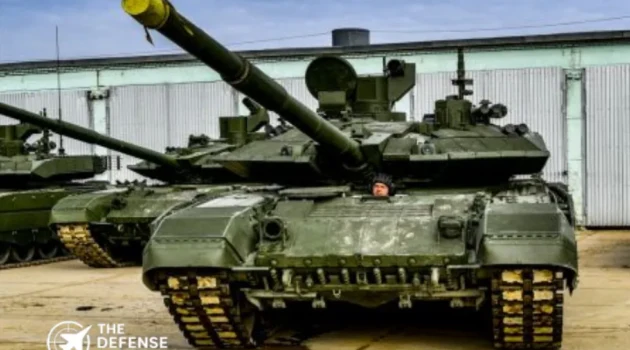
China has released rare footage of the Type 99B main battle tank conducting live-fire training, providing a clearer view of how the People’s Liberation Army is integrating its newest publicly identified 99-series tank into operational training.
The footage, released by CCTV News on September 16, shows a brigade of the PLA’s 80th Group Army conducting a live-fire assessment at a training area in Shandong Province. Four Type 99B tanks are shown maneuvering, loading ammunition, operating their sights and engaging simulated targets under different battlefield conditions.
The exercise is significant less because it demonstrates a new gun or a disclosed performance figure than because of what it reveals about how China is training the tank to fight. The assessment emphasized target detection and selection, communications with higher command, movement through obstacles and engagement while maneuvering.
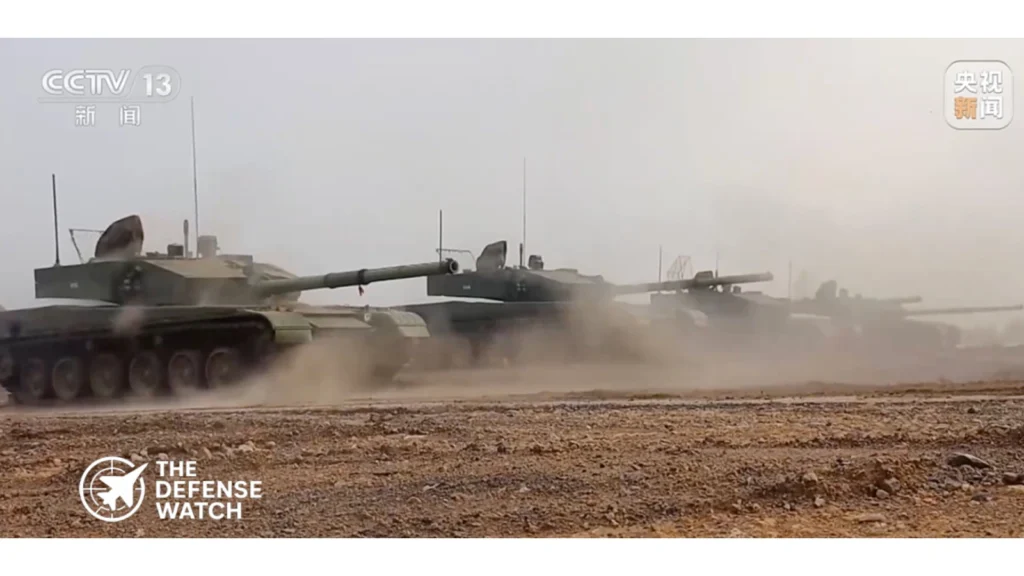
Type 99B Demonstrates Live-Fire and Maneuvering Skills
According to CCTV footage described by Global Times, the training involved fixed targets positioned at different ranges and directions. Tank crews were required to independently assess the tactical situation and select appropriate targets.
One sequence showed a Type 99B firing an armor-piercing round at a target approximately 1,200 meters away from a stationary position. Another sequence showed a tank engaging a simulated enemy tank while moving, with the target approximately 1,000 meters away. These figures describe the training scenario shown in the broadcast, not the maximum effective range of the tank’s weapon system.
The exercise also tested the crews’ ability to operate in difficult terrain. Drivers negotiated bridges, water-filled pits and craters while commanders maintained communications and directed engagement tasks.
The assessment included sideways and rearward firing scenarios and additional routes, obstacles and restricted passages intended to make the exercise more demanding. CCTV reported that all designated targets were destroyed during the assessment.
Three-Person Crew Remains Central
The footage also provides evidence of the Type 99B’s three-person crew arrangement. The crews were evaluated on their ability to identify and engage designated targets within prescribed time limits, both from stationary positions and while moving.
This matters because modern armored warfare increasingly depends on reducing the time between detection, identification, decision and engagement. A tank’s effectiveness therefore depends not only on armor and gun performance but also on crew workload, sensors, communications and access to information from other elements of a combined-arms formation.
Type 99B Builds on the Type 99A
Chinese official sources have previously described the Type 99B as an improved development of the Type 99A.
The Chinese Ministry of National Defense identified the Type 99B in December 2025 as the latest variant of China’s domestically developed third-generation main battle tank family and reported that the tank was designed for rapid and sustained operations in demanding environments, including high-altitude and cold regions.
Chinese state media also highlighted the Type 99B during the September 2025 Victory Day parade. CCTV described it as an improved Type 99A and pointed to changes involving communications and remotely operated weapon functions.
China’s Ministry of National Defense has separately described the Type 99B as part of a broader effort to improve integrated joint operations, firepower against multiple types of targets and mobility in complex terrain.
The available official information does not provide a complete technical specification for the Type 99B. Consequently, claims concerning its exact combat weight, armor protection, maximum speed, ammunition capacity, sensor performance or engagement range should not be treated as confirmed unless supported by authoritative Chinese documentation.
Type 99B vs. Type 99A
Area Type 99A Type 99B Design lineage Established Type 99-series MBT Development of the Type 99A Crew Three-person configuration Three-person configuration shown in training Main role Heavy armored combat Heavy armored combat with expanded information and networking emphasis Communications Earlier-generation architecture Official Chinese sources indicate improved communications and information systems Remote weapon capability Earlier configuration CCTV footage shows remotely operated secondary weapon features Training focus Conventional armored warfare Conventional skills plus greater emphasis on networked command and complex battlefield conditions Public technical data Limited Still limited and incomplete The most important distinction is therefore not necessarily a disclosed increase in raw firepower. It is the growing emphasis on information exchange, situational awareness and command integration.
Information Systems May Be the More Important Upgrade
Chinese military analyst Song Zhongping told Global Times that the Type 99B’s improvements are particularly important in its information systems. He described the tank as a node in a wider information network capable of receiving and executing orders from higher command more effectively.
That assessment is consistent with the direction of China’s wider land-force modernization.
Modern armored formations increasingly operate as sensor and weapons networks. Tanks can receive information from other vehicles, unmanned systems, artillery units and higher command elements, potentially allowing crews to focus on engagement decisions rather than relying exclusively on their own optical observation.
This becomes especially important in environments where drones continuously expose armored formations. A tank that can rapidly receive target information from another sensor may not need to expose itself for as long as a platform operating primarily through its own sights.
The September exercise did not demonstrate the complete battlefield network surrounding the Type 99B, so the precise level of integration remains unclear. However, the emphasis on communications and command during the exercise indicates that China is training armored crews around a broader information architecture.
Drone Threats Are Now a Core Training Problem
The footage also highlights an important problem facing modern main battle tanks: traditional armored warfare assumptions are increasingly being challenged by inexpensive unmanned systems.
Global Times reported that the Type 99B exercise represented a foundation for more complex training, including operations under extensive drone disruption. Song specifically identified drones as an emerging battlefield challenge requiring new tactics.
This is consistent with lessons emerging from recent conflicts, where small unmanned aircraft have been used for reconnaissance, artillery spotting and direct attack against armored vehicles.
For a modern tank formation, survivability therefore depends on more than passive armor protection. Units require early warning, camouflage, electronic protection, counter-UAS systems, dispersed operations and rapid access to accurate battlefield information.
The Type 99B footage does not show enough detail to establish what dedicated counter-drone systems are integrated into the tank itself. It does, however, show that Chinese training planners recognize drone-saturated conditions as a requirement for future armored operations.
China Is Moving Beyond Platform-Centric Armored Warfare
The Type 99B also needs to be viewed alongside China’s newer Type 100 main battle tank and Type 100 support combat vehicle, both of which were displayed alongside the Type 99B during the 2025 Victory Day parade.
Chinese state media presented these systems as part of a new ground combat formation. CCTV reported that the Type 99B, Type 100 and Type 100 support vehicle were being developed around increasingly informationized and unmanned approaches to ground warfare.
This suggests that China is not simply replacing one tank model with another. The broader direction is toward combining armored vehicles with sensors, unmanned systems, digital communications and supporting fires.
The distinction is important. A modern tank’s battlefield value increasingly depends on the formation around it. A well-connected tank may receive targeting information from external sensors, coordinate with infantry and supporting fires, and operate under a command structure capable of rapidly reallocating targets.
That approach mirrors a wider international trend toward networked armored warfare, although the specific architecture and degree of automation differ among militaries.
Operational Significance for the PLA
The Type 99B’s transition into increasingly demanding training provides an indication that the PLA is moving beyond equipment introduction toward developing repeatable tactical proficiency.
The September assessment included target search, identification, selection, communications, maneuver and engagement while moving. Those are basic armored warfare skills, but combining them under restricted terrain and time pressure provides a more meaningful test of operational readiness than static demonstrations.
Chinese official reporting has also emphasized the Type 99B’s suitability for demanding environments. The Ministry of National Defense previously said the tank is intended for rapid and sustained operations in high-altitude and cold conditions.
Such capabilities have potential relevance to China’s western land borders, where terrain, altitude and weather can complicate the movement and sustainment of heavy armored units. Public footage alone, however, does not establish where specific Type 99B units are permanently assigned or how many vehicles have entered service.
What the Footage Does Not Confirm
The new footage should not be interpreted as a complete demonstration of the Type 99B’s combat capability.
Several important characteristics remain undisclosed in authoritative public sources. These include exact armor composition, protection levels, engine output, maximum road speed, ammunition load, sensor specifications and the detailed architecture of its battlefield network.
Similarly, publicly circulated claims about specific active protection, artificial intelligence or advanced targeting capabilities should be separated from confirmed information unless Chinese military authorities formally identify those systems.
The footage does establish something more limited but still important: Type 99B crews are conducting live-fire training involving stationary and moving engagements, complex terrain, communications and multi-directional firing tasks. That provides direct evidence of operational training without requiring assumptions about undisclosed technical specifications.
The Broader Modernization Trend
China’s ground-force modernization is increasingly moving toward a combination of heavier armored platforms, digital command systems and unmanned capabilities.
The Type 99B occupies an intermediate position in that transition. It retains the basic concept of a conventional main battle tank while incorporating improvements intended to make it more effective inside an information-driven formation.
The appearance of the Type 100 family alongside the Type 99B suggests that China is simultaneously pursuing a newer generation of armored vehicles. This means the Type 99B should not necessarily be viewed as the final stage of Chinese tank development, but as part of a broader transition in PLA ground combat architecture.
For foreign militaries, the relevant issue is therefore not simply how the Type 99B compares with an individual Western or Russian tank. The more important question is how effectively Chinese armored formations can connect tanks with reconnaissance, unmanned systems, artillery, air defense and command networks under battlefield conditions.
The September training footage provides an early public indication that this integration is becoming a central part of Type 99B employment.
Key Takeaways
- Type 99B training: Four Type 99B tanks participated in a live-fire assessment conducted by a PLA 80th Group Army brigade in Shandong.
- Operational skills: Crews practiced stationary and moving engagements, target selection, communications and maneuver through obstacles.
- Information warfare: Chinese reporting places particular emphasis on upgraded information systems and network connectivity.
- Drone environment: PLA training planners are preparing for armored operations under conditions involving extensive drone activity.
- Technical caution: Exact Type 99B performance figures and detailed protection specifications remain incompletely disclosed in public official sources.
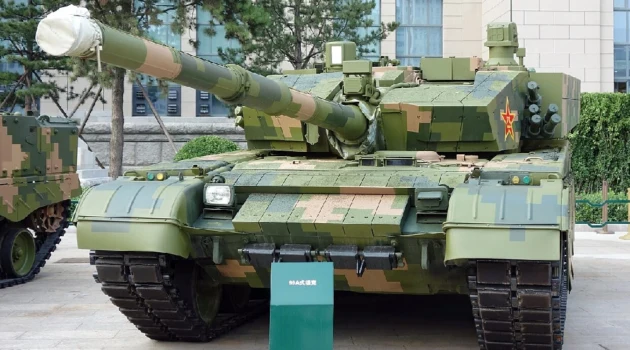
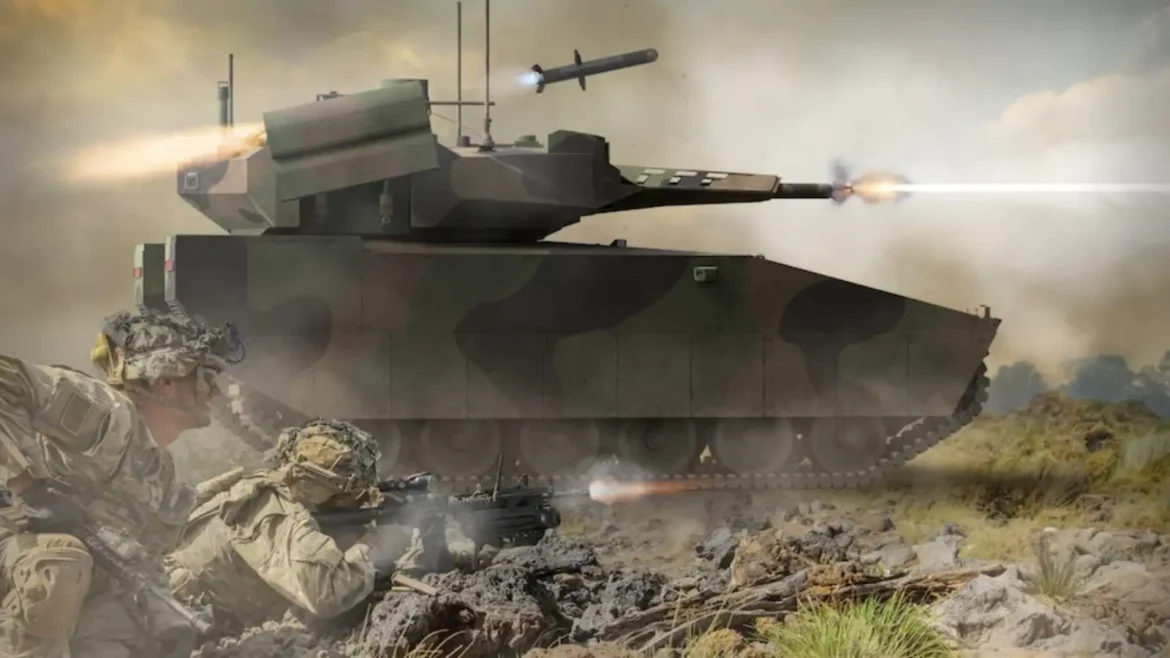
Rheinmetall’s Lynx XM30 Enters U.S. Army Testing
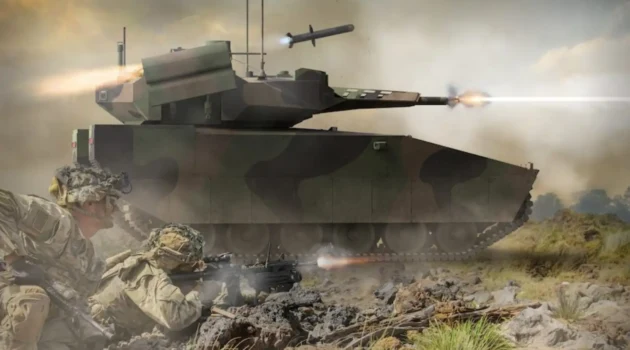
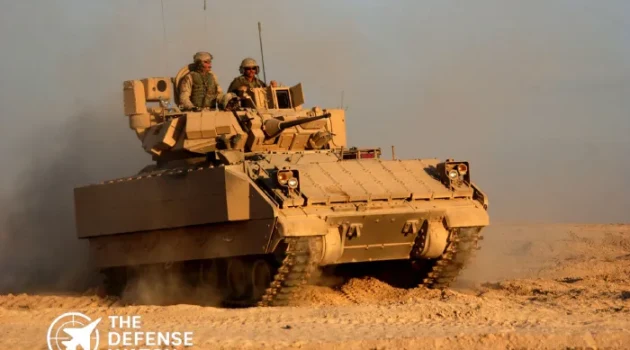
The Lynx XM30 U.S. Army program has entered a major testing phase after American Rheinmetall delivered the first of eight prototype infantry fighting vehicles to the service. The delivery moves Team Lynx from detailed design and prototype development into government-led developmental and performance evaluation as the Army seeks a replacement for the M2 Bradley Fighting Vehicle.
Takeaways
American Rheinmetall has delivered the first Lynx XM30 prototype to the U.S. Army, moving the Bradley replacement program into government-led developmental and performance testing.
The U.S. Army’s Project Manager XM30 identifies the vehicle as its future infantry fighting vehicle for armored formations, with a mission that includes maneuvering with joint combined-arms forces and controlling maneuver robotics and semi-autonomous systems. The program is explicitly intended to replace the Bradley.
The first Lynx prototype is part of American Rheinmetall’s Phase 3/4 Engineering and Manufacturing Development effort, which the company values at approximately $764 million. The work covers digital design, physical prototype production and full-system validation.
Eight Prototypes Will Support Testing And Training
American Rheinmetall plans to deliver the remaining seven Lynx XM30 prototypes later in 2026. Those vehicles are expected to support operational unit training while technical evaluations continue under the Army’s Transformation in Contact 2.0 initiative.
The Army’s approach is significant because the XM30 program is being evaluated through both technical testing and soldier interaction. Earlier Army development work used soldier touchpoints and simulations to assess crew arrangements, mission tasks and vehicle configurations before physical prototypes entered testing.
The newly delivered prototype will undergo government developmental and performance testing. Following initial military safety checks, soldiers are expected to conduct field maneuvers, with the broader evaluation culminating in large-scale combat simulations.
This testing phase is intended to establish how well the vehicle performs against the Army’s requirements rather than simply demonstrate that the prototype can operate under controlled conditions.
Lynx XM30 Program At A Glance
Program Element Current Status Program XM30 Mechanized Infantry Combat Vehicle Primary mission Infantry fighting vehicle Legacy vehicle being replaced M2 Bradley Rheinmetall prototype Lynx XM30 Prototypes from Rheinmetall Eight Phase Phase 3/4 EMD Rheinmetall EMD value Approximately $764 million Army evaluation Developmental and performance testing Key architecture Modular, adaptive open architecture Powertrain Hybrid-electric Primary competitors American Rheinmetall and General Dynamics Land Systems Planned production decision Limited competition following prototype evaluation The Army awarded Phase 3 and Phase 4 contracts to American Rheinmetall Vehicles and General Dynamics Land Systems in 2023. The combined value of the two awards was approximately $1.6 billion, and the Army said the vendors would compete later in the program based on demonstrated vehicle performance.
Hybrid Electric Powertrain Is A Key Difference
One of the most closely watched features of the Lynx XM30 is its hybrid-electric powertrain.
Rheinmetall describes the system as providing additional power-generation capacity while supporting vehicle mobility. The company also says the vehicle is designed around a modular architecture that can accommodate new technologies throughout its service life.
The importance of additional electrical power extends beyond propulsion. Modern armored vehicles increasingly depend on electronic sensors, communications, computing systems, active protection equipment and other power-intensive subsystems.
That makes electrical generation and distribution a core combat capability rather than simply an automotive consideration.
The practical test for the XM30 will therefore be whether the hybrid-electric architecture can deliver the required power without creating unacceptable penalties in weight, thermal management, maintenance burden, reliability or logistics.
Those questions can only be answered through Army testing under representative operating conditions.
50mm Weapon And Unmanned Turret
The Lynx XM30 is also designed around a larger-caliber weapon system than the 25mm cannon traditionally associated with the Bradley.
Army material has identified a 50mm cannon, remote turret and anti-tank guided missiles among the intended XM30 capabilities. The Army has separately advanced development of the XM1202 50mm training ammunition to support XM30 testing.
Rheinmetall previously identified the Lynx XM30 as featuring an unmanned 50mm turret with third-generation forward-looking infrared sensors, along with active protection and an open systems architecture.
The move toward a larger cannon reflects the Army’s requirement for greater direct-fire capability against a broader range of battlefield threats.
For the XM30 competition, however, the critical issue will not be the caliber alone. The Army will need to evaluate the complete weapon system, including target acquisition, fire control, ammunition handling, stabilization, reliability and integration with the vehicle’s digital architecture.
Designed Around Open Architecture
The XM30 program places significant emphasis on digital engineering and modular open systems.
The Army describes the XM30 as a vehicle developed through a digital acquisition environment, with Modular Open Systems Approach principles intended to support faster integration of future hardware and software.
Rheinmetall’s Lynx configuration follows the same broad approach through an adaptive open architecture.
This matters because the service expects the vehicle to remain in operation for decades. A platform that cannot accept new sensors, communications systems, electronic warfare equipment, protection technologies or software updates without major redesign would face increasing obsolescence as threats evolve.
The XM30’s architecture is therefore as important to its long-term value as the physical vehicle itself.
Survivability In A Changing Ground War
The Army is developing the XM30 for an environment in which armored formations face a wider range of threats than previous generations of infantry fighting vehicles encountered.
Rheinmetall specifically cites drones, precision weapons and electronic warfare as factors shaping the Lynx XM30 design. The company says the vehicle combines modular construction, active protection and secure real-time connectivity to support survivability and battlefield awareness.
This reflects a broader shift in armored warfare.
A modern infantry fighting vehicle must increasingly operate as part of a networked formation rather than as an isolated weapons platform. Its sensors, communications systems and onboard computing must contribute to a wider tactical picture while remaining functional under electronic attack and degraded communications conditions.
The Army’s own XM30 description also assigns the vehicle a role in controlling maneuver robotics and semi-autonomous systems. That creates another requirement: the vehicle must be capable of serving as both an armored fighting platform and a node for increasingly distributed robotic operations.
Team Lynx Builds Around A U.S. Industrial Network
American Rheinmetall is the prime contractor for Team Lynx.
The industrial team includes Textron Systems, Raytheon, L3Harris Technologies, Allison Transmission and Anduril Industries, alongside a broader U.S. supplier network.
The prototype production process is also distributed across several U.S. locations.
Rheinmetall says turret fabrication is conducted in Plymouth, Michigan, while hull and chassis integration takes place in Slidell, Louisiana. Completed vehicles undergo automotive shakeout testing before returning to Louisiana for final finishing and inspection. The Defense Contract Management Agency participates in the final inspection before government acceptance.
For the Army, this industrial arrangement has implications beyond the XM30 itself.
A future production decision will involve not only vehicle performance but also the ability of the winning contractor and its suppliers to manufacture, maintain and upgrade the platform at the scale required by the Army.
General Dynamics Remains The Competing Design
Rheinmetall’s delivery does not represent a selection for production.
The Army awarded competing XM30 development contracts to American Rheinmetall Vehicles and General Dynamics Land Systems. Both companies are developing prototypes for Army testing before a later production competition.
General Dynamics says its Wolf XM30 completed its Critical Design Review and moved into prototype construction, with prototypes scheduled for testing in 2026. Its design also uses Modular Open Systems Approach principles and a digital engineering model.
The competition therefore extends beyond traditional vehicle characteristics.
The Army will have to compare mobility, protection, lethality, crew workload, electronics, software architecture, reliability, maintainability and production readiness across both platforms.
The service has previously stated that it intended to select a single vehicle for production following the competitive prototype and test phase. Army program material in 2026 continues to identify Phase 3/4 design and testing, followed by a Phase 5 rapid-fielding effort and a planned first unit equipped phase.
Why The XM30 Matters For The U.S. Army
The XM30 represents a major change in how the Army approaches its infantry fighting vehicle fleet.
The M2 Bradley entered service in the early 1980s and has received successive modernization packages. The XM30 is intended to provide a new architecture rather than another incremental Bradley upgrade.
The Army’s requirements reflect lessons from modern combat, where armored formations must contend with precision fires, persistent surveillance, unmanned systems and electronic warfare.
The program also demonstrates the Army’s growing reliance on digital engineering. Rather than waiting until late development to identify design problems, the service has used digital models, simulation and soldier feedback throughout the XM30 development process.
That approach could reduce some development risks, but the physical prototype phase remains decisive.
Digital models cannot fully reproduce the mechanical stresses, thermal loads, maintenance requirements, crew workload and battlefield conditions that affect a heavily armored vehicle.
The Army’s evaluation of the Lynx XM30 and its General Dynamics competitor will therefore provide the first major opportunity to compare the competing designs using real hardware.
Testing Will Determine The Next Phase
The arrival of the first Lynx XM30 marks the transition from design development to a much more demanding phase of the program.
The Army will now have to determine whether Rheinmetall’s design can translate its advertised architecture into measurable performance across mobility, lethality, survivability, power generation, reliability and soldier usability.
The broader XM30 competition is also important because the Army is seeking a platform capable of operating with future robotic and semi-autonomous systems while remaining adaptable to new technologies.
For now, no production winner has been selected.
The immediate milestone is the beginning of government testing. The results of that evaluation, together with testing of General Dynamics’ competing Wolf XM30, will shape the Army’s eventual decision on the next infantry fighting vehicle for its armored formations.
U.S. Army Moves K9MH Into Mobile Tactical Cannon Testing
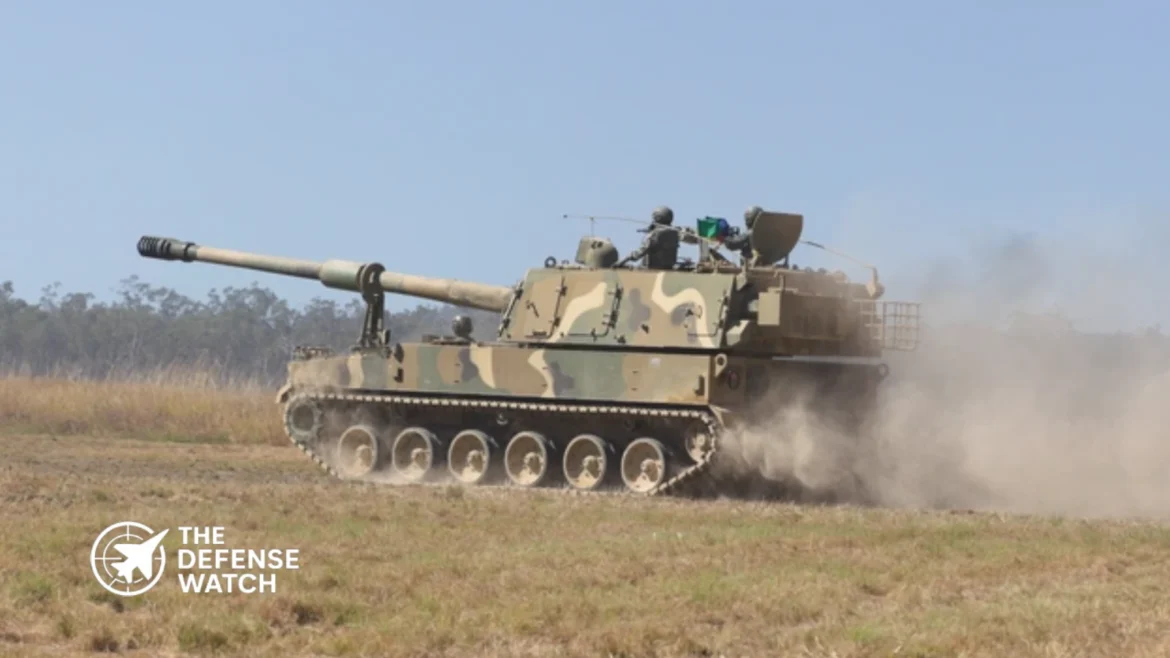
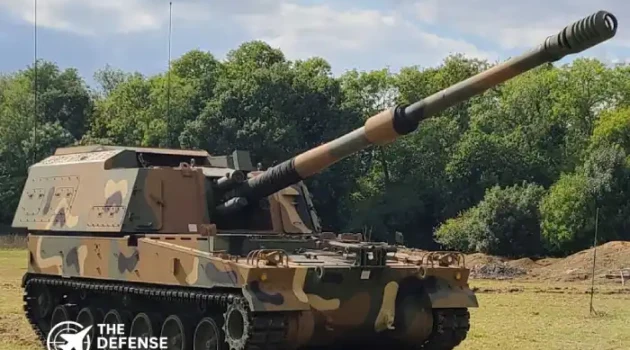
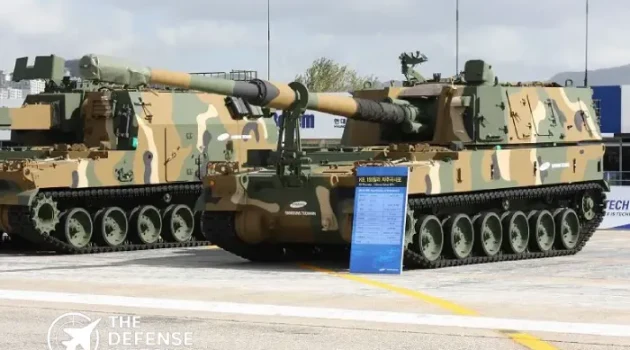
Hanwha’s K9 Mobile Howitzer has entered the U.S. Army’s Mobile Tactical Cannon evaluation after Hanwha Defense USA secured an agreement to provide prototype systems for testing and Soldier experimentation. The Army effort is focused on finding a more mobile 155mm cannon system for formations currently equipped with M777 towed howitzers.
Takeaways
Hanwha’s K9MH moves into U.S. Army prototype testing under the Mobile Tactical Cannon program.
1. $100.3 Million Initial Award
Hanwha Defense USA received an initial firm-fixed-price agreement valued at $100.3 million, with a reported cumulative face value of $262.9 million if options are exercised.
2. Six K9MH Prototypes
The Army is initially set to receive six K9 Mobile Howitzer systems, with options that could increase the prototype fleet to as many as 18 systems.
3. Potential M777 Replacement
If selected after testing, the Mobile Tactical Cannon is intended to replace M777 towed howitzers in selected Army formations with a more mobile self-propelled artillery capability.
4. Four-Year Prototype Effort
The agreement covers prototyping, testing and Soldier experimentation over an estimated four-year period before a decision on future fielding.
5. U.S. Industrial Base Is Part of the Bid
Hanwha is establishing an integration and test facility in Opelika, Alabama, as part of a broader plan to localize K9 production and sustainment in the United States.
The initial agreement is valued at $100.3 million, with a reported cumulative face value of $262.9 million if available options are exercised. The arrangement covers up to 18 systems for prototyping, testing and experimentation over an estimated four years.
The award does not represent a production decision for the Army. Instead, it puts the K9MH into the hands of the service for a structured evaluation intended to determine whether the system can meet operational, technical and sustainment requirements.
Mobile Tactical Cannon Targets a Mobility Gap
The Army’s Mobile Tactical Cannon program reflects a broader reassessment of cannon artillery after years of relying heavily on towed systems for light and medium formations.
The M777A2 remains a highly mobile 155mm system by traditional artillery standards. The Army lists its weight at less than 10,000 pounds, and its digital fire control system supports faster emplacement and displacement while enabling precision munitions such as Excalibur. Two M777 systems can also be transported inside a C-130 aircraft.
The limitation is that the M777 requires a separate prime mover and crew to tow, position and relocate the weapon. A self-propelled cannon integrates the gun, mobility platform, fire-control equipment and protected crew compartment into one vehicle.
That difference becomes important when artillery units operate under persistent surveillance and counterbattery threats. The Army has highlighted the need for cannon artillery that can move rapidly between firing positions while maintaining command and control during dispersed operations.
The Mobile Tactical Cannon concept therefore is not simply about replacing one artillery piece with another. It is about changing how selected Army formations generate and sustain cannon fires.
K9MH Brings a Wheeled Approach to the K9 Family
The K9MH is a wheeled member of Hanwha’s K9 artillery family. Hanwha has positioned the system as a 155mm self-propelled artillery platform intended to combine the established K9 weapon system with the road mobility and operational flexibility of an 8×8 vehicle.
The K9 family has extensive international operating experience, with more than 2,500 systems fielded globally according to Hanwha. The platform is already operated or ordered by numerous countries, including several NATO members.
That existing user base matters for the U.S. Army because the Mobile Tactical Cannon program is explicitly focused on mature systems rather than requiring the service to begin with a completely new artillery design.
The Army’s fiscal 2026 research and development budget identifies competitive evaluation of Mobile Tactical Cannon systems during 2026, Soldier experimentation and integration testing during 2027, and a planned senior leader downselect in the fourth quarter of 2027.
Key Program Details
Item Current information Program Mobile Tactical Cannon System Hanwha K9 Mobile Howitzer Initial prototypes 6 systems Potential prototype total Up to 18 systems Initial award value $100.3 million Cumulative face value $262.9 million Evaluation period Estimated four years Main caliber 155mm Intended role Mobile self-propelled cannon artillery Potential replacement M777 in selected Army formations U.S. integration site Opelika, Alabama Why the K9MH Matters for U.S. Army Artillery
The central operational question is survivability.
Modern artillery units increasingly operate in environments where drones, electronic surveillance, counterbattery radars and long-range fires can rapidly expose firing positions. The ability to complete a fire mission and relocate before an enemy can respond has therefore become an increasingly important part of artillery effectiveness.
A self-propelled system can reduce the number of steps required to transition between movement and firing. The vehicle carries its own gun, fire-control equipment and ammunition, while its automotive mobility allows the crew to relocate without waiting for a separate towing vehicle to reposition the weapon.
The Army’s own 2026 discussion of cannon artillery development emphasizes continuous movement and the need to improve survivability during distributed operations.
For M777-equipped units, a transition to a self-propelled system could therefore affect more than tactical mobility. It could change battery organization, logistics requirements, ammunition handling, maintenance, crew procedures and the way artillery integrates with maneuver formations.
Automation and Fire-Control Integration Will Be Critical
The K9 family has evolved around automation and digital fire control, but the U.S. Army will still have to validate the specific K9MH configuration against its own network, ammunition, maintenance and operational requirements.
Compatibility with U.S. 155mm ammunition is particularly important. The Army operates a large ecosystem of 155mm projectiles and propelling charges, and any future Mobile Tactical Cannon must function within that broader fires architecture rather than operate as an isolated weapon.
The Army is also developing improvements to cannon artillery ammunition and propulsion systems alongside the Mobile Tactical Cannon effort. Its fiscal 2026 budget documents show component engineering, propelling charge development and integration testing extending into 2028.
This means the K9MH evaluation will ultimately involve more than measuring range and rate of fire. Reliability, ammunition compatibility, digital integration, crew workload, maintenance burden and the ability to operate with Army formations will all influence the final assessment.
Hanwha Is Building a U.S. Production Footprint
Hanwha’s approach to the program also includes an industrial component.
Hanwha Defense USA announced in April that it would establish an integration and test facility in Opelika, Alabama. The company signed a three-year lease and said it planned to invest more than $2 million in the U.S. artillery system supply chain during the initial phase.
The Alabama facility is intended to support integration and testing of the K9 family while Hanwha develops a broader U.S. production and sustainment network.
That matters because any eventual Army procurement would require a reliable domestic industrial base capable of producing vehicles, supporting spare parts, maintaining systems and sustaining the fleet over decades.
Hanwha has already used localized production models for K9 programs in other countries, including Australia, Poland and Romania. The company says it intends to apply similar industrial experience to its U.S. expansion.
The Award Is a Test of More Than the Gun
The K9MH now faces the part of the competition that cannot be resolved through specifications alone.
The Army will need to establish whether the system can maintain performance during realistic field conditions, including repeated movement, firing, resupply and maintenance cycles. Soldier experimentation will provide direct evidence on whether the platform is practical for the units expected to operate it.
That distinction is important. A technically capable artillery system can still struggle if its maintenance footprint is excessive, its logistics chain is complicated, or its integration with Army command and control systems requires major changes.
The prototype phase gives the Army an opportunity to identify those issues before committing to large-scale production.
M777 Replacement Would Represent a Major Organizational Change
If the Mobile Tactical Cannon ultimately replaces M777 systems in selected formations, the effect would extend beyond artillery battalions.
The M777’s low weight has made it attractive for light formations and air transport. A self-propelled 8×8 system offers greater onboard mobility and protection but introduces a substantially different vehicle and logistics profile.
The Army will therefore have to balance tactical mobility against strategic mobility, road and off-road performance, transport requirements, fuel consumption, maintenance and sustainment capacity.
That tradeoff is central to the program. The objective is not simply to find a heavier version of the M777. It is to determine whether a self-propelled cannon provides enough additional survivability, responsiveness and operational flexibility to justify the change.
A Wider Shift Toward Mobile Fires
The K9MH award comes as the Army is reassessing how it develops and fields cannon artillery.
The service’s current approach places greater emphasis on mature technology, faster experimentation and systems that can be adapted as operational requirements change. The Mobile Tactical Cannon program fits that model by testing commercially available or mature artillery designs before making a final fielding decision.
For Hanwha, the prototype award is also strategically significant. It gives the company an opportunity to demonstrate its K9 family directly to the U.S. Army while developing a domestic manufacturing and support base.
For the Army, the value of the program will ultimately be measured by whether the tested systems can provide dependable cannon fires while surviving in a battlefield where detection and counterfire happen faster than in previous conflicts.
The K9MH is now entering that evaluation process. The eventual decision will depend on Soldier feedback, technical testing, operational performance and the Army’s assessment of long-term cost and sustainment.
At this stage, the award should therefore be viewed as the beginning of a competitive evaluation, not the selection of a final M777 replacement.
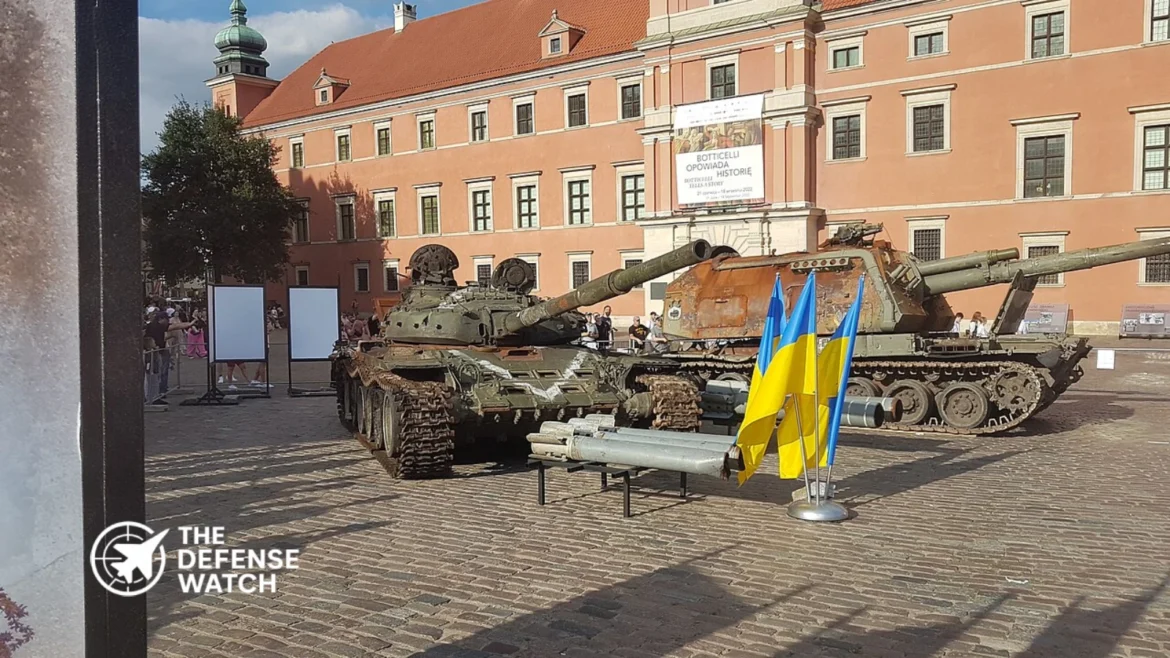
Executive Summary: Ukraine plans to transfer selected captured Russian T-72 tanks to museums in Lithuania, Latvia, Estonia, Denmark and the Netherlands. The vehicles will be demilitarized and displayed as historical evidence of Russia’s invasion, giving European audiences direct access to equipment recovered from the battlefield.
Ukraine Expands Museum Program For Captured Russian T-72 Tanks
Ukraine is preparing to send captured Russian T-72 tanks to museums in five European countries under a government-approved program designed to document the war and preserve physical evidence of Russia’s invasion. The planned transfers include museums in Lithuania, Latvia, Estonia, Denmark and the Netherlands.
Ukraine’s Cabinet of Ministers has approved a mechanism allowing selected captured or destroyed Russian military equipment to be transferred to foreign museums free of charge. The Ukrainian Ministry of Defence is involved in the program alongside the Ministry of Culture.
The equipment selected for museum use will not return to military service. Ukraine says the vehicles designated for exhibition are no longer combat-capable and contain no explosive components, allowing them to be displayed safely.
The decision gives captured armored vehicles a second role after their battlefield use. Instead of being retained for military purposes, selected examples can become physical records of the conflict for visitors, researchers and future generations.
Five European Countries Set To Receive Tanks
The first announced recipients are museums in Lithuania, Latvia, Estonia, Denmark and the Netherlands.
The selection is significant because all five countries are European partners that have maintained close political and security ties with Ukraine during the war. The Baltic states, in particular, have consistently emphasized the security implications of Russia’s military actions in Europe.
For museums, the arrival of an actual Russian T-72 provides an opportunity to explain the conflict through a physical artifact rather than photographs, video footage or written accounts alone.
The Ukrainian government says the program is intended to provide foreign audiences with physical evidence of equipment used during the war and support broader efforts to document its consequences.
This approach also builds on Ukraine’s earlier use of captured and destroyed Russian equipment in public exhibitions.
In 2022, Ukraine’s Ministry of Internal Affairs organized an open-air exhibition in Kyiv featuring captured and destroyed Russian equipment. The display included a Russian T-72B3, a Pantsir-S1 air-defense system and other vehicles. Similar exhibitions later appeared in several European capitals.
Ukraine’s Ministry of Internal Affairs exhibition record
Why The T-72 Matters
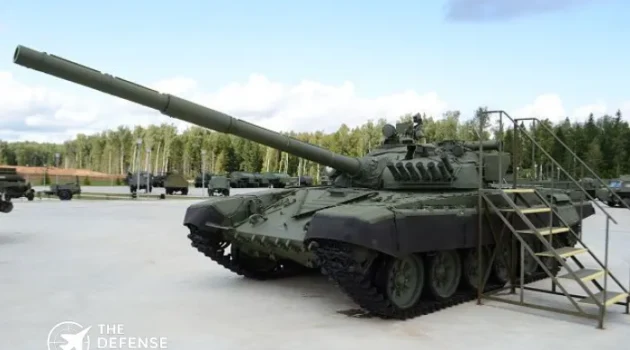
The T-72 is one of the most widely recognized Soviet-designed main battle tanks and remains an important part of Russia’s armored force.
Its basic design dates to the Soviet period, but Russia has operated and modernized numerous versions, including the T-72B3 and other upgraded variants. The platform has also been used extensively by Ukraine, making the T-72 an important example of the armored technology shared across the region.
The war has demonstrated that the value of a tank is not determined solely by its armor, gun or mobility. Modern armored warfare increasingly involves drones, electronic warfare, mines, precision weapons and persistent battlefield surveillance.
That makes captured vehicles valuable for more than their historical significance. Intact or partially intact equipment can provide technical information about enemy configurations, components and battlefield modifications.
Ukraine has already created a separate mechanism for this purpose.
Museum Displays Differ From Technical Exploitation
In June 2026, Ukraine launched TrophyLab, a government platform intended to provide approved foreign governments, defense companies and research organizations with technical information derived from captured Russian equipment.
Defense News reported that the platform contained more than 115 samples of seized Russian equipment across 79 categories, supported by more than 225 studies. Access is controlled and intended for vetted organizations.
Defense News coverage of Ukraine’s TrophyLab program
The museum program serves a different purpose.
TrophyLab is focused on technical examination and defense research, while the overseas museum transfers are primarily intended for public education and historical documentation. The distinction is important because the tanks selected for museums are being removed from combat use.
From a defense perspective, the two initiatives show how captured equipment can serve different functions after battlefield recovery. Some systems may contribute to technical intelligence, while others can be preserved as historical evidence.
A Growing Record Of Russian Equipment
Ukraine has accumulated substantial quantities of captured Russian military equipment during more than four years of full-scale war.
Ukrainian airborne forces, for example, documented the capture of Russian armored vehicles during fighting in the Kursk region in 2024, including T-72 tanks alongside newer Russian platforms.
Captured equipment has also been returned to Ukrainian military units when its condition made continued operational use practical. In September 2025, Ukrainian authorities reported that two captured Russian T-72 variants had been transferred to an Armed Forces unit after being seized during operations in the Donetsk region.
The contrast between those vehicles and the tanks selected for museums illustrates an important point. A captured tank is not automatically a museum piece. Its destination depends on its condition, military value, technical usefulness and the government’s decision on how it should be used.
The museum scheme specifically concerns equipment that Ukraine has determined should be preserved for exhibition rather than returned to combat.
Museums Become Part Of The War’s Historical Record
The planned transfers also reflect a broader effort to preserve material evidence of the conflict outside Ukraine.
The Tank Museum in Britain has already incorporated the Ukraine war into its educational work. Its 2025 exhibition, Ukraine: Armoured Warfare in the Modern World, included a Russian T-72 and a British Challenger 2 to help visitors understand the armored warfare dimension of the conflict.
The Tank Museum’s Ukraine exhibition
For European museums, displaying a captured Russian tank can provide visitors with a tangible connection to a conflict taking place on the continent. It can also help preserve details that may otherwise disappear as damaged vehicles are scrapped, repaired or returned to operational use.
The historical value is likely to increase over time. Battlefield photographs and digital records can document when and where a vehicle was captured or destroyed, but a preserved vehicle allows future visitors to examine its physical characteristics directly.
What The Program Means For Ukraine
The transfer of captured Russian T-72 tanks is unlikely to have a major direct effect on Ukraine’s battlefield strength because the vehicles selected for museums are already considered unsuitable for combat.
Its importance is instead political, educational and historical.
For Kyiv, distributing captured Russian equipment among partner countries creates a network of physical evidence of the war. It also gives museums in those countries an opportunity to explain the conflict through equipment recovered from the battlefield.
The program may also strengthen cooperation between Ukrainian institutions and European museums. Ukraine’s government says the mechanism could be used for additional captured or destroyed Russian equipment in the future.
That could eventually produce a wider collection covering tanks, armored vehicles, artillery systems, electronic warfare equipment and other military hardware used during the conflict.
For now, the T-72 is the most visible symbol of the initiative. Once demilitarized and transferred, these captured Russian tanks will move from the battlefield into museum collections, where their purpose will shift from combat to documentation.
The Bottom Line
Ukraine’s decision to transfer captured Russian T-72 tanks to museums in five European countries marks another stage in the effort to preserve physical evidence of the war.
The program is separate from Ukraine’s technical exploitation of captured Russian equipment and focuses instead on public education, historical preservation and international documentation.
The planned displays will also give European audiences direct access to a type of tank that has played a major role in the war. As the conflict continues, such vehicles are likely to become increasingly important historical artifacts, helping museums document how conventional armored warfare has evolved under the pressure of drones, precision weapons and modern surveillance.
Executive Summary:
The drone-saturated battlefields of Ukraine and the Middle East have forced a reordering of what “best tank” means in 2026 — hard-kill active protection is now table stakes rather than a luxury option, and sensor fusion against top-attack munitions counts for as much as frontal armor thickness. This ranking evaluates the ten most operationally significant main battle tanks in service or imminent fielding, weighing survivability architecture, firepower and target acquisition, mobility, and logistical sustainability rather than raw specification-sheet superlatives.
Armored Warfare in 2026: Why the Old Rankings No Longer Apply
For two decades, main battle tank rankings were largely a contest of armor thickness, gun caliber, and horsepower-per-ton. That framework has been substantially rewritten by the war in Ukraine and by successive rounds of drone and loitering-munition employment across the Middle East and the Caucasus. Cheap first-person-view drones and Switchblade-class loitering munitions have repeatedly demonstrated the ability to defeat top and rear armor arrays that were never designed against plunging or top-attack threats, while proliferated anti-tank guided missiles (ATGMs) such as Javelin, NLAW, and Kornet variants have forced armor designers to treat the 360-degree, all-aspect threat envelope as the default planning assumption rather than an edge case.
The result is a shift in engineering priority. Passive composite armor remains foundational, but it is now paired — in the platforms that matter most — with hard-kill Active Protection Systems (APS) that physically intercept incoming projectiles before impact, soft-kill countermeasures that defeat missile guidance through jamming or obscurants, and hunter-killer sensor suites that let a tank identify and engage a threat before it is itself detected. Thermal signature management, once a secondary concern, is increasingly central to survivability calculus as loitering munitions and reconnaissance drones hunt primarily on infrared and electro-optical cues.
This ranking evaluates each platform across four core pillars:
- Survivability & Active Protection Systems (APS) — composite/ERA armor architecture, hard-kill and soft-kill APS integration, and counter-UAS defensive layering.
- Firepower, Optics & Sensor Fusion — main gun caliber and APFSDS penetration performance, ammunition natures (including top-attack munitions), fire-control computers, and hunter-killer target acquisition capability.
- Tactical & Operational Mobility — power-to-weight ratio, suspension architecture (including hydro-pneumatic systems), strategic transportability, and terrain adaptability.
- Logistical Sustainability & Electronics Architecture — fuel consumption, maintenance burden, digital backbone/Modular Open Systems Approach (MOSA) upgradeability, and fleet interoperability with allied logistics chains.
2026 Main Battle Tank Comparison Table
| 1 | M1A2 SEPv3 / M1E3 Abrams | USA | 120mm M256 smoothbore | Trophy (SEPv3, fielded); XM251 Iron Fist (M1E3, developmental) | ~66.8 tons / ~18.4 hp/ton (SEPv3); ~60 tons target (M1E3) |
| 2 | Leopard 2A8 | Germany | 120mm L55A1 smoothbore | Trophy APS (factory-standard) | ~66.5 tons / ~20.7 hp/ton |
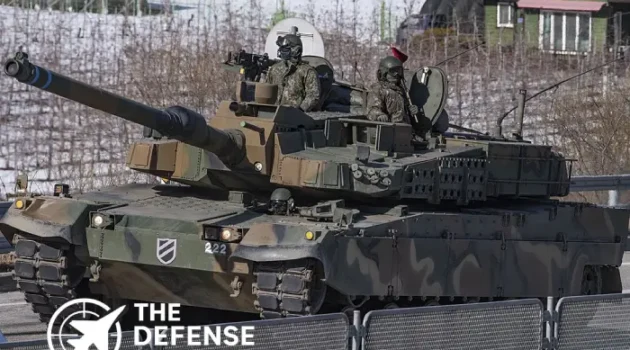
| 3 | K2 Black Panther | South Korea | 120mm L55 smoothbore | Soft-kill MSSG standard; KAPS hard-kill in PIP/K2EX upgrade path | ~56 tons / ~27.7 hp/ton |
| 4 | Challenger 3 | United Kingdom | 120mm L55A1 smoothbore | Trophy MV (partial fleet fielding) | ~66 tons / ~19 hp/ton |
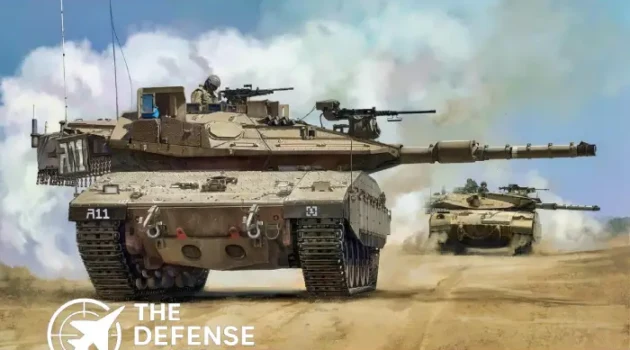
| 5 | Merkava Mk 4M | Israel | 120mm MG251-LR smoothbore | Trophy APS (combat-proven, standard) | ~65 tons / ~18.8 hp/ton |
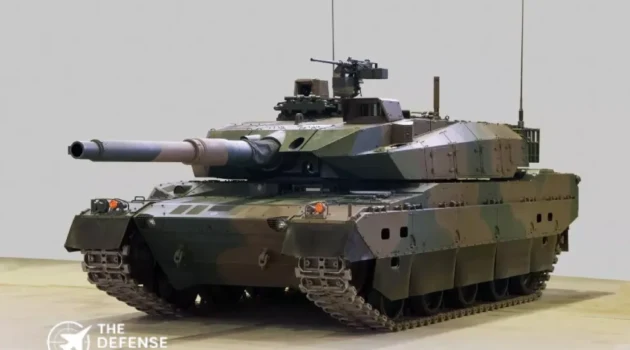
| 6 | Type 10 | Japan | 120mm L44 smoothbore | Soft-kill countermeasures; hard-kill APS not standard | ~48 tons / ~29 hp/ton |
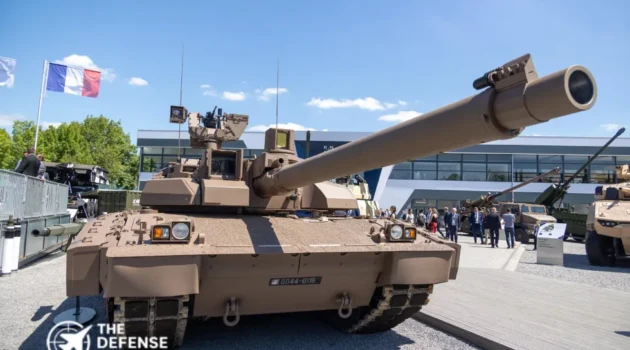
| 7 | Leclerc XLR | France | 120mm CN120-26 smoothbore | Soft-kill (GALIX); hard-kill APS not integrated | ~56.5 tons / ~24 hp/ton |
| 8 | T-90M “Proryv” | Russia | 125mm 2A46M-5 smoothbore | Shtora-1 soft-kill; Relikt ERA; hard-kill APS limited | ~48 tons / ~22.9 hp/ton |
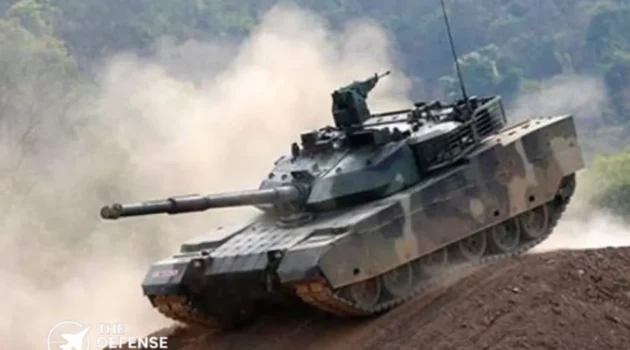
| 9 | VT-4 / Type 99A | China | 125mm smoothbore | ERA plus soft-kill countermeasures; hard-kill APS variant-dependent | ~52–58 tons / ~21–24 hp/ton |
| 10 | Altay | Turkey | 120mm smoothbore | Composite/modular armor; APS integration ongoing | ~65 tons / ~18.5 hp/ton |
Figures reflect publicly disclosed baseline configurations as of mid-2026 and vary by national upgrade package; classified armor and APS performance data are excluded by design.
1. M1A2 SEPv3 / M1E3 Abrams (USA)
Technical Specifications Brief:
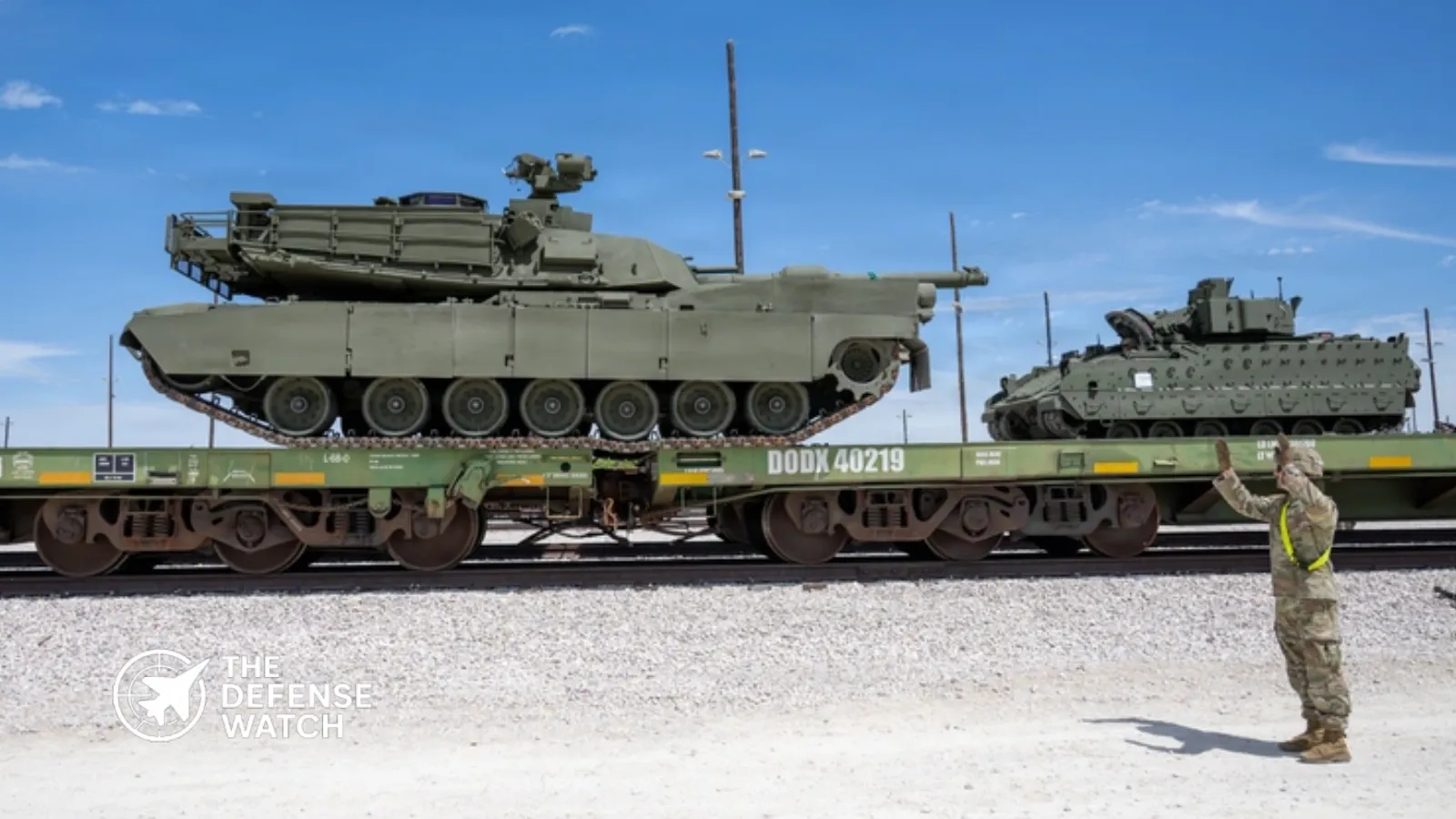
Weight ~66.8 tons (SEPv3); target ~60 tons (M1E3). Engine: 1,500 hp AGT-1500 turbine (SEPv3); hybrid diesel-electric power pack under development for M1E3. Main armament: 120mm M256 smoothbore. Secondary: coaxial 7.62mm, M2 .50 cal RWS. Armor: Chobham composite with depleted-uranium mesh (SEPv3); new-generation modular composite under evaluation for M1E3. APS: Trophy hard-kill, fielded on a portion of the SEPv3 fleet; the M1E3 program has selected Elbit’s Iron Fist, designated XM251, as its baseline hard-kill system.
Core Engineering & Operational Analysis:
The SEPv3 remains the combat-proven backbone of the U.S. armored fleet, but the Army’s own procurement decisions signal the platform’s limits: in 2023 it shelved the planned SEPv4 upgrade in favor of the M1E3, a clean-sheet redesign built around the lessons of Ukraine’s drone-saturated front lines. The M1E3 pre-prototype, unveiled at the Detroit Auto Show in January 2026, introduces an unmanned turret, a bustle autoloader, and a three-person crew relocated entirely into a protected hull cell — a survivability philosophy borrowed from Russian and Korean autoloader designs but paired with a Western-style digital backbone. A Modular Open Systems Approach lets the Army swap sensors and counter-UAS effectors as threats evolve rather than freezing a fixed defensive suite at fielding.
Mobility and sustainment drive the second half of the redesign. General Dynamics Land Systems is targeting a mass reduction to roughly 60 tons from the SEPv3’s 66.8 tons, aided by lightweight tracks and a hydro-pneumatic suspension, while Caterpillar’s hybrid diesel-electric propulsion is intended to cut fuel burn, heat signature, and acoustic detectability simultaneously — directly answering thermal-signature vulnerabilities exposed by loitering munitions.
Key Operational Trade-off:
Program risk. The Army has compressed what was once a five-plus-year development timeline into 24–30 months, meaning the autoloader, hybrid powertrain, and XM251 APS integration are all being validated concurrently with prototype soldier evaluation through 2026 — a schedule that historically produces late-stage surprises in armor programs.
2. Leopard 2A8 (Germany)
Technical Specifications Brief:
Weight ~66.5 tons. Engine: MTU MB 873 diesel, ~1,500 hp. Main armament: 120mm L55A1 smoothbore, chambered for higher-pressure APFSDS rounds including the KE2020Neo/DM83 in development. Secondary: coaxial 7.62mm MG3, RWS-mounted 12.7mm. Armor: latest-generation modular composite. APS: Trophy, integrated as a factory-standard fitment rather than a retrofit.
Core Engineering & Operational Analysis:
The Leopard 2A8 is arguably the most complete near-term answer to the ATGM/drone threat among NATO’s fielded platforms, because Trophy is designed into the vehicle from first production rather than bolted on afterward — avoiding the weight, power-budget, and structural compromises that trouble add-on APS installations. Germany’s EUR 525.6 million order for 18 tanks, with an option for a further 105, has been followed by EuroTrophy contracts extending Trophy support to Leopard 2A8 operators in Lithuania, the Netherlands, Czechia, and Croatia, positioning Trophy as the de facto NATO-standard APS and giving the 2A8 fleet unusually strong multinational logistics commonality.
The L55A1 gun’s higher chamber pressure gives it a real APFSDS performance edge over legacy L55 barrels, while updated optronics and a digital fire-control architecture preserve the hunter-killer engagement sequence that has defined Leopard 2 doctrine since the A5 generation.
Key Operational Trade-off:
Weight. At 66.5 tons, the 2A8 strains European rail and bridge infrastructure in the same way as the Abrams and Challenger 3, limiting operational mobility along NATO’s eastern flank where road and bridge classifications have not universally been upgraded for 60-plus-ton vehicles.
3. K2 Black Panther (South Korea)
Technical Specifications Brief:
Weight ~56 tons. Engine: ~1,500 hp diesel (domestic powerpack after earlier transmission delays). Main armament: 120mm L55 smoothbore with a bustle autoloader (10 rounds/minute sustained). Secondary: RWS 12.7mm. Armor: MIL-12560H steel with silicon-carbide ceramic inserts and modular ERA. APS: standard-fit Multispectral Screening Smoke Grenade (MSSG) soft-kill system, with the hard-kill Korean Active Protection System (KAPS) reserved for the K2 Product Improvement Program (K2 PIP) and export-oriented K2EX variant.
Core Engineering & Operational Analysis:
The K2 remains the field’s most mobility-optimized MBT, largely due to its In-Arm Semi-Active Suspension Unit — a hydro-pneumatic system that lets the tank crouch, kneel, or elevate its hull independently at each road wheel, enabling hull-down firing postures on ridgelines that few competitors can replicate. Combined with a power-to-weight ratio near 27.7 hp/ton, the K2 offers acceleration and cross-country agility that outpaces heavier Western designs, a factor that mattered directly in cold-weather trials against the Leopard 2A8 in Norway.
The tank’s hunter-killer fire-control system pairs a panoramic commander’s sight with pulsed-Doppler radar and a Raman laser rangefinder, and its ammunition suite includes the KSTAM fire-and-forget top-attack submunition — a direct answer to the top-armor vulnerability drone and ATGM threats now routinely exploit.
Key Operational Trade-off:
APS gap in current production. The base K2 fields only the soft-kill MSSG suite; full hard-kill KAPS integration has been deferred to the PIP/K2EX upgrade path over cost, weight, and dismounted-infantry blast-radius concerns, leaving in-service K2s more exposed to top-attack ATGMs than Trophy-equipped peers until that upgrade matures.
4. Challenger 3 (United Kingdom)
Technical Specifications Brief:
Weight ~66 tons. Engine: existing Challenger 2 diesel powerpack, ~1,200 hp (retained, not upgraded). Main armament: 120mm L55A1 smoothbore — the single biggest change from the rifled L30A1 on Challenger 2. Secondary: coaxial 7.62mm chain gun. Armor: Dorchester composite modernized to current-generation standard. APS: Trophy MV, being fielded to a portion of the fleet rather than the full inventory.
Core Engineering & Operational Analysis:
Challenger 3 represents the most significant British tank redesign in a generation, chiefly through its adoption of the Rheinmetall L55A1 smoothbore — aligning UK ammunition logistics with the Leopard 2A7/A8 family for the first time and unlocking access to higher-pressure APFSDS rounds such as the KE2020Neo/DM83 under UK-German co-development. The turret and hull retain proven Challenger 2 survivability characteristics while integrating a new digital fire-control backbone and the Trophy MV active protection suite, which uses four radar panels and paired effector launchers to intercept incoming ATGMs and rockets.
Key Operational Trade-off:
Fleet scale and APS coverage. The British Army’s planned Challenger 3 inventory is small relative to continental peers, and only a fraction of that already-limited fleet is projected to carry Trophy MV in the near term — raising sustainment questions about the UK’s ability to provide a fully protected armored division contribution to NATO over an extended campaign.
5. Merkava Mk 4M (Israel)
Technical Specifications Brief:
Weight ~65 tons. Engine: MTU 12V883, 1,500 hp diesel (power-to-weight ~18.8 hp/ton). Main armament: 120mm MG251-LR smoothbore, capable of firing the LAHAT gun-launched ATGM. Secondary: 12.7mm and 7.62mm machine guns, 60mm internal mortar. Armor: classified composite/modular arrangement with a distinctive front-engine layout for added crew protection. APS: Trophy, the system’s original combat-proven platform, standard since the mid-2010s.
Core Engineering & Operational Analysis:
The Merkava’s defining engineering choice — mounting the powerpack forward of the crew compartment — remains unique among the world’s MBTs and provides an additional layer of frontal protection along with a rear crew/troop access hatch that has proven valuable in urban and Gaza-perimeter operations. As the platform where Trophy was combat-validated against real-world ATGM and RPG salvos since 2011, the Merkava Mk 4M carries an unmatched operational track record for hard-kill APS effectiveness rather than test-range performance alone.
Its ammunition flexibility — conventional APFSDS/HEAT rounds alongside the gun-launched LAHAT — gives it precision strike options against both armor and fortified point targets without depending on a separate missile system.
Key Operational Trade-off:
Weight and strategic mobility. At 65 tons, the Merkava is not designed for long-range expeditionary deployment; its engineering logic optimizes for Israel’s specific regional threat envelope and short interior lines rather than global power-projection requirements.
6. Type 10 (Japan)
Technical Specifications Brief:
Weight ~48 tons, the lightest platform in this ranking. Engine: ~1,200 hp diesel, yielding roughly 29 hp/ton. Main armament: 120mm L44 smoothbore (Japan Steel Works). Secondary: 12.7mm and 7.62mm machine guns. Armor: modular ceramic composite, tunable to mission-specific threat levels. APS: soft-kill countermeasures standard; hard-kill APS not yet a baseline fitment.
Core Engineering & Operational Analysis:
The Type 10 was engineered specifically around Japan’s constrained road, rail, and bridge network, and its modular armor packages let commanders trade protection for weight depending on whether the tank is operating on Honshu’s main islands or in a more exposed forward posture. A C4I data-link architecture allows Type 10s to network target data across a platoon in real time, effectively extending each vehicle’s sensor reach through networked hunter-killer engagement rather than relying purely on onboard optics.
Its hydro-pneumatic suspension, similar in concept to the K2’s, allows selective hull elevation and tilt, useful for both cross-country mobility and precision gun-laying on Japan’s mountainous terrain.
Key Operational Trade-off:
Limited APS and smaller gun bore relative to 125mm/130mm peers. The Type 10’s design logic prioritizes homeland-defense mobility over the maximalist protection and firepower standards now emerging from NATO and Korean programs, leaving it comparatively under-defended against saturation drone attack absent further upgrades.
7. Leclerc XLR (France)
Technical Specifications Brief:
Weight ~56.5 tons. Engine: Wärtsilä/SACM hyperbar-assisted diesel, ~1,500 hp (~24 hp/ton). Main armament: 120mm CN120-26 smoothbore with a bustle autoloader. Secondary: coaxial 12.7mm and 7.62mm machine guns. Armor: modular composite with added turret and hull armor plus rear wire-cage protection against RPGs. APS: GALIX soft-kill smoke/countermeasure system; no hard-kill APS integrated in the baseline XLR configuration.
Core Engineering & Operational Analysis:
The Leclerc XLR modernizes rather than replaces the third-generation Leclerc hull, adding an inertial-navigation/GPS-fused digital backbone, upgraded optronics, and additional passive protection including rear engine-compartment wire cage armor — a direct, low-cost response to RPG and drone-delivered munition threats observed in recent conflicts. Its autoloader remains among the fastest in service and keeps crew size at three, consistent with French doctrine favoring compact crews and rapid sustained fire.
Follow-on French programs — the Leclerc Evolution demonstrator and the EMBT-ADT concept — point toward a 140mm Ascalon gun and expanded RCWS armament, signaling that France views the XLR as a bridge rather than an end-state platform.
Key Operational Trade-off:
No hard-kill APS. Without an integrated Trophy- or KAPS-equivalent system, the Leclerc XLR remains dependent on soft-kill smoke/jamming countermeasures against modern top-attack ATGMs and loitering munitions, a meaningful survivability gap relative to Trophy-equipped NATO peers.
8. T-90M “Proryv” (Russia)
Technical Specifications Brief:
Weight ~48 tons. Engine: ~1,130 hp diesel (~22.9 hp/ton). Main armament: 125mm 2A46M-5 smoothbore, autoloader-fed. Secondary: 12.7mm RWS, coaxial 7.62mm. Armor: Relikt explosive reactive armor over a composite base. APS: Shtora-1 soft-kill infrared jamming/laser-warning suite; hard-kill APS (Arena-class) has seen only limited operational fielding on this variant.
Core Engineering & Operational Analysis:
The T-90M represents Russia’s most combat-tested modern MBT lineage, with the Relikt ERA generation offering meaningfully improved resistance to tandem-charge ATGM warheads compared to earlier Kontakt-5 arrays. Its autoloader-fed 125mm gun preserves the traditional Soviet/Russian doctrinal advantage of a low silhouette and reduced crew exposure, at the cost of ammunition-carousel vulnerability that has been repeatedly exploited in the Ukraine conflict when frontal protection is defeated.
Networked fire control and thermal sighting upgrades bring the T-90M closer to Western hunter-killer engagement standards than earlier T-72/T-90 derivatives, though independent verification of combat performance has been complicated by the conflict environment in which most operational data has been generated.
Key Operational Trade-off:
Ammunition storage vulnerability and inconsistent hard-kill APS fielding. The autoloader carousel’s ammunition placement remains a catastrophic-kill risk when penetrated, and Shtora-1’s soft-kill approach — while useful against older laser-guided ATGMs — offers materially less protection against modern fire-and-forget missiles and loitering munitions than Trophy- or Iron Fist-class hard-kill systems.
9. VT-4 / Type 99A (China)
Technical Specifications Brief:
Weight ~52–58 tons depending on variant. Engine: ~1,200–1,500 hp diesel (~21–24 hp/ton). Main armament: 125mm smoothbore, autoloader-fed, compatible with gun-launched ATGMs. Secondary: coaxial and RWS machine guns. Armor: composite with explosive reactive armor arrays; export VT-4 configurations vary by customer. APS: soft-kill laser-warning/smoke countermeasures standard; hard-kill APS integration varies and is not confirmed as a universal fitment.
Core Engineering & Operational Analysis:
The Type 99A anchors China’s domestic armored fleet while the export-oriented VT-4 (MBT-3000) has found buyers including Pakistan and Thailand, giving Chinese armor a wider international footprint than at any prior point. Both platforms follow the autoloader-and-125mm-gun template shared with Russian designs, prioritizing a compact silhouette and gun-launched ATGM capability over the larger 120mm/130mm Western/Korean gun families.
Reported fire-control upgrades include panoramic commander sights and improved thermal imaging intended to close the hunter-killer gap with NATO and Korean platforms, though independently verified combat performance data remains far more limited than for Western or Israeli systems.
Key Operational Trade-off:
Transparency and independent verification. Chinese MBT survivability and APS claims are less independently tested in open combat than Western, Israeli, or Korean equivalents, making direct comparative assessment inherently more uncertain — a limitation this ranking notes rather than resolves.
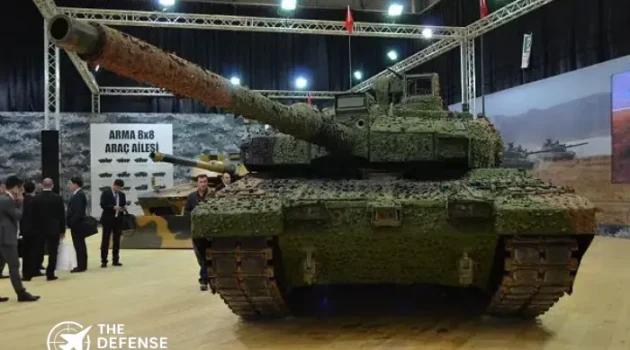
10. Altay (Turkey)
Technical Specifications Brief:
Weight ~65 tons. Engine: domestically developed diesel powerpack (import-substitution program ongoing), targeting ~18.5 hp/ton. Main armament: 120mm smoothbore. Secondary: coaxial and RWS machine guns. Armor: modular composite armor package, developed with South Korean design assistance drawing on K2 lineage. APS: integration efforts ongoing; not yet a mature standard fitment at scale production.
Core Engineering & Operational Analysis:
The Altay is Turkey’s flagship push toward indigenous armored-vehicle sovereignty, drawing substantially on South Korean K2 design assistance for its hull and armor architecture while pursuing a fully domestic engine and transmission to escape prior European supplier restrictions. Serial production has been a multi-year process, reflecting the difficulty of building an indigenous powerpack and transmission industrial base essentially from scratch.
As production matures, Turkey has signaled intent to integrate both hard-kill APS and improved composite armor packages in follow-on batches, positioning the Altay as a platform still climbing toward — rather than already at — the survivability standard set by Trophy-equipped NATO peers.
Key Operational Trade-off:
Industrial maturity. Powerpack and transmission reliability, along with APS integration, remain works in progress relative to the more mature Western, Korean, and Israeli programs ranked above it, and production volumes to date remain modest relative to program ambitions.
Next-Generation Armor: The Fifth-Generation Concepts Reshaping the Field
Three programs illustrate where the main battle tank category is heading beyond the platforms ranked above:
- Rheinmetall KF51 Panther — built on a Leopard 2A4-derived hull but centered on an autoloaded 130mm smoothbore gun, the KF51 pairs StrikeShield modular armor with the ROSY soft-kill obscurant system rather than pursuing ever-thicker passive armor, explicitly trading raw armor mass for active protection and networked lethality.
- Leopard 2 A-RC 3.0 / Leopard 3 concept — KNDS Deutschland and Rheinmetall’s follow-on Leopard concept work, alongside Germany’s broader Main Ground Combat System (MGCS) ambitions, points toward a 130mm-class successor gun and a further-integrated digital/APS architecture intended to reach production in the 2030s.
- South Korea’s K3 concept — a low-observable, hydrogen-power-concept demonstrator emphasizing thermal and acoustic signature reduction, a 130mm gun, extended-range anti-tank missiles, and AI-assisted fire control, reflecting Seoul’s continued willingness to leapfrog rather than incrementally upgrade its armor fleet.
The common thread across all three is a deliberate shift away from armor mass as the primary survivability lever, toward layered active protection, signature management, and sensor networking — the same lessons driving the M1E3, Leopard 2A8, and K2 PIP programs already fielding today.
Tank Warfare Meets the Strategy Game Meta
For the strategic-gaming and esports audience following this category, the real-world APS-versus-saturation-drone dynamic maps closely onto the “counter unit” logic familiar from RTS and wargaming titles: a single high-value unit (the MBT) surviving only if paired with layered support systems (APS, counter-UAS screening, infantry escort) rather than relying on raw stat-sheet superiority. Just as a min-maxed “glass cannon” build in a strategy title can be countered cheaply by swarm units unless the player invests in area denial and detection, a modern MBT without integrated hard-kill APS is functionally the glass-cannon build of 2026 armored warfare — impressive on the specification sheet, exploitable in the field. Procurement decisions increasingly resemble a meta-conscious loadout choice: survivability tech now outweighs marginal gains in armor thickness or gun caliber, the same way competitive players prioritize counter-picks over raw damage output once an opposing strategy becomes widely known.
Frequently Asked Questions
What is the most survivable main battle tank in 2026?Among fielded systems, the Leopard 2A8 and Merkava Mk 4M currently offer the most mature survivability packages because both integrate Trophy hard-kill APS as a factory-standard fitment rather than a partial retrofit; the M1E3 Abrams is positioned to match or exceed this once its XM251 Iron Fist APS integration completes testing.
Which tank has the best APS: hard-kill or soft-kill?Hard-kill systems like Trophy and KAPS physically intercept incoming projectiles and provide stronger protection against modern ATGMs and RPGs, while soft-kill systems like Shtora-1 and GALIX rely on jamming or obscurants and are generally considered less effective against fire-and-forget or top-attack munitions.
Why does weight matter so much in these rankings?Heavier tanks (65+ tons) face bridge, rail, and strategic-airlift constraints that lighter platforms like the K2 (~56 tons) and Type 10 (~48 tons) avoid, directly affecting how quickly a force can be deployed and sustained forward.
Are autoloaders safer or riskier than human loaders?Autoloaders reduce crew size and turret volume but concentrate ammunition storage in ways that can be catastrophic if penetrated, as seen repeatedly with carousel-fed Russian and Chinese designs; Western programs like the M1E3 are addressing this by isolating ammunition in blow-off-panel-protected compartments away from the crew.
Conclusion
The 2026 armor hierarchy no longer rewards the heaviest gun or the thickest plate in isolation. Platforms that pair proven hard-kill active protection with digital fire control and disciplined signature management — the Leopard 2A8, the Merkava Mk 4M, and the emerging M1E3 — are pulling ahead of designs that still lean primarily on passive armor mass. At the same time, the drone and loitering-munition threat is pushing every major tank-producing nation toward the same conclusion from different starting points: survivability now depends as much on layered active defense and networked sensing as on the gun and the glacis. The next decade’s main battle tank will likely be defined less by its armor tonnage than by how intelligently it manages the airspace immediately around itself — a battlefield reality that uncrewed systems, not steel, will increasingly help it fight.

Executive Summary:
International Armored Group (IAG) has introduced a new generation of armored vehicle solutions aimed at improving battlefield survivability against mines, improvised explosive devices, ambushes, and evolving battlefield threats. The latest platforms emphasize modular protection, operational mobility, and mission adaptability as armed forces worldwide continue investing in protected mobility modernization.
IAG Expands Armored Vehicle Portfolio With New Battlefield Protection Solutions
International Armored Group (IAG) has unveiled its latest generation of armored vehicle solutions designed to enhance battlefield protection and operational flexibility for military customers worldwide. The company announced the new platforms as part of its continued investment in protected mobility technologies, highlighting improvements in survivability, modularity, and mission adaptability for modern combat environments.
The announcement reflects a broader shift across the global defense industry as armies adapt to increasingly complex operational environments shaped by widespread drone use, precision-guided weapons, mines, and improvised explosive devices. Modern armored vehicles are now expected to combine high levels of protection with digital connectivity, mobility, and rapid mission reconfiguration.
Focus on Survivability and Protected Mobility
The newest IAG platforms build on the company’s experience developing Mine Resistant Ambush Protected (MRAP) vehicles, armored personnel carriers, and tactical mobility platforms.
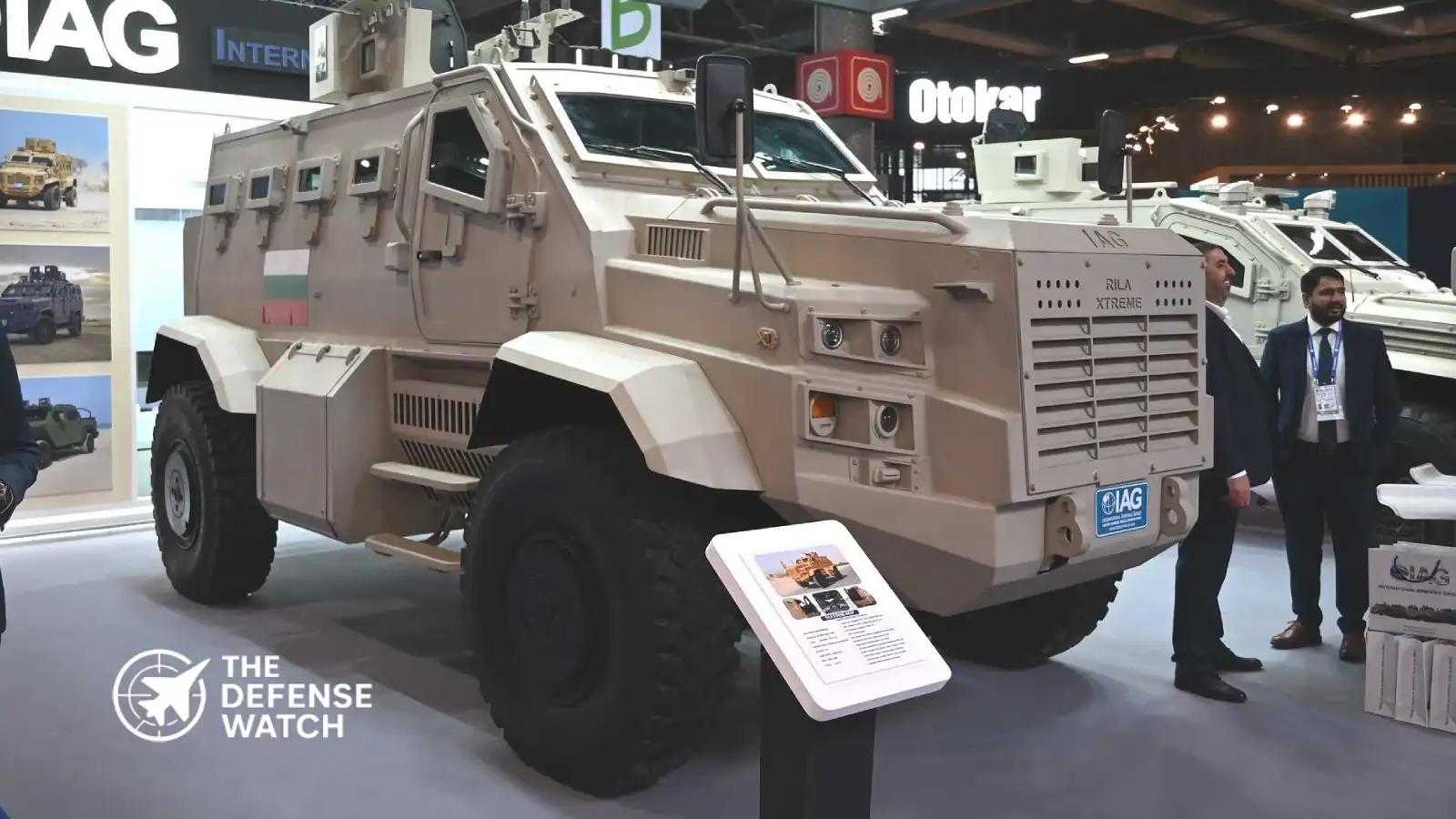
Among the highlighted vehicles are the Rila Xtreme and Guardian Xtreme, both engineered to provide enhanced crew protection while maintaining high mobility across challenging terrain. According to the company, the vehicles incorporate improved ballistic protection, blast-resistant hull designs, and modular armor packages that can be tailored to mission requirements.
Key design priorities include:
Capability Operational Benefit Modular armor architecture Adaptable protection for different missions Blast-resistant hull Improved survivability against mines and IEDs High off-road mobility Better performance across varied terrain Multi-role configurations Supports troop transport, command, reconnaissance, and security missions NATO-compatible standards Greater interoperability with allied forces Building on Earlier Vehicle Programs
The latest announcement continues IAG’s expansion beyond traditional armored patrol vehicles.
Earlier this year, the company revealed new 6×6 and 8×8 Infantry Fighting Vehicle (IFV) concepts at World Defense Show 2026, representing its entry into the medium-weight combat vehicle segment. Those platforms were designed as purpose-built infantry fighting vehicles rather than modified armored personnel carriers, featuring independent suspension systems, modular armor, and capacity for future electronic and weapons upgrades.
The company has also demonstrated the Pirin 4×4 APC and Balkan MRAP, reinforcing its strategy of offering a complete family of protected mobility solutions spanning internal security, peacekeeping, border protection, and high-intensity combat operations.
Why Protected Mobility Is Becoming More Important
The demand for modern armored vehicles has increased significantly since recent conflicts demonstrated the vulnerability of legacy platforms to inexpensive yet highly effective battlefield threats.
Commercial drones modified for reconnaissance and strike missions, loitering munitions, anti-tank guided missiles, and precision artillery have fundamentally changed vehicle survivability requirements. Passive armor alone is no longer sufficient.
As a result, military procurement increasingly emphasizes:
- Higher blast protection
- Modular armor upgrades
- Digital battlefield integration
- Counter-drone compatibility
- Improved crew survivability
- Easier maintenance and lifecycle support
These trends are influencing vehicle acquisition programs across NATO members, Middle Eastern operators, and emerging defense markets.
Analysis: A Shift Toward Adaptable Combat Platforms
IAG’s latest vehicle family illustrates a wider transformation taking place throughout the global armored vehicle market.
Rather than designing vehicles for a single operational role, manufacturers are increasingly developing common platforms that can support multiple missions through interchangeable mission modules and scalable protection packages. This approach reduces logistics burdens while allowing armed forces to adapt platforms as operational requirements evolve.
Equally important is the growing expectation that armored vehicles will function as networked battlefield assets rather than isolated platforms. Future combat vehicles are expected to integrate sensors, communications systems, electronic warfare capabilities, and autonomous technologies that improve situational awareness and accelerate decision making.
For medium-sized manufacturers like IAG, this strategy offers an opportunity to compete by providing customizable solutions for customers seeking alternatives to larger Western defense primes. Modular vehicle architectures also make it easier for nations to integrate domestically produced weapons, communications equipment, and mission systems, supporting local industrial participation and reducing long-term sustainment costs.
As modernization programs continue worldwide, demand is likely to remain strongest for armored platforms that balance protection, mobility, affordability, and upgrade potential instead of relying solely on heavier armor or larger vehicle designs.
Looking Ahead
IAG’s latest armored vehicle developments reinforce the growing emphasis on survivability, flexibility, and modular design within the global defense industry. While the company continues expanding its portfolio into increasingly capable combat vehicle segments, its newest platforms reflect broader military priorities centered on protecting personnel while maintaining operational agility across diverse mission environments.
As armed forces adapt to evolving battlefield conditions, protected mobility platforms equipped for future upgrades are expected to remain a central component of ground force modernization efforts.
Executive Summary:
Northrop Grumman has secured a contract valued at up to $885 million to produce M1147 Advanced Multi-Purpose (AMP) 120mm ammunition for U.S. Army M1 Abrams tanks. The agreement supports production through 2031 and strengthens the Army’s effort to modernize armored warfare capabilities while simplifying logistics through a single multi-role tank round.
Northrop Grumman Expands Production Of M1147 Advanced Multi-Purpose Round
The M1147 Advanced Multi-Purpose round is set to become an increasingly important part of the U.S. Army’s armored warfare modernization strategy after Northrop Grumman secured a framework contract worth up to $885 million for production and supply of the ammunition.
According to contract information released by U.S. defense authorities, the agreement allows production orders to be placed through March 2031. The contract supports procurement for the U.S. Army as well as potential Foreign Military Sales (FMS) customers operating the Abrams main battle tank.
The M1147 is designed for the 120mm smoothbore gun used across the M1 Abrams family and represents one of the most significant ammunition upgrades introduced for the platform in recent years.
Replacing Four Legacy Tank Rounds With One
A key feature of the M1147 Advanced Multi-Purpose round is its ability to consolidate the capabilities of four legacy Abrams ammunition types into a single programmable munition.
The round is intended to replace the M830 High Explosive Anti-Tank round, M830A1 Multi-Purpose Anti-Tank round, M908 Obstacle Reduction round, and M1028 Canister round. By combining these capabilities into a single ammunition type, the Army aims to reduce logistical complexity while providing crews with greater battlefield flexibility.
The ammunition employs a programmable multi-mode fuze linked to the Abrams fire control system. Tank crews can select between point detonation, delayed detonation, and airburst modes depending on the target and tactical situation.
According to the U.S. Army, the round is specifically designed to engage infantry, anti-tank guided missile teams, light armored vehicles, fortified positions, and reinforced structures. The airburst capability also allows the munition to engage targets protected by cover or terrain masking.
Full-Rate Production Milestone Supports Larger Procurement
The contract follows a major program milestone reached in December 2024 when the U.S. Army approved the M1147 for full-rate production.
The approval authorized the transition from low-rate initial production to sustained manufacturing, enabling the Army to increase procurement volumes and support both domestic and international requirements. Army officials described the decision as critical to meeting future ammunition demands while enhancing Abrams lethality.
Northrop Grumman has been heavily involved in the development and production of advanced tank ammunition for decades. The company describes the M1147 as a next-generation capability designed to provide crews with a more versatile and effective solution against a broad range of battlefield targets.
Why The Contract Matters
Beyond the contract value, the agreement highlights a broader trend in armored warfare modernization.
Modern military operations increasingly require armored forces to engage diverse threats ranging from infantry and drones to fortified positions and lightly armored vehicles. Carrying multiple ammunition types creates logistical burdens and complicates combat operations.
The M1147 Advanced Multi-Purpose round addresses this challenge by providing a single programmable munition capable of performing multiple battlefield functions. This reduces ammunition management requirements while giving commanders greater flexibility during high-intensity operations.
From a sustainment perspective, consolidating four aging ammunition types into one modern round also simplifies inventory management, training requirements, storage, transportation, and long-term procurement planning. These benefits are particularly relevant as the U.S. Army continues to modernize its armored formations and maintain readiness for large-scale combat operations.
The agreement also reflects continued investment in the Abrams ecosystem at a time when the Army is upgrading vehicles, ammunition, sensors, and support systems to maintain battlefield overmatch against evolving threats.
Outlook For Abrams Modernization
The M1147 Advanced Multi-Purpose round forms part of a wider modernization effort aimed at keeping the Abrams relevant in future conflicts.
While kinetic-energy rounds such as the M829 series remain essential for defeating heavily armored targets, the M1147 provides crews with a versatile option for the broader range of engagements commonly encountered in modern combat environments.
With production now supported under a long-term contract structure extending through 2031, the Army is positioned to field larger quantities of the ammunition across active, reserve, and partner nation Abrams fleets in the coming years.
atOptions = { ‘key’ : ‘3d48d603f906e3fe9f205be3c4433835’, ‘format’ : ‘iframe’, ‘height’ : 250, ‘width’ : 300, ‘params’ : {} };Executive Summary:
EuroTrophy has unveiled an enhanced configuration of its Trophy Active Protection System (APS) integrated on the Leopard 2 A-RC 3.0 main battle tank, introducing new capabilities aimed at countering drones and other aerial threats. Displayed during Eurosatory 2026, the upgrade reflects the growing importance of layered protection against unmanned systems that have become a defining feature of modern combat operations. The development highlights the continuing evolution of active protection technologies beyond traditional anti-tank missile defense.
EuroTrophy Demonstrates Trophy APS Drone Defense Upgrade On Leopard 2 A-RC 3.0
EuroTrophy has presented a new configuration of its Trophy Active Protection System featuring drone defense enhancements on the Leopard 2 A-RC 3.0 main battle tank during the Eurosatory 2026 defense exhibition in Paris. The system was showcased on an updated version of KNDS Deutschland’s next-generation armored vehicle concept, emphasizing the industry’s response to lessons emerging from contemporary conflicts where drones increasingly threaten armored formations.
The upgraded configuration represents a significant evolution of the combat-proven Trophy APS, which is already deployed on multiple Western armored platforms, including the Leopard 2, M1 Abrams, and Merkava IV. Recent adoption across several European Leopard 2A8 programs has further strengthened Trophy’s position as one of NATO’s most widely fielded active protection systems.
(adsbygoogle = window.adsbygoogle || []).push({});New Protection Features Target Emerging Drone Threats
According to reports from Eurosatory 2026, the latest Trophy configuration incorporates new radar panels with expanded coverage and improved detection performance against unmanned aerial systems. The upgraded sensors are designed to identify small, low-flying drones that have become increasingly prevalent on modern battlefields.
The enhanced Leopard 2 A-RC 3.0 prototype also incorporates a 30 mm remote weapon station capable of engaging aerial and ground targets. The system reportedly features dual-feed ammunition capability, allowing crews to rapidly switch between different ammunition types depending on the threat environment.
This combination of advanced sensors and dedicated weapon systems reflects a broader shift in armored vehicle protection philosophy. Traditional active protection systems were primarily optimized to defeat anti-tank guided missiles, rocket-propelled grenades, and kinetic threats. The emergence of FPV drones, loitering munitions, and top-attack systems has forced manufacturers to expand protection architectures beyond conventional anti-armor threats.
Leopard 2 A-RC 3.0 Designed For Future Battlefield Requirements
The Leopard 2 A-RC 3.0 serves as KNDS Deutschland’s vision for the future evolution of the Leopard family while Europe continues development of the Main Ground Combat System (MGCS). The platform introduces an unmanned turret design, with all three crew members located within the hull for improved survivability.
Key reported characteristics of the Leopard 2 A-RC 3.0 include:
Capability Details Crew Configuration Three personnel housed in armored hull Turret Type Unmanned remote-controlled turret Main Armament 120 mm smoothbore gun, upgradeable to 140 mm Secondary Armament 30 mm remote weapon station Active Protection Trophy APS Weight Under 60 tons Engine Power 1,500 hp Maximum Speed Approximately 65 km/h Specifications based on publicly released prototype information.
The vehicle’s reduced profile and reconfigured crew compartment are intended to improve survivability while supporting future automation and sensor integration requirements.
(adsbygoogle = window.adsbygoogle || []).push({});Why Counter-Drone Protection Is Becoming Essential For Tanks
The addition of drone defense features to Trophy APS reflects one of the most significant trends in armored warfare since the end of the Cold War.
Recent conflicts have demonstrated that relatively inexpensive drones can threaten even heavily armored vehicles. First-person-view drones, loitering munitions, and reconnaissance UAVs are increasingly used to locate, track, and attack armored formations. In many cases, these systems approach from angles that traditional armor packages were not originally designed to withstand.
As a result, military planners are shifting toward layered protection concepts that combine:
- Passive armor
- Active protection systems
- Electronic warfare measures
- Optical detection systems
- Dedicated counter-drone weapons
- Networked battlefield sensors
The Trophy upgrade displayed by EuroTrophy appears aligned with this broader trend, seeking to provide armored units with greater protection against both conventional anti-tank weapons and emerging aerial threats.
(adsbygoogle = window.adsbygoogle || []).push({});Implications For NATO Armored Modernization
The unveiling carries broader implications for NATO land forces. Several European countries are currently acquiring Leopard 2A8 tanks equipped with Trophy APS as a standard feature, including Lithuania, the Netherlands, the Czech Republic, Croatia, Germany, and Norway.
If counter-drone enhancements mature into operational capabilities, future Leopard fleets could gain significantly improved protection against one of the fastest-growing threats facing armored formations.
The development also highlights the increasing convergence between active protection systems, sensor fusion technologies, and counter-unmanned aircraft capabilities. Rather than treating these functions as separate subsystems, manufacturers are moving toward integrated survivability architectures capable of detecting, tracking, and defeating multiple threat types simultaneously.
For NATO forces preparing for high-intensity operations, such integrated protection solutions may become as important as traditional armor thickness or main gun performance.
atOptions = { ‘key’ : ‘e7d18db8b7513fb2a224cf4c3f18bbf0’, ‘format’ : ‘iframe’, ‘height’ : 90, ‘width’ : 728, ‘params’ : {} };Outlook
EuroTrophy’s latest Trophy APS configuration demonstrates how active protection systems are evolving in response to rapidly changing battlefield conditions. While Trophy established its reputation by defeating anti-tank missiles and rocket attacks, the addition of drone defense features signals a new phase in armored vehicle survivability.
As unmanned systems continue to proliferate across modern battlefields, future tank protection will likely depend on the ability to detect and counter threats arriving from all directions, including the air. The Leopard 2 A-RC 3.0 demonstrator provides an early indication of how Western armored forces may address that challenge in the years ahead.
(adsbygoogle = window.adsbygoogle || []).push({});Executive Summary:
Finland and Sweden have signed a new agreement to cooperate on the evaluation and development of the Patria TRACKX tracked armored vehicle. The initiative includes Swedish acquisition of five pre-series vehicles for testing and reflects growing Nordic efforts to improve military mobility in Arctic and northern operating environments. The cooperation comes as NATO members increase focus on high-readiness land forces capable of operating in extreme terrain.
Finland And Sweden Advance Patria TRACKX Cooperation
Finland and Sweden have formally expanded defense cooperation around the Patria TRACKX tracked armored vehicle, marking a significant step in Nordic efforts to strengthen mobility capabilities in Arctic and sub-Arctic environments.
According to Sweden’s Defence Materiel Administration (FMV), the two countries signed an Implementing Arrangement under the Common Arctic Mobility (CAM) framework that establishes structured information sharing related to the TRACKX program. The agreement was announced on June 15 and includes the purchase of five TRACKX vehicles for evaluation by the Swedish Armed Forces.
(adsbygoogle = window.adsbygoogle || []).push({});The arrangement allows both countries to exchange data on vehicle performance, operational requirements, technologies, equipment integration, software, maintenance, and lessons learned during testing activities.
FMV Army Materiel Director Jonas Lotsne said Sweden and Finland will jointly evaluate the platform and share operational experience, highlighting the benefits of conducting the assessment together.
What Is The Patria TRACKX?
Patria TRACKX is a new-generation tracked armored vehicle developed by Finnish defense company Patria as part of the European Future Highly Mobile Augmented Armoured Systems (FAMOUS) initiative.
(adsbygoogle = window.adsbygoogle || []).push({});The vehicle was created to provide high mobility in terrain where conventional wheeled armored vehicles face significant limitations. According to Patria, TRACKX is designed for deep snow, marshlands, forested regions, and other demanding environments common across Northern Europe.
Key Known Characteristics
Feature Details Vehicle Type Tracked armored personnel carrier Crew Capacity Up to 10 soldiers in rear compartment Mobility Focus Arctic, snow, swamp, and difficult terrain Protection Blast-attenuating seating and armored protection Development Origin FAMOUS European defense program Potential Roles Troop transport, fire support, mortar carrier Patria states that TRACKX uses a two-track configuration while maintaining mobility levels traditionally associated with larger tracked systems. The vehicle includes a spacious driver and commander compartment and is designed to support a range of mission packages.
At Eurosatory 2026, Patria showcased TRACKX integrated with the company’s NEMO 120 mm turreted mortar system, demonstrating its potential as both a personnel carrier and mobile indirect fire platform.
(adsbygoogle = window.adsbygoogle || []).push({});Strategic Importance For Nordic And NATO Operations
The Finnish-Swedish cooperation extends beyond a simple vehicle evaluation program.
Arctic and northern regions have become increasingly important in NATO planning following Sweden’s accession to the alliance and growing emphasis on reinforcing NATO’s northern flank. Military planners are focusing on how forces can move rapidly across terrain where roads are limited and weather conditions can severely restrict maneuver.
Traditional wheeled armored vehicles offer advantages in logistics and road mobility, but tracked platforms remain critical in deep snow, soft ground, and remote regions. The TRACKX program is intended to address that capability requirement while incorporating modern protection standards and digital systems.
For Finland and Sweden, operating common or closely aligned mobility platforms could simplify training, logistics, sustainment, and cross-border military operations.
(adsbygoogle = window.adsbygoogle || []).push({});Connection To The European FAMOUS Program
The TRACKX vehicle emerged from the European Union-backed FAMOUS project, which focuses on next-generation highly mobile armored systems.
In April 2026, the European Commission approved the third phase of the FAMOUS program. The project received €79 million in EU funding within a total budget of €115 million. Finland remains the lead nation, while Patria serves as industrial coordinator.
The second phase of the project produced the TRACKX platform itself, while the newly approved third phase is intended to continue development and maturation activities.
This European backing highlights broader interest in replacing aging tracked vehicle fleets and developing mobility systems capable of supporting operations in increasingly contested environments.
Why The Development Matters
The Finnish-Swedish agreement reflects several wider defense trends currently shaping European military modernization.
Arctic Defense Is Becoming A Higher Priority
Northern Europe is receiving increased strategic attention as NATO strengthens deterrence and reinforcement capabilities in the High North. Mobility remains one of the most important operational challenges in the region.
Demand For Tracked Vehicles Is Rising
Recent military operations have highlighted the continued relevance of tracked armored platforms in difficult terrain. While many armies have expanded wheeled vehicle fleets, demand for protected tracked mobility has remained strong.
Nordic Defense Integration Continues To Deepen
Finland and Sweden are increasingly aligning procurement, training, and operational planning. Joint evaluation of TRACKX could provide a model for future collaborative acquisitions and capability development programs.
Implications For The United States And NATO
For U.S. planners, the TRACKX initiative demonstrates how European allies are investing in specialized capabilities tailored to regional operational demands. Enhanced Nordic mobility could strengthen NATO’s ability to conduct rapid reinforcement, sustain dispersed operations, and maintain freedom of maneuver in Arctic conditions.
(adsbygoogle = window.adsbygoogle || []).push({});The program also reflects a broader trend toward multinational defense development efforts, where allied nations share costs, testing data, and operational experience to accelerate capability delivery.
Outlook
The initial Swedish acquisition of five TRACKX vehicles will provide the first substantial opportunity for joint Finnish-Swedish testing under the new cooperation framework. Results from these evaluations could influence future procurement decisions and help determine whether the platform becomes a key element of Nordic Arctic mobility forces.
With the FAMOUS program entering its next development phase and Patria preparing pre-series activities for TRACKX, the vehicle is moving from concept development toward operational assessment at a time when NATO’s northern region is receiving unprecedented strategic attention.
(adsbygoogle = window.adsbygoogle || []).push({});Executive Summary:
Daimler Truck has launched a new global defense brand, Daimler Truck Defence, as part of a major expansion into military mobility and logistics markets. The company plans to invest hundreds of millions of euros and aims to generate €1 billion in defense-related revenue by 2028, reflecting growing demand for military vehicles worldwide.
Daimler Truck Defence Becomes Central To Military Growth Strategy
Daimler Truck Defence is now at the center of the company’s effort to expand its presence in the global defense market. The German commercial vehicle manufacturer announced on June 15 that it is consolidating its worldwide military activities under a single global brand while investing a mid three digit million euro amount over the coming years to expand development, manufacturing, sales, and support capabilities.
The company has set a target of reaching €1 billion ($1.16 billion) in defense-related revenue by 2028, a significant increase from its current defense business, which already generates revenues in the hundreds of millions of euros annually.
According to Daimler Truck CEO Karin Rådström, the defense sector has become an increasingly important component of the company’s long term growth strategy. The initiative seeks to leverage the company’s global manufacturing footprint, engineering resources, and established logistics networks to serve military customers worldwide.
(adsbygoogle = window.adsbygoogle || []).push({});New Global Brand Unifies Military Vehicle Portfolio
Under the new structure, Daimler Truck Defence will go beyond traditional Mercedes-Benz military trucks and gradually integrate vehicles and technologies from across Daimler Truck’s international portfolio. This includes platforms from brands operating in North America, India, and other global markets.
The move is designed to create a unified defense offering that can support a wide range of military requirements, from tactical logistics and troop transport to specialized mission vehicles and integrated mobility solutions.
Daimler Truck Defence CEO Dennis Kinzelmann said demand for military mobility continues to grow globally, driven by rising defense budgets and military modernization efforts. The company intends to use its global production network and supply chains to deliver vehicles at scale while maintaining flexibility for customer specific requirements.
(adsbygoogle = window.adsbygoogle || []).push({});Expanding Production Capacity For Future Military Orders
A key element of the strategy involves expanding industrial capacity. Daimler Truck said it will increase engineering, manufacturing, sales, and service capabilities to support larger military contracts and fleet programs.
The company’s facilities in Wörth am Rhein, Germany, and Molsheim, France, will serve as the backbone of its European defense production network. These sites already manufacture military variants of commercial truck platforms and are expected to play a major role in future defense programs.
Approximately 1,000 employees currently work within Daimler Truck’s defense activities. The expansion is expected to create additional skilled jobs, particularly at the Wörth facility.
Military Mobility Market Continues To Expand
Daimler Truck’s decision reflects broader trends across Europe and NATO countries, where governments are increasing defense spending in response to changing security conditions and long term military modernization requirements. Growing demand for logistics vehicles, tactical transport platforms, and military support fleets has created new opportunities for manufacturers with large scale industrial capabilities.
Unlike traditional defense primes focused on weapons systems, Daimler Truck specializes in military mobility and logistics, a segment that has gained renewed importance as armed forces seek to improve readiness, sustainment, and operational mobility.
The company’s strategy also highlights a wider trend in Europe’s industrial sector, where major automotive and commercial vehicle manufacturers are increasingly exploring opportunities in defense production amid expanding procurement programs.
Eurosatory 2026 Showcase Highlights Expanded Portfolio
The launch of Daimler Truck Defence coincides with Eurosatory 2026 in Paris, one of the world’s largest defense exhibitions. Daimler Truck is displaying a range of military vehicle platforms, including the Unimog, Zetros, and Arocs, configured for logistics, tactical mobility, air defense support, and other military missions.
The exhibition serves as an opportunity for the company to demonstrate how its expanding portfolio can support evolving military requirements while benefiting from common commercial vehicle technologies and global production capacity.
(adsbygoogle = window.adsbygoogle || []).push({});Analysis: Why The Move Matters
Daimler Truck’s creation of a dedicated defense brand represents more than a marketing change. It signals a strategic commitment to military mobility as a long term growth sector.
By consolidating defense activities under a single organization, the company can better compete for multinational military contracts, streamline support services, and leverage technologies across multiple vehicle brands. The targeted €1 billion revenue milestone demonstrates that management expects sustained growth in defense procurement over the remainder of the decade.
For armed forces, military logistics vehicles remain a critical but often overlooked capability. Modern operations depend on reliable transportation, supply chains, and mobility platforms that can operate in contested environments. Daimler Truck is positioning itself to capture a larger share of this expanding market as governments continue investing in readiness and force modernization.
Newer Posts