Boeing Receives $31.5 Million P-8A Sustainment Modification
Boeing has received a $31,505,637 modification from the U.S. Navy for P-8A Poseidon sustainment support, covering the U.S. fleet and six allied operators. The award exercises options under cost-plus-fixed-fee order N0001925F0254, issued against basic ordering agreement N0001921G0006, and is expected to run through September 2027.
- Boeing Receives $31.5 Million P-8A Sustainment Modification
- Takeaways
- Funding Covers Multiple U.S. And Allied Accounts
- P-8A Support Spans A Global Operating Network
- P-8A Has Become A Common Allied Maritime Patrol Platform
- Sustainment Supports A Rapidly Upgraded Aircraft
- P-8A Sustainment Is Critical To Anti-Submarine Warfare
- Allied P-8A Integration Adds Strategic Value
- Distributed Logistics Will Remain A Major Requirement
- Boeing’s Role Extends Beyond Aircraft Production
- Outlook For The P-8A Fleet
Takeaways
Boeing is receiving a $31.5 million modification to sustain P-8A Poseidon fleets operated by the U.S. Navy and six allied countries through September 2027.
The modification covers four broad areas: P-8A platform sustainment, support equipment maintenance, engineering investigations and integrated maintenance augmentation support.
The work supports the U.S. Navy and P-8A operators in Australia, the United Kingdom, Norway, New Zealand, the Republic of Korea and Germany. The award was not competed, with Naval Air Systems Command in Patuxent River, Maryland, serving as the contracting activity.
The contract announcement was reported as part of the Department of War contract awards for Sept. 3, 2026.
Funding Covers Multiple U.S. And Allied Accounts
The Navy and its international partners will use several funding sources for the modification.
Funding source Amount FY2024 Aircraft Procurement, Navy $8,576,380 FY2026 Operations and Maintenance, Navy $8,922,792 Foreign Military Sales customer funds $2,745,842 Royal Australian Air Force cooperative funds $277,003 Total obligated at award $20,522,017 The total amount obligated at the time of award is therefore about $20.5 million, below the full $31.5 million modification value. The difference reflects the distinction between the value of the modification and funding obligated when the award is made.
The modification also follows the original September 2025 order under the same basic ordering agreement and order number. That earlier order was valued at approximately $40 million and covered the same broad sustainment mission for the Navy and the six foreign operators.
P-8A Support Spans A Global Operating Network
The geographic distribution of the new work is notable because the P-8A is not operated solely from U.S. bases.
Jacksonville, Florida, accounts for 25% of the work, while Whidbey Island, Washington, accounts for another 15%. Additional major work locations include Sigonella, Italy; Manama, Bahrain; Kaneohe Bay, Hawaii; Patuxent River, Maryland; Keflavik, Iceland; Kadena and Misawa in Japan; and multiple locations across the continental United States.
Location Share of work Jacksonville, Florida 25% Whidbey Island, Washington 15% Sigonella, Italy 6% Manama, Bahrain 6% Kaneohe Bay, Hawaii 5% Patuxent River, Maryland 5% Keflavik, Iceland 5% Kadena, Japan 5% Misawa, Japan 5% Seattle, Washington 2.5% Oceana, Virginia 2.5% Fayetteville, Tennessee 2.5% Mesa, Arizona 2.5% Dayton, Ohio 2.5% Columbus, Ohio 2.5% Fort Walton Beach, Florida 2.5% Huntsville, Alabama 2.5% Other U.S. locations 1% Other overseas locations 2% The locations illustrate the operational problem sustainment contracts must address. P-8A aircraft regularly deploy far from their home stations, requiring maintenance expertise, engineering support, spare parts and technical assistance to be available across multiple regions.
That requirement becomes more important as maritime patrol aircraft operate for extended periods in areas where access to major maintenance facilities may be limited.
P-8A Has Become A Common Allied Maritime Patrol Platform
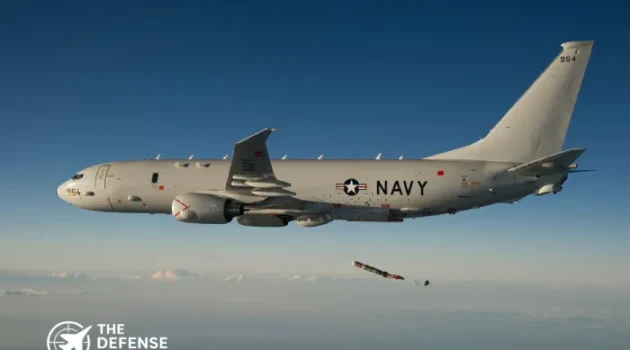
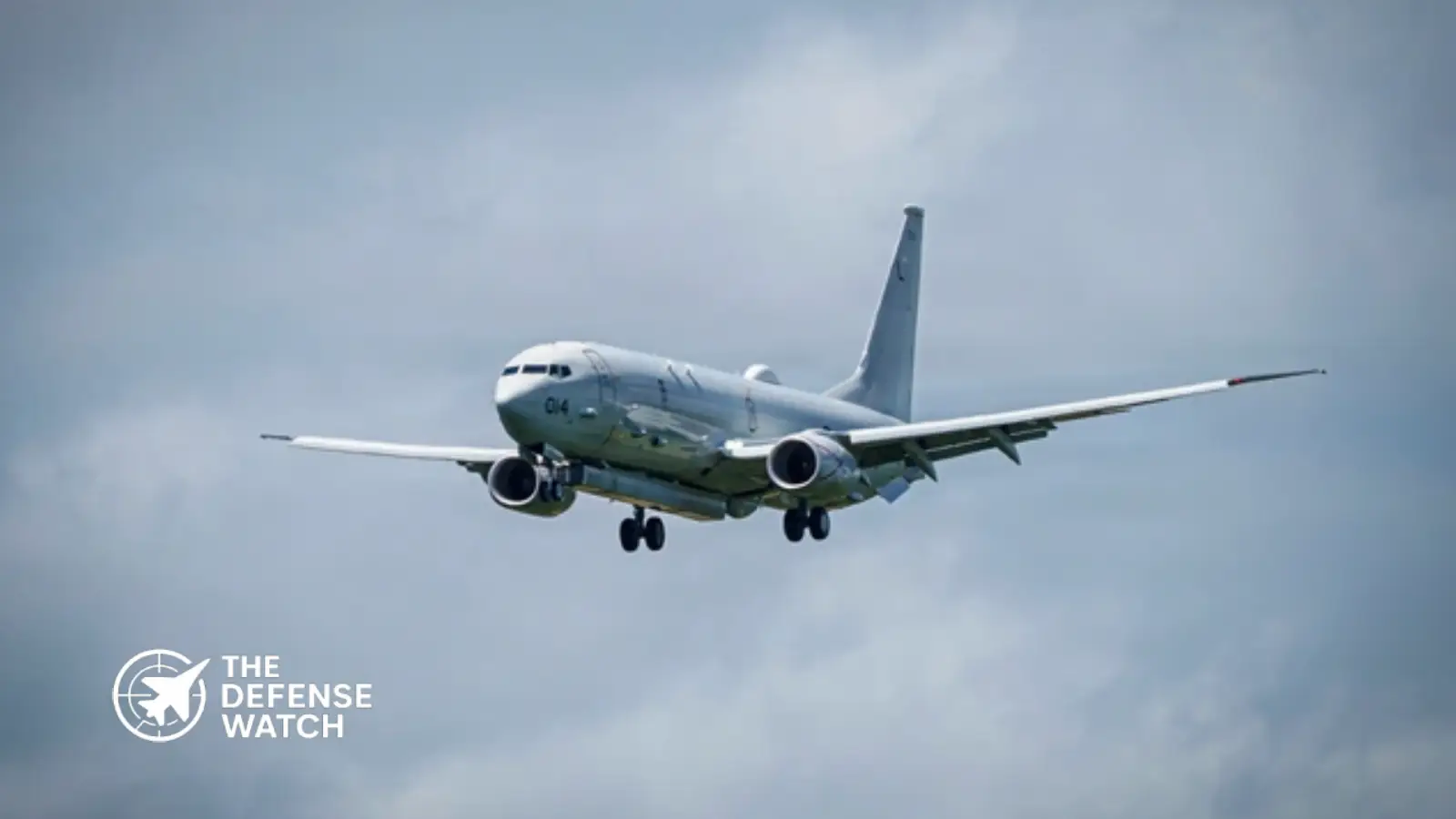
The P-8A is the U.S. Navy’s primary multi-mission maritime patrol and reconnaissance aircraft. NAVAIR identifies anti-submarine warfare, anti-surface warfare and intelligence, surveillance and reconnaissance as core missions, with the aircraft also supporting broad-area maritime and littoral operations and search and rescue.
Boeing’s current program information lists the United States, Australia, the United Kingdom, Norway, New Zealand, South Korea and Germany among P-8A operators, with Canada also under contract to become an additional P-8A operator. India operates the related P-8I variant.
This common aircraft architecture creates an important advantage for multinational maritime operations. Crews and maintainers operating the same basic platform can share procedures, technical knowledge and operational experience, while aircraft can be integrated into broader allied maritime surveillance networks.
The U.S. Navy has already demonstrated the importance of this cooperation. In 2025, NAVAIR described a joint P-8A sustainment effort involving the U.S. Navy, Royal Australian Air Force and Boeing Defence Australia that resulted in repairs to a U.S. P-8A in Australia after the aircraft suffered structural damage while deployed in the Indo-Pacific.
That event demonstrated why sustainment infrastructure outside the United States matters. A deployed maritime patrol aircraft can be operationally valuable only if it can be repaired and returned to service when problems occur.
Sustainment Supports A Rapidly Upgraded Aircraft
The new contract also comes as the P-8A continues to receive significant modernization.
In April 2026, NAVAIR announced that P-8A Increment 3 Block 2 had reached initial operational capability following initial operational testing. The upgrade includes changes to the aircraft’s airframe and avionics systems, including new racks, radome, antennas, sensors and wiring.
NAVAIR has described the P-8A modernization approach as an incremental acquisition strategy using Engineering Change Proposals. The approach allows new capabilities to be introduced without waiting for a completely new maritime patrol aircraft.
That approach creates a direct connection between modernization and sustainment.
As new sensors, communications systems, software and mission equipment enter the fleet, maintenance organizations must support an increasingly complex configuration. Engineering investigations become particularly important when aircraft encounter technical problems involving newer systems or interactions between upgraded components.
For Boeing and the Navy, sustainment therefore involves more than routine aircraft maintenance. It includes helping the fleet manage the technical changes required to keep the platform operational as its mission systems evolve.
P-8A Sustainment Is Critical To Anti-Submarine Warfare
The operational importance of the P-8A extends beyond aircraft availability.
The aircraft is designed to conduct long-range anti-submarine warfare using acoustic sensors, sonobuoys and other onboard systems. It also performs anti-surface warfare and maritime ISR missions, making it one of the primary airborne sensors supporting the Navy’s maritime operating picture.
For anti-submarine warfare in particular, readiness has a direct operational consequence. A patrol aircraft that is unavailable because of a maintenance issue cannot contribute to submarine search, tracking or maritime surveillance.
This makes sustainment contracts an important part of force structure even though they do not add new aircraft to the inventory.
The Navy previously highlighted this relationship when its P-8A sustainment and readiness team received recognition for improving aircraft availability. The service reported that the team achieved an 86% increase in average fully mission capable aircraft availability compared with the previous year in the 2021 reporting period.
Allied P-8A Integration Adds Strategic Value
The multinational nature of the contract is significant for another reason: P-8A operators are concentrated in strategically important maritime regions.
The United Kingdom, Norway and Germany provide P-8A capability across the North Atlantic and European theater. Australia and New Zealand extend the common platform into the Indo-Pacific, while South Korea operates the aircraft in an environment where maritime surveillance and anti-submarine warfare are central security requirements.
The aircraft’s geographic reach is supported by a growing network of common training, operations and sustainment relationships.
In February 2026, U.S., British, Norwegian, Canadian and German maritime patrol forces participated in a multinational P-8A symposium at Naval Air Station Sigonella focused on synchronizing operations across the European theater.
This matters because interoperability depends on more than compatible aircraft. It also requires compatible maintenance procedures, technical data, logistics arrangements and processes for dealing with aircraft that become unavailable away from their home bases.
Distributed Logistics Will Remain A Major Requirement
The distribution of work under the Boeing modification provides a useful indication of how P-8A sustainment is structured.
The largest individual shares are assigned to Jacksonville and Whidbey Island, but significant work is spread across Europe, the Middle East, the Pacific and multiple U.S. locations.
That structure supports a distributed approach in which technical and maintenance resources can be positioned closer to deployed aircraft.
NAVAIR’s recent P-8A sustainment work with Australia provides a practical example. After a U.S. P-8A experienced wingtip damage while deployed in Guam, the aircraft received temporary repairs and was subsequently flown to Australia for permanent repairs. The effort involved the U.S. Navy, Australian defense organizations, Boeing Defence Australia and AAR Corp.
For future operations, similar arrangements could reduce the time required to recover aircraft from maintenance events far from U.S. facilities. The immediate benefit is improved availability, while the broader effect is greater flexibility for commanders planning maritime patrol coverage.
Boeing’s Role Extends Beyond Aircraft Production
The modification also demonstrates how Boeing’s role in the P-8A program extends well beyond aircraft manufacturing.
Boeing identifies sustainment, maintenance and worldwide logistics support as major elements of the P-8 program. The company also highlights the aircraft’s open mission systems architecture as an enabler for future technology insertion.
That combination of production, engineering and sustainment support becomes increasingly important as the P-8A fleet expands across multiple countries.
A common platform can simplify multinational operations, but only if its operators can maintain aircraft to consistent standards and introduce upgrades without creating major differences between national fleets.
The latest $31.5 million modification is therefore best understood as part of the continuing support structure behind a multinational maritime patrol fleet rather than as a standalone maintenance award.
Outlook For The P-8A Fleet
The P-8A is entering a period in which sustainment and modernization will increasingly operate together.
The aircraft is receiving Increment 3 Block 2 capabilities while the number of international operators continues to grow. Boeing said in July 2026 that more than 200 P-8 aircraft were either in service or under contract across nine countries, including the United States, Australia, Canada, Germany, India, New Zealand, Norway, South Korea and the United Kingdom.
As the fleet expands, the value of common sustainment arrangements will increase. The ability to share engineering expertise, maintenance resources and operational lessons can help keep aircraft available across multiple theaters.
For the U.S. Navy, the latest modification provides continued industry support for a platform that remains central to long-range maritime surveillance and anti-submarine warfare.
For allied operators, the contract reinforces a common support ecosystem around one of the world’s most widely used modern maritime patrol aircraft.
The $31.5 million award does not represent a new aircraft procurement program. Its significance lies instead in the less visible infrastructure required to keep existing P-8A aircraft operational, modernized and available across a geographically dispersed multinational force.