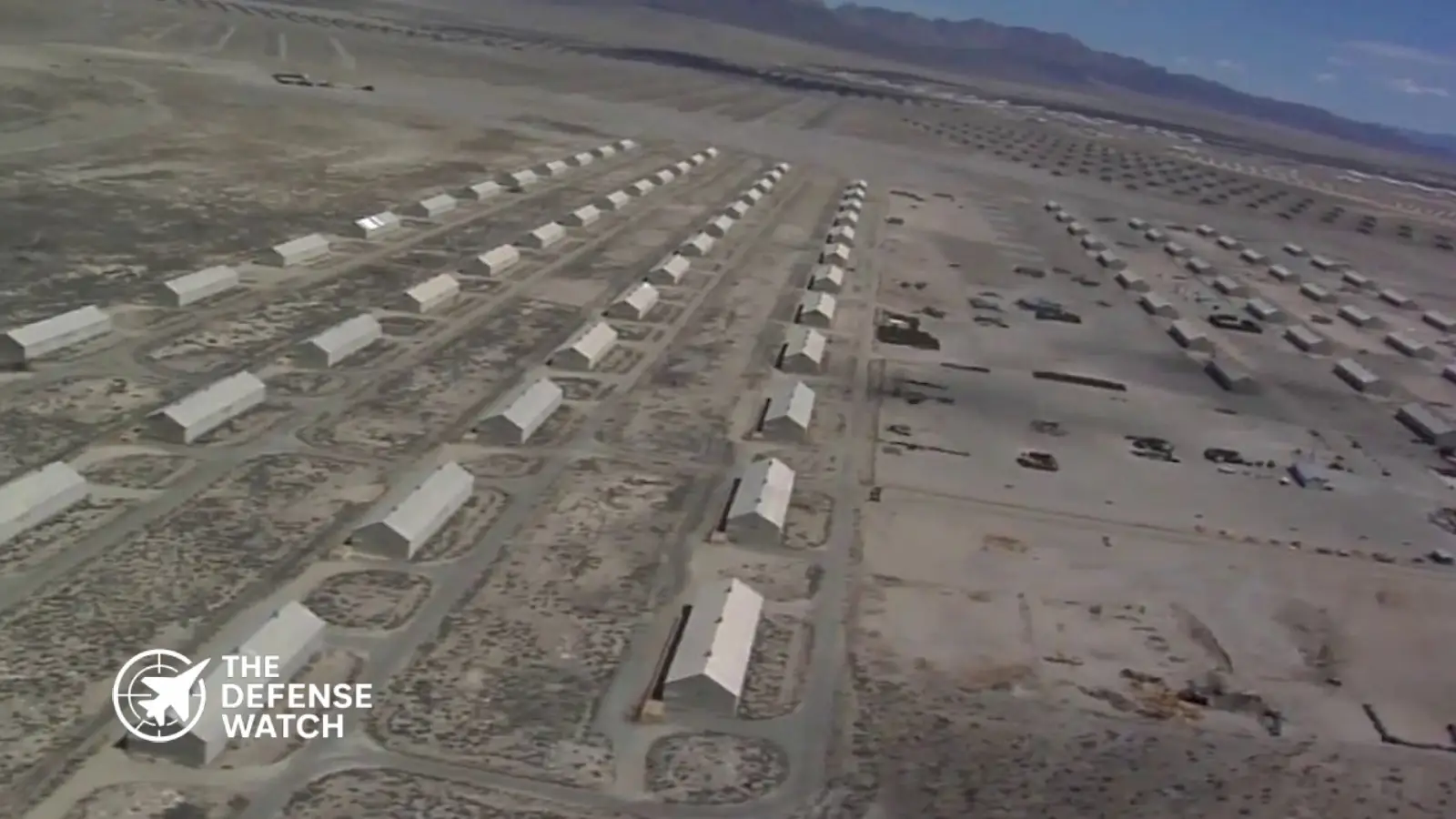
- The U.S. Army awarded Tepa-Weston JV a $14.06 million firm-fixed-price contract to rehabilitate the Hawthorne Army Depot New Bomb Open Detonation Range in Nevada.
- Work includes unexploded ordnance removal, explosive hazard mitigation, detention basin redesign, and flood protection upgrades.
- The upgraded infrastructure must withstand a 500-year flood event while controlling offsite stormwater discharge from a 100-year storm.
- Fiscal Year 2026 Army procurement funds were obligated at award, with project completion expected by May 2028.
- The effort supports long-term safety, environmental compliance, and continued munitions disposal operations at one of the Army’s key ammunition facilities.
The U.S. Army has awarded Tepa-Weston JV of Kansas City, Missouri, a $14.06 million firm-fixed-price contract to rehabilitate critical infrastructure at the New Bomb Open Detonation Range located within Hawthorne Army Depot, Nevada.
According to the award announcement issued by Army Contracting Command at Rock Island Arsenal, Illinois, the project includes design, rehabilitation, and construction work focused on detention basins and surrounding infrastructure, as well as the removal of explosive hazards and unexploded ordnance (UXO) across the work area. Fiscal Year 2026 Army procurement funding was fully obligated at the time of award.
Work is scheduled to continue through May 31, 2028.
Deep Technical & Strategic Context Analysis
Hawthorne Army Depot is one of the largest ammunition storage and demilitarization facilities in the United States. The installation plays a critical role in the long-term storage, maintenance, disposal, and demilitarization of conventional munitions. Open detonation ranges such as the New Bomb Open Detonation Range are essential for safely destroying obsolete, damaged, unstable, or excess munitions that cannot be disassembled economically or safely through industrial demilitarization processes.
The contract highlights an often overlooked but increasingly important area of military modernization: environmental resilience and explosive safety infrastructure. Climate-driven weather extremes have forced the Department of Defense to reassess the resilience of ammunition depots, test ranges, and disposal sites across the United States. By redesigning detention basins to withstand a 500-year flood event, the Army is reducing the risk of contaminated runoff, erosion, and damage to explosive disposal areas that could interrupt critical munitions disposal operations.
The use of a firm-fixed-price contract means the contractor assumes much of the cost risk associated with project execution. Unlike cost-reimbursement contracts, the agreed price remains fixed unless specific contract modifications are approved. This structure provides greater cost predictability for the government while incentivizing efficient project management by the contractor.
Contract Breakdown & Details
Scope of Work
The awarded contract covers several major project elements:
- Removal of explosive hazards
- Identification and clearance of material potentially presenting an explosive hazard (MPPEH).
- Detection and removal of unexploded ordnance across affected work zones.
- Stormwater infrastructure modernization
- Redesign and reconstruction of detention basins.
- Upgrades intended to improve flood resilience and environmental compliance.
- Range rehabilitation
- Restoration of areas supporting open detonation operations.
- Improvements to surrounding infrastructure impacted by explosive disposal activities.
Flood Protection Requirements
The Army established demanding engineering standards for the project:
- 500-year flood survivability requirement
- Detention basin infrastructure must remain structurally resilient during an extreme flood event statistically expected once every 500 years.
- 100-year stormwater control requirement
- Systems must prevent uncontrolled offsite discharge during a 100-year storm event or the most severe storm event historically recorded at the site.
These requirements reflect growing Department of Defense emphasis on climate resilience and environmental stewardship at military installations handling hazardous materials.
Contract Details
| Item | Details |
|---|---|
| Contractor | Tepa-Weston JV |
| Contract Value | $14,060,476 |
| Contract Type | Firm-Fixed-Price |
| Location | Hawthorne Army Depot, Nevada |
| Completion Date | May 31, 2028 |
| Funding Source | Fiscal Year 2026 Army Other Procurement Funds |
| Contracting Activity | Army Contracting Command, Rock Island Arsenal, Illinois |
| Contract Number | W519TC-26-C-A042 |
Competition Information
- Solicitation Method: Internet-based competitive solicitation
- Number of Bids Received: One
- Award Status: Contract awarded and funded
Geographic Work Distribution
| Location | Share of Work |
|---|---|
| Hawthorne Army Depot, Nevada | 100% |
Why The Project Matters
While major defense headlines often focus on missiles, aircraft, and combat vehicles, ammunition infrastructure remains a foundational element of military readiness. The ability to safely store, manage, and dispose of aging munitions directly affects force modernization efforts and inventory management across the U.S. military.
Facilities such as Hawthorne Army Depot support the lifecycle management of millions of rounds of ammunition and explosive items. Investments in explosive safety systems, environmental protection measures, and resilient infrastructure help ensure that demilitarization operations continue uninterrupted while reducing operational and environmental risks.
As the Army modernizes its munitions enterprise and expands production capacity across multiple weapon programs, maintaining safe disposal and storage infrastructure will remain a critical component of sustaining long-term readiness.