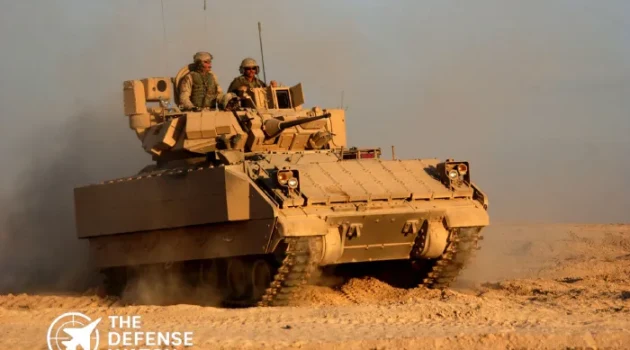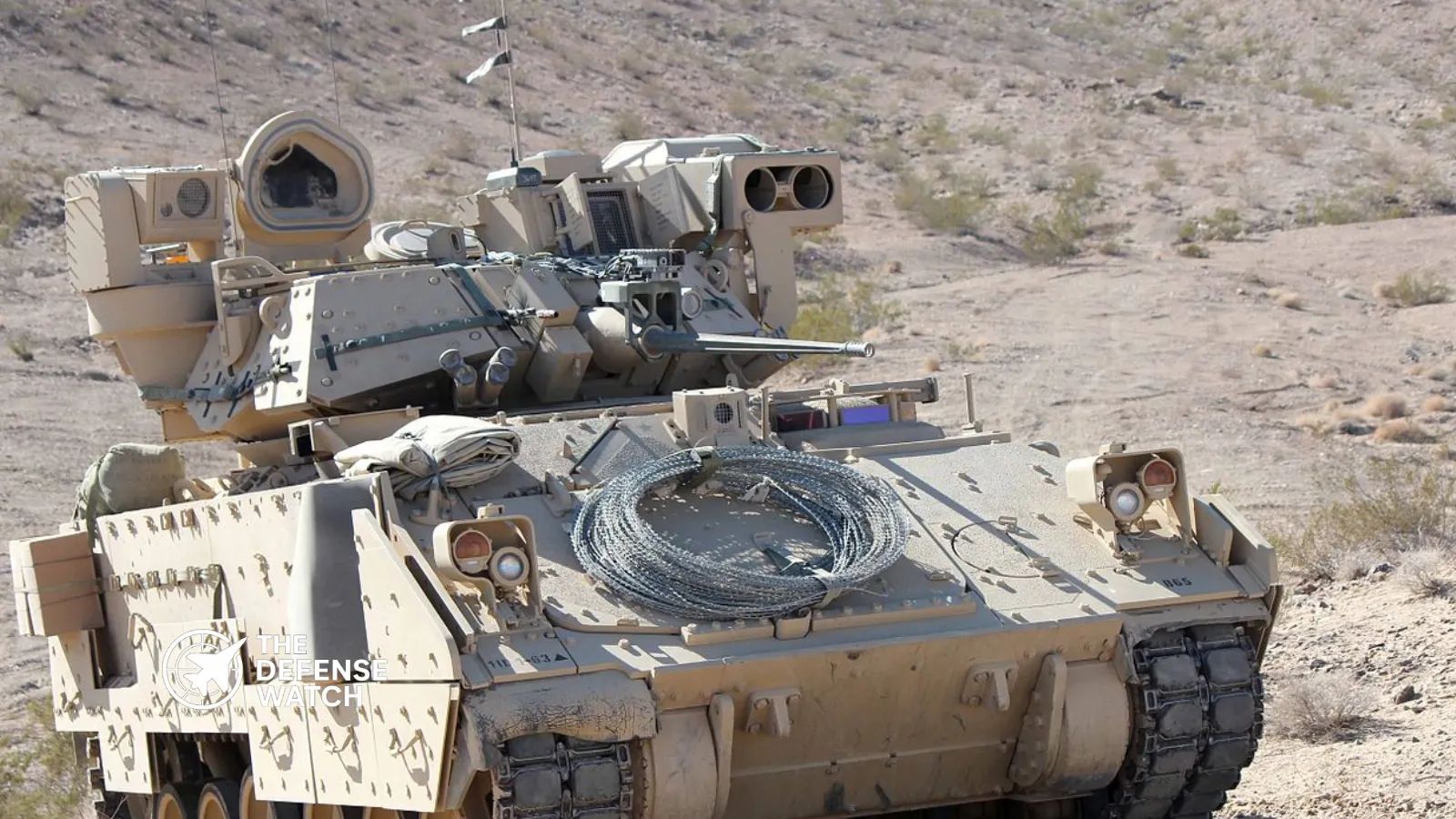
BAE Systems Bradley tanks contract activity expanded this week after the U.S. Army awarded an $11.6 million contract modification to support ongoing work on the Bradley Fighting Vehicle fleet.
The award continues a long running sustainment and services effort tied to one of the Army’s most widely deployed tracked combat vehicles. According to official contract information released by the Department of Defense, the modification funds three additional services work directives under an existing multi year agreement.
Contract Details and Scope of Work
BAE Systems Land and Armaments L.P., based in San Jose, California, received the modification, identified as P00135, to contract W56HZV 22 C 0072. The new action increases the total cumulative face value of the Bradley support contract to $420,453,368.
The $11,555,761 modification covers three services work directives related to Bradley tanks, a term commonly used in Army contracting language to describe tracked armored vehicle variants and support activities associated with the Bradley Fighting Vehicle family.
Work under the latest modification will be performed in San Jose, California. The Army estimates the work will be completed by July 23, 2027, aligning with broader sustainment timelines for legacy armored platforms that remain central to U.S. ground combat formations.
Funding for the award comes from Fiscal Year 2025 Procurement of Weapons and Tracked Combat Vehicles, Army appropriations. The full amount was obligated at the time of the award, signaling immediate execution rather than a phased funding approach.
The contracting activity is Army Contracting Command, Detroit Arsenal, Michigan, which manages a wide portfolio of armored vehicle, ground systems, and sustainment contracts for the service.
Why the Bradley Still Matters
Despite ongoing development of next generation combat vehicles, the Bradley Fighting Vehicle remains a core element of U.S. Army armored brigade combat teams. First fielded in the 1980s, the platform has undergone repeated upgrades to improve survivability, lethality, mobility, and digital integration.
Current Bradley variants support infantry transport, reconnaissance, and command and control missions. They have been modernized with improved armor packages, upgraded power systems, enhanced thermal sights, and advanced battle management systems.
Sustainment contracts such as this one are critical to keeping the fleet operational as the Army balances near term readiness with long term modernization goals. While programs like the XM30 Mechanized Infantry Combat Vehicle aim to eventually replace the Bradley, the existing fleet is expected to remain in service well into the next decade.
BAE Systems Role in Bradley Sustainment
BAE Systems has been closely tied to the Bradley program for decades, serving as the original manufacturer and a primary support contractor. The company continues to provide engineering services, lifecycle support, and upgrade work for the platform under multiple Army contracts.
The current Bradley tanks contract reflects the Army’s preference for continuity when dealing with complex armored vehicle sustainment. Keeping work within an established industrial base reduces technical risk and helps maintain specialized expertise.
BAE Systems Land and Armaments also supports other major U.S. Army ground systems, including the M109 Paladin self propelled howitzer and the Armored Multi Purpose Vehicle. This breadth allows the company to leverage shared supply chains and engineering capabilities across programs.
Budget Context and Army Priorities
The use of Fiscal 2025 Procurement of Weapons and Tracked Combat Vehicles funds highlights how the Army continues to allocate resources toward maintaining existing platforms even as it invests in future systems.
Army leaders have repeatedly emphasized that readiness gaps cannot be allowed to emerge while modernization programs mature. Sustainment spending, while less visible than new platform development, plays a major role in ensuring deployed units remain fully mission capable.
(adsbygoogle = window.adsbygoogle || []).push({});Contracts like this also support the domestic defense industrial base. Work performed in California contributes to skilled manufacturing and engineering jobs tied to armored vehicle expertise that is difficult to regenerate once lost.
Oversight and Contract Management
Army Contracting Command at Detroit Arsenal oversees many of the service’s most complex ground systems contracts. The command is responsible for ensuring cost control, schedule adherence, and technical compliance across a wide range of programs.
Incremental modifications, such as this $11.6 million award, are common in long term sustainment contracts. They allow the Army to add specific tasks or respond to evolving operational needs without renegotiating an entirely new agreement.
According to Department of Defense contracting data, the Bradley tanks contract has seen steady growth since its initial award in 2022, reflecting both the scope of the work and the enduring relevance of the platform.
Broader Implications for Armored Vehicle Modernization
While the Bradley remains effective, the Army is clear that it is not a permanent solution. Programs under the Next Generation Combat Vehicle portfolio aim to deliver improved protection against modern anti armor threats, better power generation, and greater integration with unmanned systems.
Until those platforms reach operational units at scale, sustainment and incremental upgrades will continue to shape the Bradley fleet. Support contracts ensure vehicles can deploy, train, and fight without unacceptable maintenance backlogs.
(adsbygoogle = window.adsbygoogle || []).push({});What Comes Next
With work scheduled through mid 2027, the latest BAE Systems award reinforces a predictable sustainment timeline for the Bradley Fighting Vehicle. Additional modifications are likely as operational requirements evolve and as the Army refines its modernization roadmap.
For industry observers, the contract underscores how legacy platforms continue to attract steady funding, even amid budget pressure and competing priorities such as long range fires, air and missile defense, and network modernization.