U.S. Army Moves TITAN AI Targeting Into Production
The U.S. Army has moved the Tactical Intelligence Targeting Access Node, or TITAN AI targeting system, into production, awarding $192 million in initial delivery orders to Palantir Technologies and Anduril Industries. The Army announced the decision September 1 through its Capability Program Executive for Intelligence and Spectrum Warfare at Aberdeen Proving Ground, Maryland.
- U.S. Army Moves TITAN AI Targeting Into Production
- Takeaways
- $192 Million Production Package
- What TITAN Is Designed to Do
- TITAN Advanced and TITAN Basic
- AI Is Intended to Shorten the Sensor-to-Shooter Timeline
- From Prototype to Production
- Open Architecture Is Central to the Program
- Why TITAN Matters to Long-Range Fires
- Contested Environments Remain the Key Test
- Eight New Systems Open the Production Phase
Takeaways
The U.S. Army has moved TITAN from rapid prototyping into production, establishing a larger operational base for AI-enabled intelligence fusion and accelerated long-range targeting.
The awards mark the transition of TITAN from rapid prototyping toward production after several years of development, testing and Soldier feedback. The Army says the system is intended to accelerate target recognition and geolocation by combining information from multiple sensors and generating automated target nominations for fires networks.
The initial production package consists of eight systems, four TITAN Advanced and four TITAN Basic. The Army expects delivery over the next 18 months, after which these systems will join nine prototypes already retained for operational use.
$192 Million Production Package
The production awards divide responsibilities between Palantir and Anduril.
| Company | Award | Initial Production Role |
|---|---|---|
| Palantir Technologies | $127 million | Overall TITAN production lead |
| Anduril Industries | $65 million | Critical hardware and shelter integration |
| Total | $192 million | Eight initial production systems |
Palantir will lead overall production with L3Harris Technologies, Sierra Nevada Corporation, Strategic Technology Consulting and World Wide Technology contributing capabilities and technologies. Anduril will provide critical hardware and conduct shelter integration under its separate award.
The Army’s decision also reflects the role of nontraditional defense companies in increasingly software-intensive military programs. TITAN combines computing, artificial intelligence, sensor integration, communications and deployable hardware rather than functioning as a conventional intelligence collection vehicle.
What TITAN Is Designed to Do
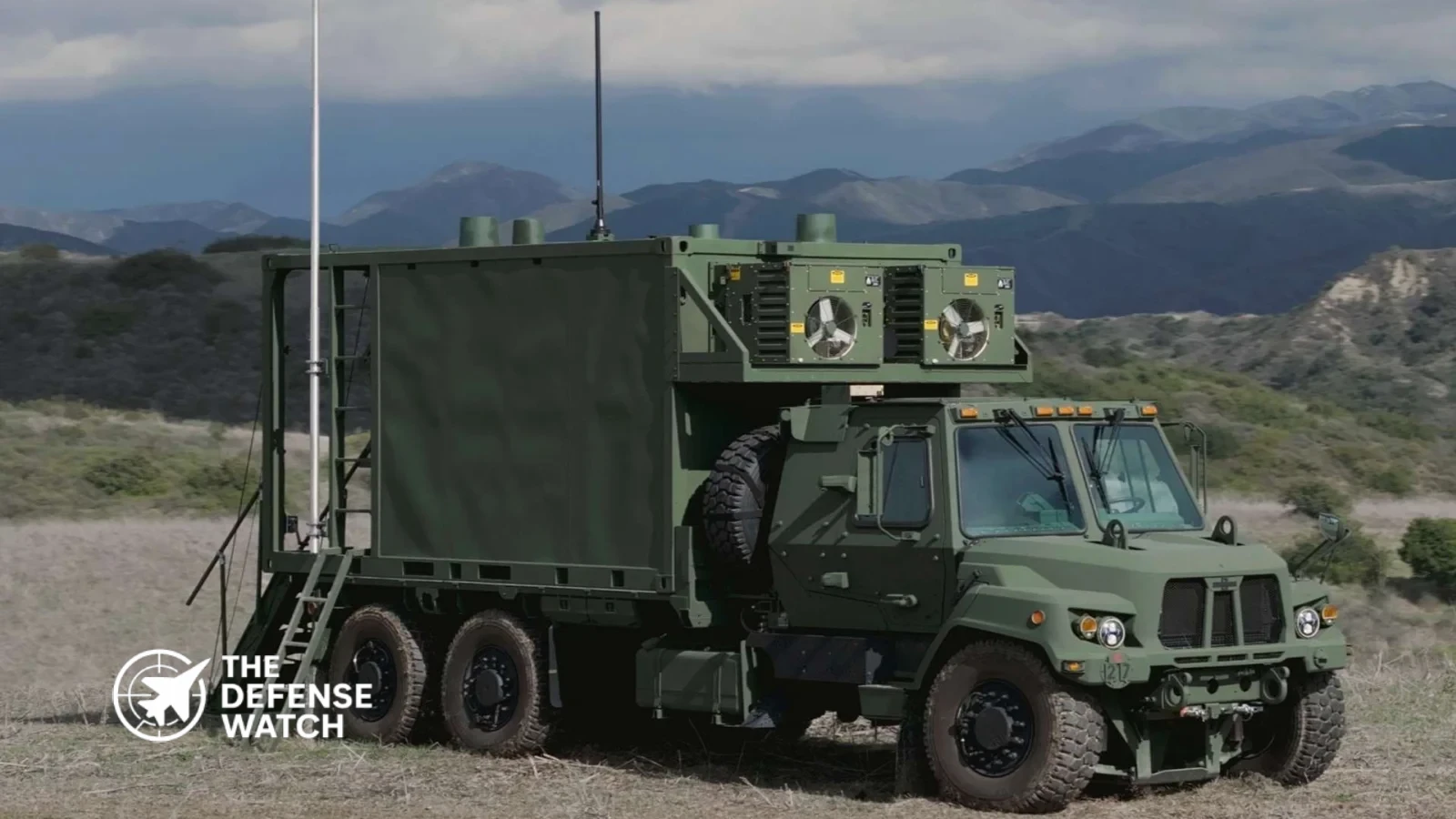
The Army describes TITAN as an AI-enabled, expeditionary and maneuverable intelligence ground station supporting Multi-Domain Operations, Joint All-Domain Operations and Long-Range Precision Fires. Its mission is to connect different sensing layers and turn large volumes of information into usable intelligence for commanders and fires organizations.
The system is designed to receive information from four broad sensing layers:
- Space
- High-altitude
- Aerial
- Terrestrial
TITAN then processes and fuses those inputs to support a common intelligence picture, target recognition, geolocation and dissemination of actionable information to fires networks.
This architecture is important because the Army’s long-range fires modernization effort increasingly depends on targets being detected and accurately located at distances beyond the immediate line of sight of maneuver formations.
A long-range missile or artillery system can have substantial reach, but range alone does not create a useful targeting capability. The force also needs persistent sensing, data processing, accurate geolocation and a communications path that can deliver information to the appropriate command and control or fires network.
TITAN is intended to address that connective problem.
TITAN Advanced and TITAN Basic
The Army is procuring two configurations rather than a single standardized system.
TITAN Advanced is intended to provide greater access to high-level intelligence sources, including direct access to space-derived information. The configuration is therefore aligned with the Army’s requirement for deep sensing and intelligence support across the multidomain battlefield.
TITAN Basic provides a more expeditionary configuration intended for lower echelons. The distinction allows the Army to tailor the capability according to the intelligence requirements and operational conditions of different formations.
The two configurations reflect an important design principle. A targeting architecture cannot rely exclusively on large, centralized intelligence facilities when units may have to operate in dispersed formations and under contested conditions.
Moving processing and exploitation capabilities closer to operational formations can reduce dependence on long data paths and allow commanders to work with information generated from several sensing sources.
AI Is Intended to Shorten the Sensor-to-Shooter Timeline
One of TITAN’s central functions is automating portions of the intelligence and targeting workflow.
The Army says TITAN can improve the speed of target recognition and geolocation from multiple sensors and generate automated target nominations while maintaining a common intelligence picture.
That distinction matters. TITAN is not described by the Army as an autonomous weapons engagement system. Its stated function is to support intelligence processing, targeting and decision-making, rather than independently authorize or execute an attack.
The operational objective is instead to reduce the amount of time between detecting a potential target and providing useful information to the force responsible for acting on it.
In a high-intensity conflict, that time can be as important as sensor range. A target may move, conceal itself, relocate, or become unavailable while intelligence is being manually processed and passed between organizations.
TITAN is intended to compress that process by combining data processing and exploitation with targeting support at the tactical edge.
From Prototype to Production
TITAN’s production decision follows a multi-year Army effort conducted under the Middle Tier of Acquisition rapid prototyping pathway.
The Army’s program office identifies February 2024 as the point when the prototype maturation phase was awarded. The first TITAN Advanced prototype was delivered in July 2024, followed by additional Advanced and Basic prototypes in 2025. The program office planned to complete final prototyping and transition into production during fiscal year 2026.
The 1st Multi-Domain Task Force became the first Army formation to receive a TITAN Advanced prototype in December 2024 after integration, testing and training.
That operational exposure is significant because TITAN is designed for environments where sensor connectivity, communications, computing and intelligence workflows must function outside controlled laboratory conditions.
The Army says the production decision incorporates four years of Soldier feedback from units using TITAN prototypes in different configurations and operating environments.
Open Architecture Is Central to the Program
TITAN has also been developed around modular and open-system principles.
Army documentation states that the program pursued a Modular Open Systems Approach and considered intellectual property and data rights during the competitive prototype phase. The prototype architecture incorporates commercial, open-source, developmental and government-off-the-shelf hardware and software.
That approach has practical implications for an AI-enabled system.
Computing hardware, sensors, software applications and machine-learning capabilities can evolve faster than traditional military vehicle procurement cycles. An architecture that allows components to be replaced or integrated without redesigning the entire system can therefore reduce the risk of technological obsolescence.
It also gives the Army greater flexibility to incorporate new sensors and processing tools as the wider intelligence architecture changes.
Why TITAN Matters to Long-Range Fires
The production decision is closely connected to the Army’s broader effort to build a network linking sensors, intelligence systems, command and control nodes and long-range weapons.
The Army has previously described TITAN as a means of addressing deep-sensing gaps and providing targeting information to long-range precision fires. Its objective is to connect information collected by space, high-altitude, aerial and terrestrial sensors with fires networks.
This makes TITAN less significant as an individual vehicle than as a component of a wider kill chain.
The value of a deep-sensing architecture depends on whether information can move rapidly from detection to identification, geolocation, decision-making and engagement. TITAN is designed to support that chain at the intelligence processing and targeting stages.
The system also fits the Army’s wider move toward data-centric command and control. In 2026, the service established a common data-layer baseline for its Next Generation Command and Control effort, with Anduril and Palantir among the companies contributing to the architecture.
Taken together, these programs point toward an Army architecture in which intelligence data is increasingly treated as a shared operational resource rather than as information confined within individual platforms or command systems.
Contested Environments Remain the Key Test
The transition to production does not eliminate the technical challenges associated with battlefield data processing.
TITAN must operate in environments where communications can be disrupted, sensor inputs can be incomplete, electronic warfare can interfere with networks, and adversaries can attempt to deceive or overload intelligence systems.
The Army’s earlier testing plans specifically included cybersecurity, electromagnetic interference and electromagnetic compatibility testing alongside developmental and operational testing.
For an AI-enabled targeting system, data quality is also critical. Automated analysis can accelerate processing, but the usefulness of the output depends on the accuracy, timeliness and consistency of the underlying sensor information.
This is why TITAN’s production value should be measured not simply by the number of systems purchased, but by how effectively those systems connect different sensing sources with commanders and fires organizations under realistic operational conditions.
Eight New Systems Open the Production Phase
The $192 million award provides the Army with eight initial production systems while preserving nine prototypes for operational use. That creates a combined fleet of 17 TITAN production and prototype systems once the new systems are delivered.
The Army expects another production order in fiscal year 2027.
The immediate significance of the September decision is therefore the transition from experimentation to a sustained acquisition pathway.
TITAN is being positioned as a connective layer between the Army’s growing network of sensors and its long-range fires capabilities. If the system performs as intended in operational use, its importance will extend beyond faster intelligence processing to the broader question of how quickly the Army can turn information collected across multiple domains into actionable battlefield decisions.
For U.S. forces preparing for increasingly dispersed and data-intensive operations, that ability to connect sensing, intelligence and fires is becoming a central requirement of modern command and control.