Executive Summary:
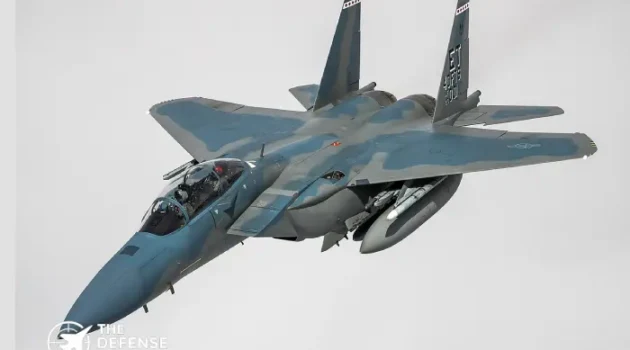
The U.S. Air Force has deployed the F-15EX Eagle II back to Kadena Air Base, Japan, as the service prepares the installation for its future permanent fighter force. The deployment also included operational training with the MQ-28 Ghost Bat during Exercise Valiant Shield, highlighting the Air Force’s growing emphasis on manned and unmanned teaming across the Indo-Pacific.
F-15EX Eagle II Returns To Strengthen Kadena’s Future Mission
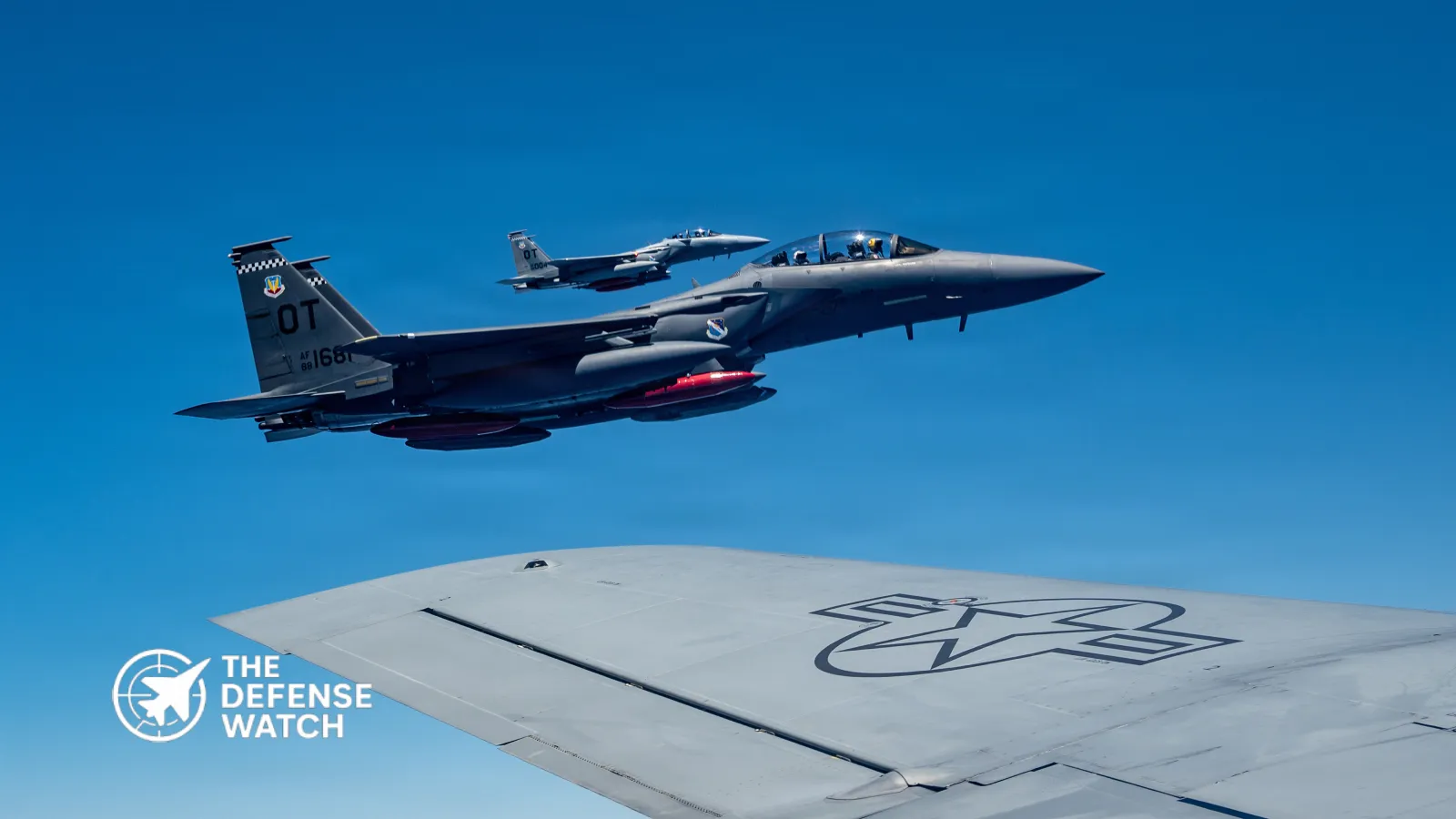
The F-15EX Eagle II has returned to Kadena Air Base in Japan, marking another major step in the U.S. Air Force’s long term modernization of its premier fighter base in the Indo-Pacific. According to the U.S. Air Force, aircraft from the 85th Test and Evaluation Squadron arrived on June 29 alongside two F-15E Strike Eagles to support integration and familiarization activities before the Eagle II enters permanent service at the base.
The deployment builds on the F-15EX’s first visit to Kadena in 2025 and allows pilots, maintainers, and support personnel to gain practical experience with the aircraft’s systems, maintenance requirements, and operational procedures before it officially replaces the aging F-15C/D Eagle fleet.
Lt. Col. Casey Watts, commander of the 85th Test and Evaluation Squadron, said early familiarity with the aircraft will help ensure a smooth transition while improving combat readiness across the Indo-Pacific.
Kadena’s Fighter Transition Continues
The F-15EX forms a central element of the Department of the Air Force’s modernization strategy for Kadena Air Base, one of America’s most strategically important forward operating locations in the Western Pacific.
The 67th Fighter Squadron, which will become Kadena’s first operational F-15EX unit, is using the deployment to build operational knowledge before receiving its own aircraft. Maintenance teams are also validating logistics procedures, combat generation capabilities, and sustainment requirements necessary for long term operations.
Brig. Gen. John Gallemore, commander of the 18th Wing, described the Eagle II as the next chapter of airpower at Kadena, emphasizing its role in supporting combat operations throughout the Indo-Pacific.
MQ-28 Ghost Bat Demonstrates Future Human Machine Teaming
One of the deployment’s most significant developments occurred during Exercise Valiant Shield, where an F-15EX aircrew operated alongside an MQ-28 Ghost Bat uncrewed aircraft over the Philippine Sea.
The mission represented another milestone in the development of Collaborative Combat Aircraft (CCA), an emerging operational concept that pairs crewed fighters with semi autonomous aircraft capable of conducting reconnaissance, electronic warfare, and strike support missions under human supervision.
Maj. Daniel Pesich, Experimental Operations Unit CCA detachment officer in charge, said future airpower will increasingly rely on partnerships between highly trained aircrews and autonomous technologies to improve survivability and combat effectiveness.
Why The F-15EX Remains Important
Although the F-15EX is not a stealth fighter, it has been designed to complement fifth generation platforms rather than replace them.
Key capabilities include:
Capability F-15EX Eagle II Maximum payload Nearly 30,000 pounds of weapons Crew One or two pilots Radar AN/APG-82 AESA radar Electronic warfare EPAWSS digital electronic warfare suite Network capability Advanced data links for joint operations Mission Air superiority, long range strike, homeland defense, missile carrier Its large payload capacity allows the aircraft to carry significantly more air to air missiles and stand off weapons than stealth fighters, making it particularly valuable in high intensity operations where magazine depth becomes critical.
Strategic Analysis: What This Means For Indo-Pacific Deterrence
The latest deployment reflects more than a routine training event.
Kadena Air Base sits at the center of the First Island Chain, placing U.S. fighters within operational reach of the East China Sea, Taiwan Strait, and much of the Western Pacific. As regional military competition continues to intensify, the Air Force is investing in aircraft capable of sustaining high sortie rates while integrating with advanced command and control networks.
The combination of the F-15EX and Collaborative Combat Aircraft points toward a future force structure that emphasizes distributed operations rather than relying solely on stealth. Instead of every aircraft penetrating contested airspace independently, future missions are expected to distribute sensing, electronic warfare, and weapons delivery across both crewed and autonomous platforms.
The MQ-28 Ghost Bat demonstration illustrates this concept in practice. Loyal wingman aircraft can extend sensor coverage, increase available weapons capacity, conduct high risk reconnaissance, or absorb threats that would otherwise endanger crewed fighters. When combined with the F-15EX’s substantial payload and advanced networking systems, the result is a more resilient and scalable combat force capable of operating across vast Indo-Pacific distances.
The deployment also demonstrates that modernization extends beyond acquiring new aircraft. Building maintenance expertise, validating logistics networks, and integrating operations personnel before permanent fielding reduces operational risk and accelerates readiness once the F-15EX enters frontline service at Kadena.
Get real time update about this post category directly on your device, subscribe now.