Executive Summary
- Lockheed Martin said Sept. 16 that the next phase of hypersonic development is shifting from headline peak speed toward sustained atmospheric flight, maneuverability and operational production.
- The company highlighted scramjet propulsion, heat-resistant materials and advanced manufacturing as central technical challenges. It said atmospheric flight at Mach 5 creates extreme thermal and aerodynamic stresses, while scramjets require the vehicle to reach sufficient speed before sustained operation.
- The industrial challenge is significant. U.S. government assessments have identified production capacity, testing infrastructure and immature technologies as persistent obstacles to scaling hypersonic weapons. Recent GAO findings show that production problems continue to affect the Navy and Army’s Conventional Prompt Strike and Long Range Hypersonic Weapon efforts.
Lockheed Martin says hypersonic weapons race is shifting from peak speed to sustained flight, maneuverability and mass production
Lockheed Martin is arguing that the next phase of the U.S. hypersonic weapons competition will be decided less by maximum speed than by how long a weapon can maintain hypersonic flight, maneuver inside the atmosphere and be produced in operational quantities.
In a Sept. 16, 2026 company analysis, Lockheed Martin described sustained atmospheric flight as the more difficult engineering problem behind future hypersonic systems. The company pointed to propulsion, thermal management, aerodynamic control and manufacturing as the areas that will determine whether hypersonic technology can move from successful demonstrations to repeatable military capability.
The argument comes as the United States continues to develop multiple hypersonic weapon architectures while China maintains a large and increasingly sophisticated missile portfolio. The Pentagon’s latest China military power assessment says China has the world’s leading hypersonic missile arsenal and continues developing both conventional and nuclear-armed hypersonic systems.
Why Sustained Flight Matters More Than a Speed Record
Mach 5 is the conventional threshold used to define hypersonic flight, but reaching that speed alone does not distinguish a modern hypersonic weapon from older missile technologies.
Ballistic missiles have reached hypersonic velocities for decades during portions of their flight. The more demanding engineering problem is maintaining controlled hypersonic flight within the atmosphere while managing heat, drag, propulsion and maneuvering forces.
Lockheed Martin says this distinction is becoming increasingly important. A powered atmospheric vehicle can potentially maintain control and alter its trajectory during flight rather than following a largely predetermined ballistic path.
That creates a different problem for missile defenses.
A defender must detect the weapon, establish a reliable track, predict its future position and provide an interceptor with sufficient time and geometry to engage it. Maneuvering during the terminal or midcourse portions of flight can complicate those calculations.
The U.S. Department of Defense has previously identified hypersonic weapons as difficult targets because of their speed, maneuverability and varying flight altitudes.
The Thermal Barrier
Sustained atmospheric hypersonic flight creates an extreme thermal environment.
Lockheed Martin says air compressed ahead of a vehicle traveling at approximately Mach 5 can generate surface temperatures exceeding 2,200 degrees Fahrenheit. The company identifies carbon-fiber composites, specialized ceramics and heat-resistant coatings as part of the material solution.
These figures come from Lockheed Martin and should therefore be treated as company-provided engineering context rather than an independently verified performance specification for a particular operational missile.
The fundamental problem is broader than skin temperature. Electronics, sensors, communications systems, control surfaces and propulsion components must continue functioning while exposed to a rapidly changing aerodynamic and thermal environment.
This is one reason why hypersonic development cannot be reduced to engine performance alone.
Scramjets Change the Design Problem
Lockheed Martin’s analysis places particular emphasis on air-breathing propulsion.
A scramjet uses atmospheric oxygen rather than carrying an onboard oxidizer supply. That can reduce the amount of oxidizer hardware that a vehicle would otherwise need, but it introduces another requirement: the engine cannot simply operate from a standstill.
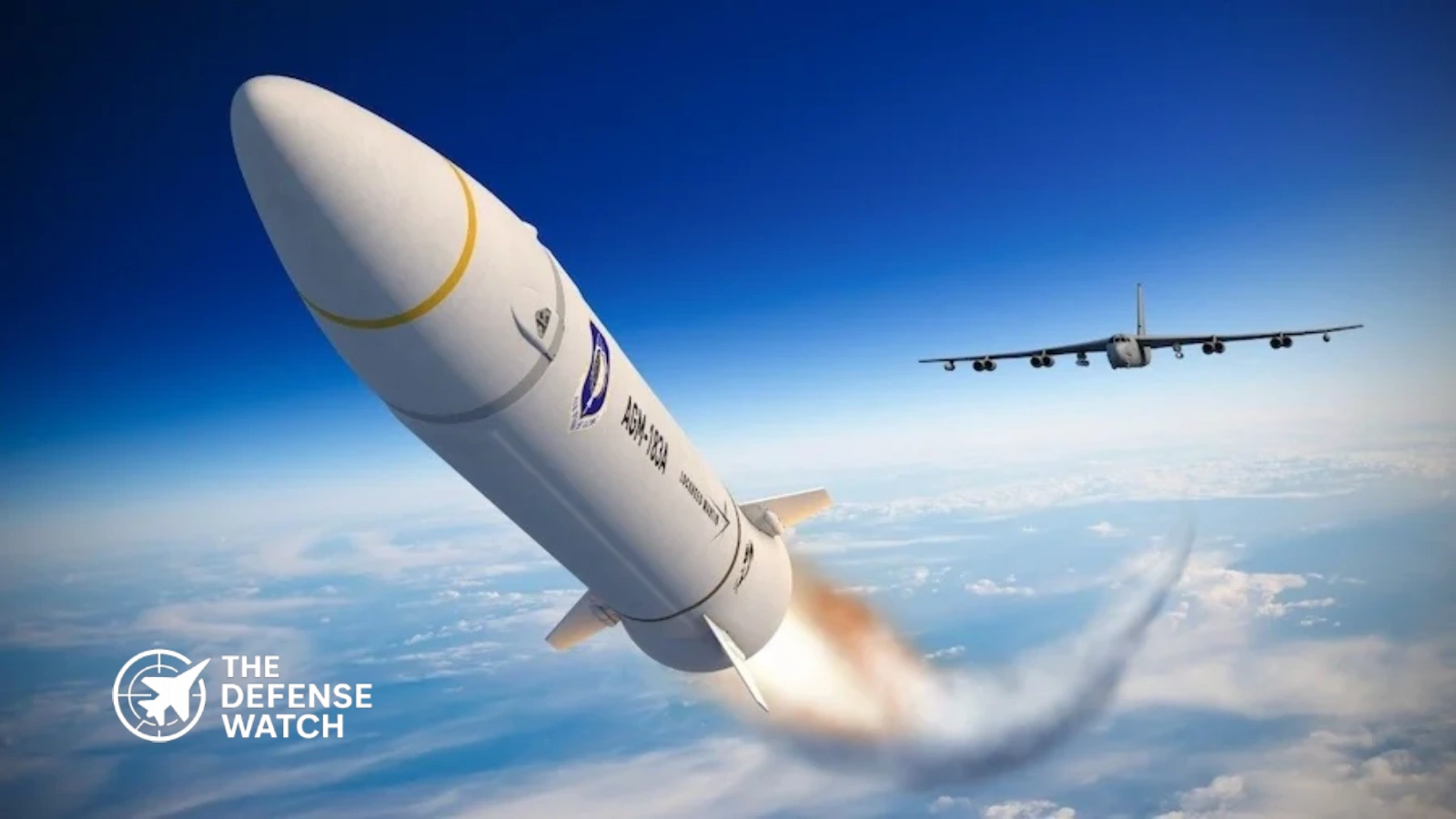
The vehicle has to reach the appropriate flight conditions before the scramjet can sustain combustion. Lockheed Martin identifies aircraft release, cold-gas ejection and hot-launch methods among possible approaches for providing the initial acceleration.
This creates a propulsion chain rather than a single-engine problem.
Hypersonic flight architecture
| Technology area | Core challenge | Operational significance |
|---|---|---|
| Initial acceleration | Reach conditions required for sustained propulsion | Determines launch architecture |
| Scramjet propulsion | Maintain combustion at hypersonic velocity | Enables sustained powered flight |
| Thermal protection | Survive prolonged aerodynamic heating | Protects structure and onboard systems |
| Guidance and control | Maneuver while exposed to extreme aerodynamic forces | Complicates defensive tracking |
| Communications | Maintain usable links during high-speed atmospheric flight | Supports command and mission updates |
| Manufacturing | Produce complex thermal and composite structures consistently | Determines fleet-scale availability |
The table reflects publicly described engineering challenges, not specifications for a specific Lockheed Martin missile.
The Industrial Base May Be the Harder Competition
The most important part of Lockheed Martin’s argument may not be aerodynamic.
It is production.
The company says factories producing hypersonic systems require specialized inspection systems, high-temperature furnaces and manufacturing processes capable of handling advanced composite structures. It also argues that future production systems need flexibility across different launch configurations.
That requirement exposes a longstanding weakness in U.S. hypersonic development.
The Government Accountability Office has repeatedly identified industrial-base capacity, workforce requirements, testing infrastructure and immature technologies as challenges to large-scale hypersonic production.
Recent GAO findings provide a more direct indication of the problem.
The Navy’s Conventional Prompt Strike program, which shares its missile and glide-body production architecture with the Army’s Long Range Hypersonic Weapon, has experienced production and quality problems. GAO reported in 2026 that the current production rate was below the program goal of 12 missile rounds per year, while flight testing aboard the Zumwalt class had moved to 2027.
That matters because a technically successful weapon has limited military value if production cannot generate sufficient inventory.
U.S. Hypersonic Programs Face a Scale Problem
The U.S. approach is not based on a single hypersonic weapon.
The FY2026 defense budget request included more than $3.9 billion for hypersonic weapons and supported development and production across programs including the Army’s Long Range Hypersonic Weapon, Conventional Prompt Strike and the Air Force’s Hypersonic Attack Cruise Missile.
Lockheed Martin has also been moving toward manufacturing approaches intended to support higher-rate production.
In June 2026, the company announced its Next Generation Hypersonic Glide Body, describing it as a manufacturing-first design intended to support scalable production. In August, Lockheed Martin and Albany Engineered Composites announced a teaming agreement focused on increasing production capacity for U.S. hypersonic programs.
These announcements do not establish that a particular weapon has entered full-rate production. They indicate where the industrial strategy is moving: reducing the gap between prototype manufacturing and repeatable production.
Where the U.S. Must Close the Competitive Gap
The comparison with China is particularly important.
The Pentagon’s 2025 China Military Power Report describes China as having the world’s leading hypersonic missile arsenal and identifies continued development of hypersonic systems. It also notes China’s fielded hypersonic glide vehicle capable DF-17 system and continued advances in related missile technologies.
The relevant competitive gap therefore extends beyond velocity.
Three areas are particularly important.
1. Sustained maneuverability
A hypersonic system must combine speed with controlled atmospheric flight. The engineering objective is not simply reaching a high velocity, but retaining useful control authority throughout the mission.
2. Detection and survivability
The offensive advantage of maneuverability depends partly on the defender’s ability to detect, track and predict the vehicle. U.S. defense officials have previously identified space-based sensing as an important component of the response to maneuvering hypersonic threats.
This makes hypersonic competition inseparable from missile warning, tracking and command-and-control architecture.
3. Production capacity
This may be the least visible but most decisive industrial factor.
GAO’s recent findings on Conventional Prompt Strike demonstrate that advanced propulsion and flight technology can reach the production stage while manufacturing capacity, quality control and testing continue to constrain output.
For the United States, closing this gap means more than funding individual weapons. It requires reliable suppliers, qualified materials, specialized manufacturing equipment, test capacity and skilled workers.
Speed Alone Does Not Define the Weapon
The shift described by Lockheed Martin is important because hypersonic weapons are often discussed primarily through maximum speed.
That metric has obvious value, but it does not capture the full military problem.
A weapon that reaches a high speed briefly but cannot sustain controlled flight, protect its electronics from heat, communicate reliably or be manufactured consistently presents a different operational proposition from a system designed around sustained atmospheric flight.
The same distinction applies to defenses. Interceptors and sensors cannot be designed around speed alone. Tracking architecture, engagement timelines, sensor coverage and fire-control systems must account for maneuvering trajectories and uncertain future positions.
The result is an increasingly integrated competition between offensive weapons and defensive sensing.
The Next Phase Is a Systems Competition
The U.S. hypersonic effort is therefore moving into a phase where propulsion, materials, sensors, guidance, launch systems, testing and industrial capacity increasingly matter as one system.
The Pentagon’s FY2026 budget request already reflects this broader approach, combining hypersonic weapons investment with funding for missile and munitions production expansion.
Lockheed Martin’s own production initiatives point in the same direction. Its hypersonics organization says it has expanded manufacturing capabilities in Alabama and development capacity in Texas, while its recent industry partnerships focus on scalable composite manufacturing.
But the recent GAO assessment provides an important counterweight to industry claims. Production targets, testing schedules and manufacturing performance remain measurable constraints, particularly for the U.S. Army and Navy’s shared hypersonic missile architecture.
That means the next meaningful benchmark will not necessarily be another speed demonstration.
It will be whether the United States can repeatedly test, manufacture and field reliable hypersonic weapons in quantities large enough to support sustained operations.
What to Watch Next
For the U.S. hypersonic sector, several indicators will provide a clearer picture of progress than headline speed claims:
- Successful completion of repeated end-to-end flight tests
- Evidence of stable production rates rather than prototype output
- Improvements in composite and thermal-protection manufacturing
- Greater availability of hypersonic test infrastructure
- Progress in air-breathing hypersonic cruise missile development
- Integration with space-based missile warning and tracking systems
- Evidence that production costs and manufacturing time are becoming more predictable
The distinction is important. Lockheed Martin’s Sept. 16 analysis describes an industry direction, not proof that every technical or manufacturing challenge has been solved.
The broader U.S. record supports that caution. Government assessments continue to identify testing, production and technology maturity as constraints even as funding and industrial investment increase.
For the next generation of hypersonic weapons, the competitive question is increasingly becoming straightforward: can a system fly fast, maneuver under extreme conditions, survive the thermal environment, remain controllable and be produced reliably at scale?
That is a considerably harder requirement than simply reaching Mach 5.