U.S. Plans Starshield Satellite Communications For The F-35
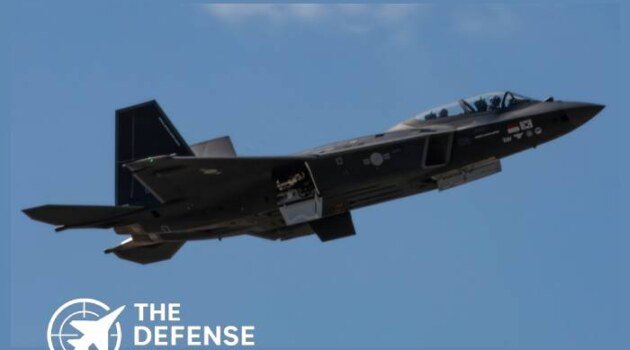
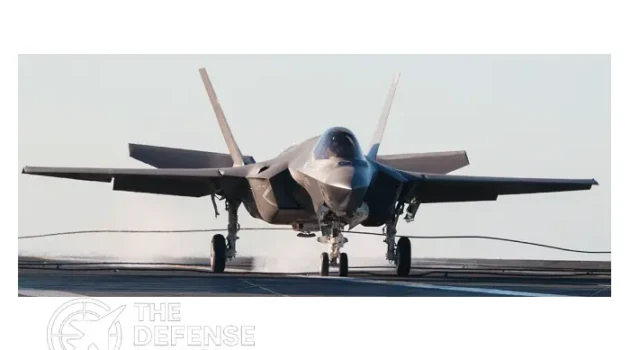
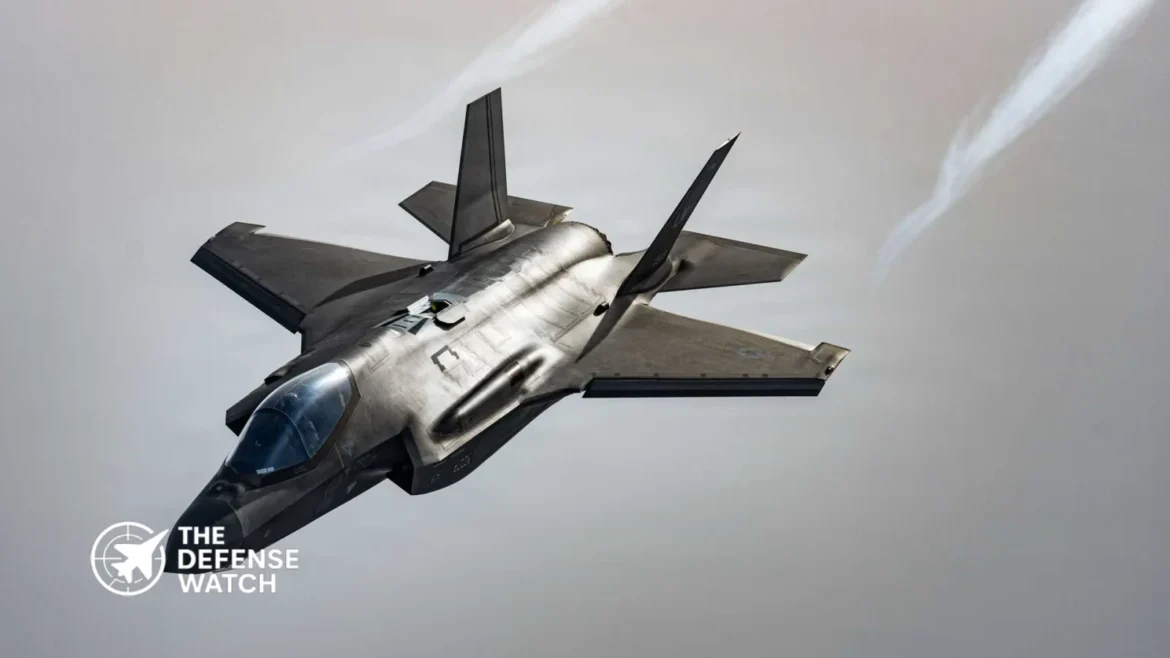
The United States plans to equip the F-35 Lightning II with a Starshield-enabled Beyond Line of Sight satellite communications capability by September 2031, according to the FY2027 F-35 Modernized Selected Acquisition Report dated April 21, 2026. The planned upgrade is part of the aircraft’s Block 4 modernization roadmap and is intended initially to move track data through satellite links beyond the range of conventional line of sight tactical communications.
Takeaways
The Pentagon plans to add a Starshield-enabled Beyond Line of Sight satellite communications capability to the F-35 by September 2031, expanding the aircraft’s ability to move track data across geographically dispersed forces.
The capability is designated BLOS Phase 0 SATCOM in the acquisition documentation. It is planned to use the Protected Tactical Waveform and operate across Ku band and Ka band frequencies, according to the reporting on the acquisition report.
The significance is not simply that an F-35 will receive another communications system. The larger change is the extension of the aircraft’s role from a tactical sensor operating within local networks to a forward sensing node capable of contributing information to a geographically dispersed force.
What The Starshield Upgrade Is Designed To Do
Starshield is SpaceX’s government-focused satellite network derived from the company’s Starlink technology and launch architecture. SpaceX describes Starshield as a secure satellite network for government users, with communications, Earth observation and hosted payloads among its primary areas. It also identifies additional high-assurance security measures for government missions.
For the F-35, however, the relevant capability is the communications function rather than Starshield as a complete standalone military architecture.
The initial BLOS Phase 0 capability is focused on transferring track data. That distinction is important because the acquisition reporting does not establish that the F-35 will directly control a distant weapon through Starshield.
Instead, the immediate objective is to extend the movement of sensor information beyond the aircraft’s local tactical network. The F-35 could detect, identify or track an object and make relevant track information available through a longer range communications path to other elements of a joint force.
That creates a potentially important separation between sensing and engagement.
Planned Capability Target Date Intended Function BLOS UHF receiver software September 2026 Receive Integrated Broadcast Service track data BLOS Phase 0 SATCOM September 2031 Transmit track data through satellite communications BLOS Phase 1b September 2031 Add two-way video communications BLOS Phase 2 September 2035 Add voice communications MADL dynamic mesh September 2030 Improve network resilience and connectivity Expanded Link 16 capability September 2031 Increase network participation and message handling The dates above come from the reported F-35 modernization roadmap. The acquisition documentation also distinguishes the 2026 UHF capability from the later SATCOM architecture.
Why Beyond Line Of Sight Communications Matter
Modern long range combat increasingly depends on networks connecting sensors, command nodes and weapons that may be separated by hundreds or thousands of miles.
A fighter may possess the best tactical view of a target without being the aircraft that ultimately engages it. Conversely, a ship, aircraft, ground unit or long range weapon may have the required range but lack the sensor information needed to act.
That is the basic problem a distributed kill chain attempts to solve.
The Space Force has identified data transport as a critical element of long range kill chains. Its broader Protected Tactical SATCOM work is aimed at maintaining communications in environments where adversaries can interfere with satellite and radio links.
Adding BLOS SATCOM to the F-35 therefore addresses an important part of the network rather than adding another weapon to the aircraft.
The F-35 already combines sensors, onboard processing and tactical data links. Its value in a distributed force increasingly depends on how reliably that information can reach other nodes. Lockheed Martin describes the aircraft as a platform designed to gather, process and securely share information across domains, while Block 4 adds further sensor, electronic warfare and weapons capabilities.
The planned SATCOM upgrade extends that networking concept beyond the geographic limits imposed by line of sight.
Protected Tactical Waveform Is A Key Part Of The Architecture
The Protected Tactical Waveform is particularly relevant because a long range communications link is useful only if it can survive the electromagnetic environment of a major conflict.
The U.S. Space Force demonstrated PTW capabilities in 2025, including frequency hopping under variable interference levels, secure voice over internet protocol communications and operation through a commercial satellite. Space Systems Command said the program is intended to provide anti-jam and low probability of intercept communications for tactical users.
That work provides important context for the planned F-35 integration.
The challenge is not simply establishing a satellite connection. A military aircraft operating against a capable opponent may face jamming, interference, detection and attempts to disrupt the broader network. Protected waveforms and resilient satellite architectures are intended to reduce those vulnerabilities.
The Space Force is also developing additional protected tactical satellite capacity. In June 2026, Space Systems Command awarded contracts totaling $437.7 million for the first two Protected Tactical SATCOM Global satellites, designed to provide anti-jam communications and connectivity in denied environments.
F-35 Communications Modernization Extends Beyond Starshield
The planned Starshield capability is only one element of a much larger communications modernization effort.
By September 2030, the F-35 program plans to transition the Multifunction Advanced Data Link from its current manually configured string topology toward a dynamic mesh architecture. The objective is to improve network resilience and reduce connectivity losses.
Link 16 is also scheduled for further upgrades, including increased message handling and the ability to listen to as many as four Link 16 networks simultaneously by September 2031. The roadmap also includes improved electronic warfare coordination.
Taken together, these changes point toward a communications architecture with several layers rather than dependence on a single data link.
That matters because different networks serve different operational purposes. MADL is central to F-35 tactical connectivity, Link 16 provides broad joint and allied interoperability, while BLOS SATCOM provides a longer range communications path.
The combination gives commanders more options for moving information when individual links are unavailable or geographically unsuitable.
The F-35 Is Becoming More Important As A Sensor Node
The planned upgrade also reinforces an established direction in F-35 development.
The aircraft was designed around sensor fusion and information sharing rather than treating the fighter solely as a platform that carries weapons. Its ability to collect information from onboard sensors and distribute useful data has become a central part of its operational value.
Lockheed Martin has also demonstrated concepts in which F-35 information can be passed through other communications nodes to fourth generation aircraft and ground based systems, including scenarios involving HIMARS and MLRS family weapons.
The Starshield integration would extend that basic concept over a much larger geographic area.
An F-35 operating forward could potentially provide track information to a distant command or engagement architecture without requiring the receiving element to be within the fighter’s conventional line of sight communications range.
The acquisition report does not specify which aircraft, ships, ground systems or weapons will receive Phase 0 data. It also does not establish a direct F-35 to weapon engagement pathway through Starshield. Those distinctions are important when assessing what the program has actually announced.
Technical And Operational Challenges Remain
The 2031 target should be viewed as a planned fielding date rather than evidence that the capability is already operational.
The F-35 Block 4 modernization effort involves major changes to software, computing, sensors, electronic warfare equipment, communications and weapons. The acquisition documentation identifies the technical complexity of the modernization effort as a significant risk and calls for expanded laboratory, simulation and flight testing.
Nine new fully instrumented Flight Science Aircraft are planned to support Block 4 development, weapons integration and certification. Technology Refresh 3 provides the additional computing capacity and memory required for future capability inserts.
SATCOM integration also creates aircraft-level engineering challenges.
The system must fit within the F-35’s existing architecture while preserving aircraft performance, electromagnetic compatibility and low observable characteristics. It must also integrate with classified mission systems and broader joint communications networks without creating an unacceptable dependency on any single communications path.
These issues are especially important because the F-35 operates in environments where electromagnetic emissions can affect survivability and where communications systems may themselves become targets.
Strategic Implications For U.S. And Allied Forces
The strategic value of the planned capability lies in network reach.
Large Indo-Pacific operating areas make this particularly relevant to U.S. force planning, but the underlying requirement applies more broadly to any theater where aircraft, ships, ground forces and long range weapons are separated by significant distances.
A distributed force can reduce the need to place every sensor and weapon in the same location. The F-35 can operate forward and collect information, while other platforms positioned farther away can contribute command, sensing or engagement functions.
That approach also fits the broader U.S. move toward joint all domain operations, in which information must move between air, maritime, land, space and cyber elements.
The F-35’s future communications architecture is therefore becoming almost as important as its individual aircraft capabilities. A stealth aircraft with advanced sensors has greater operational value when the information it generates can reach the rest of the force reliably.
A Staged Path Toward A More Connected F-35
The planned modernization schedule shows that the Pentagon is not treating BLOS communications as a single upgrade.
The 2026 UHF receiver capability provides an earlier means of receiving beyond line of sight track information. Phase 0 in 2031 would add satellite based track-data transmission. Phase 1b would expand the system to two-way video, while Phase 2 is planned to add voice communications in 2035.
This staged approach is consistent with the wider development of protected tactical SATCOM across the Department of Defense.
The U.S. Space Force is simultaneously expanding protected satellite communications through government and commercial satellite architectures, including systems designed around the Protected Tactical Waveform.
For the F-35, the result could be a more flexible communications architecture in which the aircraft contributes sensor information through multiple paths depending on the tactical environment.
Bottom Line
The planned Starshield integration represents a significant change in how the F-35 is expected to participate in distributed combat networks.
The initial objective is specific: provide Beyond Line of Sight SATCOM capable of transmitting track data by September 2031. The program does not currently establish that the F-35 will directly control distant weapons through Starshield.
Its importance is instead tied to the broader sensor-to-shooter problem. By connecting the F-35’s sensors to geographically separated forces through a protected satellite communications path, the Pentagon is seeking to make the fighter a more effective node in long range joint kill chains.
That effort will depend on successful integration with MADL, Link 16, Block 4 mission systems and protected tactical SATCOM infrastructure. If the planned milestones are met, the F-35’s role will increasingly extend beyond detecting and engaging targets itself to helping other elements of the joint force act on information collected at the forward edge.

U.S. F-22 Raptors Deepen Indo-Pacific Interoperability With Philippine FA-50PHs
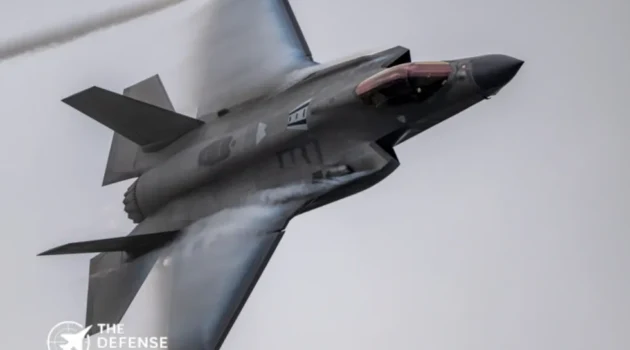
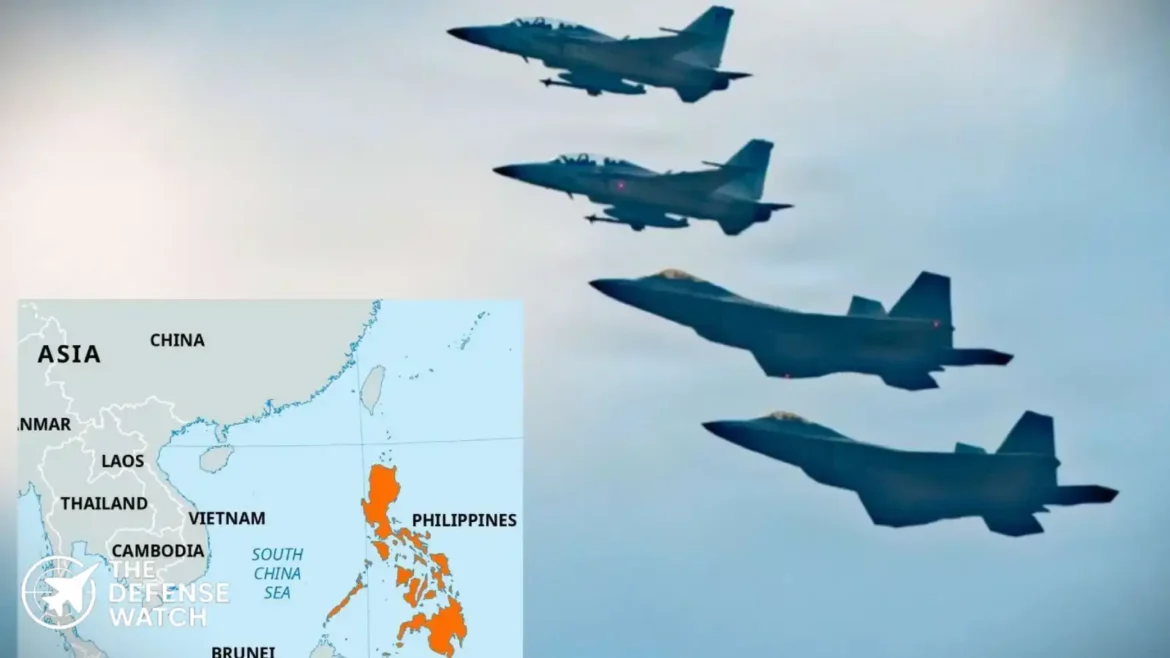
U.S. F-22 Raptors have conducted joint air combat interoperability training with Philippine Air Force FA-50PH fighter aircraft, marking another step in expanding allied airpower cooperation across the Indo-Pacific. The exercise underscores Washington and Manila’s growing focus on readiness, deterrence, and combined operations.
- U.S. F-22 Raptors trained alongside Philippine Air Force FA-50PH fighters in new bilateral air combat exercises.
- The drills focused on interoperability, tactical coordination, and joint mission execution.
- F-22 Raptors bring stealth, sensor fusion, and air dominance capabilities to allied operations.
- Philippine FA-50PH aircraft provide multirole combat capability and rapid-response flexibility.
- The exercise highlights growing U.S.-Philippine defense cooperation in the Indo-Pacific.
The training comes as regional security concerns continue to shape military planning across the South China Sea and wider Pacific theater. For both countries, practical integration between air forces is increasingly valuable.
Why The Drill Matters Now
Joint training between fifth-generation U.S. fighters and regional partner aircraft offers more than symbolic value. It creates real-world familiarity between pilots, mission planners, maintainers, and command structures.
The U.S. F-22 Raptors remain one of the world’s premier air superiority platforms. Combining stealth shaping, high-end sensors, supercruise speed, and advanced data awareness, the aircraft is designed to dominate contested airspace.
For the Philippines, operating alongside the F-22 helps expose crews to advanced tactical procedures that can improve national air defense operations. Even limited interactions with such aircraft can raise standards in mission planning, communications discipline, and air battle management.
FA-50PH Role In Philippine Defense Strategy
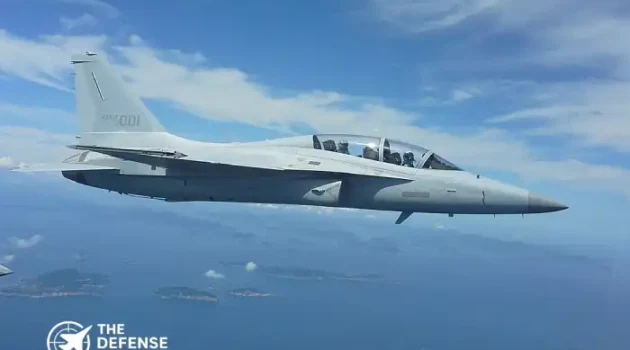
The Philippine Air Force’s FA-50PH fleet has become a central part of Manila’s modern combat aviation capability. Derived from the South Korean FA-50 platform, the aircraft can perform air defense, strike, training, and patrol missions.
While it is not in the same class as stealth fighters, the FA-50PH gives the Philippines a flexible and cost-effective fast jet fleet that can respond quickly to security events.
Its participation in exercises with U.S. F-22 Raptors also reflects a broader strategy, pairing national assets with allied high-end systems to improve layered deterrence.
Strategic Message Across The Indo-Pacific
The timing of such exercises matters. U.S.-Philippine military ties have accelerated in recent years through expanded base access, rotational deployments, maritime patrols, and combined exercises.
Airpower cooperation sends a visible signal that alliance commitments are backed by operational activity, not only policy statements.
For regional observers, the presence of F-22 aircraft in exercises suggests the U.S. is willing to deploy premier combat assets forward when required. That can shape deterrence calculations among competitors and reassure partners.
What Interoperability Really Means
Interoperability is often used as a broad term, but in military aviation it has direct operational meaning:
- Shared radio procedures
- Common tactical language
- Coordinated target identification
- Deconflicted airspace management
- Faster mission handoff between aircraft types
- Better response during crises or natural disasters
These foundations become critical during real contingencies, when reaction time is limited.
Outlook For Future U.S.-Philippine Air Cooperation
As the Philippines continues military modernization, future exercises could expand into maritime strike coordination, integrated air defense drills, and larger multinational events.
The U.S. F-22 Raptors training with Philippine FA-50PHs indicates a maturing defense relationship centered on practical readiness. In a region where distance, speed, and air control matter, that cooperation carries growing strategic weight.
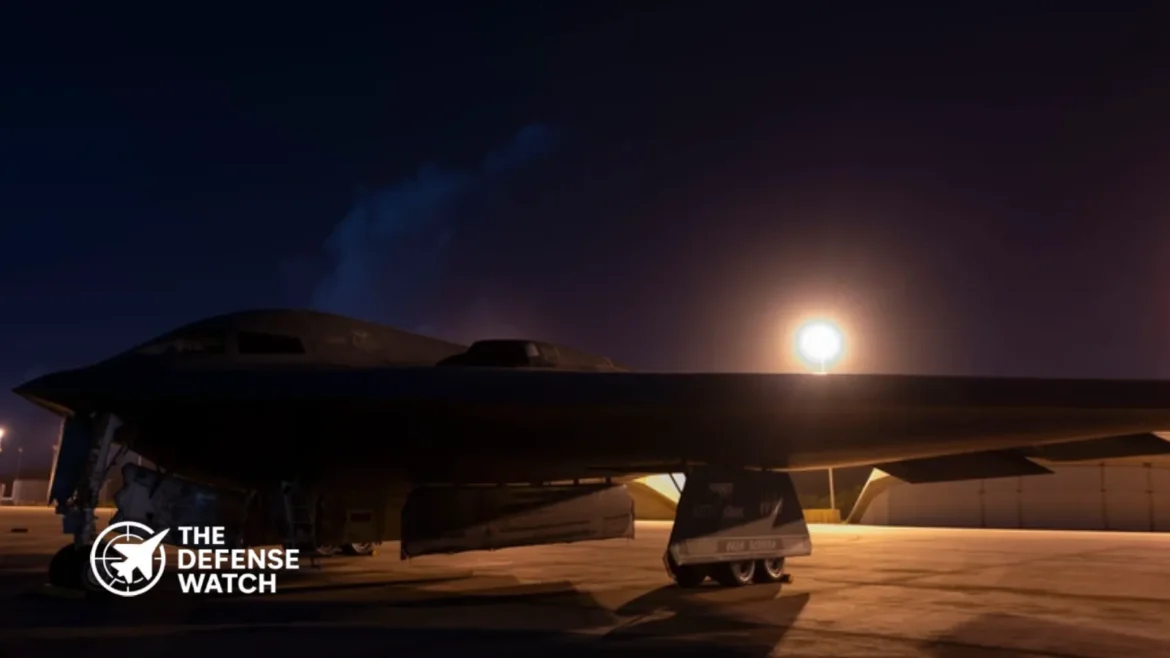
Operation Epic Fury Ends: U.S. Forces Strike Over 13,000 Targets, Crushing Iran’s Military Capabilities in 38 Days
The White House confirmed this week that Operation Epic Fury, a 38-day U.S. military campaign targeting Iran, concluded with the systematic dismantling of Iran’s core military capabilities. American forces executed more than 10,200 air sorties and struck over 13,000 individual targets — a scale of precision warfare rarely seen in the post-Cold War era. The operation ended with Tehran agreeing to a ceasefire and the reopening of the strategically vital Strait of Hormuz.
- Operation Epic Fury lasted 38 days and involved more than 10,200 air sorties conducted by U.S. joint forces against Iran.
- Over 13,000 targets were struck across Iran’s military infrastructure, including command centers, air defense networks, and naval assets.
- More than 85% of Iran’s defense industrial base was reported destroyed, and daily Iranian air flight activity was reduced to zero.
- 150 Iranian naval vessels were destroyed across multiple classes, and Iran’s submarine force was fully eliminated.
- The campaign concluded with Iran agreeing to a ceasefire and reopening the Strait of Hormuz to international shipping.
What Was Operation Epic Fury?
Operation Epic Fury was a concentrated, joint-force military campaign ordered by President Trump on February 28, 2026. According to Gen. Dan Caine, Chairman of the Joint Chiefs of Staff, the operation was built around three primary military objectives: neutralizing Iran’s ballistic missile and drone arsenals, dismantling the Iranian Navy, and destroying Iran’s defense industrial base to permanently eliminate its capacity to project military power beyond its own borders.
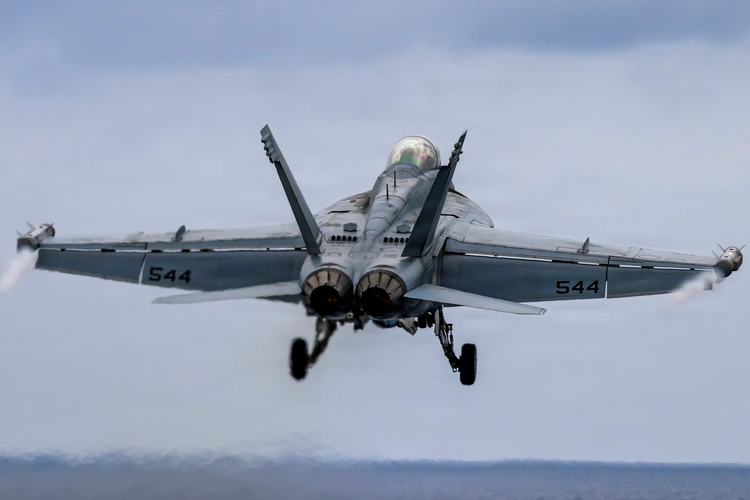
The White House reported that U.S. forces struck more than 13,000 targets during the 38-day campaign, which involved over 10,200 air sorties. What made this operation particularly notable was not just its breadth, but the systematic, layered approach used to simultaneously collapse multiple pillars of Iranian military power within a compressed operational timeline.
Target Categories: A Sweeping Dismantlement
The scope of targets engaged during Operation Epic Fury reveals a deliberate strategy to degrade Iran’s military at every functional layer:
Command & Control: More than 2,000 command and control sites were struck, disrupting the coordination networks Iran relies upon to synchronize military operations across its conventional forces and proxy networks throughout the region.
Air Defense & Missile Infrastructure: Over 1,500 air defense systems and more than 450 ballistic missile-related sites were targeted, gutting Iran’s ability to defend its own airspace and deploy the long-range strike capabilities that have long posed a threat to U.S. partners in the Gulf.
Drone Capabilities: Approximately 800 attack drone targets were struck — a pointed response to Iran’s established role as a leading supplier of low-cost attack drones to armed groups across the Middle East and to Russia during the Ukraine conflict.
Naval Forces: More than 600 naval targets were engaged, with 150 vessels destroyed across multiple classes and Iran’s submarine capability fully eliminated.
Mine Warfare: Over 700 mine systems were destroyed, directly addressing one of Iran’s most asymmetric tools for threatening Gulf shipping lanes.
Defense Industrial Base: More than 1,450 defense and industrial base targets were struck, with officials reporting that over 85% of Iran’s defense industrial capacity had been destroyed.
Defensive Intercepts: The Battle Above Iranian Airspace
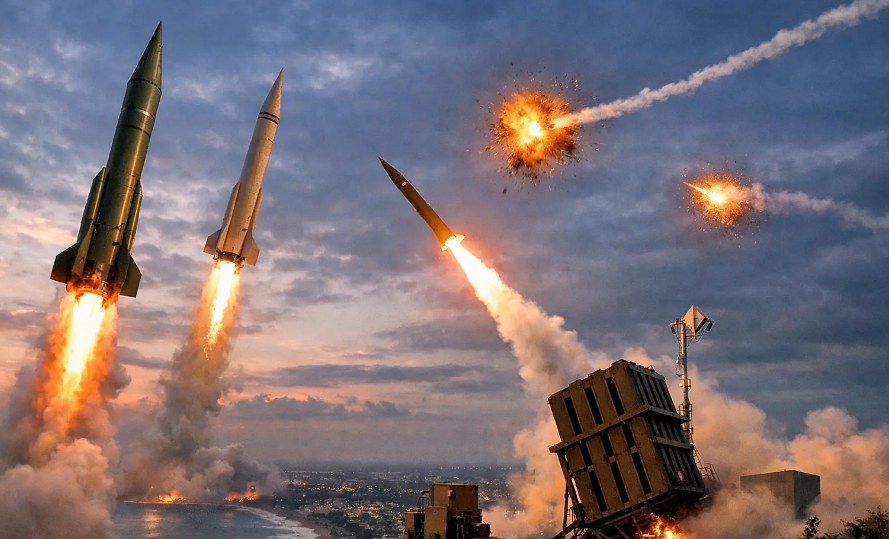
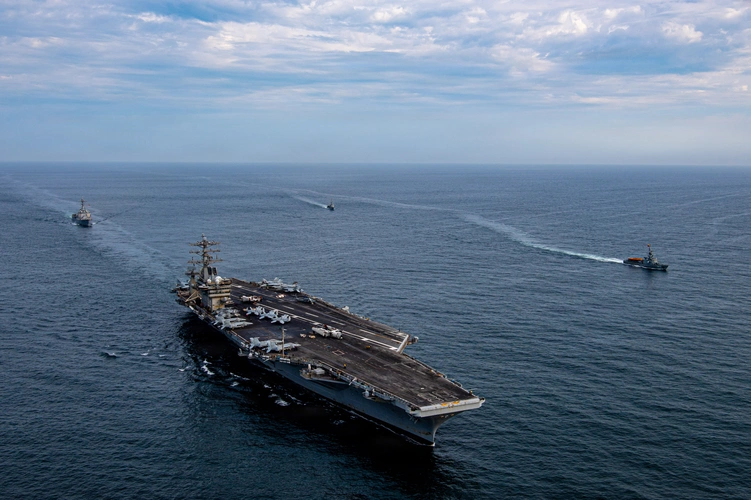
The campaign was not entirely one-directional. U.S. forces intercepted more than 1,000 incoming drone threats and over 700 ballistic missiles during the course of operations — a figure that underscores both the intensity of Iranian resistance and the effectiveness of American missile defense systems in a live, high-threat environment. This volume of successful intercepts represents one of the most significant real-world tests of layered U.S. air and missile defense architecture in history, providing invaluable operational data that defense planners will analyze for years.
Senior Officials Declare Objectives Met
Gen. Caine was direct in his assessment of the outcome. Over the course of 38 days of major combat operation, the joint force achieved the military objectives as defined by the President,” he stated, adding that the campaign methodically degraded Iran’s capacity to conduct offensive military operations.
White House Press Secretary Karoline Leavitt framed the result in broader terms, stating that the operation had achieved and exceeded its stated objectives within the planned four-to-six-week window. Secretary of Defense Pete Hegseth also highlighted the campaign’s conclusion, noting that “Iran begged for this ceasefire,” and crediting President Trump’s decision-making as central to the outcome.
Space and Advanced Weapons Programs Hit Hard
Beyond conventional military targets, the operation also degraded Iran’s space-related infrastructure, with approximately 70% of those facilities reported destroyed or rendered inoperable. This aspect of the campaign signals a deliberate effort to close off future Iranian pathways to satellite-enabled intelligence, reconnaissance, and ballistic missile guidance — capabilities that would have allowed Tehran to reconstitute a credible long-range strike posture even after suffering conventional military losses.
The Strait of Hormuz: A Strategic Endgame
Perhaps the most consequential strategic outcome of Operation Epic Fury is the reopening of the Strait of Hormuz. Approximately 20% of the world’s traded oil transits this narrow waterway daily, and Iranian threats to close it have for decades served as a powerful leverage point in regional geopolitics. With the strait now open and Iran’s naval forces largely neutralized, global energy markets have seen immediate pressure ease — a tangible economic dividend from the military campaign.
Analysis: What Operation Epic Fury Signals for Future Warfare
Operation Epic Fury represents a watershed moment in how the United States conducts large-scale, high-tempo conventional military operations. The combination of over 10,200 sorties, precision strike packages against 13,000+ discrete targets, and simultaneous large-scale ballistic missile defense in a live combat environment places this campaign in a category alongside Operation Desert Storm in terms of its doctrinal significance.
Several lessons stand out for defense analysts. First, the campaign demonstrated that the U.S. joint force can sustain an extraordinarily high operational tempo against a peer-regional military adversary with meaningful air defense capabilities — and do so with sufficient precision to isolate military targets from broader civilian infrastructure. Second, the successful intercept of more than 700 ballistic missiles in a single campaign validates years of investment in layered missile defense architecture, particularly THAAD, Patriot, and naval Aegis-based systems. Third, the deliberate targeting of Iran’s defense industrial base — rather than simply its deployed forces — reflects an evolving U.S. doctrine aimed at preventing reconstitution, not just winning the immediate engagement.
The campaign also raises critical questions for adversaries watching closely. China, Russia, and North Korea will be intensively studying the degradation sequence used against Iran’s integrated air defense, missile, naval, and industrial capabilities. The speed with which a modern, reasonably well-armed regional power was effectively disarmed in under six weeks will recalibrate threat assessments in capitals from Beijing to Pyongyang. Whether the long-term political settlement matches the military outcome, however, remains the defining open question of this chapter in Middle Eastern history.
Ceasefire and the Road Ahead
The campaign’s conclusion with a ceasefire agreement and Hormuz reopening marks the immediate end of hostilities, but the diplomatic architecture required to translate this military outcome into durable regional stability remains entirely unbuilt. Iran retains its territory, its government, and a population that — regardless of political orientation — will likely view this period as a national trauma. Reconstruction of Iran’s military will be constrained for years by the destruction of its industrial base, but the underlying geopolitical drivers of regional tension have not been eliminated. American policymakers now face the harder task: converting an overwhelming military victory into a lasting strategic outcome.
FAQs
Operation Epic Fury was a 38-day U.S. military campaign launched on February 28, 2026, targeting Iran’s ballistic missile capabilities, naval forces, drone arsenals, and defense industrial infrastructure. It concluded with a ceasefire and the reopening of the Strait of Hormuz.
U.S. forces struck more than 13,000 targets across Iran, supported by over 10,200 air sorties conducted by the joint force.
White House officials stated that more than 85% of Iran’s defense industrial base was destroyed or severely damaged during the campaign.
American forces intercepted more than 1,000 incoming Iranian drones and over 700 ballistic missiles during the 38-day campaign, representing one of the largest real-world tests of U.S. layered missile defense systems in history.
The Strait of Hormuz is one of the world’s most critical energy chokepoints, through which approximately 20% of globally traded oil passes daily. Iran’s agreement to reopen the strait following the ceasefire is considered a major strategic and economic outcome of the operation.
U.S. forces destroyed 150 Iranian naval vessels across multiple classes and fully eliminated Iran’s submarine force during the operation.
What Is a Sonic Boom, and Why Does It Matter for Military Aviation?
A sonic boom is one of the most dramatic byproducts of modern air power — a thunderclap produced not by weather, but by the raw physics of supersonic flight. A sonic boom is an impulsive noise caused by an object moving faster than sound, which travels at approximately 750 miles per hour at sea level. The phenomenon has shaped U.S. Air Force doctrine, civilian airspace law, and now, the trajectory of a new generation of aerospace technology designed to tame it.
For defense analysts and aviation professionals alike, understanding how sonic booms are generated, regulated, and potentially neutralized has become increasingly relevant in 2026 — as both military trainers and commercial developers push the boundaries of supersonic operations over populated land.
- A sonic boom is produced when any aircraft exceeds approximately 750 miles per hour at sea level — roughly the speed of sound.
- The U.S. Air Force has conducted supersonic test flights since 1947, and most of its fighter aircraft are supersonic-capable today.
- Peak sonic boom overpressure for typical fighter aircraft ranges from less than 1 to about 10 pounds per square foot under normal flight conditions.
- NASA’s X-59 QueSST demonstrator completed its maiden flight on October 28, 2025, targeting a reduced “sonic thump” instead of a full boom.
- Community overland supersonic acceptance flights by NASA are planned for 2026, with regulatory data submissions expected by 2028.
The Physics Behind the Boom
To grasp why a sonic boom happens, it helps to understand how aircraft interact with the air around them. An aircraft traveling through the atmosphere continuously produces air-pressure waves similar to the water waves caused by a ship’s bow. When the aircraft exceeds the speed of sound, these pressure waves combine and form shock waves which travel forward from the generation or “release” point.
The result on the ground is not a single bang, but rather a sustained pressure event that moves with the aircraft. As an aircraft flies at supersonic speeds it is continually generating shock waves, dropping sonic boom along its flight path, similar to someone dropping objects from a moving vehicle.
Two distinct waveform types determine how a boom manifests. The N-wave is generated from steady flight conditions, and its pressure wave is shaped like the letter “N,” with a front shock rising to positive peak overpressure followed by a linear decrease until the rear shock returns to ambient pressure. The U-wave, or focused boom, is generated from maneuvering flights, and its pressure wave is shaped like the letter “U,” with positive shocks at both the front and rear of the boom where peak overpressures are amplified compared to the N-wave.
In practical terms, maneuvers matter enormously. Pilots and mission planners must account for how aircraft movements alter a boom’s ground footprint and intensity.
How Strong Can a Sonic Boom Get?
The intensity of a sonic boom varies widely depending on aircraft size, altitude, speed, and flight maneuvers. For today’s supersonic aircraft in normal operating conditions, the peak overpressure varies from less than one pound to about 10 pounds per square foot for an N-wave boom. Peak overpressures for U-waves are amplified two to five times the N-wave, but this amplified overpressure impacts only a very small area.
Historical data points to some remarkable extremes. The strongest sonic boom ever recorded was 144 pounds per square foot, produced by an F-4 flying just above the speed of sound at an altitude of 100 feet — yet it did not cause injury to the researchers exposed to it.
Under more operationally realistic scenarios, the maximum boom measured was 21 pounds per square foot. Buildings in good repair should suffer no damage from pressures below 16 pounds per square foot, and community exposure to sonic boom typically stays below two pounds per square foot.

Image : NASA These figures matter greatly for airspace planning. The difference between a training route that keeps a fighter at 40,000 feet and one that permits lower supersonic operations can mean the difference between a faint distant rumble and cracked windows in homes below.
Altitude, Distance, and the Boom Carpet
One of the most operationally significant aspects of sonic boom behavior is how altitude affects its spread and intensity. In general, the greater an aircraft’s altitude, the lower the overpressure on the ground. Greater altitude also increases the boom’s lateral spread, exposing a wider area to the boom.
The scale of this spread is considerable. Ground width of the boom exposure area is approximately one mile for each 1,000 feet of altitude — meaning an aircraft flying supersonic at 30,000 feet will create a lateral boom spread of about 30 miles. For steady supersonic flight, the boom is described as a carpet boom since it moves with the aircraft as it maintains supersonic speed and altitude.
Weather and atmospheric conditions further complicate the picture. Under standard atmospheric conditions, air temperature decreases with increased altitude, which helps bend sound waves upward. For a boom to reach the ground, the aircraft’s speed relative to the ground must be greater than the speed of sound at ground level — for example, an aircraft must travel at least 750 miles per hour, or Mach 1.12, for a boom to be heard at the surface.
U.S. Air Force Supersonic Regulations: Balancing Combat Readiness and Public Impact
The U.S. Air Force has operated supersonic aircraft since Chuck Yeager broke the sound barrier in October 1947. That history carries significant regulatory weight. Air Force procedures require that, whenever possible, supersonic flights be conducted over open water, above 10,000 feet, and no closer than 15 miles from shore. Supersonic operations over land must be conducted above 30,000 feet or, when below 30,000 feet, in specially designated areas approved by Headquarters United States Air Force and the Federal Aviation Administration.
This regulatory architecture reflects a long-standing tension between the demands of realistic combat training and the rights of civilian communities beneath military flight corridors. Fighter pilots cannot fully prepare for high-speed engagements by flying subsonic training sorties; pushing through Mach 1 in realistic tactical scenarios is operationally essential. Yet the communities surrounding air bases and designated supersonic corridors bear the acoustic impact of that training.
The Air Force continues to expand its knowledge of sonic boom, with ongoing research specifically addressing modeling of boom generation and its impact on the environment — including people, domestic animals, wildlife, and structures. This research provides tools to mitigate disturbances through flight operations and land use planning.
NASA’s X-59: The Turning Point for Overland Supersonic Flight
The most consequential development in sonic boom science in years came in late 2025, when a purpose-built aircraft took to the skies specifically to answer a regulatory question: can supersonic flight over populated land ever be made acceptable?
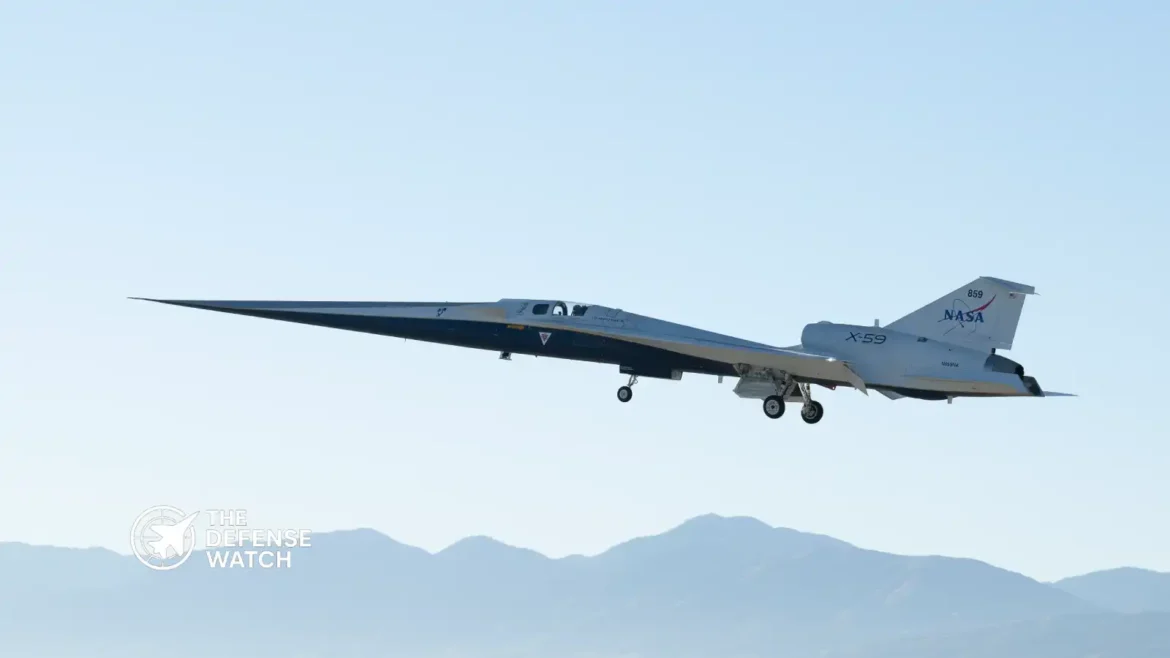
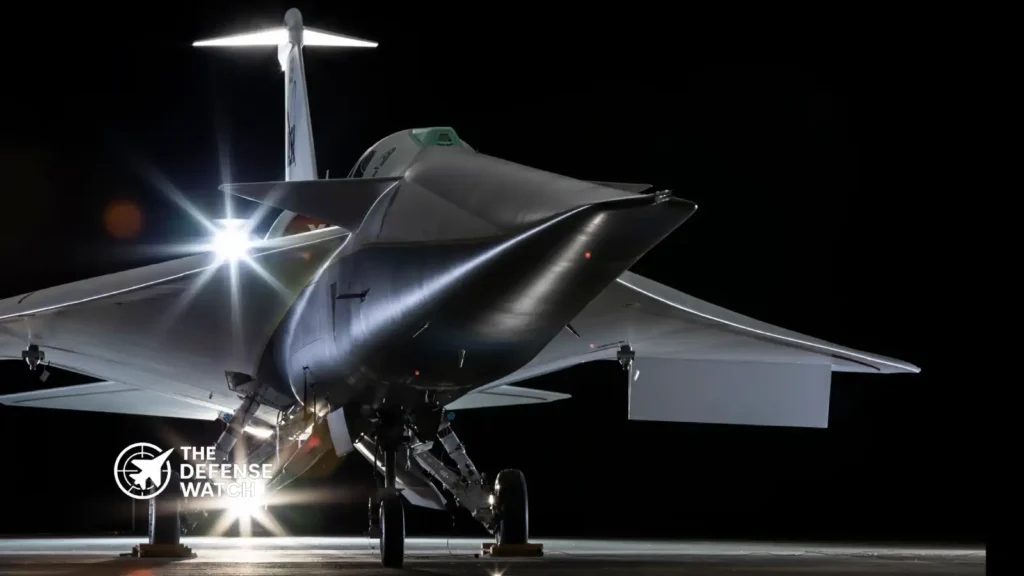
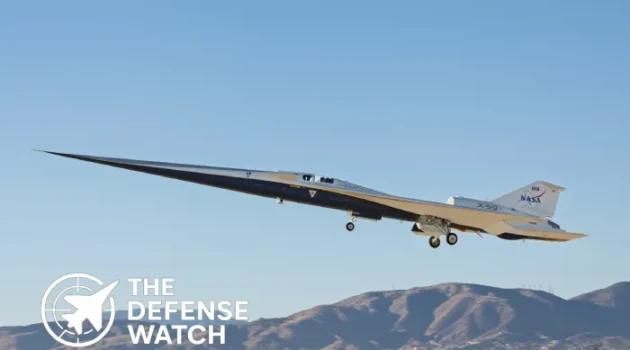
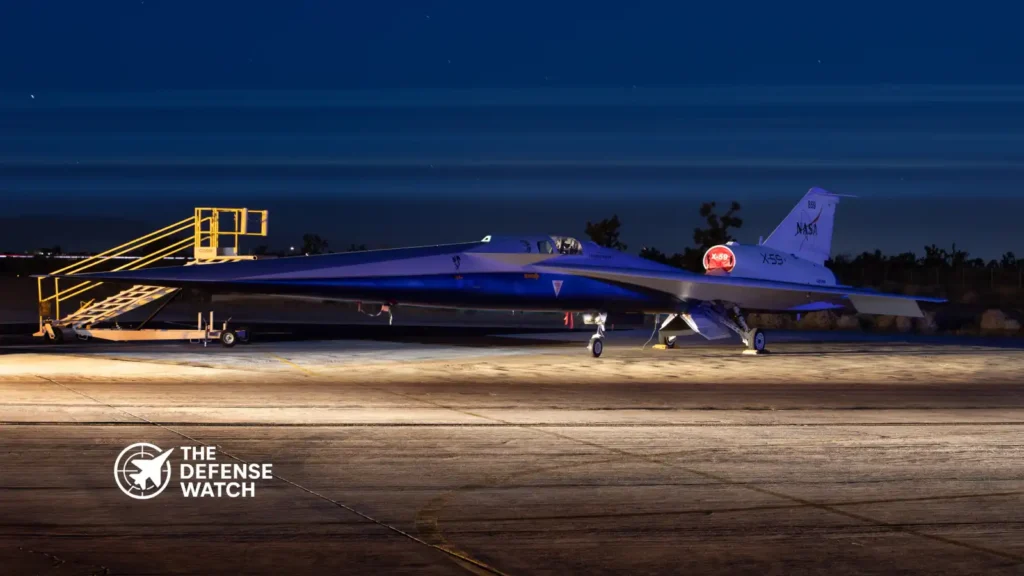
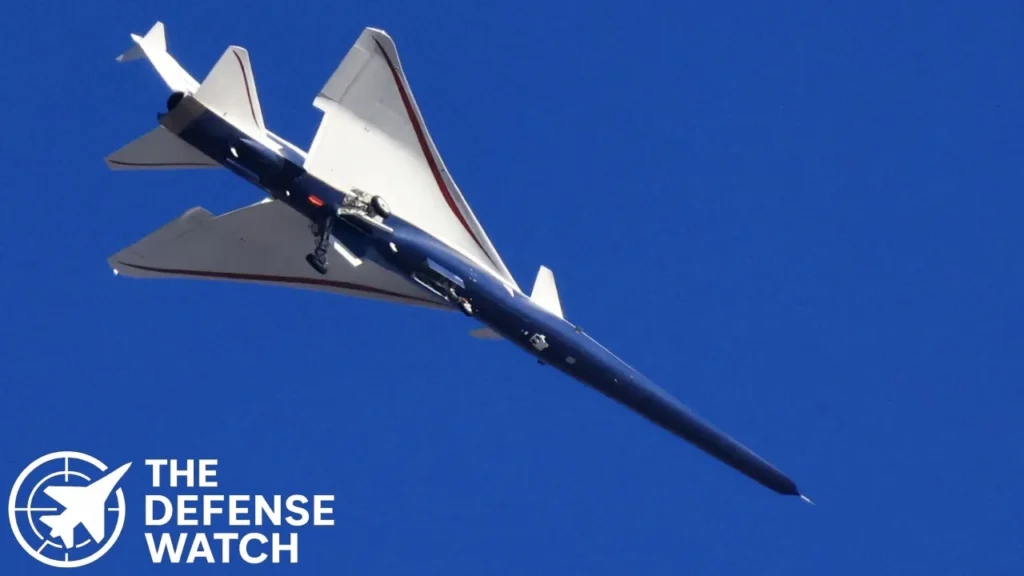
The single-seat X-59, developed by Lockheed Martin Skunk Works in partnership with NASA, is designed to cruise faster than sound while producing a minimal sonic boom — reduced to what engineers describe as a “gentle thump.” The aircraft completed its first flight on October 28, 2025, flying from Palmdale, California to NASA’s Armstrong Flight Research Center at Edwards to verify basic handling and data systems.
The engineering behind this achievement is substantial. The X-59’s elongated nose, carefully shaped fuselage, and engine integration aim to reshape shock waves and reduce noise output to levels comparable to slamming a car door. The aircraft’s 38-foot nose cone and uniquely contoured fuselage prevent shock waves from merging into a disruptive sonic boom, resulting in a softer “sonic thump.”
The X-59 is designed to operate at speeds up to Mach 1.4 and altitudes around 55,000 feet. NASA estimates that community acceptance flights over selected U.S. cities will begin in 2026, and data will inform regulatory proposals by 2028. Aviation A2Z
The Regulatory and Commercial Stakes
The implications of the X-59 program extend far beyond the aerospace research community. For decades, a 1973 FAA rule has effectively banned civil supersonic flight over U.S. soil, a restriction that grounded Concorde from trans-continental routes and has since constrained every commercial supersonic ambition that followed.
The United States recently reversed its 50-year-old ban on supersonic aircraft flying over land — a development that creates the regulatory framework into which X-59 data will feed. If NASA’s acoustic measurements demonstrate that the X-59’s “sonic thump” falls within community-acceptable noise thresholds, the FAA and the International Civil Aviation Organization could revise standards that have been frozen since the Concorde era.
The commercial sector is watching closely. Looking ahead to 2026, supersonic travel appears poised to move from concept to reality once more, with NASA’s X-59 demonstrating that sonic booms can be tamed and Boom Supersonic proving that civil jets can break the sound barrier again. Boom Supersonic’s Overture airliner, which has secured orders from United Airlines, American Airlines, and Japan Airlines, targets service entry by 2029.
Analysis: Why This Matters for Defense Strategy and Airspace Policy
From a defense perspective, the convergence of military sonic boom research and commercial low-boom technology carries strategic weight that extends beyond noise ordinances.
First, quiet supersonic flight has direct implications for reconnaissance and rapid-response aircraft. A platform capable of operating at Mach 1.4 while generating a noise signature comparable to background levels fundamentally changes what an adversary’s acoustic detection systems can track. The X-59 program, while civilian in charter, is generating data that military planners and aircraft designers will closely monitor.
Second, the regulatory shift underway in U.S. airspace policy creates new operational flexibility for Air Force training. Designated supersonic corridors could expand if community noise thresholds are revised upward based on low-boom technology. Pilots could access realistic supersonic training environments closer to populated air bases — a meaningful readiness advantage.
Third, the broader revival of supersonic commercial aviation will inevitably blur the line between civil and military aerospace industrial capacity. Engine designs, materials science, and aerodynamic shaping developed for commercial supersonic programs will feed back into next-generation military platforms, compressing development timelines and potentially cutting costs for future advanced fighters and reconnaissance assets.
The sonic boom — for 78 years a blunt announcement of military air power — may soon become a whisper. And in that transformation lies some of the most consequential aerospace policy and technology competition of the coming decade.
FAQs
What causes a sonic boom?A sonic boom is caused when an aircraft exceeds the speed of sound — roughly 750 mph at sea level — generating combined shock waves that release a sudden pressure burst heard as a loud crack on the ground.
Can a sonic boom damage buildings?Structural damage is unlikely at typical community exposure levels below two pounds per square foot. Buildings in good condition can generally withstand pressures below 16 pounds per square foot without damage.
Why can’t civilian aircraft fly supersonic over the United States?A 1973 FAA rule banned civil supersonic overland flight due to sonic boom disturbances. The U.S. government recently reversed this restriction, opening the door for new supersonic aircraft — provided they meet updated noise standards.
What is the NASA X-59 aircraft?The X-59 QueSST is a research aircraft developed by Lockheed Martin Skunk Works and NASA designed to fly at Mach 1.4 while reducing its sonic signature to a quiet “thump.” Its first flight occurred on October 28, 2025. Data from the program will be used to propose new FAA and ICAO noise regulations.
How does altitude affect a sonic boom on the ground?Higher altitude reduces peak overpressure at ground level but increases the width of the area exposed to the boom. An aircraft at 30,000 feet produces a boom carpet approximately 30 miles wide.
What is the difference between an N-wave and a U-wave sonic boom?An N-wave is produced by steady supersonic flight and has a pressure profile shaped like the letter “N.” A U-wave results from maneuvers such as dives or turns and has amplified peak pressures at both the front and rear of the boom, though it affects a smaller area.
RAF Typhoon FGR4 Heavy Loadout Signals Operational Shift
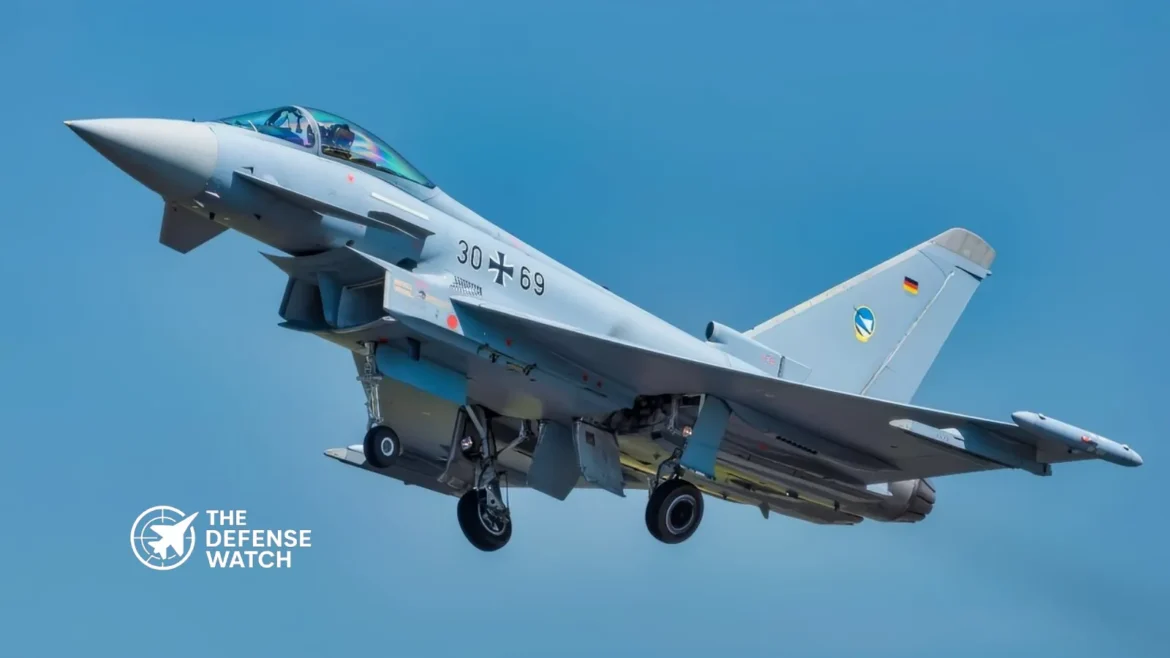
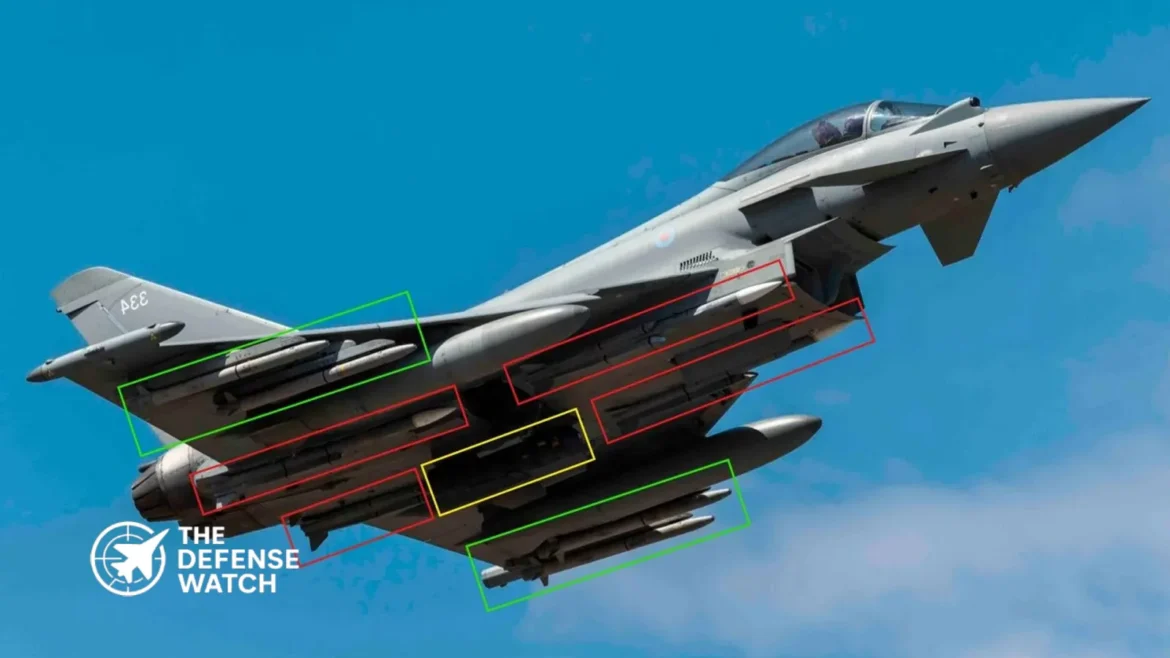
The Typhoon FGR4 heavy loadout is drawing attention as the Royal Air Force strengthens its air defense posture in ongoing Middle East operations. Recent imagery show the aircraft configured with an unusually large number of air-to-air missiles, underscoring a shift toward high-readiness interception and deterrence roles.
(adsbygoogle = window.adsbygoogle || []).push({});The deployment reflects evolving threat dynamics in the region, where unmanned systems, cruise missiles, and potential state-based air threats are increasingly shaping operational planning.
Short, visible changes in aircraft configuration often signal deeper strategic intent. In this case, the Typhoon FGR4 heavy loadout points to a mission set focused less on strike and more on persistent air dominance.
- RAF Typhoon FGR4 deployed with a heavy air-to-air missile loadout during Middle East operations.
- Configuration includes a mix of beyond-visual-range and short-range air defense missiles.
- Deployment supports ongoing coalition operations and regional airspace security missions.
- Loadout highlights focus on countering aerial threats including drones and potential hostile aircraft.
- Reflects RAF emphasis on flexible, high-readiness air defense posture in contested environments.
Expanded Missile Configuration Enhances Air Defense Reach
According to reporting by Army Recognition, the Typhoon FGR4 was observed carrying a combination of beyond-visual-range and short-range air-to-air missiles. This likely includes advanced radar-guided missiles for long-distance engagements and infrared-guided weapons for close-in combat.
Such a configuration allows the aircraft to engage multiple targets across different engagement zones without returning to base. It also increases survivability in contested airspace, where reaction time is critical.
The ability to carry a heavier missile load is a core strength of the Eurofighter platform. Its multiple hardpoints and high thrust-to-weight ratio enable it to maintain performance even when fully armed.
From an operational standpoint, this loadout supports layered air defense. Aircraft can intercept threats at extended ranges while retaining capability for close engagements if required.
Middle East Deployment Reflects Changing Threat Environment
The Typhoon FGR4 heavy loadout aligns with broader coalition efforts to secure airspace across the Middle East. The region has seen a steady rise in drone activity and asymmetric aerial threats, particularly in areas linked to ongoing conflicts and regional tensions.
RAF deployments in the Middle East have historically included both strike and air policing roles. However, the current configuration suggests a stronger emphasis on defensive counter-air missions.
This shift is consistent with trends observed across NATO and allied air forces, where air defense is regaining priority due to the proliferation of low-cost aerial threats.
The presence of heavily armed fighters also serves a deterrent function. It signals readiness to respond rapidly to incursions, reducing the likelihood of escalation.
Platform Flexibility Remains a Key Advantage
One of the defining features of the Typhoon FGR4 is its adaptability. The aircraft can transition between air superiority, ground attack, and reconnaissance roles with minimal reconfiguration.
The heavy air defense loadout highlights this flexibility. While optimized for interception in this configuration, the aircraft can be rapidly re-tasked depending on mission requirements.
This multi-role capability is particularly valuable in the Middle East, where operational demands can shift quickly. Air forces must be prepared to respond to a wide range of scenarios, from counterterrorism operations to state-level threats.
The Typhoon’s advanced radar and sensor suite further enhance its effectiveness. These systems enable pilots to detect and track multiple targets simultaneously, a critical requirement in complex airspaces.
Strategic Implications For RAF And Coalition Forces
The Typhoon FGR4 heavy loadout is more than a technical detail. It reflects a broader strategic adjustment in how air power is applied in the region.
By prioritizing air defense, the RAF is aligning with a growing emphasis on protecting critical infrastructure and maintaining airspace control. This approach complements ground-based air defense systems and provides a mobile, responsive layer of protection.
It also highlights the importance of interoperability within coalition operations. Aircraft configured for air defense can integrate with allied assets, sharing data and coordinating responses to emerging threats.
From a geopolitical perspective, the deployment reinforces the UK’s commitment to regional stability and coalition operations.


- The United States ranks #1 on the 2026 Global Firepower Index with a PowerIndex score of 0.0741 and a defense budget exceeding $895 billion.
- Russia holds #2 with a score of 0.0788, maintaining the world’s largest nuclear arsenal and over 1.3 million active personnel.
- China ranks #3 with 2+ million active troops, 3 aircraft carriers, and a defense budget of approximately $266 billion — the fastest-growing navy in the world.
- India holds #4 globally, backed by 1.45 million active personnel, nuclear deterrence, and a $75 billion defense budget.
- The 2026 index evaluated 145 nations across 60+ indicators including manpower, air power, naval strength, logistics, and financial capacity.
Which Country Has the Strongest Army in the World in 2026?
The question of which country possesses the strongest army in the world in 2026 is not answered by a single number. It is a composite picture drawn from defense budgets, technological depth, nuclear deterrence, logistics infrastructure, and the hard-won credibility of real-world combat experience. The 2026 Global Firepower Index draws on more than 60 individual factors — ranging from unit quantities and financial standing to logistical capacity and geography — to calculate each nation’s PowerIndex score across 145 countries. The lower the score, the more powerful the force.
By every available metric in 2026, the United States of America holds that top position — as it has for two decades. But the gap between Washington and its nearest competitors is narrowing in ways that should concern defense planners across the Western alliance.
#1 United States — The Undisputed Standard
Ranked as the world’s most powerful military since 2005, the U.S. tops the 2026 Global Firepower Index with a score of 0.0741. Its dominance rests on unmatched defense spending, global force projection, nuclear capabilities, advanced air and naval power, and an extensive network of overseas bases.
The U.S. fields 1,328,000 active personnel and 2,127,000 in reserve, backed by a defense budget of $895 billion — a figure that eclipses the combined spending of most of the world’s top militaries. Its technological edge — spanning fifth-generation stealth fighters, nuclear-powered carrier strike groups, satellite-based command networks, and a rapidly expanding drone and cyber warfare apparatus — remains unmatched in scale and integration.
The United States Army alone maintains 485,000 active-duty soldiers, 336,000 Army National Guard personnel, and 189,500 Army Reserve personnel, constituting the most battle-tested ground force in modern history.
TheDefenseWatch Analysis: The United States’ primary advantage in 2026 is not merely hardware — it is systemic. Decades of joint warfare doctrine, interoperability with NATO partners, and an unbroken chain of institutional learning from conflicts in Iraq, Afghanistan, and Syria give the U.S. military an adaptive quality that raw numbers cannot capture. However, high operational tempo and congressional debates over defense appropriations continue to create friction within the force’s long-term readiness picture.
#2 Russia — Nuclear Colossus Under Strain
Russia holds second place with a Power Index score of 0.0791. Its strength lies in vast nuclear arsenals, long-range missile forces, a large standing military, and significant land warfare capabilities.
Moscow fields 1,320,000 active personnel and a reserve pool of 3,570,000 troops, with a defense budget of $126 billion. Russia’s strategic deterrent — anchored by thousands of nuclear warheads and an array of intercontinental ballistic missiles, including the Sarmat ICBM — gives it a geopolitical weight that its conventional performance in Ukraine has, in some ways, challenged.
The ongoing war in Ukraine has exposed critical weaknesses in Russian logistics, precision-strike capability, and combined-arms coordination. Yet Russia continues to invest heavily in electronic warfare, hypersonic missile systems, and long-range aviation, ensuring it cannot be dismissed as a declining power.
TheDefenseWatch Analysis: Russia’s 2026 ranking reflects a military that remains dangerous at the strategic level even as it bleeds manpower and equipment in Eastern Ukraine. Moscow’s ability to reconstitute its ground forces while simultaneously sustaining a war economy is being tested in real time — the outcome of which will define Russia’s military standing well into the 2030s.
#3 China — The Fastest-Rising Challenger
China commands the world’s largest standing army with expanding naval and air capabilities. Heavy investment in technology and modernization underpins its global military ambitions. China fields 2,035,000 active personnel, 3,045,000 in reserve, and a defense budget of $266.85 billion.
At a crossroads, 2027 is set to become a pivotal year for Chinese military aspirations — a reference to the People’s Liberation Army’s (PLA) self-imposed deadline to become a “world-class military” capable of fighting and winning a modern war. Beijing has invested massively in carrier-based aviation, hypersonic glide vehicles, space warfare capabilities, and artificial intelligence-driven command systems.
China’s navy now operates three aircraft carriers, with additional hulls under construction. Its ballistic missile submarine fleet continues to grow, and its anti-access/area denial (A2/AD) strategy presents a credible challenge to U.S. naval operations throughout the Western Pacific.
#4 India — South Asia’s Nuclear Giant
India holds the 4th position with a score of 0.1346. As South Asia’s leading military power, India combines large manpower, nuclear deterrence, expanding indigenous defense production, strong missile forces, and growing air and naval capabilities.
India maintains 1,455,550 active personnel — more than either Russia or the United States — and a reserve force of 5,137,000 troops, all supported by a $75 billion defense budget. New Delhi’s ambitious “Atmanirbhar Bharat” (self-reliant India) defense manufacturing initiative is steadily reducing dependence on foreign arms imports while building domestic production capacity across fighters, missiles, and warships.
India’s ongoing border friction with China and long-standing tensions with Pakistan ensure that its military investment is not abstract — it is operationally driven and geopolitically consequential.
#5 Through #10 — The Rest of the Top Tier
South Korea secures fifth place, focusing on advanced technology, a strong reserve force, and defense readiness structured to counter regional threats — particularly from North Korea. Its active force of 600,000 is backed by 3,800,000 reserves and a $50 billion budget.
The United Kingdom placed sixth, maintaining nuclear deterrence, a capable navy, and forces designed for global deployment alongside allies. France followed closely with a versatile military, modern aircraft, and the capacity to conduct overseas operations independently. Japan ranked eighth, with a focus on maritime security, missile defense, and advanced technology reinforced by strategic partnerships.
Türkiye maintains a sizeable active and reserve force, growing domestic production, drone capability, and regional influence in the Middle East, while Italy fields a modern NATO-standard military with aircraft carriers, cyber defense, and participation in multinational operations and peacekeeping missions.
What Separates the World’s Strongest Armies in 2026?
The 2026 rankings make one thing unmistakably clear: military power today is multidimensional. Raw troop counts alone no longer determine strategic outcomes.
Modern warfare increasingly favors countries investing in advanced technology. Artificial intelligence systems, drones, cyber warfare capabilities, and satellite surveillance are now decisive factors in determining global military strength.

In 2026, military effectiveness depends more on training, modern equipment, and strategic coordination than sheer numbers. Highly skilled, technologically advanced forces consistently outperform larger, less-modern armies.
Personnel-wise, China’s two million active troops provide numerical superiority, while the United States and Israel lead in drones, cyber warfare, and missile defense systems. On the nuclear dimension, Russia and the United States each dominate with over 5,000 warheads.
The Emerging Challenge: Technology, Alliances, and Budget Pressure
Perhaps the most consequential shift in 2026 is not who holds the top spot — it is the structural change in how military power is being built and projected. Rising powers including France, Germany, Israel, and South Korea are showing consistent growth due to technological upgrades, modernization programs, and strategic alliances.
Alliance architecture is increasingly central. NATO’s combined firepower, AUKUS’s trilateral submarine technology transfer, and the Quad’s Indo-Pacific security framework all multiply the effective deterrent power of member states beyond what individual rankings suggest.

Meanwhile, critics of standard military indexes note that the lack of precision in weighting asset capability can lead to oversized scores for armies with plentiful but outdated equipment. A destroyer built in 1993 and a carrier launched in 2023 are not equivalent — yet both count as a single unit in many composite rankings.
TheDefenseWatch Analysis: The real story of global military power in 2026 is a world fragmenting into competing technological blocs. The United States leads — but the margin is slimmer than headline budgets suggest. China’s PLA is acquiring not just weapons, but doctrines, space assets, and cyber capabilities that were, until recently, the exclusive domain of Washington. Russia, despite its Ukraine losses, retains a strategic deterrent that keeps it in the conversation. And mid-tier powers like South Korea, Turkey, and India are investing with a discipline and urgency that is reshaping regional balances faster than traditional assessments capture. The next decade will not be defined by who has the biggest army — it will be defined by who can best integrate AI, unmanned systems, and real-time data into a cohesive fighting force.
FAQs
Which country has the strongest army in the world in 2026?The United States holds the top position on the 2026 Global Firepower Index with a PowerIndex score of 0.0741, supported by an $895 billion defense budget, over 13,000 aircraft, 460 naval vessels, and more than 800 overseas military installations.
Where does China rank in global military strength in 2026?China ranks third on the 2026 Global Firepower Index. It fields the world’s largest standing army with over two million active personnel and is rapidly expanding its blue-water navy and aerospace capabilities ahead of its stated 2027 military modernization deadline.
How is military strength measured by Global Firepower?The Global Firepower Index uses more than 60 individual indicators including manpower, defense budget, air power, naval assets, land forces, logistics, geographic factors, and natural resource capacity. Nuclear capability is factored in through special modifiers rather than direct scoring.
Is Russia still a top military power despite the Ukraine war?Yes. Russia remains ranked #2 globally in 2026. While the war in Ukraine has exposed logistical and coordination weaknesses in its conventional forces, Russia’s nuclear arsenal, long-range missile systems, and electronic warfare capabilities continue to position it as a major strategic power.
Which military is growing fastest in 2026?China’s PLA represents the most rapid large-scale military build-up in the world. Its naval expansion — now including three aircraft carriers — combined with hypersonic missile development, AI integration, and space warfare programs makes it the most consequential rising military force in the 2026 rankings.

Exercise Point Blank 26 Advances NATO Airpower Integration
Exercise Point Blank 26 brought the Royal Air Force and the United States Air Force together across multiple locations in England to strengthen NATO airpower readiness and operational integration. The large scale training activity focused on tactical proficiency, airpower mobility, and agile combat employment, reflecting how allied air forces expect to operate in a high intensity conflict environment.
The exercise combined fast jet operations, aerial refueling, and airfield support exchanges. It emphasized interoperability between US and UK forces and the ability to rapidly generate combat power from dispersed locations.
Allied Air Forces Train for High Tempo Operations
Exercise Point Blank 26 centered on improving how allied air forces deploy, sustain, and fight together under realistic conditions. RAF and US Air Force personnel operated side by side, sharing procedures for flight operations, maintenance, logistics, and command and control.
A key objective was refining airpower mobility. Tanker aircraft from both nations conducted joint refueling missions to support fighter operations, allowing combat aircraft to extend range and remain on station longer. These missions are essential for sustaining operations in contested environments where access to forward bases may be limited.
Airfield operations were another major focus. Ground crews exchanged best practices on aircraft servicing, rapid turnarounds, and base defense. These skills support NATO concepts that rely on flexibility, speed, and resilience rather than fixed infrastructure.
Agile Combat Employment at the Core
Agile combat employment was a central theme throughout Exercise Point Blank 26. This concept involves operating aircraft from multiple locations, often with smaller teams and limited support, to complicate adversary targeting and maintain combat effectiveness.
RAF and US Air Force units practiced deploying aircraft and personnel across different airfields in England. This included setting up temporary operating locations and sustaining flight operations with reduced footprints.
According to NATO doctrine, agile combat employment is critical for modern air campaigns. It allows allied forces to survive and fight even when traditional bases are under threat from long range missiles, cyber attacks, or electronic warfare.
Exercise Point Blank 26 provided a realistic environment to test these methods in a combined setting, ensuring that US and UK forces can execute them together if required.
F 35 Lightning II Operations Highlight Interoperability
The F 35 Lightning II played a visible role during Exercise Point Blank 26, underscoring its importance to NATO airpower. Both the RAF and US Air Force operate the fifth generation fighter, making it a cornerstone of allied combat aviation.
Training events included F 35 takeoff and recovery operations supported by allied tanker aircraft and shared airfield infrastructure. These activities demonstrated how the aircraft integrates into joint force operations and how allied support elements enable its deployment.
The F 35 brings advanced sensors, data sharing, and stealth characteristics that enhance situational awareness across the force. Exercises like Point Blank 26 allow operators and support crews to refine how these capabilities are employed in coalition scenarios.
Strengthening NATO Readiness and Deterrence
Exercise Point Blank 26 reflects a broader NATO effort to improve readiness and deterrence amid a more contested security environment. Regular combined exercises ensure that allied forces can respond quickly and cohesively to emerging threats.
The United Kingdom remains a key hub for US airpower in Europe, and exercises hosted on British soil reinforce the long standing defense partnership between the two nations. Training together also reduces friction during real world operations by aligning procedures, communications, and expectations.
By focusing on realistic scenarios and modern operational concepts, Exercise Point Blank 26 supports NATO goals of credible deterrence and collective defense.
Strategic Context
Airpower remains a central element of NATO military strategy. The ability to deploy fighters, tankers, and support forces rapidly across the alliance underpins both deterrence and crisis response.
Exercises like Point Blank 26 are not symbolic. They are practical tests of how forces would operate during a real contingency. The emphasis on agile combat employment and joint logistics reflects lessons learned from recent conflicts and evolving threat assessments.
As NATO continues to adapt to new challenges, combined training between the RAF and US Air Force will remain a critical pillar of alliance readiness.
Eurofighter Typhoon One Million Flying Hours
The Eurofighter Typhoon fleet officially surpassed one million flying hours, a milestone that highlights the long-term service and broad operational use of the European multirole combat aircraft across allied air forces. The achievement was confirmed by Eurofighter Jagdflugzeug GmbH and reflects more than two decades of continuous flight operations.
(adsbygoogle = window.adsbygoogle || []).push({});Operational Record and Scope
The global Typhoon fleet, in service with nine nations, has steadily increased flight hours through air policing, quick reaction alert duties, joint patrols, and combat missions. The milestone coincides with the EJ200 engine reaching two million engine flying hours, a direct result of Typhoons operating with twin-engine powerplants on every sortie.
Officials emphasize this tally as a sign of the aircraft’s operational reliability and adaptability in diverse mission sets. Fleet commanders and industry partners note the combined contribution of pilots, maintenance crews, and support networks across partner nations.
What One Million Hours Means
Reaching one million flying hours places the Typhoon among a select group of modern fighters with long histories of sustained operations. The aircraft’s usage covers routine peacetime missions as well as higher-intensity activities for NATO and coalition partners. Its multirole design supports both air superiority and ground attack tasks.
About 80 percent of the core nations’ operational air missions are now flown by Typhoons, underscoring its central role in European and allied defense postures.
Aircraft and Engine Performance
The Typhoon’s twin-engine configuration powered by the EJ200 turboshaft has now doubled the flying hours of the airframe itself. This engine milestone reinforces confidence in the aircraft’s propulsion system under varied operational demands.
Manufacturers and military stakeholders have pointed to this record as evidence of sustained industrial cooperation and technical performance across multiple decades of service.
Broader Context
The Typhoon program started deliveries in the early 2000s and has since become one of Europe’s largest defense collaborations. Partner countries include the United Kingdom, Germany, Italy, and Spain, with additional export customers extending its global footprint.
(adsbygoogle = window.adsbygoogle || []).push({});This milestone comes as allied air forces adapt to shifting security demands and pursue air defense modernization programs, balancing legacy systems with fifth-generation platforms and future combat air systems. For context, other major fighter fleets like the U.S. F-35 Lightning II have also surpassed one million flight hours globally.
What’s Next for the Typhoon
Beyond flight hours, the Eurofighter consortium is advancing modernization efforts, including updated sensors, electronic warfare systems, and weapon integration. Partner nations are investing in enhancements to keep the platform operationally relevant through the 2030s and beyond.
F-22 and F-35 Airpower at the Center of Venezuela Operation
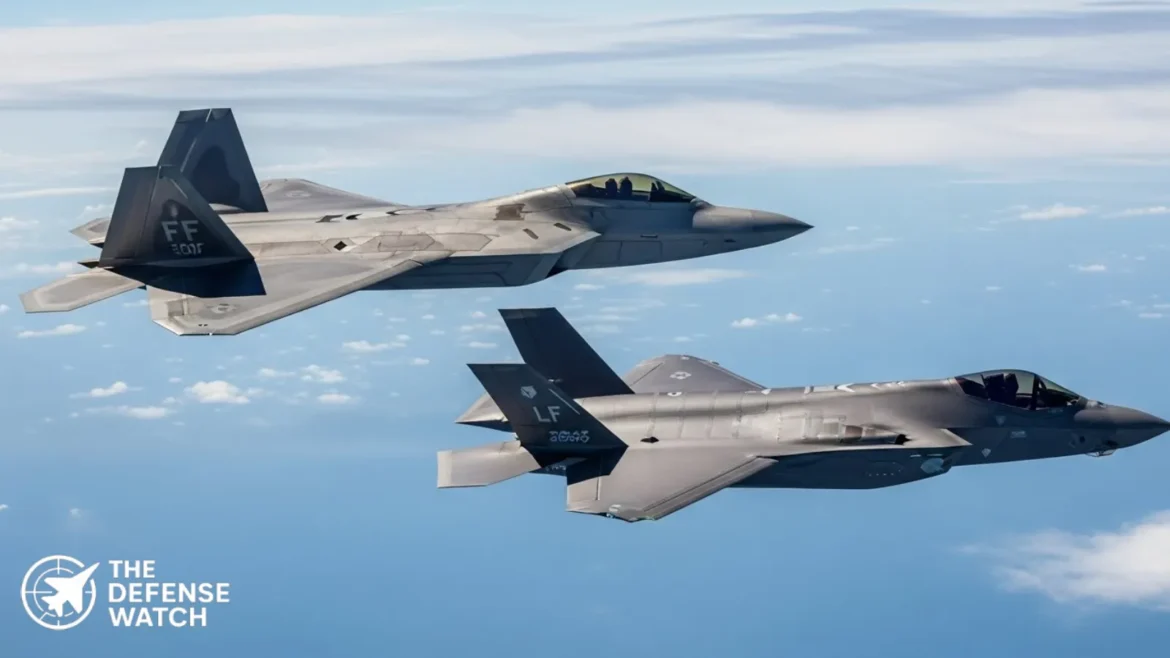
F-22 Raptor and F-35 Lightning II fighter jets reportedly played a central role in a US led airpower operation that enabled the capture of Venezuelan leader Nicolas Maduro, according to a report published by Defence Industry Europe. The account highlights how advanced US stealth aircraft were used to establish air dominance and suppress Venezuelan military responses during the operation.
While US officials have not publicly confirmed the details, the report underscores how fifth generation airpower remains a key tool for Washington in high risk contingency operations. The focus keyword F-22 and F-35 airpower operation has emerged prominently in coverage of the incident, reflecting the aircraft’s strategic value.
Establishing Air Superiority with Stealth Fighters
According to the report, F-22 Raptors were deployed to secure air superiority early in the operation. Designed primarily for air dominance, the F-22’s stealth profile, high speed, and advanced sensors reportedly allowed US forces to neutralize potential aerial threats before they could react.
The F-35 Lightning II complemented this role by conducting precision strikes, electronic warfare tasks, and intelligence gathering. With its sensor fusion and networked warfare capabilities, the F-35 is described as providing real time targeting data to US and allied forces involved in the operation.
Together, the F-22 and F-35 formed a layered airpower approach that limited Venezuela’s ability to respond militarily.
Role of US Airpower in Ground Operations
The report suggests that US airpower over Venezuela was not limited to combat aircraft alone. Airborne early warning platforms, aerial refueling tankers, and intelligence assets reportedly supported sustained operations across Venezuelan airspace.
By controlling the air domain, US forces were able to support ground elements tasked with securing key locations. The capture of Maduro, as described in the report, was made possible by the absence of effective Venezuelan air or air defense resistance during the critical phases of the mission.
This approach aligns with longstanding US doctrine, where air dominance is achieved first to reduce risk to personnel on the ground.
Venezuela’s Air Defenses and Regional Implications
Venezuela operates a mix of Russian supplied air defense systems and combat aircraft, including older generation fighters. However, analysts have long questioned their effectiveness against US stealth platforms such as the F-22 and F-35.
If the report is accurate, the operation highlights the widening airpower gap between the United States and regional militaries in Latin America. The ability to deploy stealth aircraft with minimal warning reinforces Washington’s freedom of action in contested environments.
Analysis, What This Means for US Airpower Strategy
The reported use of F-22 and F-35 jets in Venezuela underscores how fifth generation fighters are increasingly central to US crisis response options. Rather than relying on large scale troop deployments, Washington appears to favor precision airpower combined with limited ground action.
This model reduces political risk while maintaining decisive military advantage. It also sends a clear signal to adversaries that advanced air defenses alone may not be sufficient to deter US intervention.
At the same time, the lack of official confirmation means the full scope of the operation remains unclear. Future disclosures may refine or challenge the current narrative.
Broader Geopolitical Context
The reported operation comes amid ongoing instability in Venezuela and heightened US focus on maintaining influence in the Western Hemisphere. Control of airspace through platforms like the F-22 Raptor and F-35 Lightning II remains a cornerstone of that strategy.
As global competition intensifies, US airpower capabilities continue to shape outcomes far beyond traditional conflict zones.
FAQs
Did the US officially confirm the use of F-22 and F-35 jets in Venezuela?No official confirmation has been issued. Details are based on external reporting.
Why are F-22 and F-35 aircraft important in modern operations?They offer stealth, advanced sensors, and the ability to operate in contested airspace.
Does Venezuela have defenses against stealth aircraft?Venezuela operates legacy air defenses that are generally considered ineffective against fifth generation fighters.
What does this mean for regional airpower balance?It highlights the significant technological gap between US forces and most Latin American militaries.
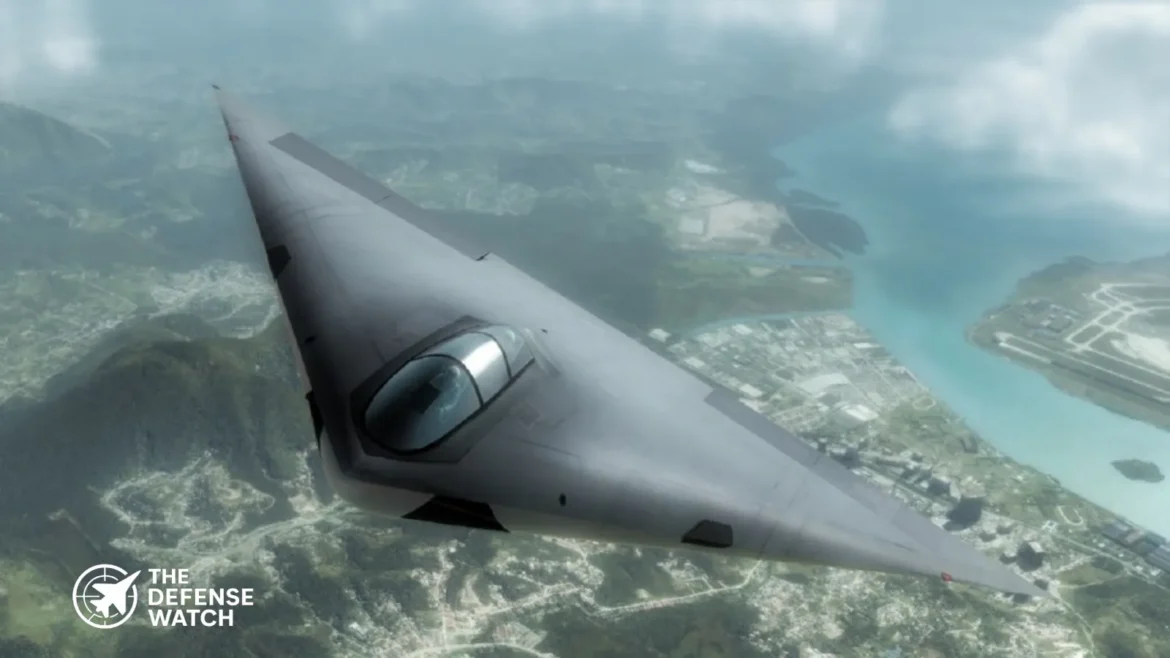
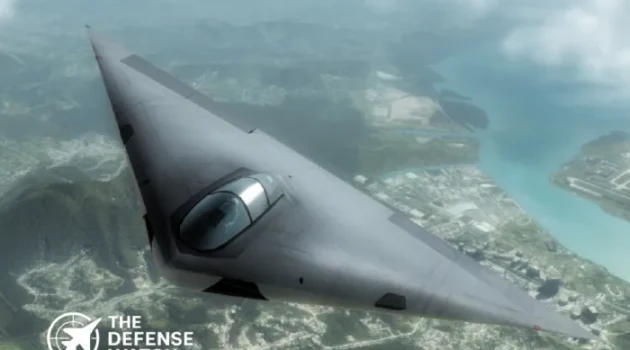
The revived debate around the A-12 Avenger II bomber is not about nostalgia or canceled programs. It points to a deeper and unresolved problem in U.S. naval strategy. Large aircraft carriers remain central to American power projection, yet the systems designed to find and strike them keep getting better. The A-12 Avenger II, often called the flying dorito, symbolizes a class of long range stealthy naval strike aircraft that could exploit this tension.
The strategic challenge is simple to describe and hard to solve. How does the United States protect high value carriers in an era of dense sensors, long range missiles, and precision strike networks. The A-12 debate matters because it forces planners to confront limits in current carrier defense concepts rather than assuming technological dominance will always hold.
Strategic Context
The A-12 Avenger II was conceived during the Cold War as a stealth attack aircraft designed to penetrate heavy defenses and strike enemy fleets and coastal targets. Its cancellation in the early 1990s reflected budget pressure, technical risk, and the belief that the carrier air wing faced no near peer threat.
That assumption no longer holds. China and Russia have invested heavily in anti access area denial systems built around satellites, over the horizon radars, submarines, bombers, and long range anti ship missiles. These networks aim to hold U.S. Navy aircraft carriers at risk hundreds or even thousands of kilometers from shore.
Recent conflicts and exercises reinforce this trend. Precision strike, real time targeting, and layered sensors are no longer theoretical. Even regional powers now field capabilities that complicate carrier operations. In this environment, the A-12 Avenger II represents a capability gap rather than a historical curiosity. The U.S. Navy still lacks a true long range, stealthy, carrier based strike aircraft optimized for naval targets.
Military Balance and Strike Reach
The first major driver is range. Modern anti ship missiles often outrange carrier based aircraft, forcing carriers closer to contested areas to generate combat power. This increases exposure and reduces operational flexibility.
The A-12 Avenger II bomber was designed to reverse that equation. Its long range and stealth would have allowed carriers to remain farther from enemy sensors while still threatening surface fleets and land targets. Without such an aircraft, the carrier strike group must rely on tanking, stand off weapons, or joint force support, all of which add complexity and risk.
This imbalance matters because carriers are not just combat platforms. They are symbols of commitment. If adversaries believe carriers can be pushed back or neutralized, U.S. deterrence credibility suffers.
Political and Budget Constraints
A second obstacle is political reality. Aircraft carriers are deeply embedded in U.S. defense culture, industrial planning, and alliance signaling. Any suggestion that their dominance is fading triggers resistance across Congress, industry, and parts of the military.
Developing an A-12 like platform today would require major investment, long timelines, and acceptance of technical risk. These factors compete with other priorities such as submarines, missiles, space systems, and cyber capabilities. Budget tradeoffs are unavoidable, and carriers remain politically protected programs.
This creates a strategic trap. Acknowledging carrier vulnerability without funding the tools to mitigate it leaves U.S. naval power exposed by design rather than by necessity.
Alliance Dynamics and Operational Assumptions
Allied strategy is the third driver. Many U.S. allies depend on carrier presence as a visible security guarantee. Forward deployed carriers reassure partners in the Indo Pacific, Middle East, and Europe.
If carriers are forced to operate farther from contested zones, the perception of U.S. commitment may weaken even if strike capability remains. An A-12 Avenger II type aircraft would help bridge this gap by extending reach without abandoning presence.
Without it, the burden shifts to land based aircraft and allied bases, which may be politically sensitive or vulnerable themselves. This complicates coalition planning and crisis response.
Technological and Industrial Limits
The final factor is industrial capacity. Building a stealthy, carrier capable strike aircraft is among the hardest tasks in aerospace engineering. Weight limits, corrosion, deck handling, and maintenance all constrain design choices.
The A-12 program struggled with these realities decades ago. Today, while technology has advanced, the complexity remains. This makes incremental upgrades to existing platforms more attractive in the short term, even if they do not fully address the strategic problem.
Strategic Implications
These constraints are difficult to change because they are structural. Geography, physics, budgets, and politics all shape naval power. Ignoring them does not make them disappear.
For U.S. defense planning, the lesson is not that carriers are obsolete. It is that their effectiveness depends on complementary systems that restore initiative and range. Without a credible long range naval strike aircraft, carrier strike group vulnerability becomes a planning assumption rather than a contingency.
For allies, the implication is a need for deeper integration. Shared sensors, distributed basing, and joint strike concepts become more important as single platforms face greater risk.
Conclusion
The A-12 Avenger II bomber debate highlights a strategic tension at the heart of modern naval warfare. Aircraft carriers remain indispensable, yet increasingly contested. Resolving this tension will require choices about force structure, investment, and operational concepts.
There is no quick fix. The future will likely involve a mix of longer range aircraft, unmanned systems, and tighter integration across domains. What matters is recognizing that the problem is real and persistent. The flying dorito may never return, but the message it carries about carrier vulnerability cannot be ignored.
Key Takeaways
- The A-12 Avenger II symbolizes a missing long range naval strike capability.
- Carrier strike group vulnerability is growing due to anti access area denial systems.
- Political and budget pressures limit radical changes to carrier centric strategy.
- U.S. and allied security depends on restoring range, flexibility, and deterrence credibility.
Newer Posts