• Home
  • About
  • Defense Systems
  • Manufacturer
  • Comparisons
  • Compare 
  • Tools
TheDefenseWatch.com
  • Aerospace & Aviation
  • Military & Ordnance
  • Naval & Maritime
  • Cyber & Space Defense
  • Policy & Strategy
  • Global News
  • Tools Library
    • Smart Calculator
    • Drone Flight Time Calculator
    • Drone Range Calculator
    • Counter-Drone Jammer Effective Range Calculator
    • Counter-Battery Radar Detection Calculator
    • Artillery Fire Correction Calculator
    • Thermal Camera Detection Range Calculator
    • Missile Range & Time-of-Flight Calculator
    • Radar Detection Range Calculator
    • FPV Strike Drone Payload vs Range Calculator
    • Loitering Munition Endurance Calculator
    • Sniper Ballistic Drop & Windage Calculator
    • Bullet Drop Calculator
    • U.S. Army Combat Fitness Test (ACFT) Calculator
    • Military Pension Calculator
    • Military Retirement Calculator
    • Military Pension Calculator
    • Large Number Calculator
Font ResizerAa

TheDefenseWatch.com

The Defense Watch | U.S. & Global Defense News, Analysis & Military Updates

Search
  • Home
  • About
  • Defense Systems
  • Manufacturer
  • Comparisons
  • Compare 
  • Tools

Stay Updated

Get the latest update

Subscribe

Explore

  • Drone
  • Fighter Jets & Military Aircraft
  • Hypersonic Weapons
  • Aircraft Carriers
  • Strategic History & Missions
  • Tools Library
Home » FAA, Pentagon Move To Deploy Anti-Drone Laser System As Border Airspace Threats Rise
Alliances & DoctrinesPolicy & Strategy

FAA, Pentagon Move To Deploy Anti-Drone Laser System As Border Airspace Threats Rise

Daniel Mercer / Defense & Aerospace Analyst
Last updated: April 12, 2026 10:24 am
Daniel Mercer / Defense & Aerospace Analyst
Share
6 Min Read
anti-drone laser system deployment
SHARE

FAA And Pentagon Advance Anti-Drone Laser System Deployment Near U.S. Border

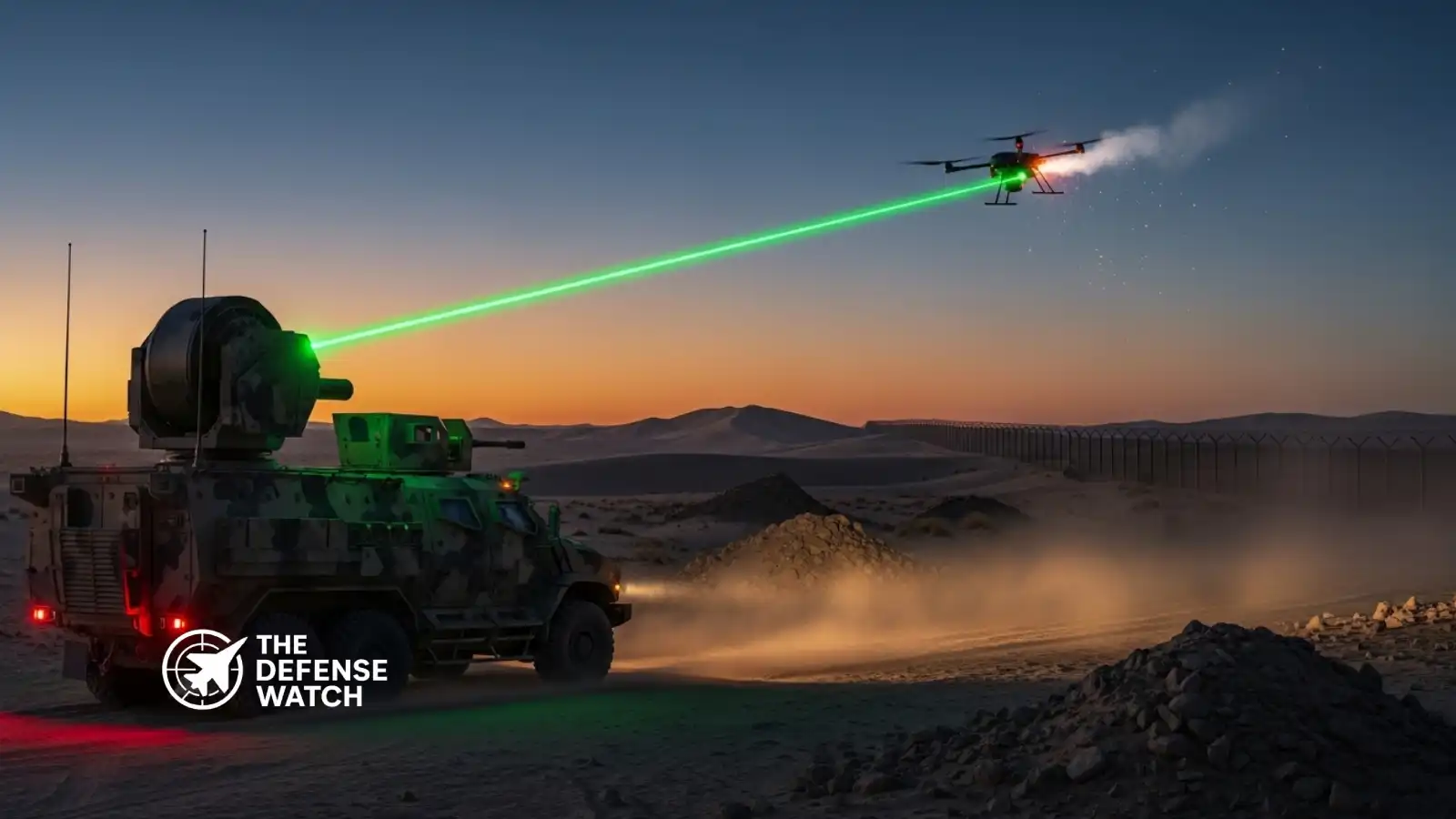
The anti-drone laser system deployment led by the Federal Aviation Administration and the U.S. Department of Defense marks a significant shift in how the United States is addressing rising drone threats near sensitive airspace.

Contents
  • FAA And Pentagon Advance Anti-Drone Laser System Deployment Near U.S. Border
  • Why The Anti-Drone Laser System Matters Now
  • Bridging Civil-Military Gaps In Airspace Security
  • Directed Energy Systems Gain Operational Momentum
  • Operational And Strategic Implications
  • Challenges And Considerations
  • Outlook: A New Layer Of Airspace Defense

The agreement allows for the integration of military-grade counter-unmanned aerial systems, including directed-energy weapons, into areas traditionally governed by civilian aviation authorities. The focus is on regions near the U.S.–Mexico border, where unauthorized drone activity has increased in recent years.

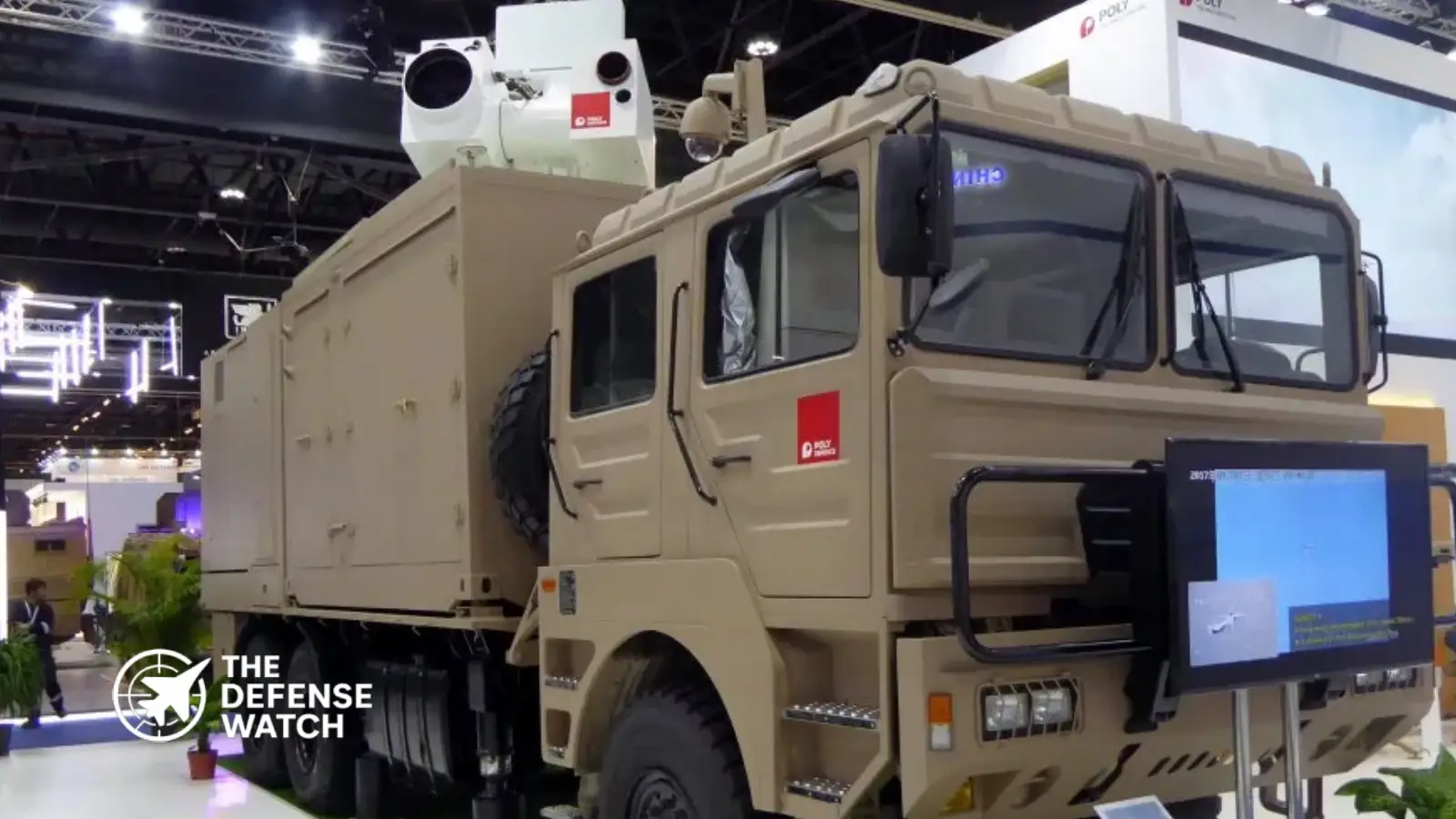
Unlike conventional counter-drone systems that rely on missiles or electronic jamming, laser-based solutions offer a precise and scalable way to neutralize aerial threats with minimal collateral risk.

¦ KEY FACTS AT A GLANCE
  • The FAA and Pentagon signed an agreement to deploy anti-drone laser systems.
  • Systems will be positioned near the U.S.–Mexico border to counter unauthorized drone activity in sensitive airspace.
  • The effort focuses on directed-energy solutions capable of disabling drones without traditional kinetic interceptors.
  • The deployment reflects growing concern over drones interfering with civilian aviation and national security operations.
  • The agreement establishes coordination between civil aviation authorities and military counter-UAS capabilities.

Why The Anti-Drone Laser System Matters Now

The anti-drone laser system initiative reflects a broader trend. Small, commercially available drones are increasingly being used for surveillance, smuggling, and potential disruption of aviation operations.

- Advertisement -

U.S. officials have raised concerns about drones operating near airports, border infrastructure, and military installations. Traditional countermeasures, such as signal jamming, often face legal and technical limits, especially in civilian airspace managed by the FAA.

This is where directed-energy systems change the equation.

Laser weapons provide a line-of-sight solution that can disable or destroy drones almost instantly, without generating debris that could endanger aircraft. Their low cost per shot also makes them more sustainable for persistent defense compared to missile-based systems.

Bridging Civil-Military Gaps In Airspace Security

A key aspect of the agreement is coordination. Historically, the FAA has maintained strict control over U.S. airspace, while the military operates under separate authorities.

The new framework allows both sides to work together more closely. It enables the Pentagon to deploy counter-drone capabilities in areas where civilian aviation safety is at risk, while ensuring compliance with regulatory requirements.

This is not just a technical upgrade. It is a policy shift.

The integration suggests that drone threats have reached a level where civil and military domains can no longer operate independently when it comes to airspace security.

Directed Energy Systems Gain Operational Momentum

The anti-drone laser system deployment aligns with the Pentagon’s broader push toward directed-energy weapons.

- Advertisement -

Over the past decade, the U.S. military has invested heavily in high-energy laser systems for air defense, naval protection, and base security. These systems are now moving from testing into operational use.

Laser-based counter-UAS systems offer several advantages:

  • Near-instant engagement speed
  • High precision targeting
  • Reduced logistical footprint
  • Lower long-term operating costs

For border regions, where drone incursions may be frequent but low-cost, these attributes are especially important.

Operational And Strategic Implications

From an operational standpoint, deploying anti-drone laser systems near the border could significantly improve response times to unauthorized UAV activity.

It also reduces reliance on law enforcement or manual interception methods, which are often slow and resource-intensive.

Strategically, the move signals that the U.S. is preparing for a future where drone threats are persistent, decentralized, and difficult to track using traditional methods.

There is also a deterrence element. The presence of advanced counter-drone systems may discourage illicit drone use by raising the likelihood of immediate neutralization.

Challenges And Considerations

Despite its advantages, the anti-drone laser system deployment is not without challenges.

Legal and regulatory concerns remain a key issue. The use of military-grade systems in civilian airspace raises questions about oversight, rules of engagement, and safety protocols.

Weather conditions can also affect laser performance. Dust, fog, and atmospheric interference may reduce effectiveness in certain environments.

Additionally, adversaries may adapt. As counter-drone systems improve, drone operators may shift tactics, including swarm operations or hardened UAV designs.

Outlook: A New Layer Of Airspace Defense

The FAA-Pentagon agreement suggests that counter-drone operations are entering a new phase, one where advanced technologies are deployed closer to civilian environments.

The anti-drone laser system is likely to become a core component of layered air defense, complementing radar, electronic warfare, and kinetic interceptors.

As drone usage continues to expand across both civilian and illicit domains, the demand for rapid, precise, and scalable countermeasures will only grow.

This deployment may serve as a model for future integration of military capabilities into domestic security frameworks.


TAGGED:Border Securitycounter dronedirected energy weaponsFAAPentagon
Share This Article
Facebook Copy Link Print
ByDaniel Mercer / Defense & Aerospace Analyst
Follow:
Daniel Mercer is a defense and aerospace analyst at TheDefenseWatch.com covering military aviation, aerospace technology, unmanned systems, air warfare, and defense procurement. His reporting uses official documents, government and military statements, company announcements, and other public sources.
Leave a Comment

Leave a Reply Cancel reply

Your email address will not be published. Required fields are marked *

New Arrivals

  • Boeing VC-25B Presidential Aircraft Boeing VC-25B Presidential Aircraft
  • SM-3 Block IB Missile SM-3 Block IB Missile
  • USS Abraham Lincoln Aircraft Carrier USS Abraham Lincoln Aircraft Carrier
  • M142 HIMARS M142 HIMARS
  • Terrex S5 Infantry Vehicle Terrex S5 Infantry Vehicle
  • A-29 Super Tucano Aircraft A-29 Super Tucano Aircraft
  • DSAR 15 Rifle DSAR 15 Rifle

Recent Compares

  • Tejas vs Gripen: Key Differences and Capabilities Tejas vs Gripen: Key Differences and Capabilities View Comparison →
  • Tejas vs MiG-21 Bison: How India Replaced Its Iconic Supersonic Fighter Tejas vs MiG-21 Bison: How India Replaced Its Iconic Supersonic Fighter View Comparison →
  • F-35 vs F-16: Stealth, Sensors and Combat Roles F-35 vs F-16: Stealth, Sensors and Combat Roles View Comparison →
  • Tejas Fighter Jet vs F-16 Fighting Falcon: Capability Compared Tejas Fighter Jet vs F-16 Fighting Falcon: Capability Compared View Comparison →
  • Rafale Fighter Jet vs F-16 Fighting Falcon : Which Fighter Has the Edge? Rafale Fighter Jet vs F-16 Fighting Falcon : Which Fighter Has the Edge? View Comparison →
  • Su-57 Fighter Jet vs J-20 Fighter Jet: Stealth and Air Combat Compared Su-57 Fighter Jet vs J-20 Fighter Jet: Stealth and Air Combat Compared View Comparison →
  • Mirage 2000 vs Tejas Mk1A: Legacy Combat Power vs Indigenous Modernization Mirage 2000 vs Tejas Mk1A: Legacy Combat Power vs Indigenous Modernization View Comparison →
  • Rafale Fighter Jet vs F-22 Raptor: Which Air Dominance Fighter Has the Edge? Rafale Fighter Jet vs F-22 Raptor: Which Air Dominance Fighter Has the Edge? View Comparison →
  • Tejas Fighter Jet vs. Rafale Fighter Jet: India’s Indigenous Fighter Meets France’s Proven Multirole Combat Aircraft Tejas Fighter Jet vs. Rafale Fighter Jet: India’s Indigenous Fighter Meets France’s Proven Multirole Combat Aircraft View Comparison →
  • F-22 Raptor vs. F-35 Joint Strike Fighter: Which Fifth Generation Fighter Has the Edge? F-22 Raptor vs. F-35 Joint Strike Fighter: Which Fifth Generation Fighter Has the Edge? View Comparison →

Recent Posts

  • USS Oregon Visits Norway as U.S. Navy Maintains High North Presence
  • Lockheed Martin Unveils PAC-3 Edge Interceptor for U.S. Army
  • Northrop Grumman Completes B-2 Spirit of Kitty Hawk Overhaul
  • Army Report Finds Systemic Failures Behind Fatal 2025 Midair Collision
  • Lockheed Martin to Supply Black Hawk Training Systems to Philippine Air Force

You Might Also Like

PAC-3 seeker production expansion
Artillery & Missile SystemsMilitary & Ordnance

Pentagon, Boeing Agree To Triple PAC-3 Seeker Production In Seven-Year Framework

September 7, 2026
India Su-57E decision
Defense Budgets & PolicyPolicy & Strategy

India Moves To Modernize Su-30MKI Fleet As Su-57E Fighter Jet Purchase Falls Off Near Term Agenda

August 5, 2026
Chinese Silent Hunter mobile laser air defense system displayed or positioned near Abu Dhabi Airport facilities, highlighting its 6x6 truck-mounted configuration for rapid deployment.
Global News

Chinese Silent Hunter Laser System Reappears in UAE Spotlight Amid Regional Air Defense Push

September 7, 2026
Switzerland F-35A acquisition
Defense Budgets & PolicyPolicy & Strategy

Switzerland Moves To Reassess F-35A Purchase As Costs And Capability Concerns Rise

September 8, 2026

Logo

Copyright © 2026 TheDefenseWatch.com

Helpful Links

  • Home
  • About Us
  • Privacy Policy
  • Terms of Use / Disclaimer
  • U.S. Privacy Notice – CCPA Compliance

Defense Systems

  • Defense Systems
  • Comparisons 
  • Manufacturer
  • Tactical Calculators

Popuplar

Which 5 Air Forces Possess the Costliest Fighter Jet Fleets in the World
Evolving Strategic Value: Carrier Strike Groups in the Indo-Pacific’s Future Security Architecture
Autonomous Weapon Systems Spark U.S. Ethics Debate Amid Rapid Military AI Integration

We report on developments involving military forces, governments, defense companies, research organizations, and security institutions around the world. 

Welcome Back!

Sign in to your account

Username or Email Address
Password

Lost your password?