Executive Summary:
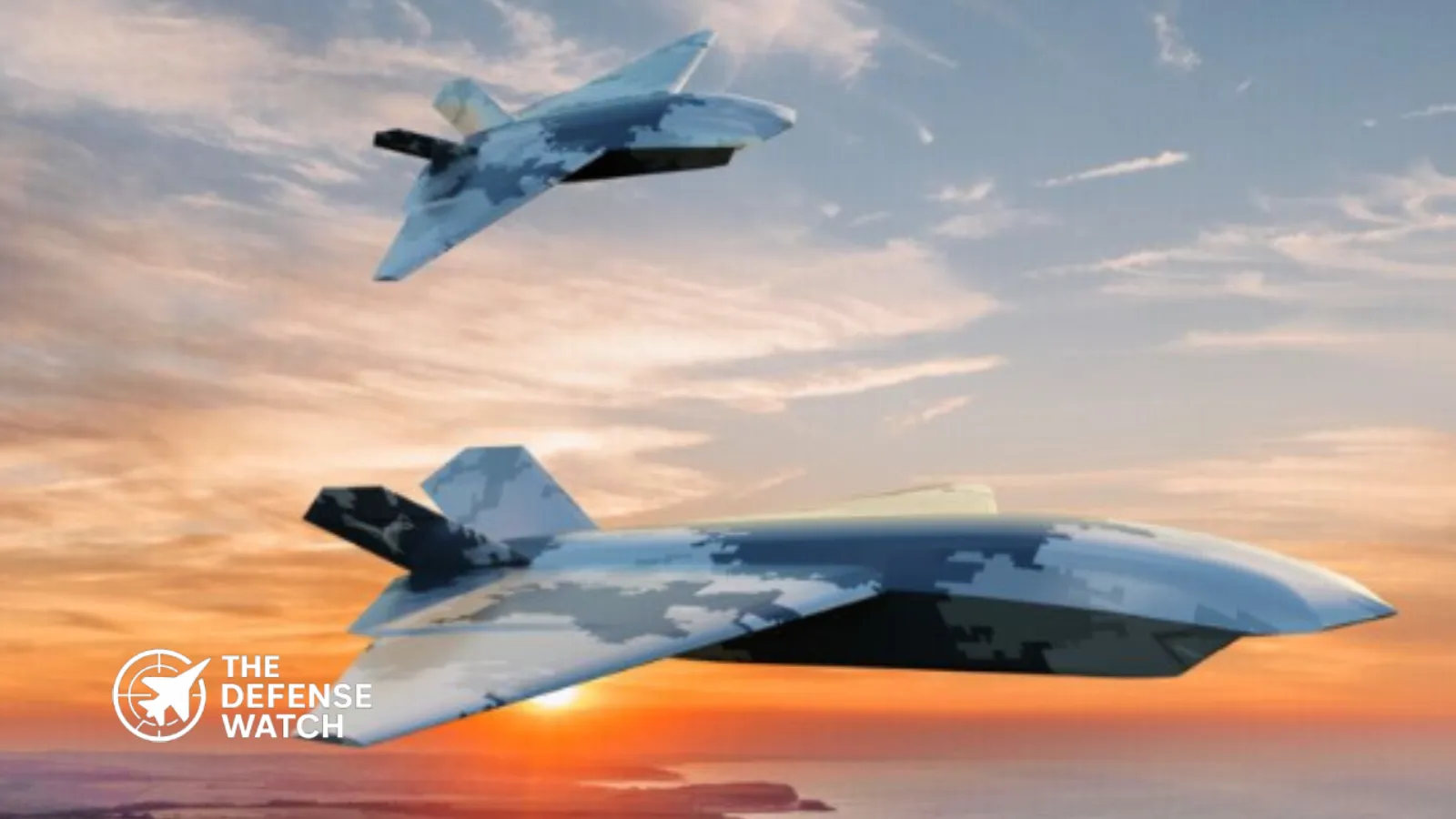
The Royal Air Force has officially launched the Stormfighter Collaborative Combat Aircraft (CCA) program, a major step toward integrating autonomous combat aircraft with crewed fighters. The initiative is intended to accelerate the UK’s transition to what officials describe as Europe’s first sixth generation air force, combining Typhoon, F 35, future GCAP fighters, and AI enabled uncrewed aircraft into a single combat ecosystem.
RAF Launches Stormfighter Collaborative Combat Aircraft Program
The RAF Stormfighter collaborative combat aircraft initiative was formally unveiled during the Global Air and Space Chiefs’ Conference in London as part of the UK’s broader Defense Investment Plan. UK Minister for Defence Readiness and Industry Luke Pollard announced that Stormfighter will become the Royal Air Force’s dedicated Collaborative Combat Aircraft program, designed to operate alongside existing and future fighter fleets.
- RAF Launches Stormfighter Collaborative Combat Aircraft Program
- Stormfighter Will Support Typhoon, F 35, And Future Tempest Fighters
- Accelerating Collaborative Combat Aircraft Before GCAP Enters Service
- Stormfighter Supports The UK’s Sixth Generation Airpower Strategy
- Why Stormfighter Matters For NATO And U.S. Defense Strategy
- Technical Challenges Still Lie Ahead
- Strategic Outlook
Rather than replacing crewed aircraft, Stormfighter will function as an autonomous force multiplier capable of extending sensor coverage, carrying additional weapons, conducting electronic warfare, and performing high risk missions that would otherwise expose pilots to danger.
According to the UK government, the initiative forms part of a broader £27.8 billion investment intended to modernize the Royal Air Force over the next four years while supporting Britain’s ambition to become Europe’s first sixth generation air force.
Stormfighter Will Support Typhoon, F 35, And Future Tempest Fighters
British officials describe Stormfighter as an autonomous combat aircraft that can serve both offensive and defensive missions.
Potential operational roles include:
| Capability | Operational Purpose |
|---|---|
| Escort missions | Protect crewed fighters in contested airspace |
| Electronic warfare | Jam or deceive enemy radar systems |
| Intelligence, surveillance and reconnaissance | Extend battlefield awareness |
| Weapons carrier | Increase available missile capacity |
| Decoy operations | Draw enemy air defenses away from crewed aircraft |
| Autonomous strike support | Conduct high risk attacks with limited human exposure |
Government officials characterized Stormfighter as both a “guardian angel” and an “attack dog” for Typhoon, F 35, and future Tempest aircraft, highlighting its expected role in manned and unmanned teaming.
Accelerating Collaborative Combat Aircraft Before GCAP Enters Service
RAF Chief Air Marshal Sir Richard Harv Smyth has indicated that the service intends to field an operational CCA capability before the end of the decade rather than waiting for the Global Combat Air Programme fighter to enter service in the mid 2030s.
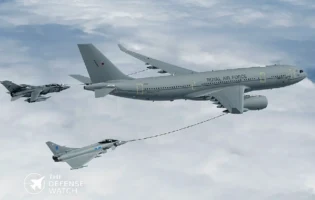
The RAF hopes to demonstrate autonomous aircraft flying alongside Eurofighter Typhoons during NATO exercises as early as 2027 before moving toward an operational capability several years later. Officials also expect multiple software and hardware upgrades throughout the program’s lifecycle.
This accelerated timeline reflects growing recognition that software defined autonomy and rapid upgrades may evolve faster than traditional fighter development programs.
Stormfighter Supports The UK’s Sixth Generation Airpower Strategy
Stormfighter represents more than a single aircraft program. It forms one element of a broader combat system centered on the UK’s participation in the Global Combat Air Programme (GCAP) with Japan and Italy.
The future force structure is expected to include:
- GCAP Tempest sixth generation fighter
- Eurofighter Typhoon
- F 35 Lightning fleet
- Stormfighter collaborative combat aircraft
- AI enabled autonomous systems
- Advanced networking and edge computing
- Space enabled command and control
The UK recently awarded a £4.6 billion GCAP development contract while reaffirming plans to introduce the next generation fighter around 2035. Stormfighter is expected to bridge today’s combat aircraft with that future force architecture.
Why Stormfighter Matters For NATO And U.S. Defense Strategy
Stormfighter mirrors a broader shift taking place across Western air forces toward collaborative combat aircraft.
The U.S. Air Force is pursuing its own CCA initiative through platforms such as the YFQ 42A and YFQ 44A, emphasizing autonomous aircraft that operate alongside crewed fighters while separating mission autonomy software from air vehicle development.
Although developed independently, both British and American programs reflect similar operational priorities:
- Increasing combat mass without proportionally expanding fighter fleets.
- Reducing pilot exposure in highly contested environments.
- Rapidly updating mission software instead of waiting for aircraft redesigns.
- Using artificial intelligence to distribute sensing, electronic warfare, and strike missions across multiple platforms.
For NATO, this convergence could improve interoperability by allowing allied air forces to employ compatible concepts of operations for human and machine teaming, even if their aircraft differ technically.
From an industrial perspective, Stormfighter also strengthens the UK’s sovereign aerospace sector by investing in domestic autonomous technologies while supporting the broader GCAP ecosystem involving Britain, Italy, and Japan.
Technical Challenges Still Lie Ahead
Despite the ambitious timeline, significant engineering hurdles remain before Stormfighter reaches operational service.
Among the key challenges are:
- Secure AI decision making in contested electronic warfare environments.
- Reliable human machine teaming during high intensity combat.
- Cyber resilience for autonomous mission systems.
- Integration across Typhoon, F 35, and future GCAP aircraft.
- High bandwidth, low latency communications that remain functional despite enemy jamming.
Successfully solving these issues will determine whether collaborative combat aircraft become trusted wingmen or remain limited support platforms.
Strategic Outlook
The launch of Stormfighter signals that the Royal Air Force intends to accelerate the transition toward autonomous combat aviation rather than waiting for sixth generation fighters alone.
Instead of viewing future airpower as a single advanced aircraft, the RAF is embracing a combat system that combines crewed fighters, autonomous aircraft, artificial intelligence, and networked battle management. If the program meets its planned milestones, Stormfighter could become one of Europe’s earliest operational collaborative combat aircraft and establish the UK as a leading developer of sixth generation air combat concepts.