

Lockheed Martin’s NGC2 Prototype Compresses Kill Chain at Balikatan 2026
Executive Summary: During the Balikatan 2026 joint exercise, Team Lockheed Martin successfully demonstrated its NGC2 prototype’s ability to fuse cross-domain sensor data, manage airspace in real time, and compress sensor-to-shooter timelines across geographically dispersed locations in Hawaii, the continental United States, and the Philippines. The exercise marked the first division-level NGC2 cross-domain data-sharing demonstration in the 25th Infantry Division’s operational environment. The results are expected to directly inform U.S. Army modernization decisions for large-scale combat operations in the Indo-Pacific.
SCHOFIELD BARRACKS, Hawaii — May 12, 2026 — Lockheed Martin’s NGC2 prototype achieved a significant operational milestone at Balikatan 2026, demonstrating for the first time that a unified data platform can link sensors, fires systems, and airspace management across a distributed, contested theater spanning three geographic locations simultaneously.
The exercise, conducted in partnership with the U.S. Army’s 25th Infantry Division, the Armed Forces of the Philippines, I Marine Expeditionary Force, I Corps, and 613 Air Operations Center, represents a direct test of the kind of multi-domain, coalition-interoperable architecture the U.S. military is racing to field across the Indo-Pacific.
What Is NGC2 — And Why Does It Matter Now?
The NGC2 — Next Generation Command and Control — prototype is Lockheed Martin’s answer to a persistent challenge in modern warfare: the gap between sensing a threat and responding to it.
The NGC2 prototype successfully demonstrated the integration of sensors, fires systems, and airspace management through a unified data platform to compress sensor-to-shooter timelines, accelerate warfighter capability, and provide a real-time view of the battlefield across the Indo-Pacific.
In any contested environment — particularly one as vast and multi-layered as the Indo-Pacific — the speed of that kill chain is decisive. A system that can fuse targeting data, deconflict airspace, and deliver actionable fire solutions across hundreds or thousands of miles in real time is not a future capability. At Balikatan 2026, it became a demonstrated one.
The Exercise: Three Locations, One Operational Picture
Team Lockheed Martin collaborated with the U.S. Army’s 25th Infantry Division, the Capability Program Executive Command and Control Information Network, the Armed Forces of the Philippines, the I Marine Expeditionary Force, I Corps, and 613 Air Operations Center to perform an operational exercise simultaneously from Hawaii, the continental United States, and the Philippines.
That geographic span is significant. It mirrors the actual operational distances U.S. and allied forces would face in any Indo-Pacific contingency — where command nodes, fires platforms, and partner forces may be spread across thousands of miles of ocean and islands.
This was the first NGC2 division-level demonstration of cross-domain data sharing in the 25th Infantry Division operational environment, spanning multiple geographically dispersed locations. The results of the Balikatan Counter Landing Live Fire exercise will inform Army modernization decisions for large scale combat operations in the Indo-Pacific.
Live Fire, Real Stakes: What the System Actually Did
The demonstration was not a simulation. Soldiers conducted live-fire drills with the NGC2 platform active and processing real operational data.
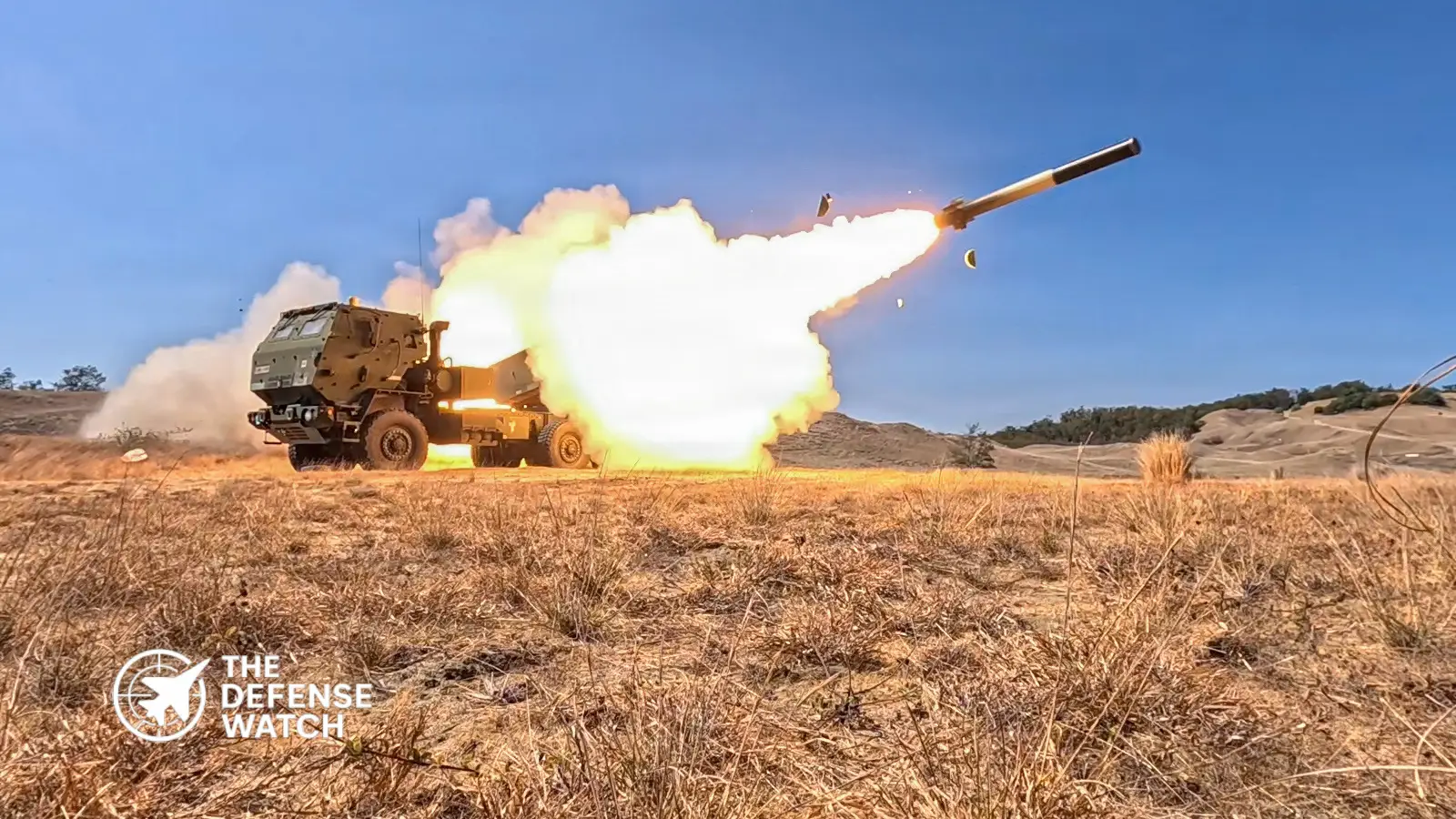
Apache helicopters, Howitzers, Mortars, and HIMARS executed fires while NGC2 recorded and displayed a real-time operational picture that showcased performance metrics and battle damage assessments.
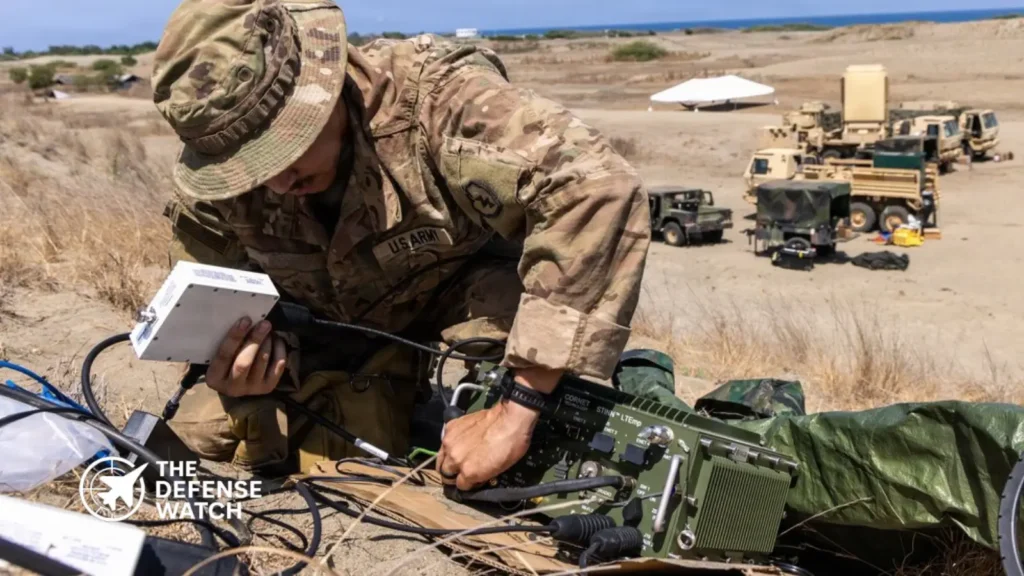
On the airspace management side, the results were equally notable. A unified interface integrated data from multiple radar and data links into a single operational picture, streaming live GPS and flight path data into NGC2, enabling real-time visualization of airspace lanes and immediate “safe-to-fire” cues for pilots and ground shooters.
This is the operational logic behind the NGC2 architecture: eliminate the manual coordination delays that currently slow down multi-domain fires, and replace them with machine-speed data fusion that the warfighter can actually trust.
Allied Interoperability: A Coalition-Ready System
One of the exercise’s most operationally relevant achievements was the multi-partner, multi-classification data sharing that NGC2 enabled.
Operating across multiple security classification levels, Team Lockheed Martin supported reliable data ingestion, storage, and distribution ensuring warfighters had access to a consistent, authoritative operational picture in an operational environment.
Allied forces operated as a unified system, sharing mission data between divisions to enhance the common operating picture and coordinate fires.
For U.S. defense planners, this matters strategically. Indo-Pacific deterrence depends on coalition coordination — with Japan, South Korea, Australia, and the Philippines. A command-and-control architecture that can operate across classification boundaries and national systems closes one of the most persistent gaps in joint operations.
Industry Team Behind the Prototype
Lockheed Martin is not building NGC2 alone. For NGC2, Lockheed Martin is collaborating across industry with a range of companies, including Raft, Lyntris, Rune, and Amazon Web Services to integrate best-in-class capabilities.
The inclusion of AWS is particularly notable. Cloud-enabled operations support was a core element of the Balikatan demonstration, allowing edge nodes in the Philippines to communicate in real time with command nodes in Hawaii and the continental United States. This cloud-to-edge architecture is increasingly seen as essential for distributed operations in the Pacific.
What Lockheed Martin’s Leadership Said
During Balikatan, success came down to how well we could integrate across Army units, joint forces and Indo-Pacific partners,” said Chandra Marshall, vice president of Multi-Domain Combat Systems at Lockheed Martin. That ability to operate seamlessly across the coalition is what makes Team Lockheed Martin’s NGC2 prototype real.”
Marshall’s emphasis on coalition integration over pure technical performance reflects a broader shift in how U.S. defense contractors are framing their value proposition. In the Indo-Pacific, technology that can’t interoperate with allied systems isn’t a deterrent — it’s a liability.
What Comes Next: Lightning Surge 4
The Balikatan demonstration was part of a serialized test campaign. Constant soldier feedback is incorporated into each Lightning Surge exercise, with new functionality being added onto the NGC2 prototype architecture to adapt as the mission changes. Lightning Surge 4 will focus on a logistics mission thread in support of the 25th Infantry Division.
The logistics focus of Lightning Surge 4 is strategically meaningful. Sustaining distributed forces across the Pacific — fuel, ammunition, maintenance — is one of the most difficult challenges in large-scale Indo-Pacific operations. Extending the NGC2 data layer into logistics command and control would significantly enhance the Army’s ability to operate at distance.
Analysis: Why This Exercise Is a Signal, Not Just a Demo
The Balikatan 2026 NGC2 demonstration is notable not just for what it tested, but for the timing. U.S. defense policy has been increasingly focused on Indo-Pacific deterrence, and the Army’s modernization roadmap has identified command and control as a critical gap — particularly the ability to execute large-scale combat operations across vast maritime and island terrain.
The NGC2 prototype directly addresses that gap. By compressing sensor-to-shooter timelines and enabling real-time coalition data sharing across classification levels, it offers a credible path toward the kind of multi-domain, distributed command architecture that Indo-Pacific scenarios demand.
The fact that exercise results will directly feed Army modernization decisions signals that this is not a science project. NGC2 is being evaluated as a real operational system — one that could shape how the U.S. Army fights in the Pacific for the next decade.
About Balikatan
Balikatan is a bilateral exercise between the U.S. and Philippines designed to strengthen regional security through combined air, land, sea, cyber and space operations. First held in 1991, the exercise has grown in scope and complexity alongside rising regional tensions and the deepening of the U.S.-Philippines defense alliance. Balikatan 2026 is among the most operationally complex iterations to date.
