Executive Summary
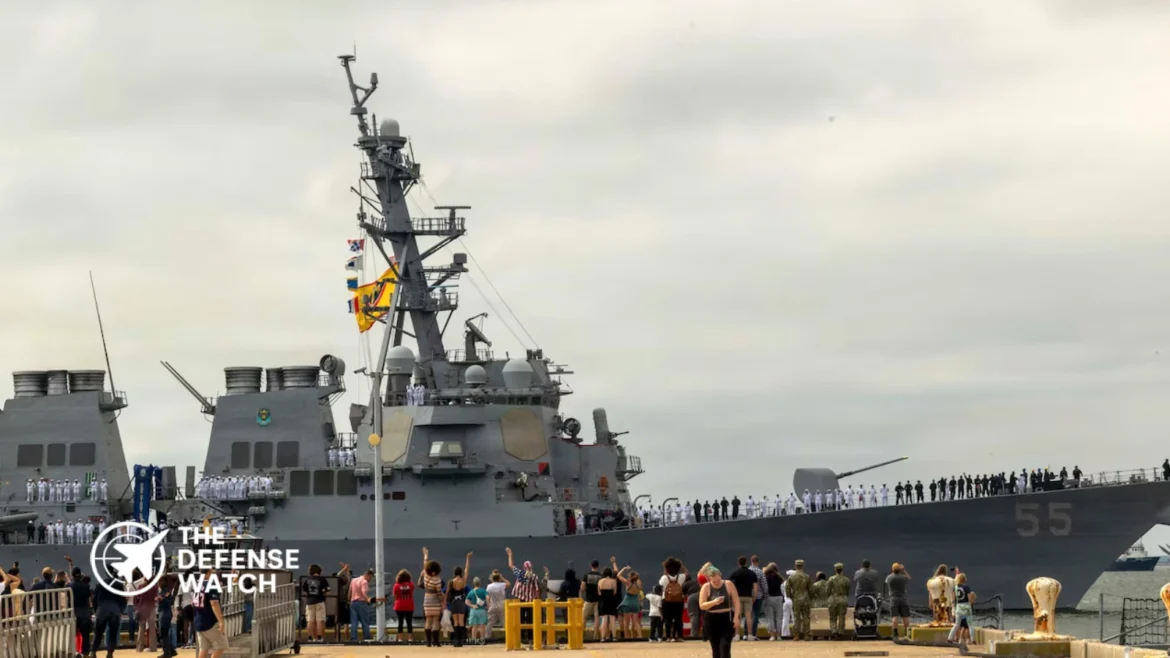
- USS Stout (DDG 55) departed Naval Station Norfolk, Virginia, on Sept. 21, 2026, beginning deployment operations after months of training, maintenance and certification events.
- The 1994-commissioned destroyer is a Flight I Arleigh Burke-class ship equipped with the Aegis combat system and designed for anti-air, anti-surface and anti-submarine warfare.
- Stout’s deployment highlights the continuing operational role of older Aegis destroyers as the Navy balances near-term fleet readiness with the transition toward newer Flight IIA and Flight III ships. The Navy has separately announced plans to extend the service lives of 12 Flight I destroyers beyond their originally expected 35-year service lives.
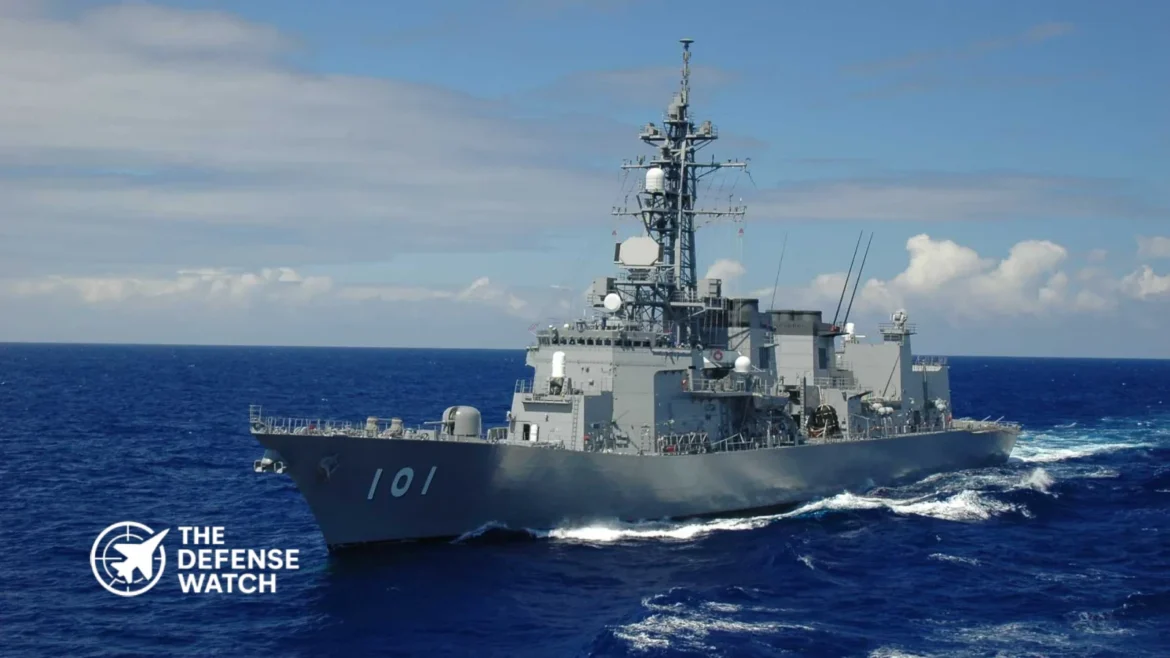
The guided-missile destroyer USS Stout (DDG 55) departed Naval Station Norfolk on Sept. 21, 2026, to begin deployment operations, putting one of the U.S. Navy’s original Arleigh Burke-class destroyers back into an operational cycle following months of training, maintenance and certification. The departure represents a near-term addition to the Navy’s deployable surface combatant force and demonstrates the continuing operational value of older Aegis destroyers.
Cmdr. Kevin Taylor, commanding officer of Stout, said the crew had trained to prepare the ship for sustained operations. The Navy did not disclose the deployment’s specific operational area, mission schedule or planned port calls in the departure announcement, so those details should not be inferred from the ship’s departure from Norfolk.
USS Stout Begins Deployment After Readiness Cycle
Stout’s departure followed a preparation period involving training, maintenance and certification activities. That sequence is important for an older surface combatant because deployment readiness depends not only on the ship’s combat system but also on engineering reliability, crew proficiency, damage control and certification across multiple mission areas.
The Navy describes Stout as a multimission surface combatant capable of conducting anti-air, anti-submarine and anti-surface warfare operations. Its official mission description also places the ship within carrier, expeditionary and surface strike group operations.
The deployment therefore represents more than the movement of a single destroyer. A combat-ready DDG 51-class ship can provide air defense, surface warfare, undersea warfare and strike capabilities within a larger naval formation or operate independently for selected missions.
Flight I Aegis Destroyer Retains a Broad Mission Set
USS Stout was commissioned Aug. 13, 1994, and is the fifth ship of the Arleigh Burke class. DDG 55 belongs to the original Flight I configuration, which includes the earliest ships of the DDG 51 class.
The Navy’s description of Stout identifies the ship’s combat system as centered on Aegis, supported by the Mk 45 5-inch gun, SQQ-89 anti-submarine warfare system and SLQ-32 electronic warfare system. The ship’s listed weapons include Standard missiles, Tomahawk cruise missiles, Harpoon anti-ship missiles and Mk 46 torpedoes.
The broader DDG 51 design uses the Mk 41 Vertical Launching System. Navy documentation identifies the system as capable of launching multiple missile types, including Standard Missile variants, Tomahawk, ASROC and Evolved Sea Sparrow Missile.
| Capability area | USS Stout / Flight I baseline |
|---|---|
| Ship class | Arleigh Burke-class guided-missile destroyer |
| Hull | DDG 55 |
| Commissioned | 1994 |
| Configuration | Flight I |
| Combat system | Aegis Weapon System |
| Primary missions | Anti-air, anti-surface and anti-submarine warfare |
| Vertical launch system | Mk 41 VLS |
| Radar family | SPY-1 |
| Propulsion | Gas turbine |
| Deployment status | Departed Norfolk Sept. 21, 2026 |
The table reflects Navy documentation for the ship and the DDG 51 class. Exact weapons loaded for the current deployment have not been publicly disclosed and should not be assumed from the ship’s baseline armament.
Aegis Remains the Core of Stout’s Combat Capability
The significance of Stout’s deployment rests heavily on the Aegis architecture. The Navy describes Aegis as an integrated combat system built around detection, tracking, command and weapons control, with the SPY radar forming a central part of the system.
For an Arleigh Burke-class destroyer, this architecture allows the ship to perform several warfare functions through a common combat system rather than relying on separate platforms for every threat category. That remains important for carrier strike groups and surface action groups, where destroyers can combine air defense, undersea warfare, surface warfare and strike functions.
The original Flight I configuration is technologically older than the Flight IIA and Flight III ships entering or remaining in the fleet. Flight III destroyers introduce the SPY-6 Air and Missile Defense Radar and other improvements intended to provide greater capability against modern air and missile threats.
That difference does not make the Flight I ships irrelevant. Instead, it illustrates the Navy’s layered fleet approach, in which upgraded legacy destroyers provide available combat power while newer ships gradually introduce newer sensors, computing architecture and air and missile defense capabilities.
The Navy Is Extending the Role of Older Destroyers
Stout’s deployment comes against a broader Navy effort to retain selected Flight I destroyers beyond their originally expected service lives.
In October 2024, the Secretary of the Navy announced plans to operate 12 Arleigh Burke-class Flight I destroyers beyond their 35-year expected service life. The decision reflected the need to retain available surface combatant capacity while newer ships enter the fleet.
Stout, commissioned in 1994, is already more than three decades old. Its continued deployment illustrates the operational importance of maintaining older destroyers in a fleet that must balance current readiness requirements against the time required to build and field new surface combatants.
For the Navy, the challenge is not simply keeping older hulls at sea. Sustaining these ships requires maintenance, modernization, trained crews and continued support for combat-system components. The effectiveness of the approach therefore depends on how much capability can be preserved or upgraded without creating disproportionate maintenance burdens.
Flight I Versus Newer Arleigh Burke Configurations
The DDG 51 family has evolved substantially since Stout entered service. The Navy identifies DDGs 51 through 71 as Flight I ships, DDGs 72 through 78 as Flight II, DDGs 79 through 124 and DDG 127 as Flight IIA, and newer hulls beginning with DDGs 125 and 126 as Flight III ships.
The evolution is particularly significant in sensors, computing, aviation facilities and air and missile defense.
| Feature | Flight I | Flight IIA | Flight III |
|---|---|---|---|
| Basic role | Multimission destroyer | Multimission destroyer | Multimission destroyer with enhanced air and missile defense |
| Radar architecture | SPY-1 family | Upgraded SPY-1 variants and modernization | SPY-6 AMDR |
| VLS | Mk 41 | Mk 41 | Mk 41 |
| Aviation capability | Helicopter support capability | Expanded aviation facilities | Advanced fleet configuration |
| Primary modernization trend | Sustain and upgrade legacy ships | Expanded mission capability | New-generation sensor and power architecture |
The comparison shows why Stout’s deployment should be viewed primarily through the lens of fleet availability rather than technological parity with the newest destroyers.
The Navy’s current Aegis modernization approach has also provided older DDG 51 ships with combat-system improvements. Navy documentation states that modernization programs for the class have included improvements to computing, radar performance, Cooperative Engagement Capability, electronic warfare, missile systems and other combat-system elements.
The exact modernization status and software baseline of Stout for this deployment were not specified in the Sept. 21 announcement.
Why the Deployment Matters
The immediate significance of the USS Stout deployment is force availability.
A destroyer that has completed its training, maintenance and certification cycle can contribute to the Navy’s global operational schedule without waiting for a new ship to enter service. That matters as the fleet manages demand for surface combatants across carrier strike groups, surface action groups and other maritime operations.
Stout also illustrates the continuing value of the Arleigh Burke design. The class was developed around the Aegis Weapon System and has been continuously upgraded over its service life. The Navy describes DDG 51-class ships as capable of independent operations as well as operations with larger naval formations.
At the same time, the ship’s age highlights the fleet management challenge facing the Navy. Older Flight I destroyers do not have the same baseline sensor architecture as Flight III ships, which are designed around the SPY-6 radar and associated power, cooling and combat-system changes.
The result is a transition period in which legacy destroyers remain operationally important while the Navy gradually increases the share of ships equipped with newer systems.
Deployment Details Remain Limited
The Navy’s announcement confirms that Stout departed Norfolk for deployment operations, but it does not identify the ship’s precise operational area, assigned task group, deployment duration or planned missions.
Those omissions are significant because the tactical value of a destroyer depends partly on its assigned mission and operating environment. An Aegis destroyer supporting a carrier strike group, conducting maritime security operations or operating as part of a surface action group could face very different requirements.
Until the Navy releases additional information, the confirmed facts are limited to the ship’s departure, its readiness preparation and its established multimission role.
Bottom Line
USS Stout’s Sept. 21 departure demonstrates that the U.S. Navy continues to rely on upgraded legacy Arleigh Burke-class destroyers as part of its deployable surface force.
The ship’s Flight I configuration dates from the earliest generation of the DDG 51 program, but its Aegis combat system and multimission design continue to provide a broad set of naval warfare functions. Its deployment also comes as the Navy extends the service lives of selected Flight I destroyers while newer Flight III ships introduce more advanced air and missile defense sensors.
The central issue is therefore fleet readiness and transition. Stout provides immediately available combat power, while the Navy’s longer-term modernization effort moves the destroyer force toward newer sensors, combat systems and hull configurations.
Key Takeaways
- USS Stout departed Norfolk on Sept. 21, 2026, beginning deployment operations after months of training, maintenance and certification.
- DDG 55 is a Flight I Arleigh Burke-class destroyer, commissioned in 1994 and built around the Aegis combat system.
- The deployment highlights the continuing role of legacy Aegis destroyers as the Navy extends selected Flight I ships while introducing newer Flight III destroyers equipped with SPY-6 radar.