

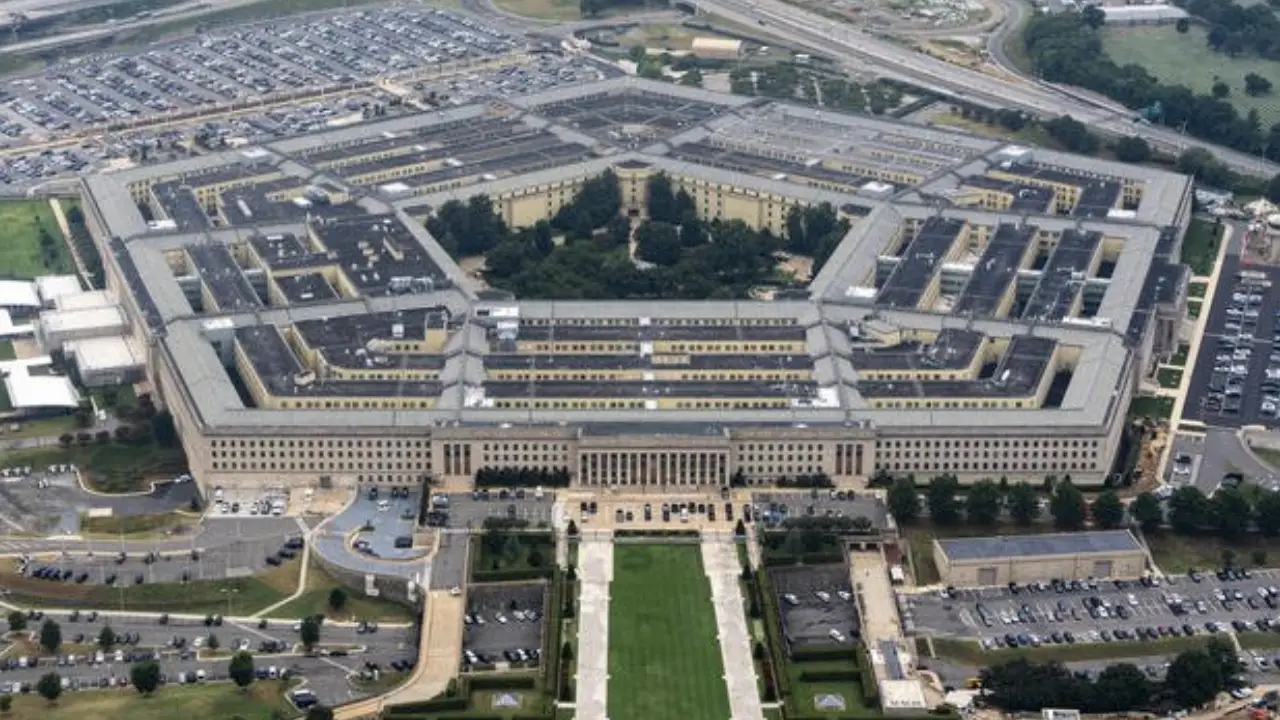
Trump Pushes for Department of War as GOP Amendment Backs Renaming the Pentagon
President Donald Trump’s long-discussed idea of reviving the “Department of War” could move closer to reality after a House Republican introduced an amendment to rename the Department of Defense.
Rep. Greg Steube (R-Fla.), an Army veteran, filed an amendment this week to the National Defense Authorization Act (NDAA) that would formally change the Pentagon’s title and alter all federal references accordingly. If adopted, the secretary of defense would become the secretary of war, marking the first major symbolic restructuring of U.S. defense policy since 1949.
“Restoring the Department of War name to our military will not only honor the heroism of the service members who came before us but also remind each new generation of their sacred responsibility to defend freedom,” Steube said in a statement to Military.com.
A Historic Name with Deep Roots
The Department of War was established in 1789 and managed the Army, Navy, and Marine Corps until the Navy received its own Cabinet department in 1798. It existed through World War II, when Congress passed the 1947 National Security Act to unify the armed services under the newly created Department of Defense.
President Harry Truman strongly advocated for the reorganization, arguing that victory in World War II had been achieved “in spite of” fragmented command structures. By 1949, the War Department was formally dissolved and replaced by the modern Pentagon system.
Trump and Hegseth Endorse a Shift
Trump, alongside Defense Secretary Pete Hegseth, has increasingly signaled that he intends to push forward with restoring the older name.
“Defense? I don’t want to be defense only. We want defense, but we want offense too,” Trump said this week during a White House ceremony. “As Department of War, we won everything. I think we’re going to have to go back to that.”
Hegseth echoed Trump, calling the renaming “common sense” and saying the administration was preparing formal steps.
Political and Legislative Path Ahead
Renaming the Pentagon would require congressional approval, since the Department of Defense’s title is enshrined in federal law. However, Trump suggested that he might proceed unilaterally, insisting, “We’re just going to do it.”
Steube’s amendment signals Republican willingness to support the effort, though the proposal still faces significant hurdles. The House Rules Committee will meet the week of September 8 to decide which NDAA amendments advance to the floor. Historically, only a fraction of hundreds of proposed amendments receive votes.
Steube has previously aligned closely with Trump, including introducing legislation earlier this year to rename Washington’s Metro system the “Trump Train.”
Analysis: Symbolism vs. Strategy
Defense analysts note that while renaming the Department of Defense would carry no immediate operational impact, it could shift perceptions of U.S. military posture. Proponents argue the change reflects a more assertive approach to global threats. Critics contend it risks projecting unnecessary aggression at a time of heightened competition with China, Russia, and Iran.
The symbolic weight is significant. For nearly 80 years, the “Defense” title has underscored America’s image as a stabilizing force. A return to “War” could be seen internationally as a signal of confrontation rather than deterrence.
As Congress debates the NDAA in September, the amendment will serve as a test of how far Republican lawmakers are willing to support Trump’s vision for reshaping U.S. defense identity.
FAQs
It was part of the National Security Act, aimed at unifying the services and emphasizing defense rather than offensive warfighting.
No, the change would be symbolic. The structure and missions of the U.S. military would remain unchanged.
Legally, no. Because the name is set in federal law, Congress would need to pass legislation.
It faces an uphill battle, as most NDAA amendments do not make it to the House floor for a vote.

6 comments
[…] efforts sit within a larger Pentagon push to integrate AI across cybersecurity and defense […]
[…] since the Strategic Defense Initiative of the 1980s,” said one congressional staffer, noting that Trump has championed the project as a centerpiece of his second-term defense […]
[…] delays and cancellations have pushed back original deployment goals. For instance, a planned flight test in late FY2022/early FY2023 was […]
[…] and First Amendment scholars warn that some clauses in the policy resemble prior restraint by restricting publication of unapproved, unclassified information. The […]
[…] the War Department has not officially announced the agreement, defense officials note that the nearly $2 billion […]
[…] leaders, including those in the European Parliament, have pushed back strongly, arguing the strikes demonstrate Russia’s willingness to inflict civilian suffering and […]