Executive Summary
- DeltaQuad launched the Evo-LE on September 22, 2026, positioning the electric fixed-wing VTOL UAV for intelligence, surveillance, target acquisition and reconnaissance, border surveillance and communications relay missions.
- DeltaQuad lists up to eight hours of flight time, a 1.5 kg payload and up to 120 km radio range. Defence Industry Europe reports a maximum flight range of 480 km, but that figure is not currently stated on DeltaQuad’s main Evo-LE product page and should therefore be treated as a reported, configuration-dependent figure rather than an independently confirmed primary-source specification.
- The key design tradeoff is endurance rather than payload capacity. A dual-battery system, revised electrical architecture and upgraded VTOL drivetrain allow Evo-LE to remain airborne longer while retaining runway-independent deployment.
DeltaQuad Evo-LE Adds 8-Hour Endurance for Military ISR
DeltaQuad Launches Evo-LE for Persistent ISR
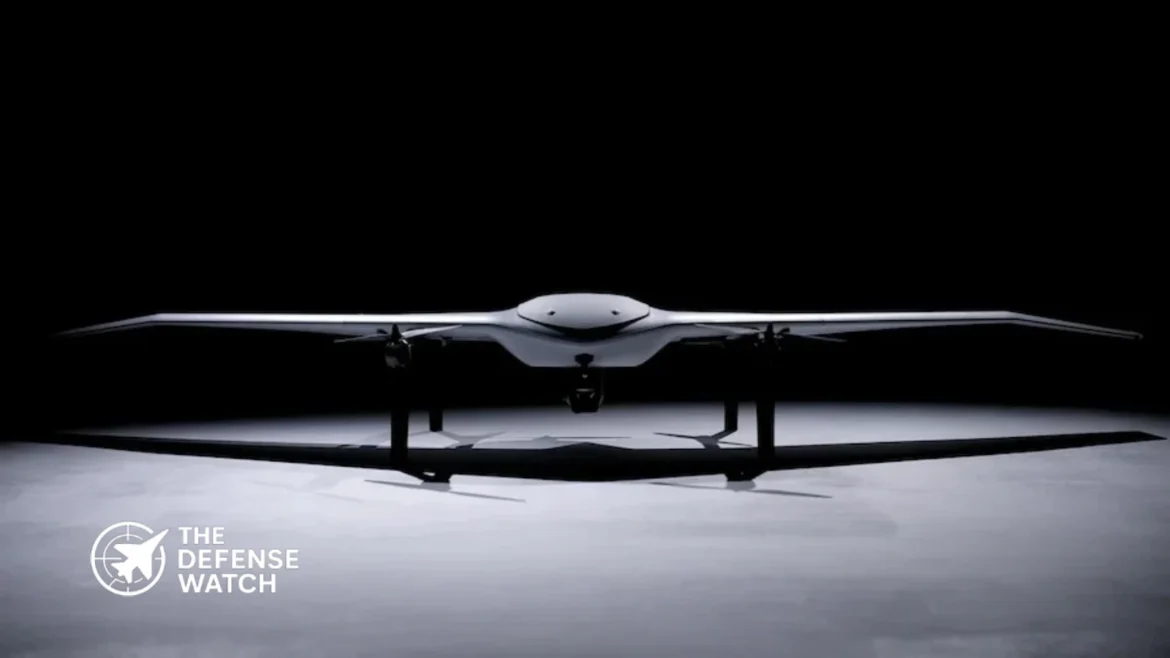
Dutch UAV manufacturer DeltaQuad has launched the Evo-LE, an electric fixed-wing VTOL aircraft designed to extend the duration of intelligence and surveillance missions without requiring a runway. The company announced the platform on September 22, 2026, with applications spanning ISTAR, border surveillance and communications relay operations.
The Evo-LE is based on the company’s Block 3 airframe and takes a different approach from the standard Evo. Rather than maximizing payload flexibility, DeltaQuad has configured the new aircraft around endurance, using two batteries as standard and modifying several elements of the propulsion and electrical architecture.
That distinction matters for military users operating small unmanned aircraft over large areas. Longer endurance can reduce the number of aircraft rotations required to maintain surveillance coverage, although actual mission persistence will depend on payload, weather, flight profile, communications requirements and operating conditions.
Evo-LE Specifications and the 480 km Range Question
DeltaQuad’s current product information identifies the Evo-LE with an eight-hour maximum flight time, 120 km maximum radio range and 1.5 kg payload capacity. The manufacturer also says the aircraft can be configured for anti-jamming, secure communications and autonomous navigation.
| Parameter | Evo-LE |
|---|---|
| Maximum flight time | Up to 8 hours |
| Reported maximum flight range | Up to 480 km* |
| Maximum radio range | Up to 120 km |
| Payload capacity | 1.5 kg |
| Maximum takeoff weight | 13 kg |
| Propulsion | Fully electric |
| Configuration | Fixed-wing VTOL |
| Airframe | Block 3 |
| Battery configuration | Dual battery |
| Primary missions | ISTAR, surveillance, communications relay |
*The 480 km figure is reported by Defence Industry Europe. DeltaQuad’s current official Evo-LE product page confirms eight-hour endurance but does not currently list the 480 km figure. DeltaQuad also states that actual endurance and range vary with payload, mission profile and operating conditions.
This distinction is important when comparing the Evo-LE with other unmanned systems. Range figures for electric UAVs are particularly sensitive to payload, wind, altitude, battery reserve requirements and flight profile. A headline maximum range should not be interpreted as the same thing as usable combat or surveillance radius.
Engineering Changes Focus on Endurance
The Evo-LE’s principal technical change is not simply a larger battery pack.
DeltaQuad says the platform combines higher-energy-density battery technology, a dual-battery configuration, redesigned electrical architecture and an upgraded VTOL drivetrain. The company says these changes were made across the aircraft to support longer missions.
This is significant for a VTOL aircraft because vertical flight imposes a different energy demand from efficient fixed-wing cruise. The aircraft must spend energy on takeoff and landing before transitioning into the lower-power forward-flight portion of the mission.
The design therefore attempts to preserve the operational advantage of VTOL deployment while optimizing the aircraft for the long cruise phase. DeltaQuad’s stated objective is to give operators longer observation periods without moving a ground team or introducing a runway requirement.
Same Airframe, Different Mission Priority
DeltaQuad says Evo-LE shares the Block 3 airframe with the standard Evo. The two platforms are differentiated primarily by configuration and mission priorities.
The standard Evo is designed around payload flexibility and can use one or two batteries. Evo-LE uses two batteries as standard and sacrifices some payload capacity in favor of greater endurance.
That creates a clear procurement tradeoff:
| Capability priority | Standard Evo | Evo-LE |
|---|---|---|
| Endurance | High | Primary design objective |
| Payload flexibility | Higher | More constrained |
| Battery configuration | One or two | Two standard |
| Payload capacity | Up to 3 kg | 1.5 kg |
| Maximum flight time | 4.5 hours | Up to 8 hours |
| Mission emphasis | Multi-role | Persistent ISR and relay |
The official figures for the standard Evo are 4.5 hours maximum flight time, 272 km maximum flight range and 3 kg payload capacity.
What Eight Hours Changes for Military Surveillance
The main operational value of an eight-hour electric VTOL UAV is coverage continuity, rather than simply flying farther.
For surveillance units, replacing an aircraft requires landing, battery replacement or recharge, payload handling and relaunch. Longer endurance can reduce those interruptions and allow one aircraft to remain over an area of interest for substantially longer.
The benefit is especially relevant to missions such as:
- Border and coastal surveillance
- Persistent observation of remote areas
- Tactical ISR
- Communications relay
- Search and rescue
- Route and terrain monitoring
DeltaQuad specifically identifies ISTAR and radio relay as Evo-LE mission scenarios. The company says the aircraft can remain positioned as an airborne relay for longer periods, potentially reducing the frequency of aircraft replacement.
The 1.5 kg payload limit, however, establishes an important boundary. The aircraft is suited to compact electro-optical, infrared and communications payloads rather than the heavier sensor packages carried by larger tactical UAVs.
DeltaQuad currently identifies the NextVision Raptor, combining stabilized RGB and thermal imaging, as an available Evo-LE payload.
Designed for Contested Electromagnetic Environments
The Evo-LE’s relevance to military operations extends beyond endurance.
DeltaQuad lists 4 or 8-array CRPA anti-jamming GNSS, with an optional visual navigation system for operations where satellite navigation is disrupted. The company also lists secure communications options, including mesh and phased-array broadband radios, with AES-256 encryption on selected configurations.
These features address a major limitation of small UAVs in contested environments: the aircraft’s ability to remain airborne does not guarantee that an operator can maintain control or reliable navigation.
A long-endurance UAV therefore needs resilience across several layers:
- Navigation resilience, so the aircraft can continue its mission when GNSS signals are degraded.
- Communications resilience, so the control link remains usable in interference.
- Autonomy, reducing dependence on a continuous high-bandwidth control connection.
- Sensor persistence, allowing the aircraft to continue collecting information while operating beyond the immediate reach of ground teams.
DeltaQuad’s product information supports these configuration options, but it does not establish that the aircraft is immune to sophisticated electronic warfare systems. Anti-jamming capability should therefore be understood as an element of resilience rather than a guarantee of operation in every contested environment.
How Evo-LE Fits Against Larger ISR UAVs
The Evo-LE occupies a different segment from larger tactical and expeditionary ISR aircraft.
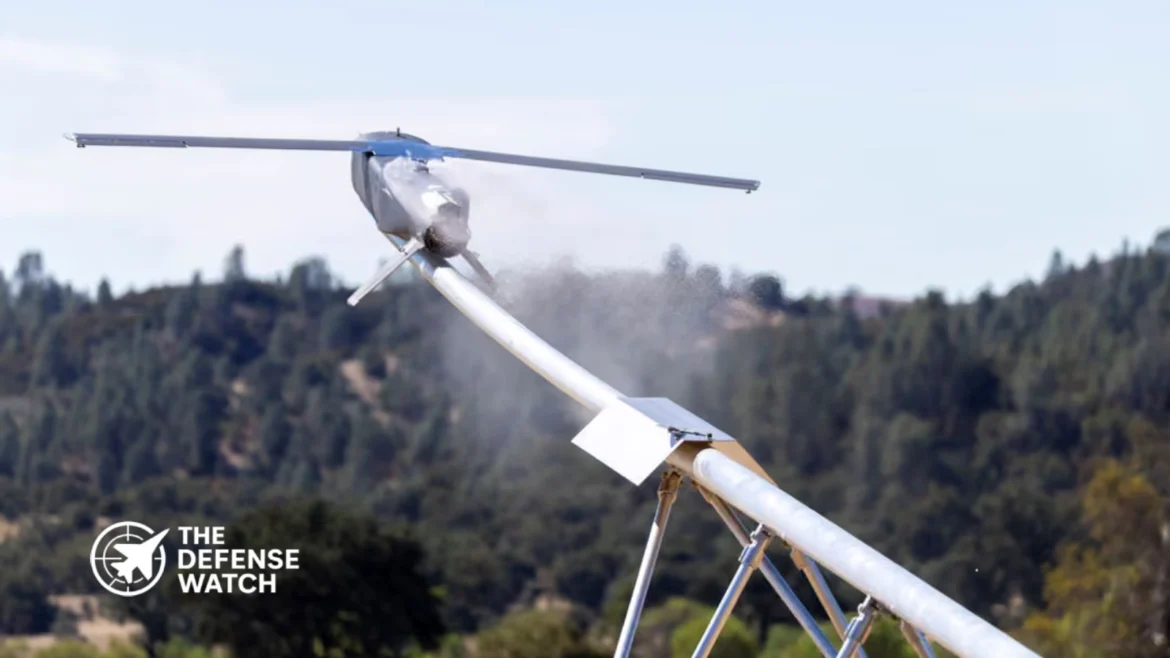
For example, Insitu’s ScanEagle offers more than 18 hours of endurance and a substantially larger payload capacity. The platform can also use a VTOL kit and satellite communications.
That comparison illustrates where DeltaQuad is trying to compete. Evo-LE is not a replacement for a larger ISR aircraft. Its attraction is the combination of electric propulsion, VTOL deployment, small physical footprint and extended endurance.
These figures come from the respective manufacturers and are not directly comparable test results. Different launch methods, payloads, environmental conditions and mission profiles can materially affect endurance.
The more relevant procurement question is therefore not which aircraft has the largest headline number. It is whether an operator needs small-unit deployability and electric VTOL access, or the greater payload, endurance and communications architecture available from larger systems.
The Industrial Significance of a Small Long-Endurance UAV
Evo-LE also reflects a broader shift in small military UAV design toward persistence.
Earlier small UAV procurement often placed significant emphasis on portability, rapid launch and sensor capability. Those attributes remain important, but persistent surveillance requires another metric: how long a system can maintain coverage before an operator must recover and replace it.
The Evo-LE addresses that problem through an incremental airframe evolution rather than an entirely new aircraft. DeltaQuad says the design incorporates revised composite materials, improved water-ingress protection, rain performance, a heated pitot tube and navigation and anti-collision lighting.
The company also says its landing legs can detach during a hard landing to help protect the airframe. Such features are relatively mundane compared with battery technology, but they matter for field operations because survivability of the air vehicle can affect lifecycle costs and availability.
What the 480 km Figure Does and Does Not Mean
The reported 480 km maximum range deserves careful interpretation.
Defence Industry Europe reported the figure when covering the September 22 launch. DeltaQuad’s own current product page confirms the eight-hour endurance and 120 km radio range but does not publish 480 km as a headline specification.
DeltaQuad previously reported experimental Evo flights using advanced batteries, including a 6-hour-46-minute flight covering nearly 430 km, and said those tests indicated the possibility of reaching eight hours and approximately 500 km under test conditions. That earlier statement concerned experimental battery testing rather than the current Evo-LE production specification.
Accordingly, the eight-hour endurance is a current manufacturer-stated Evo-LE specification, while 480 km should be treated as a reported maximum range that remains configuration-dependent.
That distinction is particularly important for military procurement because an aircraft’s theoretical flight distance is not equivalent to its useful surveillance radius. Communications coverage, reserve energy, sensor operation and the requirement to return to the launch point all affect the actual mission envelope.
Strategic Assessment
Evo-LE’s most important feature is the combination of persistent endurance and VTOL deployment, rather than any single headline range figure.
For small military units, a runway-independent aircraft that can remain airborne for much of a working day could provide a different model of tactical surveillance. Ground teams could deploy the aircraft from confined locations while maintaining a longer observation window than the standard Evo configuration.
The tradeoff is payload. At 1.5 kg, Evo-LE is optimized for relatively compact ISR and relay equipment, which limits how far it can move into missions requiring larger radars, heavier electronic warfare equipment or multi-sensor payload stacks.
Its competitive position will therefore depend on how customers value endurance against payload capacity, communications range and electronic-warfare resilience. The platform’s strongest differentiator is the integration of these features into a small electric VTOL architecture, rather than a claim that it can replace larger long-endurance ISR aircraft.
For European defense forces seeking distributed surveillance assets, the concept also fits a wider movement toward smaller unmanned systems that can operate closer to tactical units while reducing dependence on fixed airfields. The effectiveness of such systems in genuinely contested environments, however, will ultimately depend on testing under realistic electronic warfare, weather and communications conditions.