

Executive Summary:
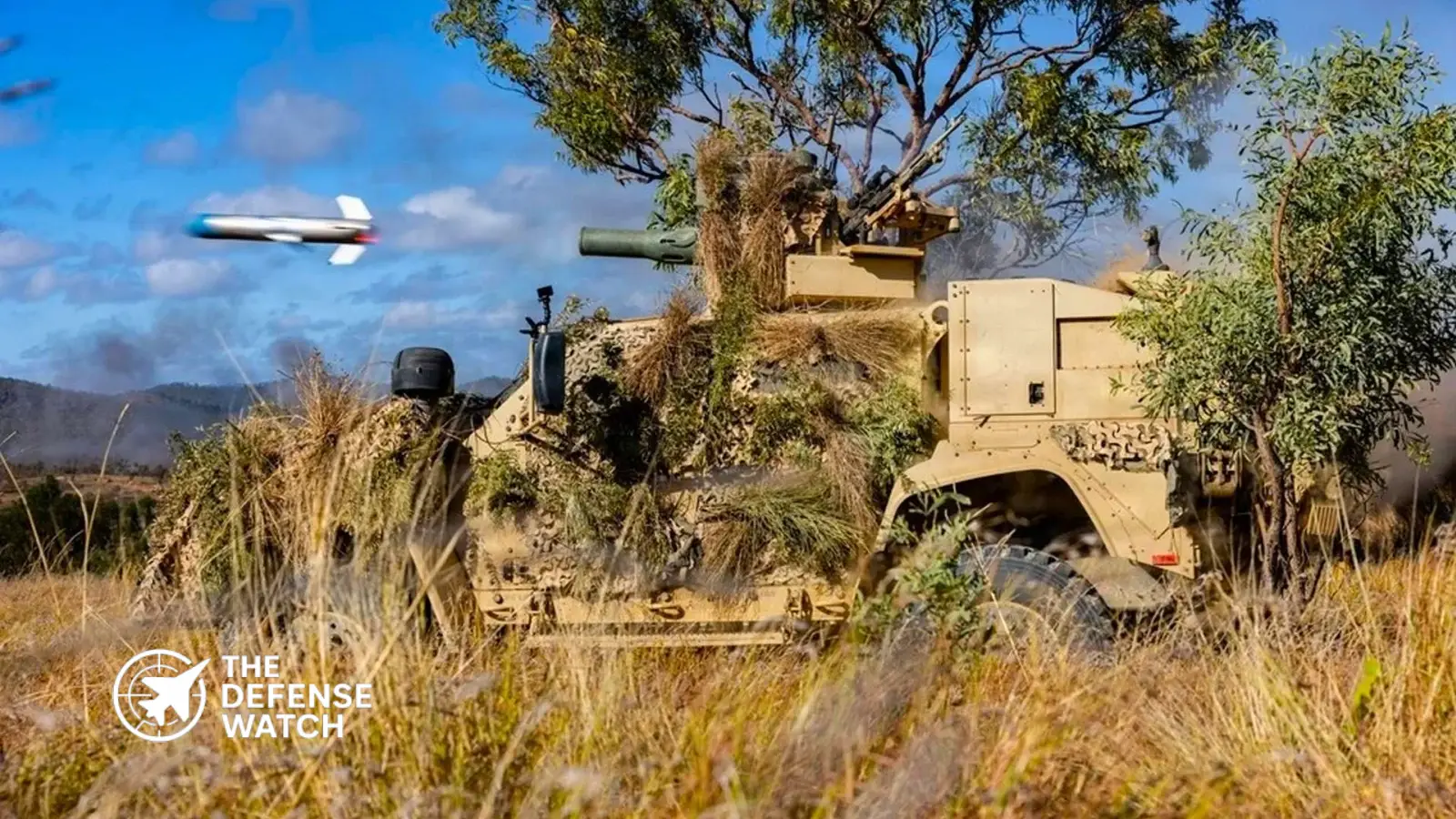
U.S. Marines from Weapons Company, 1st Battalion, 5th Marine Regiment, Marine Rotational Force – Darwin 26, conducted a live-fire demonstration of a Joint Light Tactical Vehicle (JLTV) mounted with a BGM-71 TOW anti-tank guided missile during Exercise Southern Jackaroo 26 at Townsville Field Training Area, Queensland, Australia. The event, part of a trilateral exercise with Australian and Japanese forces, showcased mobile, concealed anti-armor tactics suited to distributed warfare. This capability enhances the Marine Corps’ ability to operate in dispersed formations, deliver precision fires, and rapidly displace in contested environments across the Indo-Pacific.
U.S. Marines have demonstrated the integration of the BGM-71 TOW missile system on the Oshkosh JLTV during Exercise Southern Jackaroo 26, underscoring advancements in mobile anti-armor capabilities tailored for distributed operations in the Indo-Pacific.
The live-fire event, reported via the U.S. Defense Visual Information Distribution Service, involved Marines operating from a camouflaged position, emphasizing reduced signatures against modern surveillance threats.
JLTV-TOW Integration: Technical and Tactical Details
The JLTV serves as a highly mobile platform that significantly improves upon legacy light tactical vehicles like the HMMWV. Produced by Oshkosh Defense, it features scalable armor protection, a Duramax V8 turbo-diesel engine, TAK-4i intelligent suspension for superior off-road performance, and the ability to operate in demanding 70% off-road mission profiles while maintaining payload capacity and transportability.
Mounting the TOW system on the JLTV creates a flexible hunter-killer platform. The BGM-71 TOW is a proven tube-launched, optically tracked, wire-guided (or wireless variants) anti-tank missile with a maximum effective range of approximately 3,750 meters in many configurations, capable of defeating armored vehicles, bunkers, and fortified positions with tandem HEAT or other warheads.
Key Specifications:
| System | Key Attributes |
|---|---|
| JLTV | Curb weight ~14,000 lbs, high mobility, scalable protection, ~300+ mile range |
| BGM-71 TOW | Range up to ~3,750 m, SACLOS guidance, heavy anti-armor/fortification warhead |
| Configuration | Concealed firing from camouflaged JLTV, shoot-and-scoot tactics |
This setup allows crews to maneuver into position, engage at standoff ranges, and displace quickly—critical in environments saturated with unmanned aerial systems and precision counterfire.
Operational Context: Southern Jackaroo 26 and Trilateral Training
Exercise Southern Jackaroo 26 is an annual trilateral event involving U.S. Marines from MRF-D, the Australian Defence Force’s 3rd Brigade, and Japan Self-Defense Force elements. It focuses on joint operations, live-fire training, and interoperability in realistic scenarios across northern Australia’s expansive training areas.
atOptions = { ‘key’ : ‘e7d18db8b7513fb2a224cf4c3f18bbf0’, ‘format’ : ‘iframe’, ‘height’ : 90, ‘width’ : 728, ‘params’ : {} };The TOW demonstration by 1st Battalion, 5th Marines aligns with broader Marine Corps Force Design initiatives, including Expeditionary Advanced Base Operations (EABO) and stand-in forces. These concepts prioritize small, agile, low-signature units capable of persistent presence, sea control support, and precision effects in contested littoral and archipelagic environments.
Strategic Implications for Indo-Pacific Defense
This capability directly supports U.S. and allied efforts to counter potential high-end threats in the region, where vast distances and anti-access/area-denial (A2/AD) challenges demand survivable, distributed forces rather than massed concentrations. A mobile JLTV-TOW team can establish temporary anti-armor kill zones, defend key maritime terrain, and complicate adversary planning without presenting a large, static target.
Analysis: In peer competition scenarios, traditional massed armor or fixed defenses are increasingly vulnerable to persistent ISR and long-range fires. The JLTV-TOW combination leverages the vehicle’s protection and mobility to enable “hide, shoot, move” tactics, preserving combat power. It complements other Marine systems like NMESIS for maritime strike, contributing to a layered, resilient network of effects. For allies, shared training builds common tactics, techniques, and procedures, enhancing collective deterrence without relying on permanent large forward bases.
Technical hurdles remain, including ensuring reliable TOW performance under electronic warfare conditions (though modern variants address countermeasures) and integrating with emerging networked fires. Operationally, success depends on effective camouflage, rapid displacement, and seamless allied communications—skills honed in exercises like Southern Jackaroo.
Northern Australia’s strategic depth, combined with MRF-D’s rotational presence, provides a forward yet sustainable posture that signals commitment while avoiding escalation. This approach strengthens the U.S.-Australia-Japan trilateral defense relationship, a cornerstone of regional stability.
Broader Marine Corps Modernization
The demonstration fits within ongoing JLTV fielding to Marine units and continued investment in the TOW system, including sustainment through Raytheon. It reflects a shift toward lighter, more survivable platforms that balance protection, mobility, and lethality for littoral operations.
- Advantages over legacy systems: Superior protection and mobility compared to HMMWV-mounted TOWs.
- Role in distributed operations: Enables independent action by small units while integrating into larger joint fires networks.
Conclusion
The JLTV-mounted TOW live-fire in Australia represents a practical step in refining tactics for high-intensity conflict in the Indo-Pacific. By combining proven systems with modern platforms and allied training, the U.S. Marine Corps and partners are building credible, distributed combat power that enhances deterrence and readiness.
