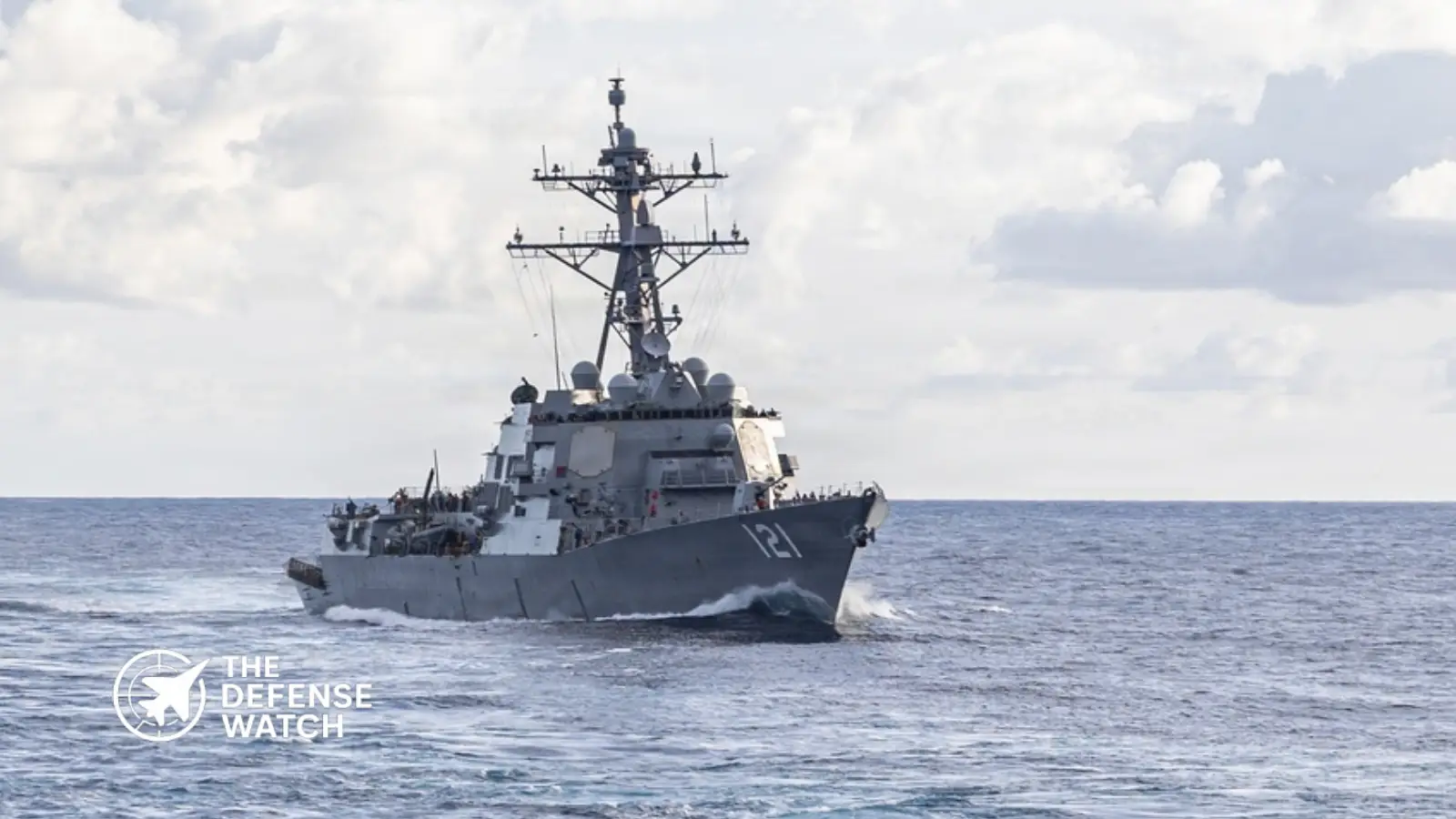
Lockheed Martin has secured a new U.S. Navy contract worth up to $1.38 billion to provide engineering, integration, testing, and sustainment services for the AEGIS Combat System, one of the world’s most capable naval air and missile defense architectures.
According to the Naval Sea Systems Command (NAVSEA), Lockheed Martin Rotary and Mission Systems, based in Moorestown, New Jersey, received an initial $60.6 million cost-plus-award-fee, cost-plus-fixed-fee, and cost (no-fee) contract to support AEGIS ship integration and testing for surface combatants and associated tactical sites.
The contract contains multiple options that could increase its total value to approximately $1.383 billion if exercised, extending work through June 2036. The award was competitively procured through the System for Award Management (SAM) website, with two offers received.
- Lockheed Martin received an initial $60.6 million Navy contract that could grow to $1.38 billion through exercised options.
- The work supports integration, testing, sustainment, and modernization of the AEGIS Combat System aboard U.S. Navy surface combatants.
- Engineering efforts also cover AEGIS Ashore ballistic missile defense facilities in Romania and Poland.
- The contract ensures long term combat system readiness as the Navy expands missile defense and integrated air defense capabilities.
- Performance is scheduled through 2027, with options extending work until June 2036.
Deep Technical & Strategic Context Analysis
The AEGIS Combat System serves as the backbone of U.S. Navy air and missile defense operations. Installed aboard Arleigh Burke-class guided missile destroyers, Ticonderoga-class cruisers, and adapted for Aegis Ashore missile defense installations in Europe, the system combines powerful phased array radar, command and control software, advanced fire control, and interceptor missiles into an integrated combat architecture.
Modern AEGIS configurations employ the AN/SPY-1 radar on legacy ships and increasingly the AN/SPY-6(V) Air and Missile Defense Radar on newer destroyers. Together with the Baseline 9 and Baseline 10 software architectures, the combat system enables simultaneous engagement of ballistic missiles, cruise missiles, hypersonic glide vehicle threats under development, aircraft, unmanned aerial systems, and surface targets. The Navy continues upgrading AEGIS to support Integrated Air and Missile Defense (IAMD), Cooperative Engagement Capability (CEC), and Joint All Domain Command and Control (JADC2), making software integration and continuous testing as strategically important as hardware modernization.
This contract primarily funds the engineering required to ensure new combat system software, sensors, launch systems, and weapons function reliably across multiple ship classes. Unlike a production contract for new ships or missiles, this effort focuses on systems integration, verification, and operational testing, reducing technical risk before fleet-wide deployment.
The contract structure also reflects the complexity of combat system engineering. A cost-plus-award-fee arrangement reimburses allowable costs while providing additional incentives for exceptional technical performance and schedule execution. A cost-plus-fixed-fee component pays a predetermined fee regardless of actual costs, reducing contractor incentives to cut corners while supporting highly uncertain engineering work where precise costs cannot be estimated in advance. Such contract types are commonly used for sophisticated defense software development, systems integration, and test activities where technical challenges evolve throughout execution.
Contract Breakdown & Details
Scope of Work
Lockheed Martin will provide:
- AEGIS combat system integration
- Engineering support
- Developmental and operational testing
- Mission planning support
- Combat system verification
- Surface combatant modernization support
- Support for related tactical test facilities
- Lifecycle sustainment of deployed combat systems
The work supports operational readiness across active fleet units while enabling future combat system upgrades.
Geographic Distribution of Work
The contract work will be performed across several key naval engineering and fleet support locations:
| Location | Share of Work |
|---|---|
| Moorestown, New Jersey | 36% |
| Norfolk/Virginia Beach, Virginia | 25% |
| Bath, Maine | 11% |
| Pascagoula, Mississippi | 10% |
| San Diego, California | 9% |
| Deveselu, Romania | 4% |
| Redzikowo, Poland | 3% |
| Other locations | 2% |
The inclusion of Romania and Poland highlights continued U.S. support for NATO’s Aegis Ashore ballistic missile defense network, which forms a key component of the European Phased Adaptive Approach designed to defend allied territory against ballistic missile threats.
Funding Breakdown
Initial obligations total more than $19 million, sourced from multiple Navy appropriations:
- 43%, Fiscal Year 2026 Operations and Maintenance (Navy)
- 27%, Fiscal Year 2026 Other Procurement (Navy)
- 16%, Fiscal Year 2024 Shipbuilding and Conversion (Navy)
- 4%, Fiscal Year 2020 Shipbuilding and Conversion
- 4%, Fiscal Year 2017 Shipbuilding and Conversion
- 4%, Fiscal Year 2023 Shipbuilding and Conversion
- 2%, Fiscal Year 2021 Shipbuilding and Conversion
The Navy noted that $8.24 million of Fiscal Year 2026 Operations and Maintenance funding will expire at the end of the current fiscal year.
Contract Timeline
Initial Award Value: $60.6 million
Maximum Potential Value: $1.383 billion
Completion of Base Period: June 2027
Potential Completion with Options: June 2036
Contract Type: Cost-plus-award-fee, cost-plus-fixed-fee, and cost (no-fee)
Contracting Activity: Naval Sea Systems Command (NAVSEA), Washington, D.C.
Contract Number: N00024-26-C-5341
Award Date: June 30, 2026
Strategic Importance
As missile threats continue to evolve, particularly from increasingly capable ballistic, cruise, and hypersonic weapons, maintaining the AEGIS Combat System’s software and systems integration is becoming as critical as procuring new ships. The Navy’s modernization strategy depends on continuously updating combat systems across existing destroyers while ensuring interoperability with new sensors, Standard Missile variants, allied missile defense networks, and emerging command and control architectures.
The inclusion of Aegis Ashore facilities in Romania and Poland also underscores the contract’s significance beyond the U.S. fleet. It reinforces NATO’s integrated missile defense posture while ensuring the same engineering standards support both deployed warships and fixed ballistic missile defense sites.