(adsbygoogle = window.adsbygoogle || []).push({});Executive Summary:
The U.S. Army has awarded AeroVironment a $117.3 million production contract for its P550 Long Range Reconnaissance (LRR) unmanned aircraft system. The award, announced in March 2026, supports the Army’s effort to provide battalion-level commanders with organic intelligence, surveillance, reconnaissance, and target acquisition capabilities for operations in contested environments. The contract marks another step in the Army’s broader modernization push toward distributed, drone-enabled warfare.
AeroVironment P550 Drone Wins Major U.S. Army Production Contract
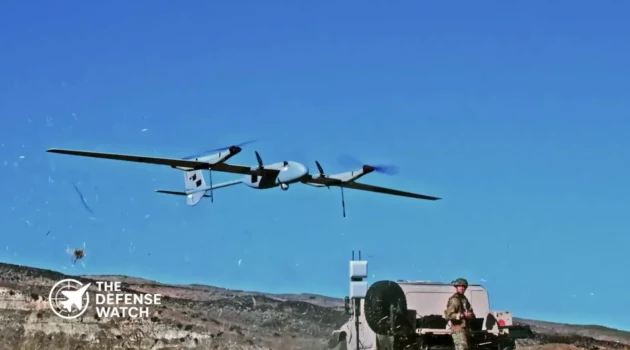
The AeroVironment P550 drone has secured a $117.3 million U.S. Army production contract as the service continues expanding its tactical unmanned aircraft capabilities. According to the U.S. Army’s Uncrewed Aircraft Systems Project Office, the award covers procurement and delivery of P550 Long Range Reconnaissance systems for operational deployment across Army formations.
- AeroVironment P550 Drone Wins Major U.S. Army Production Contract
- What The P550 Brings To The Battlefield
- Supporting The Army’s Long Range Reconnaissance Strategy
- Why The Contract Matters
- Modular Design Offers Future Growth Potential
- AeroVironment Expands Its Position In Military UAS Markets
- Strategic Outlook
The contract was awarded on March 20, 2026, through the Army’s Unmanned Aircraft Systems Marketplace Basic Ordering Agreement, an acquisition framework designed to accelerate procurement timelines and rapidly field new technologies. Army officials stated the approach reduces traditional acquisition timelines from months or years to only days.
Work locations and funding allocations will be determined on individual orders, with contract completion currently projected for July 2026.
- (adsbygoogle = window.adsbygoogle || []).push({});
What The P550 Brings To The Battlefield
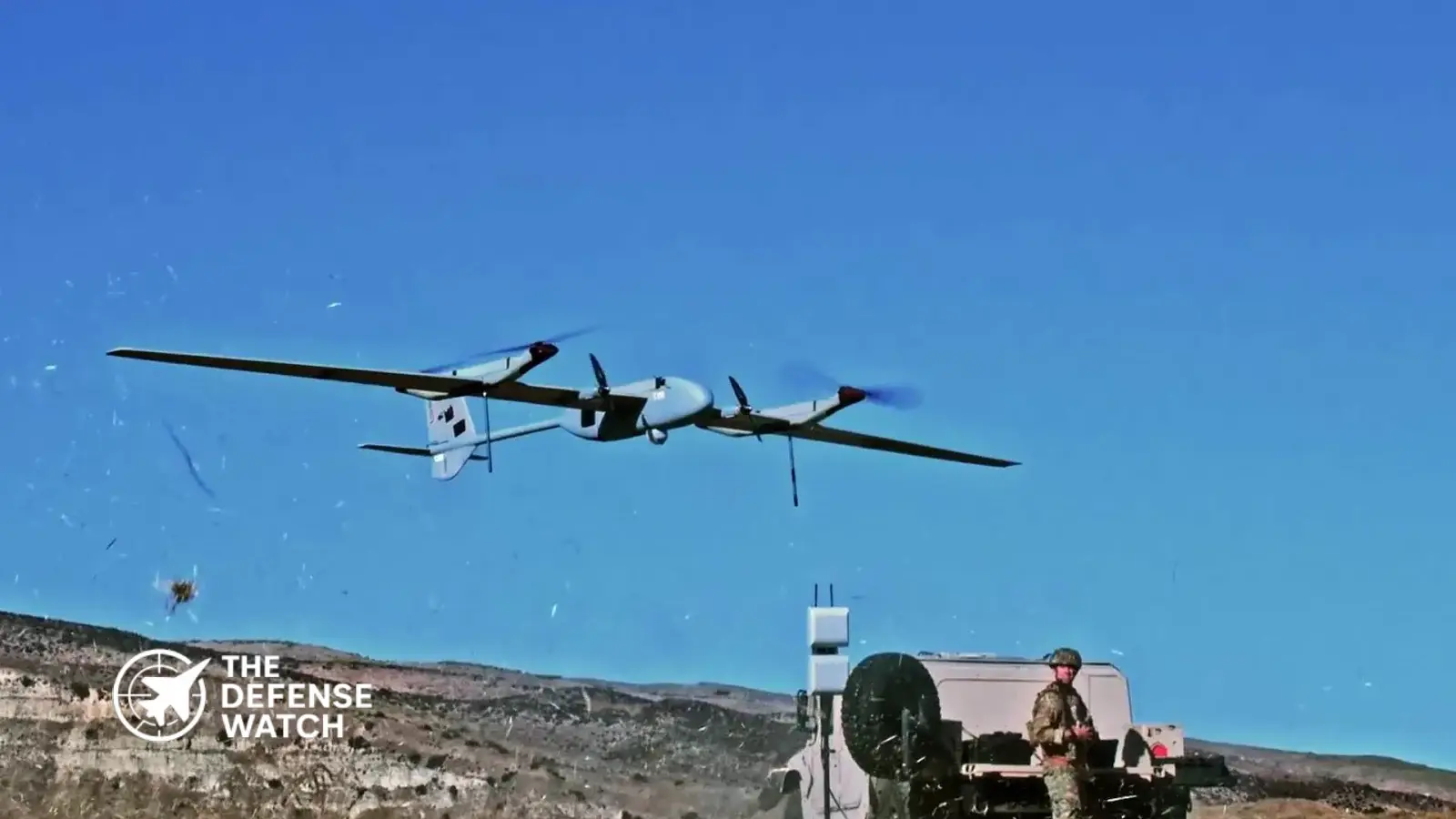
The P550 is a Group 2 electric vertical takeoff and landing (eVTOL) unmanned aircraft system designed to provide reconnaissance, surveillance, target acquisition, and strike support capabilities for tactical units. Unlike larger unmanned systems that require dedicated launch infrastructure, the P550 can operate from austere locations and support highly mobile formations.
Key reported specifications include:
Capability P550 Specification Aircraft Type Group 2 eVTOL UAS Maximum Payload 15 lbs (6.8 kg) Endurance Up to 5 hours Gross Takeoff Weight 55 lbs (24.9 kg) Architecture Modular Open Systems Architecture Mission Types ISR, targeting, communications relay, strike support Source: AeroVironment and U.S. Army reporting
The platform incorporates artificial intelligence-enabled mission systems, including onboard processing, automated target recognition, and autonomous flight functions designed to reduce operator workload and accelerate decision-making.
Supporting The Army’s Long Range Reconnaissance Strategy
The contract is directly tied to the Army’s Long Range Reconnaissance program, which seeks to equip maneuver battalion commanders with organic intelligence, surveillance, reconnaissance, and target acquisition capabilities.
According to Army officials, LRR systems are intended to increase situational awareness while allowing commanders to observe and identify threats from greater stand-off distances. The capability is increasingly important as U.S. forces prepare for operations against peer adversaries possessing advanced electronic warfare systems, long-range fires, and integrated air defenses.
(adsbygoogle = window.adsbygoogle || []).push({});The Army selected multiple systems for evaluation under the LRR effort, including AeroVironment’s P550 and the VXE30 Stalker family from Edge Autonomy. The production award to AeroVironment represents a significant milestone in transitioning the capability from evaluation to wider operational fielding.
Why The Contract Matters
The significance of the P550 award extends beyond the contract value itself.
Over the past several years, conflicts in Ukraine, the Middle East, and other regions have demonstrated the growing importance of tactical drones for reconnaissance, targeting, and battlefield awareness. Military planners increasingly view unmanned systems as essential tools for maintaining operational tempo while reducing risks to personnel.
The P550 addresses several operational requirements that have emerged from recent combat observations:
- Persistent surveillance without dependence on runways
- Rapid deployment by small tactical units
- Lower logistics requirements compared with larger UAVs
- Flexible payload integration through open architecture
- Operation in dispersed and contested environments
These characteristics align closely with the Army’s Multi-Domain Operations doctrine, which emphasizes distributed formations, rapid information sharing, and decentralized decision-making.
(adsbygoogle = window.adsbygoogle || []).push({});Modular Design Offers Future Growth Potential
One of the P550’s most notable features is its Modular Open Systems Approach (MOSA) architecture.
This design allows the Army to integrate new sensors, communication systems, electronic warfare payloads, and mission software without redesigning the aircraft itself. As threats evolve, operators can rapidly adapt the platform to emerging requirements.
The system can reportedly be reconfigured in less than five minutes through rapid payload and battery swaps, enabling units to shift between mission sets with minimal downtime.
For Army planners, this flexibility helps avoid the long modernization cycles that often affect military aviation programs.
AeroVironment Expands Its Position In Military UAS Markets
The award further strengthens AeroVironment’s position as one of the Pentagon’s leading suppliers of tactical unmanned systems.
The company already fields several widely used platforms, including the Puma reconnaissance drone and Switchblade loitering munitions. In recent months, AeroVironment has secured additional Army contracts covering reconnaissance, strike, and counter-drone capabilities.
(adsbygoogle = window.adsbygoogle || []).push({});Industry analysts have noted that the Army is expected to invest heavily in long-range reconnaissance drone capabilities over the coming decade as unmanned systems become increasingly central to tactical operations.
Strategic Outlook
The P550 contract illustrates a broader shift in U.S. military procurement toward scalable, attritable, and highly autonomous unmanned systems.
Rather than relying exclusively on larger and more expensive aircraft, the Army is increasingly investing in tactical drones that can provide intelligence, surveillance, reconnaissance, and targeting capabilities directly to front-line units.
As future battlefields become more contested and sensor-driven, systems such as the P550 are expected to play a growing role in helping commanders detect threats, maintain situational awareness, and accelerate the sensor-to-shooter cycle.
The $117.3 million award therefore represents more than a procurement action. It reflects the Army’s continuing effort to integrate autonomous systems deeper into tactical operations and strengthen battlefield reconnaissance capabilities across the force.