Executive Summary:
The U.S. Navy deployed a P-8A Poseidon maritime patrol aircraft for live anti-submarine warfare operations near Taiwan using Mk 54 lightweight torpedoes. The exercise underscores Washington’s continued focus on undersea warfare readiness and maritime deterrence in the increasingly contested Indo-Pacific region.
U.S. Navy P-8A Poseidon Conducts Live Anti-Submarine Warfare Operations Near Taiwan
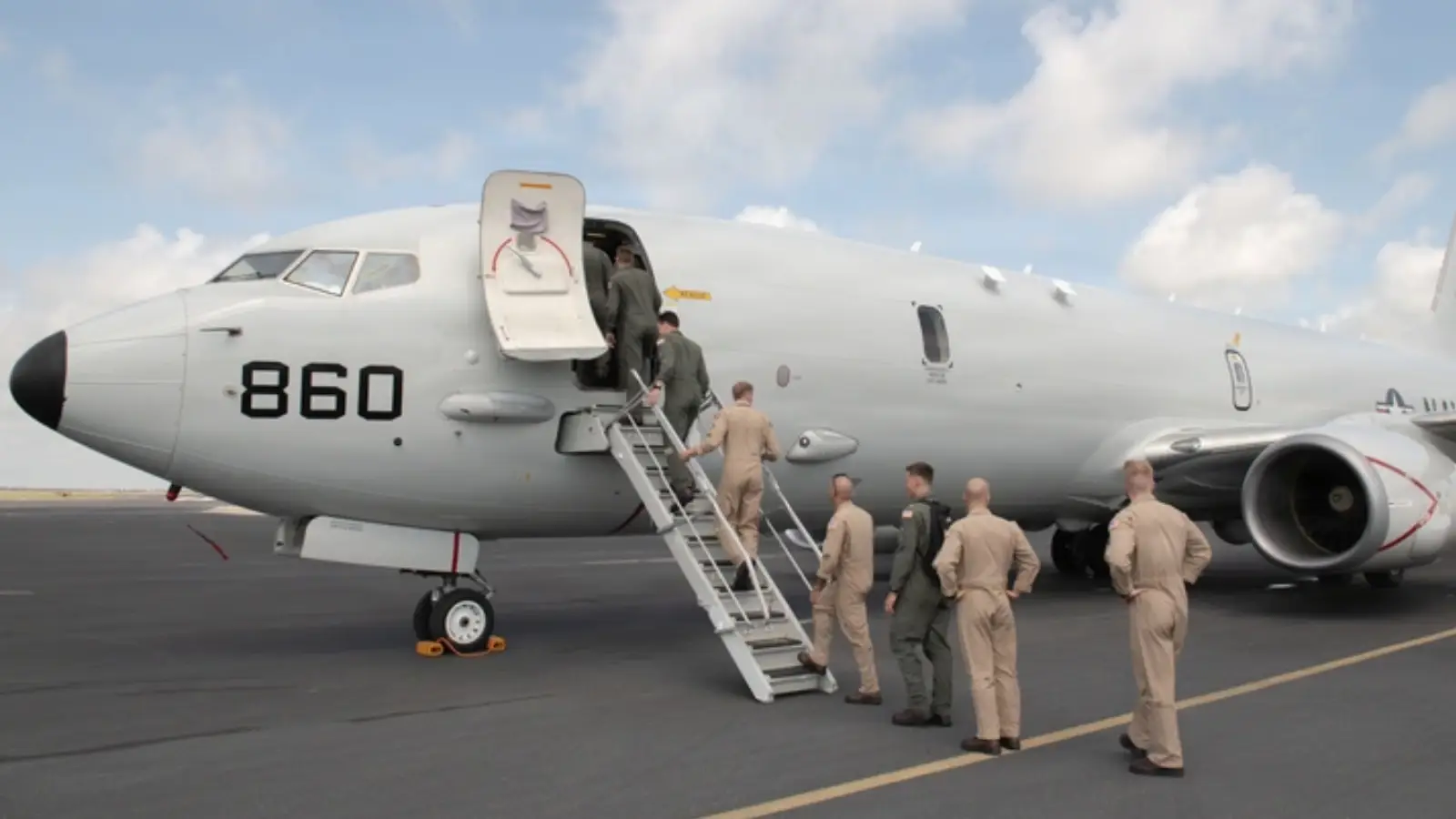
The U.S. Navy P-8A Poseidon conducted live anti-submarine warfare operations near Taiwan in a move that highlights growing American focus on maritime surveillance and undersea deterrence across the Indo-Pacific theater.
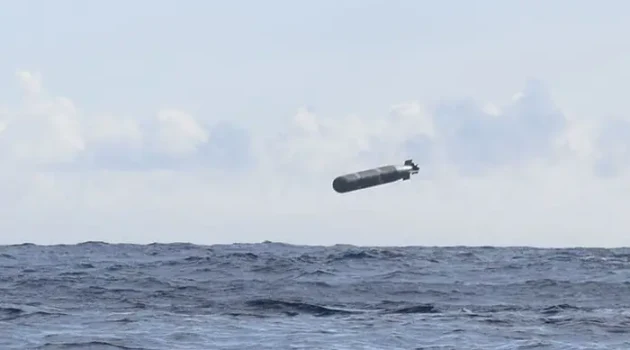
The exercise involved the deployment of live Mk 54 lightweight torpedoes during operational training missions designed to strengthen anti-submarine warfare readiness in strategically sensitive waters near Taiwan.
The drill reflects the expanding operational role of the P-8A Poseidon as the U.S. Navy continues increasing maritime patrol activities across the Western Pacific amid heightened regional military competition.
P-8A Poseidon Remains Central To U.S. Maritime Surveillance Strategy
The Boeing P-8A Poseidon has become one of the most important airborne assets in the U.S. Navy’s anti-submarine warfare architecture. Developed from the Boeing 737-800ERX airframe, the aircraft combines long-range surveillance, electronic intelligence collection, and anti-submarine combat capabilities within a single platform.
The aircraft is equipped with advanced maritime radar systems, acoustic sensors, sonobuoys, electro-optical targeting systems, and secure communications suites that allow crews to detect, classify, and track hostile submarines across large operational areas.
Its ability to deploy the Mk 54 lightweight torpedo gives the platform an immediate strike capability against submerged threats. The torpedo itself is optimized for both deep-water and littoral combat environments, making it suitable for operations across the complex maritime geography of the Indo-Pacific.
The latest exercise near Taiwan demonstrates how the U.S. Navy is integrating surveillance and strike capabilities into regular operational patrols rather than treating anti-submarine warfare as a standalone mission set.
Indo-Pacific Undersea Competition Continues To Intensify
The operational environment surrounding Taiwan has become increasingly important in modern naval strategy, particularly as regional powers continue investing heavily in submarine fleets and long-range maritime strike systems.
China’s rapid naval modernization has included significant expansion of the People’s Liberation Army Navy submarine force, including nuclear-powered ballistic missile submarines and advanced diesel-electric attack submarines designed for operations in contested regional waters.
For the United States and allied forces, maintaining anti-submarine warfare superiority has become critical to preserving freedom of navigation, carrier strike group survivability, and regional deterrence credibility.
The U.S. Navy P-8A Poseidon fleet plays a central role in this strategy by providing persistent maritime domain awareness across chokepoints and contested sea lanes stretching from the South China Sea to the Philippine Sea and East China Sea.
Operational patrols near Taiwan also serve broader strategic objectives by demonstrating U.S. capability to monitor underwater activity in one of the world’s most strategically sensitive maritime corridors.
Live Torpedo Operations Signal Operational Readiness
Unlike routine surveillance missions, live torpedo exercises provide crews with real-world operational training under combat-like conditions. These drills test targeting procedures, sensor integration, communications coordination, and weapons deployment accuracy.
The use of live Mk 54 torpedoes indicates a focus on maintaining combat proficiency rather than conducting symbolic presence operations alone.
From a military readiness perspective, anti-submarine warfare remains among the most technically demanding naval mission areas. Modern submarines are increasingly quiet, difficult to detect, and capable of operating across shallow coastal waters where acoustic tracking becomes more challenging.
By conducting live anti-submarine warfare drills near Taiwan, the U.S. Navy is reinforcing its ability to rapidly respond to underwater threats in a high-risk operational environment.
The exercise also reflects a wider Pentagon emphasis on distributed maritime operations and persistent forward presence across the Indo-Pacific region.
Allied Maritime Coordination Expands Across The Region
The P-8A Poseidon platform is also widely operated by U.S. allies and partners, including Australia, the United Kingdom, India, South Korea, Norway, and New Zealand. This growing multinational operator base enhances interoperability during coalition maritime operations and regional security patrols.
In recent years, Indo-Pacific security cooperation has increasingly focused on maritime intelligence sharing, anti-submarine warfare coordination, and integrated surveillance operations.
Taiwan’s surrounding waters remain particularly important due to their proximity to key shipping routes and military operating areas. The ability to monitor submarine activity in this environment provides strategic advantages for both deterrence and crisis response planning.
As regional tensions continue evolving, maritime patrol aircraft such as the P-8A Poseidon are expected to remain among the most heavily utilized assets in forward U.S. naval operations.
Strategic Analysis
The latest U.S. Navy P-8A Poseidon anti-submarine warfare mission near Taiwan highlights a broader shift toward persistent undersea dominance operations across the Indo-Pacific.
Rather than relying solely on large naval formations, the United States is increasingly leveraging networked surveillance aircraft, submarines, unmanned systems, and distributed sensor networks to counter emerging maritime threats.
This approach reflects the growing recognition that future naval competition may be decided as much below the surface as above it.
The combination of live weapons training, forward deployment patterns, and expanded allied interoperability suggests Washington intends to maintain continuous anti-submarine warfare pressure in strategically contested waters.
For regional actors, these operations signal that maritime surveillance and undersea warfare capabilities will remain central components of Indo-Pacific military planning in the years ahead.