Executive Summary
- USS Farragut (DDG 99) completed a Task Force Exercise on Sept. 18 in the Atlantic Ocean with MH-60R Seahawk helicopters from Helicopter Maritime Strike Squadron 74.
- Led by Carrier Strike Group 4, the exercise used live, virtual and constructive training methods to test combat systems, damage-control procedures and warfighting watch teams against complex operational scenarios.
- The certification is significant because Farragut is preparing for an independent deployment, requiring the destroyer to operate as a self-contained combat platform while remaining able to integrate with joint, allied and combined forces.
USS Farragut Completes Task Force Exercise Ahead of Deployment
The U.S. Navy’s USS Farragut (DDG 99) completed a Task Force Exercise in the Atlantic Ocean on Sept. 18, marking a major readiness milestone before the Arleigh Burke-class guided-missile destroyer moves toward its next global deployment.
The exercise was led by Carrier Strike Group 4 and included Farragut’s embarked MH-60R Seahawk helicopters from Helicopter Maritime Strike Squadron 74. Navy officials said the training was designed to certify independently deploying units and test their ability to deliver combat capabilities to combatant commanders. The exercise was completed as the Navy continues to place greater emphasis on generating forces that can operate across contested maritime environments and integrate with joint and allied formations.
Why the Farragut Exercise Matters
Task Force Exercise is not simply a navigation or seamanship drill. Its purpose is to test whether a deploying ship and its crew can integrate multiple warfare functions under demanding operational conditions.
According to the Navy, the Farragut certification period tested the ship’s combat systems, damage-control capabilities and warfighting watch teams. The exercise also used live, virtual and constructive training methods, allowing commanders and training organizations to create scenarios that replicate complex operational environments without requiring every element of a tactical engagement to occur physically at sea.
That approach reflects a broader change in naval training. Modern destroyers must be prepared to manage simultaneous air, surface and undersea threats while maintaining command and control, protecting the ship from damage and continuing the mission.
For an independently deploying destroyer, those requirements become especially important because the ship cannot depend on the presence of a carrier strike group for every mission or support function.
Farragut’s Multi-Mission Role
USS Farragut is an Arleigh Burke-class guided-missile destroyer designed for multiple warfare missions. The Navy identifies air warfare, undersea warfare, surface warfare and naval surface fire support among the ship’s mission areas.
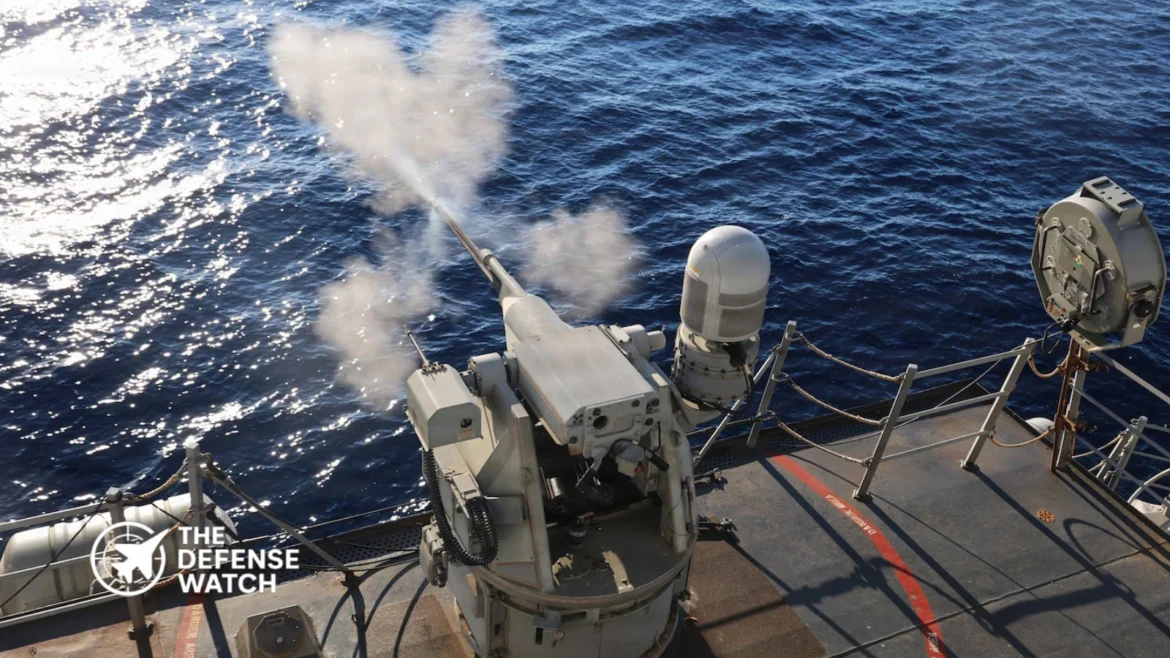
The class combines the Aegis combat system with vertical launch capabilities and other sensors and weapons. The Navy’s official Farragut webpage lists Standard Missile, Vertical Launch Anti-Submarine Rocket, Tomahawk, Evolved Sea Sparrow Missile, a 5-inch Mk 45 gun and close-in weapon systems among the class’s armament.
The Navy lists Flight IIA and III Arleigh Burke-class ships as capable of operating MH-60R helicopters. Farragut’s current exercise configuration included MH-60R aircraft from HSM 74, adding an airborne sensor and weapons layer to the destroyer’s organic capabilities.
| Capability Area | Farragut Training Relevance |
|---|---|
| Air warfare | Combat-system and watch-team readiness against air threats |
| Undersea warfare | Integration with embarked MH-60R aviation capabilities |
| Surface warfare | Detection and engagement of maritime surface threats |
| Naval surface fire support | Ship-based fires and coordination with other forces |
| Damage control | Maintaining survivability after simulated battle damage |
| Command and control | Operating as an independent unit within larger joint structures |
| Aviation operations | MH-60R surveillance and maritime warfare support |
The exact weapons carried during the September 2026 exercise were not disclosed in the Navy’s public report. Weapon-load assumptions therefore should not be treated as confirmed details of the deployment.
MH-60R Extends the Destroyer’s Reach
The embarked HSM 74 detachment is an important part of Farragut’s operational package.
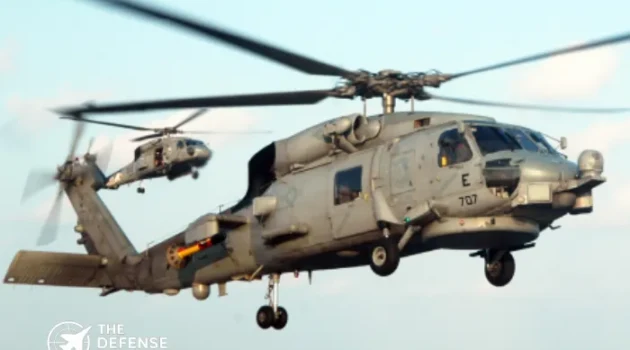
The Navy describes the MH-60R Seahawk as a multi-mission helicopter used for anti-submarine warfare, anti-surface warfare, electromagnetic warfare and command-and-control missions. It can also support search and rescue, logistics and naval surface fire support missions.
During Farragut’s Task Force Exercise, the helicopters provided airborne surveillance, strike coordination, electronic warfare and intelligence, surveillance and reconnaissance capabilities, according to the Navy.
This matters because a destroyer’s sensors and weapons are constrained by the horizon and the ship’s physical position. An embarked helicopter can operate away from the ship, search areas that the ship’s own sensors cannot observe directly and contribute information to the ship’s tactical picture.
The result is a layered combat architecture rather than a single platform operating only through its own onboard sensors.
Training Against More Complex Maritime Threats
The Navy said CSG 4 built complex scenarios around emerging operational challenges and peer-adversary tactics.
That emphasis reflects the changing character of naval warfare. A modern destroyer may need to operate against aircraft, cruise missiles, unmanned systems, surface ships, submarines and electronic attacks while maintaining communications with other forces.
The challenge is therefore not simply whether an individual weapon system works. The larger question is whether the ship’s crew can detect a threat, classify it, distribute information, select an appropriate response and continue operating when the tactical environment becomes degraded.
Task Force Exercise training is intended to expose those command-and-control and crew-performance issues before a ship enters an operational deployment.
CSG 4’s Role in Independent Deployments
Carrier Strike Group 4 serves as a training and assessment organization for U.S. Navy forces preparing for forward deployment.
Its responsibilities extend beyond carrier strike groups. The command also trains and assesses amphibious ready groups and independently deploying ships through academic instruction, live exercises and synthetic training.
Earlier Navy descriptions of TFEX identified the exercise as a certification event for independently deploying ships, with training covering areas including command and control and maritime security operations.
The current exercise follows that same broader readiness model, but the 2026 event incorporated live, virtual and constructive training techniques intended to expose crews to increasingly complex operational scenarios.
That distinction is important. Certification is not the same as combat experience. It demonstrates that a unit has completed the Navy’s required training and assessment process, not that the ship has been tested against an actual wartime adversary.
From Training Readiness to Global Deployment
Farragut’s exercise completion provides the Navy with a certified destroyer capable of entering an operational deployment as an independent unit.
The Navy has not publicly disclosed the ship’s future deployment itinerary, operational tasking or detailed weapons configuration in the source material used for this report. Those details should not be inferred from the completion of TFEX.
What is clear is the force-generation logic behind the exercise. The Navy is using a structured training pipeline to move a ship from routine readiness through increasingly complex certification events before assigning it to a global mission.
For the surface fleet, that process is increasingly important as destroyers are expected to support carrier operations, conduct independent missions, protect maritime routes, contribute to integrated air and missile defense and work with allied and joint forces.
Operational Significance for the Surface Fleet
The Farragut exercise illustrates a wider Navy requirement: individual warships must be capable of operating both as members of larger formations and as independent combat units.
That flexibility gives fleet commanders more options when forces are distributed across multiple theaters. A destroyer that can operate independently can be assigned to maritime security, escort, surveillance, strike or other missions without requiring an entire carrier strike group to accompany it.
At the same time, independent operation increases the importance of crew proficiency, logistics, communications and onboard combat-system readiness.
The September exercise therefore represents more than a pre-deployment event. It is part of the Navy’s broader effort to generate forces that can remain effective when operating across geographically dispersed maritime environments and under increasingly complex threat conditions.
What the Exercise Does Not Confirm
Several details remain undisclosed in the Navy’s public reporting.
- The Navy has not publicly identified Farragut’s specific future deployment destination in the exercise report.
- The report does not provide a confirmed weapons load for the destroyer.
- No operational range, engagement or performance figures were released for the ship’s combat systems during TFEX.
- The exercise does not constitute evidence of combat performance against an actual adversary.
- Completion of certification confirms training readiness, but it does not guarantee how the ship will be employed during its subsequent deployment.
Maintaining that distinction is important when assessing the significance of the exercise. The strongest confirmed conclusion is that Farragut has completed the Navy’s specified training and certification event and is being prepared for independent global operations.
Bottom Line
USS Farragut’s completion of Task Force Exercise demonstrates the Navy’s current approach to preparing independently deploying destroyers for complex maritime operations.
The exercise combined shipboard combat-system training, damage-control readiness, watch-team performance and MH-60R aviation integration under scenarios designed around modern operational challenges.
For the surface fleet, the larger significance is force generation. A destroyer such as Farragut must be able to function independently when required, yet remain interoperable with carrier strike groups, joint forces and allied navies. TFEX is one of the mechanisms the Navy uses to validate that transition from training to deployable combat readiness.