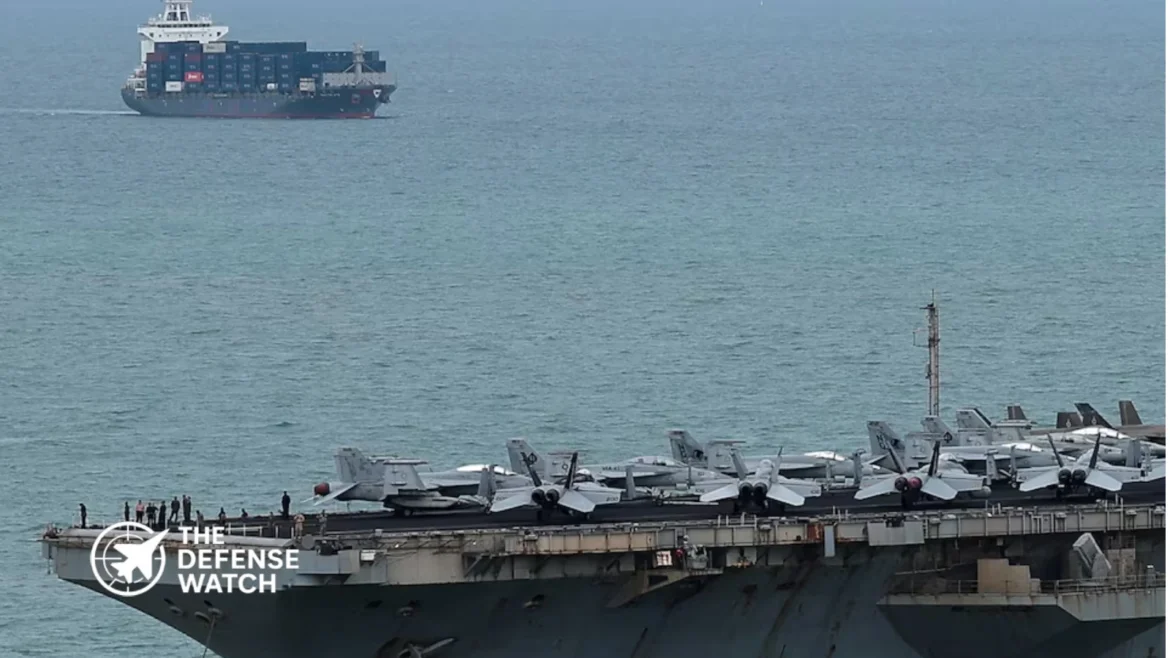
After nearly 10 months at sea, the USS Abraham Lincoln has reached Thailand for a five-day rest and recovery stop following an extended combat deployment in the Middle East.
USS Abraham Lincoln Arrives In Thailand After Extended Deployment
The USS Abraham Lincoln Thailand arrival marks a significant pause for one of the U.S. Navy’s longest recent carrier deployments. The Nimitz-class aircraft carrier entered Laem Chabang port on September 2 after spending 286 days at sea, including an extended period supporting U.S. military operations in the Middle East.
Takeaways
The USS Abraham Lincoln has arrived in Thailand after an unusually prolonged deployment that kept the carrier at sea for 286 days.
The carrier arrived with roughly 5,000 sailors and Marines aboard. Reuters reported that the deployment has been described by Democratic lawmakers as a modern-day record for consecutive days at sea. The unusually long deployment has also generated concerns about conditions aboard the ship and the effect of sustained operations on crew welfare.
The Thailand visit is intended to provide a break from the prolonged operational cycle. Thai officials said the U.S. carrier strike group will remain in the country for five days for rest and recuperation.
A Record-Setting Carrier Deployment
The USS Abraham Lincoln aircraft carrier is the centerpiece of Carrier Strike Group 3 and operates with an embarked Carrier Air Wing 9 and other supporting elements.
The U.S. Navy said the force arriving in Thailand includes the Abraham Lincoln, the staffs of Carrier Strike Group 3, Carrier Air Wing 9 and Destroyer Squadron 21, as well as nine squadrons assigned to the carrier air wing.
The deployment began in November 2025 and included nearly seven months operating in the U.S. Central Command area of responsibility, according to reporting from Thailand’s Nation and U.S. military information. The carrier strike group subsequently moved into the U.S. Seventh Fleet area of operations.
The operational tempo illustrates the demands placed on U.S. Navy carrier forces when regional conflicts require sustained maritime presence. Carrier strike groups are designed to remain forward deployed and provide aviation, command, air defense and strike capabilities without relying on a fixed land base for every mission.
The length of the Lincoln’s deployment, however, is notable because U.S. Navy deployments commonly involve planned periods for maintenance, replenishment, training and crew recovery. Reuters reported that typical naval deployments last between six and nine months, although conflicts can extend those timelines.
Middle East Operations Extended The Mission
The carrier’s deployment became substantially longer as U.S. military operations in the Middle East continued.
According to U.S. military reporting, the Abraham Lincoln Carrier Strike Group conducted operations in the U.S. Central Command region before moving toward the Indo-Pacific. U.S. Navy officials have described the Thailand stop as an opportunity for sailors and Marines to rest and recharge following the extended mission.
The deployment also demonstrates how quickly U.S. Navy carrier forces can be redirected between geographic commands. A carrier strike group can provide a mobile aviation and command capability that can shift between theaters as operational requirements change.
For the U.S. Navy carrier Thailand visit, the immediate objective is different. The stop is primarily a scheduled port visit rather than a new combat operation or major military exercise. Thai officials said the ships are in the country for rest and recuperation.
Three U.S. Navy Warships Visit Thailand
The Abraham Lincoln is not the only U.S. Navy warship making the port call.
The Arleigh Burke-class guided-missile destroyer USS Frank E. Petersen Jr. arrived at nearby Sriracha, while the Ticonderoga-class guided-missile cruiser USS Robert Smalls made a scheduled visit to Map Ta Phut.
Together, the ships represent several layers of a U.S. carrier strike group’s capabilities. The aircraft carrier provides the central aviation and command platform, while surface combatants contribute air defense, maritime security and long-range missile capabilities.
The arrival also gives the crew an opportunity to conduct normal port activities that are difficult to carry out during extended periods at sea.
Crew Welfare Becomes A Major Issue
The USS Abraham Lincoln 286 days at sea deployment has also focused attention on the human cost of maintaining a carrier at high operational tempo.
Reuters reported concerns about mental health and deteriorating conditions aboard the carrier during the extended deployment. Those concerns have drawn attention from lawmakers as the Navy manages the demands of sustained operations.
For the crew, the five-day Thailand stop provides a rare opportunity to leave the ship after months of continuous operations.
The importance of such port visits extends beyond recreation. Carrier crews require opportunities for rest, medical care, resupply and personal recovery. Those factors directly affect readiness when ships remain deployed for extended periods.
The U.S. Navy has emphasized the professionalism of the personnel who supported the prolonged deployment. Rear Adm. Robert E. Loughran, commander of Carrier Strike Group 3, described the Thailand arrival as an opportunity for sailors and Marines to rest and recharge while also highlighting the U.S.-Thailand partnership.
Thailand Remains A Key U.S. Regional Partner
The USS Abraham Lincoln Thailand arrival also carries broader significance for the U.S.-Thailand defense relationship.
Thailand is the United States’ treaty ally in mainland Southeast Asia. The two countries regularly conduct military cooperation and exercises, including Cobra Gold, one of the region’s major multinational military exercises.
Port visits provide another practical element of that relationship. They support military-to-military engagement while giving U.S. ships access to established regional infrastructure.
The current visit is not being described as a combat deployment or military exercise in Thailand. Instead, it is a scheduled stop following a demanding Middle East mission. U.S. Navy officials said the visit reinforces the enduring partnership between Washington and Bangkok.
What Happens Next For The Abraham Lincoln?
The Thailand stop represents a transition point for the carrier and its crew after an unusually long operational period.
The immediate priority is recovery and resupply. After months of sustained operations, the crew can use the port visit to rest before the carrier continues its broader deployment cycle.
The arrival also demonstrates the continuing global reach of U.S. carrier aviation. A Nimitz-class carrier can operate for extended periods far from the continental United States, while its embarked air wing and accompanying surface ships provide a flexible military force.
At the same time, the length of the Lincoln’s deployment highlights the challenge of sustaining that capability. The Navy must balance operational demand with maintenance schedules, logistics, crew readiness and personnel welfare.
For now, the focus is on the sailors and Marines returning ashore after 286 days at sea.
The USS Abraham Lincoln aircraft carrier has reached Thailand at the end of one of the most demanding deployments in its recent history. The five-day stop gives the crew a chance to recover while underscoring the continuing operational value of U.S. naval access and partnerships in the Indo-Pacific.

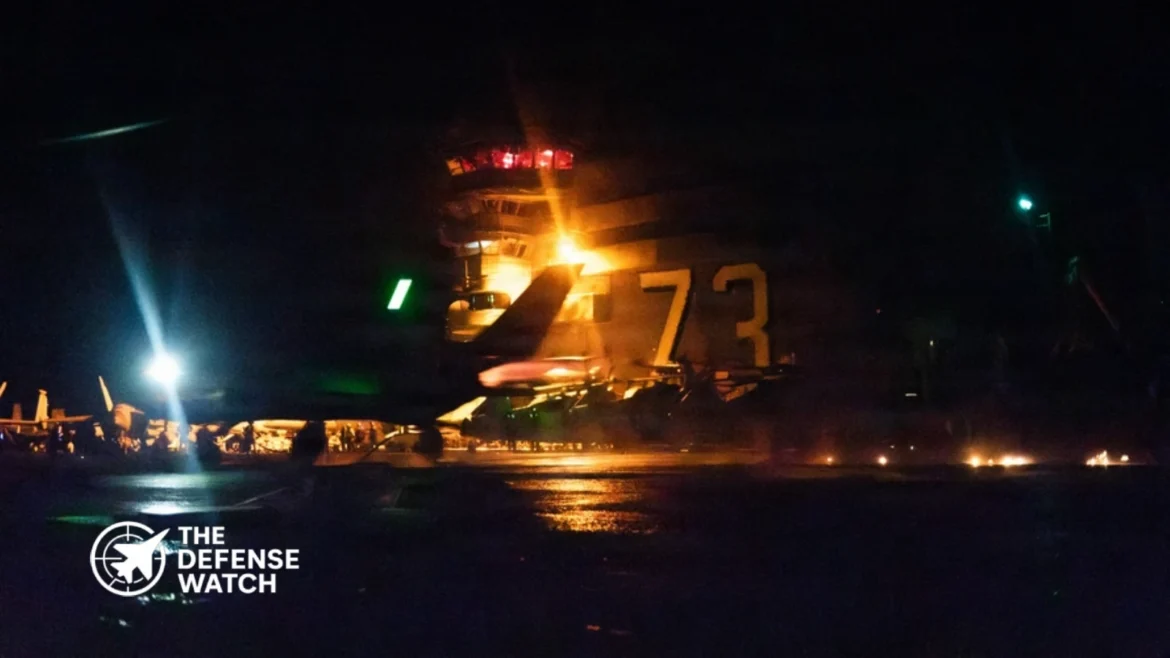
USS George Washington Reaches 200,000th Aircraft Recovery
USS George Washington has completed its 200,000th fixed wing aircraft recovery, with an F-35C Lightning II making the milestone landing during flight operations in the Indian Ocean on Aug. 18, 2026. The U.S. Navy reported the event through the Defense Visual Information Distribution Service, identifying the landing as a major aviation milestone after more than three decades of carrier operations.
Takeaways
A major carrier aviation milestone for USS George Washington
1. 200,000 Fixed Wing Recoveries
USS George Washington completed its 200,000th fixed wing aircraft recovery while operating in the Indian Ocean on Aug. 18, 2026.
2. F-35C Performs the Milestone Landing
An F-35C Lightning II assigned to Strike Fighter Squadron 147 conducted the historic arresting gear landing.
3. More Than 34 Years of Service
Commissioned in 1992, the Nimitz class carrier has supported U.S. naval aviation operations across multiple generations of carrier aircraft.
4. Forward Deployed in the Indo Pacific
George Washington is operating in the U.S. 7th Fleet area of operations as part of the Navy’s forward presence in the Indo Pacific.
5. The Milestone Reflects Carrier Readiness
The 200,000 recovery figure represents decades of coordinated work involving pilots, landing signal officers, flight deck crews, maintainers and arresting gear teams.
The aircraft involved was an F-35C assigned to Strike Fighter Squadron 147, the Navy’s first operational F-35C squadron. The pilot, Lt. Steven Frazier, conducted the recovery after routine operations in the U.S. 7th Fleet area of operations.
For a carrier, an aircraft recovery is more than a landing. The aircraft must approach a moving flight deck, align with the landing area and use its tailhook to catch one of the ship’s arresting wires, which rapidly absorbs the aircraft’s energy and brings it to a stop.
The Navy said George Washington can recover approximately one aircraft per minute and typically lands about 70 aircraft during several flight operations events throughout a day.
A 34 Year Record of Carrier Aviation
USS George Washington was commissioned on July 4, 1992, and is one of the Nimitz class nuclear powered aircraft carriers. Navy historical records show that the ship was designed to support sustained offensive air operations while providing forward presence, sea control, deterrence and maritime security.
The 200,000 recovery milestone therefore represents aircraft operations spanning several generations of U.S. naval aviation.
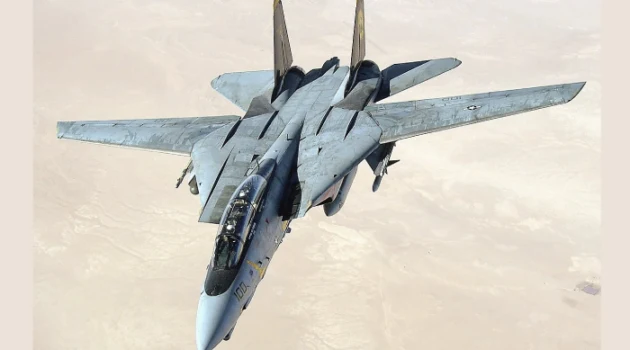
According to the Navy, George Washington has recovered aircraft ranging from F-14 Tomcats and F/A-18C/D Hornets to F/A-18E/F Super Hornets, EA-18G Growlers, E-2D Hawkeyes and the F-35C Lightning II.
That transition is significant because the aircraft operating from the carrier have changed considerably in their sensors, mission systems, propulsion, weapons integration and maintenance requirements.
The ship’s underlying recovery function, however, remains dependent on the same basic principle: safely stopping a fixed wing aircraft on a relatively short flight deck at sea.
Why the F-35C Is Suited to Carrier Operations
The F-35C is specifically designed for catapult assisted launches and arrested landings aboard large aircraft carriers.
Compared with the other F-35 variants, the carrier version has larger wings, reinforced landing gear and structural features designed to withstand the repeated stresses associated with carrier launch and recovery operations. Its wingtips also fold to improve aircraft handling and storage on the carrier deck.
F-35C Carrier Feature Operational Purpose Larger wing surfaces Improved low speed carrier handling Reinforced landing gear Supports carrier launch and recovery loads Arresting hook Enables arrested landings Folding wingtips Improves carrier deck and hangar storage Internal fuel capacity of nearly 20,000 pounds Supports longer range and mission persistence Supersonic performance Allows high speed tactical operations The F-35C can reach approximately Mach 1.6 and has more than 1,200 nautical miles of range according to Lockheed Martin. The aircraft also combines stealth characteristics with sensor fusion and networked information sharing, making it fundamentally different from many of the aircraft that previously operated from George Washington.
The Navy declared the F-35C operationally capable in February 2019. VFA-147 was the first Navy squadron to reach that milestone with the aircraft.
The Recovery System Is a Critical Part of Carrier Combat Power
The 200,000th recovery also highlights an element of carrier aviation that receives less attention than the aircraft itself: the ship’s arresting gear and the personnel responsible for operating it.
Every recovery requires coordination between the pilot, landing signal officer, flight deck personnel, maintainers and arresting gear operators. The recovery system must absorb the aircraft’s kinetic energy while keeping the landing sequence within the available deck space.
The Navy described the milestone as the product of continuous work by arresting gear teams, flight deck personnel, maintainers and watch standers who keep the carrier’s aviation systems operational.
This is particularly important for a carrier operating at sea because aviation support cannot depend on a conventional runway or nearby maintenance base. The ship has to launch, recover, refuel, rearm and maintain aircraft while continuing to operate as a mobile naval airfield.
The F-35C adds another layer of complexity because its carrier operations depend on the aircraft’s specialized landing gear, arresting hook, folding wings and integration with carrier launch and recovery equipment.
From F-14 Tomcats to F-35C Lightning IIs
The aircraft recovered by George Washington over its service life provide a useful picture of the evolution of U.S. carrier aviation.
When the carrier entered service in 1992, its air wing included aircraft such as the F-14B Tomcat, F/A-18C Hornet, E-2C Hawkeye, EA-6B Prowler, S-3B Viking and C-2A Greyhound.
Many of those platforms have since been retired.
Today’s carrier aviation force relies heavily on the F/A-18E/F Super Hornet, EA-18G Growler, E-2D Hawkeye, MH-60 helicopters and F-35C. The change reflects the Navy’s broader move toward networked operations, improved sensors, electronic warfare and fifth generation aircraft.
The F-35C’s presence aboard George Washington is particularly relevant because the aircraft can contribute sensing and targeting information beyond its traditional role as a fighter. Its networked architecture allows information gathered by the aircraft to be shared with other connected forces.
Why the Milestone Matters for U.S. Naval Operations
The 200,000th recovery is primarily a readiness milestone, but it also illustrates the operational value of maintaining carrier aviation at high tempo.
A carrier’s combat effectiveness depends on its ability to repeatedly generate sorties. Launching an aircraft is only one part of that cycle. The aircraft must also be recovered safely, inspected, serviced and prepared for another mission.
The recovery rate cited by the Navy, approximately one aircraft per minute under suitable operating conditions, demonstrates why arresting gear performance and flight deck coordination are central to carrier sortie generation.
This matters to U.S. naval strategy because aircraft carriers are designed to provide air power without requiring access to a land base. In the Indo Pacific, where distances between bases can be substantial and access to fixed infrastructure can be politically or militarily constrained, the ability to operate aviation forces from the sea remains an important component of U.S. forward presence.
George Washington’s current activity in the 7th Fleet area also places the milestone within the Navy’s broader Indo Pacific posture. The Navy describes the carrier as a forward deployed platform supporting U.S. engagement with allies and partners across the region.
F-35C Integration Shows the Carrier’s Continued Adaptation
George Washington has continued integrating the F-35C into its flight operations rather than treating the aircraft as a separate capability.
In earlier operations, the carrier conducted cyclic flight operations involving F-35Cs and other aircraft. During a 2024 training period, the Navy reported 141 sorties, including 67 day traps and 17 night traps, as the carrier and air wing practiced operating together.
That integration is important because the value of a carrier based fifth generation aircraft depends not only on the jet itself, but also on the ship, air wing, maintenance teams, communications architecture and flight deck personnel working as a single operational system.
The 200,000th recovery therefore represents more than a numerical record. It demonstrates that a carrier commissioned in 1992 remains capable of supporting a modern air wing built around aircraft with substantially different requirements from those of the platforms it operated during its early service.
A Milestone Built Around Routine Operations
The significance of the event also comes from the fact that it occurred during routine flight operations rather than a ceremonial demonstration.
The Navy described the recovery as part of normal operations in the Indian Ocean. That distinction matters because carrier readiness is ultimately measured through repeated operational performance, not isolated demonstrations.
For the sailors involved, the 200,000th trap was the result of thousands of previous recoveries and the accumulated procedures, maintenance practices and training developed over the carrier’s service life.
George Washington is now well into its fourth decade of service. Its latest aviation milestone shows how the Nimitz class continues to support successive generations of aircraft while remaining part of the U.S. Navy’s forward deployed carrier force.
The 200,000th fixed wing recovery, completed by an F-35C in the Indian Ocean, connects those two eras directly: a carrier commissioned during the Cold War era’s aftermath recovering a fifth generation fighter designed for modern networked naval warfare.
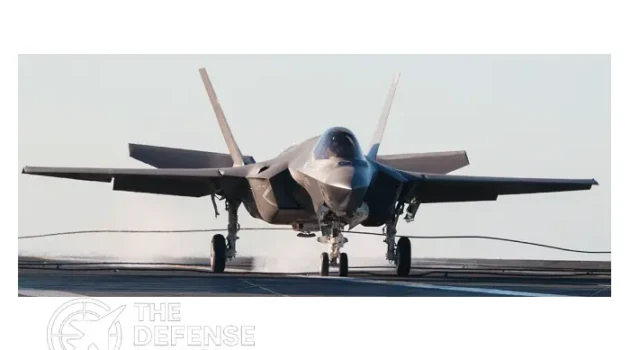
Executive Summary: President Donald Trump signed a national security memorandum on August 13 directing the Department of War and Navy to develop a plan within 60 days for replacing the Electromagnetic Aircraft Launch System, or EMALS, and advanced weapons elevators with steam and hydraulic systems on the future USS Doris Miller, CVN-81. The memorandum also calls for a fifth public Navy shipyard and creates a limited pathway for foreign shipyards to build selected U.S. warships as Washington seeks to expand naval industrial capacity.
Trump Targets EMALS On The Future USS Doris Miller
The Trump administration’s latest U.S. Navy shipbuilding directive puts the Ford-class carrier program at the center of a major technology debate, but the memorandum does not itself immediately order workers to remove EMALS from CVN-81. Instead, it requires the administration to produce a detailed plan for replacing the electromagnetic launch system and advanced weapons elevators with steam and hydraulic equipment.
The 60-day requirement is significant because CVN-81 is already part of the Ford-class production program. General Atomics received a $1.204 billion Navy contract modification in June for EMALS and Advanced Arresting Gear production, engineering, installation and certification support for the carrier through 2032.
The decision therefore reaches beyond a simple equipment swap. It raises questions about engineering changes, ship integration, supplier commitments, workforce requirements, testing and schedule risk.
The Navy’s own documentation describes EMALS as a central Ford-class technology designed to improve launch control, reduce maintenance and manpower requirements, and support aircraft ranging from lightweight unmanned systems to heavy strike fighters.
Why EMALS Was Chosen For Ford-Class Carriers
EMALS was developed to replace the C-13 steam catapults used aboard Nimitz-class carriers. Instead of using high-pressure steam to drive a launch shuttle, EMALS uses stored kinetic energy and solid-state electrical power conversion to accelerate aircraft.
NAVAIR says the system provides more precise end-speed control, smoother acceleration, reduced maintenance requirements and greater flexibility for launching different aircraft types. Its electrical architecture also fits the Ford-class design, which uses extensive electrical power distribution rather than relying on traditional steam services.
The Ford-class carrier was designed around this architecture. The Navy’s Naval Aviation Playbook identifies EMALS, Advanced Arresting Gear, all-electric auxiliary services and advanced weapons elevators as key differences from the Nimitz class.
That integration is important to understanding the potential impact of the new policy.
Replacing EMALS with steam catapults would not simply involve installing older launch equipment in the same physical space. The ship would have to accommodate the associated steam generation, distribution, control, maintenance and support requirements.
The memorandum also identifies advanced weapons elevators for replacement with hydraulic systems. That expands the scope from aircraft launch equipment to another major part of the Ford-class aircraft-handling architecture.
EMALS And Steam Catapults Compared
| Area | EMALS | Steam Catapult |
|---|---|---|
| Energy source | Stored kinetic and electrical energy | High-pressure steam |
| Launch control | Computer-controlled electronic system | Mechanical and hydraulic controls |
| Aircraft handling | Designed for lightweight and heavy aircraft | Proven primarily with conventional carrier aircraft |
| Integration | Designed into Ford-class architecture | Developed around earlier carrier designs |
| Manning | Designed to reduce manpower | Requires larger maintenance and operating support |
| Maintenance model | Electrical and electronic systems | Steam, mechanical and hydraulic systems |
| Fleet experience | Ford-class operational experience | Decades of Nimitz-class experience |
The comparison shows why the administration’s argument is centered on technological maturity and complexity, while Navy and industry assessments have emphasized the benefits of the Ford-class architecture.
The Biggest Issue Is Integration, Not The Age Of The Technology
The central engineering question is not whether steam catapults can launch aircraft. They have done so successfully for decades.
The more difficult issue is whether a mature steam system can be integrated efficiently into a carrier whose design was developed around a different power and machinery architecture.
That distinction matters for CVN-81. A carrier is an integrated system in which propulsion, electrical generation, aircraft handling, weapons movement, maintenance spaces, cooling, piping and crew requirements interact.
A change to the launch system can therefore create secondary design changes elsewhere in the ship.
The Navy has not yet released a complete engineering plan showing how those changes would be implemented on CVN-81. That makes it premature to assign a definitive cost or schedule penalty to the conversion.
However, the timing creates an obvious industrial challenge. General Atomics is already under contract for the EMALS and AAG shipset, with production and related engineering work extending through the early 2030s.
Any replacement plan would have to address existing contracts, supplier commitments and engineering work already completed.
The Policy Comes As The Navy Tries To Expand Shipbuilding Capacity
The carrier decision is only one part of the memorandum.
The administration is also directing work toward establishing a fifth public Navy shipyard. The Navy currently operates four public shipyards: Norfolk, Portsmouth, Puget Sound and Pearl Harbor. Their primary mission includes depot-level maintenance and modernization of nuclear-powered aircraft carriers and submarines.
NAVSEA has acknowledged that the existing public shipyards face aging infrastructure, outdated facilities and dry-dock limitations that contribute to maintenance costs and schedule problems.
A fifth yard would therefore address a different part of the naval industrial problem than CVN-81’s launch system.
The strategic challenge is that new shipyard capacity takes years to establish. Facilities, dry docks, specialized equipment, nuclear-qualified personnel and experienced tradespeople cannot be created quickly.
The same problem exists across private shipbuilding. The United States depends heavily on a small number of yards for complex warship construction, particularly nuclear-powered aircraft carriers and submarines.
Foreign Shipyards Enter The U.S. Naval Strategy
The memorandum also marks a notable change in policy by allowing limited foreign shipyard participation in U.S. Navy construction.
Existing U.S. law generally prohibits construction of vessels for the armed forces, including major hull or superstructure components, in foreign shipyards. Section 8679 of Title 10 provides a presidential national-security waiver, subject to statutory procedures.
Congressional Research Service analysis has previously identified Japan, South Korea and European allies as potential sources of foreign shipbuilding capacity while also noting concerns involving technology security, industrial policy and the protection of sensitive ship-design information.
The administration’s approach is therefore more limited than simply outsourcing U.S. naval construction overseas.
The memorandum’s foreign-shipbuilding concept is based on bringing foreign investment, technology and industrial capacity into the U.S. shipbuilding base. Under the policy framework, selected foreign companies could participate in building initial ships overseas while developing American production capacity for later vessels.
This is where the policy could have broader implications for European and Asian allies.
Countries such as Finland, South Korea and Japan have shipyards with large-scale commercial and military construction experience. A controlled partnership model could allow Washington to draw on that industrial expertise while requiring investment in American facilities and workers.
The security challenge will be determining which technologies and ship classes can safely be exposed to foreign production environments.
What The Steam Decision Means For U.S. Naval Aviation
The immediate operational effect remains uncertain because the Navy has been asked to develop a plan rather than execute a completed conversion.
If steam systems ultimately replace EMALS on CVN-81, the carrier would represent a significant departure from the technology architecture adopted for the Ford class.
The first three Ford-class carriers would remain important reference points. USS Gerald R. Ford, John F. Kennedy and Enterprise were designed around EMALS and related Ford-class systems. The Navy’s aviation documentation identifies EMALS and Advanced Arresting Gear as standard features of the class.
That could eventually create a mixed technology environment within the carrier fleet.
From an operational standpoint, the question will be whether the additional complexity of maintaining two generations of launch technology is offset by perceived reliability, availability or industrial benefits.
There is also an unmanned-aircraft dimension. NAVAIR specifically identifies EMALS’s ability to launch aircraft ranging from lightweight unmanned systems to heavy strike fighters.
As carrier air wings incorporate more unmanned aircraft, launch-system flexibility could become increasingly important.
The Broader Strategic Problem Is Industrial Capacity
The most consequential part of the memorandum may ultimately be its attempt to address the underlying capacity problem rather than the argument over steam versus electromagnetic launch systems.
The Navy needs more maintenance capacity, more shipbuilding throughput and a larger skilled workforce. Its existing public shipyards are already undergoing major modernization efforts because of infrastructure limitations.
Foreign industrial partnerships and a fifth public shipyard could increase capacity over the longer term, but both approaches require sustained investment and workforce development.
The carrier catapult decision presents a different challenge because it introduces a major technology change into an existing production program.
The next critical milestone will therefore be the 60-day plan required by the memorandum. That document should provide the first detailed indication of how the Navy intends to handle engineering, funding, contracts, testing, schedule and workforce requirements for CVN-81.
Until that plan is produced and funded, describing the change as a completed return to steam catapults would overstate what the August 13 memorandum actually does.
For the U.S. Navy, the central issue is broader than EMALS. The administration is attempting to change how the service balances technological modernization, industrial capacity, schedule pressure and the need for proven systems.
The outcome of the CVN-81 review will provide an important test of whether those objectives can be reconciled without creating new delays in one of the Navy’s most complex shipbuilding programs.
Key Facts At A Glance
| Item | Current Status |
| Presidential action | National security memorandum signed August 13, 2026 |
| Carrier affected | Future USS Doris Miller, CVN-81 |
| Current launch technology | EMALS |
| Proposed replacement | Steam catapults |
| Weapons elevator change | Advanced electric elevators to hydraulic systems |
| Required plan | Within 60 days |
| Existing EMALS/AAG contract | $1.204 billion modification |
| Public Navy shipyards | Four currently operate |
| New infrastructure proposal | Fifth public Navy shipyard |
| Foreign shipbuilding | Limited pathway under national-security authorities |
Why This Matters
The memorandum represents a broader test for U.S. naval modernization.
The Navy is being asked to increase fleet capacity while simultaneously dealing with aging shipyards, workforce shortages, long construction timelines and limited industrial throughput. Changing a major carrier system during production adds another layer of complexity to that challenge.
At the same time, the proposed foreign-shipyard model signals that Washington is increasingly willing to use allied industrial capacity as part of the solution to U.S. shipbuilding constraints.
For the carrier fleet, however, the immediate question is narrower: whether CVN-81 can be redesigned around steam and hydraulic systems without creating unacceptable cost, schedule or technical consequences.
That answer will not come from the August 13 memorandum alone. It will depend on the Navy’s engineering assessment, the funding decisions that follow and ultimately whether Congress supports the required changes.
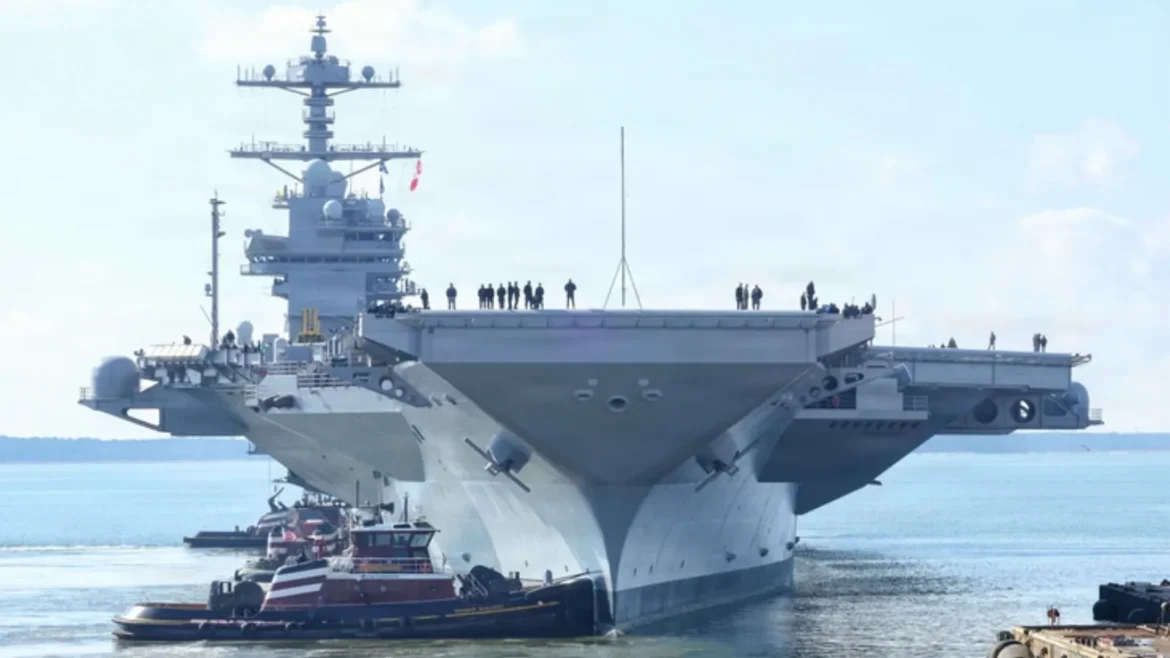
Executive Summary: The future USS John F. Kennedy (CVN-79), the second Gerald R. Ford-class nuclear-powered aircraft carrier, departed Huntington Ingalls Industries’ Newport News Shipbuilding facility on Aug. 12 to begin acceptance sea trials. The evaluation represents a major pre-delivery milestone for the carrier, which is currently scheduled for delivery to the U.S. Navy in spring 2027.
USS John F. Kennedy Enters Acceptance Trials
The USS John F. Kennedy carrier trials have entered a decisive phase, with the future CVN-79 beginning acceptance sea trials on Aug. 12 after completing its builder’s sea trials earlier in 2026. The acceptance process is conducted for the Navy to evaluate whether the ship’s systems and performance meet required standards before formal delivery.
Huntington Ingalls Industries, the carrier’s builder through its Newport News Shipbuilding division, had previously confirmed that CVN-79 was being prepared for acceptance trials during its first-quarter 2026 results. HII said in May that the carrier’s builder’s trials had been completed and that the company remained focused on preparing the ship for the next stage.
The latest milestone moves CVN-79 closer to delivery, although acceptance trials do not by themselves mean that the carrier is ready for operational deployment. Outstanding discrepancies identified during testing can require additional corrective work before the Navy accepts the ship.
From Builder’s Trials to Navy Acceptance
CVN-79 completed its first builder’s sea trials after departing Newport News on Jan. 28, 2026. During those trials, the ship’s crew, shipbuilders and Navy personnel evaluated major systems and components at sea. The carrier returned to the shipyard in early February for continued completion and corrective work.
Builder’s trials and acceptance trials serve different purposes.
Builder’s trials allow the shipbuilder and Navy teams to test the vessel’s major systems under operational conditions and identify problems that require correction. Acceptance trials are a later evaluation in which the Navy determines whether the ship meets its contractual and military requirements.
That distinction is important for CVN-79 because the Ford-class program incorporates a large number of new technologies compared with the older Nimitz class. The Navy has described the class as incorporating more than 23 new or significantly modified technologies, covering propulsion, electrical power, aircraft launch and recovery, ordnance handling, radar and other ship systems.
CVN-79 Specifications
| Specification | USS John F. Kennedy |
|---|---|
| Hull number | CVN-79 |
| Class | Gerald R. Ford |
| Ship type | Nuclear-powered aircraft carrier |
| Length | 1,092 feet |
| Full-load displacement | Approximately 100,000 long tons |
| Propulsion | Two nuclear reactors, four shafts |
| Maximum speed | More than 30 knots |
| Flight deck width | 256 feet |
| Aircraft capacity | 75 or more aircraft |
| Builder | HII Newport News Shipbuilding |
| Aircraft launch system | Electromagnetic Aircraft Launch System |
| Recovery system | Advanced Arresting Gear |
The Navy lists the Ford-class at approximately 100,000 long tons full load, with a length of 1,092 feet and a speed exceeding 30 knots. The design can support an air wing of more than 75 aircraft.
Why Ford-Class Technology Matters
The most significant difference between the Ford class and the preceding Nimitz class is not simply the size of the ship. It is the integration of new electrical, aviation and automation technologies intended to increase aircraft generation capacity while reducing manpower and maintenance demands.
The Electromagnetic Aircraft Launch System, or EMALS, replaces the steam catapults used on Nimitz-class carriers. The system uses electromagnetic energy to accelerate aircraft from the flight deck and is designed to provide more precise control across a wider range of aircraft weights.
The Ford class also uses Advanced Arresting Gear, or AAG, instead of the legacy Mk 7 arresting system. According to NAVAIR, AAG uses energy absorbers, power conditioning equipment and digital controls, while incorporating built-in testing and diagnostic capabilities. The system is intended to support aircraft ranging from unmanned systems to heavy manned fighters.
These technologies matter because the effectiveness of a carrier depends heavily on how quickly and reliably it can launch, recover, refuel, rearm and maintain aircraft. Increasing the number of aircraft that can be cycled through flight operations can improve the combat output of the carrier without increasing the physical size of the air wing.
CVN-79 Was Built With F-35C Operations in Mind
One important distinction between John F. Kennedy and the first Ford-class carrier, USS Gerald R. Ford, is the decision to incorporate modifications for the F-35C Lightning II during CVN-79 construction.
The Navy announced in 2020 that it would incorporate F-35C modifications into CVN-79 before delivery. The change was intended to ensure that the carrier could deploy with the carrier-based stealth fighter without requiring the same type of major post-delivery modification period.
This approach increased complexity during construction, but it also reflects a broader Navy effort to deliver carriers with more of their required combat capability already integrated.
For a carrier expected to operate with modern strike fighters, unmanned aircraft and increasingly networked weapons, aviation integration is central to the ship’s value. The carrier is effectively a mobile airfield, command center and logistics hub operating thousands of miles from the continental United States.
A More Electrified Carrier Design
The Ford-class also places substantially greater emphasis on electrical power.
The Navy’s Naval Aviation 2025 publication identifies the class’s new propulsion and electrical architecture, all-electric auxiliary services, electromagnetic catapults, advanced arresting gear and improved flight deck arrangement as major differences from the Nimitz class. The Navy says the class has three times the electrical generating capacity of its predecessor.
That additional electrical capacity is important beyond today’s aircraft systems. Modern radars, electronic warfare equipment, communications systems and future directed-energy weapons all require substantial electrical power.
The Ford-class architecture therefore provides the Navy with more electrical growth margin than a conventional steam-based carrier design. This is one reason the carrier remains relevant as naval aviation moves toward more networked and unmanned systems.
The Delivery Schedule Remains a Key Milestone
CVN-79’s progress is significant because the carrier has experienced a lengthy construction and testing period.
The Navy initially pursued an earlier delivery schedule, but construction changes, technology integration and the decision to incorporate additional capabilities affected the timeline. The carrier is now expected to be delivered in spring 2027, according to recent reporting on the program.
The delay also illustrates the difficulty of building a second ship in a class that introduces a large number of new technologies.
At the same time, CVN-79 benefits from lessons learned during the construction and operational introduction of USS Gerald R. Ford. The Navy has sought to incorporate those lessons into subsequent Ford-class ships while improving construction processes and reducing long-term operating costs.
The Navy has stated that Ford-class carriers are expected to reduce life-cycle operations and support costs by approximately $4 billion per ship compared with Nimitz-class carriers.
What Acceptance Trials Will Demonstrate
The current trials are important because they provide the Navy with an opportunity to evaluate CVN-79 as an integrated warship rather than as a collection of individual systems.
Key areas of interest include:
- Propulsion and electrical power generation
- Navigation and ship-control systems
- Flight deck operations
- Aircraft launch and recovery systems
- Advanced Arresting Gear performance
- Electromagnetic Aircraft Launch System operation
- Radar and combat-system integration
- Damage-control and ship survivability functions
- Crew performance and operational procedures
Not every aspect of carrier combat capability can be demonstrated during acceptance trials. Some aviation and weapons certifications occur through later testing and fleet integration activities.
The broader objective is to establish that the ship can safely and reliably perform the functions required of a nuclear-powered aircraft carrier before the Navy formally accepts it.
Strategic Importance for the U.S. Navy
CVN-79’s progress comes as the Navy works to maintain a carrier force capable of supporting operations across multiple maritime theaters.
A nuclear-powered carrier provides sustained aviation presence without requiring a host nation’s land base for its primary air operations. Its mobility allows commanders to reposition an air wing as operational conditions change.
The Ford-class adds another dimension through increased electrical capacity, automation and redesigned aircraft handling systems. Those changes are intended to support higher sortie generation while reducing some of the manpower and maintenance burden associated with earlier carriers.
For the Navy, the significance of CVN-79 therefore extends beyond adding another hull to the fleet. The carrier is a test of whether the Ford-class design can transition from the difficult introduction of the lead ship into a more mature production and operational model.
That transition will matter for the ships that follow, including the future USS Enterprise (CVN-80) and USS Doris Miller (CVN-81).
What Comes Next for CVN-79
Successful acceptance trials would represent another major step toward formal Navy acceptance, but the carrier will still require additional work, certifications, crew training and fleet integration before becoming a fully operational carrier.
The Navy’s 2025 aviation documentation identified CVN-79 as the next Ford-class carrier scheduled for delivery, while future carriers Enterprise, Doris Miller, William J. Clinton and George W. Bush are planned to follow.
For now, the immediate focus is on the performance of CVN-79 at sea.
If the acceptance process proceeds successfully, the carrier will move closer to its planned spring 2027 delivery and eventual integration into the U.S. fleet. That milestone would mark an important step in the Navy’s transition from the Nimitz-class generation to the Ford-class carrier force.
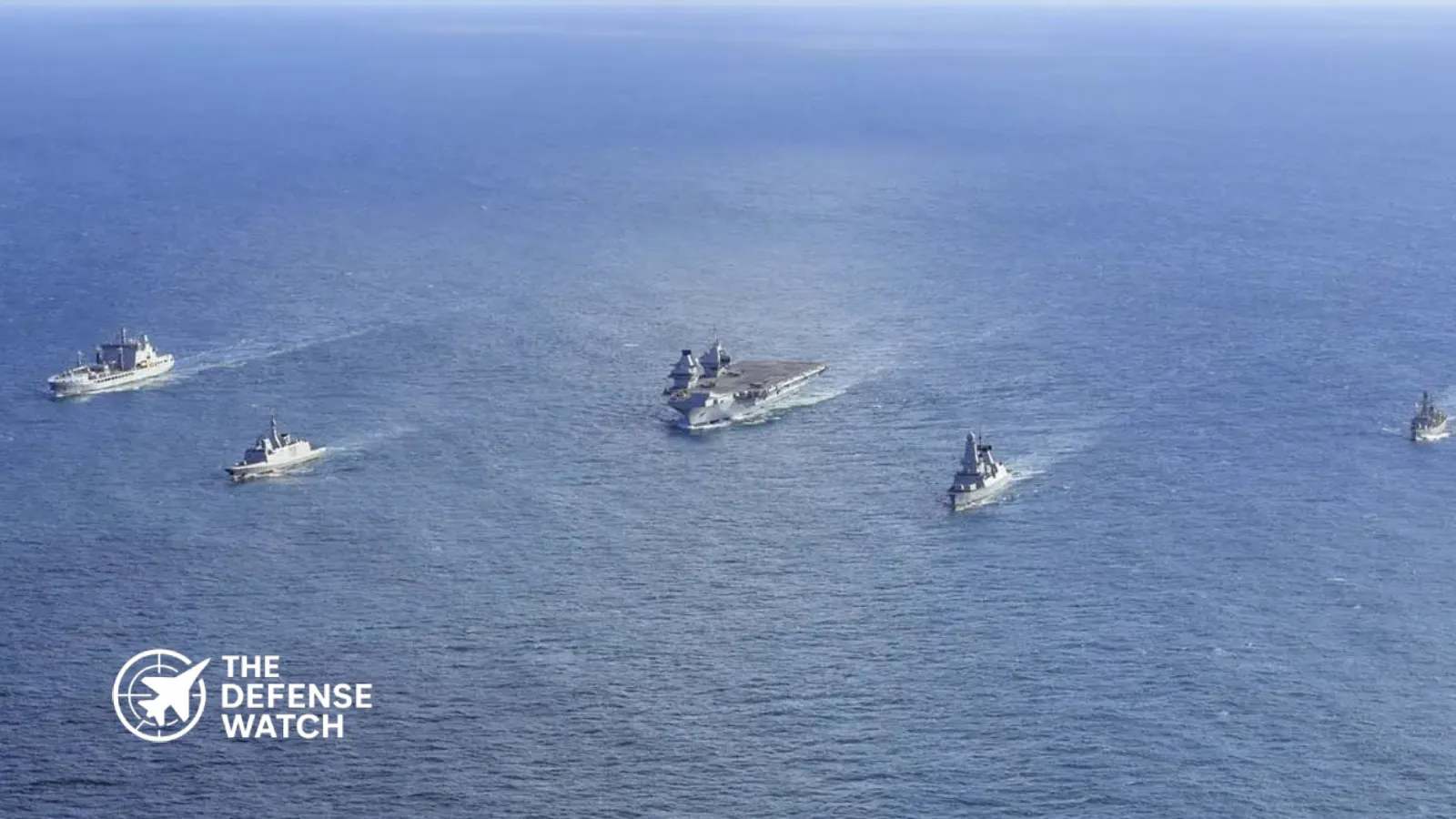
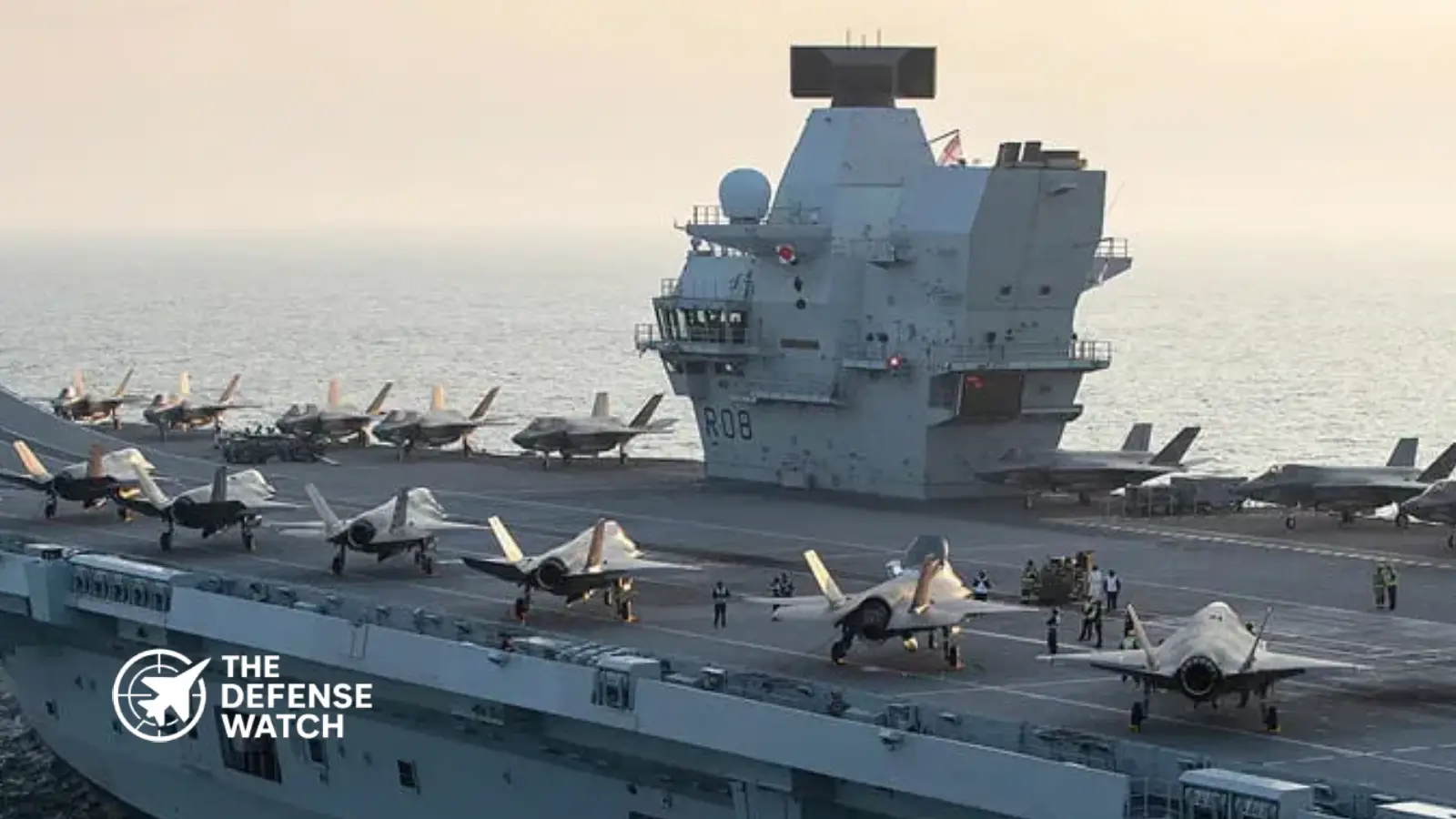
The Royal Navy’s flagship carrier has completed a three month NATO deployment that combined Arctic air policing, multinational exercises, and extended range F-35B operations across the High North.
Executive Summary:
The UK Carrier Strike Group has completed the first phase of Operation Firecrest after three months of NATO operations in the Arctic and North Atlantic. The deployment featured carrier launched F-35B air policing missions, multinational exercises, and enhanced allied interoperability aimed at strengthening NATO’s Northern Flank.
UK Carrier Strike Group Completes First Phase Of NATO Arctic Deployment
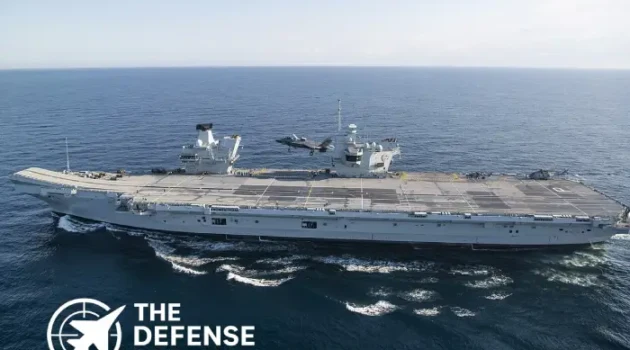
The UK Carrier Strike Group has concluded the opening phase of its 2026 deployment to the Arctic and North Atlantic, marking the end of a three month mission focused on NATO deterrence, regional security, and multinational interoperability. Led by the aircraft carrier HMS Prince of Wales, the task group will return briefly to Portsmouth before resuming Operation Firecrest later this year in northern European waters.
The strike group included HMS Prince of Wales, destroyer HMS Duncan, support tanker RFA Tidespring, embarked F-35B Lightning II fighters, Merlin and Wildcat helicopters, and uncrewed autonomous systems. According to the Royal Navy, the deployment demonstrated the UK’s ability to operate a carrier centered force in demanding Arctic conditions alongside NATO allies.
Exercise Neptune Strike Concludes Initial Deployment
The deployment ended with Exercise Neptune Strike, a large NATO exercise involving forces from ten allied nations across the air, maritime, and land domains.
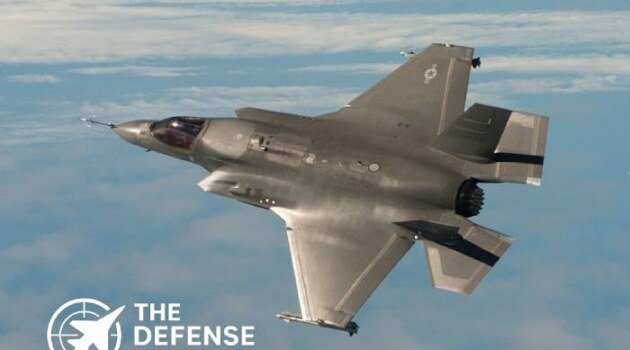
The exercise emphasized long range strike operations, integrated command and control, and joint planning across multiple operational environments. British F-35B fighters conducted extended range sorties with support from RAF Voyager and Italian KC,767 aerial refueling aircraft, allowing missions to reach areas including Poland while operating from HMS Prince of Wales.
Royal Navy escorts and embarked helicopters simultaneously participated in anti surface and anti submarine warfare activities, highlighting the carrier group’s ability to conduct multi domain operations.
Arctic Air Policing Marks Operational Milestone
One of the most significant achievements during the deployment was the UK’s contribution to NATO’s Arctic Sentry Enhanced Vigilance Activity.
Carrier launched F-35B fighters carried out NATO Air Policing missions over Iceland and the Arctic, intercepting and monitoring Russian military aircraft operating near allied airspace. According to the Royal Navy and UK Ministry of Defence, this marked the first time NATO air policing missions have been conducted by fighter aircraft launched from a European aircraft carrier.
Earlier in July, Royal Navy F-35Bs were scrambled after a Russian Tu,142 maritime patrol aircraft approached the carrier group in the Norwegian Sea during ongoing NATO operations. The aircraft was escorted while the task group continued its mission.
Broader NATO Cooperation
Beyond Arctic air policing, the UK Carrier Strike Group participated in several multinational activities, including Exercise Ramstein Flag, Dynamic Mongoose, and Joint Expeditionary Force Exercise Tamber Shield.
Throughout the deployment, the carrier group operated with 19 NATO and Joint Expeditionary Force partners, strengthening interoperability across allied naval, air, and maritime forces. The mission also supported NATO Joint Force Command Norfolk’s efforts to improve coordinated operations across the strategically important North Atlantic and High North.
Why The Deployment Matters
The completion of the first phase of Operation Firecrest reflects several broader trends in NATO’s evolving defense posture.
First, it demonstrates the growing integration of carrier aviation into alliance air defense missions. Carrier based F-35Bs traditionally support expeditionary strike operations, but their use in standing NATO air policing expands the operational flexibility of allied naval aviation.
Second, the deployment highlights the increasing strategic importance of the Arctic and North Atlantic. These regions remain vital for transatlantic reinforcement, undersea infrastructure protection, and monitoring military activity as Russia maintains a significant military presence across the High North. NATO has responded by increasing exercises, surveillance, and multinational deployments across the region.
Finally, the mission reinforces the UK’s role as one of NATO’s primary carrier operating nations. Regular multinational deployments provide opportunities to validate command structures, logistics, aerial refueling, and interoperability before potential crisis situations arise.
Rather than representing a standalone operation, Operation Firecrest forms part of NATO’s broader effort to maintain readiness and credible deterrence across Europe’s northern approaches through routine, integrated military activity.
What’s Next
HMS Prince of Wales and HMS Duncan are expected to undergo maintenance and provide leave for their crews before the second phase of Operation Firecrest begins later this year.
The next deployment phase will continue operations in northern European waters, building on lessons learned during the Arctic mission while supporting ongoing NATO maritime security and collective defense objectives.
Executive Summary:
Newly released footage of China’s Type 076 amphibious assault ship, Sichuan, provides the clearest public view yet of the People’s Liberation Army Navy’s emerging drone carrier concept. The images reinforce assessments that the vessel is designed to operate fixed wing unmanned combat aircraft, potentially giving the PLAN a new capability for long range surveillance, strike, and amphibious support operations across the Indo Pacific.
China Type 076 UAV Carrier Moves Closer To Operational Service
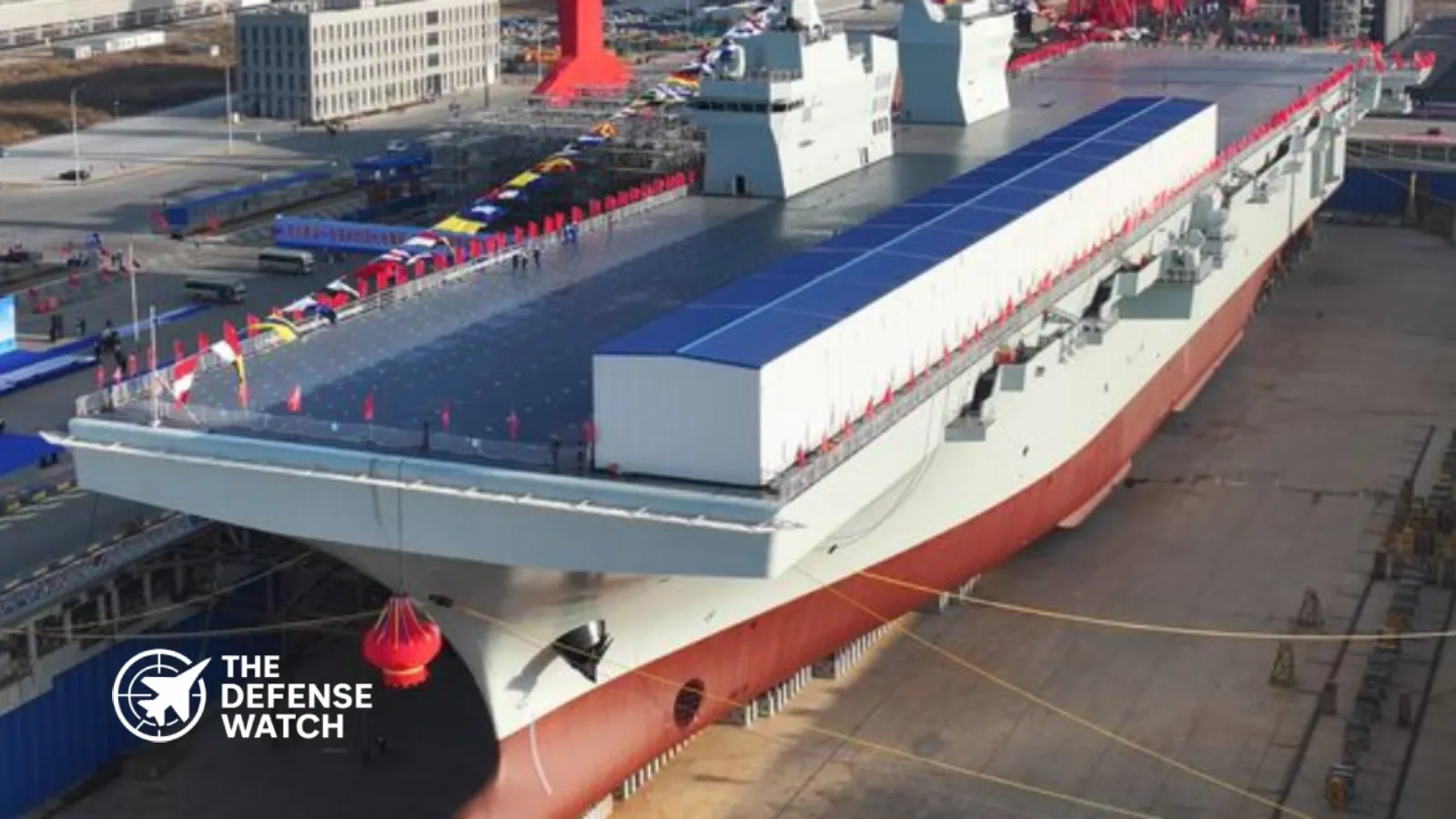
New video footage of China’s Type 076 UAV carrier, Sichuan, has provided the clearest public evidence to date of the People’s Liberation Army Navy’s (PLAN) evolving concept for operating fixed wing unmanned aircraft from an amphibious assault ship. The footage, first highlighted by Janes following the circulation of Chinese media imagery, shows that the vessel’s flight deck, electromagnetic launch system, arresting gear, and deck markings appear substantially complete as the ship progresses toward operational service.
The Type 076 represents a significant departure from traditional landing helicopter docks. Rather than relying solely on helicopters, the ship is expected to operate a mix of rotary wing aircraft and carrier capable unmanned aerial vehicles (UAVs), expanding the PLAN’s options for intelligence, surveillance, strike, and amphibious support missions.
A Hybrid Between An Amphibious Assault Ship And A Drone Carrier
Displacing approximately 40,000 tons, the Type 076 is China’s largest amphibious assault ship to date. Unlike earlier Type 075 vessels, it incorporates technologies typically associated with aircraft carriers, including:
| Capability | Type 076 Sichuan |
|---|---|
| Estimated displacement | About 40,000 tons |
| Flight deck | Full length |
| Launch system | Electromagnetic Aircraft Launch System (EMALS) |
| Recovery system | Arresting gear |
| Aircraft elevators | Two |
| Primary aviation focus | Helicopters and fixed wing UAVs |
These features make the Type 076 unique among amphibious assault ships currently known to be under construction worldwide.
Evidence Points Toward GJ 21 Naval UCAV Operations
Recent imagery previously analyzed by Janes showed what appeared to be a mock up of China’s naval unmanned combat aerial vehicle, commonly referred to as the GJ 21, positioned aboard Sichuan. The aircraft features folding wings and a tail hook, indicating compatibility with catapult assisted takeoff and arrested recovery (CATOBAR) operations.
Although the aircraft observed was likely a developmental mock up rather than an operational platform, its presence suggests that China is actively integrating stealth UAV operations into future naval deployments.
If fielded as expected, these aircraft could conduct:
- Long range intelligence, surveillance, and reconnaissance (ISR)
- Maritime targeting
- Precision strike missions
- Electronic warfare support
- Support for amphibious landings
Why The Type 076 Matters
The Type 076 introduces a capability that differs from conventional aircraft carriers.
Rather than replacing large fleet carriers such as China’s Type 003 Fujian, the new ship appears intended to complement them by extending unmanned aviation into expeditionary and amphibious operations. This could provide commanders with additional flexibility while reducing the operational risk associated with deploying manned aircraft for every mission.
The combination of helicopters and unmanned combat aircraft also reflects a broader global trend toward integrating autonomous systems into naval operations. Several navies are exploring similar concepts, but the Type 076 is among the first large amphibious ships specifically designed around catapult launched UAV operations.
Operational Implications For Indo Pacific Security
From a strategic perspective, the Type 076 could improve the PLAN’s ability to maintain persistent aerial surveillance over contested maritime regions.
Fixed wing UAVs generally offer longer endurance than shipborne helicopters while requiring fewer personnel than conventional fighter aircraft. Combined with electromagnetic launch capability, they could provide continuous reconnaissance during amphibious operations or maritime patrols.
For regional militaries, this development highlights China’s continued investment in distributed naval aviation and unmanned systems. While the vessel alone does not fundamentally alter the regional military balance, it expands the range of operational options available to the PLAN during expeditionary missions.
For the United States and allied navies operating in the Indo Pacific, the emergence of dedicated drone capable assault ships reinforces the importance of counter UAS capabilities, electronic warfare, integrated air defense, and persistent maritime surveillance.
Technical Challenges Remain
Despite the visible progress, several hurdles remain before the Type 076 reaches full operational capability.
Among the most significant are:
- Maturing carrier capable stealth UAVs suitable for sustained naval operations.
- Developing reliable autonomous launch and recovery procedures at sea.
- Integrating unmanned aircraft into fleet command and control networks.
- Training crews for simultaneous helicopter and UAV flight operations.
- Establishing maintenance and logistics support for advanced unmanned air wings.
Successful integration of these capabilities will determine whether the Type 076 becomes a transformational operational asset or primarily a technology demonstrator during its initial years of service.
Looking Ahead
The latest footage indicates that Sichuan is approaching the final stages of fitting out, with observers expecting delivery to the PLAN following completion of sea trials and acceptance testing.
As China’s naval modernization continues, the Type 076 will likely serve as an important testbed for integrating fixed wing unmanned aviation with amphibious warfare. Its eventual operational performance will provide valuable insight into how major navies may employ drone carriers alongside traditional aircraft carriers in future maritime operations.
(adsbygoogle = window.adsbygoogle || []).push({});Executive Summary:
The United Kingdom Carrier Strike Group, led by HMS Prince of Wales, is operating under NATO command as part of the alliance’s Arctic Sentry mission. The deployment enhances NATO’s maritime presence in the Arctic while improving allied readiness in a region of growing strategic importance.
UK Carrier Strike Group Strengthens NATO Presence In The Arctic
The UK Carrier Strike Group has entered a new phase of operations after being placed under NATO operational command as part of Arctic Sentry, the alliance’s enhanced vigilance activity focused on the Arctic and High North. The move underscores NATO’s increasing emphasis on northern defense as military competition intensifies across the region.
Led by HMS Prince of Wales, the Royal Navy’s flagship aircraft carrier, the task group is supporting NATO’s Joint Force Command Norfolk during a series of operations designed to improve allied coordination, surveillance, deterrence, and maritime security throughout the Arctic.
The deployment represents one of the United Kingdom’s most significant naval contributions to NATO’s northern posture in recent years.
atOptions = { ‘key’ : ‘e7d18db8b7513fb2a224cf4c3f18bbf0’, ‘format’ : ‘iframe’, ‘height’ : 90, ‘width’ : 728, ‘params’ : {} };Carrier Strike Group Brings Fifth Generation Airpower
At the center of the deployment is HMS Prince of Wales, carrying Britain’s carrier-based fifth generation combat capability through F-35B Lightning II fighters from 809 Naval Air Squadron and Royal Air Force 617 Squadron.
The strike group also includes escorts, support vessels, helicopters, and maritime surveillance assets capable of conducting air defense, anti-submarine warfare, strike missions, and intelligence gathering in one of the world’s most demanding operating environments.
Operating under NATO command allows allied naval and air forces to coordinate through a unified operational structure, improving interoperability across multiple national fleets.
What Arctic Sentry Means For NATO
Arctic Sentry was launched by NATO in February 2026 as a multi-domain operational framework that combines allied exercises, maritime patrols, air operations, and land activities under a single command structure led by Joint Force Command Norfolk.
Rather than creating a single exercise, Arctic Sentry synchronizes existing allied activities across the Arctic and High North into a coordinated operational approach.
According to NATO, the initiative responds to increasing military activity by Russia in the Arctic, while also addressing China’s growing strategic interest in the region. The alliance says the effort improves situational awareness, operational planning, and collective defense across NATO’s northern flank.
(adsbygoogle = window.adsbygoogle || []).push({});Why The Arctic Matters
The Arctic has become increasingly important for global security.
Melting sea ice is gradually opening new shipping routes while exposing natural resources and expanding access to previously inaccessible waters. At the same time, the region contains critical sea lines of communication linking North America and Europe.
Russia has continued modernizing military infrastructure across its Arctic territories, including airfields, naval facilities, and surveillance capabilities, while NATO has responded by increasing exercises and strengthening cooperation among Arctic allies.
For NATO, maintaining freedom of navigation and protecting reinforcement routes through the North Atlantic remain central strategic objectives.
Analysis: A Shift Toward Persistent Northern Operations
While the deployment itself does not represent a permanent increase in NATO forces, it reflects a broader transition toward sustained allied operations in northern waters.
Placing the UK Carrier Strike Group under NATO command demonstrates the alliance’s growing preference for integrated multinational operations rather than nationally directed deployments operating alongside one another.
From an operational perspective, carrier strike groups provide flexible airpower, command and control, anti-submarine capabilities, and long-range surveillance without relying on fixed regional bases. These attributes are particularly valuable in the Arctic, where infrastructure is limited and weather conditions complicate military operations.
The deployment also highlights Britain’s continued role as one of NATO’s primary maritime powers. By contributing its largest naval formation to alliance command, London reinforces its commitment to collective defense while improving interoperability with U.S., Norwegian, Canadian, Danish, Dutch, and other allied forces operating across the High North.
For NATO, Arctic Sentry is as much about improving command integration as it is about demonstrating presence. Coordinated operations enable faster decision making, more effective intelligence sharing, and greater readiness should security conditions deteriorate.
Looking Ahead
The UK Carrier Strike Group is expected to continue participating in additional Arctic Sentry activities alongside allied naval and air forces throughout the coming weeks.
NATO has indicated that Arctic Sentry will continue evolving as a long-term framework for coordinating operations across the Arctic and High North, complementing other regional initiatives designed to strengthen deterrence and collective defense.
As geopolitical competition in the Arctic continues to increase, deployments such as this are likely to become a more regular feature of NATO’s operational posture.
Executive Summary:
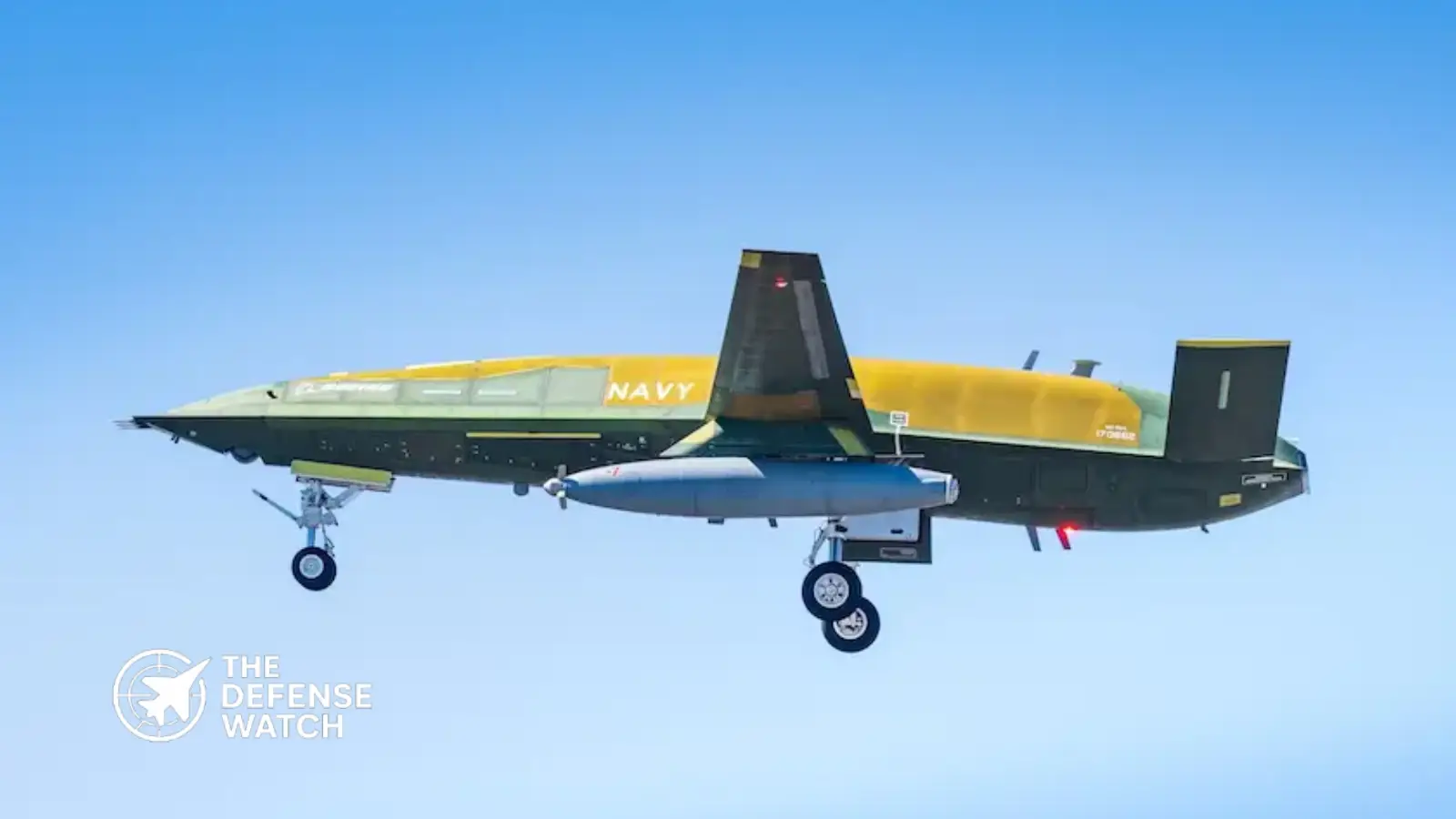
The U.S. Navy has authorized low-rate initial production of the Boeing MQ-25A Stingray following key flight testing milestones. The carrier-based unmanned aircraft is designed to extend the operational range of naval fighter aircraft and reduce strain on manned tanker missions aboard aircraft carriers.
U.S. Navy Advances MQ-25A Stingray Program
The Boeing MQ-25A Stingray program has reached a major milestone after the U.S. Navy approved the unmanned aerial refueling aircraft for low-rate initial production. The decision follows a series of developmental and flight test achievements that move the Navy closer to fielding its first operational carrier-based unmanned tanker aircraft.
Developed by Boeing for the United States Navy, the MQ-25A Stingray is intended to provide aerial refueling support to carrier air wings while extending the operational range of aircraft such as the F/A-18 Super Hornet and the F-35C Lightning II.
The approval for low-rate production marks a transition from development and testing into the early manufacturing phase, allowing the Navy to begin building operational aircraft while continuing evaluation activities.
Carrier Aviation Focus Shifts Toward Range And Endurance
The MQ-25A Stingray addresses one of the most persistent operational challenges facing modern carrier aviation: combat range.
For years, the U.S. Navy has relied heavily on Super Hornets configured as buddy tankers to refuel other aircraft during missions. While effective, that approach reduces the number of fighters available for strike and air defense missions.
The MQ-25A is designed to assume much of that refueling workload. By transferring aerial refueling duties to an unmanned platform, the Navy expects to free additional manned fighters for frontline combat operations.
This shift is particularly important in the Indo-Pacific theater, where long operational distances are increasingly shaping U.S. naval planning. Analysts have frequently noted that carrier air wings require greater reach to operate effectively in contested environments against near-peer adversaries.
The Stingray is expected to provide carrier aircraft with significantly extended mission endurance, improving flexibility for strike, reconnaissance, and maritime security operations.
Flight Testing Supported Production Approval
The production clearance follows extensive testing activities involving Boeing test aircraft and Navy integration teams.
The MQ-25A program previously completed several major milestones, including its first flight, aerial refueling demonstrations, and carrier deck handling tests aboard U.S. Navy aircraft carriers. The aircraft successfully refueled Navy tactical aircraft during testing campaigns, validating one of the program’s core operational requirements.
Testing also focused on integrating the unmanned aircraft into carrier flight deck operations, which remain among the most demanding aviation environments in the world.
Unlike land-based UAV operations, carrier aviation requires precise launch, recovery, taxiing, and deck coordination procedures within limited space and under high operational tempo conditions. The MQ-25A program therefore serves as both a capability platform and a broader stepping stone for future carrier-based autonomous systems.
Boeing Expands Its Role In Naval Unmanned Aviation
For Boeing, the MQ-25A Stingray represents a strategically important defense program as the company continues expanding its unmanned systems portfolio.
The aircraft was selected by the Navy under the Carrier-Based Aerial-Refueling System competition, beating rival industry proposals. Since then, Boeing has continued refining the platform through testing and systems integration work.
The low-rate production authorization enables Boeing to begin manufacturing aircraft intended for operational fleet introduction while supporting continued program maturation.
The program also reinforces growing Pentagon interest in unmanned and semi-autonomous systems across air, land, and maritime domains. Defense planners increasingly view unmanned aircraft as critical force multipliers capable of extending operational reach while reducing risk to pilots in contested environments.
MQ-25A Could Shape Future Carrier Air Wings
The MQ-25A Stingray is more than a refueling aircraft. Defense analysts widely view the program as an early step toward broader integration of autonomous systems aboard U.S. Navy aircraft carriers.
Future naval unmanned aircraft could eventually perform intelligence gathering, electronic warfare, surveillance, strike missions, or logistics support alongside manned aircraft.
By proving that unmanned systems can safely integrate into carrier operations, the MQ-25A program may help establish the operational framework for next-generation naval aviation concepts.
The Navy has consistently emphasized that future carrier air wings will likely combine crewed and uncrewed platforms operating together across long distances and highly contested operational theaters.
As geopolitical competition intensifies in the Indo-Pacific and other strategic regions, extending carrier reach and preserving manned fighter capacity remain central priorities for U.S. naval planners.
Executive Summary: A proposed Trump class nuclear battleship concept linked to modern naval force expansion has triggered debate over affordability and industrial feasibility.
Analysts and defense observers are questioning whether current U S shipyard capacity can support construction of ultra large nuclear surface combatants at scale.
The discussion highlights broader tensions between fleet modernization goals and the realities of the U S naval industrial base.
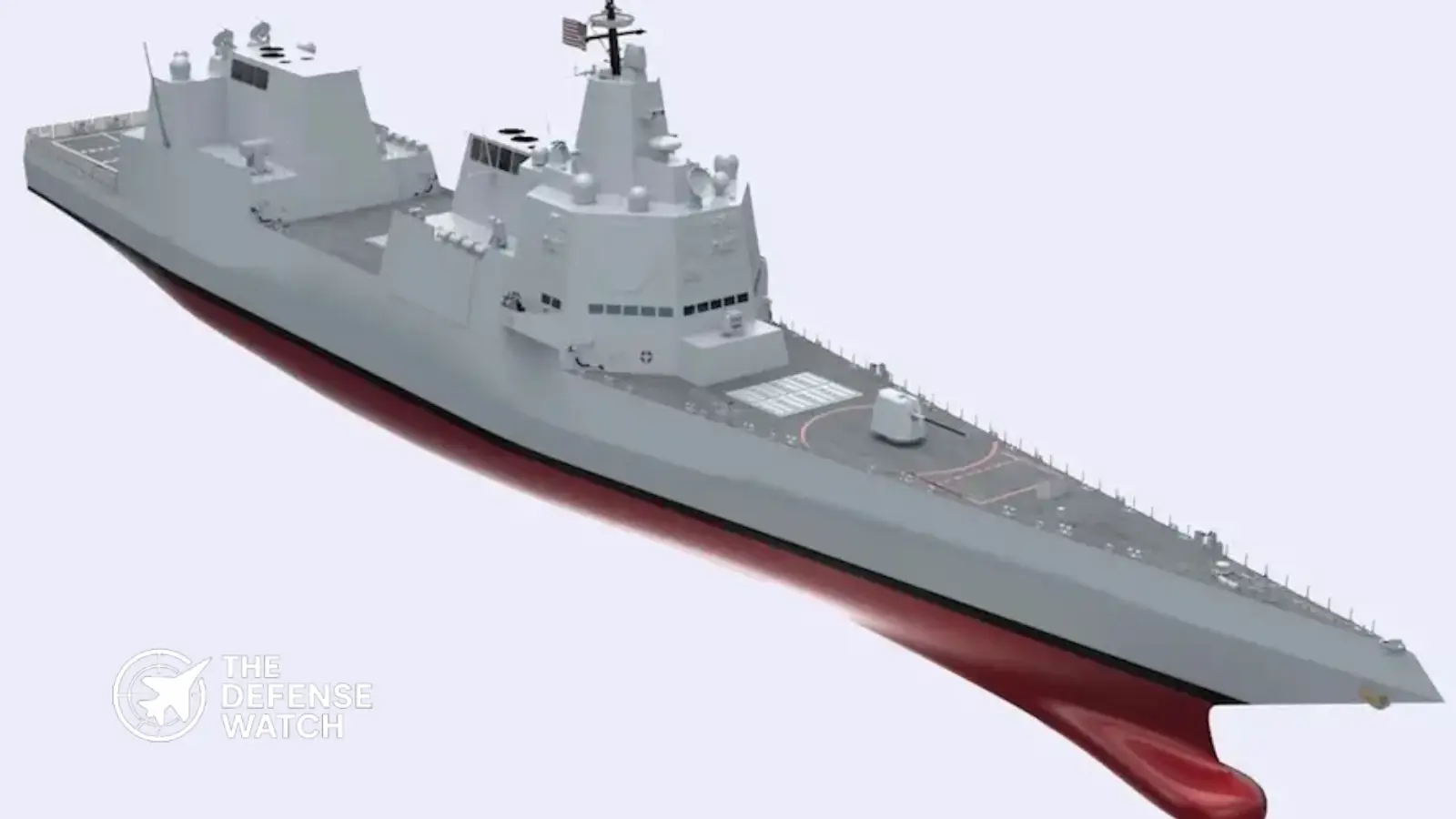
The Trump class nuclear battleship plan is drawing attention across defense circles as questions grow around cost, industrial capacity, and strategic value. The concept, associated with future U S Navy surface warfare ambitions, has prompted renewed debate over whether the United States can realistically build and sustain ultra large nuclear powered warships.
U.S. Navy modernization priorities have increasingly focused on distributed lethality, unmanned systems, and next generation destroyers. Against this backdrop, the idea of a nuclear powered battleship scale platform has raised concerns among analysts who see potential strain on both budgets and shipyard throughput.
Strategic Context Behind the Concept
The discussion around a Trump class nuclear battleship concept comes at a time when naval planners are reassessing force structure requirements for high end conflict environments. Rising tensions in the Indo Pacific and growing concerns over peer adversary naval expansion have driven renewed interest in platforms capable of long endurance operations and heavy payload capacity.
However, large surface combatants have historically faced challenges related to cost growth, maintenance complexity, and construction timelines. Nuclear propulsion adds another layer of technical and logistical demand, requiring specialized infrastructure and highly trained personnel.
Cost Pressures and Budget Reality
One of the central concerns surrounding the Trump class nuclear battleship plan is procurement cost. Modern surface combatants already represent some of the most expensive assets in the defense portfolio. Introducing nuclear propulsion at battleship scale would significantly increase upfront costs as well as lifecycle maintenance expenses.
Defense analysts note that funding such a program could require tradeoffs across other modernization efforts, including submarine production, amphibious fleet recapitalization, and unmanned maritime systems. This raises questions about opportunity cost and whether resources would be better distributed across a larger number of smaller platforms.
Shipyard Capacity Constraints
Industrial base capacity remains a critical bottleneck. The United States has a limited number of shipyards capable of constructing large complex surface combatants, and even fewer with experience integrating nuclear propulsion systems into surface vessels.
Current workload already includes destroyers, aircraft carriers, and submarine production lines. Adding a new class of nuclear battleship would likely stretch schedules further, potentially increasing delivery timelines across the broader fleet.
Industry observers have also pointed to workforce shortages, supply chain limitations, and material availability challenges as key constraints that would need to be addressed before any such program could scale effectively.
Operational Value Versus Risk
Supporters of large nuclear powered surface combatants argue that such platforms could offer unmatched endurance, power generation capacity, and weapons integration potential. A nuclear propulsion system allows sustained high speed operations without the logistical constraints of fuel supply chains.
However, critics question survivability in modern threat environments. Advances in anti ship missiles, submarine warfare, and long range targeting systems have increased the vulnerability of large surface vessels. This has led some defense planners to favor distributed fleets composed of smaller, more numerous platforms.
Industrial Tradeoffs and Force Design Debate
The Trump class nuclear battleship concept highlights a broader debate within U S naval strategy. The question is not only whether the technology is feasible, but whether it aligns with emerging force design priorities.
Current modernization trends emphasize:
Distributed maritime operations
Unmanned surface and underwater systems
Long range precision strike integration
Resilient and networked fleet architecture
A capital intensive battleship program could potentially compete with these priorities for funding and industrial attention.
Historical Lessons in Battleship Development
Historically, battleships represented dominant naval power until the rise of carrier aviation reshaped maritime warfare. While modern surface combatants incorporate far more advanced sensors and weapons, the strategic shift toward multi domain warfare has reduced the emphasis on single platform dominance.
Analysts caution that revisiting battleship scale designs requires careful consideration of historical lessons, particularly regarding survivability and adaptability in rapidly evolving threat environments.
Key Analytical Takeaways
The Trump class nuclear battleship plan is still best understood as a conceptual debate rather than a confirmed acquisition program. Even so, it serves as a useful lens into current tensions within U S naval modernization strategy.
Key issues include:
High acquisition and lifecycle cost risk
Limited shipyard and nuclear integration capacity
Competing priorities in fleet modernization
Evolving threat environments favoring distributed forces
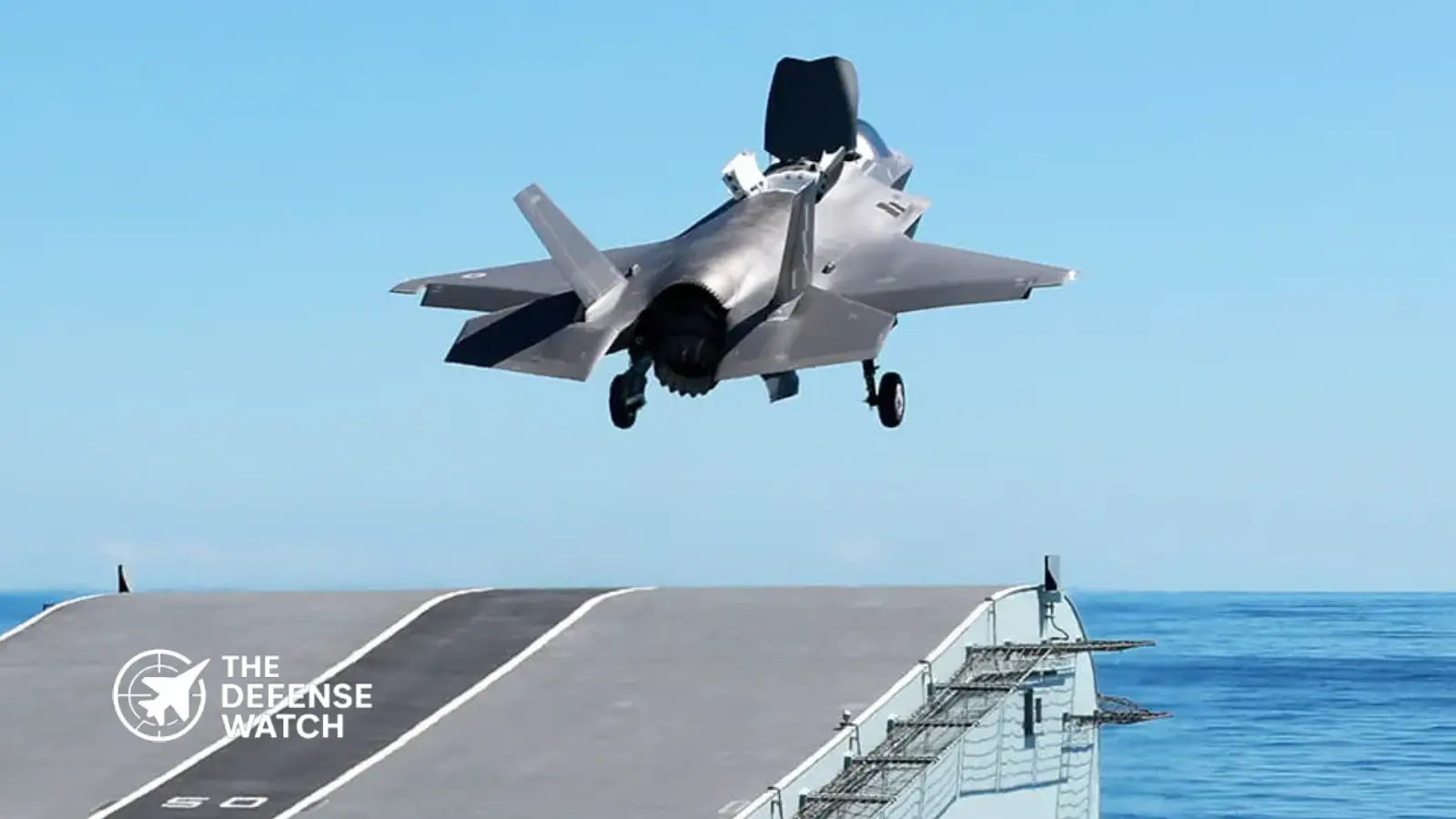
The deployment spotlights how sustainment gaps can shape frontline carrier capability even before combat begins
Executive Summary: The Royal Navy deployed HMS Prince of Wales while facing reported constraints in F35 spare parts availability. The situation highlights ongoing challenges in sustaining carrier air wing readiness during extended operations. It also raises broader questions about logistics resilience in modern naval aviation.
The F35 spare parts shortage affecting UK carrier operations has drawn attention to the sustainment side of naval aviation rather than frontline combat performance. According to reporting from UK Defence Journal, HMS Prince of Wales sailed with limited availability of critical spare components for its embarked F35B fleet, creating potential constraints on sustained flight operations.
While the carrier strike group remains fully operational, the issue underscores a recurring reality in modern expeditionary warfare. High end platforms depend not only on procurement but on continuous global logistics support that can keep aircraft mission ready over long deployments.
Carrier Readiness and Supply Chain Pressure
HMS Prince of Wales represents the Royal Navy flagship for carrier strike operations, designed to operate the F35B variant of the F35 Lightning II multirole fighter. In theory, the combination delivers a highly flexible fifth generation air wing capable of strike, reconnaissance, and maritime support missions.
In practice, sustaining that capability depends heavily on spare parts availability, engine components, avionics modules, and low observable materials support. When inventories are constrained, aircraft availability rates can decline even if the platform itself is fully mission capable on paper.
The F35 spare parts shortage has therefore become a central factor in how often aircraft can actually fly during deployment cycles. Each sortie consumes components that must be rapidly replaced through a tightly coordinated global supply chain.
Why Spare Parts Matter More Than Aircraft Numbers
Modern carrier aviation is not only about how many jets are assigned to a ship. It is about how many are ready to fly at any given moment. The F35 Lightning II ecosystem is highly integrated, meaning that even minor component shortages can ripple through readiness rates.
Key dependencies include:
- Engine module turnaround times
- Low observable coating maintenance
- Sensor and avionics replacement cycles
- Software update integration hardware
- Tire, brake, and airframe wear components
When any of these categories face delays, aircraft availability can fall below planned levels. This is especially critical on a carrier deployment, where onboard storage is limited and resupply depends on scheduled logistics links.
Operational Impact on Carrier Strike Groups
Carrier strike groups are designed for sustained forward presence, often operating far from home support infrastructure. For the Royal Navy, HMS Prince of Wales serves as a central node for power projection, NATO operations, and joint exercises.
However, the F35 spare parts shortage introduces operational friction. While mission capable aircraft can still fly, planners may need to adjust sortie generation rates, prioritize mission types, or extend maintenance intervals between flights.
This does not necessarily reduce combat effectiveness in the short term. Instead, it creates constraints on tempo and endurance, two factors that are critical during prolonged deployments or crisis response scenarios.
Strategic Context and Alliance Considerations
The UK operates the F35 program as part of a wider multinational supply network led by the United States and partner nations. This structure offers scale advantages but also introduces competition for limited spares during high demand periods.
In recent years, global F35 fleet expansion has accelerated, increasing pressure on depot level maintenance capacity and spare production timelines. The result is a system where operational readiness is closely tied to industrial throughput.
For NATO carriers, including the Royal Navy, this means that readiness is not solely a national issue. It is shaped by shared production pipelines and multinational logistics coordination.
Analysis: What This Means for Future Carrier Deployments
The situation involving HMS Prince of Wales highlights a broader challenge in modern naval aviation. Fifth generation carriers are only as effective as the sustainment systems behind them.
Three key implications stand out:
First, logistics planning is becoming as important as platform acquisition. Carrier groups require pre positioned supply strategies that anticipate long duration deployments.
Second, spare parts stockpiles are now strategic assets. Shortages can directly influence deterrence posture even without combat engagement.
Third, allied interoperability is increasing dependency on shared industrial capacity. This creates efficiency but also vulnerability when demand spikes.
The F35 spare parts shortage does not indicate a failure of the platform itself. Instead, it reflects the complexity of maintaining advanced stealth aircraft at scale while simultaneously expanding global fleets.
Broader Implications for the F35 Program
The F35 Lightning II remains one of the most widely deployed fifth generation fighters in the world. Its performance and versatility are not in question, but sustainment continues to be a central planning challenge for operators.
For carrier based variants like the F35B, the issue is even more pronounced due to the demanding environment of shipborne operations. Saltwater exposure, constant launch and recovery cycles, and limited onboard storage all increase maintenance pressure.
As more carriers integrate the F35, spare parts demand is expected to grow further. This makes supply chain resilience a key factor in future procurement decisions.