Executive Summary:
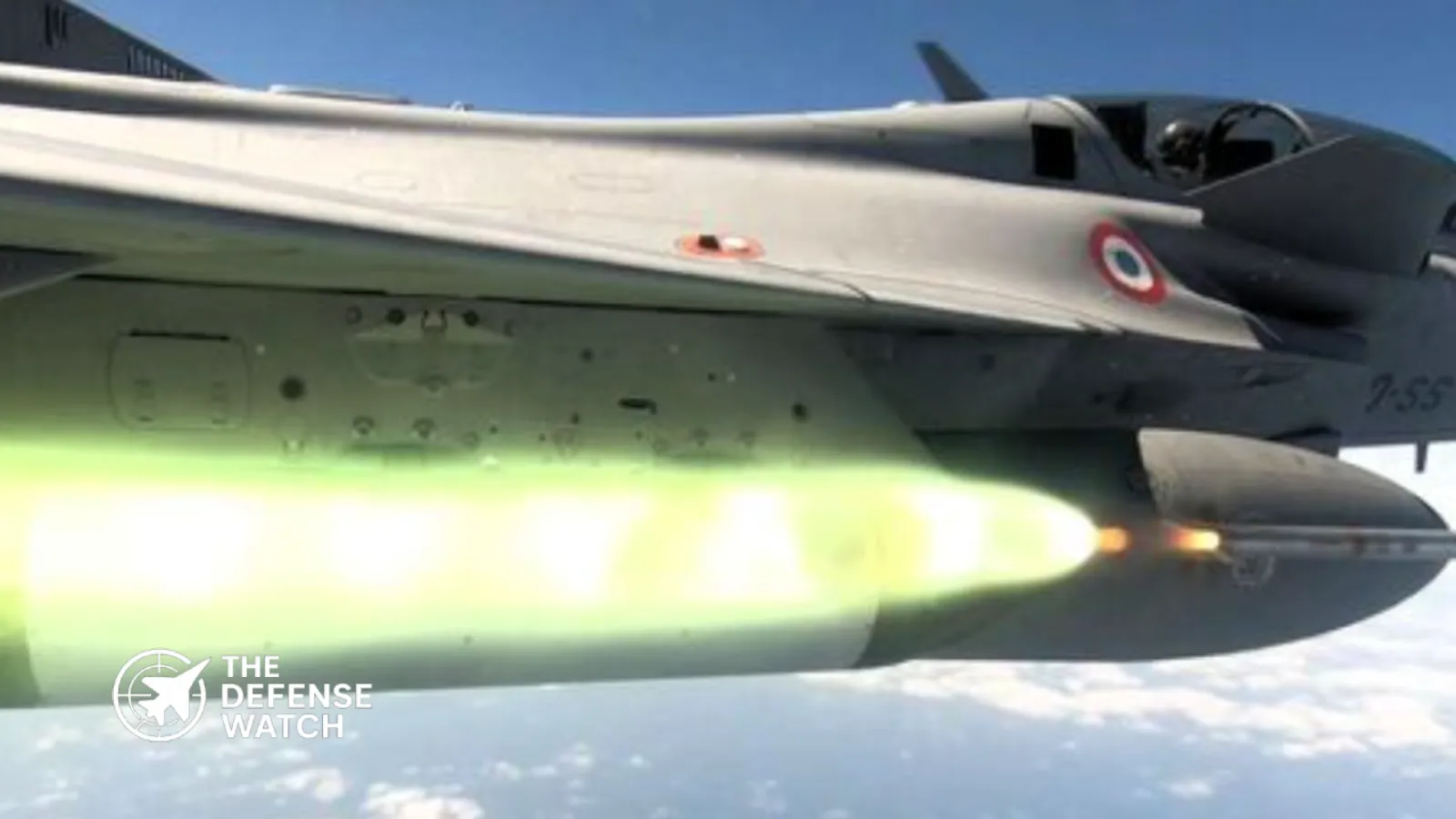
France’s Directorate General of Armament (DGA) announced the successful completion of laser-guided rocket integration on the Dassault Rafale for the counter-unmanned aircraft system (C-UAS) role. The capability, known as LADAC (Lutte antidrone sur avion de combat), equips the multirole fighter with Thales 68mm Aculeus LGRs fired from Telson rocket pods. Rollout to French Air and Space Force and Navy Rafales is underway this summer, addressing the unsustainable use of high-cost missiles against low-cost drones.
France has completed the integration of Thales 68 mm Aculeus laser-guided rockets (LGRs) aboard the Dassault Rafale combat aircraft, marking a significant enhancement to its counter-unmanned aircraft system capabilities.
The DGA confirmed the conclusion of live-fire trials at the Biscarrosse missile test facility on July 7, 2026, following 13 months of development first reported by Janes at the 2025 Paris Air Show.
Technical Details of the LADAC Capability
The system centers on the Thales Aculeus-LG 68mm laser-guided rocket, launched from 12-round Telson JF12 pods using the company’s Induction Rocket Solutions architecture. The rocket, weighing approximately 8.8 kg and measuring 1.4 meters in length, offers a range of around 3.7 to 5 km with semi-active laser guidance.
Integration leverages the Rafale’s RBE2 AESA radar (modified for the role) and the Talios targeting pod for laser designation and tracking. This setup allows precise engagement of small, slow-moving targets like one-way attack drones without relying solely on high-value air-to-air missiles such as the MBDA MICA.
Key Specifications (Aculeus-LG 68mm LGR):
- Caliber: 68 mm
- Guidance: Semi-active laser (compatible with standard designators)
- Range: ~3.7–5 km (air-to-air C-UAS profile)
- Warhead: High-explosive fragmentation suitable for drone targets
- Launcher: Thales Telson JF12 (12 rounds per pod)
- Platform: Dassault Rafale (Air Force and Navy variants)
This configuration provides substantial magazine depth compared to single-shot missiles, with each pylon supporting multiple engagements.
Operational Context and Drivers
The development responds directly to lessons from recent operations, including Rafale deployments protecting UAE airspace against Iranian drone threats in early 2026 under Operation Epic Fury, where dozens of MICA missiles were expended.
French Air and Space Force Chief of Staff Gen. Jérôme Bellanger highlighted the cost disparity: MICA missiles exceed €1 million each, while targets like Shahed-style drones cost far less. The LADAC program, initiated urgently in late 2025, prioritizes sustainable, layered defense.
DGA head Patrick Pailloux confirmed summer 2026 operational readiness to the French National Assembly. Trials involved collaboration between DGA, the Centre d’expertise aérienne militaire (CEAM), Dassault Aviation, and Thales.
Strategic and Technical Analysis
This upgrade represents a pragmatic adaptation to the proliferation of low-cost, attritable aerial threats in modern conflicts. By integrating affordable precision munitions, France addresses a critical vulnerability: the economic asymmetry of using million-dollar missiles against targets orders of magnitude cheaper.
Why it matters for U.S. and allied defense strategy: The U.S. pioneered this approach with the BAE Systems APKWS II 70mm laser-guided rockets on F-15E, F-16, and A-10 platforms, proving highly effective against Houthi and Iranian drones in the Middle East. The UK’s Eurofighter Typhoon followed suit. France’s move aligns European capabilities with this trend, enhancing interoperability in NATO and coalition operations.
Operationally, laser-guided rockets excel against non-maneuvering or predictably behaving targets like loitering munitions and cruise missiles. They reduce risk to high-value assets while preserving expensive missiles for peer threats. Technical hurdles—such as radar modifications for small-target detection and safe engagement geometries—appear resolved through targeted upgrades to the Rafale’s sensor suite.
For export Rafale operators in the Middle East (Qatar, UAE) and potential future users, this capability could be offered as an enhancement, strengthening regional air defense against asymmetric threats. It also positions the Rafale competitively against evolving drone swarms in high-intensity scenarios.
Potential limitations include shorter range compared to dedicated air-to-air missiles and the need for laser designation, which may constrain beyond-visual-range or all-weather use in some conditions. However, the system’s integration with the Rafale’s advanced avionics mitigates many of these through sensor fusion.
Broader Implications for French and Allied Modernization
The LADAC rollout coincides with France’s Military Programming Law (LPM 2024–2030), emphasizing resilience against proliferating UAS threats. It complements ground-based C-UAS systems and enhances the Rafale’s omnirole flexibility across air superiority, ground attack, and defensive counter-air missions.
As conflicts in Ukraine and the Middle East demonstrate the scale of drone employment, such low-cost kinetic solutions are becoming standard. France’s rapid development—from concept to operational rollout in under 18 months—highlights effective industry-government collaboration involving Dassault, Thales, and DGA.
This positions the Rafale fleet for sustained relevance in contested airspace while conserving high-end munitions for decisive engagements.