


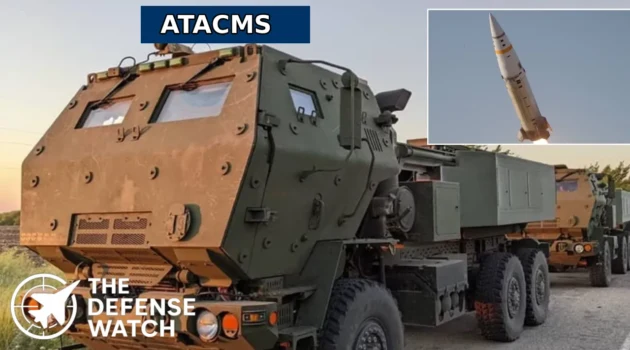
Ukraine has confirmed launching strikes into Russian territory using U.S.-supplied ATACMS missiles, marking a new chapter in Kyiv’s long-range strike capabilities. The announcement came after months of Pentagon-imposed restrictions that had previously limited Ukraine’s use of these advanced tactical missiles. Ukrainian officials disclosed that the strikes targeted critical military infrastructure deep inside Russia, signaling a significant escalation in the ongoing conflict.
Background
The ATACMS (Army Tactical Missile System) is a U.S.-developed surface-to-surface missile capable of striking targets up to 300 kilometers away with high precision. Since the onset of Russia’s invasion of Ukraine in 2022, the U.S. has provided a range of military assistance to Kyiv, including artillery, drones, and precision-guided munitions. However, ATACMS deliveries were initially restricted due to concerns about escalating the conflict into Russian territory. Pentagon sources had previously indicated that providing Ukraine with these long-range capabilities would be closely monitored to avoid direct confrontation.
Details of the Strikes
According to Ukrainian Defense Ministry officials, the strikes targeted ammunition depots and command centers located deep inside Russian territory, although specific locations were not disclosed for operational security reasons. The use of ATACMS marks the first confirmed deployment of U.S.-supplied tactical missiles in direct operations across the Russian border.
A Ukrainian military spokesperson stated, “These strikes demonstrate Ukraine’s growing capability to disrupt enemy operations beyond the immediate frontlines. ATACMS provides us with the precision and reach necessary to strike high-value targets safely.”
U.S. officials have confirmed the provision of ATACMS systems but emphasized that their use by Ukraine remains subject to ongoing coordination to minimize escalation risks. Analysts note that the strikes could have strategic and psychological impacts, demonstrating Kyiv’s ability to hit targets previously considered out of reach.
Expert Perspective
Defense analysts suggest that Ukraine’s deployment of ATACMS could alter operational calculations for both sides. “The introduction of long-range tactical missiles changes the battlefield dynamics. Russia must now consider vulnerabilities deep in its rear areas,” said Dr. Karen Thompson, a senior analyst at the Center for Strategic Defense Studies.
However, experts also caution that the increased range of strikes carries potential risks of escalation. Maintaining control over target selection and ensuring precise intelligence are critical to minimizing unintended consequences.
Impact and What’s Next
The confirmed use of ATACMS by Ukraine indicates an evolution in the conflict’s trajectory, highlighting Kyiv’s growing reliance on U.S. technological support to extend its strike capability. It also underscores the Pentagon’s continued strategic role in balancing military aid with broader geopolitical considerations.
Observers anticipate that additional missile systems and precision-guided munitions could follow in the coming months, potentially reshaping operational strategies across the conflict. The strikes serve as both a tactical advantage and a message of capability to Moscow, signaling that Ukrainian forces are increasingly able to project power beyond frontline engagements.

63 comments
[…] is reportedly being integrated into Russia’s existing air defense mix, working alongside S-400, S-350, and Pantsir […]
[…] redundancy to nuclear missile defense units around […]
[…] defensive systems include the Rolling Airframe Missile (RAM) system and Evolved Sea Sparrow Missile (ESSM) for engaging incoming anti-ship missiles. The […]
[…] Tor-E2’s presence in Dubai is more than a product reveal—it is a strategic signal. Russia’s global arms exports have taken a hit in recent years, particularly since the onset of the Ukraine war. […]
[…] air-defense systems expend expensive missiles (often costing hundreds of thousands or millions of pounds per shot) to intercept relatively cheap […]
[…] mechanism verified: Fit checks confirmed that the missile launch rails, ejection clearance, and geometry are compatible with internal carriage and expected […]
[…] Russia’s official Defense Ministry did not immediately issue a statement on the intercepts, leaving the mayor’s Telegram posts as the key source of information on the number of drones and how they were handled. […]
[…] Pentagon confirmed the strikes were part of an operation named Hawkeye Strike. Defense Secretary Pete Hegseth said the mission […]
[…] is a key Russian air base near Sevastopol that houses fighter aircraft and air defense assets supporting operations over southern Ukraine and the Black Sea […]
[…] firing was described as a technical milestone rather than final operational acceptance. It confirmed that the missile, weapon station, and vehicle platform can operate together under live conditions. Further […]
[…] Martin Missile and Defense in Ocala, Florida, remains the principal contractor for AGM-114R Hellfire missiles involved in the […]
[…] combination challenges traditional missile defenses because hypersonic delivery compresses the time between launch detection and impact. Allied radar […]
[…] barrier-removal team parallels larger Defense Department strategies to accelerate AI adoption outlined in the Pentagon’s 2023 Data, Analytics and Artificial Intelligence Adoption Strategy, which emphasized speed, […]
[…] Arrow interceptor family forms Israels top tier defense against long range ballistic missiles. Arrow Two and Arrow Three are designed to engage threats outside the atmosphere or in the upper […]
[…] the SHIELD contract will take place across the United States, reflecting the nationwide scope of missile defense research, development, and sustainment […]
[…] with US counterparts, reflecting shared concerns about Iranian capabilities and intent. Israeli defense officials reportedly view the prospect of a US strike on Iran as still […]
[…] a range of low-signature targets, including unmanned aerial systems (UAS), rockets, and cruise missiles in point-defense […]
[…] naval assets near Iran, the U.S. enhances its ability to conduct maritime security operations, missile defense, and precision strikes. The presence of Aegis equipped destroyers also strengthens regional missile […]
[…] continued prioritization, with the document outlining timelines for fielding offensive hypersonic strike systems and defensive interceptor capabilities. Defense officials acknowledge ongoing challenges in this domain but […]
[…] Defense Minister Crosetto confirmed the substantial financial commitment during recent parliamentary proceedings, emphasizing that the investment would be distributed across the program’s development timeline through 2035. The allocation represents a significant portion of Italy’s long-term defense modernization budget and underscores Rome’s strategic commitment to maintaining air superiority capabilities. […]
[…] has not released comprehensive intercept statistics, though preliminary reports suggest significant defensive success against cruise missile […]
[…] announcement was confirmed by UK and French officials following high level defense and security consultations with European and NATO partners. The new force is intended to strengthen […]
[…] defense officials have not announced any decision to conduct strikes. However, public Pentagon planning documents, congressional assessments, and prior US military […]
[…] “fire and forget” capability enables launching aircraft to engage multiple targets or maneuver defensively without maintaining target illumination throughout missile […]
[…] response to the emerging threat, Ukraine has appointed Beskrestnov as an adviser to Defense Minister Mykhailo Fedorov, focusing on technology and electronic warfare […]
[…] 2025 exchange of direct strikes and missile launches between Israel and Iran. In that conflict, US strikes on Iranian nuclear sites and subsequent Iranian missile barrages drew international attention and underscored the risk of broader […]
[…] Defense analysts note that satellite connectivity allows drones to mitigate Ukrainian electronic warfare efforts that disrupt GPS and line of sight data links. However, there is no independent confirmation regarding the exact configuration used in this strike. […]
[…] delivery underscores the close defense and aerospace ties between Russia and Belarus, particularly in the field of military aviation. Belarus remains one of the few […]
[…] defense electronics. It also reflects a broader trend among US allies to invest in sovereign defense capabilities amid supply chain risks and export […]
[…] operational capability. This approach aligns with broader US and allied efforts to integrate Ukraine into Western defense support structures rather than relying on ad hoc wartime […]
[…] pillar of the UK’s surface fleet modernisation, alongside other efforts such as adding anti-ship strike systems like the Naval Strike Missile and exploring next-generation systems for future air defence […]
[…] of publication, Russias Ministry of Defense has not issued a detailed response to the SBU Alpha claims. In past incidents, Moscow has […]
[…] Defense analysts note that such investments reflect broader Pentagon efforts to diversify suppliers and reduce dependency on a small number of legacy contractors. […]
[…] decision adds to a growing trend of Latin American air forces deepening defense ties with the United States amid rising concerns over fleet readiness, regional security, and long term sustainment […]
[…] Norwegian Armed Forces Chief of Army Major General Lars Lervik attended the contract signing, underscoring the Norwegian military’s prioritization of modern artillery systems. The acquisition aligns with NATO’s emphasis on long-range precision fires and territorial defense capabilities following Russia’s 2022 invasion of Ukraine. […]
[…] and allied procurement priorities, particularly as NATO members increase spending on naval strike, missile defense, and maritime domain […]
[…] Batteries: Provide upper-tier defense against medium and intermediate-range ballistic missiles during their terminal phase, operating at altitudes up to 150 […]
[…] had been reliably fulfilled despite mounting pressure from Western nations attempting to block Russia’s defense partnerships. The revenue, according to the Russian president, would help modernize defense […]
[…] of the Singapore Airshow, Traut outlined Berlin’s ambitious strategy to strengthen its orbital defense posture amid what he characterized as an increasingly contested space environment. The investment reflects […]
[…] significant arms sales to key regional partners, including Israel and Saudi Arabia, to boost defensive capabilities amid rising […]
[…] A3 added multiple reentry vehicles, enabling single missiles to engage multiple targets and complicating adversary defense […]
[…] UK’s review of undersea protection comes amid wider efforts to bolster defense against maritime threats, particularly in the North Atlantic region. As part of the Strategic […]
[…] this scenario, Australia could redirect funds toward other defense needs such as long-range anti-ship missiles and unmanned systems, or invest in capabilities tailored to its own territorial […]
[…] focus on basing missiles within hardened underground facilities aligns with longstanding doctrine aimed at improving […]
[…] Medvedev, New START restricted each side to no more than 1,550 nuclear warheads on no more than 700 missiles and bombers—deployed and ready for use. The agreement was initially set to expire in 2021 but […]
[…] Witkoff and Trump’s son-in-law Jared Kushner joined the discussions, according to Rustem Umerov, Ukraine’s National Security and Defense Council […]
[…] coastal defense missile systems, configured for over-the-horizon sea […]
[…] Defense planners value the missile for: […]
[…] The SAMP T system, also known as Mamba, is designed to counter aircraft, cruise missiles, and certain ballistic missile threats. Ukraine already operates at least one SAMP T battery, which has been credited by Ukrainian defense officials with successful interceptions of Russian missiles. […]
[…] relieving interceptor shortages. Fedorov’s announcement highlighted the urgency of replenishing defensive ammunition as Russian air strikes continued. He framed Canada’s contribution as practical help at a time when every additional […]
[…] The introduction of the hypersonic anti-ship ballistic missile Pakistan at one of the Middle East’s premier defense exhibitions positions GIDS as a serious contender in the global market for advanced strike systems. According to company specifications presented at World Defense Show 2026 Pakistan, the SMASH system combines high-speed terminal performance with precision guidance architecture tailored to defeat layered air and missile defenses. […]
[…] for a fairer share of responsibilities among member states. European nations have increased defense investments following Russia’s invasion of Ukraine and evolving security pressures on NATO’s eastern and northern […]
[…] missiles are a core part of US air and missile defense. Mounting them on truck-based launchers lets forces move launchers quickly across a base or region […]
[…] dynamics shifting and Russia’s northern forces drawing strategic scrutiny, Norway’s upgraded missile capability adds a new dimension to NATO’s northern defenses. The acquisition reflects Oslo’s commitment to layered deterrence and long‑range fires support […]
[…] air defense forces. Officials described the interception as a significant effort by defenders and confirmed the missiles did not reach their intended […]
[…] Ukraine has kept parts of its defense intact, with occasional reversals of Russian gains reported in multiple sectors of the front. […]
[…] known as KM-SAM Block II or Cheongung II, is a mobile surface-to-air and terminal phase ballistic missile intercept system developed by South Korean defense firms and the Agency for Defense Development. Saudi Arabia’s deal for 10 batteries was announced […]
[…] to the contract announcement, the work will support the missile defense Agency’s need to better integrate requirements, architecture, and performance data across […]
[…] Bayraktar TB3 UCAV can carry up to six smart munitions, including laser guided bombs and precision missiles developed by Turkish defense firms. This payload capacity allows the drone to perform strike, close air support, and maritime […]
[…] warning places renewed attention on missile defense, sanctions enforcement, and regional […]
[…] of an upgraded Aegis destroyer as an escalation in U.S. naval posture, emphasizing precision strike and layered defense against both missile and air threats. For China and Russia, continued investment in modernizing legacy systems […]
[…] and the war in Ukraine. These systems offer a cost-effective alternative to traditional guided missiles and enable forces to engage targets with precision and […]
[…] the U.S. may be forced to expand its rules of engagement to include “proportionate” strikes on Iranian coastal missile […]