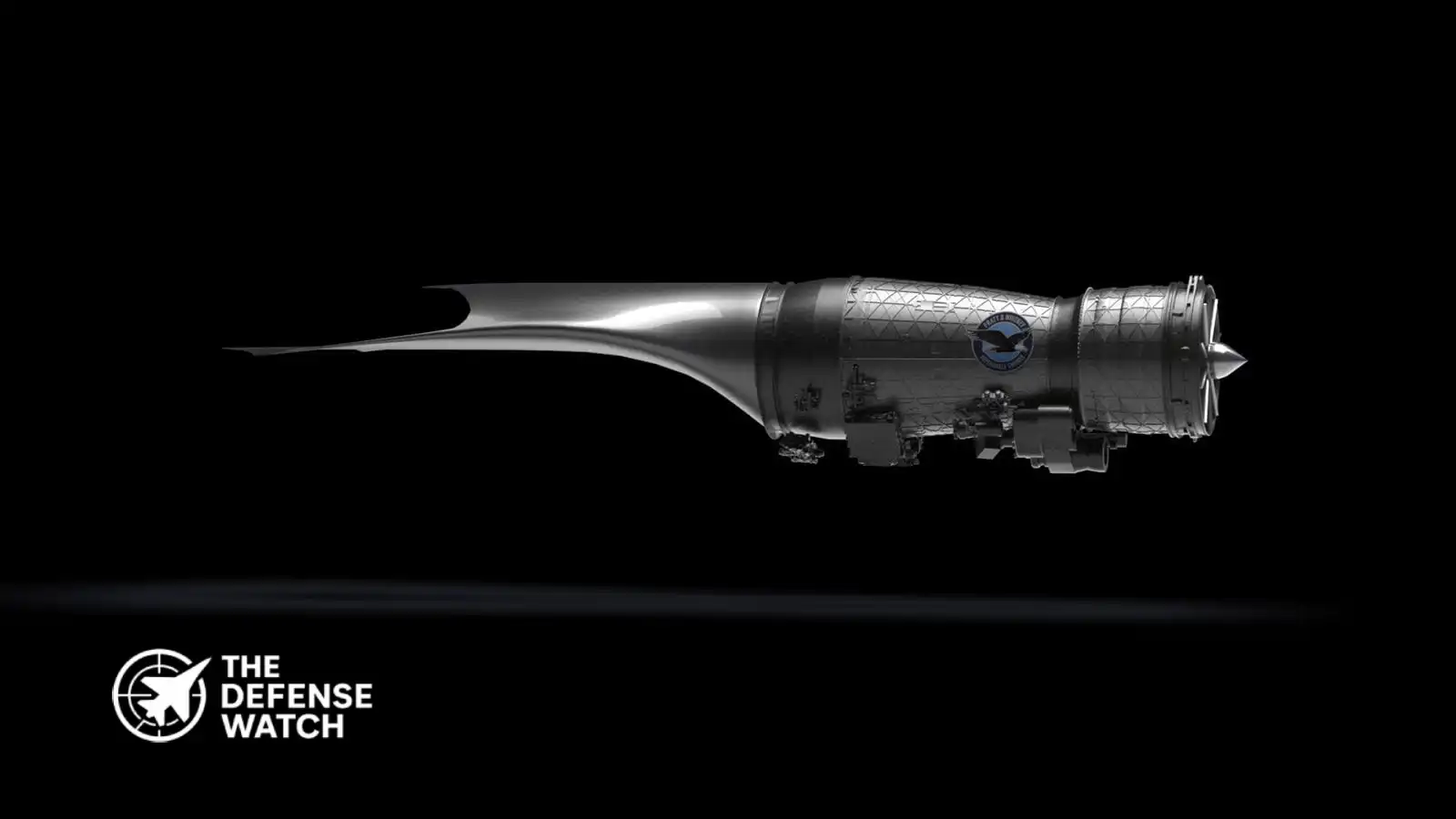
Executive Summary: Pratt & Whitney, an RTX business, has completed a fully digital assembly readiness review (ARR) for its XA103 engine under the U.S. Air Force’s Next Generation Adaptive Propulsion (NGAP) program. The milestone signals the program’s transition from digital design to physical hardware procurement. The XA103 is expected to deliver propulsion performance that surpasses any engine available today, with ground testing targeted for the late 2020s.
Pratt & Whitney Clears Key Digital Milestone In Race To Power America’s Next Fighter
Pratt & Whitney has reached a significant milestone in the U.S. Air Force’s Next Generation Adaptive Propulsion (NGAP) program, completing a fully digital assembly readiness review for its XA103 engine — a development that moves the program decisively from the design phase into physical hardware production.
Announced on May 8, 2026, from East Hartford, Connecticut, the accomplishment underscores the growing role of digital engineering in the development of advanced military propulsion systems. For the U.S. Air Force, which faces mounting pressure to maintain air superiority in an increasingly contested operational environment, the progress represents a critical step toward fielding a new generation of fighter engines.
What Is the NGAP Program?
The Next Generation Adaptive Propulsion program is a U.S. Air Force initiative to develop the propulsion system for next-generation combat aircraft — platforms designed to operate in high-threat environments against near-peer adversaries like China and Russia. NGAP is intended to replace or supplement the current F135 engine that powers the F-35 Joint Strike Fighter, and is closely linked to emerging sixth-generation fighter concepts.
The XA103 engine features an adaptive design intended to provide advanced survivability, improved fuel efficiency, and robust power and thermal management for next-generation platforms. These capabilities are widely viewed as essential for future aircraft operating in contested airspace, where mission profiles increasingly require engines capable of rapidly adjusting performance output to match operational demands.
Pratt & Whitney is competing against GE Aerospace, which is also developing its own NGAP candidate engine. The outcome of this competition will define the propulsion backbone of American air power for decades to come.
A Fully Digital Assembly Readiness Review — Why It Matters
The assembly readiness review (ARR) is a formal technical checkpoint at which engineers verify that a design is mature enough and all necessary components are available to begin physical assembly. Completing this review in a fully digital environment — rather than relying on physical prototypes or traditional paper-based processes — represents a meaningful advancement in how the defense industry approaches complex engineering programs.
The review marks Pratt & Whitney’s progress in transitioning from designing in a digital environment to procuring and producing physical hardware. By conducting the ARR entirely within a digital framework, Pratt & Whitney’s engineers were able to identify and resolve potential integration issues before a single physical component was assembled — reducing cost risk and accelerating the development timeline.
This approach reflects a broader industry shift toward what the Pentagon calls “digital engineering” — the use of integrated digital models, simulations, and data environments to manage weapon system development from design through sustainment. The Department of Defense has been actively pushing contractors to adopt digital engineering practices as a means of reducing program delays and cost overruns that have plagued major defense acquisitions.
What Pratt & Whitney’s Leadership Said
Jill Albertelli, president of Pratt & Whitney’s Military Engines business, described the milestone as a demonstration of the company’s investment in digital infrastructure and its collaboration with the U.S. Air Force. She noted that the NGAP team is simultaneously developing novel digital validation tools as it moves toward engine assembly and test. Albertelli stated that the performance expected from the XA103 engine exceeds anything available today, emphasizing the critical importance of stable investment in propulsion as a strategic competitive advantage.
That framing — “strategic competitive advantage” — is deliberate. Propulsion has historically been an area where the United States has maintained a decisive edge over adversaries. Sustaining that edge, Pratt & Whitney argues, requires sustained investment and an accelerated development cadence, both of which the NGAP program is designed to deliver.
Hardware Procurement Now Underway
With the digital ARR complete, Pratt & Whitney’s NGAP team has moved into active hardware procurement. The company is working with its supply base to procure the components needed to assemble the XA103 for testing, which is expected in the late 2020s.
This supply chain engagement is itself a significant signal. Bringing suppliers into the production loop indicates that the program has cleared internal technical risk thresholds and that leadership has confidence in the design’s readiness for physical validation. For a program of NGAP’s scale and strategic importance, that confidence — backed by a completed digital ARR — carries real programmatic weight.
The timeline targeting late-2020s testing aligns with broader U.S. Air Force planning horizons for next-generation platforms. While specific aircraft programs remain sensitive, the Air Force has publicly discussed the need for advanced propulsion solutions to support its Next Generation Air Dominance (NGAD) initiative and the broader family-of-systems approach to future air combat.
Strategic Context: Why Next-Gen Propulsion Is a National Security Priority
The NGAP program does not exist in a vacuum. It is part of a broader effort by the United States to recapitalize its tactical air power in response to significant advances by China and Russia in fifth-generation fighters, long-range air defense systems, and directed-energy weapons.
China’s J-20 stealth fighter is already operational in significant numbers, and Beijing is actively developing its own sixth-generation combat aircraft concepts. Russia, despite economic pressure from sanctions, continues to advance its Su-57 program. Both adversaries are investing heavily in engine technology, and both have historically lagged behind the United States in propulsion — a gap that U.S. officials are determined to preserve.
The adaptive cycle engine architecture at the heart of NGAP is designed to give American pilots a significant performance advantage in this environment. Unlike conventional turbofan engines, adaptive cycle engines can dynamically shift between high-thrust and high-efficiency operating modes — extending range, reducing heat signature, and improving combat persistence. These attributes are particularly valuable in long-range strike and contested air superiority missions in the Pacific, where distances are vast and forward basing is limited.
Platform-Agnostic Design: Built for Flexibility
One detail in Pratt & Whitney’s announcement deserves particular attention: the XA103 is described as platform-agnostic. The engine’s adaptive design is intended to enable the U.S. Air Force to meet evolving operational needs and maintain global air dominance.
A platform-agnostic engine means the XA103 is not being designed exclusively for a single aircraft type. This approach gives the Air Force flexibility to integrate the engine across multiple future platforms — an important consideration given ongoing uncertainty about the final configuration of next-generation combat aircraft. It also reduces programmatic risk: if one platform is delayed or restructured, the engine program can continue on its own development track.
This mirrors the broader logic behind the NGAP program itself, which is structured to ensure the United States maintains a competitive propulsion option regardless of how specific platform programs evolve.
About Pratt & Whitney and RTX
Pratt & Whitney, an RTX business, is a world leader in the design, manufacture, and service of aircraft engines and auxiliary power units for military, commercial, and civil aviation customers. The company has been pioneering aircraft propulsion technologies since 1925 and supports more than 90,000 in-service engines through a global network of maintenance, repair, and overhaul facilities.
RTX employs more than 180,000 people globally and reported 2025 sales of more than $88 billion. The company is headquartered in Arlington, Virginia.
What Comes Next
The completion of the digital ARR puts Pratt & Whitney on track for a late-2020s ground test of the XA103 demonstrator. That test campaign will be the first opportunity to validate, in a physical environment, the performance claims that have driven the program forward. Success at that stage would position the XA103 as a strong candidate for selection as the propulsion system for the next generation of American combat aircraft.
For the U.S. Air Force, the stakes are clear. Propulsion is a foundational capability — one that shapes what aircraft can do, how far they can fly, and how long they can survive in contested airspace. The NGAP program, and the digital engineering practices that are accelerating it, represent the United States’ best current bet on maintaining the air dominance that has defined American military power for three-quarters of a century.