• Home
  • About
  • Defense Systems
  • Manufacturer
  • Comparisons
  • Compare 
  • Tools
TheDefenseWatch.com
  • Aerospace & Aviation
  • Military & Ordnance
  • Naval & Maritime
  • Cyber & Space Defense
  • Policy & Strategy
  • Global News
  • Tools Library
    • Smart Calculator
    • Drone Flight Time Calculator
    • Drone Range Calculator
    • Counter-Drone Jammer Effective Range Calculator
    • Counter-Battery Radar Detection Calculator
    • Artillery Fire Correction Calculator
    • Thermal Camera Detection Range Calculator
    • Missile Range & Time-of-Flight Calculator
    • Radar Detection Range Calculator
    • FPV Strike Drone Payload vs Range Calculator
    • Loitering Munition Endurance Calculator
    • Sniper Ballistic Drop & Windage Calculator
    • Bullet Drop Calculator
    • U.S. Army Combat Fitness Test (ACFT) Calculator
    • Military Pension Calculator
    • Military Retirement Calculator
    • Military Pension Calculator
    • Large Number Calculator
Font ResizerAa

TheDefenseWatch.com

The Defense Watch | U.S. & Global Defense News, Analysis & Military Updates

Search
  • Home
  • About
  • Defense Systems
  • Manufacturer
  • Comparisons
  • Compare 
  • Tools

Stay Updated

Get the latest update

Subscribe

Explore

  • Drone
  • Fighter Jets & Military Aircraft
  • Hypersonic Weapons
  • Aircraft Carriers
  • Strategic History & Missions
  • Tools Library
Home » GE Aerospace And Kratos Win US Air Force Award To Design Engine For Expendable Drone Systems
Defense Contracts

GE Aerospace And Kratos Win US Air Force Award To Design Engine For Expendable Drone Systems

Daniel Mercer / Defense & Aerospace Analyst
Last updated: September 7, 2026 6:40 pm
Daniel Mercer / Defense & Aerospace Analyst
Share
6 Min Read
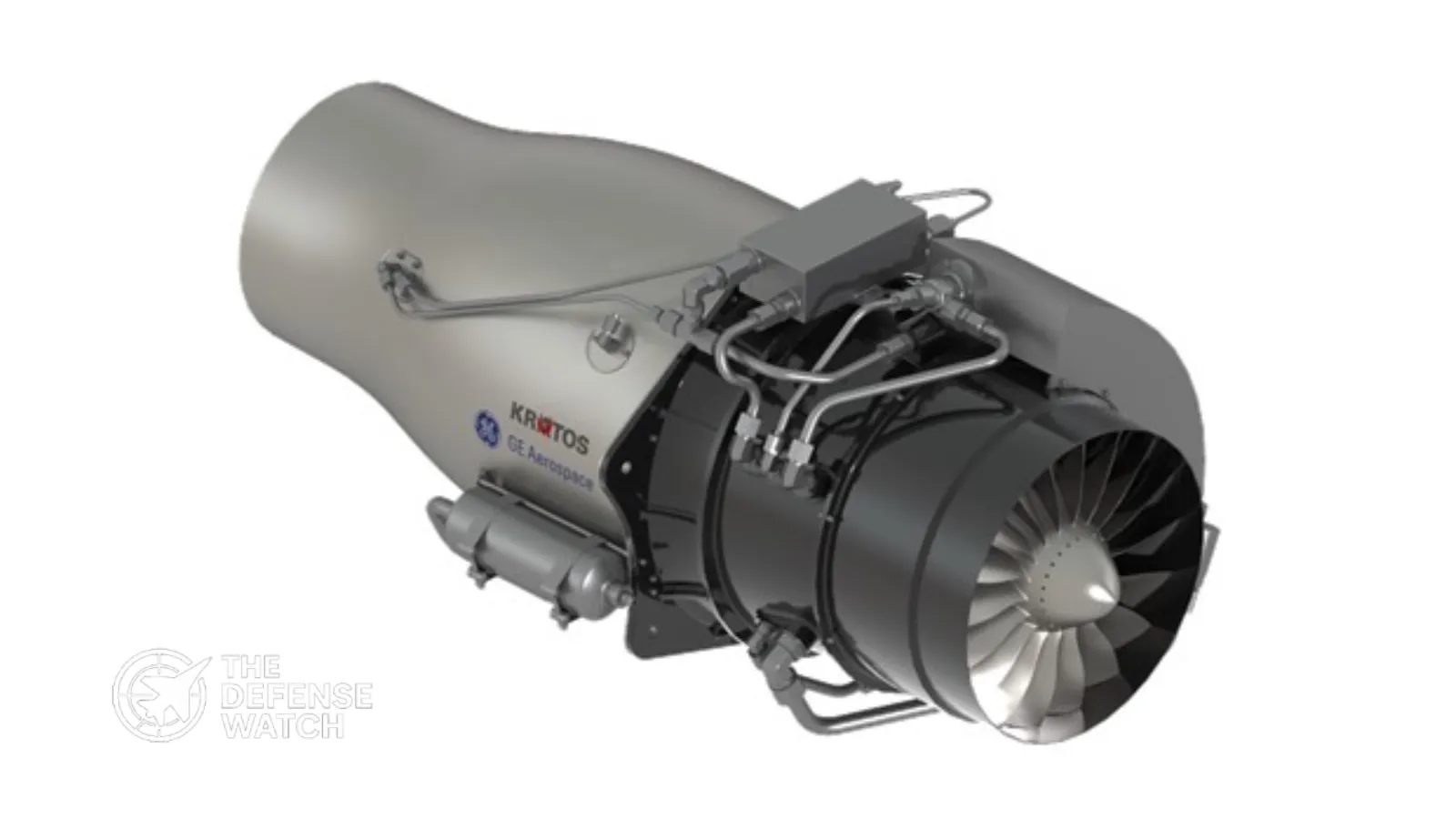
GE Aerospace expendable drone engine
Image : GE Aerospace
SHARE
■ KEY FACTS AT A GLANCE
  • ► GE Aerospace and Kratos won a US Air Force award to design an expendable unmanned aircraft engine.
  • ► The engine will support affordable, high volume unmanned combat air systems.
  • ► Program focuses on low cost propulsion optimized for one way or limited life missions.
  • ► The award aligns with the Air Force push for collaborative combat aircraft and attritable platforms.
  • ► Development will leverage GE Aerospace propulsion expertise and Kratos unmanned systems experience.

GE Aerospace And Kratos Win US Air Force Award For Expendable Drone Engine Development

GE Aerospace and Kratos have secured a US Air Force award to design an expendable drone engine intended for affordable, next generation unmanned combat aircraft.

Contents
  • GE Aerospace And Kratos Win US Air Force Award For Expendable Drone Engine Development
    • Supporting The Collaborative Combat Aircraft Vision
    • Why Expendable Engines Matter
    • Industrial And Strategic Implications
    • What Comes Next

The contract brings together GE Aerospace and Kratos Defense & Security Solutions under a US Air Force initiative focused on low cost, high performance propulsion for attritable platforms.

(adsbygoogle = window.adsbygoogle || []).push({});

According to a company statement, the engine will be purpose built for unmanned aircraft designed for one way missions or limited operational lifespans. The goal is to reduce cost per flight hour while maintaining sufficient performance for contested environments.

The award was issued by the United States Air Force as part of its broader push to field more affordable autonomous systems at scale.

Supporting The Collaborative Combat Aircraft Vision

The expendable drone engine program aligns with the Air Force’s collaborative combat aircraft strategy. That effort aims to pair manned fighters with autonomous unmanned aircraft capable of reconnaissance, electronic warfare, strike, or decoy missions.

While the Air Force has not disclosed the specific airframe associated with this propulsion effort, industry observers note that attritable or expendable systems are central to future force design. By lowering unit cost, the service can deploy larger numbers of aircraft without assuming the financial risk tied to traditional fighter programs.

Kratos has extensive experience in this segment. The company produces several unmanned systems designed for target drones, tactical missions, and high risk operations. GE Aerospace, meanwhile, brings decades of propulsion development across military and commercial platforms.

(adsbygoogle = window.adsbygoogle || []).push({});

By combining Kratos’ unmanned aircraft integration background with GE’s turbine expertise, the Air Force appears to be pursuing a modular, scalable propulsion solution tailored for mass production.

Why Expendable Engines Matter

An expendable drone engine differs from traditional fighter jet engines in both cost structure and lifecycle expectations. Instead of designing for thousands of flight hours, the emphasis shifts to affordability, simplified manufacturing, and rapid production.

This approach reflects lessons from recent conflicts where inexpensive drones have reshaped air defense and strike operations. Large volumes of low cost systems can saturate defenses, complicate targeting, and provide operational flexibility.

For the Air Force, building an industrial base capable of producing such engines at scale is as important as raw performance. Cost discipline, supply chain resilience, and rapid assembly are likely to be core metrics in the program.

(adsbygoogle = window.adsbygoogle || []).push({});

The award also signals confidence in industry partnerships that can move quickly from concept to prototype. GE Aerospace has been advancing small engine architectures suited for unmanned applications, while Kratos continues to invest in high performance, affordable drone platforms.

Industrial And Strategic Implications

The GE Aerospace and Kratos partnership underscores a broader shift in US airpower planning. Rather than relying solely on exquisite, high cost aircraft, the Air Force is building a layered force structure.

Attritable and expendable systems offer several advantages:

  • Reduced financial risk in high threat environments
  • Greater operational mass
  • Faster technology refresh cycles
  • Flexibility in mission design

The engine program supports this shift by targeting propulsion as a key cost driver. Historically, advanced jet engines have been among the most expensive components of combat aircraft. Simplifying that architecture without sacrificing mission effectiveness could enable new operational concepts.

From an industrial perspective, the contract strengthens domestic propulsion development. It reinforces the role of established engine manufacturers while opening pathways for integration with emerging unmanned platforms.

What Comes Next

The initial award focuses on design and development. Testing, integration, and potential low rate production decisions will depend on performance milestones and Air Force budget priorities.

(adsbygoogle = window.adsbygoogle || []).push({});

As the Air Force refines requirements for collaborative combat aircraft and related unmanned systems, propulsion choices will directly influence range, payload capacity, and survivability.

The GE Aerospace expendable drone engine effort therefore represents more than a single contract. It reflects a structural change in how the United States plans to generate airpower in contested theaters.

By investing in affordable propulsion, the Air Force is positioning itself to field larger numbers of autonomous aircraft capable of supporting manned fighters and operating independently when required.


TAGGED:Defense contractsDrone EngineGE AerospaceKratos Defenseus air force
Share This Article
Facebook Copy Link Print
ByDaniel Mercer / Defense & Aerospace Analyst
Follow:
Daniel Mercer is a defense and aerospace analyst at TheDefenseWatch.com covering military aviation, aerospace technology, unmanned systems, air warfare, and defense procurement. His reporting uses official documents, government and military statements, company announcements, and other public sources.
Leave a Comment

Leave a Reply Cancel reply

Your email address will not be published. Required fields are marked *

New Arrivals

  • Boeing VC-25B Presidential Aircraft Boeing VC-25B Presidential Aircraft
  • SM-3 Block IB Missile SM-3 Block IB Missile
  • USS Abraham Lincoln Aircraft Carrier USS Abraham Lincoln Aircraft Carrier
  • M142 HIMARS M142 HIMARS
  • Terrex S5 Infantry Vehicle Terrex S5 Infantry Vehicle
  • A-29 Super Tucano Aircraft A-29 Super Tucano Aircraft
  • DSAR 15 Rifle DSAR 15 Rifle

Recent Compares

  • Tejas vs Gripen: Key Differences and Capabilities Tejas vs Gripen: Key Differences and Capabilities View Comparison →
  • Tejas vs MiG-21 Bison: How India Replaced Its Iconic Supersonic Fighter Tejas vs MiG-21 Bison: How India Replaced Its Iconic Supersonic Fighter View Comparison →
  • F-35 vs F-16: Stealth, Sensors and Combat Roles F-35 vs F-16: Stealth, Sensors and Combat Roles View Comparison →
  • Tejas Fighter Jet vs F-16 Fighting Falcon: Capability Compared Tejas Fighter Jet vs F-16 Fighting Falcon: Capability Compared View Comparison →
  • Rafale Fighter Jet vs F-16 Fighting Falcon : Which Fighter Has the Edge? Rafale Fighter Jet vs F-16 Fighting Falcon : Which Fighter Has the Edge? View Comparison →
  • Su-57 Fighter Jet vs J-20 Fighter Jet: Stealth and Air Combat Compared Su-57 Fighter Jet vs J-20 Fighter Jet: Stealth and Air Combat Compared View Comparison →
  • Mirage 2000 vs Tejas Mk1A: Legacy Combat Power vs Indigenous Modernization Mirage 2000 vs Tejas Mk1A: Legacy Combat Power vs Indigenous Modernization View Comparison →
  • Rafale Fighter Jet vs F-22 Raptor: Which Air Dominance Fighter Has the Edge? Rafale Fighter Jet vs F-22 Raptor: Which Air Dominance Fighter Has the Edge? View Comparison →
  • Tejas Fighter Jet vs. Rafale Fighter Jet: India’s Indigenous Fighter Meets France’s Proven Multirole Combat Aircraft Tejas Fighter Jet vs. Rafale Fighter Jet: India’s Indigenous Fighter Meets France’s Proven Multirole Combat Aircraft View Comparison →
  • F-22 Raptor vs. F-35 Joint Strike Fighter: Which Fifth Generation Fighter Has the Edge? F-22 Raptor vs. F-35 Joint Strike Fighter: Which Fifth Generation Fighter Has the Edge? View Comparison →

Recent Posts

  • Lockheed Martin Unveils PAC-3 Edge Interceptor for U.S. Army
  • Northrop Grumman Completes B-2 Spirit of Kitty Hawk Overhaul
  • Army Report Finds Systemic Failures Behind Fatal 2025 Midair Collision
  • Lockheed Martin to Supply Black Hawk Training Systems to Philippine Air Force
  • US Air Force Expands B-21 Raider Production Capacity by 25%

You Might Also Like

E 2D Advanced Hawkeye contract
Defense Contracts

Northrop Grumman wins 198 million dollar E 2D Advanced Hawkeye support order for US Navy and Japan

September 12, 2026
Navy air to air refueling contract
Defense Contracts

Metrea And Omega Secure $938.9 Million U.S. Navy Air To Air Refueling Services Contract Through 2031

September 7, 2026
AC-130J gunship deployment
Aerospace & AviationFighter Jets & Military Aircraft

US Air Force Moves To Deploy AC-130J Gunship As Counter-Trafficking Mission Expands In Central America

September 8, 2026
Lockheed Martin submarine contract
Defense Contracts

Lockheed Martin Wins 9.5 Million Navy Contract for Submarine Electronic Warfare Support

September 7, 2026
Welcome Back!

Sign in to your account

Username or Email Address
Password

Lost your password?